Spain in Winter: 19 Best Places to Visit & Winter Weather
Are you thinking about visiting Spain in winter, but worried that it will be cold, gray, and half-closed?
Spain is traditionally more of a summer holiday destination, but personally, I find winter is one of the best times to travel in Spain!
When you visit Spain in winter, you need to pick the right place for the kind of trip you want!
Spain does not have just one winter. It has several very different ones, depending on where in the country you go.
In the same week, you could be sitting outside in the sunshine in the Canary Islands, skiing in the Sierra Nevada, and walking around Madrid in a warm coat and scarf.
I have lived permanently in Spain since 2023. First, I spent two and a half years in Barcelona, where I experienced two winters, and since 2025, I have called Madrid my home.
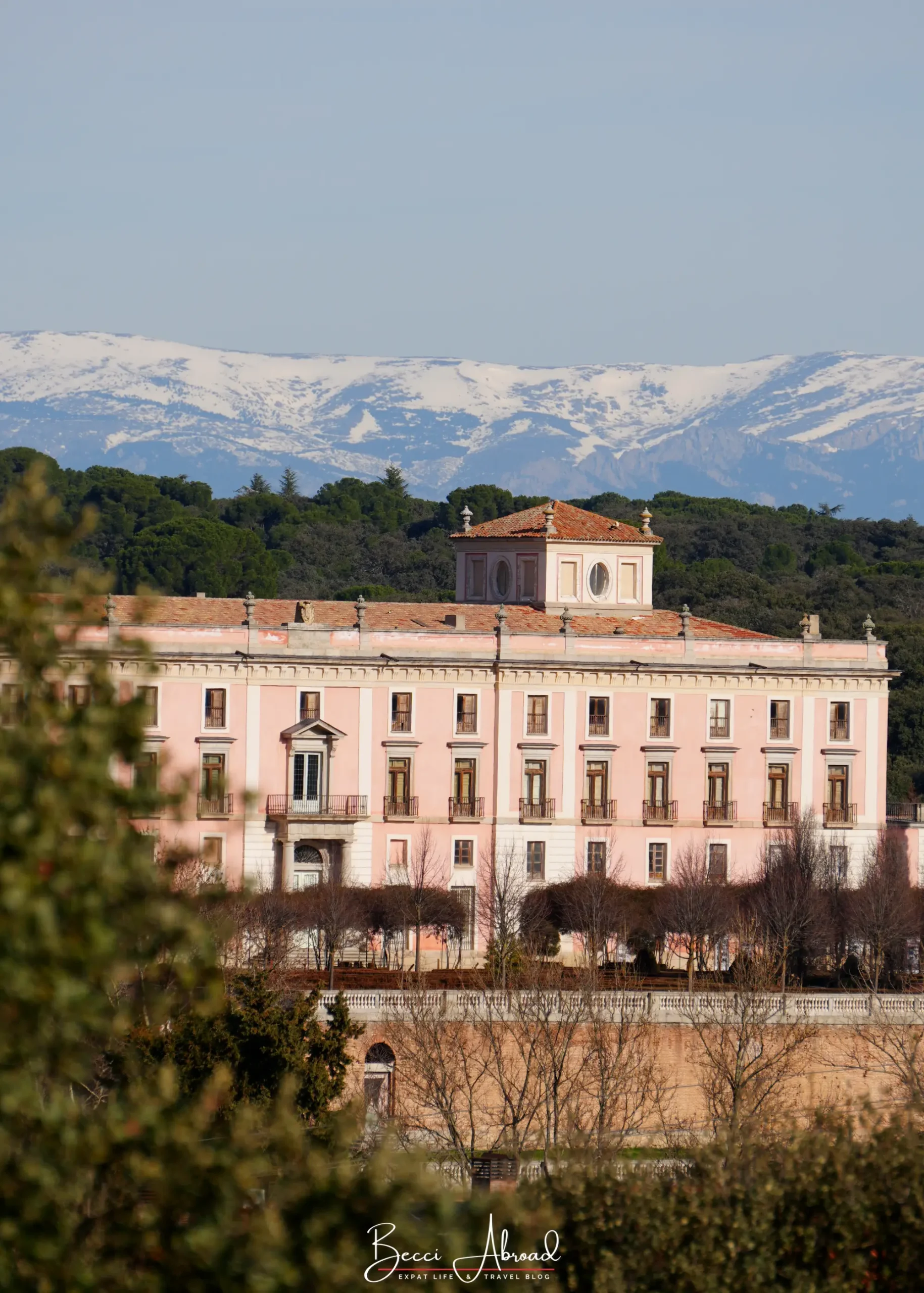
Winters in Madrid get pretty chilly, and last year it even snowed in the mountains close to Madrid! I really love the winter days in Madrid with clear sun, blue sky, and a little crispness in the wind!
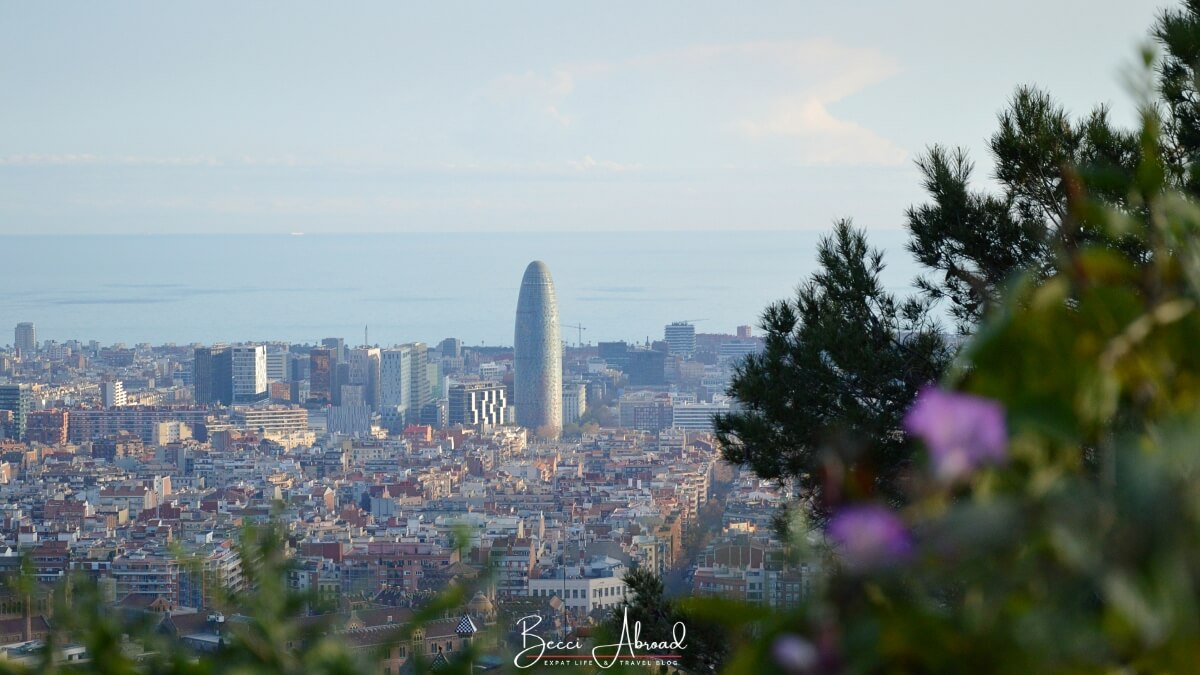
Winters in Barcelona are different from winters in Madrid, with milder weather and sunny days. Barcelona in the winter has become one of my favorite times of the year, with fewer crowds, a more local feeling in the city, and many interesting winter activities to experience!
I also lived in Granada for one year in my early twenties, and spent the winter soaking in the breathtaking views of La Alhambra, with the snow-covered peaks of the Sierra Nevada mountains behind.
So, while I have spent quite a few winters in Spain, I still haven’t been everywhere in Spain in winter myself, and that is why I asked some of my fellow travel bloggers to share their favorite places to visit in Spain during the colder months!
In this guide, I will take you through what the weather is really like in each part of Spain in winter and the best places to visit depending on the kind of trip you want.
Let’s get under the skin of winter in Spain!
The Complete Guide to Spain in Winter
Disclosure: Some of the links below are affiliate links. This means that at no additional cost to you, Becci Abroad will earn a commission if you purchase through one of those links. This helps to pay the bills and the maintenance of the site.
The Short Version: Where to Go in Spain in Winter?
The best place to go in Spain in winter depends on what you want from your trip, because the weather and the atmosphere change completely from one part of the country to the next.
Here are my quick picks:
Winter in Spain is not summer (obviously!), and it is good to set your expectations before you book. Unless you go to the Canary Islands, winter in Spain does not offer beach weather. You can still take lovely walks along the beach, but the sea is generally too cold for most people to swim in.
The days are also noticeably shorter in winter. In December, the sun sets around 5:30 – 6 pm on mainland Spain, so I strongly recommend that you start your sightseeing early.
Finally, at some of the popular summer destinations in Spain, you will find that beach resorts close for the season.
So, I would generally recommend avoiding resort towns during the winter and instead prioritizing larger cities, such as Málaga and Valencia, or towns where locals actually live all year round.
Before You Visit Spain in the Winter
Summers in Spain get all the hype, but Spain during the winter isn’t too bad either!
Before we dive into all the cool places to visit in Spain in winter, I wanted to set your expectations for what the winter weather and temperatures in Spain look like, so you can better prepare for your Spain trip!
When Is Winter in Spain?
According to the Spanish Tourist Board, winter in Spain officially starts around the 21st of December and ends around the 21st of March.
In this guide, I focus on December, January, and February, because those are the three months that feel like winter in most of Spain.
However, how wintry it feels depends a lot on where you are. In the Canary Islands, you will hardly notice that it is winter at all!
Why Visit Spain in Winter?
Visiting Spain in the winter is a different experience than visiting Spain in the summer, and honestly, I have found that the Spanish winters offer so much charm that they are well worth a visit!
Here are some of my top reasons why I think you should visit Spain in the winter:
What is the Weather Like in Spain in the Winter?
The weather in Spain in winter varies a lot more than most people expect! Spain has several very different climates, and the winter weather and temperatures differ greatly between them.
In Spain in winter, the nights are much colder than the days, especially inland.
In Madrid, the average low in the coldest month is just 3°C (37°F), and in some villages in inland Spain it can easily drop below freezing.
In the warmer parts of Spain in winter, such as the Canary Islands and the Andalusian coast in the south, the average daytime temperatures stay around 17 – 22°C (63 – 72°F).
At night, temperatures on the Andalusian coast drop to about 8 – 9°C (46 – 48°F), while the nights in the Canary Islands rarely drop below about 15°C (59°F) in the coldest month.
I strongly recommend that you pack layers and make sure your accommodation has proper heating, especially if you’re visiting central Spain or northern Spain!
Many Spanish homes are built to stay cool in the summer heat and are not always optimized to keep you warm on cold winter nights.
Locals normally solve this by having small portable heaters that can be moved around from room to room, if they are not lucky enough to have central heating.
So, don’t expect warm weather just because you’re travelling to Spain!
Here are the average daytime highs in each region during the coldest month of the year:
|
Place to Visit in Winter…
|
Feels like…
|
Average high temperature in the coldest month
|
|---|---|---|
|
Canary Islands (Gran Canaria, Tenerife) |
Spring-like and sunny, warm enough to sit outside |
21°C (70°F) |
|
Andalusian coast (Málaga, Estepona, Cádiz) |
The mildest winters on the mainland, with lots of sunshine |
17°C (63°F) |
|
Inland Andalusia (Granada, Seville, Córdoba, Ronda) |
Sunny days and chilly nights, and colder in Granada and Ronda |
15 – 16°C (59 – 61°F) |
|
Mediterranean coast (Barcelona, Tarragona, Valencia) |
Mild and mostly sunny, with the odd rainy spell |
15 – 16°C (59 – 61°F) |
|
Balearic Islands (Mallorca, Ibiza) |
Mild and sunny, similar to the Mediterranean coast |
15°C (59°F) |
|
Central Spain (Madrid, Toledo, El Escorial, Ponferrada) |
Dry, bright, and sunny days, but cold, frosty nights |
10 – 11°C (50 – 52°F) |
Source: Climate averages from AEMET, the Spanish state weather agency.
What is Spanish Winter Like? A Month-by-Month Overview
The Spanish winter changes from month to month. Below is an overview of the highlights in each of the winter months in Spain.
Spain in December
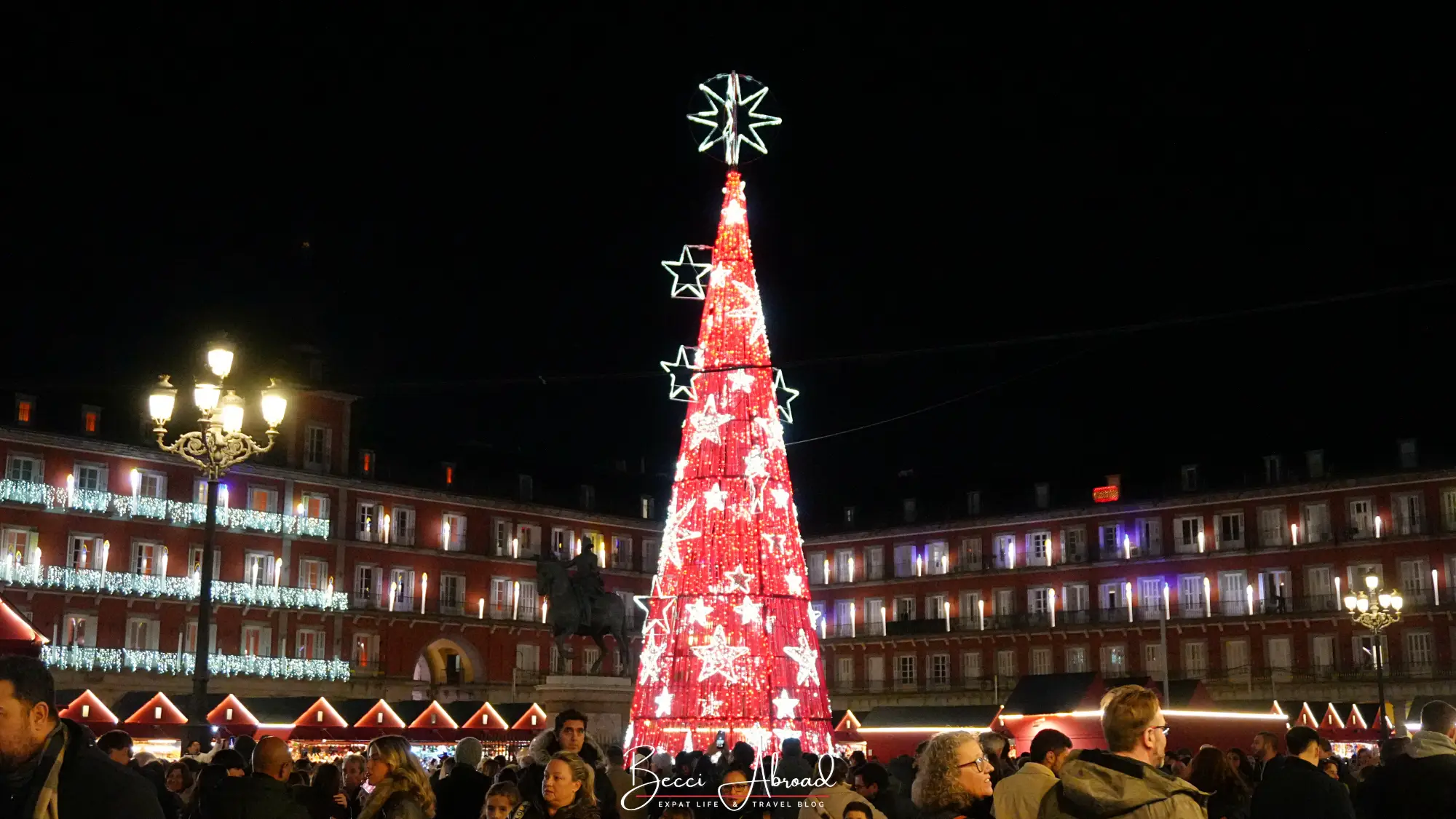
December is the most festive month to visit Spain. Many Spanish cities light up with Christmas lights, and the squares fill up with Christmas markets and belenes, the traditional nativity scenes.
On New Year’s Eve, Spaniards eat las doce uvas de la suerte, the twelve lucky grapes, one for each chime of the clock at midnight.
The first time I experienced the Spanish New Year’s tradition with the twelve lucky grapes was when I was living in Granada.
My friend and I had organized this New Year’s get-together with people from all over the world. At the end of the evening, we went to a private party on a rooftop overlooking La Alhambra. At midnight, everybody was laughing while trying to eat their twelve grapes. It was such a beautiful experience and a unique way to start the new year!
Christmas Day, New Year’s Day and the 6th of January are national holidays (and the 26th in Catalonia), and many places close early on the 24th and 31st. If you’re planning to spend or celebrate Christmas or New Year’s in Spain, I recommend that you book your restaurant ahead of time, so you don’t get caught without a place to eat!
Average daytime highs in December:
- Madrid: around 10°C (50°F)
- Málaga: around 18°C (64°F)
- Canary Islands: around 22°C (72°F)
Spain in January
January is usually the coldest month in Spain, and the first week is still busy with holiday celebrations.
On the evening of the 5th of January, cities and towns all over Spain celebrate the Cabalgata de Reyes, the Three Kings Parade. It’s a big parade where the kings throw candy to the crowds from their floats.
The 6th of January is Día de Reyes in Spain, or “the day of the Kings”. This is the day when Spanish children traditionally get their Christmas presents, and everyone eats roscón de Reyes, a ring-shaped sweet bread decorated with candied fruit.
After Three Kings’ Day, the country slows down, and mid-January is one of the quietest and cheapest times of the year to travel in Spain.
From the 7th of January, you will also find that many shops in Spain are in full swing with their winter sales, also called rebajas!
Average daytime highs in January:
- Madrid: around 10°C (50°F)
- Málaga: around 17°C (63°F)
- Canary Islands: around 21°C (70°F)
Spain in February
February is when Spain starts to wake up again, and the days begin to get noticeably longer.
In the southern part of Spain, you will also see that the almond trees start to blossom.
February is also Carnival season in Spain!
The biggest celebrations are in Cádiz and in Santa Cruz de Tenerife, but you will find Carnival parades in towns and cities all over Spain.
In 2027, the Tenerife Carnival takes place from the 22nd of January to the 28th of February, and the Cádiz Carnival runs from the 4th to the 14th of February.
If you’re travelling to Barcelona in February, don’t miss the Sitges Carnival. In 2027, the Sitges Carnival runs from the 4th to the 10th of February.
Average daytime highs in February:
- Madrid: around 12°C (54°F)
- Málaga: around 18°C (64°F)
- Canary Islands: around 21°C (70°F)
How to Get Around Spain in Winter?
Getting around during the colder months is just as easy as in summer. Sometimes, it might actually be easier because the cities are less crowded.
Where to Visit in Spain in the Winter?
Now that you know what to expect from the weather, let’s look at where to go in Spain in winter!
The best place to visit in Spain in winter depends on what kind of trip you are dreaming of, so I have grouped the destinations by travel style. Some of them are places I know from living in Spain, and others are favorites shared by my fellow travel bloggers.
If you are chasing the sun, start with the warmest places on mainland Spain, like Málaga and Cádiz, or head to the Spanish islands, where Gran Canaria stays warm all winter.
If you are dreaming of snow, Granada and the Sierra Nevada are the place to go.
For culture, food, and Christmas lights, the best Spanish cities for a winter city break include Madrid, Barcelona, and Seville.
You will also find historic towns that make easy day trips, like Toledo and El Escorial, and a handful of lesser-known winter escapes for when you want to avoid the crowds altogether.
Use the map below to see where all the places are located, and continue reading for the best recommendations and travel tips!
The Best Places to Visit in Spain in Winter Map
Check out all the best places to visit in Spain in winter on this map. In the top right-hand corner, you can click on the full-screen icon and have the map open directly in your Google Maps app.
The Warmest Places on Mainland Spain
The coast around Málaga has the mildest winters on mainland Spain and is one of the best places to visit in Spain in winter if you’re looking for winter sun and warmer weather!
Here are some of the best places to visit in mainland Spain for warm weather and winter sun!
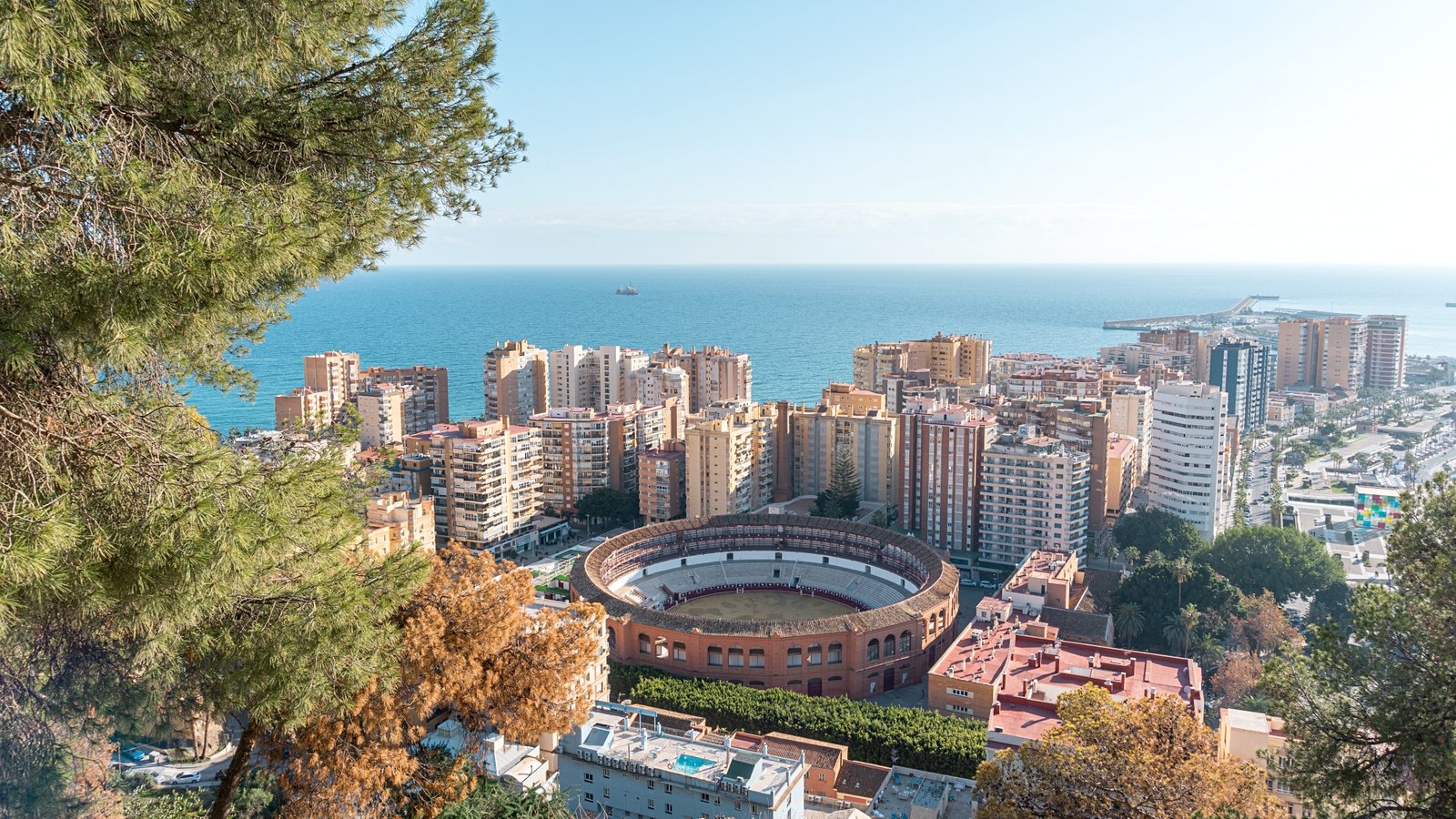
Málaga
If you are looking for a sunny winter destination, Málaga is a fantastic option. With over 320 days of sunshine, you will likely experience good weather during your winter visit.
Many travellers visit Málaga in summer; however, winter is much better for sightseeing and fewer crowds. If you aren’t interested in spending time on the beach, winter is a good option.
There are plenty of activities to do in Málaga during the off-season, from exploring its numerous museums and learning about its top attractions, such as Málaga Cathedral and the Alcazaba, to immersing yourself in the local cuisine. Among the historic buildings, the Alcazaba palace fortress, dating from the Moorish period in Andalusia, is unmissable.
Outside of Christmas, you will enjoy a more tranquil atmosphere and lower flight and accommodation rates.
Nevertheless, as a local, I love the festive season for a few reasons: the lively atmosphere, the Christmas lights in Calle Larios, Málaga’s main street, and the Three Kings Parade.
You don’t need many days to discover the city; two or three are enough, but I highly recommend staying longer to explore the surroundings. For example, you can discover other coastal towns, such as Marbella or Nerja, and lesser-known white-painted Andalusian villages.
Málaga is a good base for a road trip around southern Spain, and it is easy to reach from many international airports, especially in Europe.
Once you arrive at Málaga Airport, take the Cercanías commuter train or bus, and you will be in Málaga city center in about 20 minutes.
Contributed by Cristina of My Little World of Travelling
Explore more of Málaga
Frigiliana
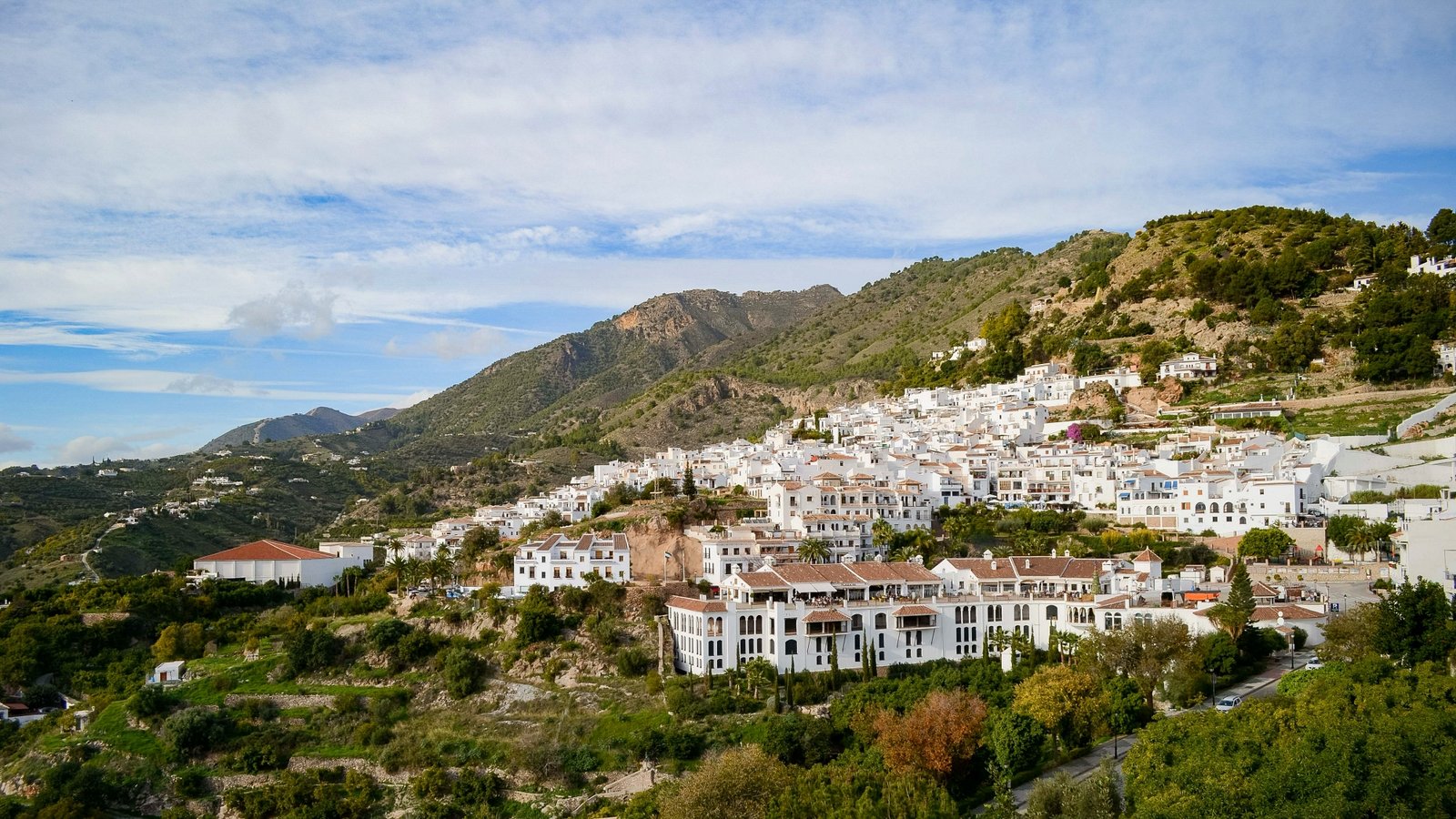
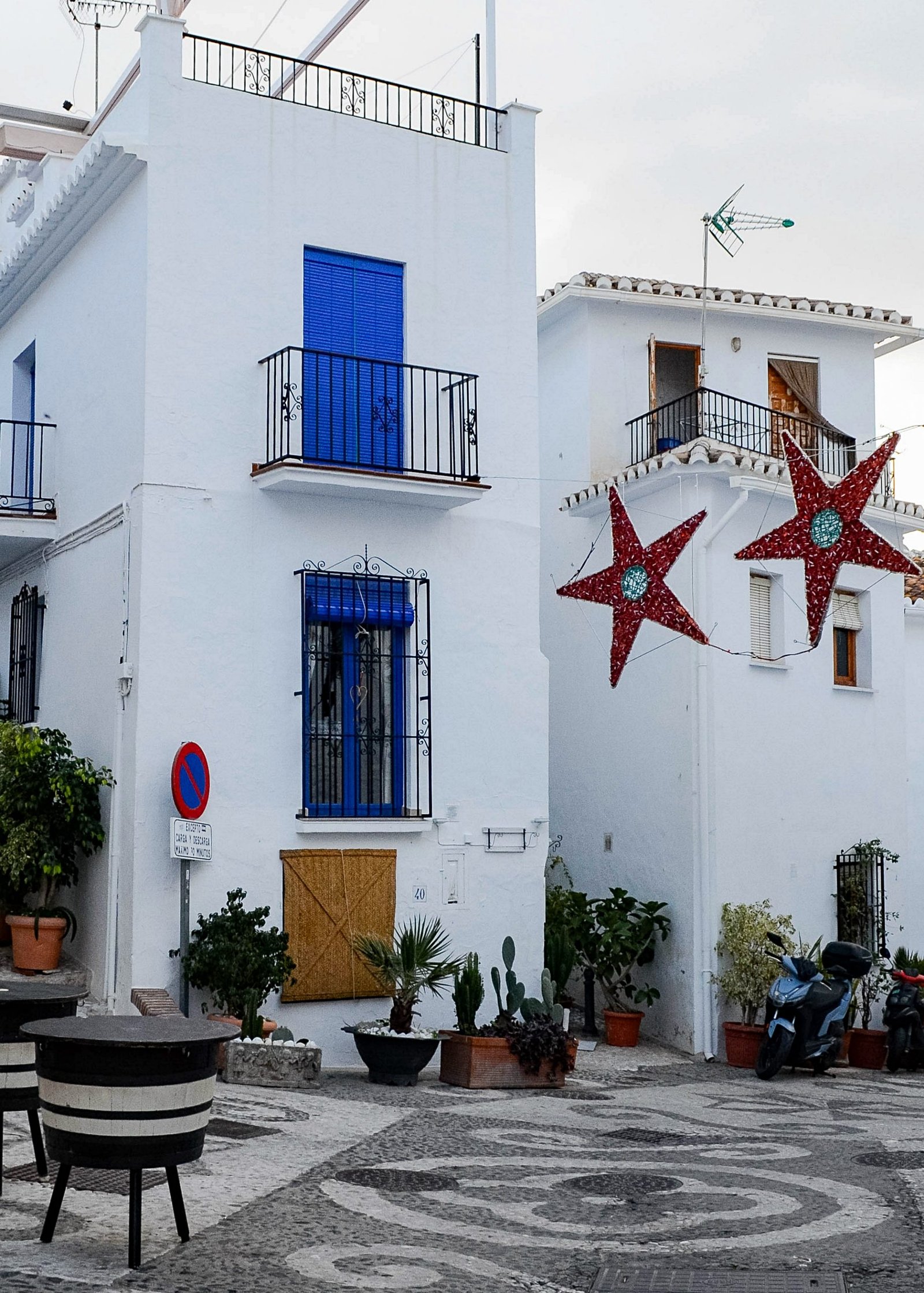
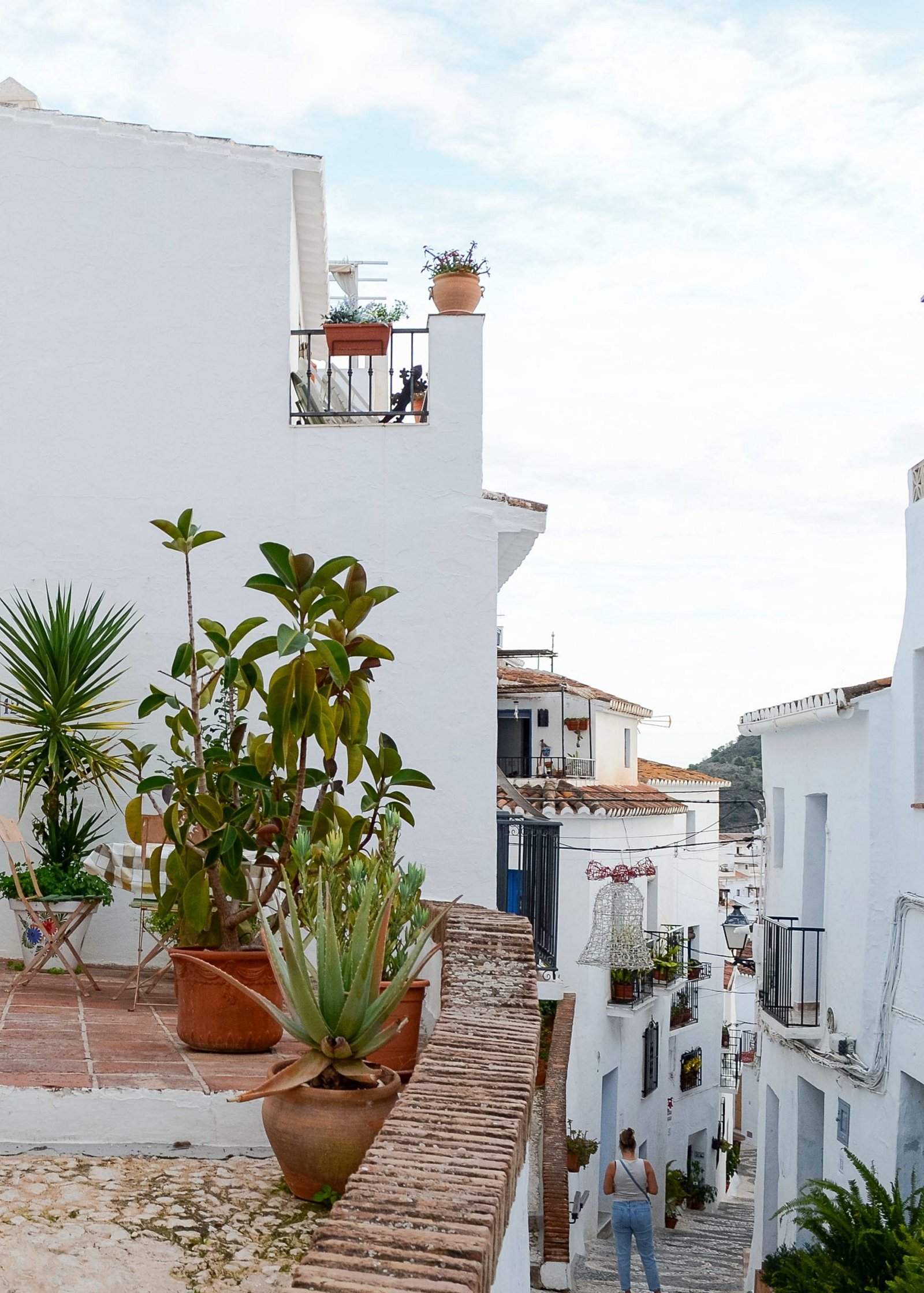
Frigiliana is one of Andalucia’s most famous Pueblos Blancos, or ‘White Towns’, and one of the great places to visit in Spain in the winter for sunny weather and calming Spanish village vibes.
Tucked into the hillside above the coastal town of Nerja, Frigiliana is known as ‘the prettiest village in Andalucia’. The whitewashed buildings, brightly painted shutters, colourful flowers and cobblestone streets draw an estimated 976,000 visitors every year, with most of those visiting the town in the spring and summer months.
I’ve visited Frigiliana twice, both times in winter, and honestly think it’s actually the best time of year to experience this beautiful town.
With far fewer travellers making their way to Andalucía in the winter months (even despite pretty good weather all year-round), you’ll have the town to yourself, which means you can enjoy the winding streets and take photos without hordes of tourists blocking the view.
One of the things I love most about Frigiliana and the surrounding area is the number of things there are to do all year-round, including exploring other Pueblos Blancos, visiting the nearby coastal towns of Nerja, and exploring the incredible Nerja caves. Not to mention visiting the various tapas bars and restaurants with incredible views over the Andalucian countryside.
The winter months also mean cooler weather to enjoy some of the local hiking trails in the surrounding hills. It’s often much too hot in the South of Spain in summer to go hiking, but the cooler winter months offer the perfect opportunity to get outdoors.
To get to Frigiliana, you will need to fly into Málaga Airport. The easiest way to get from Málaga to Frigiliana is via a hire car, but you can also get a bus from Málaga to Nerja, and then a second bus from Nerja to Frigiliana.
Contributed by Zara Aitken of Passport for Living
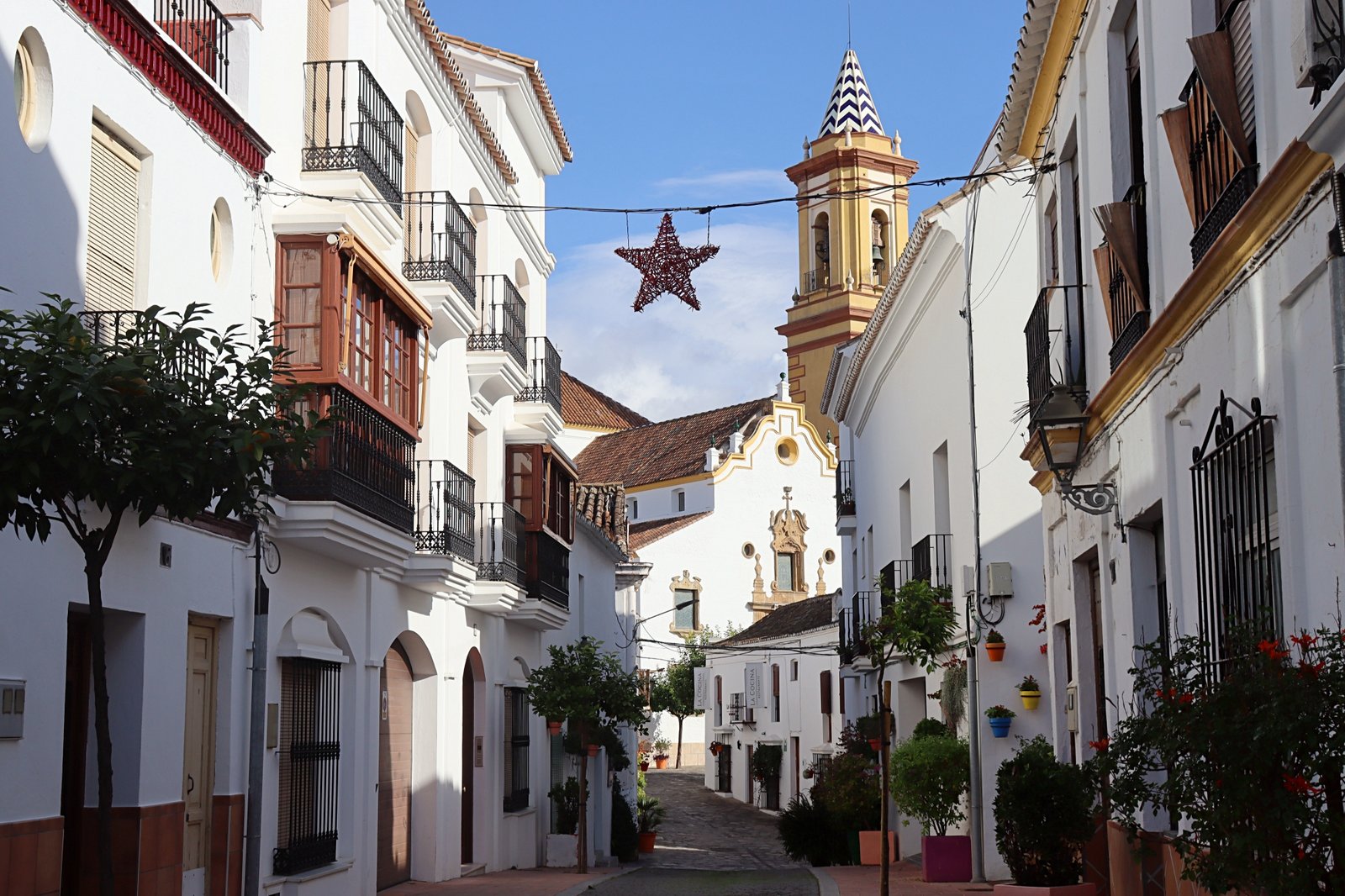
Estepona
When I lived in Gibraltar, Estepona was my favourite winter getaway! Located just along the coast on the famous Costa del Sol, this beautiful seaside town had everything I wanted in winter: warm weather, beautiful beaches, and a much quieter vibe than nearby Marbella.
So, if you’re looking for some winter sunshine in Spain without the crowds, Estepona is a bit of a hidden gem!
Temperatures can even be warm enough for beach days – I’ve spent time on the beach here in February! You might need an extra layer, but the beach Playa de la Rada is the perfect spot to relax at any time of year.
But if it’s not quite sunbathing weather, walk into Estepona’s beautiful whitewashed old town and spend time getting lost in its maze of streets.
My favourite spots include the floral, tree-lined Plaza de las Flores, enjoying tapas at La Sureña, and the imposing Reloj bell tower, one of Estepona’s most famous landmarks.
And if the weather turns, you can’t miss the Estepona Orchid House. I visit every time I’m in town!
For only a few euros, you can see more than a thousand varieties of orchids, alongside other beautiful plants and flowers. There is even an impressive indoor waterfall at this underrated oasis in the heart of the town centre!
Getting to Estepona is easy, too. From Málaga Airport, you can drive or take a taxi in around 50 minutes, or take a direct Avanza bus in around 1 hour 20 minutes.
Alternatively, from Gibraltar, you can drive or take a taxi in around 55 minutes, or take the direct Avanza bus from La Línea bus station.
Whether you’re looking for a relaxing beach break or to explore one of Andalusia’s prettiest old towns, Estepona is well worth adding to your winter itinerary!
Contributed by Katie of Where’s Katie Now
Cádiz
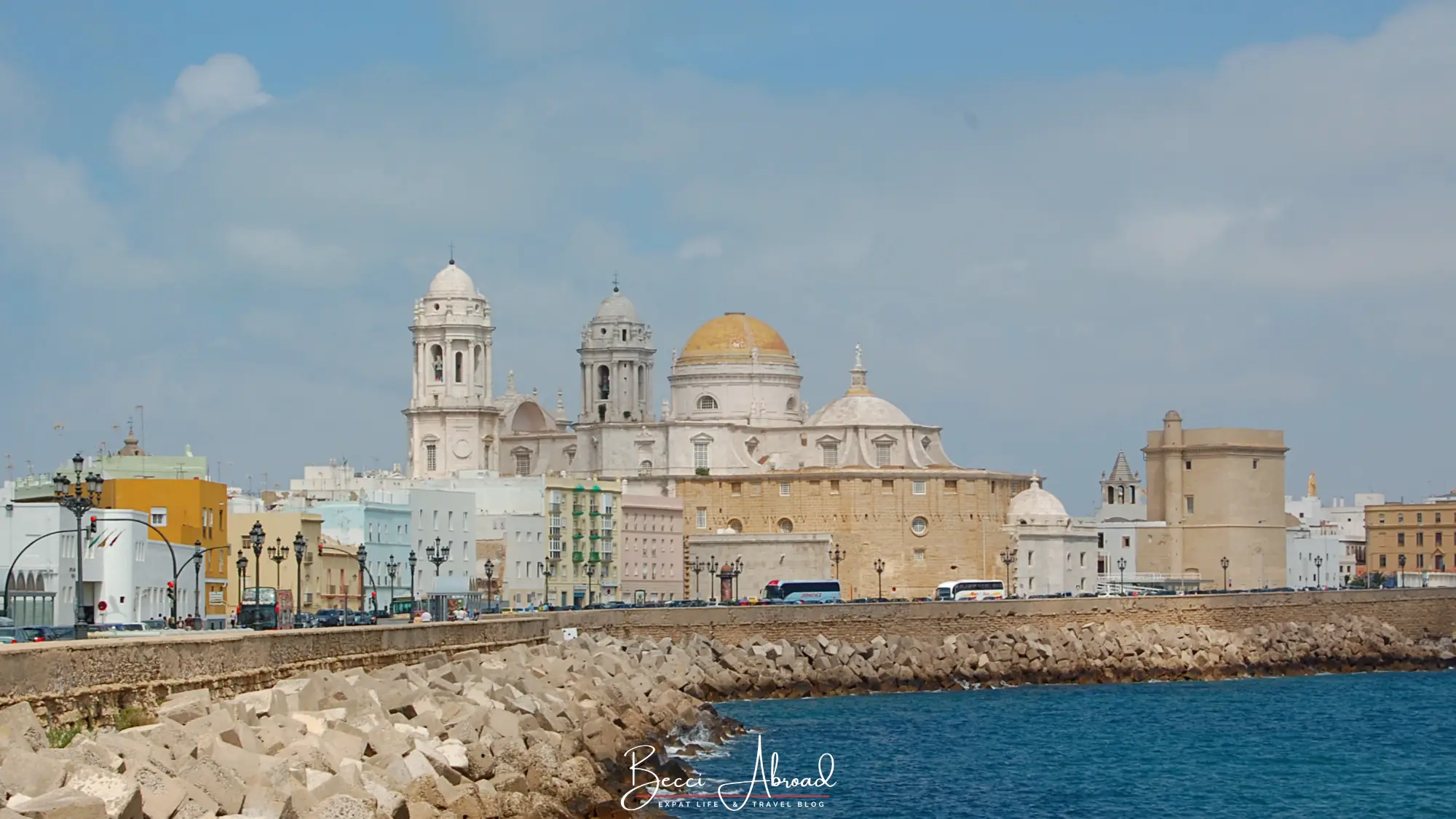
Cádiz is one of the best places to visit in Spain in winter, with its mild and sunny weather and its gorgeous historic old town right by the sea!
Cádiz sits on a narrow peninsula on the Atlantic coast of Andalusia, and in the winter, the average daytime high is around 17°C (63°F), making it perfect weather for long walks along the seafront and around the old town.
I visited Cádiz for the first time on a beautiful sunny winter day when my friend and I drove from Seville to Cádiz. We walked around the old town and ate plenty of delicious seafood! Cádiz is very famous for its seafood, so make sure to try some!
In Cádiz, some of the most popular things to do are to visit the Cádiz Cathedral with its beautiful golden dome, relax at the small La Caleta beach, and enjoy the views from the old watchtower, Torre Tavira, featuring a camera obscura that projects live images of the city.
In February, Cádiz hosts the Cádiz Carnival, one of the biggest Carnival celebrations in Spain. The highlights are the chirigotas, groups in costumes who sing funny, satirical songs about politics and everyday life.
So, if you enjoy carnivals, visiting Cádiz in February during Carnival should be an incredible experience (I haven’t yet visited the Carnival in Cádiz myself)!
In 2027, the Cádiz Carnival runs from the 4th to the 14th of February. If you are planning on going, I strongly recommend booking your accommodation as soon as possible, as hotels and hostels book up fast during Carnival.
You can get to Cádiz with direct trains from Seville (1.5 – 2 hours) and Madrid (4.5 hours).
However, getting to Cádiz from abroad can be a bit trickier. The closest airport is in Jerez, located around 45 kilometers (28 miles) from Cádiz. Another option is to fly to Seville Airport, which has more international flights, and then take the train from Seville to Cádiz.
If you’re flying into Seville, I strongly recommend staying in Seville for a few days if you haven’t been before! Seville is one of my favorite cities in Spain!
Contributed by Becci Abroad
The Best Spanish Islands to Visit in Winter
Are you dreaming of an island escape this winter? Spain has two very different groups of islands to choose from!
The Canary Islands lie off the coast of northwest Africa, and they are the only part of Spain where it feels warm all winter long. Even in January, the average daytime high is around 21°C (70°F)!
The Balearic Islands are cooler, with average highs of around 15°C (59°F) in winter. The four main Balearic Islands, Mallorca, Menorca, Ibiza, and Formentera, are located off Spain’s east coast in the Mediterranean.
Here are the best Spanish islands to visit in winter!
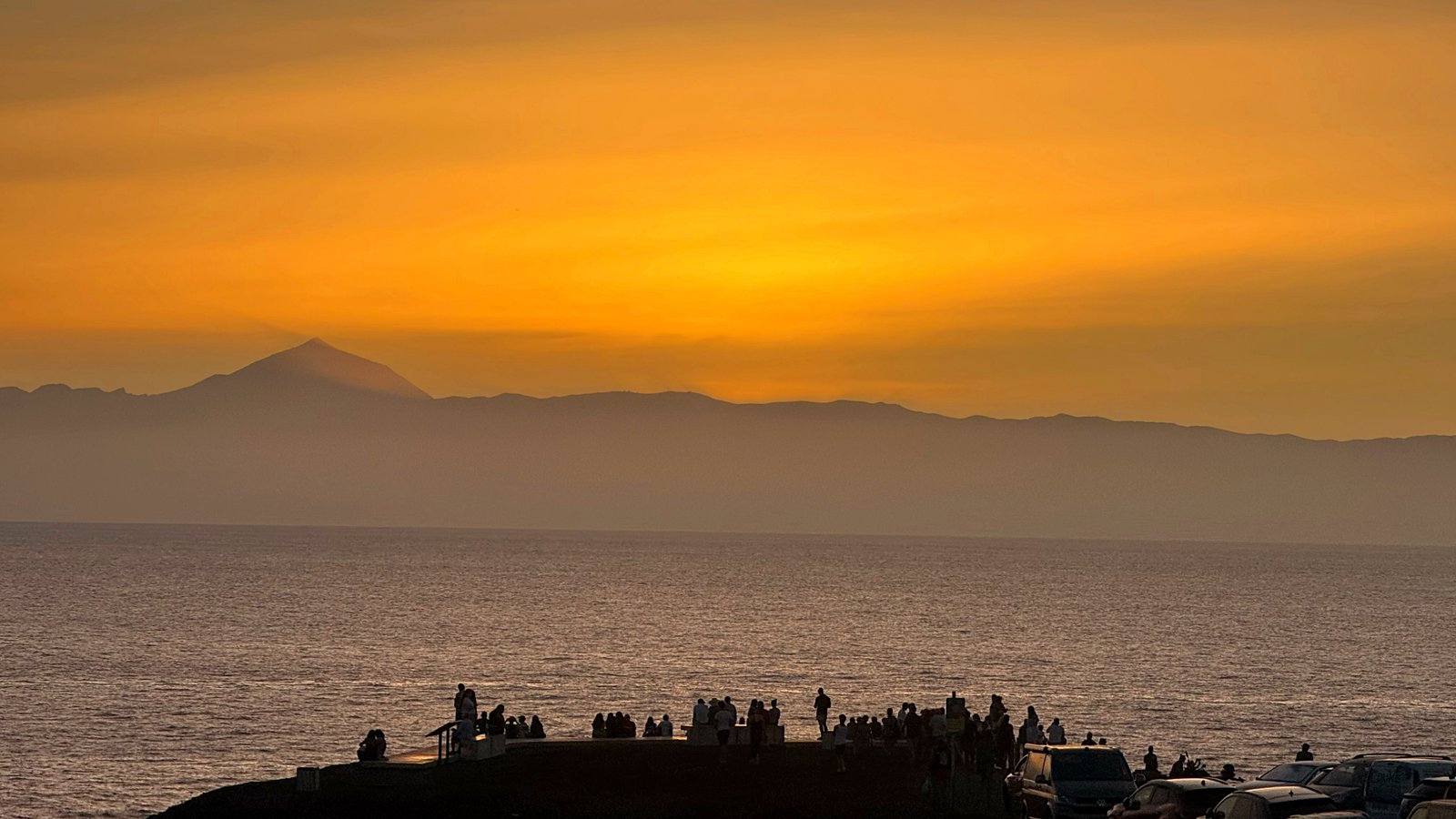
Gran Canaria
Gran Canaria is the best place to visit in Spain in winter for warm weather, beaches, and a real city to explore!
The Canary Islands are an archipelago off the North African coast, consisting of eight main islands. Of all of them, from quiet La Gomera to volcanic Tenerife, Gran Canaria is my absolute favorite!
Gran Canaria is vibrant, well connected, and packed with variety. In winter, the average daytime high on Gran Canaria is around 21 – 22°C (70 – 72°F), with plenty of clear, sunny days. That is also why winter is high season on Gran Canaria, when many northern Europeans come to escape the cold.
When visiting Gran Canaria, your biggest decision is whether to stay in the north or the south of the island.
The south of Gran Canaria is almost always sunny and warm, with lots of resorts. It is perfect if your main goal is to soak up the winter sun, relax on the beach, and escape the cold for a few days.
The north is home to Las Palmas, the island’s capital, with a lively local and international social scene. Instead of resorts, you will find Las Canteras, one of the best city beaches in the world, and a hub for beach volleyball, surfing, snorkeling, and evening get-togethers.
Another good reason for visiting Gran Canaria in the winter is that the sky is usually clearer. In summer, Las Palmas is often covered by the panza de burro (translated as “donkey’s belly”), a layer of low clouds that the trade winds push in over the city.
The roads on Gran Canaria are excellent, and it only takes around 45 minutes to drive from Las Palmas to the south. So, you can experience completely different microclimates in a single day.
In the south, don’t miss the Maspalomas Dunes, where sweeping, desert-like sand dunes meet the ocean.
In the mountains, the picturesque village of Tejeda and the iconic volcanic rock of Roque Nublo offer some of the most spectacular hikes on the island.
On the west coast, you’ll find the Agaete Valley, which is the only place in Europe where coffee is grown. In the nearby Puerto de las Nieves, there are natural sea pools that are perfect for a dip.
If you visit in February, Las Palmas also hosts one of the biggest Carnival celebrations in Spain, Carnaval de Las Palmas de Gran Canaria, famous for its Drag Queen Gala!
Getting to Gran Canaria is easy, with direct flights from all over Europe. From Madrid, the flight takes around 2 hours and 50 minutes. The airport on Gran Canaria is located on the east coast, halfway between the northern and the southern parts, and only about 18 kilometers (11 miles) from Las Palmas.
Contributed by Agustin from Coffset
Book your experience on Gran Canaria
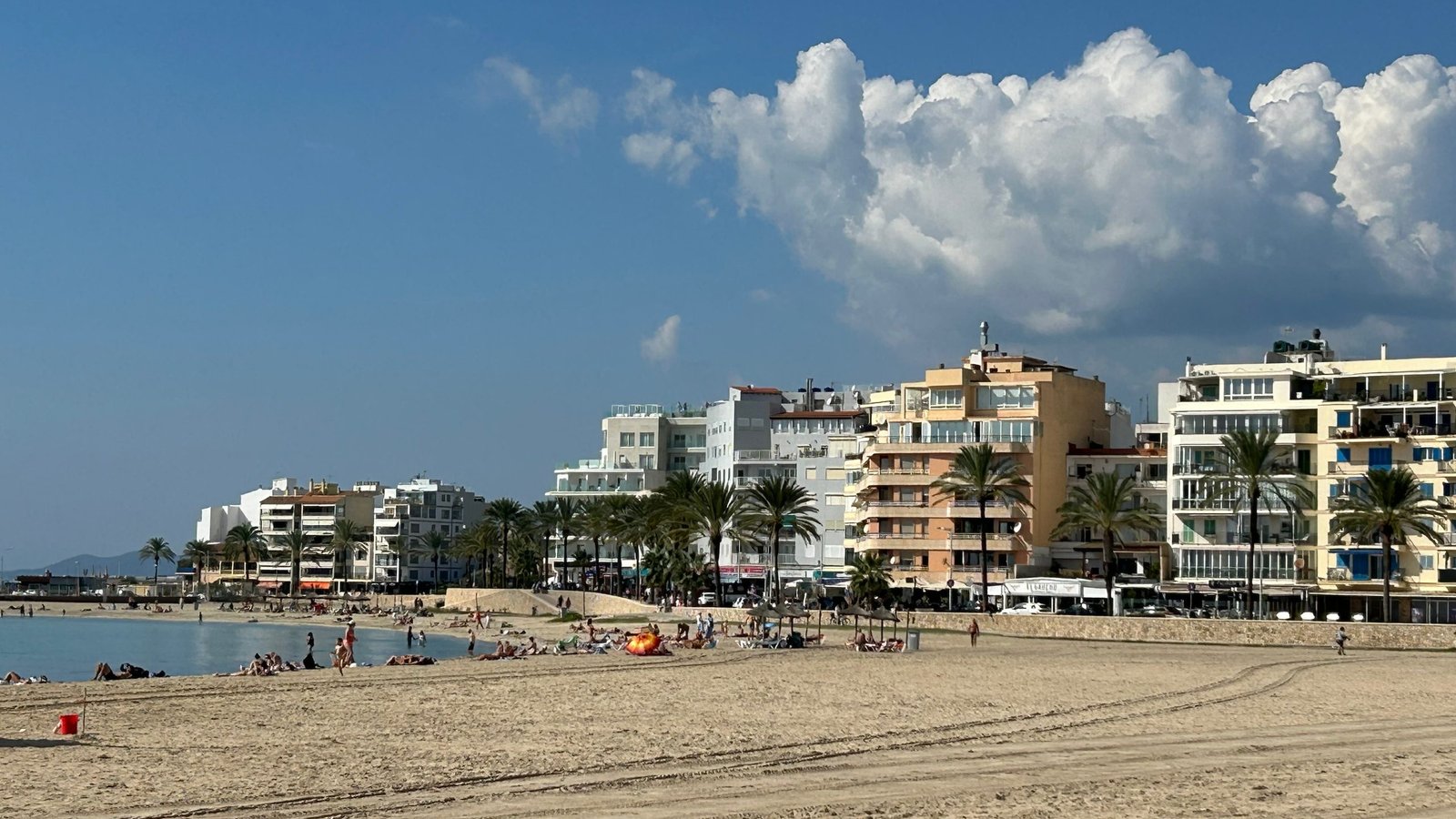
Mallorca
My aunt and cousin have moved to Mallorca from Belgium, so I have a good excuse to visit the island once or twice a year. Of all my visits, winter is by far my favorite time to go.
The most obvious reason to visit Mallorca in the winter, of course, is the lack of tourists. For much of the year, the sheer number of visitors can be overwhelming, but in winter, you finally have some room to breathe.
The weather is usually pretty nice, too. Evenings can get chilly, and you might encounter the occasional rainy day, but temperatures are generally pleasant for sightseeing.
If you’re after a beach holiday, on the other hand, Mallorca isn’t the best choice. You might get lucky with warm enough temperatures for sunbathing, but don’t count on it.
But my absolute favorite reason to visit Mallorca in winter? Palma de Mallorca, the capital, does Christmas really well, with plenty of lights, decorations, and markets throughout the historic center. If you’re looking for a festive winter getaway, Palma is an excellent choice!
The main thing to keep in mind when visiting Mallorca in winter is where you stay. In most typical resort towns, nearly all the restaurants, bars, and hotels will be closed.
If you stay in or around Palma, or in nearby Can Pastilla, you’ll find plenty of places open year-round, thanks to the local population. You’ll also have excellent train and bus connections to some of the island’s prettiest spots, including Valldemossa, Port de Sóller, or Alcúdia.
Mallorca also remains well connected, with direct flights from most European countries and only a few exceptions where you have to go through Barcelona first.
Contributed by Vanessa Morgan from Traveling Cats
Ibiza
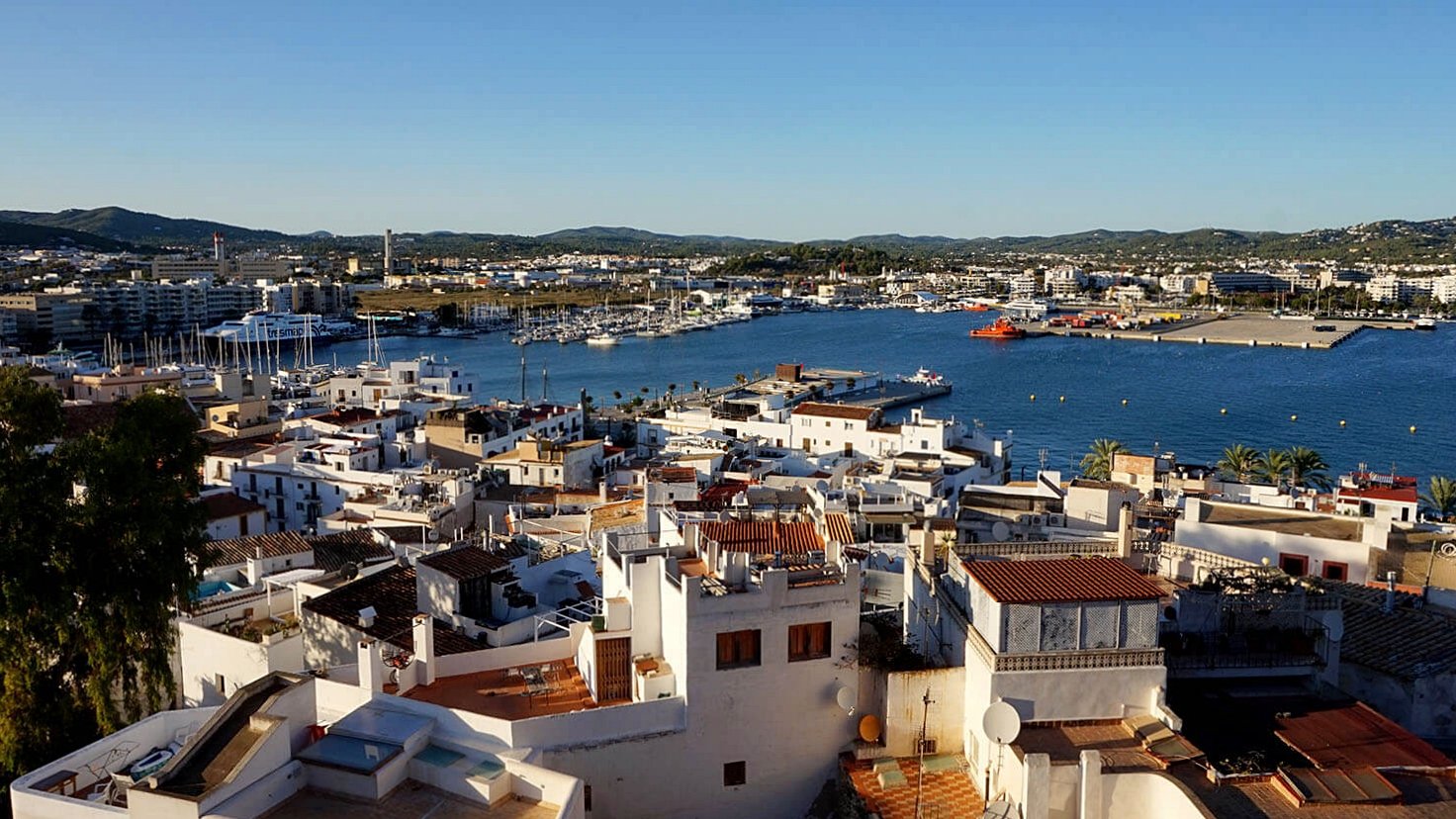
Ibiza is famous for its sandy beaches, beautiful capital, and legendary nightlife. The island is so popular in summer that it’s almost impossible to enjoy it in peace. Thanks to its mild weather, winter is actually a great time to visit Ibiza.
During the winter in Ibiza, there are far fewer tourists, and prices are much lower. The atmosphere is more relaxed, making it the best time to experience the authentic Ibiza.
Ibiza offers many cool things to do and see in the winter. The island’s capital, Ibiza Old Town, is a maze of medieval streets and small squares, including highlights such as the 16th-century fortress and the 13th-century Cathedral of Our Lady of the Snow. Since it’s a real city, most of its bars and restaurants remain open even in winter.
Another place you shouldn’t miss is Ses Salines Natural Park. This stunning park is home to salt ponds, watchtowers, and colorful flamingos. It’s a perfect place to disconnect and enjoy the surrounding nature.
Though you can’t swim in the sea, taking a walk along some of the island’s nicest beaches is a great idea. If you are staying in the capital, you can reach Figueretes, Talamanca, and Platja d’en Bossa on foot.
For a taste of rural Ibiza, visit Santa Gertrudis, a picturesque village surrounded by green fields and orchards. You’ll love its restaurants and lively central square.
No matter when you visit Ibiza, you shouldn’t miss the sunset overlooking Es Vedrà. This imposing island lies just off Ibiza’s southwestern coast, and the views are breathtaking.
If you have some extra time, take a ferry to Formentera, just 30 minutes away. This small island offers pristine beaches, beautiful coastal scenery, and charming coves.
You can reach Ibiza by plane or ferry. Several airlines connect the island with major cities on the Spanish mainland and various European destinations. Alternatively, regular ferry services connect Ibiza with Barcelona and Valencia.
Contributed by Milos from Happy Frog in Spain
Snow and Mountains in Spain in Winter
You might be thinking: does it actually snow in Spain in the winter?
Yes, it does snow in Spain… Or at least, in certain places in Spain!
While the Spanish coast stays mild, the high mountains in Spain get covered in snow during the winter months.
Skiing is also a popular winter activity in Spain. The two biggest ski areas are the Pyrenees in the north, along the border with France, and the Sierra Nevada in the south, near Granada.
The Sierra Nevada is one of the few places in Europe where you can go skiing in the morning and relax by the Mediterranean in the afternoon!
Granada & the Sierra Nevada
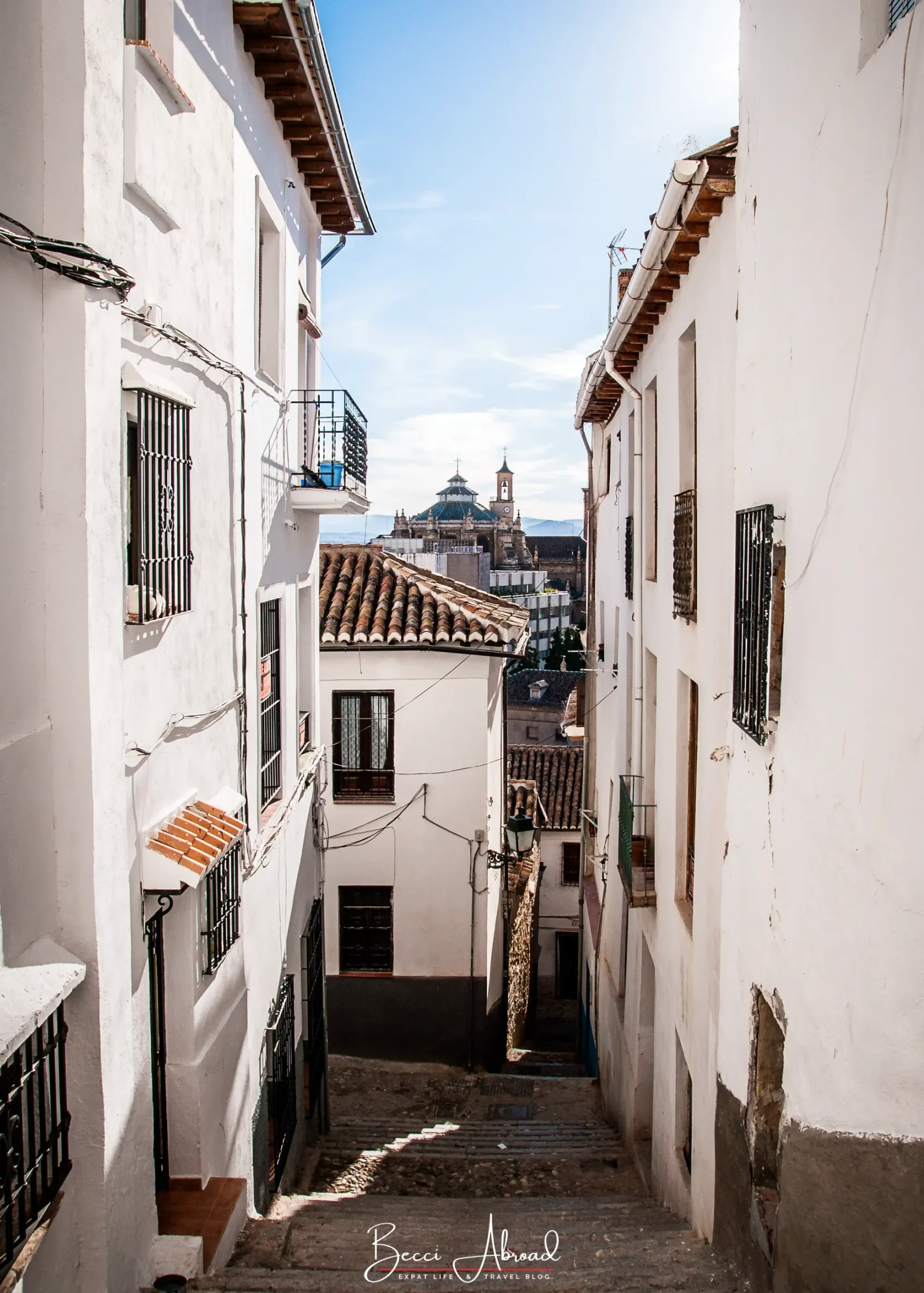
Granada is the perfect place to visit in Spain in winter for a trip combining skiing and culture. In Granada, you can go skiing in the morning and eat tapas in the cobblestoned streets of the old town in the afternoon.
I lived in Granada for one year in my early twenties, including one winter, and while I’m not the biggest skiing person (okay, actually I’m not a skiing person at all), I found winter to be one of the most beautiful times to visit Granada.
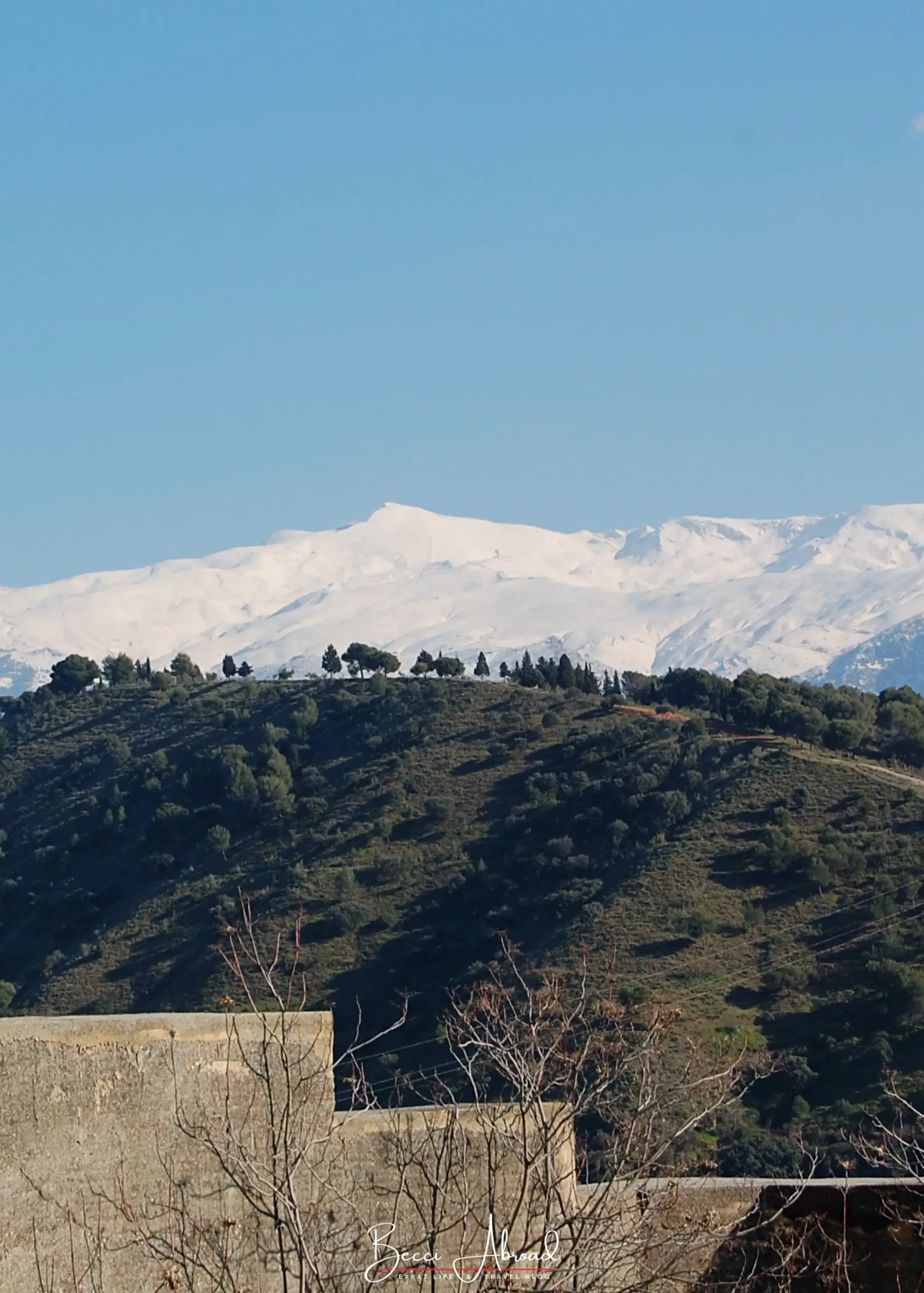
Granada sits at the foot of the Sierra Nevada mountains, which are home to Mulhacén, the highest mountain in mainland Spain! In the village of Pradollano inside the Sierra Nevada mountain range, you’ll find the southernmost ski resort in Europe.
The ski resort is located only 31 kilometers (19 miles) from the city of Granada, and buses run from Granada bus station to Pradollano three to four times a day in winter.
The ski season in the Sierra Nevada usually runs from early December until April. And even if skiing is not your thing, you can still go up for the snowy mountain views and a hot chocolate at one of the cafés in Pradollano.
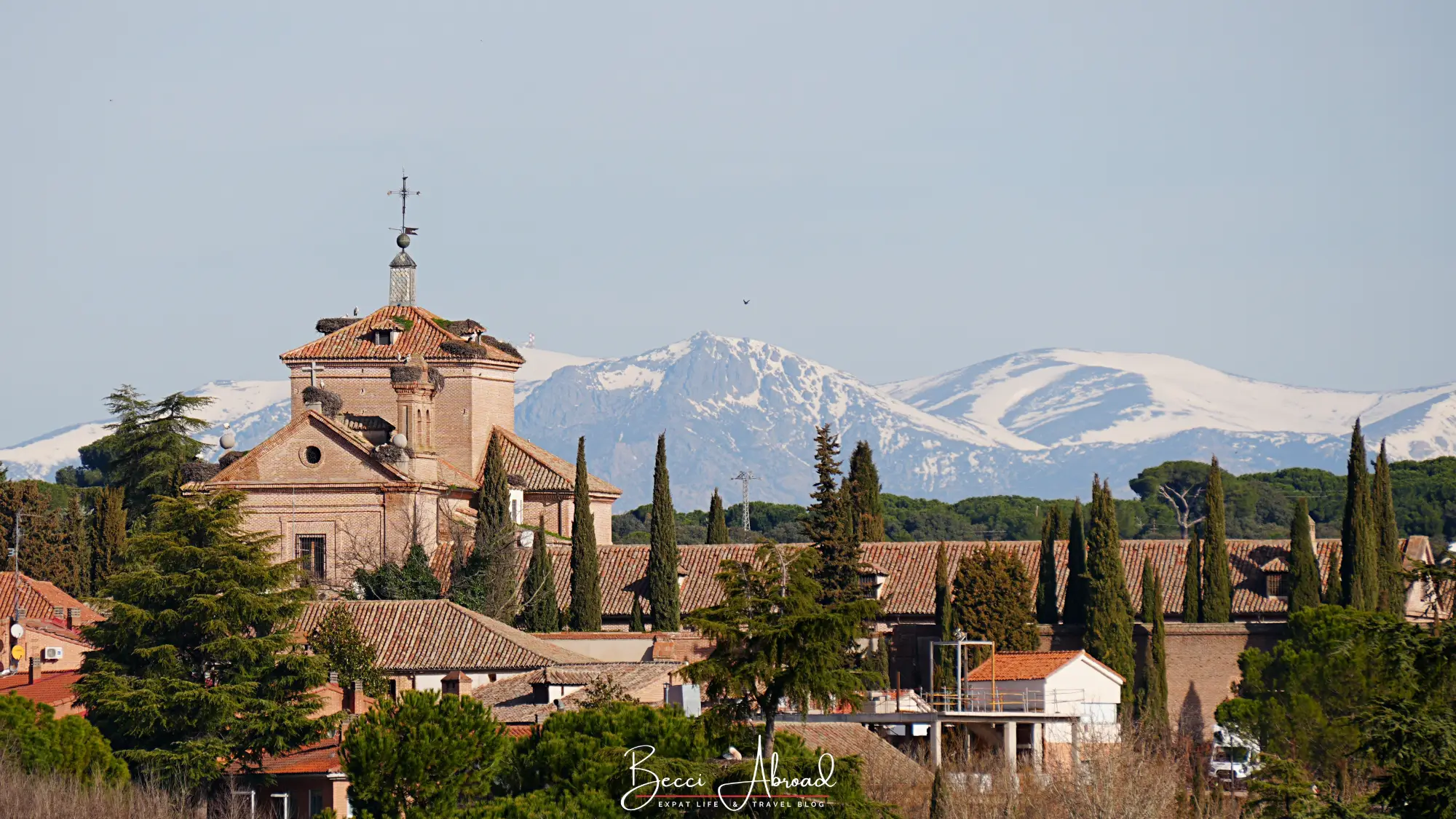
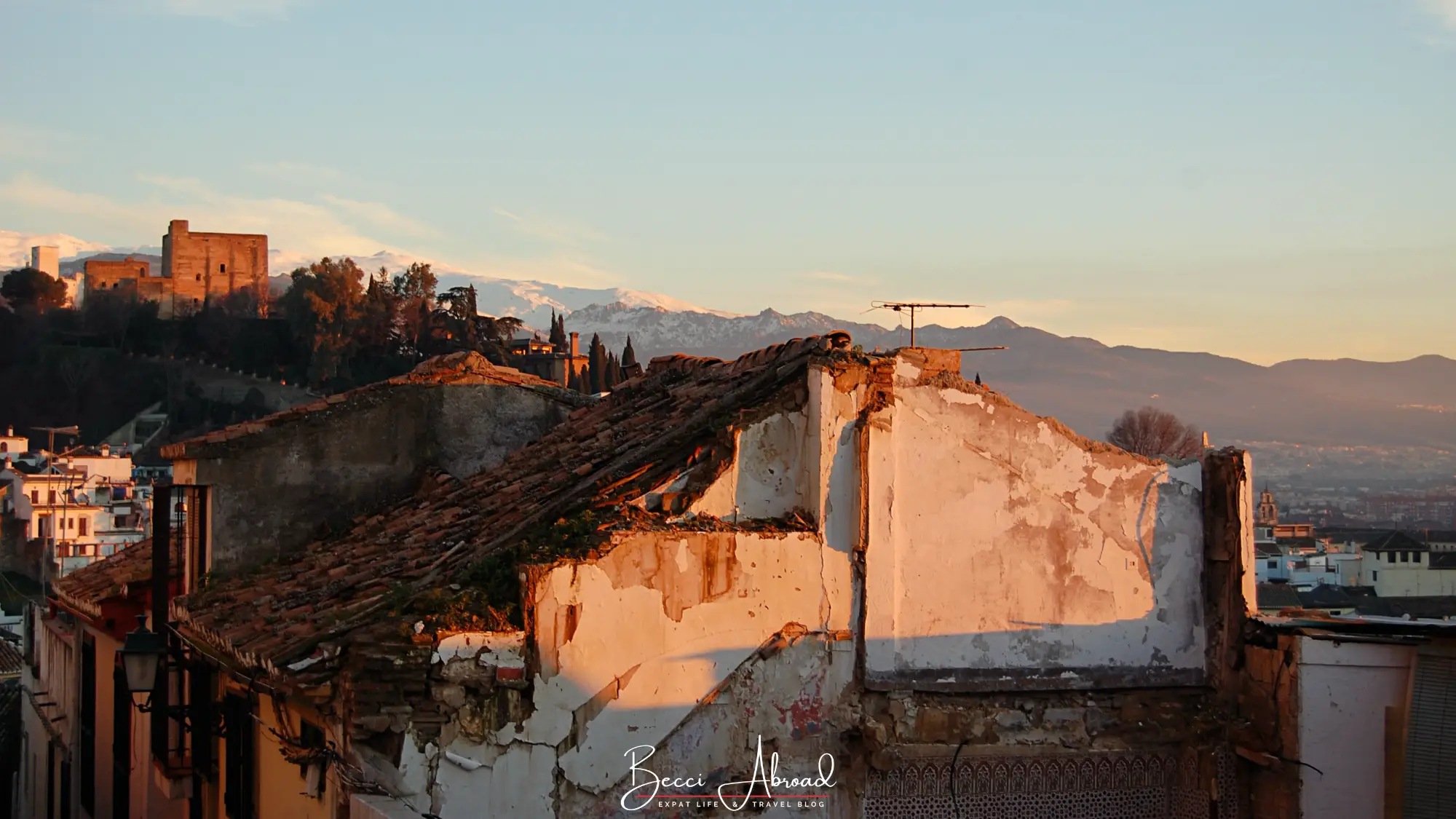
In winter, you will find the snow-covered peaks of the Sierra Nevada mountains rising right behind La Alhambra, Granada’s famous Moorish palace and fortress, and that’s truly one of the best views in Spain in winter!
La Alhambra is Granada’s most popular place to visit, and a benefit of visiting during the winter is that La Alhambra is much less crowded than in summer. Tickets to La Alhambra might still sell out, so book them as early as you can.
Another benefit of visiting Granada in winter is that it is more pleasant to wander the steep streets of the Albaicín neighborhood, Granada’s old Moorish quarter. For the best views of La Alhambra from Albaicín, head to the viewpoint Mirador de San Nicolás.
Granada’s proximity to the snow-covered Sierra Nevada mountains also means that it gets quite cold in the city in the winter, especially at night! So, remember to pack an extra sweater and a warm coat.
You can easily get to Granada by bus or train from Málaga (2 hours), Seville (3 hours), and Madrid (3.5 hours). Granada also has a small airport with mostly domestic flights, so if you’re coming from abroad, it is usually easier to fly to Málaga.
Contributed by Becci Abroad

Explore the best of Granada
The Best Spanish Cities for a Winter City Break
Winter is the perfect time for a city break in Spain, where you can explore the beautiful Spanish cities without the crowds and the heat of the summer months.
The big Spanish cities stay lively all year round, and they offer everything from world-class museums and famous sights to plenty of delicious Spanish food!
Winter in Spain’s cities also gives you an opportunity to experience unique winter activities and festivals.
Here are some of the best Spanish cities to visit during the winter!
Barcelona
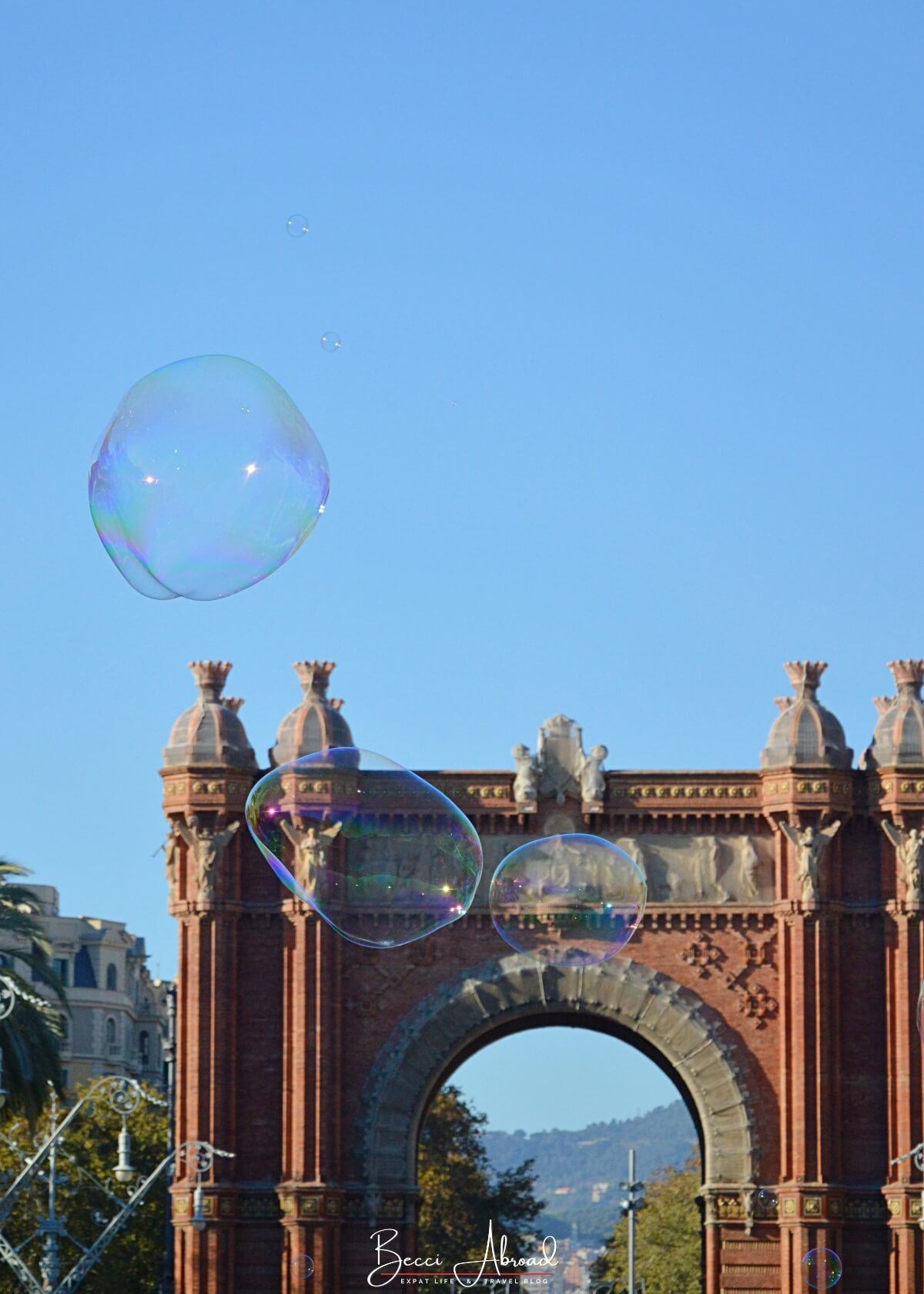
Barcelona is one of my favorite places to visit in Spain in winter, with mild, sunny days and far fewer crowds than in summer!
I lived in Barcelona for two and a half years, and during my two winters in the city, it actually became my favorite time of the year.
The winter weather in Barcelona is the perfect balance between a chilly wind and warm sunshine. In January, the average daytime high is around 15°C (59°F), and you will get plenty of sunny days.
Winter is also the best time to see Barcelona’s most famous sights without the summer crowds. You can wander the medieval streets of the Gothic Quarter and visit La Sagrada Familia with much more room to take it all in.
One of my favorite things about winter in Barcelona is that there are so many special winter events. For example, Casa Batlló opens its doors for a special winter event called “A Winter Night,” with beautiful light projections inside Gaudí’s iconic house. Last year, I visited with a friend of mine, and apart from the beautiful projections, we also almost had Casa Batlló to ourselves (that doesn’t happen in summer!).
For the colder and rainier days in Barcelona, I strongly recommend joining the Chocolate Amattler Experience in El Born neighborhood to warm up and try some amazing local chocolate!
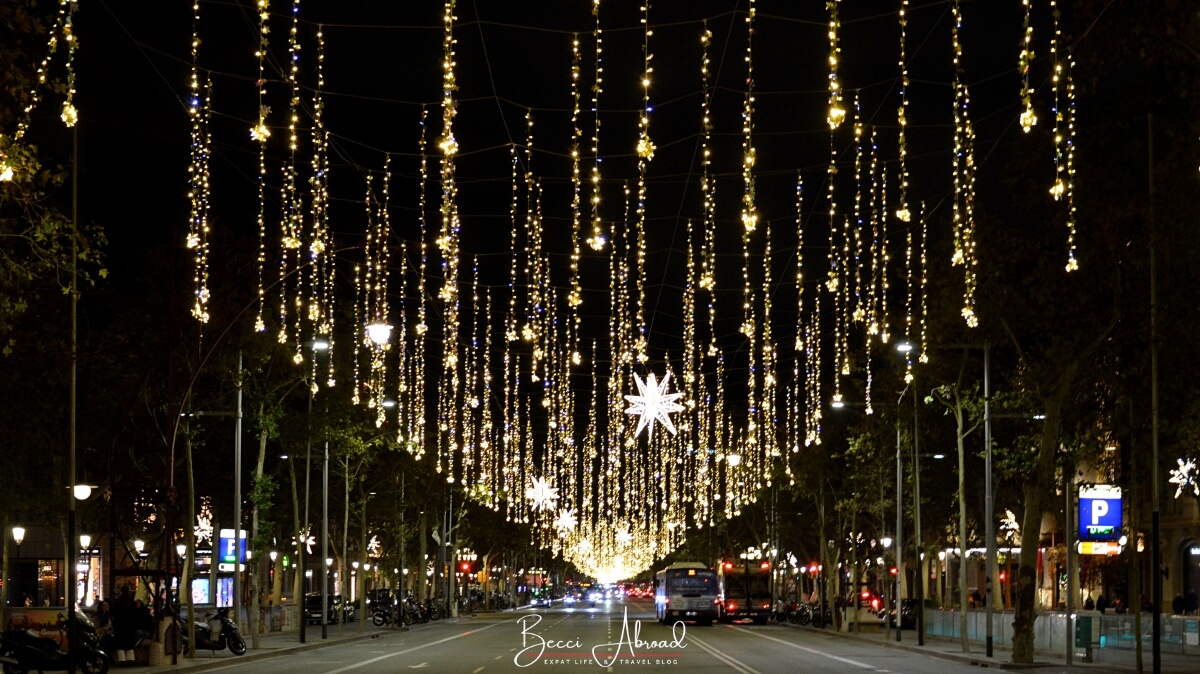
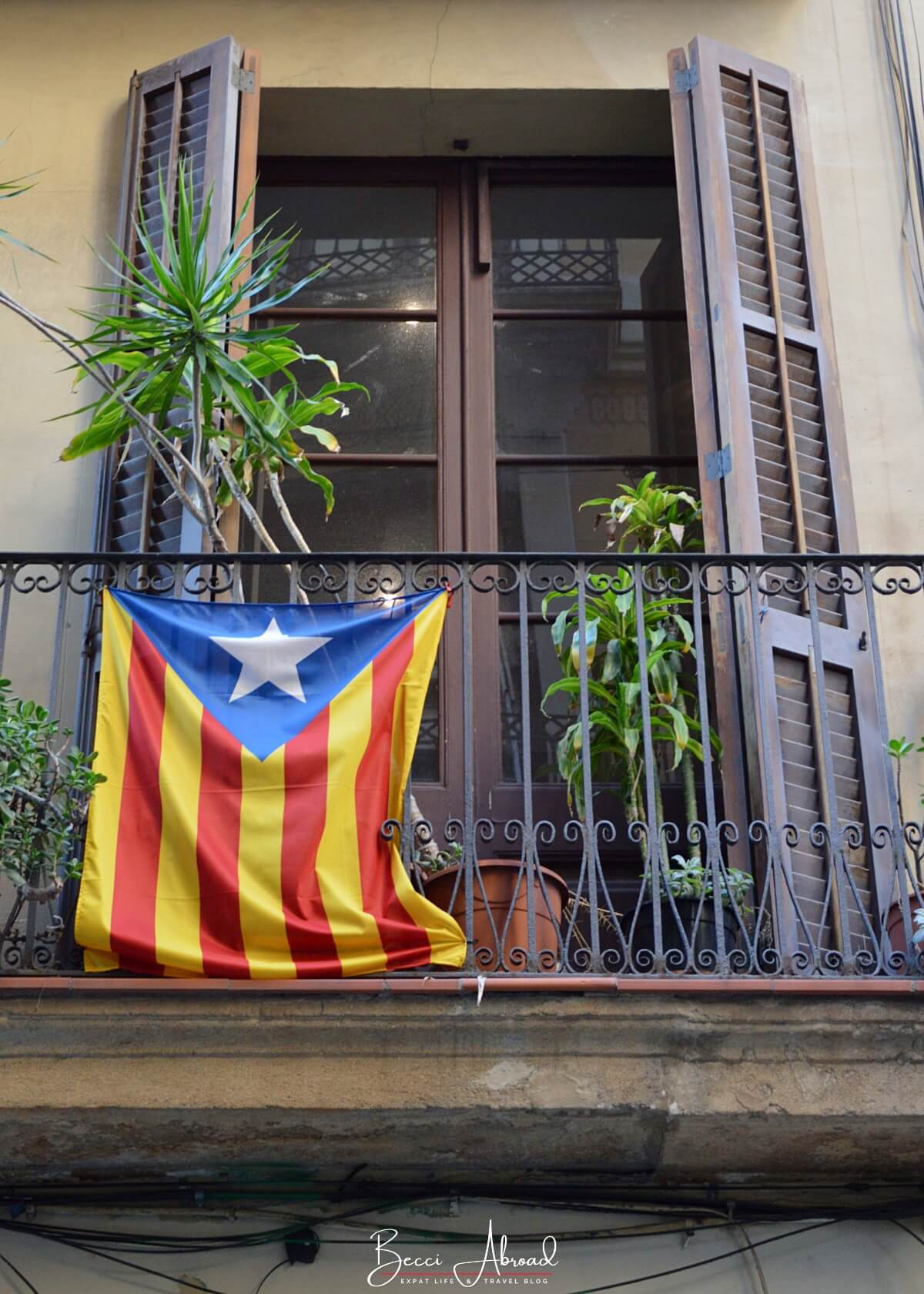
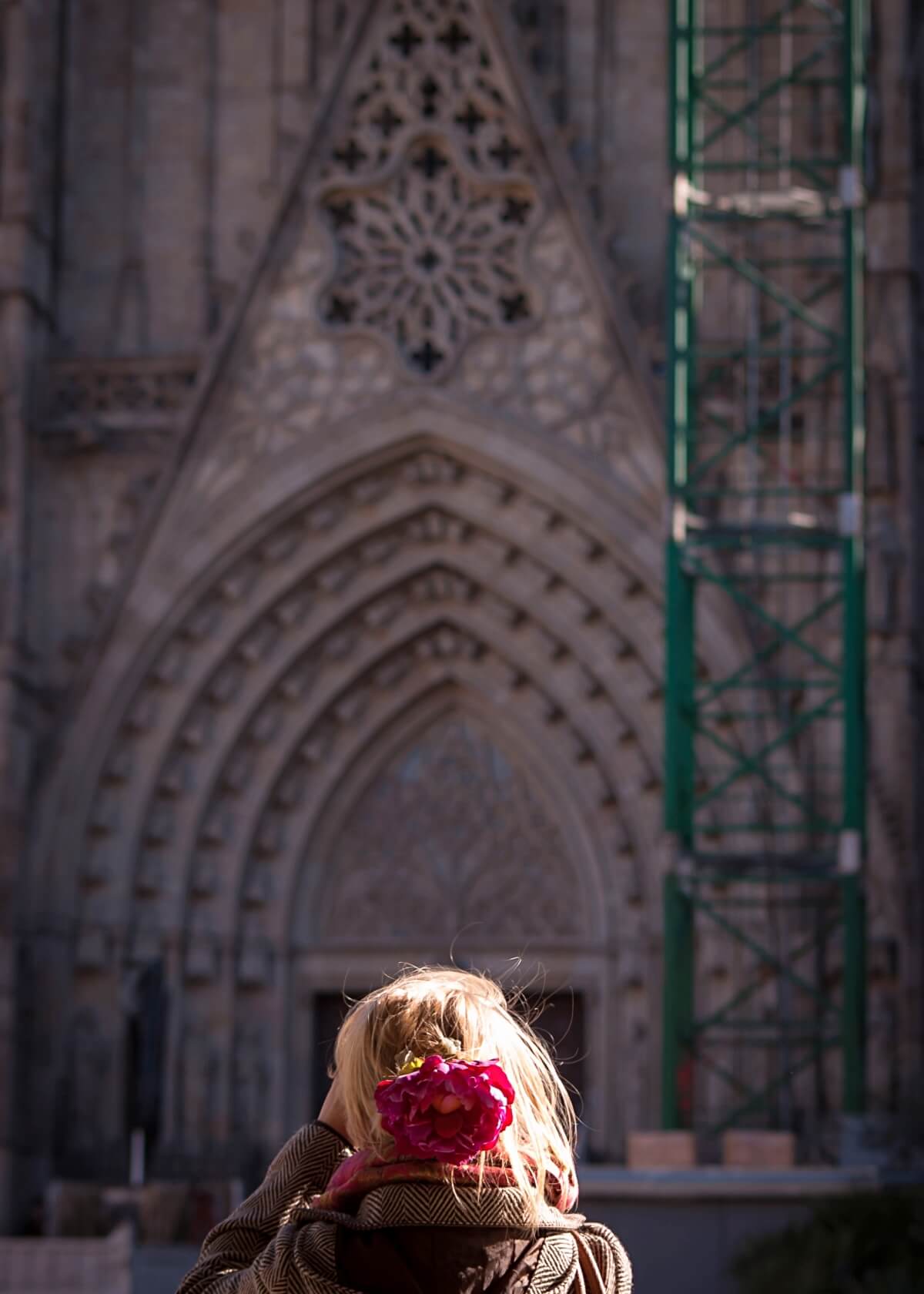
During December, Barcelona dresses up for Christmas with plenty of Christmas decorations and Christmas markets such as the popular Fira de Santa Llúcia Christmas market in front of the cathedral. The Fira de Santa Llúcia market has been going on since 1786!
On the 5th of January, the Three Kings arrive in Barcelona by boat for the Cavalcada de Reis, the Catalan name for the Three Kings Parade. And in February, the Llum BCN light festival takes over the streets of Poblenou during the Santa Eulàlia festivities.
Another thing I really enjoy about winter in Barcelona is that the weather is perfect for exploring the city’s many scenic viewpoints and hikes. One of our favorite hidden gems in Barcelona, for both me and my dog, is hiking in the Serra de Collserola, the mountain range right behind the city, where you can hike for hours with views over Barcelona.
You can easily get to Barcelona from abroad with the many international flights landing at the Barcelona-El Prat Airport. From the airport, the Aerobús takes you to Plaça de Catalunya in around 35 minutes.
Within Spain, the high-speed trains connect Barcelona with Madrid (2.5 hours), Valencia, Málaga, and Seville.
Contributed by Becci Abroad
Explore Catalan Christmas traditions in Barcelona
Madrid
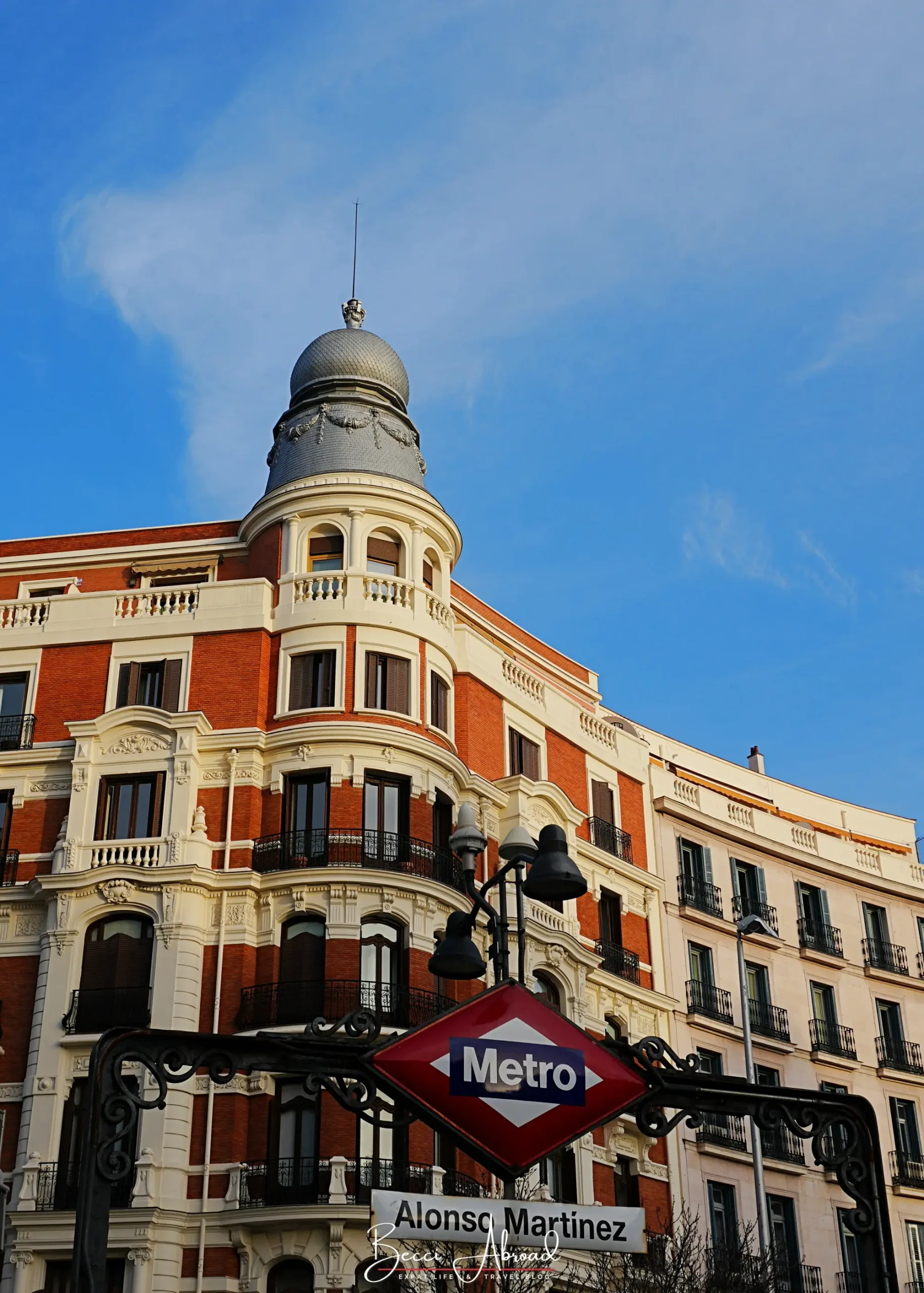
Madrid is one of the best cities to visit in Spain in winter if you love museums, good food, and a festive Christmas atmosphere! Madrid has been my home since 2025, so this is the city where I spend my winters now.
Before visiting Madrid in the winter, you should know that Madrid is not warm at all during the winter months. In January, the average daytime high is around 10°C (50°F), and the nights get close to freezing.
Some winter days in Madrid are gray and rainy, but my favorite days are the ones with clear sun, blue skies, and crisp, fresh air!
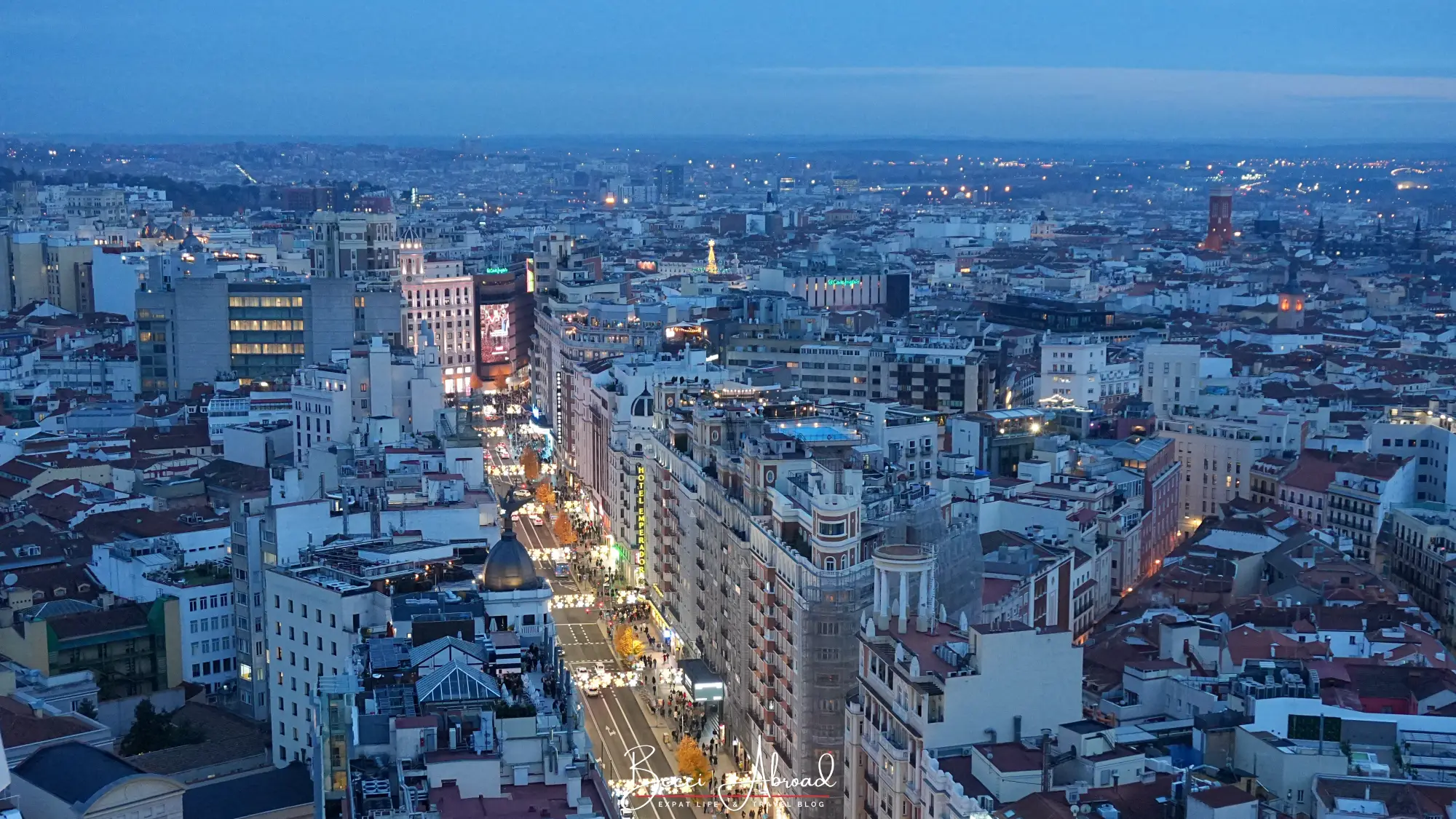
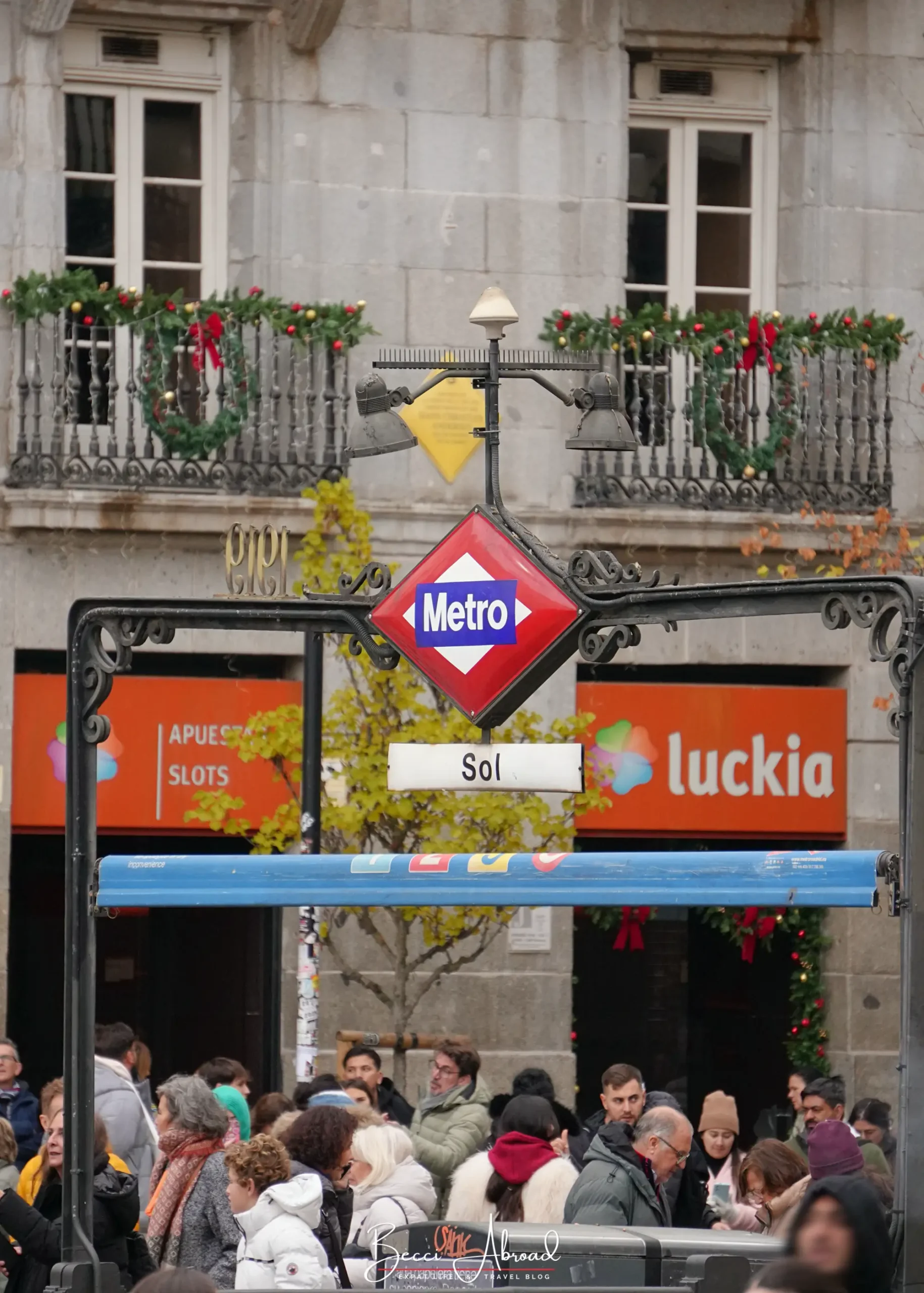
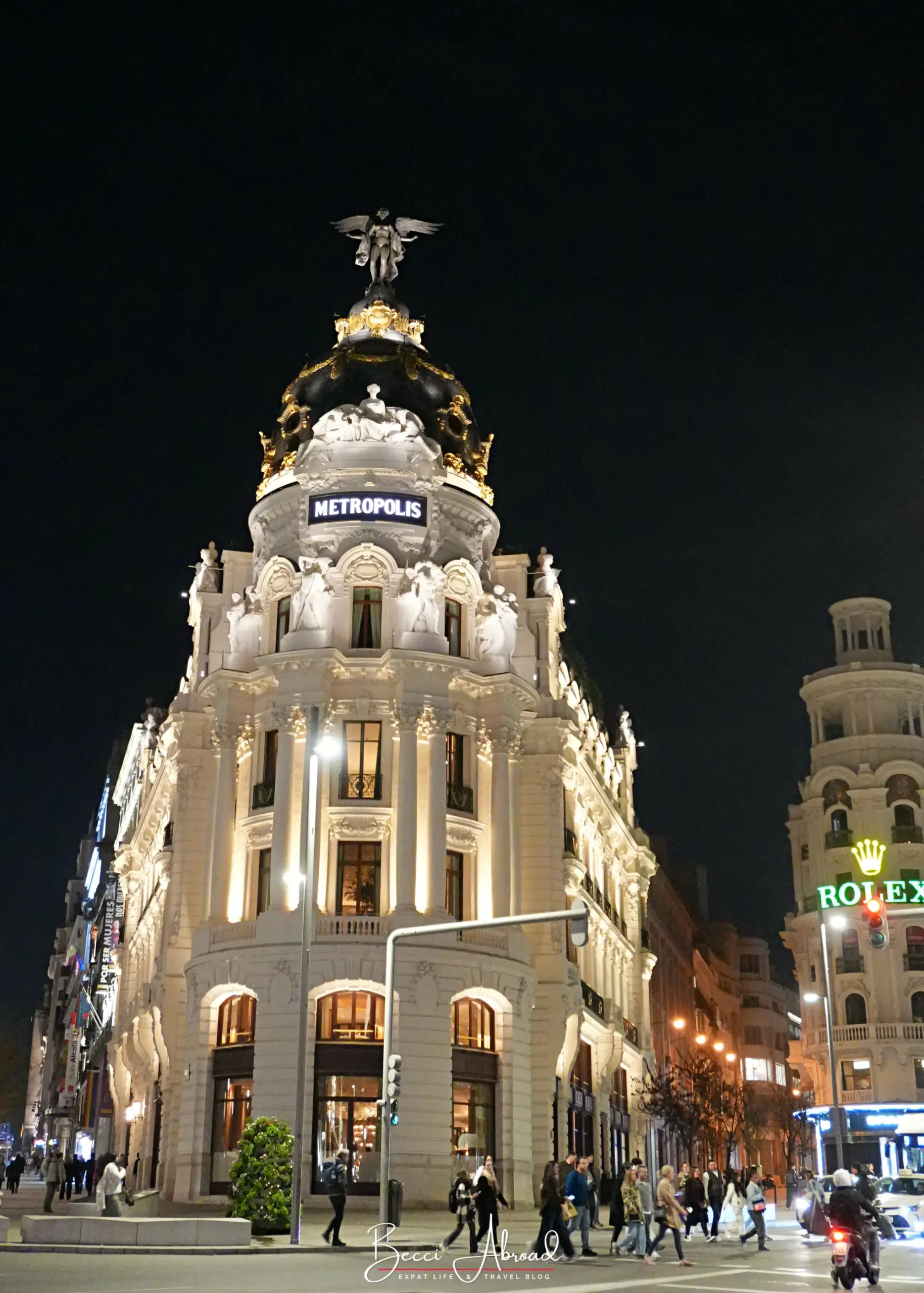
The sunny winter days in Madrid are perfect for a long walk in Retiro Park or strolling down the city’s popular shopping street, Gran Vía, and visiting the city center with its famous squares, Plaza Mayor and Puerta del Sol.
On the colder rainy days, Madrid’s world-class museums are the perfect escape. Madrid’s three main museums, the Prado, the Thyssen-Bornemisza, and the Reina Sofía, also commonly known as the Golden Triangle of Art, are all within walking distance of each other.
Madrid is one of the best Spanish cities (in my humble opinion) to visit for a Christmas getaway! During December, the city dresses up with Christmas lights, decorations, and different Christmas markets.
Last year, my friend and I visited the Hotel Riu’s rooftop bar, 360º Rooftop Bar, in December, and the views over Gran Vía lit up with Christmas lights were so beautiful – though it was quite windy up there!
On New Year’s Eve, thousands of people gather at Puerta del Sol to eat the twelve lucky grapes at midnight. And on the 5th of January, the Cabalgata de Reyes, the Three Kings Parade, is one of the biggest celebrations of the year in Madrid!
Winter is the best time to try cocido madrileño, Madrid’s famous chickpea stew, and also a great time for a tapas tour. To warm up with something sweet, stop at Chocolatería San Ginés for churros con chocolate, Spain’s popular breakfast treat. Chocolatería San Ginés has been serving its famous churros since 1894.
You can easily get to Madrid from abroad by flying to Madrid-Barajas Airport, the biggest airport in Spain. Madrid’s airport has direct flights from all over the world.
If you’re travelling around Spain, you can also easily get to Madrid (it is the capital city after all!) by high-speed trains from, for example, Barcelona (2.5 hours), Seville (2 hours and 40 minutes), Valencia (2 hours), and Málaga (2 hours and 40 minutes).
Contributed by Becci Abroad
Valencia
Valencia is one of Spain’s most underrated cities, and winter is when it shines. While most of Europe is grey, Valencia’s highs sit around 15 – 18°C (59 – 64°F) from November to February; the sun is out most days, and you’ll have the old town largely to yourself.
We spent a week there. It’s calmer and less touristy than Barcelona or Madrid, with everything from paella and flamenco to beaches and some of Europe’s most striking modern architecture.
There are plenty of things to do in Valencia, and I recommend starting out in the old town. Wander the lanes of El Carmen to the Mercado Central, a real working market in a beautiful old building where vendors still shout their prices. Next door, you’ll find La Lonja de la Seda, a 15th-century silk exchange and UNESCO site.
Valencia Cathedral claims to hold the Holy Grail; whether or not you believe it, the treasury is worth a look.
Stop for paella (Masusa was our favourite), then end the night at Café del Duende, a tiny, authentic flamenco bar. We recommend arriving early, as the flamenco bar fills fast.
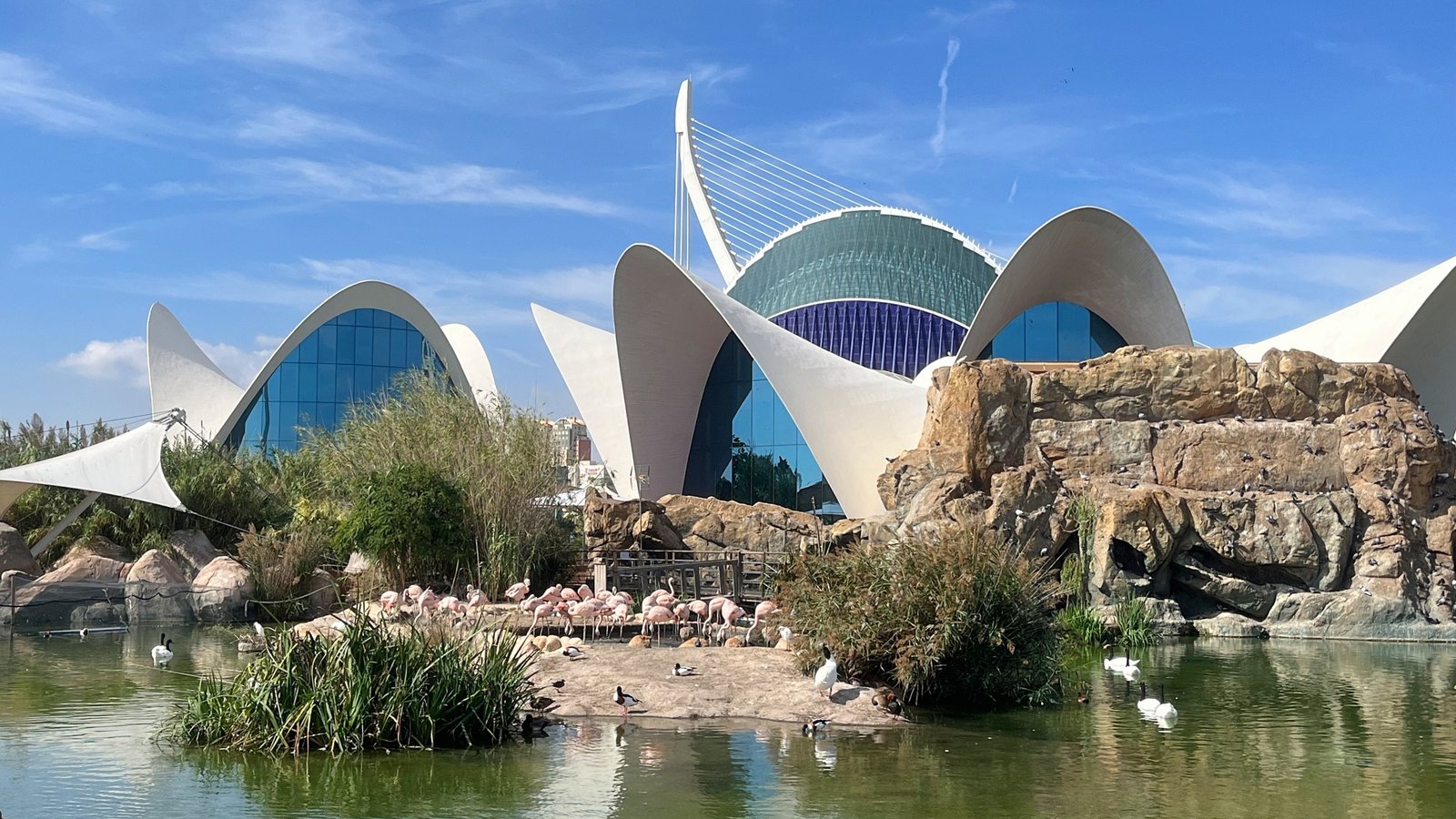
The next day, walk or cycle through the Turia Gardens, a 9 km park built in the old riverbed, to the City of Arts and Sciences. Santiago Calatrava’s futuristic buildings feel like a sci-fi film set. The Oceanogràfic, Europe’s largest aquarium, is a great backup on the rare rainy day.
If you have a third day, escape to the waterfalls and thermal pools around Montanejos, an easy day trip into the hills.
You can get to Valencia from abroad by plane. Valencia Airport is about 25 minutes from the centre by metro. Within Spain, the high-speed trains connect Valencia to the rest of Spain. If you stay in the old town, you can walk almost everywhere.
Contributed by Steff of JustTravelous
Book your tickets to Valencia’s Science Museum
Seville
Winter in Spain is a great time to visit Seville. My first trip to Seville was in September, when the city was hot and busy. I went back in December, and I think winter is one of the most overlooked times to visit.
Visiting in winter means you avoid the large crowds that come to Seville in spring and early autumn.
When I visited the Real Alcázar in September, I shared the courtyards with plenty of tour groups. In December, it was noticeably quieter, and I was able to take my time in the tiled rooms and gardens. The orange trees lining the streets were also heavy with fruit, which made even a simple walk through the old town feel special.
The weather is mild too, with daytime temperatures of around 17°C (63°F), which is comfortable for walking around the city all day.
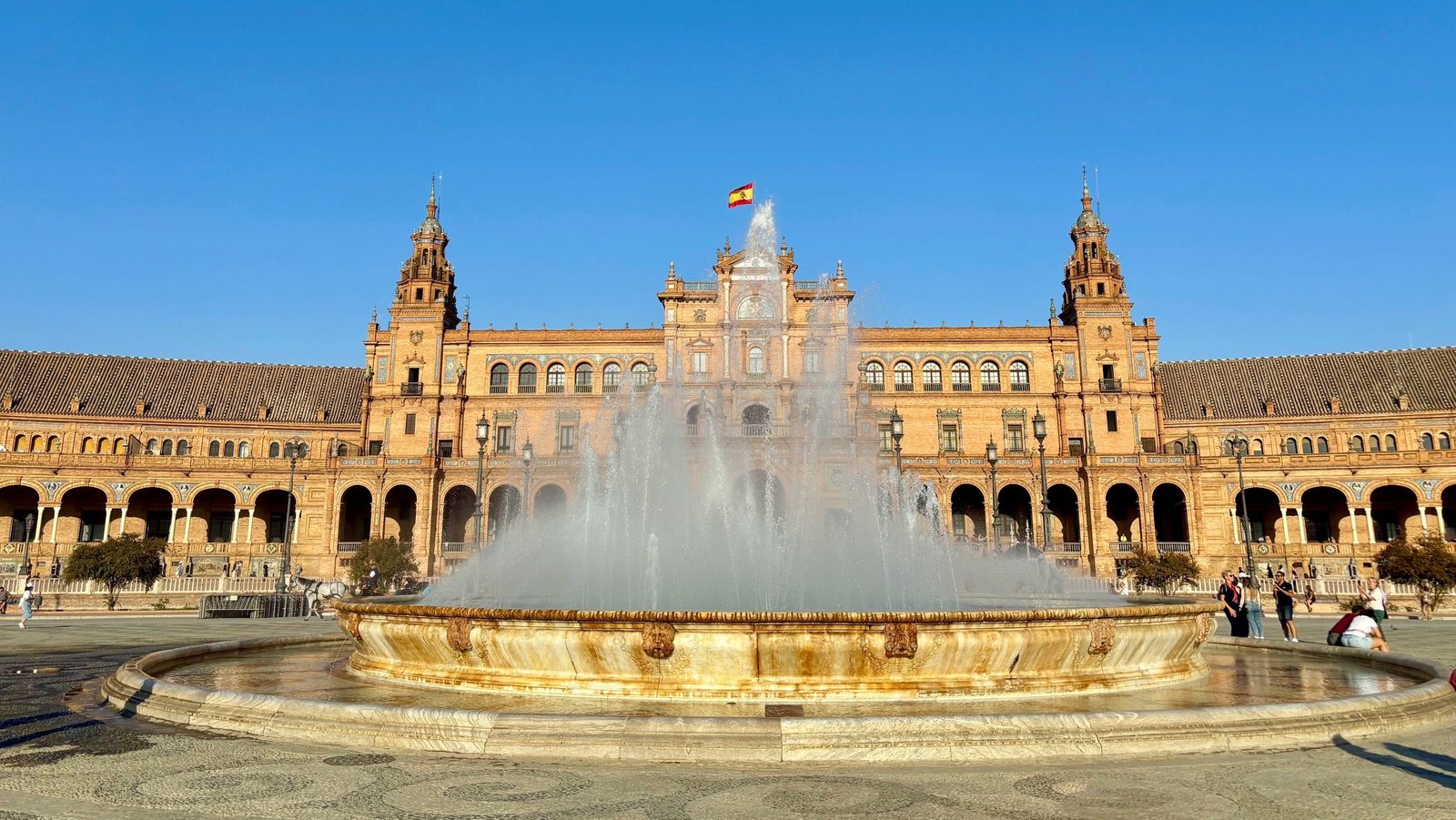
I went to Plaza de España at around 4:30 pm, when the low winter sun lit up the building. Then I walked to the Metropol Parasol, also called Setas de Sevilla, to watch the sunset over the rooftops at about 6 pm. The evenings in Seville in winter do get chilly, so pack a warm jacket.
If you’re working out how many days you need in Seville, I personally find that three days is the sweet spot for a first-time visit.
Getting to Seville from abroad is straightforward. There are direct flights from several European airports, and the airport bus takes around 35 minutes to reach the city centre. If you are already in Spain, the high-speed train from Madrid takes around two hours and forty minutes.
Contributed by Chris of Global Trip Diaries
Book your tickets to Seville’s main attraction ahead of time
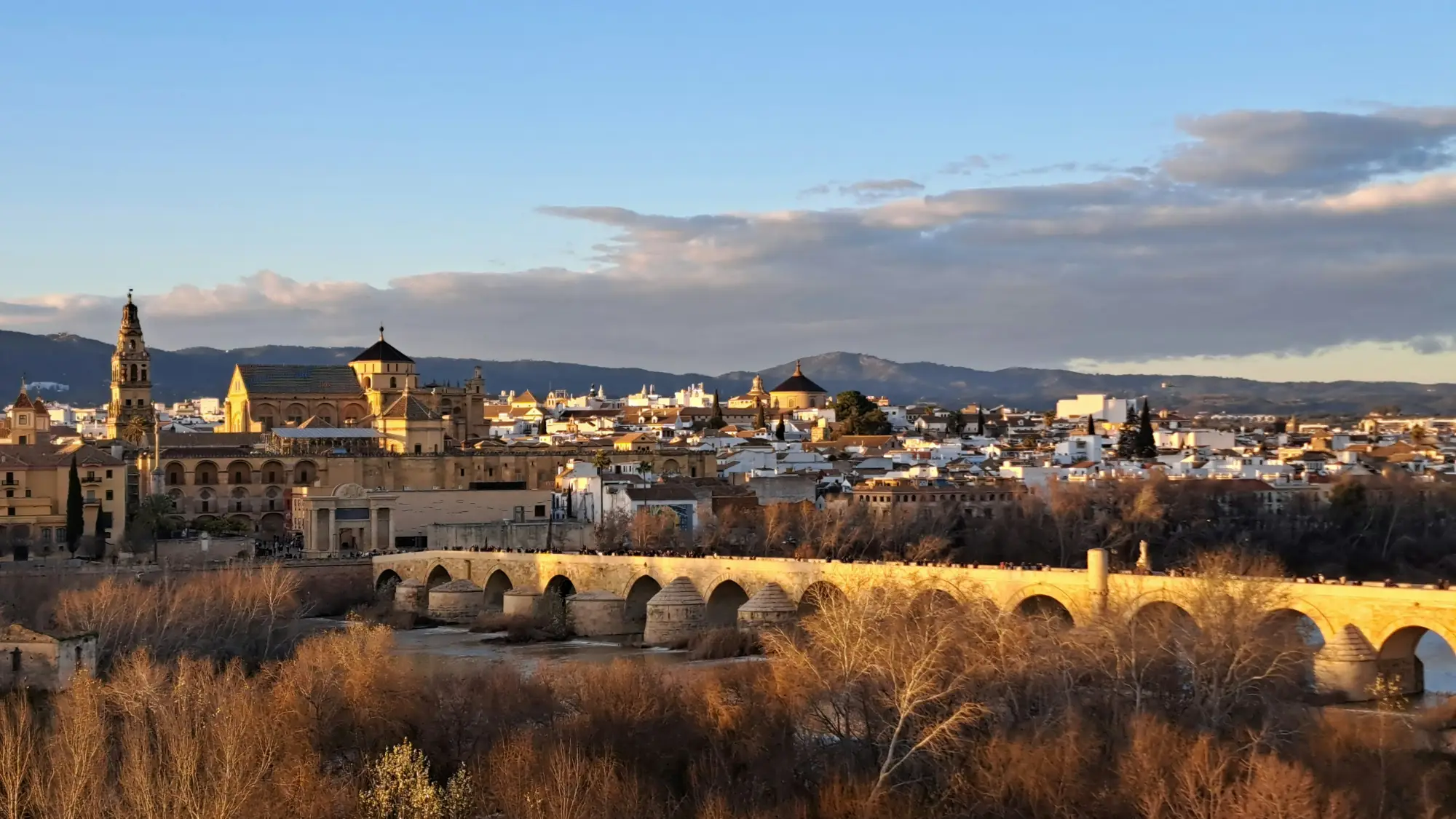
Córdoba
I spent a winter in Córdoba, and absolutely loved it. I arrived in September, just in time to commence my final term on a mental health nursing placement. I had the benefit of enjoying the tail end of the warm summer weather and the transition into the winter months.
Córdoba is a beautiful city, and the people are just incredibly welcoming. The great thing about visiting in winter is fewer queues at the monuments, cheaper accommodation, and the chance to wander the gorgeous, cobbled streets with fewer crowds.
The Mezquita, Córdoba’s Mosque-Cathedral, is a central part of visiting Córdoba. The architecture and design of the World Heritage site are unique and simply mesmerising.
Make sure to wander the streets of La Judería, Córdoba’s historic Jewish Quarter, and take a walk to see the famous Roman bridge.
The beautiful thing about visiting Córdoba is the wonderful blend of Roman, Islamic, Jewish and Christian historical influences.
One of my favourite activities during winter in Córdoba was visiting the Arab baths. Here you can opt to have a relaxing massage, then enjoy the variety of baths and a cold plunge. You can sip limitless fresh mint tea from gorgeous tea sets. You will leave here feeling refreshed and recalibrated.
This is a great early evening activity, before setting off to enjoy some dinner and flamenco in a local restaurant and bar.
Córdoba hosts several winter and Christmas events, including Christmas markets, light shows, festivals and flamenco gatherings, so keep an eye out for these wonderful celebrations.
On the 5th of January, Córdoba celebrates the Three Kings Parade, where a number of floats make their way through the centre throwing sweets to kids!
One thing I will say is Córdoba gets cold in the winter, which I simply was not expecting! The buildings are built to keep the heat out and to stay shaded in the blazing hot summers. So make sure to bring some layers and a coat.
Contributed by Gill from Secret Sussex
Historic Towns and Easy Day Trips in Spain in Winter
Some of Spain’s most beautiful historic towns are even better in winter!
Without the summer heat and the big tour groups, it is much more pleasant to wander up and down their steep, cobblestoned streets.
Most of them are also easy day trips from the big cities. Toledo and El Escorial are both within about an hour of Madrid, Ronda is simple to reach from Málaga, and Sitges is a short trip from Barcelona.
Here are the best historic towns and easy day trips to visit in Spain in winter!
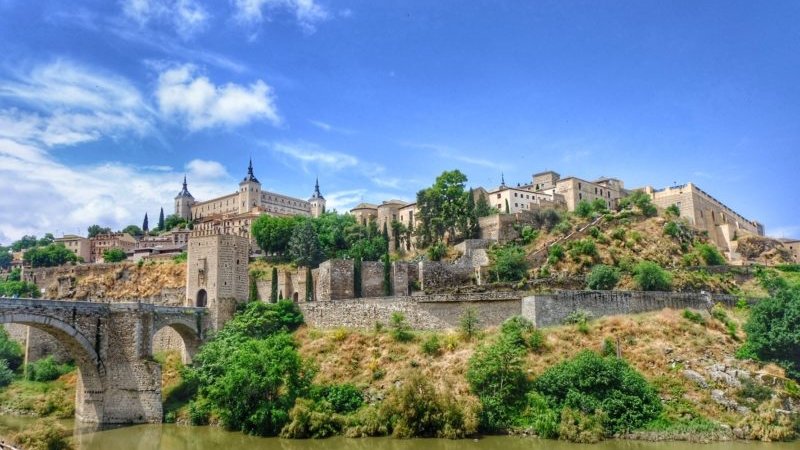
Toledo
Toledo is one of those places that immediately makes you feel like you have stepped into another world. With its medieval streets, old stone buildings, impressive views, and historic walls, there were moments when I felt like a scene from Game of Thrones could have been filmed there.
I visited Toledo in winter, and I think it is a particularly good time to explore the city. There are quite a few uphill and downhill streets, so walking around in cooler weather is much more comfortable than doing it in the middle of summer. You can also take your time exploring the narrow streets without feeling like you have to escape the heat.
Some of the main sights include the beautiful Toledo Cathedral and two historic synagogues, Santa María la Blanca and El Tránsito. But for me, one of the best things to do in Toledo is simply walk around and see where you end up.
San Martin’s Bridge is another beautiful spot, with amazing views over the surrounding area.
I also loved stopping at La Alacena Manchega, a small local shop selling cheeses, cured meats, olive oil, and other Spanish products.
Toledo is famous for its marzipan, and even though I am not usually a fan, I actually really enjoyed theirs.
During our visit, we suddenly got caught in heavy rain, which was a good excuse to find somewhere warm. We ended up at Teteria Dar Al Chai, a cozy tea house with lots of different teas, and it was the perfect way to warm up.
Getting to Toledo is also very easy. From Madrid, you can take a high-speed train and arrive in around 30 – 35 minutes, making it a convenient addition to a Spain winter itinerary.
Contributed by Nofar Ronen at Traveling outside the box
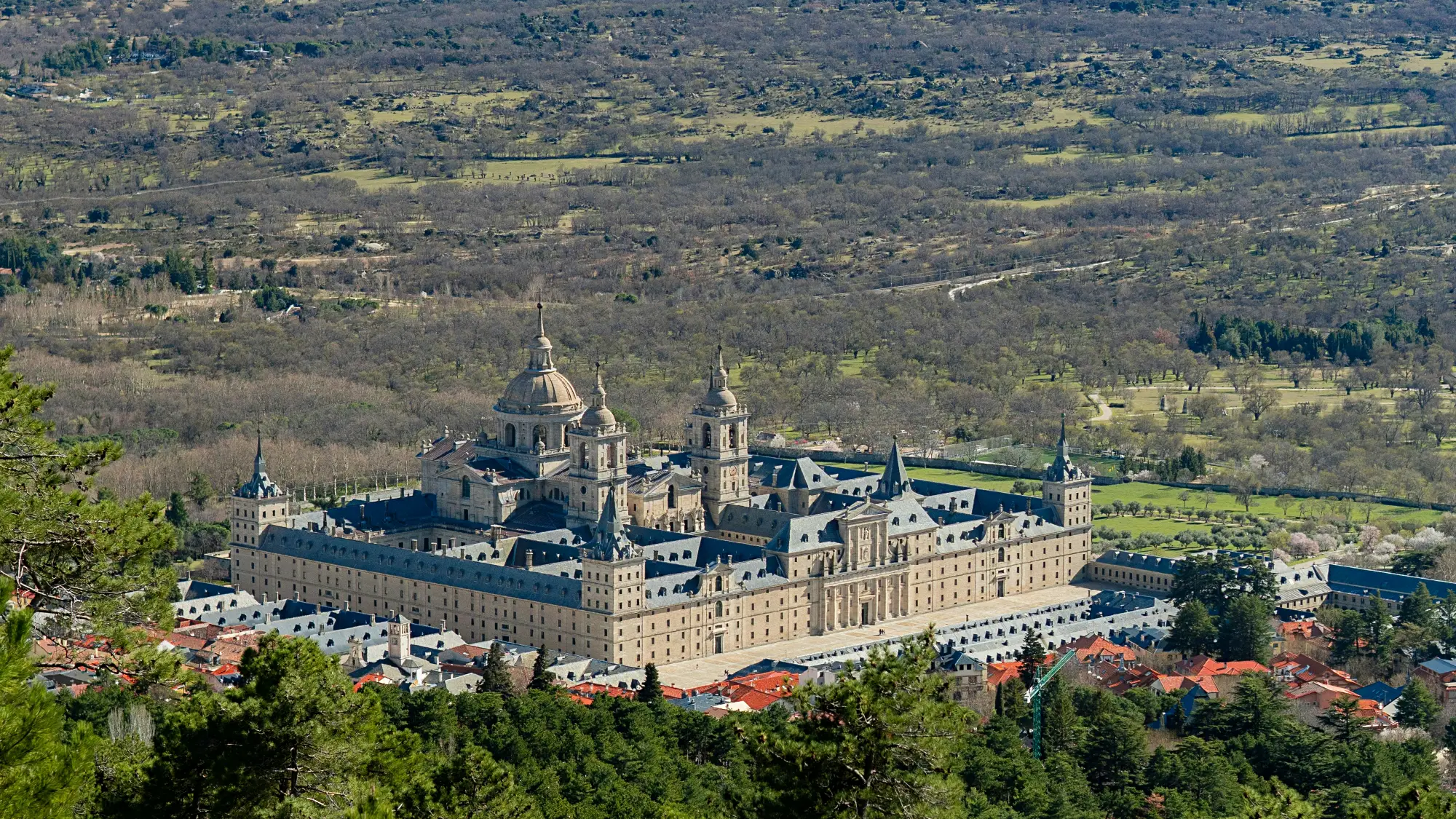
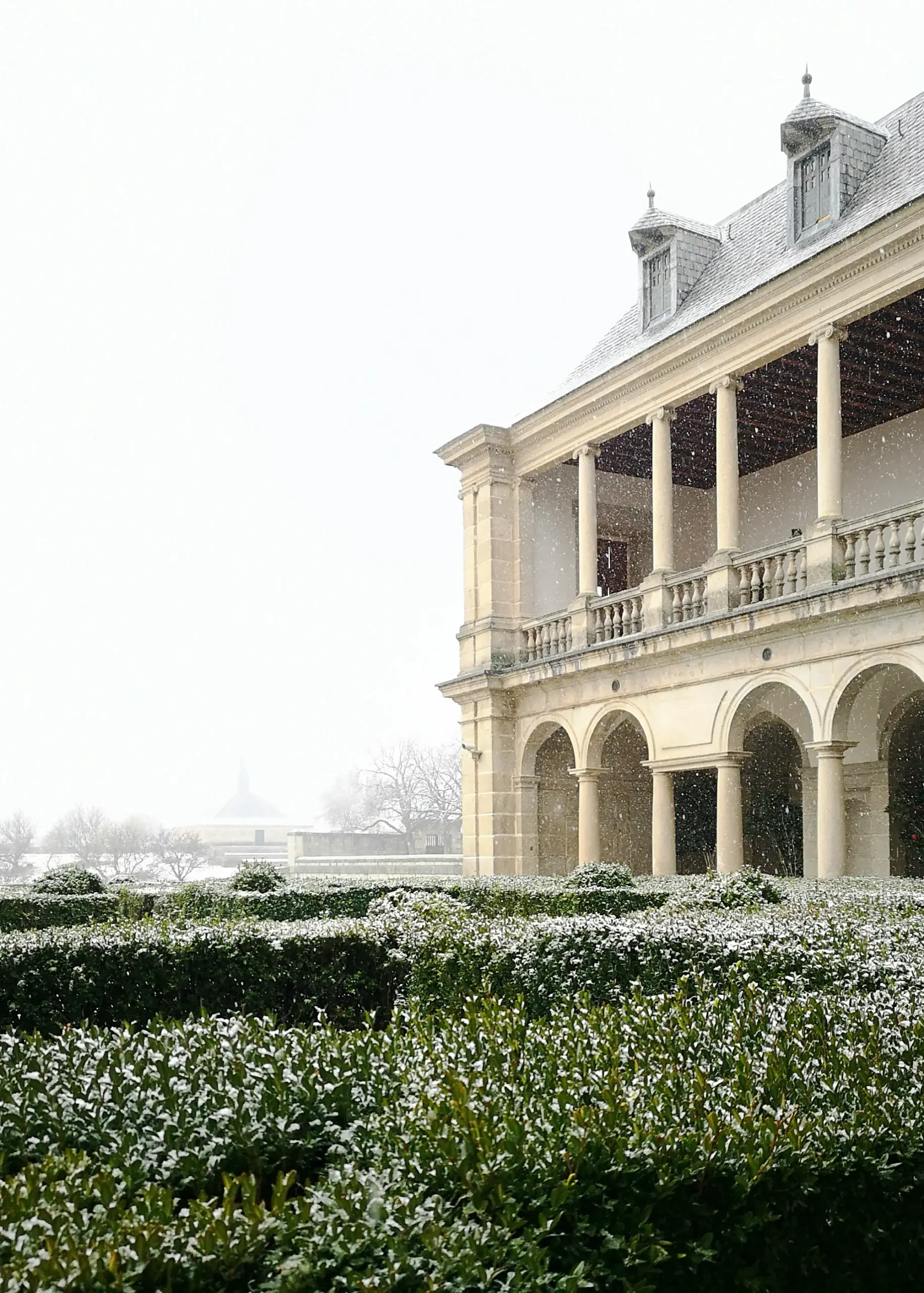
El Escorial
One of my favorite things about living in Madrid is how easy it is to escape for a day and head somewhere else that feels completely different.
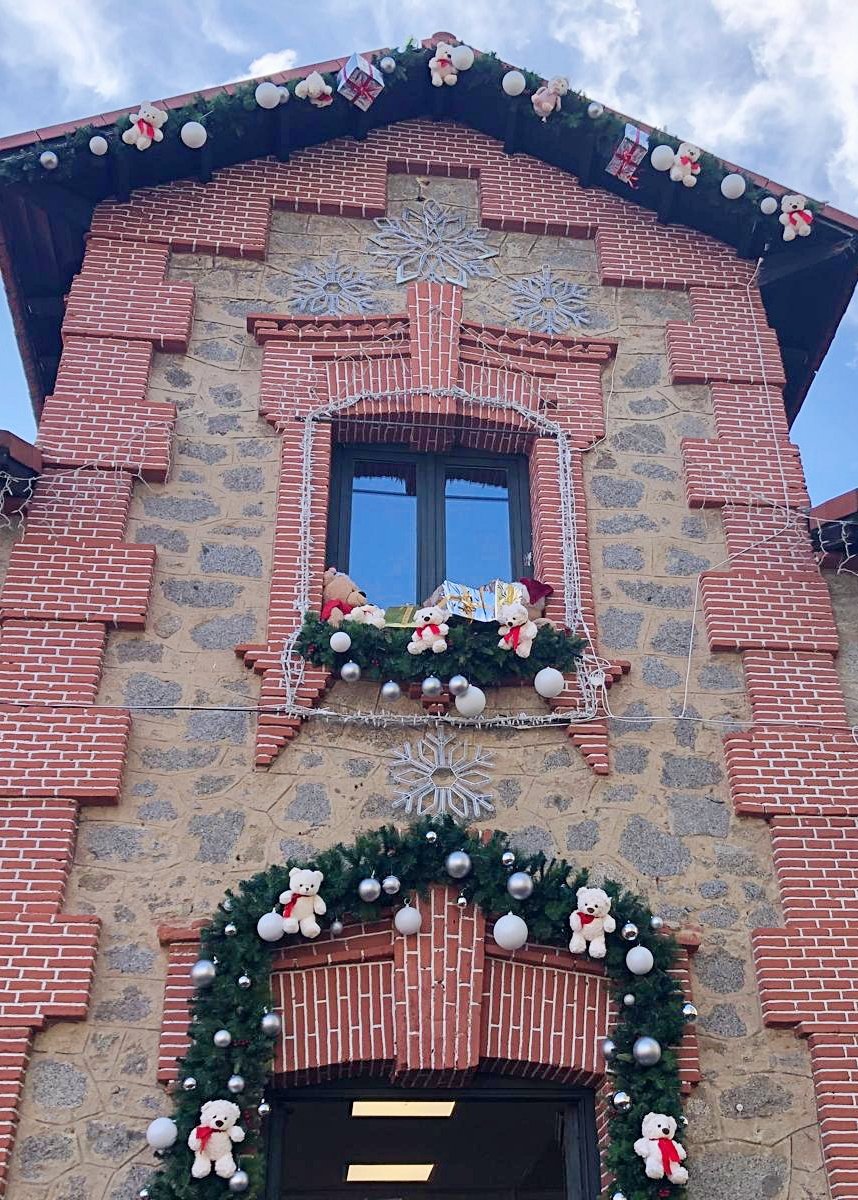
San Lorenzo de El Escorial is one of those places I love visiting in winter, especially around the holidays. During December, the streets take on a festive charm, and the mountains provide the perfect backdrop.
My favorite thing to do around Christmas is to visit the Belén Monumental, which is a fantastic life-size nativity scene in the town center.
There’s something extra special about wandering the streets and discovering the scenes with shepherds, animals, and characters, and it’s especially fun for children. The display generally opens in early December and can be visited until the Christmas festivities have ended, in early January.
The Royal Monastery of El Escorial, which was commissioned by King Philip II in the 16th century, is also a must-see. The El Escorial monastery is a UNESCO World Heritage site and is very interesting to explore, from the royal tombs to the historic library.
It’s also lovely to just wander around the town. There are loads of local shops to see, and you can always stop for a hot chocolate. You can also explore the countryside with a picturesque walk in La Herrería forest.
It’s very easy to visit El Escorial from Madrid, as there are frequent commuter trains and buses. There’s even a special vintage train called the Tren de Felipe II, dating back to the 1940s! There are actors on board wearing period costumes, which really makes the journey unique. The journey takes just an hour, so this is a great day trip from Madrid.
The Tren de Felipe II only runs on selected dates in winter. In 2026, it runs on the 1st, 7th, 8th, 14th, 15th, 21st, 22nd, 28th, and 29th of November, and on the 5th, 6th, 8th, and 12th of December. If you are visiting El Escorial over Christmas, take the regular commuter train instead, and check the timetables for the Renfe Cercanías train before you go.
I love visiting El Escorial because it feels a bit like a magical place during Christmas time, and it combines history and nature with the typical Spanish holiday traditions.
Contributed by Samara of Madrid with Kids
Explore El Escorial from Madrid
Ronda
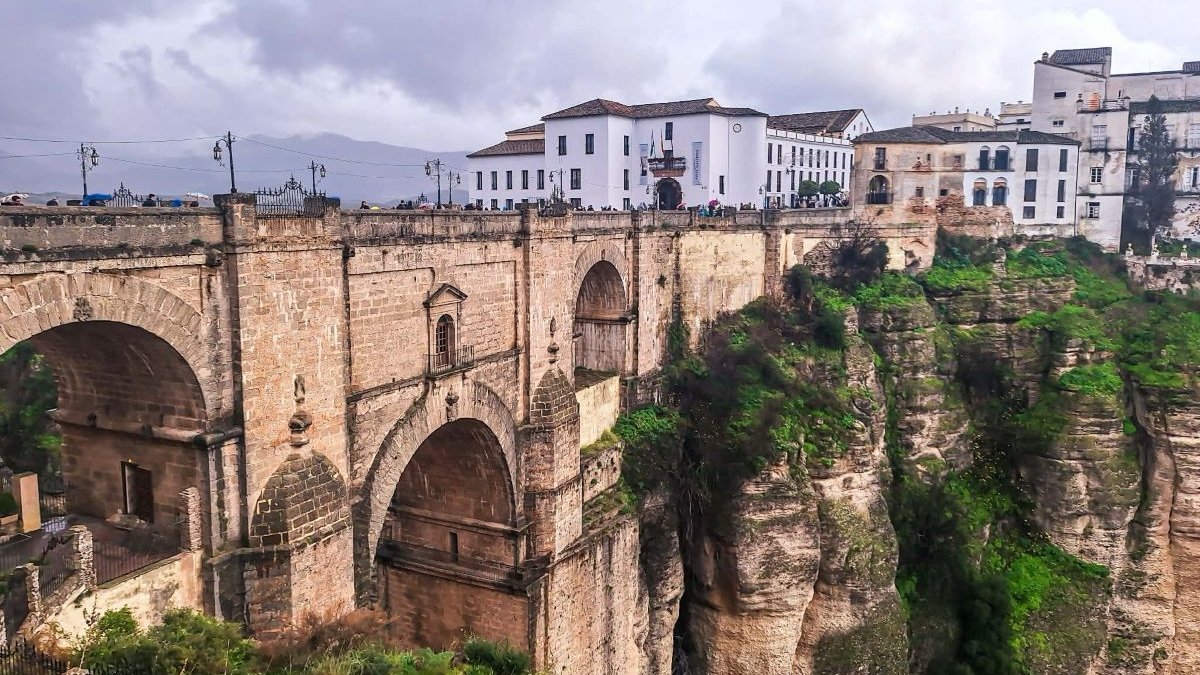
Ronda is an enchanting town located near Málaga, and dramatically situated atop the El Tajo gorge.
Ronda is renowned for the Puente Nuevo, a remarkable 18th-century bridge that spans the chasm, providing breathtaking views of the surrounding landscape.
The most striking feature of the Puente Nuevo is its central arch, which soars 98 meters (about 322 feet) above the canyon floor.
The iconic bridge, completed in 1793, links the old and new sections of Ronda. Its construction took 42 years, following the collapse of a previous bridge in 1741 that tragically resulted in several deaths.
The town is also home to the Plaza de Toros de Ronda, one of Spain’s oldest bullrings.
Other popular attractions here include the ancient Arab Baths and the Mondragón Palace, which houses the municipal museum.
The Museo Lara is another must-see site in Ronda, offering intriguing exhibits that include vintage cameras and scientific instruments.
We visited Ronda in early January, and it wasn’t too cold, around 15°C (59°F). The city was much quieter than when we visited in the summer months. So, we got to tick off all the sights in a couple of hours (no queuing is always a bonus in my book!)
We drove here from Málaga in our rental car, and it took us around 90 minutes each way. You can also catch a train from Málaga to Ronda. However, you’ll need to change trains, usually at Antequera-Santa Ana station, which makes it a 2 – 2.5-hour journey each way.
Contributed by Aimee of Snap Happy Travel
Sitges
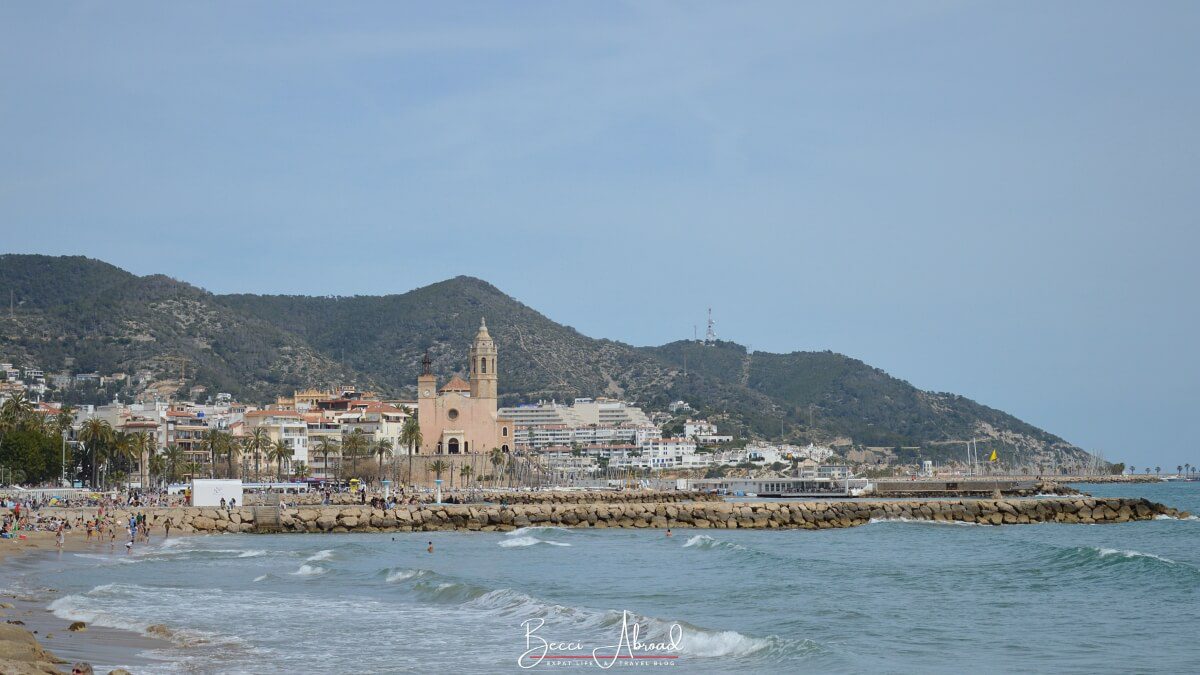
Sitges is one of the most popular day trips from Barcelona in the summer, but this charming seaside town is also one of the most fun places to experience winter in Spain!
In winter, the beaches and the seafront promenade of Sitges are much quieter, and the mild Mediterranean weather is perfect for long walks by the sea.
Last winter, my friend, my dog Baloo, and I hiked from Vilanova i la Geltrú, a nearby town, to Sitges, and it was such a beautiful experience. We ended up in Sitges and went for coffee before heading back to Barcelona.
The biggest reason to visit Sitges in winter is the Sitges Carnival, which is considered one of the most vibrant Carnival celebrations in Catalonia.
Every February, the small town fills up with colorful parades, extravagant costumes, and street parties day and night! With nearly 50 floats, around 2,500 people in costume, and more than 300,000 spectators, the Sitges Carnival is quite a show!
In 2027, the Sitges Carnival runs from the 4th to the 10th of February. The town gets very busy during Carnival, so I recommend booking your accommodation early or visiting on a day trip from Barcelona.
Getting to Sitges from Barcelona is easy. The town is about 38 kilometers (24 miles) southwest of Barcelona, and the R2 Sud train takes you there from Barcelona Sants or Passeig de Gràcia in less than an hour.
Contributed by Becci Abroad
Lesser-Known Winter Escapes in Spain
Are you looking for a side of Spain that most tourists never see?
In my opinion, winter is the best time to discover Spain’s hidden gems, when you can explore at your own pace and often have the streets almost to yourself.
From a medieval Templar castle on the Camino de Santiago to Roman ruins by the Mediterranean, Spain offers many lesser-known places that are perfect for a slow winter trip.
Many of Spain’s smaller towns are quieter in winter, and you might find that some restaurants and shops have shorter opening hours.
Here are some of the best lesser-known places to visit in Spain in winter!
Ponferrada
Ponferrada is a unique lesser-known place to visit in Spain in the winter, located in the region of Castile and León. I visited Ponferrada while walking the Camino de Santiago. I knew about its famous Templar castle, but not much else. It turned out to be one of the best stops in northern Spain.
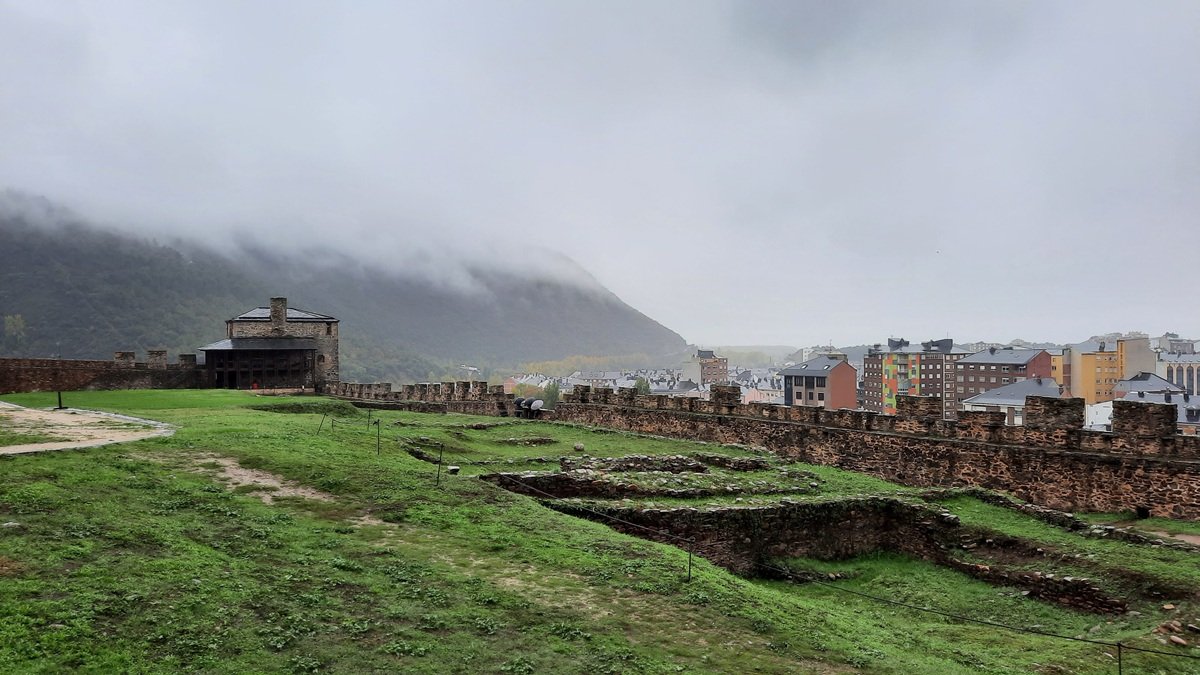
Winter was just setting in, so the weather wasn’t great. It was cold, rainy, and completely overcast during my stay. But far from ruining the visit, I’d say the weather actually enhanced it. Amidst the mist, the imposing medieval castle looked like something out of a mystery movie.
The Templar Castle is, by far, Ponferrada’s main attraction. The original fortress dates back to the 12th century; the Knights Templar took control of it in 1178 to protect pilgrims traveling the Camino de Santiago.
You can go inside and explore its massive walls and towers. It’s impossible not to imagine the bustle that must have filled the place in medieval times, with so many travelers passing through the area. Plus, looking out from the turrets offers fantastic views of the city with the mountains in the background.
Of course, there’s more to Ponferrada than just the castle. If you’re up for a walk in the cold, it’s worth getting lost for a while in the Old Town and visiting the Basilica of Nuestra Señora de la Encina, the area’s most iconic church.
Alternatively, you can just stroll the streets and enjoy the green, lush landscape that surrounds the whole region of El Bierzo.
From Santiago de Compostela, you can get to Ponferrada by train or bus in about three and a half hours. León is even closer, just under two hours by train, while Madrid is about four hours away by train, depending on the service.
If you are traveling through northern Spain in winter, I highly recommend including Ponferrada in your itinerary. The city combines the history, scenery, and atmosphere needed to turn a cold, rainy day into a surprisingly pleasant visit.
Contributed by Fernando of The Prism of Fer
Tarragona
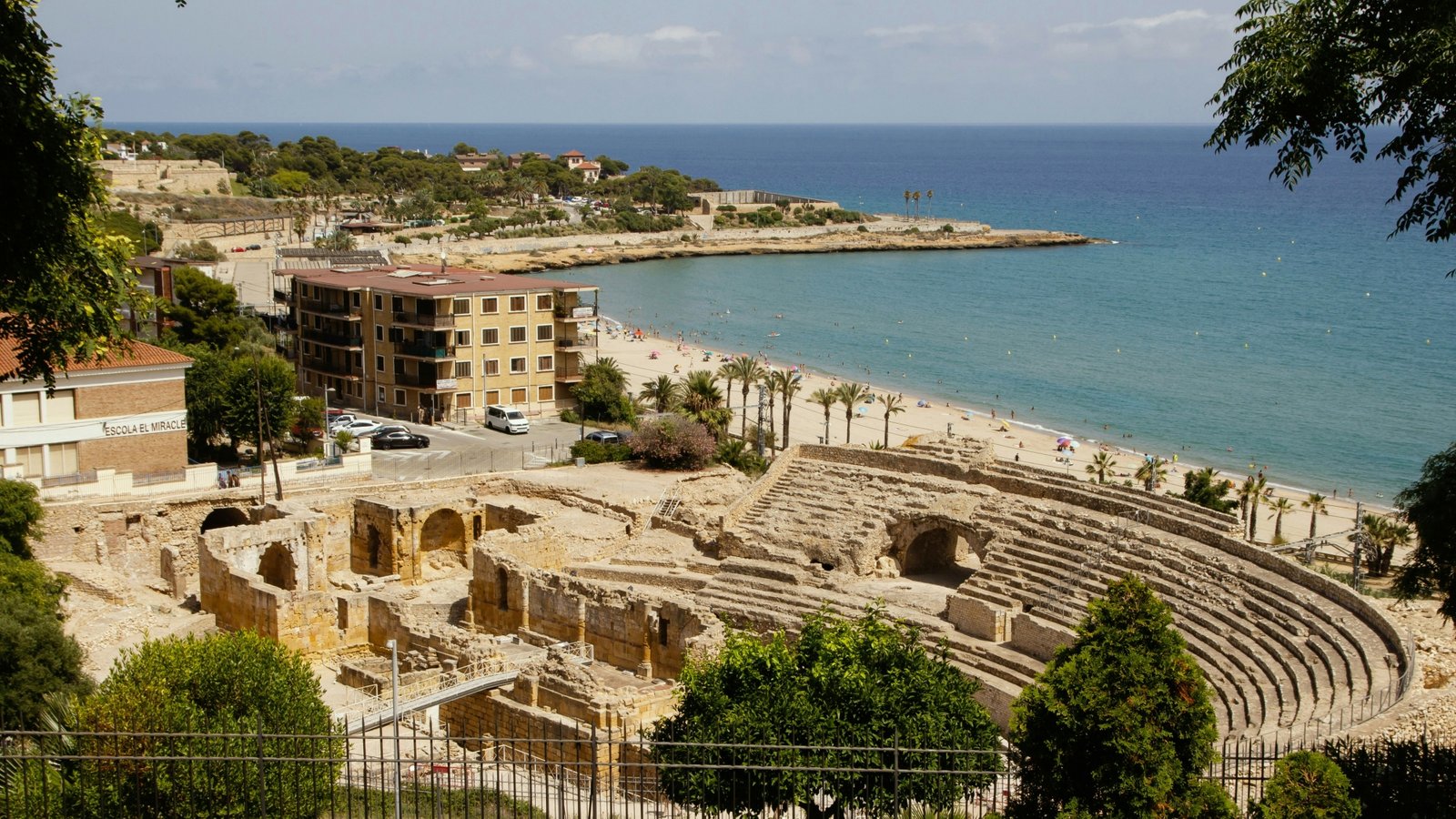
Tarragona is a wonderful place to visit in Spain in winter as it benefits from the mild Mediterranean weather, making it a fantastic weekend escapade from colder destinations.
The city is a gem with beautiful beaches, incredible Roman ruins, and natural landscapes located about an hour from Barcelona. I consider Tarragona one of my favourite underrated European destinations after living there for a while many years ago.
Tarragona was the capital of the Roman Empire in the Iberian Peninsula, and it has been a UNESCO World Heritage Site since 2000.
Some of the most impressive sights to visit in Tarragona are the Amphitheatre, the Roman Circus, and the city walls. On the outskirts of the city, you can also visit the Roman Aqueduct, which is pretty impressive.
The old town is a delight to wander on foot, and you will find many tapas places along the narrow streets and in the bustling Plaça de la Font (Font Square).
There are three great beaches in Tarragona within walking distance from the centre, my favourite being the Arrabasada Beach, and even if it’s too cold for you to go in the winter, you can still enjoy lovely sunny walks.
Within a short drive or bus ride from Tarragona, you can visit PortAventura, which is one of the biggest theme parks in Europe. Just keep in mind that PortAventura Park is mostly closed from early January until around March, so check the opening calendar before planning a winter visit around it.
Whether you want to have a sunny winter break, a cultural immersion, a party escapade, or a family holiday, this is surprisingly one place that doesn’t come up so often on the list of destinations of people visiting Spain.
Contributed by Juan from planetofadventures.com
Frequently Asked Questions
Spain in Winter FAQ
Find answers to commonly asked questions about places to visit in Spain in the winter.
Final Thoughts: Is it Worth Visiting Spain in the Winter?
Yes, it is absolutely worth visiting Spain in winter, as long as you choose the right place for the kind of trip you want!
After living in Granada, Barcelona, and now Madrid, I have come to love the Spanish winter.
From the snowy peaks of the Sierra Nevada behind La Alhambra to sunny winter days in Barcelona and crisp, blue-sky days in Madrid, winter has given me some of my favorite memories in Spain.
In winter, you get to see the famous sights with far fewer crowds, enjoy lower prices outside the Christmas holidays, and experience traditions you will never see in summer, like eating the twelve lucky grapes on New Year’s Eve, seeing the Three Kings Parade, and participating in Spanish carnival celebrations.
Spain has several very different winters, so when planning your winter trip, you need to decide if you want to chase the sun in the Canary Islands, wander the beautiful white villages of Andalusia, go skiing in the Sierra Nevada, or explore Madrid’s museums and Christmas lights.
So, if you want to experience Spain without the summer crowds and heat, and with a more local feel, winter might just become your favorite season to visit, as it did for me!
Have you been to Spain in winter, or are you planning a winter trip? Share your thoughts and questions in the comments below!