Where to Stay in Barcelona: The Best Areas & Neighborhoods (2026)
If you have just booked your flights to Barcelona and you are now staring at a map wondering whether Gothic Quarter, El Born and Eixample are three different cities or three different streets…
Well, then you have come to the right place!
Hola, and welcome to my guide on where to stay in Barcelona!
I lived in Barcelona for two and a half years, from February 2023 to July 2025, in the local and lesser-known Barcelona neighborhood, Horta.
I have walked home through the Gothic Quarter at 1 am after drinks with friends, and I have had countless tapas in Eixample and cañas (beers) in Poblenou, and generally explored Barcelona and its many different neighborhoods as the curious soul I am.
Before moving to Barcelona in February 2023 after years of living in Buenos Aires, I had already visited the city twice.
My first visit was back in 2012 with one of my friends from Denmark, where we lived in a small youth hostel just off La Rambla (we were young and didn’t mind the noise and mess).
The second time I visited Barcelona was a few years later, when I solo traveled around Spain and Portugal, and was supposed to have couchsurfed with a Spanish guy in Barcelona.
But he gave me major creepy vibes (telling me via message that his couch was occupied but I could just sleep in his bed… with him!? No thank you!). So, I booked a small hostel in Gràcia.
What I’m trying to say here is: I have been around and about in Barcelona!
During my time living in the city, I experienced and learned about Barcelona’s different neighborhoods and which ones are the best places to stay in Barcelona when you visit for the first time.
So, if you’re looking for the perfect place to stay in Barcelona and want a little local expert knowledge to help guide you to the most suitable neighborhood for you, I hope you’ll find it in this post!
Let’s dive in!
An Insider Guide to the Best Neighborhoods to Stay in Barcelona
Disclosure: Some of the links below are affiliate links. This means that at no additional cost to you, Becci Abroad will earn a commission if you purchase through one of those links. This helps to pay the bills and the maintenance of the site.
Where to Stay in Barcelona for the First Time: My Honest Opinion
If this is your first trip to Barcelona, and you want a quick and easy recommendation on where to stay that suits almost everybody, then my recommendation would be:
Book your accommodation in Barcelona in Eixample!
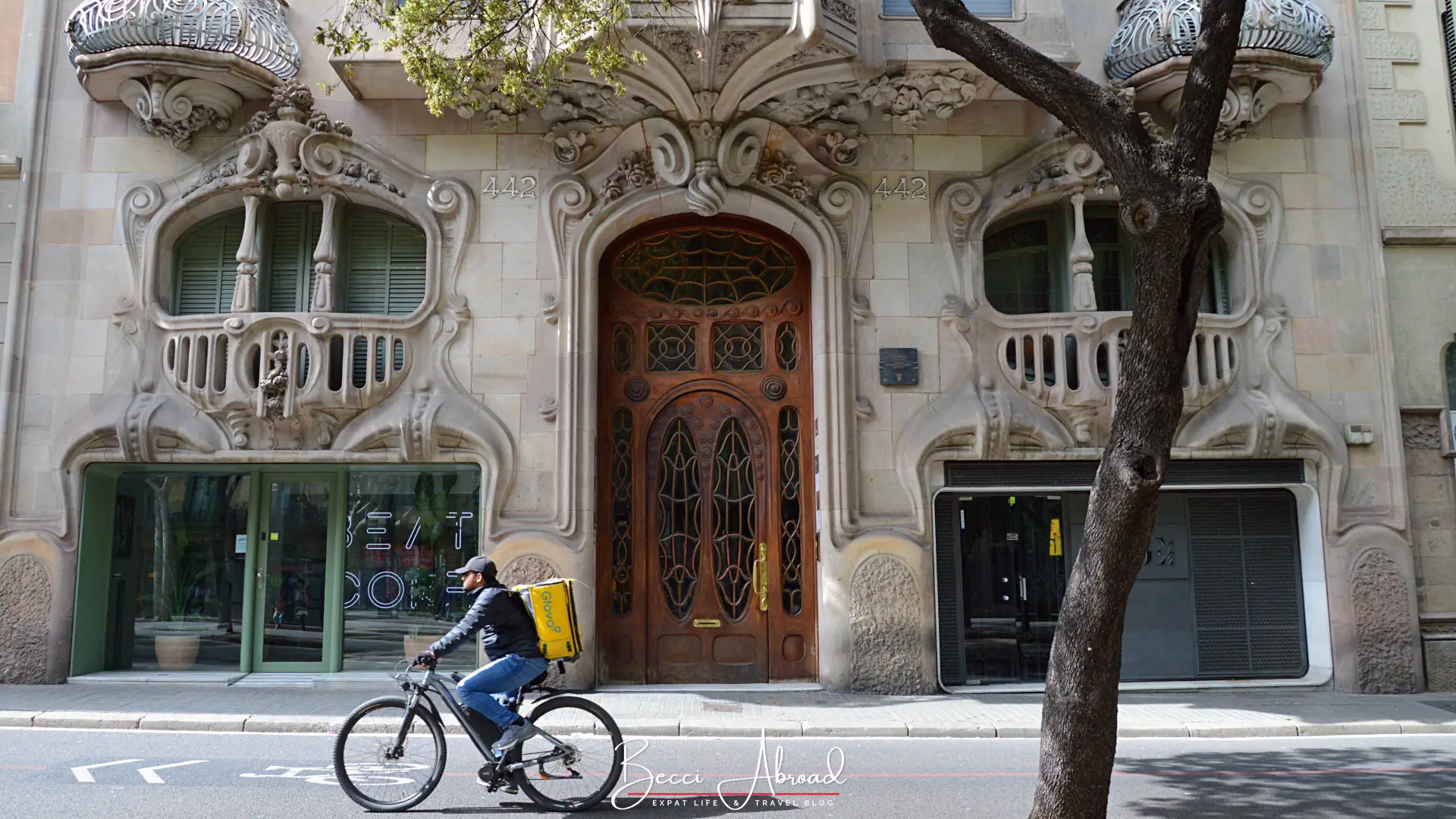
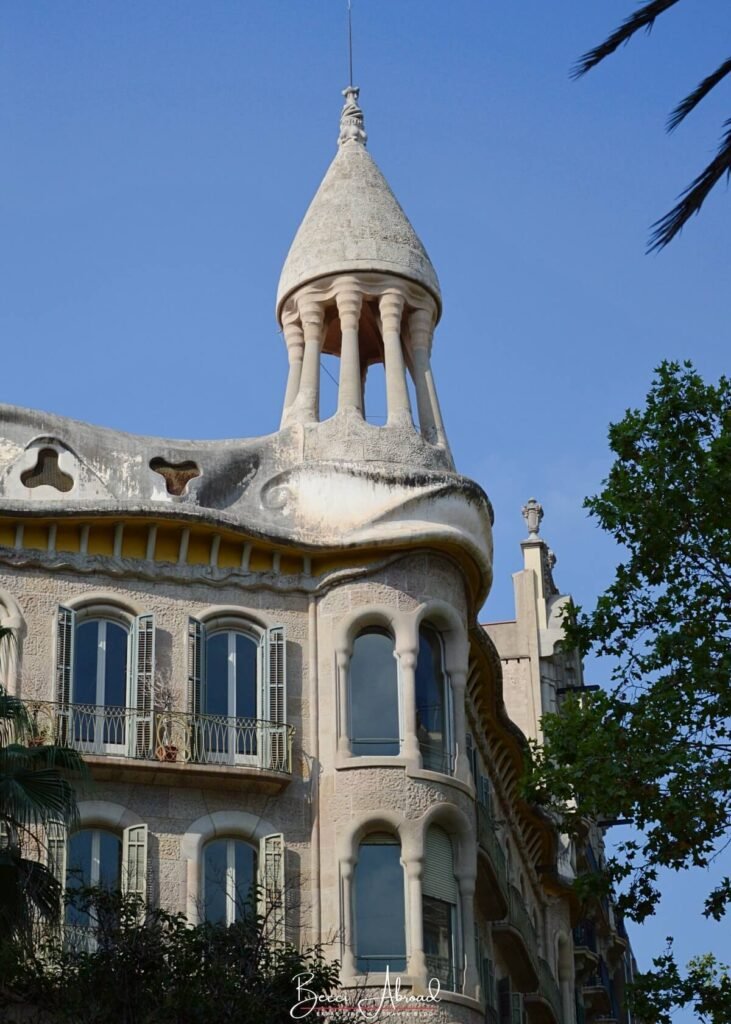
Eixample is the neighborhood in Barcelona that’s famous for its gorgeous modernist architecture and its proximity to many of Barcelona’s most famous landmarks.
When you’re looking for a place to stay in Eixample, my recommendation is to look for accommodation within a few blocks of Passeig de Gràcia.
Also, make sure there’s a metro stop within a few minutes of the accommodation, as it will make your life a lot easier for getting around Barcelona.
Eixample is my preferred option for staying in Barcelona if you’re new to the city, because:
- You can easily walk to the Gothic Quarter and the rest of Barcelona’s Old Town.
- The famous landmarks of Casa Batlló, La Pedrera, and the Sagrada Família are all located in this neighborhood.
- Eixample is one of the safest neighborhoods in central Barcelona.
- The airport bus leaves from Plaça de Catalunya, which is located in Eixample.
- Eixample is generally a calm neighborhood at night (except if you end up staying on top of a nightclub, of course!)
If Eixample is outside your budget, my order of preference after that is El Born and Gràcia.
Personally, I don’t think that Barcelona’s Gothic Quarter is a good place to stay if you are visiting Barcelona for the first time.
Where to Stay in Barcelona: A Quick Overview
|
Neighborhood
|
Best for
|
Why
|
|---|---|---|
|
Eixample |
First-time visitors and architecture lovers |
Central, safe, beautiful, brilliantly connected. |
|
El Born |
Old Town Vibes with fewer crowds |
All the medieval atmosphere of the Gothic Quarter, a fraction of the crush. |
|
Gothic Quarter |
Getting the classic Barcelona postcard experience |
Barcelona’s oldest streets with real trade-offs after dark. |
|
Gràcia |
Getting a local, less-touristy experience |
A former village that never quite joined the city. Squares, terraces, neighbours. |
|
Barceloneta |
Prioritizing Barcelona as a beach holiday |
Sand at the end of your street. Loud, crowded, and worth it in summer. |
|
Poblenou |
Having more space & family trips to Barcelona |
Quieter beaches, wide streets, parks, and normal Barcelona life. |
|
Sants-Montjuïc (Poble-sec) |
Being close to the train station & lower costs on accommodation |
Cheaper beds, great tapas, the Sants train station on your doorstep. |
A Barcelona Neighborhood Map: How the City Actually Fits Together
Before the neighborhood-by-neighborhood breakdown, it can be very helpful to understand that Barcelona is really three cities stacked on top of each other:
Check out all the neighborhoods in Barcelona on this map. In the top right-hand corner, you can click on the full-screen icon and have the map open directly in your Google Maps app.
Ciutat Vella (The Old Town)
Ciutat Vella, or the Old Town, is Barcelona’s medieval core. The Old Town consists of four areas or neighborhoods:
- The Gothic Quarter
- El Born
- El Raval
- Barceloneta
In Barcelona’s Old Town, you’ll find narrow streets with no grid and no logic to their layout (and very easy to get lost in!).
In the Old Town, you’ll have a lot of atmosphere and charming old buildings, but also noise from bars and somewhat dirty streets (depending on the time of day!)
The famous pedestrian street, La Rambla, cuts straight through the middle of Barcelona’s Old Town.
Eixample (the “extension”)
Eixample is the enormous 19th-century grid extension of the city built when Barcelona knocked down its city walls and expanded.
In Eixample, you’ll find wide avenues, charming cafes, modernista façades, and many of Gaudí’s famous buildings.
Eixample wraps around the Old Town like a collar, and during the evening and night it’s a more residential and calm area than the Old Town.
The Old Villages: Gràcia, Poblenou, Sants, Poble-sec
Many of the neighborhoods in modern-day Barcelona used to be independent towns that Barcelona swallowed as the city grew.
These neighborhoods still feel different, and they’re where locals actually live.
Gràcia and Poblenou have become increasingly popular for tourist accommodations.
The Best Areas to Stay in Barcelona: A Neighborhood by Neighborhood Guide
Now that we have got a better understanding of how Barcelona and its neighborhoods are organized, let’s explore the best areas to stay in Barcelona and what to keep in mind about each neighborhood.
This is not a list of the prettiest neighborhoods in Barcelona. This is a list of where I would actually tell you to sleep and, just as importantly, where I wouldn’t.
Note: I haven’t stayed in any of the below-mentioned hotels, so the descriptions are drawn from the properties themselves rather than experience. I’ve used bands rather than exact rates since Barcelona pricing swings 40–60% between November and August, and hard numbers would date the post fast.
Eixample: Art Nouveau Elegance (and the Best Area for First-Timers)
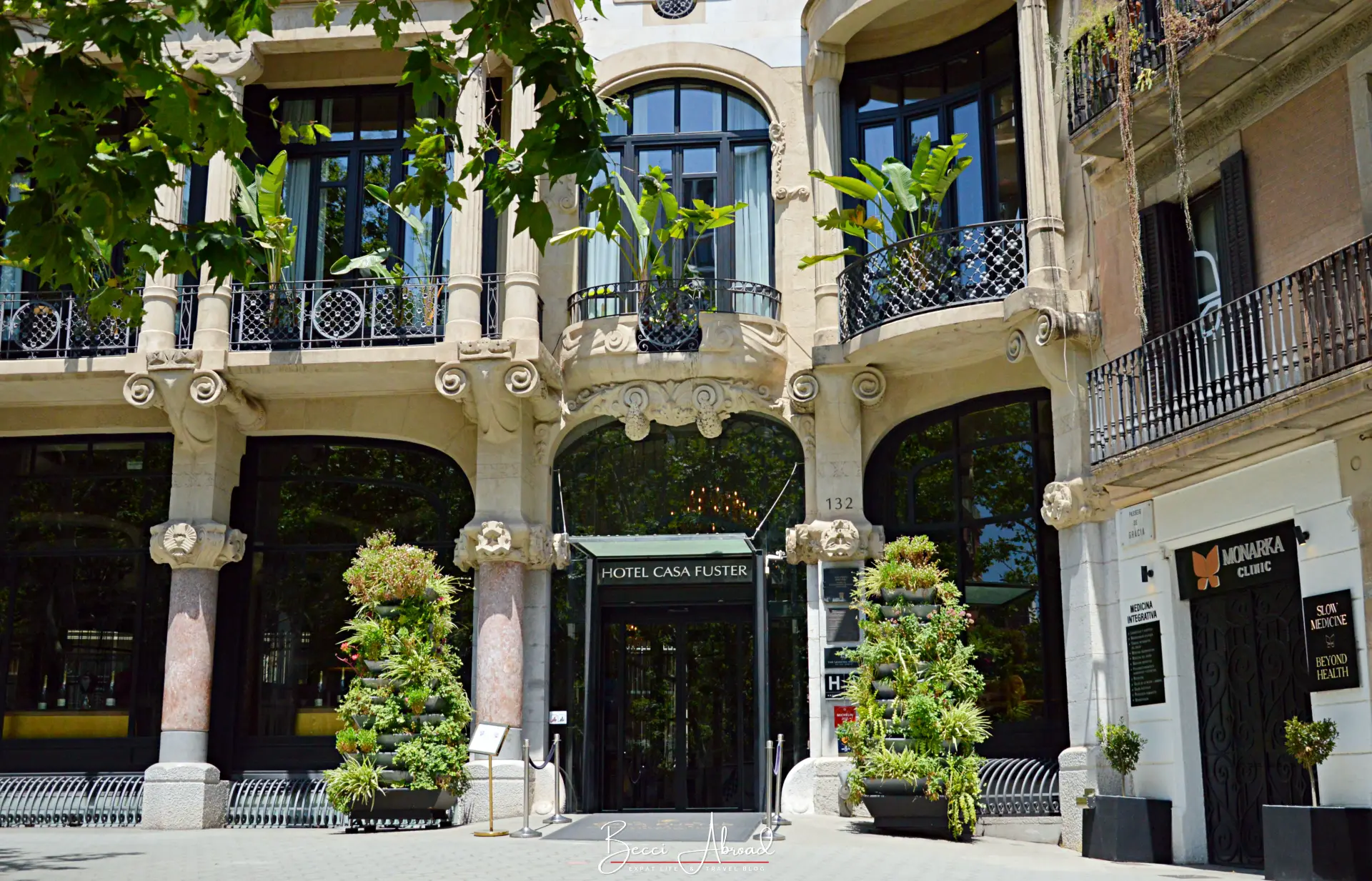
Eixample is my favorite neighborhood in Barcelona, and in my opinion, it’s the best place to stay if you’re visiting the city for the first time.
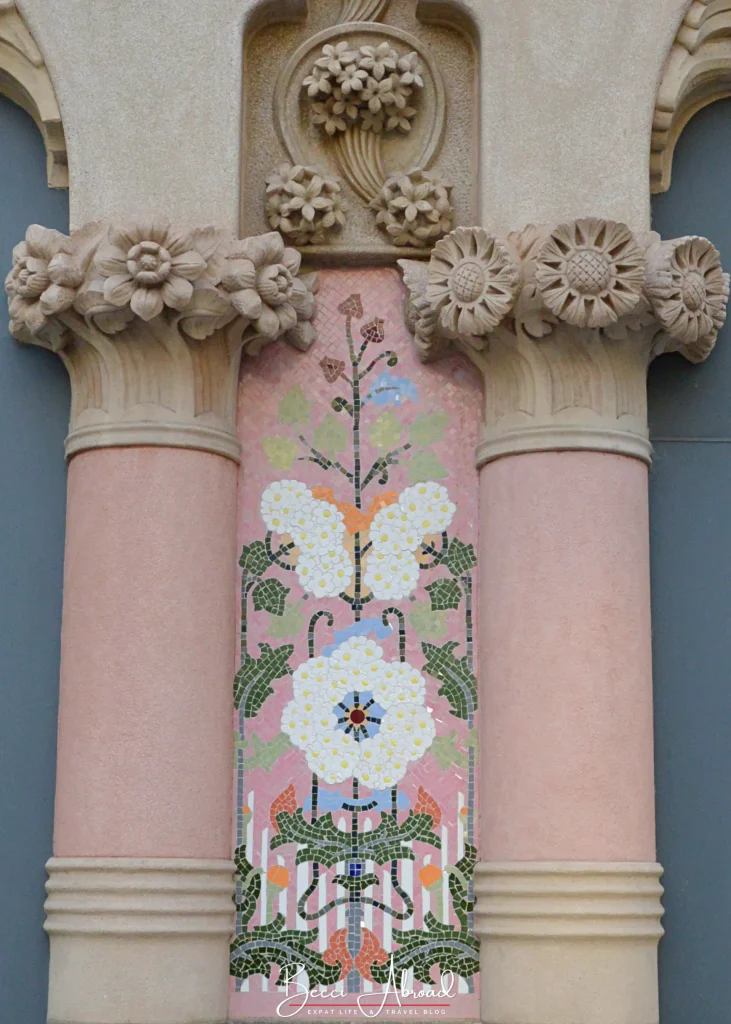
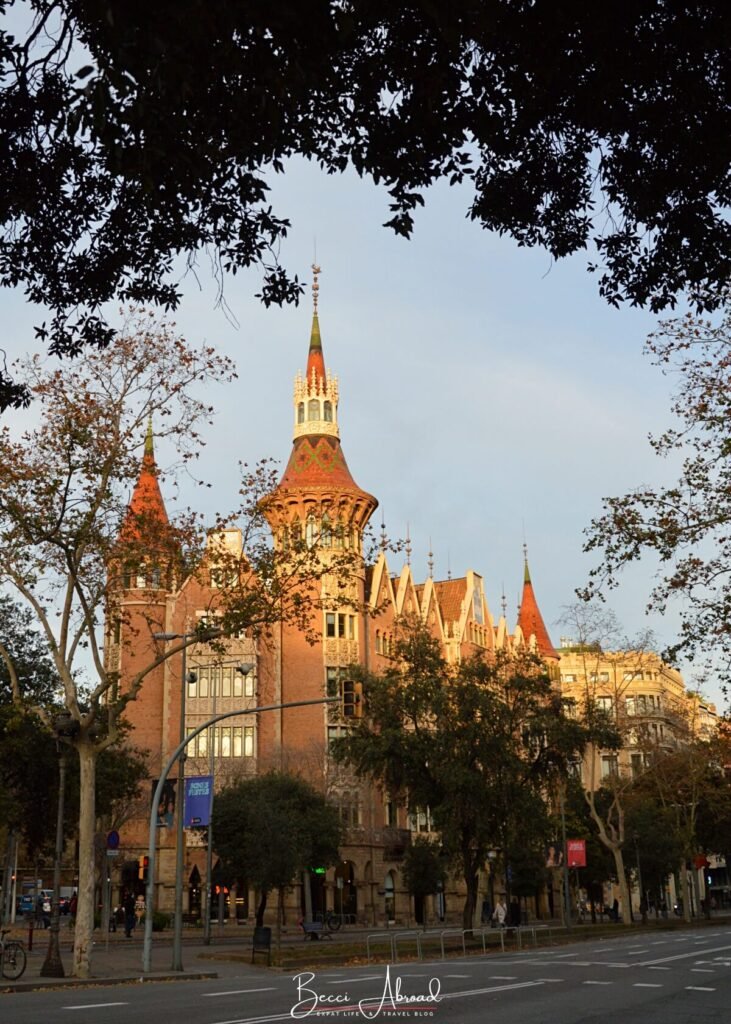
You’re surrounded by gorgeous Modernista buildings, which are Barcelona’s take on Art Nouveau, and the reason half the world puts the city on their bucket list.
In Eixample, you will find famous landmarks like Casa Batlló, Casa Milà (La Pedrera), Passeig de Gràcia, and Plaça de Catalunya just a short walk away.
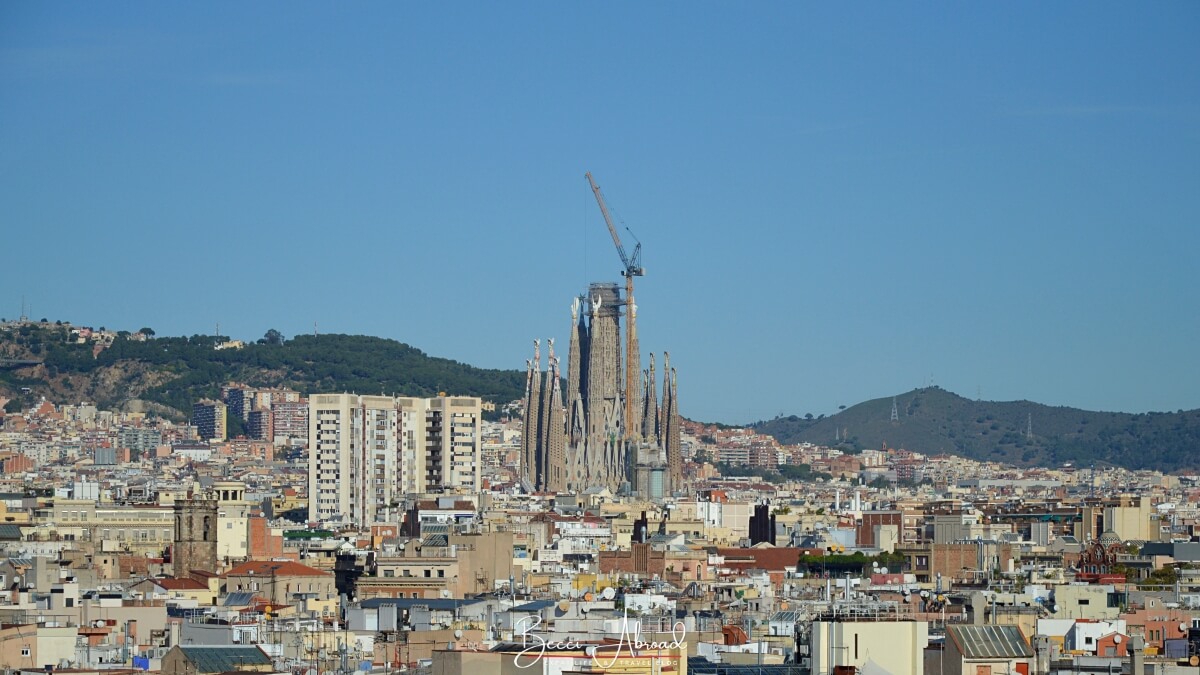
Barcelona’s most famous landmark, the Sagrada Família, sits in the northeastern corner of the Eixample district.
Eixample is a relatively large neighborhood in Barcelona, and there are many different hotels and accommodation options to choose from. The neighborhood also offers more restaurants and tapas bars per block than you’ll manage to eat your way through in a week (if you do manage, please email me your review!).
Another benefit of staying in Eixample during your visit to Barcelona is how extremely easy it is to get around from Eixample!
Four metro lines cross the neighborhood, buses run in every direction, and the Aerobús to the airport leaves from Plaça de Catalunya, which matters more than you’d think when you’re dragging a suitcase at 6 am.
In my opinion, staying in Eixample will give you a much better experience of Barcelona than staying in the Gothic Quarter or out by Barceloneta beach. Especially if you are visiting Barcelona for the city vibes and not only for the beach.
In Eixample, you feel like you’re in the heart of the city. You can walk to the Old Town in 10 minutes whenever you want to explore the medieval streets and historic buildings.
Eixample is largely a residential area, so it is a lot calmer at night than the Old Town, which is perfect if you prefer to sleep early rather than stumble home from a bar.
Eixample is Best for:
- First-time visitors
- Couples on a romantic getaway
- Anyone who is looking to walk everywhere in Barcelona
- Architecture lovers
The downside of staying in Eixample:
- Accommodation prices in Eixample are normally higher than in more local neighborhoods in Barcelona.
- Personally, I would avoid staying in a hotel close to Plaça de Catalunya and instead opt for a quieter part of Eixample (but I’m also becoming an “old lady” in my mid-30s).
Where to Stay in Eixample: My Hotel Picks
The Gothic Quarter: The Barcelona Classic
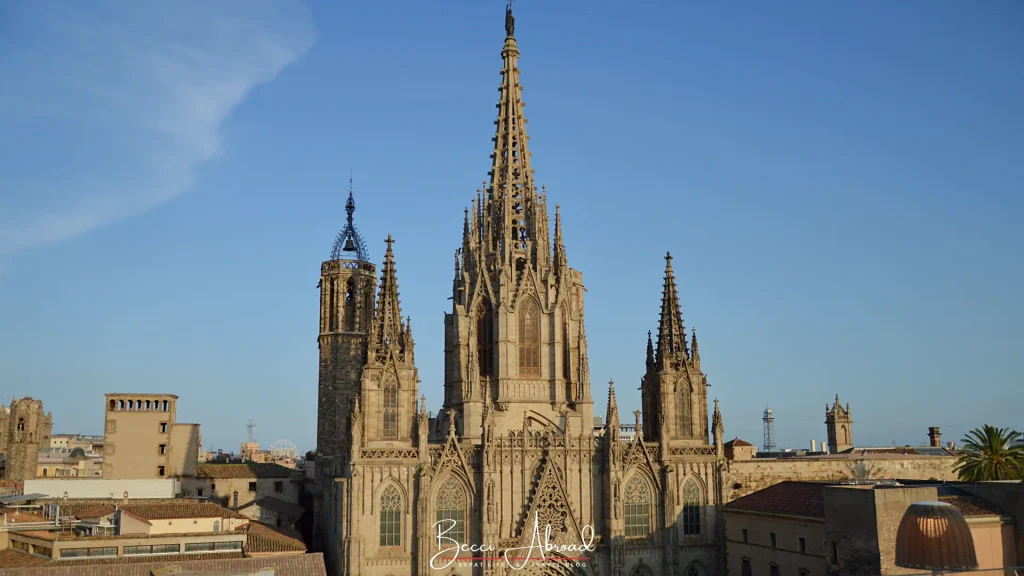
The Gothic Quarter is the classic place people choose to stay in Barcelona, but personally, I wouldn’t choose to stay in the Gothic Quarter if I were visiting Barcelona for the first time.
Let me be fair to the Gothic Quarter first, because it deserves it!
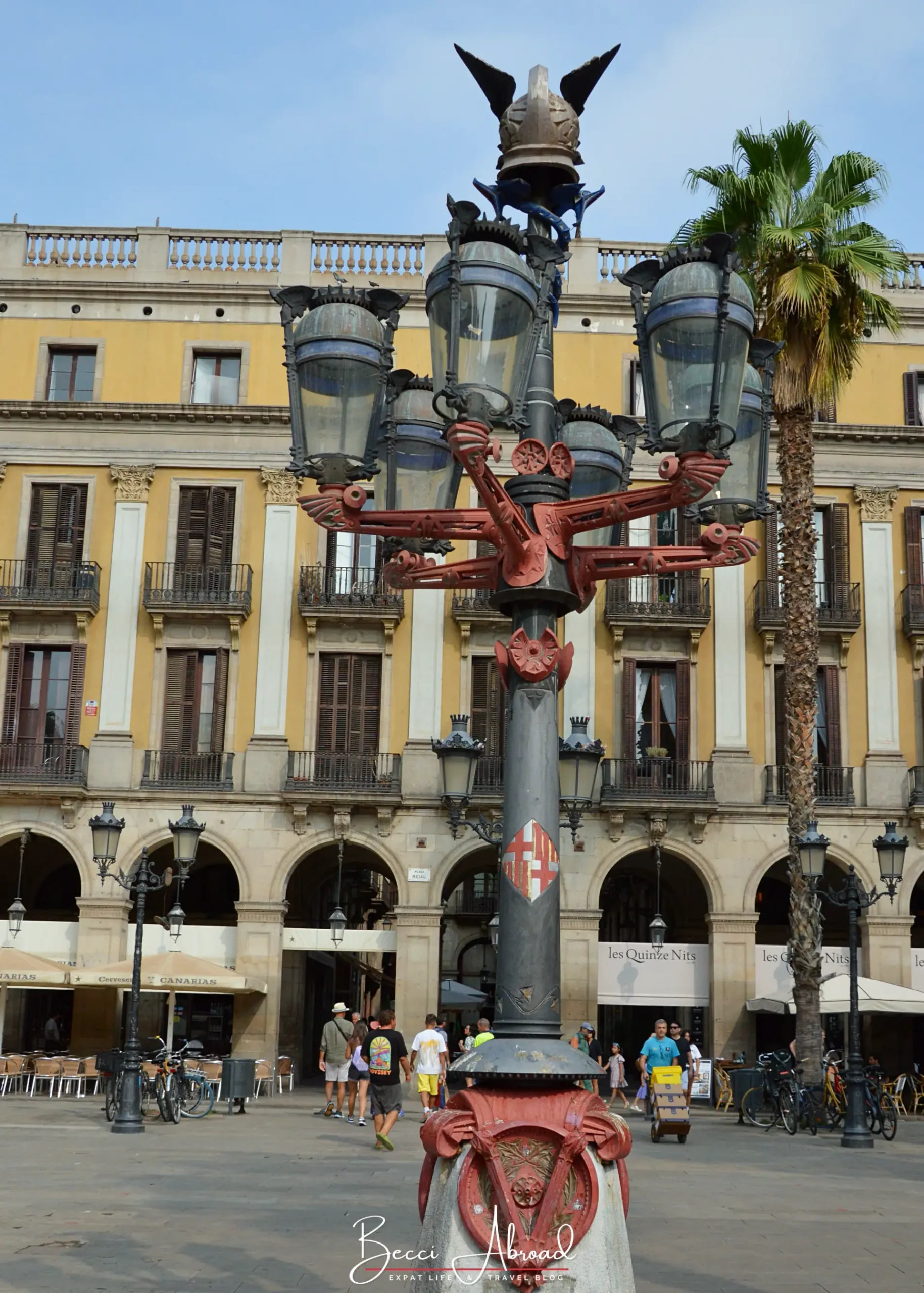
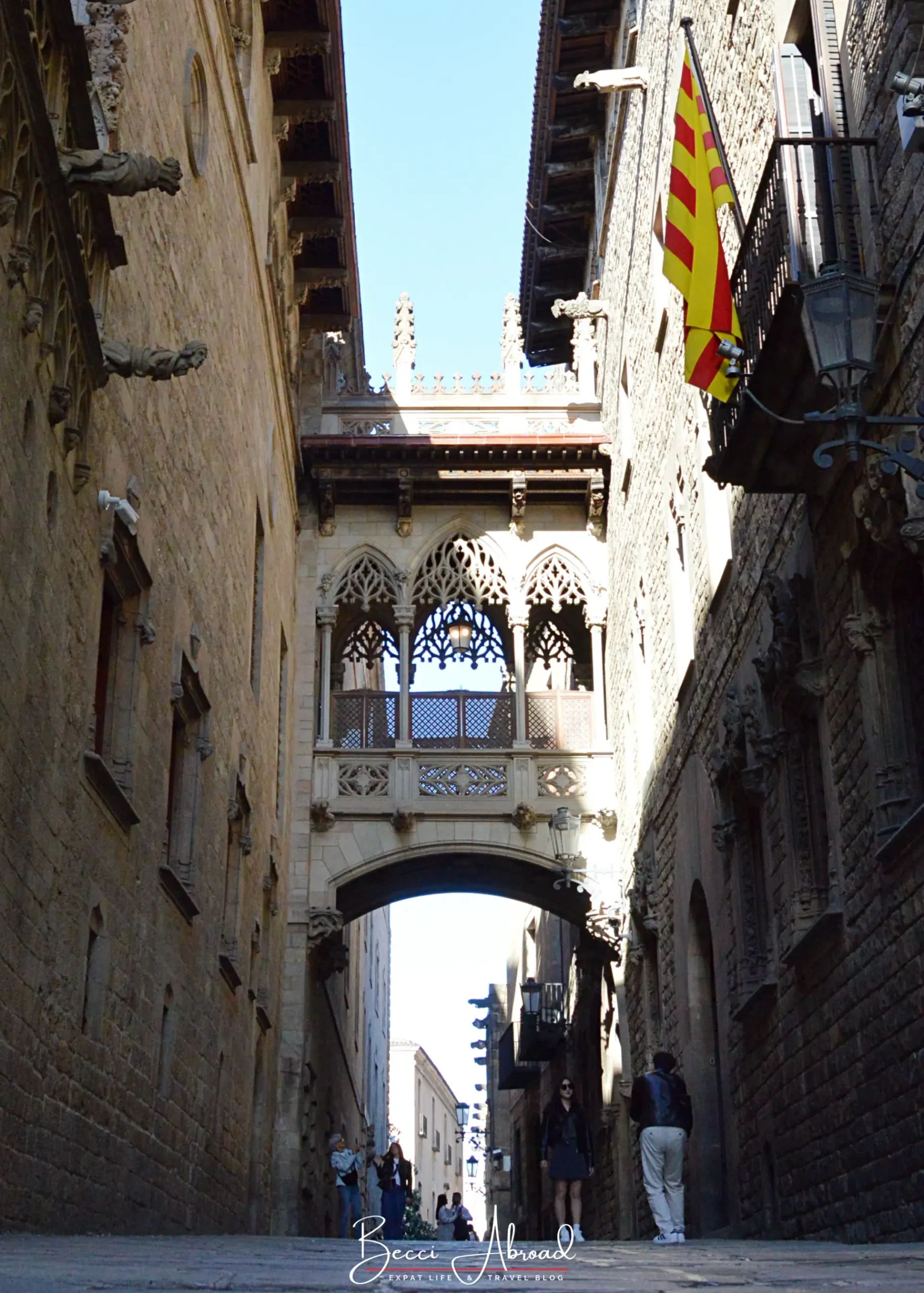
The Gothic Quarter, or Barri Gòtic in Catalan, is Barcelona’s oldest neighborhood and one of the city’s most popular places to visit! Within a few hundred meters, you can visit Barcelona Cathedral, Plaça del Rei, the arcaded Plaça Reial, chunks of the original Roman wall, and the photogenic Pont del Bisbe.
But… Here’s the honest version!
In the evening and at night, when the shops have closed and most tourists and cruise ship guests have gone, the Gothic Quarter isn’t the nicest area of Barcelona!
The narrow and dark streets make it hard to see, and the crowd that replaces the tourists is not the crowd you want to walk past on the way to your front door.
Personally, I never enjoyed the Gothic Quarter’s atmosphere after dark, and the few times I had to walk back to the metro alone after meeting up with friends, I have not exactly felt safe (and I used to live in Latin America!).
You should also keep in mind that the Gothic Quarter in Barcelona is the densest pickpocketing zone in the city.
In addition, the old buildings in the Gothic Quarter carry noise absurdly well, and you might be unlucky that your hotel is located right above a bar.
On weekends, the streets around Plaça Reial and down towards the port are stag-party territory.
If you really do want to stay in the Gothic Quarter, I would look for something closer to Plaça de Catalunya or towards Via Laietana, the main road that forms the border between the Gothic Quarter and El Born.
Lastly, I would steer clear of staying directly on La Rambla. I know it looks central and convenient on a map, but La Rambla is also the noisiest street in Barcelona, the street heavily worked by pickpockets, and generally the worst and most touristy place to eat in Barcelona.
The Gothic Quarter is Best to Stay in for:
- Night owls & party animals
- People who want history at their doorstep
- People who don’t mind crowds.
The downside of staying in the Gothic Quarter:
- The Gothic Quarter is crowded during the day, with many pickpockets roaming the narrow streets
- At night, the Gothic Quarter can get noisy and feel insecure (I never liked the atmosphere in the Gothic Quarter after dark).
Where to Stay in the Gothic Quarter: My Hotel Picks
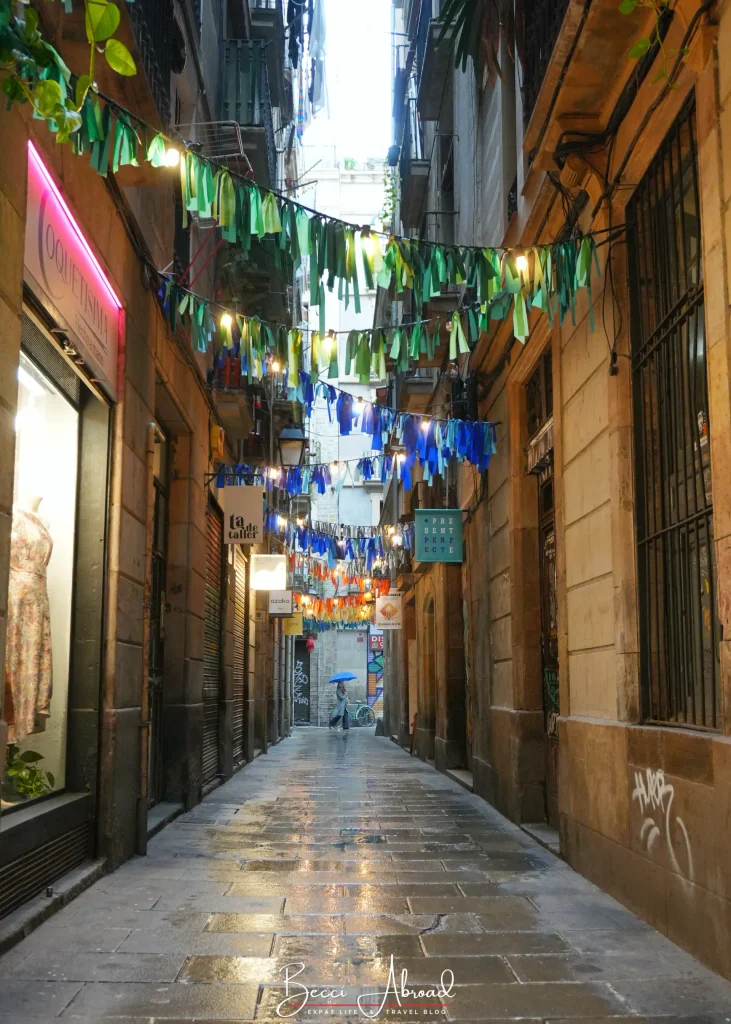
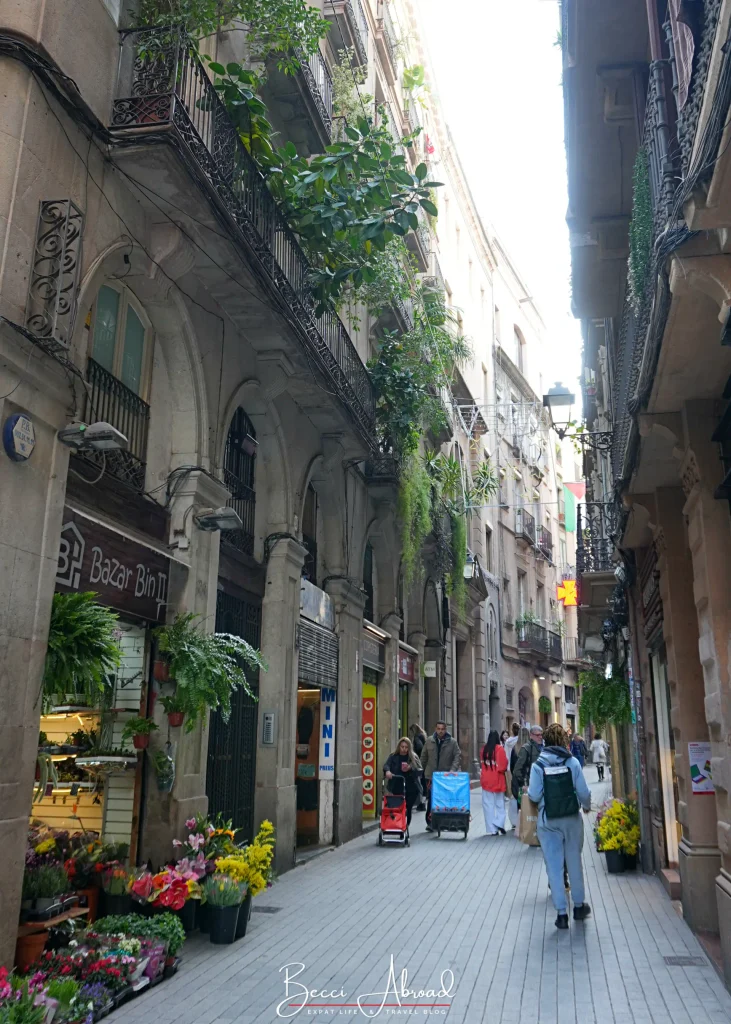
El Born: Old Town Vibes, Without the Old Town Crush
El Born is part of Barcelona’s Old Town without actually being part of the Gothic Quarter, even though most first-time visitors don’t realize that there is a difference!
El Born has a more bohemian and artistic feel than the Gothic Quarter, with small independent shops and art galleries.
In El Born, you also have a surprisingly large share of Barcelona’s museums: the Picasso Museum and the Moco Museum sit almost next to each other on Carrer de Montcada, and the Banksy Museum is a few minutes north near Arc de Triomf.
El Born is also home to the Santa Maria del Mar Church, the most beautiful church in Barcelona and, unlike the Cathedral, still mostly full of people who came to sit down rather than photograph it.
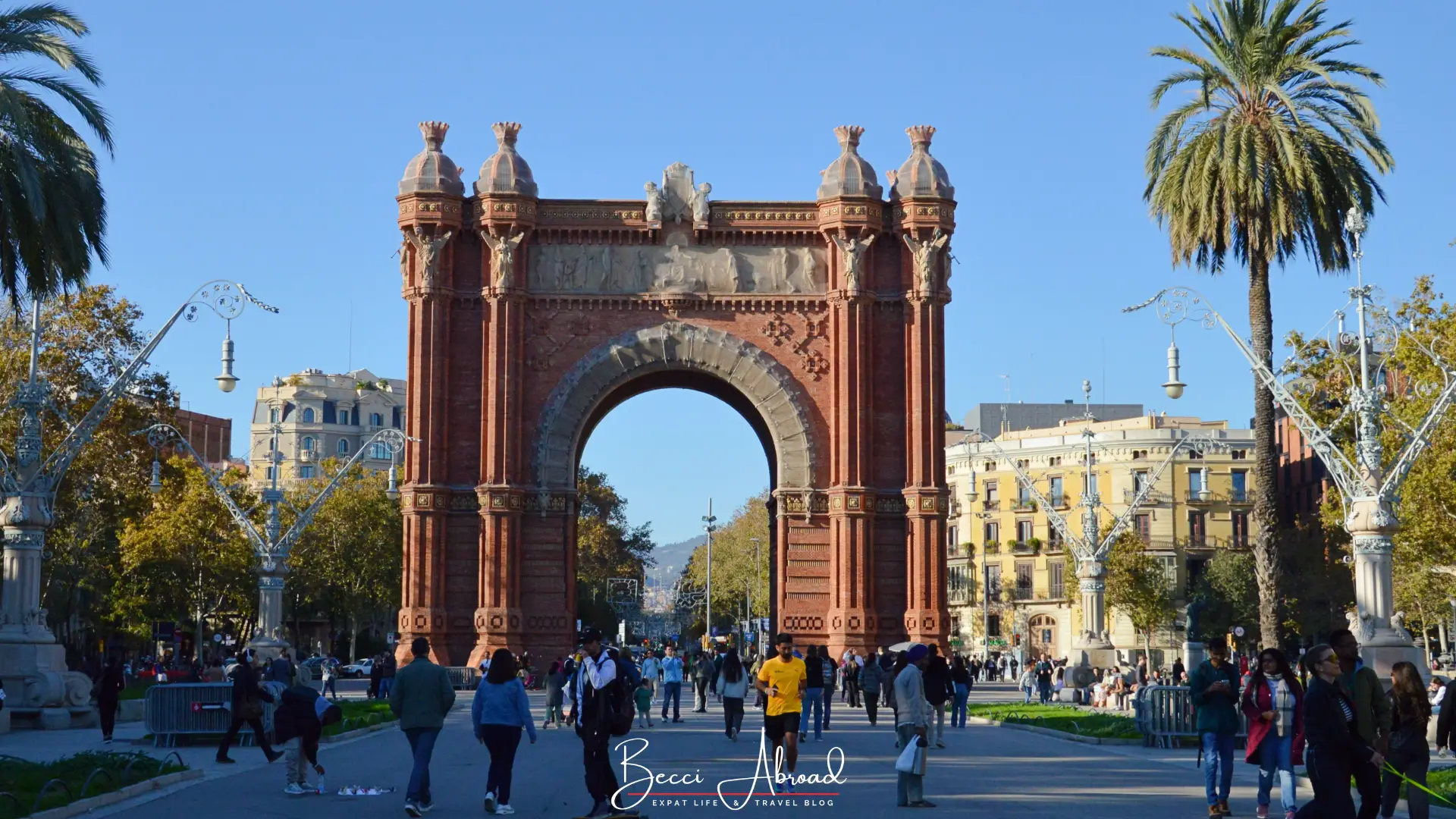
From El Born, you’re a short walk from the Gothic Quarter’s main sights such as Barcelona Cathedral, the Pont del Bisbe, as well as the Arc de Triomf and the Ciutadella Park.
If you really want to stay in Barcelona’s Old Town, I’d personally choose El Born over the Gothic Quarter every time.
El Born is Best to Stay in for:
- Couples
- Museum people
- Anyone who wants medieval Barcelona without the crowds and tour groups.
The downside of staying in El Born:
- Despite not being in the Gothic Quarter, you can still end up in an old building with thin walls, weak water pressure, no lift, or a bar directly downstairs. Read the recent reviews properly, and search them for the words “noise” and “shower” before you book.
Where to Stay in El Born: My Hotel Picks
Gràcia: A Village Inside the City
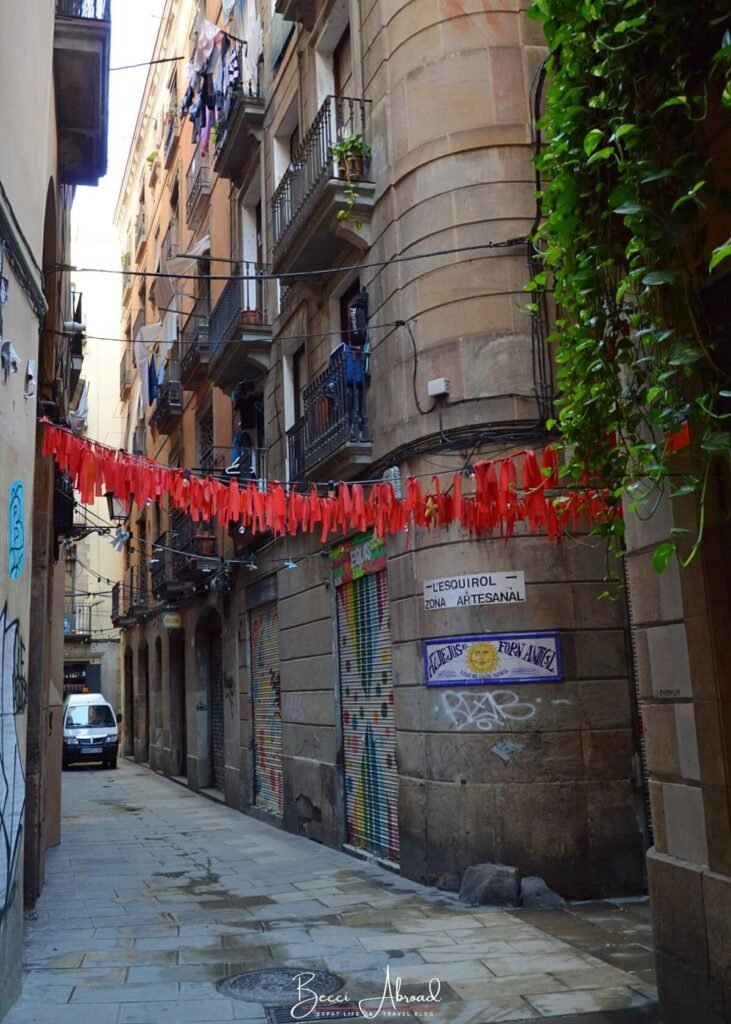
Gràcia is the neighborhood where Barcelona stops feeling like a tourism capital and starts feeling like somewhere people live.
Gràcia is located north of the popular Eixample neighborhood, and was an independent town until 1897. Honestly, I think this part of Barcelona never fully accepted the takeover.
In Gràcia, you are still close to Eixample and its many popular tourist sights. But instead of the wide boulevards of Eixample, you’ll find narrow tree-lined streets opening into a chain of small squares.
Each local square fills up with terrace tables and neighbours the moment the weather turns. In Gràcia, you’ll find many independent shops, chic vermouth bars, and few tour groups.
Some of Gaudí’s most important landmarks are even located in Gràcia:
The famous Park Güell is located on the hillside just above Gràcia, and Casa Vicens, Gaudí’s very first house (and the one most visitors skip), is located right in the Gràcia neighborhood.
If you’re in Barcelona in mid-August, you should not miss the local neighborhood party of Gràcia, Festa Major de Gràcia, when residents spend months decorating entire streets, and the Gràcia neighborhood turns into one enormous week-long party.
Gràcia is Best to Stay in for:
- Repeat visitors
- Slow travelers
- Anyone who’d rather eat where locals eat than where the guidebook says.
The downside of staying in Gràcia:
- You’re 20–25 minutes from the Old Town,
- The upper end of Gràcia towards Park Güell has some quite steep streets!
- Gràcia is more an area for holiday apartment rentals than hotels.
- The local squares that are so charming at 8 pm are still going at 1 am in summer.
Where to Stay in Gràcia: My Hotel Picks
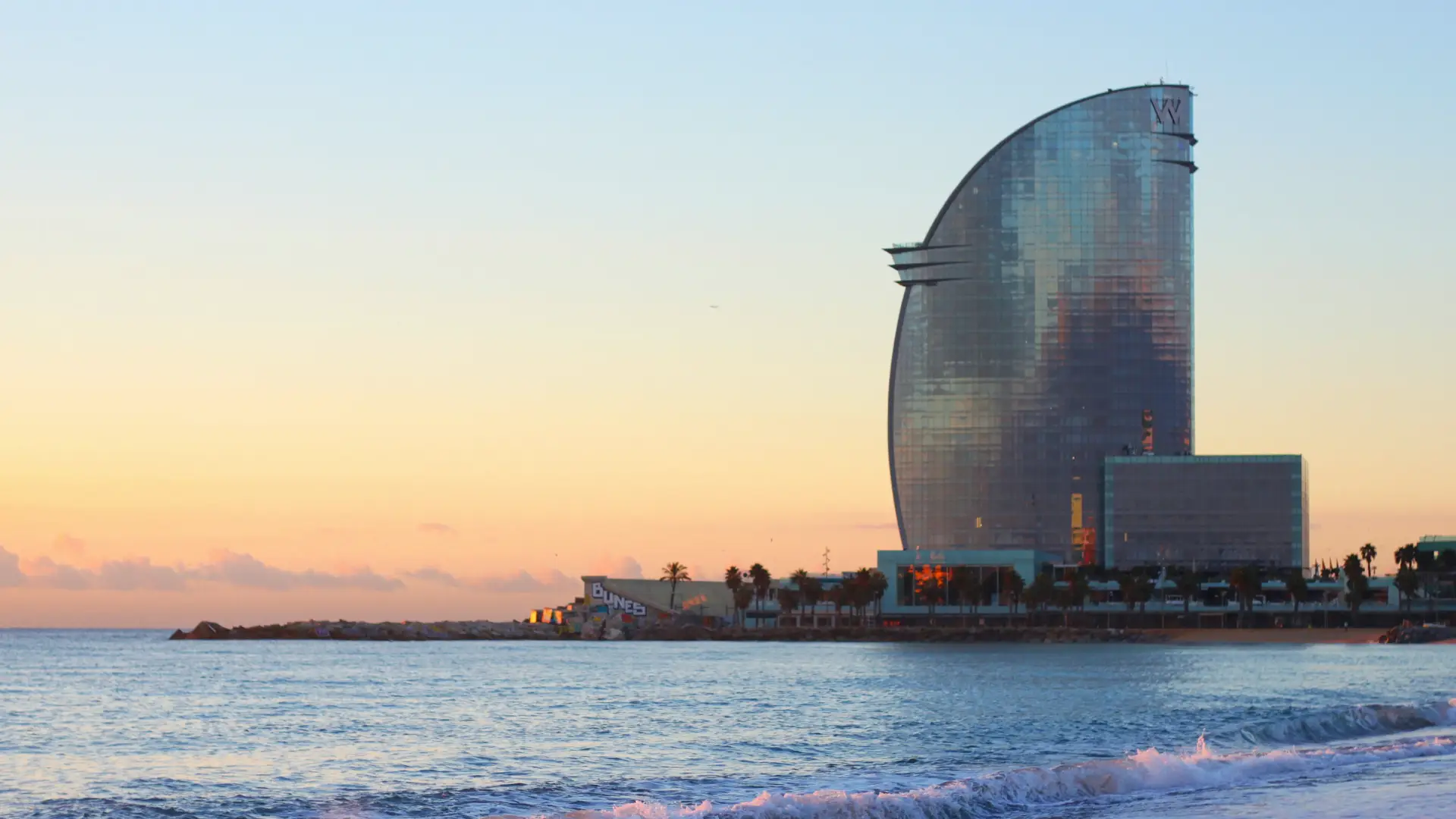
Barceloneta: The Beach Right at Your Feet
Barceloneta is the neighborhood sitting right on Barcelona’s most famous beach, and it’s the answer if “I want to swim before breakfast” is high on your list.
The Barceloneta area was built in the 18th century for fishermen and dockworkers displaced from the Old Town. This also explains the layout: the area is a tight grid of very narrow, very tall buildings, laundry across the balconies, and some of the best seafood in the city tucked into unglamorous corners.
The beach itself is largely man-made and built for the 1992 Olympics, and it’s a ten-minute walk from the Gothic Quarter. Having the beach this close to the old town is a very unusual thing for a European city, but Barcelona offers it!
Personally, I never really understood the hype about Barceloneta, but as you have probably guessed by now, I’m not the best person for crowded and loud places.
Barceloneta is the best area to stay in Barcelona if you’re prioritizing Barcelona as a beach holiday rather than a city break. Personally, I would still opt for staying in El Born or Eixample to have a good mixture of both.
Barceloneta is Best to Stay in for:
- Summer trips
- Beach-first travellers
- Seafood lovers
The downside of staying in Barceloneta:
- In July and August, La Barceloneta is packed, loud, and hot.
- Hotel stock is limited, so most of what you’ll find are small apartments in old buildings (this is also the neighborhood where locals have pushed back hardest against tourism).
Where to stay in Barceloneta: My hotel picks
Poblenou: Modern, Up-and-Coming Barcelona
Poblenou is Barcelona’s modern, up-and-coming area, where old industrial halls stand side by side with glass towers.
Traditionally, Poblenou isn’t a popular place to stay in Barcelona for international travelers and tourists, but I think you should give it a try – especially if you’re staying more than a few days in Barcelona and get a bit more peace.
Poblenou is located north of the popular Barceloneta beach, and the Ciutadella Park, and the city center can easily be reached by metro or bus.
The Poblenou neighborhood splits into two quite different halves:
- Vila Olímpica is the beach-and-marina side, closer to the center and fairly anonymous.
- 22@ district is the “proper” Poblenou around Rambla del Poblenou with a local atmosphere.
Poblenou was once known as the “Catalan Manchester,” with textile factories, warehouses, and chimneys. When the industry left, the city rebranded the Poblenou neighborhood as a tech and design district, also known as the 22@ district.
The result is a neighborhood with genuinely mixed architecture, a wide, leafy main street called Rambla del Poblenou, with local bars and restaurants. Rambla del Poblenou feels nothing like the tourist Rambla!
If you book “Poblenou” for this local and modern feel and end up in Vila Olímpica, you would probably end up quite disappointed!
Vila Olímpica is a more anonymous part of Poblenou, but it is located closer to the city center, and some of the accommodation options here are located very close to the beach!
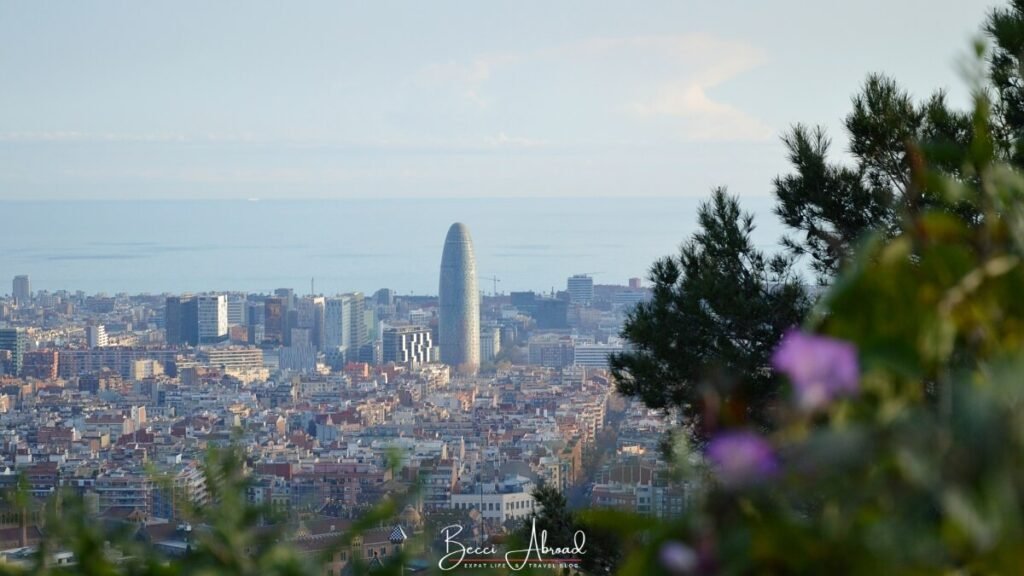
In Poblenou, you can also find one of Barcelona’s most famous (or infamous) modern landmarks, Torre Glòries.
Torre Glòries is a massive bullet-shaped building that can be seen from almost everywhere in Barcelona. At night, you can see Torre Glòries lighting up in different colors!
On the top floor of Torre Glòries, there is a popular indoor viewpoint. Personally, the Torre Glòries viewpoint isn’t my favorite viewpoint in Barcelona, but the building has become an icon of Barcelona and of Poblenou.
A huge benefit of Poblenou is the neighborhood’s string of beaches (Bogatell, Mar Bella, Nova Icària) that are cleaner and calmer than Barceloneta’s.
Poblenou is Best to stay in for:
- Families
- Longer stays
- Digital nomads
- Anyone who wants the beach without the beach crowds of Barceloneta.
The downside of staying in Poblenou:
- You’re 20-30 minutes from the Old Town (but only 10-15 minutes from Plaça de Catalunya),
- Poblenou will not give you the Barcelona classic feel of medieval streets and Modernista façades.
- Hotel options are limited compared with the center.
Where to Stay in Poblenou: My Hotel Picks
Sants-Montjuïc: Where the Mountain and the City Meet
Sants-Montjuïc is a large neighborhood in Barcelona, located south of Barceloneta beach, and a less popular neighborhood to stay in Barcelona.
The neighborhood is actually three different areas sharing one district name, and only two of them are worth booking.
The neighborhood of Sants-Montjuïc consists of:
- Poble-sec
- The Montjuïc Mountain
- Sants
The neighborhood of Poble-sec is located right at the foot of Montjuïc Mountain, on the northern part of the district, up in the corner towards the Old Town and Barceloneta.
Poble-sec is a good area to stay in if you want a quieter and more local experience of Barcelona, and don’t mind jumping on the metro to get to the popular landmarks in Eixample.
Generally, Poble-sec is also cheaper than the more traditionally popular neighborhoods to stay in Barcelona, such as Eixample and the Gothic Quarter.
The street Carrer Blai in Poble-sec is a pedestrian street lined with tapas bars where you pile up cocktail sticks and pay by the stick, one of the best-value evenings in Barcelona.
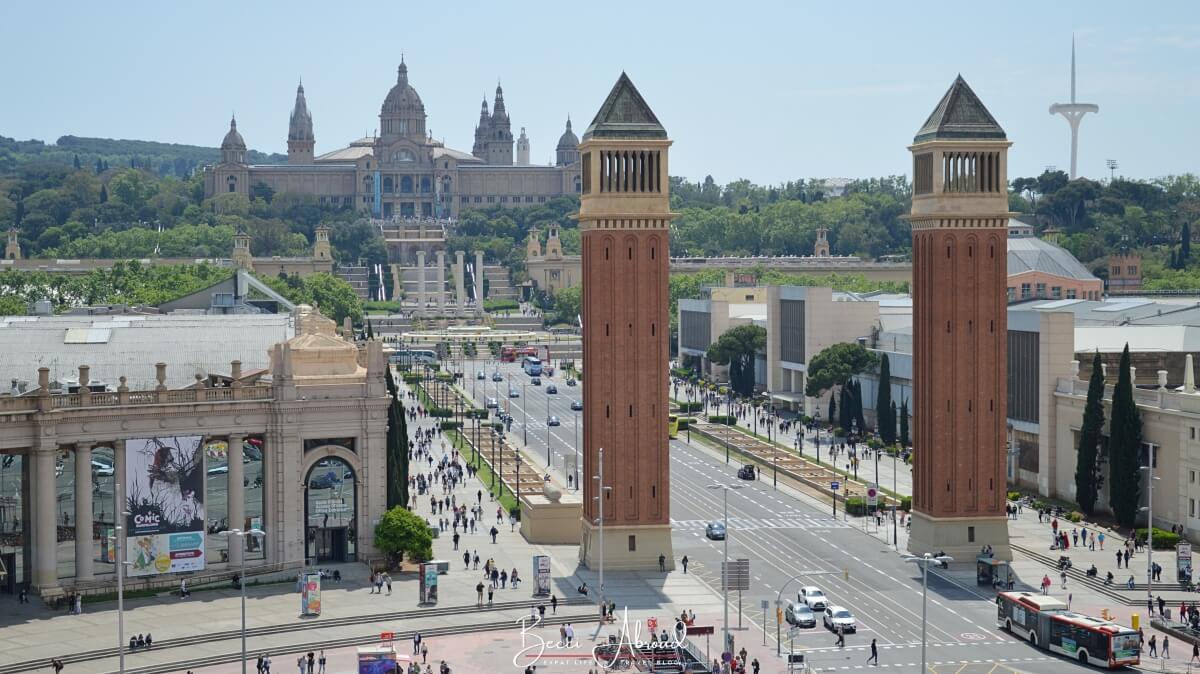
Montjuïc is the mountain that sits right above Poble-sec, and it features many of Barcelona’s popular tourist attractions such as the MNAC art museum, the Fundació Joan Miró, Montjuïc Castle, the Olympic Swimming Pool, and the Magic Fountain at Plaça d’Espanya.
But there is almost no accommodation on Montjuïc, and any accommodation in Poble-sec puts you at the bottom of the funicular to get to Montjuïc.
Sants is the last of the trio. The Sants neighborhood is mostly known for being the home to Barcelona’s main train station, Estació Barcelona-Sants.
Staying in the Sants neighborhood is a practical option if you’re only staying in Barcelona for a short while and you’re planning on taking the AVE train to Madrid or Seville afterwards.
The neighborhood of Sants itself isn’t the most charming place, so I would only recommend staying here if you find it practical to be close to the train station.
Sants-Montjuïc is Best to stay in for:
- Budget travelers
- Day-trippers by train
- Museum and viewpoint people
The downside of staying in Sants-Montjuïc:
- Montjuïc and Poble-sec are hilly areas of Barcelona, so you need to be prepared to walk up and down quite a lot.
- Montjuïc is one of the neighborhoods that is located the furthest from the beach.
- The area immediately around Sants station is bland at best and unpleasant at night.
Where to stay in Sants-Montjuïc: My hotel picks
Insider Tips for Finding the Best Place to Stay in Barcelona
Before you go ahead and decide where to book your accommodation in Barcelona, let me share some last tips on how to find the best place to stay in Barcelona.
Where to Stay in Barcelona on a Budget
Barcelona is not a cheap city anymore, and it’s about to get slightly less cheap (see the tourist tax section below). A few honest ways to bring the cost down:
Change neighborhood, not standard. The same money buys a noticeably better room in Poble-sec, Gràcia, or Poblenou than in Eixample or the Old Town. And all four are connected with Barcelona’s metro.
Another way to save on your Barcelona trip is to travel outside the peak season starting in May through to September.
Autumn (October and November) and spring (March and April) in Barcelona are still warm, still sunny, and generally cheaper than the busy summer months. Winter in Barcelona also has its own charm.
Buy a T-casual, not a tourist travel card. The T-casual gives you 10 metro or bus journeys in Zone 1 for around €13 (a single ticket is €2.90).
Just keep in mind that the T-casual does not cover the L9 Sud metro to the airport, and you’ll need a separate ticket to the airport.
Factor the tourist tax into your budget properly. For two people over four nights in a four-star hotel, it’s roughly €67 on top of the room rate.
Safest Areas to Stay in Barcelona
The safest central areas to stay are Eixample, Gràcia, and Poblenou.
Generally, pickpocketing is very bad in Barcelona, and you should keep an eye on your belongings when you’re out in the city.
The worst areas in Barcelona for pickpocketing are La Rambla and everything within a block of it, La Boqueria market, the metro (especially L3 and the entrance turnstiles), Plaça de Catalunya, the beach, and the crowd around the Sagrada Família.
However, violent crime isn’t too common in Barcelona. So, the realistic risk is that you lose your phone or your wallet, not that you get hurt.
A few rules for staying safe in Barcelona:
- Nothing valuable in a back pocket or an open tote, ever.
- Bag in front of you on the metro, strap across your body.
- Never leave a phone on a restaurant table, especially on a terrace next to a street.
- Don’t leave anything on the sand while you swim. Take turns.
- If someone gets physically close to you in a crowd, for example by spilling a drink, covering you with a map, or trying to suddenly hug you, check your pockets immediately!
Where NOT to Stay in Barcelona
While Barcelona is generally a safe city, despite a huge problem with pickpockets, there are a few areas in the city that I would avoid staying.
El Raval
This is the one I get asked about most, because the prices look great. El Raval is on the other side of La Rambla from the Gothic Quarter, and it is a genuinely interesting part of Barcelona.
In El Raval, you’ll find the MACBA Contemporary Art Museum, the local Filmoteca cinema, Botero’s fat bronze cat on the Rambla del Raval, and some of the best and most varied cheap food in the city.
Personally, I would stick to visiting El Raval during the daytime, but I just wouldn’t sleep there.
Directly on La Rambla
La Rambla is one of the most visited streets in Barcelona, dividing the Gothic Quarter on one side and El Raval on the other side.
Personally, I wouldn’t choose to stay on La Rambla. The street is noisy, and it is one of the areas in Barcelona with the most pickpockets.
There are so many other lovely places to stay in Barcelona that it doesn’t make sense to stay on La Rambla.
Before You Book: 3 Things to Know About Barcelona Accommodation in 2026
Before you book your accommodation in Barcelona, there are a few things you should keep in mind.
The tourist tax roughly doubled in April 2026
Since 1 April 2026, Barcelona charges a new, increased tourist tax.
The tourist tax is a combined regional and city levy of €12 per person, per night in a five-star hotel, €8.40 in a four-star hotel, and €9.50 in a licensed tourist apartment.
The tourist tax is charged per person and paid at check-out. The tax is not included in the price you see on Booking.com!
So, for a couple on a four-night trip, that’s roughly €67–€96 you hadn’t budgeted for when researching and booking your hotel.
The city surcharge is scheduled to rise again each year through 2029.
Tourist apartments are being phased out entirely by November 2028.
Barcelona is not renewing any of its more than 10,000 tourist apartment licences, and Spain’s Constitutional Court upheld the city’s right to do it.
This means that whole-flat holiday rentals in Barcelona will simply stop existing.
Two practical consequences: the legal apartment pool is shrinking now, so book earlier than you think.
And if you do book an apartment, check that it displays a HUT licence number, which is the registration number given to legally registered tourist and seasonal rentals in Barcelona.
Hotels, hostels and licensed guesthouses in Barcelona are unaffected by these new rules.
Old buildings are old buildings
In the Old Town and much of Gràcia, “charming 19th-century building” often also means no lift, four flights of stairs, unreliable water pressure, and thin walls.
If any of that matters to you, remember to do your own research before booking any accommodation in Barcelona. Searching in the reviews for “lift”, “stairs”, “noise” and “shower” before you book can sometimes help you find out what the accommodation didn’t put in the description itself.
Frequently Asked Questions
Where to Stay in Barcelona FAQ
Find answers to commonly asked questions about where to stay in Barcelona and the best areas in the city.
Final Thoughts: Where Would I Stay in Barcelona?
So, where would I stay in Barcelona if I were to book a trip to Barcelona again, you might ask!
Well, that’s a good question!
If I didn’t have to worry about money and travel budgets, I would choose to stay at The Barcelona EDITION in El Born or The Hoxton Poblenou.
I’m simply obsessed with the rooftop terrace at both hotels! The Barcelona EDITION’s terrace looks like the perfect green oasis to relax after a long day of visiting the city, while I’m not too keen on the location (old lady vibes, you know, I like to go to bed early).
The interior design of The Hoxton Poblenou is just so cozy and unique that I would love the chance to wake up in those settings. And then imagine ending the day with a glass of cava on the rooftop with the perfect view over La Sagrada Familia.
Buuuut… If I were to be financially responsible for my poor Spanish salary, I would book a room at Chic&Basic Habana Hoose or Room Casa Gracia.
I’m simply in love with the colorful retro Cuba-inspired interior design of Chic&Basic Habana Hoose, and the location in the heart of El Born makes it a great option for a short trip to Barcelona.
The setting of Room Casa Gracia inside a beautiful old modernist building, combined with the modern og stylish design of the rooms and one of the best locations in Barcelona for a fraction of the price you pay at other hotels in the area, is definitely one of the many reasons I would choose Room Casa Gracia for a Barcelona trip.
So, what about you? Where will you choose to stay in Barcelona?