
Things to Do in Havana, Cuba: 25 Best Sights and Local Gems
Cuba’s vibrant capital city, Havana, is on many travelers’ bucket lists of destinations to visit, and for a good reason!
Havana is a fascinating city!
The Cuban capital features beautiful colonial buildings, UNESCO World Heritage Sites, and a lot of fascinating history and culture… And, of course, many beautiful old vintage cars!
I have traveled to Cuba twice. The first time was in 2014 when I studied Spanish for five months at the University of Havana.
I have walked the dirt roads of Centro Habana, danced salsa in Vedado, taken countless local taxis, and drank mojitos on rooftops.
This post is for all of you planning your first trip to Cuba and Havana and wondering: what are the best things to do in Havana?
I share what, for me, after a total of more than 6 months in Havana, are some of the greatest things to do in Havana!
Let’s explore together!
A City Guide to the 25 Top Things to Do in Havana, Cuba
Disclosure: Some of the links below are affiliate links. This means that at no additional cost to you, Becci Abroad will earn a commission if you purchase through one of those links. This helps to pay the bills and the maintenance of the site.


Short Version: What Are My Favorite Things to Do in Havana?
The short version is that my favorite things to do in Havana are the ones that let you experience everyday Cuban life, but you should also see the classic sights.
Here are my top picks for the best things to do in Havana:
Of course, Habana Vieja and the Malecón Sea Drive are the classic things to do in Havana, so do not skip those.
Keep reading to see all the things to do in Havana!
Book an experience in Havana!
What to Do in Havana, Cuba?
To help you plan your travels to Havana, I have gathered some of my favorite things to do in Havana for first-timers.
I have divided the popular activities and attractions in Havana into different sections, so you can choose the section that suits you best for your trip to Havana, from classic things to do to local culture and lesser-known neighborhoods to visit.
Havana Map
Check out all the best things to do in Havana on this map. In the top right-hand corner, you can click on the full-screen icon and have the map open directly in your Google Maps app.
Classic Havana: Old Town, Malecón Sea Drive, and Vintage Cars
Let’s start with classic Havana!
These are the iconic things to do in Havana that most first-time visitors want to see, from the colonial streets of Habana Vieja and the Malecón Sea Drive to the vintage American cars.
Classic Havana is a great way to get to know the city, but it is also the most touristy part of Havana.
Walk Old Havana (Habana Vieja)
No visit to Havana is complete without exploring Old Havana, known as Habana Vieja in Spanish!
Habana Vieja is one of the most iconic tourist attractions in Havana.
The area is a UNESCO World Heritage Site, known for its well-preserved colorful colonial architecture, cobblestone streets, and picturesque plazas. Habana Vieja starts at Parque Central in central Havana and extends down to the Havana Harbor.
Throughout Havana, you will find a fusion of architectural styles between colonial Spanish architecture and 1990s Russian-inspired apartment blocks. However, in Havana Vieja, the Spanish Empire’s influence on Cuba and Havana is especially well represented in architectural style.
You could set half a day aside to wander through the narrow streets of Old Havana or join a free walking tour of Havana Vieja.
What to Do and See in Old Havana?
Here are some of the main points of interest in Habana Vieja:
Habana Vieja is one of the most popular places to visit in Havana for tourists since the neighborhood is pedestrian-friendly, easily accessible, and packed with restaurants, cafes, and souvenir shops.
Habana Vieja is cute, vibrant, and touristy. But for me, Habana Vieja doesn’t represent the Havana that most Cubans live in. The Cuban State has been investing heavily in renovating Habana Vieja to make it a beautiful and tourist-friendly area.
My recommendation is that when visiting Havana, you try to get out of the (touristy) comfort zone and also explore areas such as Centro Habana and Vedado (see more below).
Sign up for a private tour of Havana


Visit El Capitolio, the National Capitol Building
El Capitolio, also known as the National Capitol Building, is an iconic landmark in Havana that serves as the seat of Cuba’s national assembly.
The building is located centrally in Havana, just a stone’s throw from Habana Vieja and Parque Central. El Capitolio is a place you cannot miss visiting in Havana!
El Capitolio was constructed in 1929 and showcases stunning neoclassical architecture similar to the US Capitol in Washington, D.C.
El Capitolio has recently reopened its doors to the public after being closed for years due to restoration.
You can join guided tours of El Capitolio. On the guided tour, you will experience the building’s interior, learn about its history, and gain insight into Cuba’s political landscape.
Sign up for a guided tour of El Capitolio

Walk Along the Malecón Sea Drive
The Malecón is a five-mile-long oceanfront promenade and ocean drive, and it is one of the most iconic and picturesque places to visit in Havana.
The ocean drive stretches along the coastline, starting at the Havana Harbor and running through Habana Vieja, Centro Havana, and Vedado.
The Malecón offers stunning views of the sea. Watching the massive waves break against the stone walls is quite an impressive experience.
A visit to the Malecón will also introduce you to a more authentic experience of Cuban everyday life. Along the ocean drive, you’ll see locals fishing, young couples strolling hand in hand, and groups of friends gathering to chat and enjoy the sea breeze.
In the evenings, the Malecón is a hub for social activity. Locals gather to enjoy the Havana sunset with music, dancing, and laughter in the company of friends. Street performers try to entertain passersby or sell roses or small plastic cups with rum.
A walk along the Malecón is an essential part of any trip to Havana!
No matter whether you visit the Malecón during the day to admire the views of the sea and the historic buildings along the promenade or in the evening, soaking in the nightlife of Havana.


Ride in a Vintage American Car
The vintage American cars from the 1950s have become iconic symbols of Havana. One of the most iconic things to do in Havana is to get a ride in a vintage American car.
You will see classic vintage cars all around Havana and Cuba. The cars are not just for show for tourists visiting Cuba. The Cubans do use the old cars for getting around in Havana and between cities!
The classic cars used by the Cubans are normally the older and less-renovated classic cars you see around Havana. The nicer-looking and more renovated classic cars are the ones used for private tours for tourists.
A popular thing to do in Havana is to get a private tour in one of the old classic cars and cruise along the Malecón. There are many drivers offering tours around the city. Many of the drivers offering private tours are parked by Parque Central or in front of El Capitol.
In my opinion, the private tour in a classic car is a bit of a tourist trap in Havana. However, it can be a great way to experience more of Havana if you are only visiting for a short amount of time.
Sign up for a ride in a classic car in Havana
The Cuban Shared Taxis
In Havana, the Cubans use the old classic American cars as shared taxis, a bit like a small bus. The Cubans call them taxis colectivos or máquinas.
The shared taxis run in fixed routes throughout Havana. Along their route, the shared taxis will pick up locals. Several people can share the same taxi towards one destination or get off along the way.
The shared taxis are not only for Cubans! You can stop a taxi colectivo by waving your hand at them to stop; ask if they are going in the direction of where you want to go and jump on for a ride. You need to have a bit of understanding about Havana to know when to ask to get off. Read more on how to use the shared taxis in Havana.
When I stayed in Havana, I used the shared taxis a lot and had some funny experiences. But I admit that at first, it can be a bit terrifying.

Visit the Revolution Museum
The Revolution Museum, also known as Museo de la Revolución in Spanish, is located in the former Presidential Palace in Havana.
The Revolution Museum is one of the best things to do in Havana if you want to learn more about Fidel Castro’s Cuban Revolution.
The museum displays photo exhibitions and explanations of the events leading up to the Cuban Revolution. The museum also features different weaponry and relics from the Cuban Revolution, and a selection of artifacts from iconic figures like Che Guevara and other revolution heroes.
The Revolution Museum’s exhibitions provide an interesting and insightful look at Cuban history from a distinctly Cuban viewpoint, which I found especially interesting when visiting.
The museum is housed in an impressive and beautiful building from the 1920s. Originally, the building was designed for the provincial government, but once it was completed, it was used as the presidential palace.
The last president to use the building was Fulgencio Batista, Cuba’s president before and during the Cuban Revolution. On the museum’s walls, you can still see the bullet holes from when the palace was overthrown during the revolution, and Batista had to flee Cuba.
The Revolution Museum is located between Paseo del Prado and Habana Vieja.
Get more information on the Revolution Museum’s Facebook page.
Location: Calle Refugio 1, Havana.

Admire Cuban and International Art at Museo Nacional de Bellas Artes
Museo Nacional de Bellas Artes de Cuba is one of the best things to do in Havana for any art lover!
Museo Nacional de Bellas Artes, translated as the National Museum of Fine Art, features the largest collection of art in Cuba, including both local and international artists. This state-owned museum is considered one of the finest art galleries in the Caribbean.
The Cuban National Museum of Fine Art is located on Paseo de Prado in the center of Havana. The museum is divided into two buildings; one building is dedicated to Cuban art and the other building to international art.
The Cuban art collection showcases the country’s rich artistic heritage, featuring works by many renowned Cuban artists. In the international art section, you can admire works by famous international artists, including Picasso, Goya, and Rubens.
A visit to the Museo Nacional de Bellas Artes is a great thing to do in Havana if you want to learn more about Cuba’s artistic legacy and history.
Get more information about the museum’s entrance fee and opening hours.
Location: Trocadero & Avenida Bélgica, Havana.
Enjoy Paseo del Prado
Paseo del Prado, also known as Paseo de Martí, is one of the most beautiful streets in Havana and one of my favorite things to do in Havana.
A stroll along Paseo del Prado offers a glimpse into Havana’s rich history and architectural beauty. The street features iron lampposts, marble benches, and bronze sculptures that showcase the wealth and grandeur of Havana’s past inhabitants.
Paseo del Prado serves as a dividing line between Old Havana and Centro Havana, making it a convenient place to begin exploring the city’s different neighborhoods.
Get a Ride on a Bicitaxi
In Havana, bicitaxis are extremely popular! Bicitaxi translates to a bicycle taxi, and they are bicycles turned into small taxis with a seat behind the driver.
On almost every corner of the city, you can find groups of bicitaxis parked waiting for their next customer. The drivers will shout at bystanders in the hope of catching their attention.
A sentence that has become a synonym for bicitaxis in Havana is hasta la puerta de tu casa.
In English, hasta la puerta de tu casa best translates to “right to your doorstep”, because the bicitaxis will take you straight to any location you wish for in the city. If you are not sure what a bicitaxi driver is shouting at you, it is most likely: hasta la puerta de tu casa.
Despite what you actually might think, the Cubans do use the bicitaxis! Nevertheless, the bicitaxi drivers are especially interested in foreign tourists because they hope to charge them more or get a good tip from them.
Most bicitaxi drivers will try to overcharge you just because you are a foreigner. My recommendation is to always agree on the price for the ride before you jump in to avoid surprises at the end of the trip.
To be completely honest, those bicitaxis in Havana just didn’t do it for me. I quickly grew weary of the pushy male drivers attempting to charm me while also overcharging me.

Local Neighborhoods: The Best of Centro Habana & Vedado
Now let’s get out of the touristy comfort zone and explore the Havana that most Cubans live in!
In this section, we will explore Centro Habana and Vedado, which are more local and authentic than Habana Vieja, and where I found some of my favorite things to do in Havana.
Stroll through the Streets of Centro Habana
One of my favorite places to visit in Havana is Centro Habana, translated as Central Havana.
Centro Habana is a bustling district in Havana with a more local and authentic atmosphere than Old Havana.
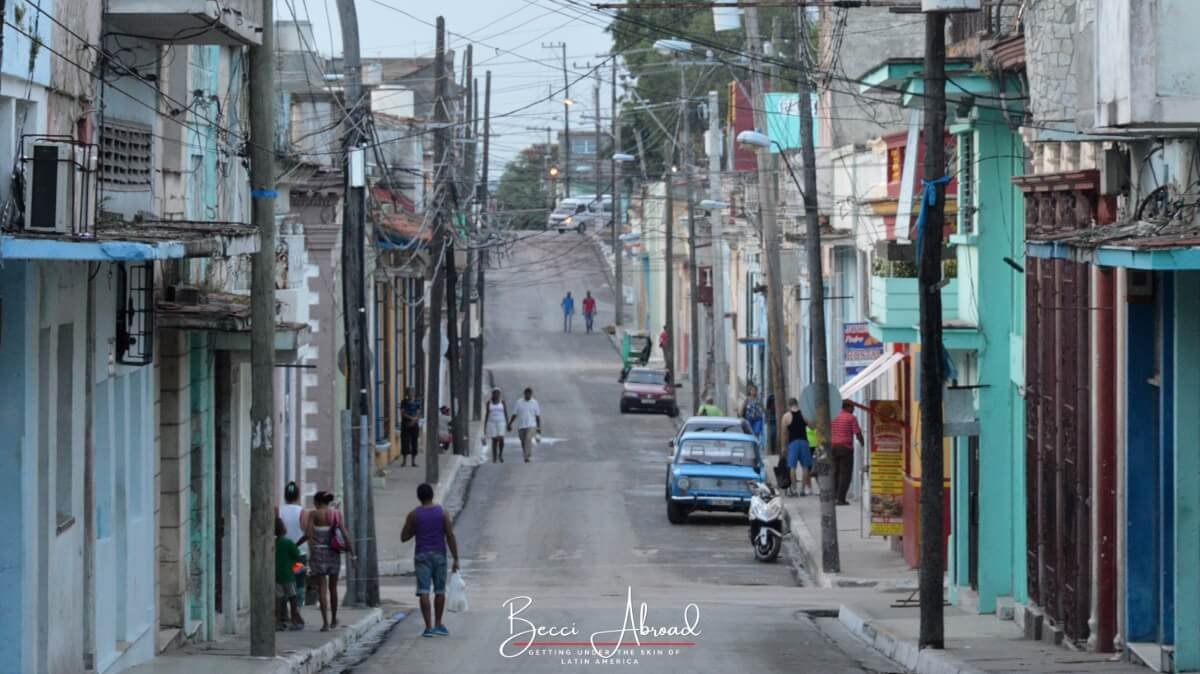
In Centro Habana, the buildings aren’t as newly renovated as in Old Havana. You will find badly maintained buildings with the paint falling off and doors hard to open.
But Centro Habana also has its charm!
You will find Cubans sitting in their doorways, chatting with their neighbors, shouting at acquaintances passing by, or buying a cafecito from a small local shop. The streets of Centro Habana may be broken and filled with potholes, causing the occasional clash of metal as cars navigate through them.
Centro Habana is filled with small local coffee shops, juice bars, and bakeries located as an extension of somebody’s house. Look for an open window with a menu card hanging outside or a front door transformed into a counter. Don’t be shy to shop at one of these small local shops to try the local specialties.
Get off the beaten path and wander through the narrow streets of Centro Habana. Here you can discover hidden gems and gain a deeper understanding of everyday life in Havana.
A great way to explore Centro Habana and learn more about everyday life in Cuba’s capital is to sign up for a free walking tour of Centro Habana.
To find your way to Centro Habana, stand at Parque Central with Calle Obispo behind you. In the right-hand corner, you’ll spot the beginning of Calle Neptuno, which is the gateway to Centro Habana.
Centro Habana lies alongside the famous Malecón seaside drive. So, if you happen to lose your way when exploring Centro Habana, simply heading toward the Malecón can help you find your bearings once again.
Join a free walking tour of Centro Habana


Wander the Streets of the Vedado Neighborhood
Vedado is a quieter and more residential neighborhood in the northern part of Havana. In Vedado, you can find stunning architecture, beautiful colonial houses with small gardens in front, local markets, and more of an authentic feeling of life in the capital city of Cuba.
The University of Havana is located in the Vedado neighborhood and is worth a visit. You can walk up the picturesque stairs of the university’s main entrance to get a great view over Havana down towards the Malecón. Inside the University of Havana, there is a beautiful little garden nestled between the old buildings of the university.
Vedado is also home to two of Havana’s most important avenues: Avenida 23 and Líneas.
The two avenues connect Havana’s famous Ocean Drive, el Malecón, with the opposite side of the city. Both avenues are hotspots for catching the local shared taxis to almost anywhere in Havana.
Calle 23 connects with the Malecón, so you might be lucky to catch a shared taxi toward the Malecón and get a part of that touristic drive on the Malecón in your own a la Cubano way.
You can get to Vedado from Habana Vieja by walking straight ahead on Calle Neptuno with Parque Central behind you. Calle Neptuno ends at the stairs of the University of Havana. You can follow the street around the university until you see the large building of Hotel Habana Libre.
Book a Modern Havana guided tour


Drink Mojito at Fábrica de Arte Cubano
Fábrica de Arte Cubano, translated as Cuban Art Factory, is a multi-level cultural space in Havana. In my opinion, Fábrica de Arte Cubano was hands down one of the most inspiring and interesting things to do in Havana!
Fábrica de Arte Cubano, or simply FAC, features contemporary art, has live music performances, and showcases new local and international films.
On weekends, Fábrica de Arte Cubano turns into a mix of a nightclub and an art museum, with popular Cuban music playing and some people dancing while others admire contemporary Cuban art hanging on the walls.
Fábrica de Arte Cubano is a perfect plan for a different night out in Havana to try a good, strong Cuban mojito while soaking in this modern and vibrant atmosphere.
Fábrica de Arte Cubano was founded by the famous Cuban musician and multi-artist X Alfonso around a decade ago.
The cultural space is located in a former cooking oil factory at the very far end of Vedado. It can be a bit of a hustle to get to Fábrica de Arte Cubano from the city center. The best option is to take a taxi.
Fábrica de Arte Cubano is open Thursday through Sunday from 8 pm to 2 am. The agenda of activities and events at Fábrica de Arte Cubano changes constantly, so check their Facebook or Instagram before going.
Location: Fábrica de Arte Cubano, Calle 26 between calle 11 & calle 13, Vedado (Havana)


Visit Callejon de Hamel
Callejon de Hamel is a colorful alleyway in the Centro Habana neighborhood, where you can experience Afro-Cuban culture and art.
Callejon de Hamel, or Hamel’s Alley, is covered in colorful murals, sculptures, and installations created by local artists. These artworks celebrate the rich cultural heritage of the Afro-Cuban community and pay homage to their traditions, beliefs, and history.
You can either explore Callejon de Hamel on your own or join a guided tour to learn more about the significance of the art and its connection to Afro-Cuban culture.
On Sundays, there are normally live music performances on Callejon de Hamel.
Honestly, Callejon de Hamel was my cup of tea. It felt extremely touristy, and I hardly heard of Cubans going to hang out there. So, most Cubans you will meet at Callejon de Hamel are there because they are trying to sell something to tourists.
Explore more of Havana with a guided experience!


Discover the History of Hotel Habana Libre
Hotel Habana Libre, formerly known as the Havana Hilton, is one of the most iconic hotels and landmarks in Havana.
Hotel Habana Libre is located in the heart of Havana’s Vedado district and shares a fascinating history.
Hotel Habana Libre was built in 1958 and hosted numerous famous guests. With the Cuban Revolution in 1959, the Habana Libre was turned into the revolutionary headquarters. Fidel Castro’s first press conference after overthrowing the Batista regime was held at the Hotel Habana Libre.
Today, the hotel’s lobby is still filled with historic photographs and artifacts from the Cuban Revolution.
For its guests, Hotel Habana Libre offers comfortable stays with stunning views of the city and the sea. The hotel also features several restaurants, bars, and a rooftop pool where guests can relax and enjoy stunning views over Havana.

Get Drinks at Hotel Nacional
Hotel Nacional de Cuba is one of the most iconic landmarks in Havana. The historical hotel is a great place to visit in Havana if you want to experience stunning architecture and a luxurious atmosphere.
The Hotel Nacional is located in the Vedado neighborhood on a small hill overlooking the Malecón Sea Drive and the Caribbean Sea.
Hotel Nacional was built in 1930 and features an interesting combination of Art Deco and Spanish architecture. Over the years, the Hotel Nacional has hosted several famous guests, including Frank Sinatra, Winston Churchill, and the famous writer Ernest Hemingway.
While a stay at Hotel Nacional might be out of your budget, you can still experience its charm by stopping by for drinks at the hotel’s bar.
Enjoy a classic Cuban cocktail like a mojito or daiquiri while soaking in the history and elegance of this historic place.
Join a cocktail tour of Havana


Visit the Revolution Square
The Revolution Square, also known as Plaza de la Revolución, is one of the most iconic things to do in Havana.
The Revolution Square is a vast square with iconic monuments and buildings like the José Martí Memorial and the Cuban Ministry of the Interior (in Spanish, el Ministerio del Interior).
The Cuban Ministry of the Interior is most famous for being the home to the giant mural of the famous revolutionary fighter Che Guevara with the iconic phrase from the Cuban Revolution, “Hasta la victoria siempre”, translated as “Always toward victory”.
Plaza de la Revolución is famous for its historical significance as the place of many political rallies and events throughout Cuba’s history. When I studied in Cuba, I got to experience the massive rally taking place on International Labor Day, the 1st of May, at Plaza de la Revolución.
Plaza de la Revolución is located quite far from both the city center and Central Havana. So, the best idea is to get a taxi or a guided tour to visit Plaza de la Revolución.
The guided tours offer a chance to learn about Cuba’s revolutionary past and gain insights into Cuban history.
And honestly, if you don’t do a tour to learn more, there isn’t much more to do at Revolution Square than take a picture of the Che Guevara Mural.

Local Cuban Culture, Customs, and Traditions
Havana is not only about the sights. It is also about the culture, the music, and the food!
In this section, I share the things to do in Havana that helped me understand Cuban culture, customs, and traditions, from traditional Cuban food and coffee to salsa, live music, and baseball.
Eat a Traditional Cuban Dinner
When visiting Havana, one of the best things to do is to try a traditional Cuban dinner like ropa vieja (shredded beef), congrí (rice and beans), and tostones (fried plantains).
The Cuban cuisine offers many tasty dishes. However, you cannot come to Cuba without trying arroz y frijoles (rice and beans) at least once!
Rice and beans are essential in Cuban cuisine!
Rice and beans are normally served as a side dish together with carne de cerdo (pork meat) and plátano frito (fried banana).
There are two versions of how to make arroz y frijoles in Cuba:
- Cooking the rice separately from the beans. The beans are cooked as a sauce to be added afterward.
- Cooking the rice and beans all together, so it becomes one rice and bean mix.
Rice and beans might seem a bit boring. BUT if you find a good place where you can get a good homemade portion of arroz y frijoles, it can be very tasty and very authentic Cuban food.
One popular option for a traditional Cuban dinner is to visit a paladar. A paladar is a privately owned restaurant that serves home-cooked meals with a personal touch. These establishments often offer a cozier and more intimate atmosphere than restaurants.
Another popular option to try authentic Cuban food is to take a Cuban cooking class. With a cooking class, you will learn to make Cuban food yourself, so you can prepare Cuban food even when you are back home!
If you are staying in a casa particular, you can also ask for arroz y frijoles there.
For me, trying a traditional Cuban dinner at a locally-owned restaurant, a cooking class, or a casa particular is one of the absolute best things to do in Havana!
Try a Cuban cooking class in Havana


Try Cuban Coffee
One of the best things to do in Havana is to start your day in an authentic Cuban fashion with a cafecito, a rich and flavorful Cuban coffee.
Cuban coffee is made by brewing espresso with sugar to create a sweet and potent drink. It is typically served in small cups called tacitas.
Cafecito is the diminutive of the Spanish word café, or translated as coffee. Cubans love to make diminutives of all kinds of words by adding -cito, -cita, -ito, or -ita to the end of the words. For example, mamacita (little mother), hermanito (little brother), and of course, cafecito.
A Cuban cafecito can be enjoyed on its own or as part of a traditional Cuban breakfast with fresh fruits. The local way of drinking the cafecito is on the spot from the street cafe to get a quick energy boost before you head on with your day.
To try authentic Cuban coffee, head to Centro Habana and find any small local cafées located in an open window of somebody’s home. Ask for a cafecito (black espresso coffee) or cortadito (espresso shot with a bit of milk).
Trying an authentic Cuban cafecito is one of those small things to do in Havana to experience the soul of everyday life in Cuba’s capital city.

Dance Salsa
One of the absolute best things to do in Havana to embrace Cuban culture is to sign up for a salsa class!
Salsa dancing is deeply ingrained in Cuban culture, and taking a salsa class in Havana will help you better understand the salsa moves.
There are many dance schools and instructors offering salsa lessons for all levels of experience. I used to take some salsa classes at a local dance school in Centro Habana, called Casa del Tango y Salsa. They offer classes for all levels.
However, if you are like me and more on the beginning scale of salsa mastery, a beginner salsa class from Civitatis might be less terrifying than going to a local school.
Many clubs and bars in Havana also offer salsa nights where you can watch professional dancers and maybe join in on the fun.
Listen to Cuban Music
Cuba is famous for its vibrant music and dance culture, and Havana is the perfect place to experience Cuban music.
Havana is filled with bars and clubs where you can experience Cuban music, everything from traditional Afro-Cuban rhythms to salsa and jazz.
Sometimes, you can even pop into live music performances happening on the streets where locals gather to jam together.
For live performances by local Cuban musicians, try out some of these venues:
During my months studying in Havana, I went several times to La Zorra y El Cuervo and Casa de la Amistad.
La Zorra y El Cuervo is located in Vedado and has live jazz performances most nights. The entrance is through a red English phone booth on Calle 23 – it is hard to miss when you know that it is the entrance!
Casa de la Amistad is a gorgeous, old building located on Avenida Paseo in Vedado. Live music performances normally take place on the weekends. It can be a bit difficult to figure out the program online beforehand. So, it might be a good idea to head out there during the day to check with the staff. Even if you can’t make it to one of the live performances, the building that houses Casa de la Amistad is still worth a visit, and there is a small bar inside the house.
If you want to dive even deeper into learning about Cuban music (and you are just a little bit more capable with instruments than me!), there is a great Cuban music class available on Civitatis!
For me, getting to experience Cuban music firsthand is, without any doubt, one of the greatest and most unique things to do in Havana!
Book a Cuban music class in Havana

Stay at a Casa Particular
A Casa Particular is a small, privately owned bed and breakfast that invites travelers to stay with a Cuban family during their visit to Cuba.
Casas particulares are extremely popular throughout Cuba, especially in Havana. In Havana, you will find a wide variety of different casas particulares within different price ranges. There is everything from Cuban renting just a small room in their house as a casa particular to almost whole mansions.
Staying at a Casa Particular is often more affordable than staying at a local hotel. Many of the casas particulares also offer either breakfast, lunch, or dinner (or all of it!), giving you the chance to try a real traditional home-cooked Cuban meal prepared by your hosts.
The Cuban government holds very tight control over the casas particulares to ensure that they meet certain standards of quality and safety. You should also not be surprised if you are asked the register when you arrive to check in at a casa particular.
In recent years, Airbnb has become more accessible in Cuba, making the booking of casa particulares a lot easier than it used to be.
It is my strong recommendation that you try to stay in a casa particular at least once when visiting Cuba! A stay at a casa particular is one of the best ways to learn about Cuban culture and traditions, and experience authentic Cuban hospitality!

Learn About Cuban Santería
Santería is a local Cuban religion that combines African beliefs and rituals with elements of Catholicism.
Santería originates from the Yoruba people of West Africa. However, santería has been practiced in Cuba for centuries, and santería plays a significant role in the daily lives of many Cubans.
Throughout Havana and Cuba in general, you will see representations of santería in the form of necklaces and bracelets, dried palm leaves over doorways, or people dressed in white from top to toe.
Cubans tend to be open and welcoming when talking about santería, so it’s important to listen attentively and respectfully, given its importance to them.
One of the best ways to learn about santería and this unique and fascinating aspect of Cuban culture is to join a Yoruba Religion Tour in Havana.
Learning about santería is, for me, one of the best things to do in Havana to get under the skin of understanding Cuban traditions and culture.
Learn more about santería and the Afro-Cuban culture
Take a Spanish Lesson
One of the best things to do in Havana is to take a Spanish lesson. I’m a big fan of improving your Spanish by being in a setting where you have the opportunity to practice Spanish with native speakers – both inside and outside the classroom!
Havana is also a fun place to learn Spanish! Cubans have a very unique Spanish dialect and pronunciation, with many popular local Cuban slang words. Many of these Cuban slang words are very different compared to other Spanish-speaking countries.
When I stayed in Cuba, I took a Spanish course at the University of Havana. Unfortunately, it seems like the University has stopped offering these classes. However, there are many other language schools and private tutors in Havana that offer personalized lessons based on your needs and level of proficiency.
What I really enjoyed about the Spanish class, apart from improving my Spanish, was having a safe space to ask the teachers questions about Cuban history, traditions, and way of life.
So, whether you are a beginner looking to learn the basics or an advanced learner wanting to improve your skills, taking a Spanish lesson in Havana will help you learn more about Cuban Spanish!


Finish Your Day with Baseball or Telenovela
Cubans are known for their love of music, social gatherings, and parties. However, many Cuban families enjoy ending their day by watching television, whether it is a baseball match or the latest episode in the ongoing telenovela.
Telenovelas can best be translated as soap opera TV shows. The telenovelas in Cuba are mostly imported from other Latin American countries, but you might also find a local Cuban show.
At around 9 pm, most residential streets are usually quiet as people stay indoors to watch the evening’s telenovela episode.
Baseball is a very popular sport in Cuba and an essential part of everyday Cuban life. Cubans normally call baseball pelota, translated simply as “ball”.
Most Cubans have strong opinions about recent baseball matches and their favorite teams.
The baseball team from Havana is called the Industriales, and their team colors are blue and white. In Havana, you will see many Cubans in the Havana team’s blue-and-white colors and Industriales logo on their clothes.
The baseball teams from other cities are easier to identify since their names are based on their city of origin.
Baseball’s popularity in Cuba is something that I don’t fully grasp, but that’s probably more on me for growing up in a country without a strong baseball culture.
If you are staying in a casa particular, you can ask your host family if you can join them for a real Cuban night-in with baseball and telenovela.

Day Trips from Havana
Havana has plenty to keep you busy, but a day trip is a great way to see a different side of Havana.
In this section, I share two day trips from Havana: the historic fortress on the hill overlooking Havana Bay and the beaches at Playas del Este.
Get the Best Views From Fortaleza de San Carlos de la Cabaña
Fortaleza de San Carlos de la Cabaña, also simply known as La Cabaña, is a historical fortress located on a hill overlooking Havana Bay, just across from Old Havana.
The fortress was built in the 18th century to defend Havana from foreign powers and pirate attacks. Fortaleza de San Carlos de la Cabaña is considered one of the largest fortresses in the Americas.
Fortaleza de San Carlos de la Cabaña offers some of the best views of Havana and the surrounding coastline, with the Malecón and the blue waters of the Caribbean Sea.
In 1982, Fortaleza de San Carlos de la Cabaña was declared a UNESCO World Heritage Site, and today it operates as a historic site and museum.
The fortress is open to the public to visit and explore both the fascinating history of La Cabaña as well as Cuba’s military history. The fortress is also used to host book fairs and other cultural events.
Every evening at 9 pm, you can experience a traditional cannon ceremony at La Cabaña. This ceremony dates back to 1774 and is still in place. It is a truly amazing way to both experience the fortress, its history, and the great views of Havana at night!
To get to Fortaleza de San Carlos de la Cabaña, you can hike up the hill, take a taxi, or go on a guided tour.
Read more about how to visit Fortaleza de San Carlos de la Cabaña.

Take a Day Trip to the Beaches at Playas del Este
One of the great things to do in Havana is to take a day trip to visit the peaceful beaches at Playas del Este, or translated, the beaches of the East.
Playas del Este are located a short drive from Havana’s city center, and the area offers a long stretch of coastline with white sand and turquoise-colored water.
The stretch of coastline that makes up Playas del Este starts at Bacuranao and ends at Playa Jibacoa, with about six picturesque beaches.
Playas del Este is perfect for swimming, sunbathing, and relaxing without having to plan a trip to one of Cuba’s main beach resorts, which can easily break the bank if you are traveling on a budget.
At Playas del Este, you can rent lounge chairs and beach umbrellas, and there are small shops to buy refreshments.
On the weekends, the beaches at Playas del Este get busy when Cubans also head out here to escape the noise and chaos of Havana. You will see Cuban families or groups of friends lounging and enjoying the white sand and clear waters while sharing a bottle of rum.
If you are on a tight Cuba itinerary, then Playas del Este might not be your top choice. You should plan a visit to Playas del Este to be more or less a day trip from Havana.
Personally, I enjoyed visiting these beaches because they are not just created for and used by tourists.
How to Get to Playas del Este from Havana?
To get to Playas del Este, there are three options from Havana:
- Tourist bus, T3
- Shared taxi ride
- Private taxi ride
Let’s take a look at each of the ways to get to Playas del Este.
Tourist bus line T3
The tourist bus line T3 is the most straightforward way to get from Havana to Playas del Este. The tourist bus T3 leaves from Parque Central in Old Havana. The bus will take you to Playas del Este and stop at the main beaches on the stretch that makes up Playas del Este. Get more details about the different beaches on Playas del Este.
A Shared Taxi to Playas del Este
The second way to get from Havana to Playas del Este is with a shared taxi. This is the more authentic Cuban way to get to Playas del Este. The shared taxis to Playas del Este leave from Parque de la Fraternidad, located south of El Capitolio in Old Havana.
The shared taxis to Playas del Este also tend to be the cheaper option. However, the drivers might try to charge you more for being a foreigner than they charge Cubans.
Sometimes, especially during weekends and public holidays, it can also be very hard to get on a shared drive. So, if you don’t want to hustle and bustle, it might be more straightforward to jump on the tourist bus.
A Private Taxi to Playas del Este
The third way to get to Playas del Este from Havana city center is to hire a private taxi. There is a big difference in the price of the private taxis depending on whether you want to hire a normal taxi or one of the pretty old vintage cars available around Old Havana.
If you don’t book the private taxi beach trip beforehand, it is a good idea to agree on the price before you jump on to avoid any unpleasant surprises at the end of the trip.

Planning Your Trip to Havana
Now we have looked at the best things to do in Havana, but how do you actually best plan your trip to Havana? Here are some of my best travel tips for visiting Havana.
How Long Do You Need to Visit Havana?
There are so many great things to do in Havana that it can be hard to decide how long time you need to visit!
If you have the time, I would recommend spending around 5 – 7 days exploring the Cuban capital. That gives you enough time to wander around and explore some of the more secret and less-touristy areas, as well as the most popular tourist attractions in Havana.
However, if you are on a tight schedule and want to see more of Cuba, spend at least 3 – 4 days to discover the best things to do in Havana and to try some of Cuba’s delicious food and drinks!
How to Get Around in Havana?
Havana is a relatively easy city to get around, especially if you’re staying in the most touristy areas, and you can walk to most places. For getting to neighborhoods outside the city centre, you might want to stop a taxi or jump in a local shared taxi.
Here are the best ways to get around in Havana:
What is a Shared Taxi (máquina) in Havana?
The function of the local taxis in Havana can best be compared with a small bus. They run on a network of routes across Havana, dropping off and picking up people along the way.
Using the máquinas, of course, requires a minimum of knowledge about the streets of Havana. However, as a rule of thumb, the máquinas
Los taxis
A misconception of many visiting Cuba is that these máquinas are only for Cubans. I have never been denied entry or anything, and you get a great authentic feeling for Cuba. Also, don’t start asking about the price, as the driver might take it as an indication for giving you a private tour.
How to Use a Shared Taxi in Havana?
First of all, we need to get on one of the shared local taxis. For that, place yourself on the side of a street, by a crossroad or junction in the direction you want to go, and wait.
When you see one of the old cars with a little taxi sign in the window, you pull out your hand to signal that you would like to go with them.
If you are traveling with more people, you can indicate the number of people by showing that amount of fingers to the driver. I would highly recommend not traveling with more than three people together, as it might be hard to find a taxi with enough space.
Don’t be offended if the car doesn’t stop; it usually means that it is full. Sometimes, the driver pulls out his hand and shows you a half-open, upright-facing hand (a bit like a cup), meaning the car is already full. But mostly they will just drive past you without signaling.
If the car stops, quickly approach the driver by addressing him by the window or opening the door and ask: ¿Para dónde vas? or ¿Vas a/por… (and the name of the street your what to go to)?
If your Spanish is a bit rusty, go for the ¿Vas por…? as this only requires you to understand
You will need to tell the driver yourself when you want to get off.
When you approach the place you want to get off, kindly tell the driver to stop. If you are in the back of the car, you will probably need to shout for the driver to hear you.
Approach him with: Déjame allá en la esquina, por favor, or ¿Puedes dejarme en la próxima esquina?
Or the simpler version: Aquí, por favor, or Déjame aquí, por favor.
Before he stops, give him the money. Sometimes this includes the other passengers helping out a bit by passing the money to the driver. Jump out, and end your trip with a Gracias!
If you are still not so used to the streets of Havana, I recommend that you use the offline version of your map on your phone or start out using the máquinas to a place you can recognize.
My advice is to start out catching a local taxi somewhere on
Or the other way, going from the university down San Lazaro towards Parque Central. Since both Parque Central and the university are landmarks easy to recognize from the backseat of a car, you will need to tell the driver when to get off.
Nevertheless, you should be very aware of not ending up with a private taxi if you take it from the beginning of Calle Neptuno or Parque Central. These are touristic hotspots, and the taxi drivers are completely aware of the fact that tourists don’t usually know the difference between “taxi
Where to Stay in Havana?

Havana FAQ
Find answers to commonly asked questions about Havana.
Final Thoughts: Is Havana Worth Visiting?
So, is Havana worth visiting? Personally, I think that Havana is very much worth visiting!
But I also want to be realistic and say that Havana, in particular, and Cuba, in general, are not for everyone. Cuba isn’t an easy, straightforward country to visit, and things that we take for granted in Europe and North America cannot be taken for granted in Cuba.
That being said, I would definitely still recommend visiting Havana – as long as your expectations are aligned!
Havana has beautiful colonial buildings, UNESCO World Heritage Sites, and a lot of fascinating history and culture, and of course many beautiful vintage cars.
The things I loved most about Havana were wandering through the streets of Centro Habana and buying a cafecito from a small café in an open window, listening to live music in Vedado, and a night out at Fábrica de Arte Cubano.
My recommendation is to see the classic sights in Habana Vieja, and then get out of the touristy comfort zone to see the Havana that most Cubans live in.
A few of the most popular spots, like Callejon de Hamel, also felt extremely touristy to me, and I didn’t particularly enjoy this area.
The streets in Centro Habana are broken and full of potholes. But for me, that is all part of the charm of Havana!
If you are planning your first trip to Havana, I recommend spending 5 to 7 days in the city and staying in a casa particular at least once.
Have you been to Havana, or are you planning a trip to Cuba? Share your thoughts and questions in the comments below!




This is somewhere I have always wanted to visit, great post! You have a lovely blog here too by the way, well done on all your hard work pretty lady! x
adelelydia.blogspot.com
Hi Adele,
Thank you so much for your nice comment! I’m so happy to hear that you enjoyed the reading and the blog! You should for sure visit Cuba some day 🙂
I have heard that walking through Cuba is like going back in the past, because of their 50s cars! It’s so interesting that they like to walk in the middle of the streets! I’ll have to bookmark this, in the case that I visit Cuba someday!
Kim
Simply Lovebirds
Hi Kim 🙂 Thank you so much for your comment! I’m so happy that you liked the reading! Yeah, Havana is a bit like walking around in the 50s. Feel free to ask anything you want when you one day plan your Cuba trip!
Great Post! I have never been to Latin America before but next month my first trip to Panama is coming up which I am pretty excited for! I will have a layover in Havana, but after reading this I am regretting not making it an actual stopover and explore the city for a day or two. That probably wouldn’t have been enough time anyway, so I hope I’ll get to go to Cuba one day, It looks amazing! 🙂
Thank you so much, Becky! You should definitely visit Cuba one day! It is a very fascinating country. But properly best just to say at the airport when you have the layover for now – usefully a flexible schedule is needed for doing things in Cuba 😉 Btw. I recommend you to pack some extra snacks for your layover in Havanan! Their supply of food and snacks is VERY limited!
I’m looking forward to checking out your updates on Panama! Thinking about going there myself 😉
Excellent guide. This is actually somewhere I really want to go so it was great reading about it.
Thank you so much, Lizzie! Happy to hear that you found the guide useful!
Hej Rebecca, jeg har lavet en kommentar men aner ikke om den er gået igennem. Jeg får ingen besked om det.
Annette
Hej Annette,
Det var da vældig mærkeligt! Den gik i hvert fald ikke hele vejen igennem til mig! Beklager virkelig, at du blev nødt til at skrive den igen 🙁
Tusind tak for de fine ord! Jeg er meget glad for at høre, at du kunne bruge guiden til inspiration. I skal da I den grad ligge vejen forbi Havana på et tidspunkt! Det er virkelig et interessant sted. Du må endelig sige til, hvis I får brug for flere tips 🙂
Glædelig dansk sommer til jer – hos os her i Argentina er det jo omvendt, så der er egentlig vinter nu 😉
Rebecca
Ok så prøver jeg igen.
Dejlig guide du har lavet og meget brugbar. Vi har en drøm om en dag at opleve Havana og en guide som giver indblik i de lokales liv er lige mig. Elsker at opleve livet som leves, det autentiske og ikke alt det turistede.
Jeg vil bestemt, bruge dine mange nyttige tips den dag vi rejser dertil så tak fordi du delte 🙂
De bedste sommerhilsner Annette
I’m hoping to go to Cuba sometime soon while it’s still open to Americans. The low airfare from the East Coast has been tempting me! Your pictures of Havana are gorgeous, and the tips here are very helpful. I’d read in other posts that it was difficult or illegal for tourists to have CUP and use local buses, so it’s nice to hear that’s not the case!
Happy to have discovered your blog!
Grace
Hi Grace! Thank you so much for coming by my blog! I’m so happy to hear that you enjoyed the read!
You should so much come by Cuba! It is a very special experience. But that said, some likes it a lot and others really don’t 🙂 I’m happy to hear that my pictures at least made an positive impression on you!
Yeah, I know! The CUC versus CUP thing is an ongoing discussion on blogs. My best tip to you is simply to go to the exchange houses and directly tell how much you want of each, when they usually don’t make any problem.
I will be looking forward to seeing Cuba pictures on your blog one day 😉
//Rebecca
Havana is a magic place frozen in time! I have just written a short travel memoir after my visit there, where I partied with locals and heard a lot of their stories.
Thank you for dropping by, Daniele! It sound like you too had an amazing time in Havana.
Love your guide! Thank you very much!
Hi Anchell! Thank you so much for dropping by! I’m happy to hear that you enjoyed this alternative guide to Havana.