

An Insider Guide to Study in Argentina for International Students
Argentina is a popular destination to study abroad for many international students. While studying abroad in Argentina can be an exciting and challenging experience, it is great to prepare a bit before embarking on the big adventure of studying abroad in Argentina.
I studied abroad in Argentina for a total of 6 years, and have been around and about when it comes to studying abroad in Argentina. One of the most stressful parts of studying abroad is keeping up with medical check-ups and any travel emergencies. But I found that SafetyWing’s Nomad Insurance Complete is one of the best ways to get peace of mind when studying abroad in Argentina!
This is my story of studying abroad in Argentina as a non-Spanish-speaking international student: I came to Buenos Aires in 2016 to study for a six-month exchange semester for my undergraduate studies in Denmark.
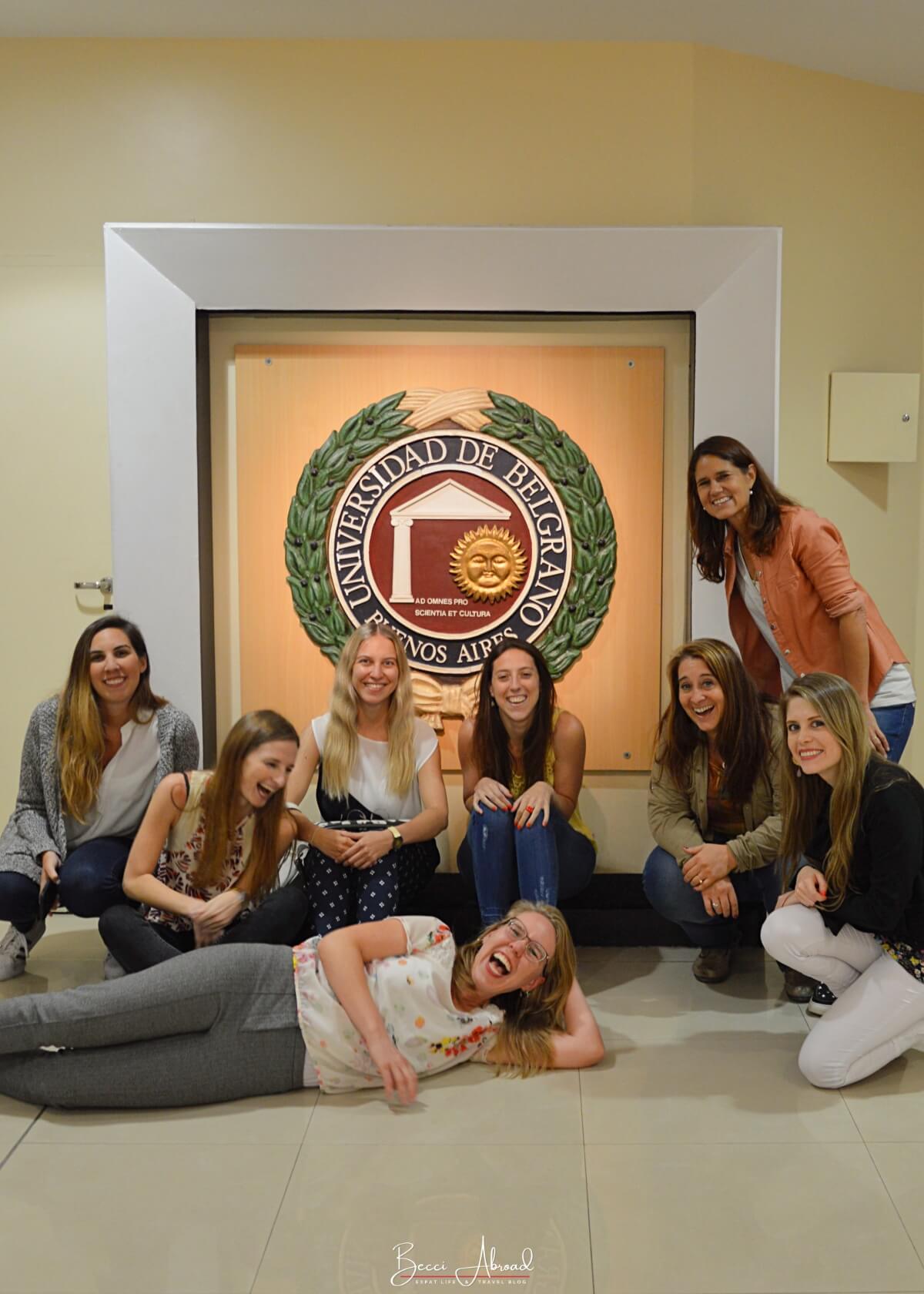
In 2017, after graduating with my undergraduate degree in Denmark, I started a Master’s Degree in Organizational Psychology (now called Master’s in Organizational Analysis) at Universidad de Belgrano in Buenos Aires. In 2022, I graduated with this Master’s Degree, still living in Buenos Aires.
And to spice things up a bit (why be bored?), in 2018, I started a Master’s Degree in Political Science focused on Latin American studies at Universidad Torcuato di Tella. In 2021, I graduated with this Master’s Degree as well.
During your time studying in Argentina, I strongly recommend signing up for Nomad Insurance Complete, which covers everything from routine medical appointments to unexpected incidents. Safewing’s Nomad Insurance Complete is created exactly for those of us living abroad for a longer or shorter amount of time, but still want to keep up with medical appointments and feel covered against lost baggage, delays, and stolen belongings on our travels.
Get your Nomad Insurance Complete today, and you’re protected during your time studying abroad in Argentina!
I have created this guide about studying abroad in Argentina for you, who might be dreaming about or planning to take the jump and study abroad in Argentina. I want to share my best tips and tricks for studying in Argentina for international students.
A Former Student’s Guide to Studying in Argentina for International Students
Disclosure: Some of the links below are affiliate links. This means that at no additional cost to you, Becci Abroad will earn a commission if you purchase through one of those links. This helps to pay the bills and the maintenance of the site.

How to Study Abroad in Argentina
To study abroad in Argentina, you have two options:
- Doing an exchange semester
- Studying a full degree in Argentina
Let’s look into each of them one by one:
Exchange Semester in Argentina
To study an exchange semester in Argentina means that you go to study abroad in Argentina as part of your ongoing university education.
Many of the local universities in Argentina have international agreements with universities around the globe, where they send and receive each other’s students.
You should check with the educational institution where you are studying to see which agreements they have with universities in Argentina.
You don’t pay tuition fees at the Argentine host university when you go on exchange. However, if you are paying tuition fees to your home university, you will continue to pay that tuition fee during your exchange semester.
During the exchange semester, you will need to buy course materials such as books, compendia, or copies for the courses you are taking during the exchange semester in Argentina.
I first came to Argentina on an exchange semester to study a semester of my bachelor’s in Business, Language, and Culture from Copenhagen Business School at Universidad Torcuato di Tella in Buenos Aires.
I was supposed to have just stayed for six months, but as I told you before, it ended up being a seven-year stay in Buenos Aires.
Applying for an Exchange Semester in Argentina
The application for an exchange semester in Argentina normally goes through your home university.
Your home university will have some already established agreements with different universities, including the requirements you must meet before you are eligible to apply for an exchange semester in Argentina.
The requirements differ from university to university, but the standard prerequisites include:
- Proof of language proficiency in Spanish
- Proof of approved courses at your home university
- Cover letter
You should always double-check with your university what the specific requirements are for the university you wish to study at in Argentina.
How Long Is An Exchange Semester in Argentina?
Generally, an exchange semester in Argentina is 6 months.
Sometimes, extending your exchange semester for an additional 6 months is possible. However, it all depends on what you can agree with your home university and the host university in Argentina.
Study for a Full University Degree in Argentina
Argentina is an attractive destination for those looking to further their education by studying a full university degree abroad.
Studying a full university program in Argentina means you enroll from the beginning of the university program and follow the full course program as if it were a degree at home.
In Argentina, to enroll and study a full university degree at a local university is referred to as being alumno regular in Spanish, or translated as “regular student”.
Argentina offers international students the opportunity to study a full university degree in a wide range of fields, including business, engineering, law, medicine, and humanities.
It is important to note that tuition fees for international students studying full degrees in Argentina can vary depending on the university and program. However, compared to other countries, Argentina offers relatively affordable tuition fees for international students.
Ultimately, you will also receive a diploma from the Argentine university.
Admission & Study Requirements for University Degrees in Argentina
To study for a full university degree in Argentina as an international student, you will need to meet the admission requirements set by the university. You enroll in the program under the equal admission requirements of any Argentine student.
The requirements to study a full degree in Argentina may include:
- A valid Argentine ID (DNI) or passport,
- Proof of language proficiency in Spanish, if you are not a native Spanish speaker,
- Academic transcripts and diploma for your previously completed education (if your education is from outside Argentina, you need to have your transcripts and diploma legalized)
- CV, letters of recommendation, or personal statement.
Always ask the specific university you are applying to in Argentina for their enrollment details. Most of them have online enrollments or enrollments via email.
Spanish Language Proficiency Requirements
Most universities in Argentina offer their programs in Spanish, so it is essential that you have a good level of Spanish before you apply. I have never heard of full university degrees in English in Argentina!
In my case, all my classes in both of the Master’s degrees that I did were in Spanish. Since I was the only foreigner in both of the programs, the teachers spoke as if the whole class were Spanish speakers. It was a steep learning curve, even though my Spanish was relatively good when I started. But it also helped me get an even better level of Spanish.
In my Master’s Degree in Political Science at Universidad Torcuato di Tell, most of the readings were in English, and all the assignments were in Spanish.
A few times, when I had a lot of exams at the same time, I would ask some of the teachers who I knew had studied in the U.S. if I could write the assignments in English. I never had anyone say no to me.
In the second year of the Master’s, in many of the classes, we also had to do oral presentations in class in Spanish. The presentations were based on one or two of the texts from the course assigned to each student. Those I did have to do in Spanish.
In my Master’s Degree in Organizational Psychology at Universidad de Belgrano, all of my classes and assignments were in Spanish. Around 95% of the readings were in Spanish, and for the last 5%, which were in English, the Argentine students complained so much that the teacher had to find the Spanish version.
In this Master’s Degree, we did a lot more group assignments and presentations in groups. In my experience, the Argentine students were so nice to me for being the non-Spanish speaker who tried her best with Spanish.
Legalization of Foreign Degrees in Universities in Argentina
For admission to a university in Argentina, you must present your diplomas or academic transcripts of previous finalized education.
If your previous completed education is from outside Argentina, you need your diploma and transcripts legalized before they can be used in Argentina.
The documents need to be legalized in your home country – or the country of origin of your diploma, in case you studied abroad before – and if the official language of the documents is not Spanish, you need to have the documents translated into Spanish by an authorized translator in Argentina.
Legalization of Foreign Degrees
The type of diploma you need legalized (secondary education or undergraduate degree) depends on the level of University program you are applying for in Argentina.
The most common way to legalize a document is with an apostille. An apostille is a form of authentication or certification used to verify the legitimacy of a document for use in a foreign country and is recognized by the authorities abroad.
Obtaining an apostille typically involves submitting the original documents to the relevant authorities in your home country, who will then attach the apostille certification. Once you have obtained the apostille, you can submit your legalized documents and your application for a university degree in Argentina.
It is important to get your diplomas certified before you move to Argentina, since getting them certified through your home country’s embassy in Argentina can be a bit of a headache.
Translate Your Legalized Documents into Spanish
You must translate your diploma or academic transcripts into Spanish if these documents are not already in Spanish.
Documents in English do not work in Argentina! I have tried… My diploma for my undergraduate degree is in English because it was an international program in English; however, this does not work in Argentina. The degree needs to be translated into Spanish!
The translation of your documents to Spanish must be certified in Argentina by the local translator association, Colegio de Traductores Públicos.
Each province in Argentina has a translator association with a translator institute that certifies the translations provided by the province’s translators. Search for the one based in the province where you are going to stay.
For Buenos Aires, you can find certified translators at the website for Colegio de Traductores Públicos de la Ciudad de Buenos Aires.
Costs of Studying in Argentina
You will have to cover the costs of studying for a full degree in Argentina yourself on equal grounds to the Argentine students.
For some of the public universities, the undergraduate degrees are free of charge for everybody resident in Argentina. However, for Master’s degrees, both public and private universities charge a tuition fee.
Apart from the tuition fee, you will need to consider a budget for course materials such as books, etc., which are not included in the program costs at the universities in Argentina.
Tuition Fees
The tuition fee for universities in Argentina normally consists of a yearly enrollment fee, called matricula, and a monthly fee, called cuota.
You should keep in mind that the universities might change the price of the monthly fee during the year because of inflation. Some universities also offer you a discount if you pay for the whole school year up front. This way, you are secured against their price increases throughout the year.
Some universities in Argentina will also charge you to present the thesis if you do it outside the yearly enrollment fees you have paid.
At Universidad de Belgrano, I had to pay a new enrollment fee (matricula) before I could present my Master’s thesis. At Universidad Torcuato di Tella, on the other hand, I had five years after I passed my first exam to present and approve the final Master’s thesis before they would start to charge me.
The tuition fees in Argentina tend to be lower than most tuition fees for universities in other Latin American countries and the U.S. For that reason, Argentina is a very popular study-abroad destination for other Latin American students.
Since the economic crisis in Argentina and the skyrocketing inflation rates, which constantly change the price of everything – including university tuition fees – you should always double-check the price with the university you are interested in.

An Introduction to Universities and the Education System in Argentina
In this section, we will look a bit more into how the education system in Argentina is set up for you to best prepare for your experience of studying abroad in Argentina!
School Year in Argentina
The school year in Argentina works a bit differently compared to Europe and the U.S.
In Argentina, the school year starts in March and runs until mid-December.
At universities in Argentina, the first semester of the school year normally runs from March to June or July. Then the second semester runs from August to December.
In December, most schools and universities in Argentina close for the summer vacations.
Universities in Argentina
In Argentina, there are public and private universities:
- Public universities are state-owned institutions,
- Private universities are privately owned, mostly by a private foundation.
You could research in advance what type of university suits you the best. There are many differences between public and private universities in Argentina, such as varying academic levels, enrollment requirements, and tuition fees.
Let’s look a bit more at the differences between public and private universities in Argentina!
Public Universities in Argentina
Argentina is home to several important public universities that offer a wide range of academic programs.
The public universities are state-owned educational institutions, aiming to provide equal access to education for all layers of Argentine society. One of the most well-known public universities in Argentina is the University of Buenos Aires, or UBA.
Is Education Free in Argentina?
The public universities in Argentina offer undergraduate degrees without any tuition fee for all residents in Argentina – including international students!
However, a new proposal from the current Argentine government in 2024 aims to change the free access to public universities for international students.
For Master’s Degree programs at public universities in Argentina, there is a tuition fee for all students – Argentine or international!
When I was researching where to study abroad, the price difference between a Master’s Degree at a public university in Buenos Aires and a private university in Buenos Aires wasn’t too big.
The big challenge to take into account with public universities in Argentina is that they are extremely bureaucratic! As with any public office or authority in Argentina, efficiency and organization are not its strengths.
You will have to bring a good amount of patience if you are planning on studying a full degree at a public university in Argentina. With exchange semesters, from what I have heard, they tend to be a little bit better.
Private Universities in Argentina
In Argentina, private universities are privately owned and run, mostly by local private foundations.
At private universities, both undergraduate degrees and Master’s degrees have a tuition fee.
Generally speaking, private universities tend to be less bureaucratic than public universities in Argentina. However, that does not mean that they are not bureaucratic, and it can be a bit uphill to deal with some universities’ administrations for simple tasks such as payments, academic transcriptions, etc.
Some private universities in Argentina are infamous for being educational institutions for the well-off part of society to pay for an education without too many academic requirements.
On the other hand, other private universities in Argentina, such as Universidad Torcuato di Tella and Universidad San Andrés are known to offer some of the highest academic levels in Argentina.

University Degrees in Argentina
In Argentina, the university levels and degrees are similar to those of most other countries, where you start with an undergraduate or bachelor’s degree, then work towards a Master’s or graduate degree, and finally can choose to study a PhD or doctorate.
However, the Spanish words used in Argentina for each level change slightly.
These are the three main levels of university degrees in Argentina:
- Grado – Undergraduate Degree
- Posgrado – Master’s Degree
- Doctorado – PhD
Let’s look at them in detail!
Grado – Undergraduate Degree in Argentina
Undergraduate degrees, or bachelor’s programs, in Argentina are the first level of University degree in Argentina.
Undergraduate degrees are the university programs you do after high school. In Argentina, high schools are called secundarios.
The undergraduate degrees in Argentina are called grado.
When you are researching the websites of different universities in Argentina, you will see how they normally have a section for undergraduates or grado.
Duration of Undergraduate Degree in Argentina
In Argentina, an undergraduate degree takes around four to five years, depending on the program you choose to study.
Admission for Undergraduate Programs in Argentina
Most universities in Argentina will ask you to present proof of finalized secondary education before you can apply for undergraduate studies.
Apart from the finalized high school degree, each local university also has its own set of standard forms you need to complete as part of the admission process.
Many universities in Argentina will also ask you to pass an admission test before you are fully accepted to the undergraduate program. In Spanish, the admission test is called exámenes de ingreso.
At the public university, Universidad de Buenos Aires (UBA) in Buenos Aires, there is no admission test, but you must pass a one-year introduction course.
The one-year-long introduction course for the University of Buenos Aires is called Ciclo Básico Común, or simply CBC. The CBC aims to make sure all students are on the same level in basic subjects needed for their future university degree.

Posgrado – Master’s degree in Argentina
A Master’s degree in Argentina is the second level of university education. In Argentina, the Master’s degrees are called posgrado.
You can do a Master’s degree in Argentina once you have finalized your undergraduate studies. The undergraduate degree can be from a local university or a university abroad.
I started my Master’s degree in Argentina with an undergraduate degree from a university in my home country, Denmark.
Duration of Master’s Degree in Argentina
The duration of a Master’s Degree in Argentina is normally two years.
However, you should be aware that most universities in Argentina only include the time to finalize the courses for the Master’s degree in this estimate.
After you finalize the courses for the Master’s degree, you will still have to perform the investigation and write the final thesis or project before you can graduate with your Master’s degree from Argentina.
Master’s Degree Thesis in Argentina
The requirements and length of the final thesis for a Master’s degree in Argentina vary a lot. The Master’s degree thesis can be a long written assignment or a shorter one, depending on the University you choose to study in Argentina.
For my Master’s degree at Universidad de Belgrano, the thesis had to be around 90 to 120 pages long. There were a lot of requirements around how to perform an investigation as the basis for the thesis.
Whereas, for my Master’s degree at Universidad Torcuato di Tella, the final thesis only had to be around 30 to 40 pages long. However, during the university program itself, the exams for the individual courses at Universidad Torcuato di Tella were a lot harder and longer than at Universidad de Belgrano.
I strongly recommend that you check the details for the Master’s degree’s final thesis before you choose where to study in Argentina! The length and complexity of the final thesis can make or break whether you graduate from your Master’s Degree in Argentina. Many Argentine Master’s Degree students complete all their courses but never finalize their thesis.
Without presenting and defending your Master’s Degree thesis, you will not graduate with your Master’s Degree and receive your official diploma!
Admission for Master’s Degree Programs in Argentina
For all Master’s Degree programs in Argentina, you need a finalized undergraduate/bachelor’s degree.
The rest of the admission procedure for the Master’s Degree programs differs a lot from university to university in Argentina.
Most universities in Argentina have a formal admission test for their Master’s degree programs. These tests differ from university to university. In the end, they seem to be nothing more than a formality.
For my Master’s Degree at Universidad de Belgrano, I had to answer a questionnaire about my academic and professional background. I also had to explain why I wanted to study in this specific Master’s program. Honestly, I highly doubt that anybody ever read my answers.
For my second Master’s Degree at Universidad Torcuato di Tella, I had to take a short written test at the university campus. This was pre-pandemic, so they are properly doing this online now.
The questions used for the admission test were the same as the ones in the sample of an admission test that the university had provided before the test.
The program director of the Master’s Degree in Political Science at di Tella later explained that the admission test is for him to understand whether or not the applicants had an idea about how to organize a written argument.
Doctorado – PhD in Argentina
PhD or doctorate degrees are the highest formal university degree in Argentina. You can enroll in a doctoral program in Argentina if you have finalized a Master’s degree in a related field of study.
In Argentina, a PhD is called doctorado in Spanish.
At private universities, most PhD programs share the first year of study with the Master’s program in the same field of study. At Universidad Torcuato di Tella, for example, I studied many of the courses in the first year with PhD students in Political Science and International Relations.
A difference I noticed in PhD programs in Argentina, based on what my classmates said, is that Argentine universities usually don’t employ PhD students while they are studying, which is not the case in Europe and the U.S.
At most private universities, the PhD students are paying tuition fees to study for their doctorate, just as the Master’s degree students were paying theirs.
At the public universities in Argentina, it seems to depend a lot on which field of study you wish to pursue your PhD, whether it is with or without tuition fees.
Admission for PhD Programs in Argentina
The admission requirements for the PhD programs in Argentina tend to be similar to the requirements for the Master’s Degree Programs.
However, the requirements for the PhD programs tend to be a bit more extensive since you have to present an idea for your research project when you apply.
The admission requirements for the PhD programs vary depending on the university or faculty you are interested in, so you should always check with the specific university in Argentina about their requirements.

Popular Destinations to Study Abroad in Argentina
Choosing where you want to study abroad in Argentina is one of the many important decisions you need to make when you plan to move abroad to study.
Here are some of the most popular study-abroad destinations in Argentina for international students!
Buenos Aires
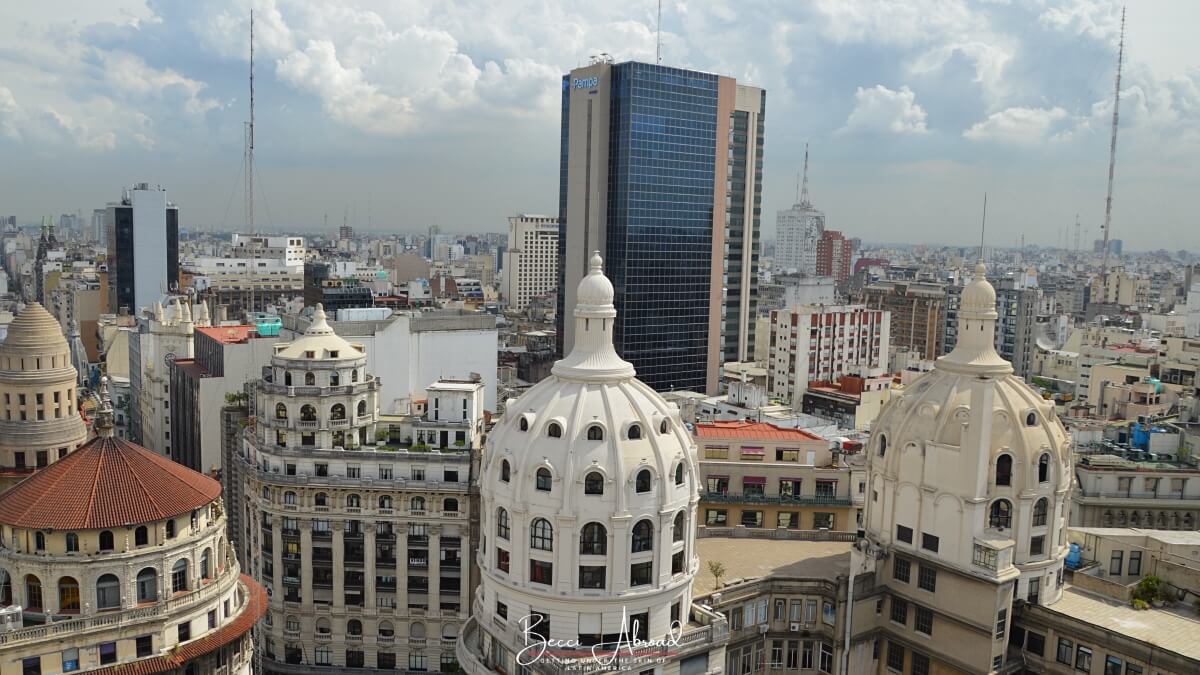
The cosmopolitan city of Buenos Aires is the most popular destination to study abroad in Argentina for international students.
Argentina’s capital city offers a European touch to the experience of living in Latin America, with its European architecture and European-inspired food scene.
Most foreign students choose to study in Buenos Aires, where there are many different universities to choose from. Find local universities in Buenos Aires on the Study Buenos Aires list of universities and language schools in Buenos Aires.
Buenos Aires also offers an active international student community, many fun things to do after school, and plenty of hidden gems to explore.
Popular Universities in Buenos Aires
Here are some of the most popular universities for international students to study abroad in Buenos Aires:
Universidad de Buenos Aires (UBA)
The University of Buenos Aires, Universidad de Buenos Aires in Spanish or simply UBA, is considered the best public university in Argentina.
Universidad de Buenos Aires is the largest university in Argentina and one of the biggest educational institutions in Latin America.
The University of Buenos Aires often appears in the top rankings of the top universities in Latin America. The QS World University Ranking, for example, ranked the University of Buenos Aires as 69th in the world in 2023 and the number one university in Argentina.
However, if you choose to study there, you must prepare to handle some frustration due to slow and non-responsive university administration.
Universidad Torcuato di Tella (UTDT)
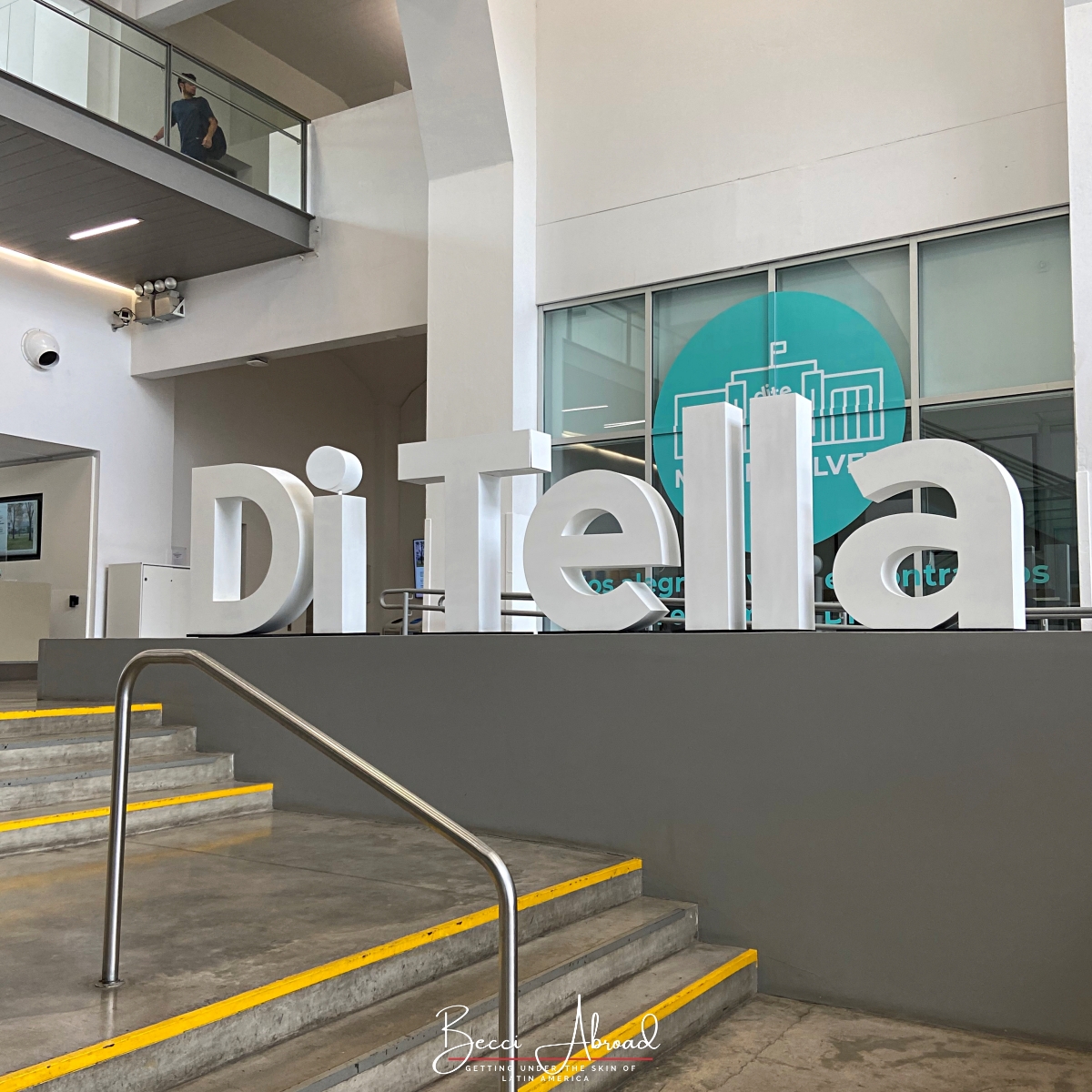
University Torcuato de Tella, or Universidad Torcuato di Tella in Spanish, is a small private university in the Buenos Aires neighborhood of Nuñez.
Universidad Torcuato di Tella is mostly known as just di Tella or UTDT.
In my opinion, Universidad Torcuato di Tella is the best university in Argentina for international students – but I’m properly just a bit biased from having studied there myself!
Universidad Torcuato di Tella is especially well-known for its high academic levels within social sciences, international relations, business studies, and architecture.
In my experience, the classes at di Tella are small, the academic level is high, and the workload for the Master’s Degree courses is relatively high.
At di Tella, many of the teachers have studied for their Master’s Degrees and their PhDs abroad in Europe and the U.S., and they work hard to set high standards for the university.
Universidad de Belgrano
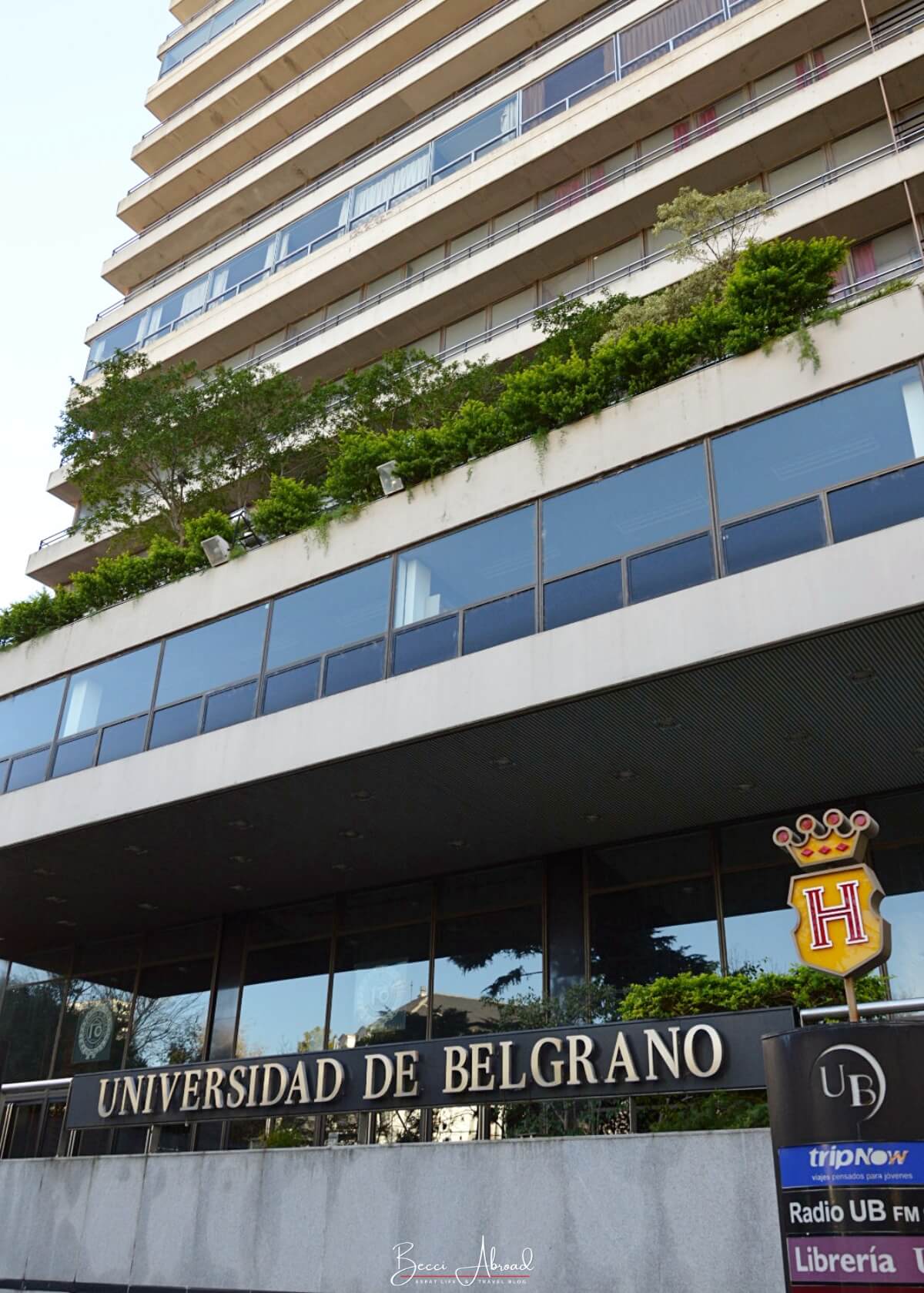
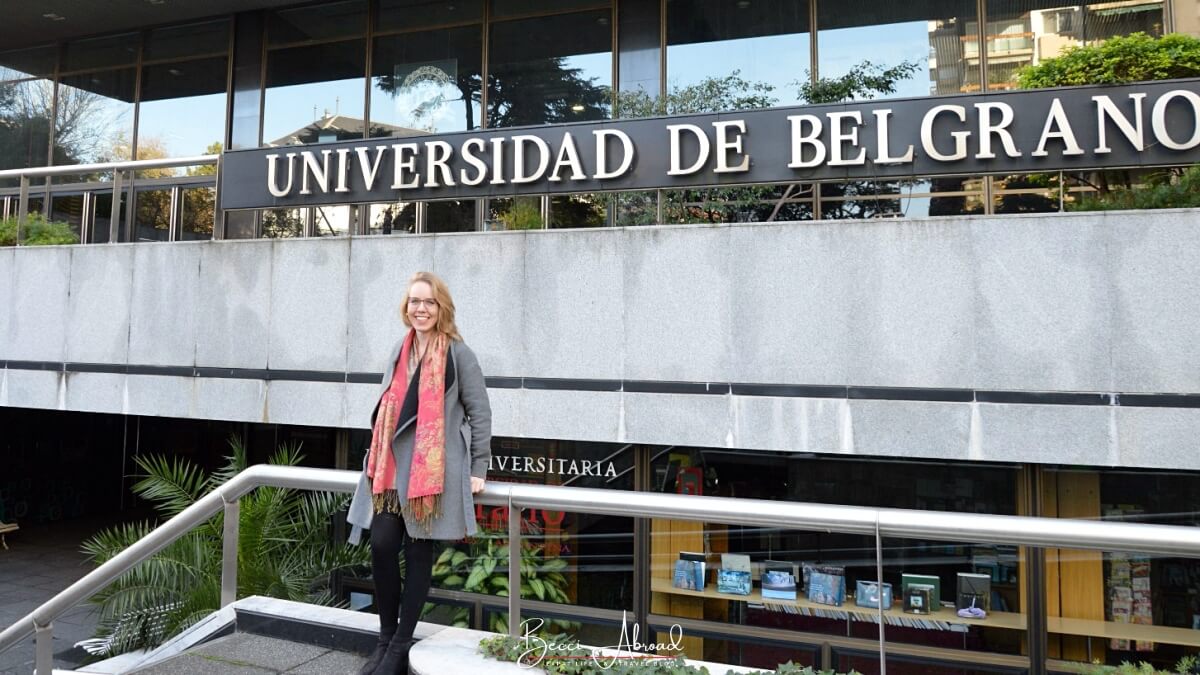
University of Belgrano, or Universidad de Belgrano, is a private university in Buenos Aires, located in the neighborhood of Belgrano.
The university has many international agreements with universities around the world, and there is a big community of international students at Universidad de Belgrano.
In my own experience of doing a whole Master’s Degree at Universidad de Belgrano, the university doesn’t have the highest academic levels, and the administration at Universidad de Belgrano is terribly slow and inefficient.

Instituto Tecnológico de Buenos Aires (ITBA)
The Technological Institute of Buenos Aires, Instituto Tecnológico de Buenos Aires in Spanish, or simply ITBA.
ITBA is the best university in Argentina for studying engineering and technology.
ITBA offers undergraduate and graduate programs in various fields, including engineering, computer science, and business. The university has a strong emphasis on practical learning, with opportunities for internships and hands-on projects to complement classroom instruction.
ITBA provides a unique and enriching academic experience for international students looking to study abroad in Argentina.
Universidad de San Andrés (UdeSA)
University San Andres, or Universidad de San Andrés in Spanish, is one of the best private universities in Buenos Aires.
The university is known for its high academic levels. However, a friend of mine who studied there often complained about having to deal with a slow and unresponsive university administration.
Universidad de San Andrés offers a wide range of undergraduate and Master’s degree programs in fields such as business administration, social sciences, humanities, law, and engineering.
Pontificia Universidad Católica Argentina Santa María de los Buenos Aires (UCA)
Pontificia Universidad Católica Argentina Santa María de los Buenos Aires, commonly known as la Católica or simply UCA, is one of the best private universities in Argentina.
UCA is another popular choice for international students looking to study abroad in Argentina. UCA has a strong reputation for academic excellence and offers a wide range of programs in various fields of study.
The main campus of UCA is located in the heart of Buenos Aires in the exclusive harbor neighborhood, Puerto Madero.

Mendoza
Mendoza is a cozy, laid-back city located in western Argentina. While the city is a lot smaller than Buenos Aires, it still offers a popular destination to study abroad in Argentina for international students looking for a unique study abroad experience.
Mendoza is situated at the base of the Andes Mountains and is famous for its beautiful scenery and globally recognized wine and olive oil production.
Popular Universities in Mendoza
Mendoza is home to several important universities that attract students from all over the world who are interested in studying abroad.
Here are some of the most popular universities in Mendoza:
Universidad Nacional de Cuyo (UNCuyo)
The National University of Cuyo, Universidad Nacional de Cuyo, or simply UnCuyo, is a public university in Mendoza with its main campus located close to the city center of Mendoza.
UNCuyo was founded in 1939 and is one of the oldest universities in Argentina. The university offers a wide range of undergraduate and graduate programs in fields such as engineering, law, social sciences, and humanities.
Universidad de Mendoza (UM)
University of Mendoza, Universidad de Mendoza, or UM is a private university in Mendoza that is known for its strong programs in business, engineering, and law.
The university offers a variety of undergraduate and graduate programs for international students looking to study abroad in Argentina.

Córdoba
Córdoba is a popular destination for international students looking to study abroad in Argentina in a more unusual and off-the-beaten-track destination.
Córdoba is a city in Argentina’s central region, beautifully surrounded by mountains and rivers.
Popular Universities in Córdoba
Córdoba features some of the oldest and most renowned universities in Argentina, and for a student budget, Córdoba is generally cheaper than Buenos Aires.
Universidad Nacional de Córdoba (UNC)
The National University of Córdoba (Universidad Nacional de Córdoba) or simply UNC, is a public Universidad in Córdoba.
Universidad Nacional de Córdoba was founded in 1613 and is the oldest university in Argentina and among the first universities in Latin America. The National University of Córdoba offers a wide range of programs in various fields of study.
The university also offers a special program in Spanish and Latin American culture (PECLA) for international students looking to improve their Spanish and learn about Latin America.
Universidad Católica de Córdoba (UCC)
The Catholic University of Córdoba, Universidad Católica de Córdoba, or UCC, is one of the top private universities in Córdoba.
Universidad Católica de Córdoba was among the first private universities in Argentina and was founded in 1956 as a Jesuit university.
UCC offers a wide range of academic programs in various fields such as business, law, humanities, social sciences, engineering, and health sciences.

What to Expect from Studying in Argentina?
Studying abroad in Argentina can be a bit of a change, and getting the expectations right beforehand might help you to adapt to the experience of studying abroad in Argentina.
Here are some of my best tips for adjusting your expectations to the experience of studying abroad in Argentina!
The Universities & Academic Levels
In my experience, the universities in Argentina, the university culture, and the academic level in Argentina were very different from what I was used to in Denmark.
For sure, your country will probably be different from both Denmark and Argentina. But here are some of the things that I found very different when studying abroad in Argentina.
Grading System in Argentina
The Argentine grading system can take some time to wrap your head around. There doesn’t seem to be a standardized grading system at the universities in Argentina!
Some universities use an alphabetical scale for their grading system, similar to the one used in the US.
While others use a percentage or a scale from 1 to 10. When it is a scale, 1 is the lowest, and 10 is the highest you can get.
The Argentine grading system seems to follow the logic that their grades are the percentage of correct answers you have in an exam.
However, each university, and even each teacher, seems to do the grades in a slightly different way.
For me, the grading system in Argentina was slightly confusing at first. Over time, I got more used to it.
The Academic Levels
The academic level of the universities in Argentina is one of the most important things to keep in mind when choosing where to study.
At the local Argentine universities, the academic levels vary a lot from one university to the other.
Some private universities are infamous for being for rich kids paying for an easy university degree. While other private universities in Argentina, on the other hand, have very high academic levels.
Choosing an Argentine university with a less demanding academic curriculum might be more beneficial if your Spanish is still a bit rusty.
While I simply loved studying for my Master’s degree in Political Science at Universidad Torcuato di Tella, looking back, I also recognize that it was good for my Spanish and my academic vocabulary in Spanish that I had already studied a year at Universidad de Belgrano, where the academic level was a lot lower than at di Tella.
Actually, the academic level (or lack thereof) at Universidad de Belgrano was the main reason why I decided to start another Master’s degree in Argentina.
I recommend that you research a bit more in-depth about the university you are interested in before committing to an enrollment, especially if you are looking to study a full degree there.
The Class Sizes
The number of students in the class that you are taking a university course with at local Argentine universities can differ a lot!
The public universities in Argentina are infamous for having large class sizes. Whereas the class size at the private universities in Argentina depends a lot on the study program.
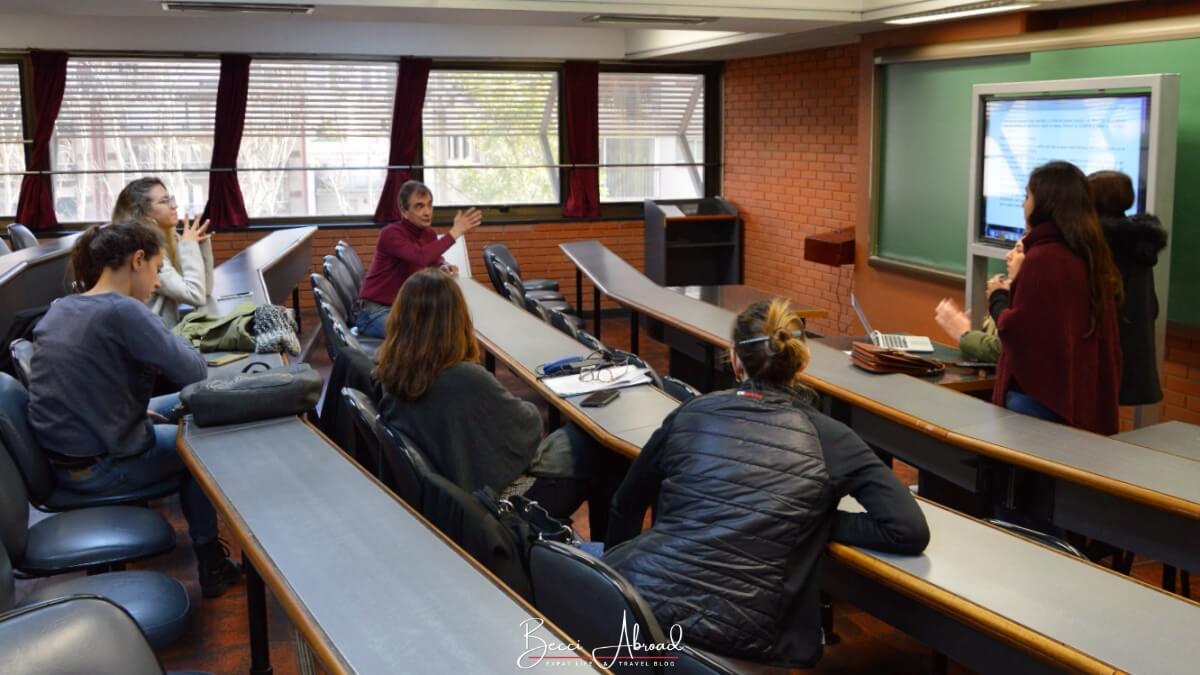
In my experience through my exchange semester at Universidad Torcuato di Tella through the Master’s degree programs at di Tella and Universidad de Belgrano, the classes were a lot smaller than what I was used to at Copenhagen Business School.
During my exchange semester at Universidad Torcuato di Tella, each course I took had around 30 students per class. Whereas, for both Master’s degree programs, we were a lot less!
For the Master’s degree at Universidad de Belgrano, we were mostly around 10 students per class. Whereas, for the Master’s degree at Universidad Torcuato di Tella were around 30 students per year for the first year when we did the program with the PhD students, and after that, for the second year, there were around 15 students per class.
In small classes, most teachers made an effort to get to know the students a little more, remember their names, or at least have an idea of who they are. I have even some of my teachers outside the university, who greeted me and more or less had an idea about who I am. That would not have happened back home!
The Exams
The exams at the Argentine universities were a strange experience for me while studying abroad in Argentina!
In my experience, the exams at universities in Argentina are very informal. During my exchange semester at Universidad Torcuato di Tella, most of my exams were closed-book sit-in exams where you had to provide hand-written answers to a couple of questions prepared by the teacher.
The guards would casually check our student ID and hand us the exam questions. Sometimes, the teacher would arrive late for the exam, and you would start the exam late.
The exams at the undergraduate level in Argentina are a lot about memorizing content and providing the correct answers to the teacher’s specific questions.
The Master’s Degree exams were a lot more about writing essays or doing practice tests about the subjects studied in class. However, my experience with exams for the two Master’s degree programs that I did was also very different:
At Universidad de Belgrano, the exams were easy. We had to write assignments of around 10 pages in groups of 2-3 students. The subject for the assignment was within the field of what we had studied in the course. The final exam was a quick chat with the teacher about your group assignment or a presentation in class about the assignment.
Exams at Universidad Torcuato di Tella were challenging and required significant effort. Typically, students had 48 hours to write 10-15 pages in response to 2-3 questions. Occasionally, more time was given for the same page requirement. Sometimes, we could choose our own topic from the course material. Final exams rarely involved class presentations. Class presentations were used throughout the academic year to work through the readings.
The University Administration
Dealing with the administration at local Argentine universities takes the challenge of studying abroad in Argentina to a whole new level!
Some of the private universities have good and pretty well-functioning university administrations.
However, university administrations in Argentina are notoriously infamous for being extremely slow, inefficient, and poorly organized!
While the functioning of the university’s administration might seem like a minor thing when deciding to study abroad in Argentina, trust me it is not!
When you, for example, are faced with payments not going through, exam registrations not being completed on time, and putting the possibility of taking your exam on time at risk, you start to realize how big a part of the experience of studying abroad in Argentina, the university’s poorly organized administration play.
Not to mention the fact that your migration status also depends on dealing with the administration at your university to get you the correct paperwork in time.
Honestly, I completely underestimated the influence that a bureaucratic and inefficient university administration would have on my experience of studying abroad in Argentina.
Graduation Ceremonies
The graduation ceremonies for when you finalize a university degree in Argentina differ a lot.
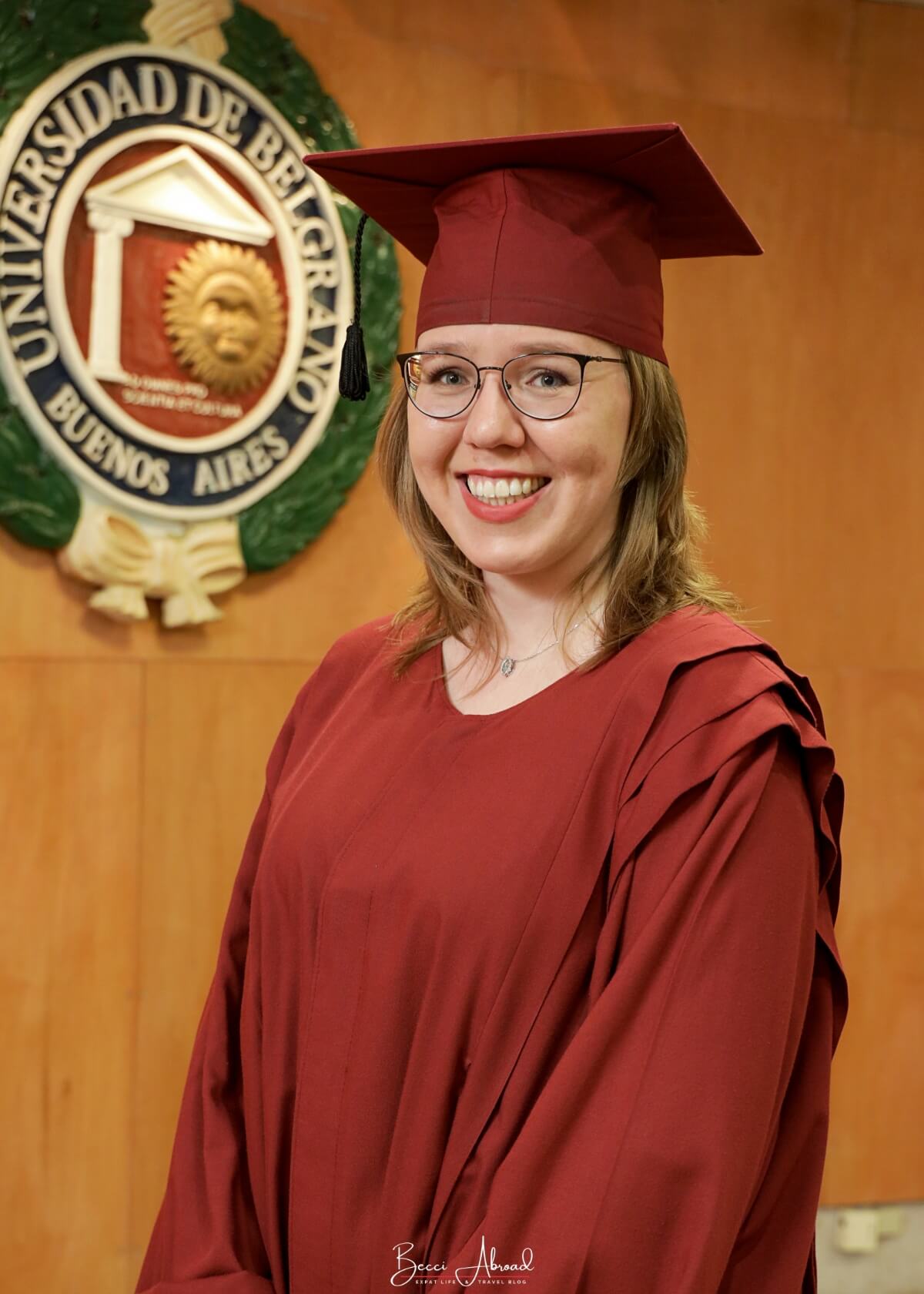
The ceremonies were very different between my two Master’s degree programs. At Universidad de Belgrano, the graduation ceremony was formal and very traditional. We all got dressed up in matching graduation gowns and square academic caps provided by the university, and the representatives from the university were also dressed up in their traditional academic gowns.
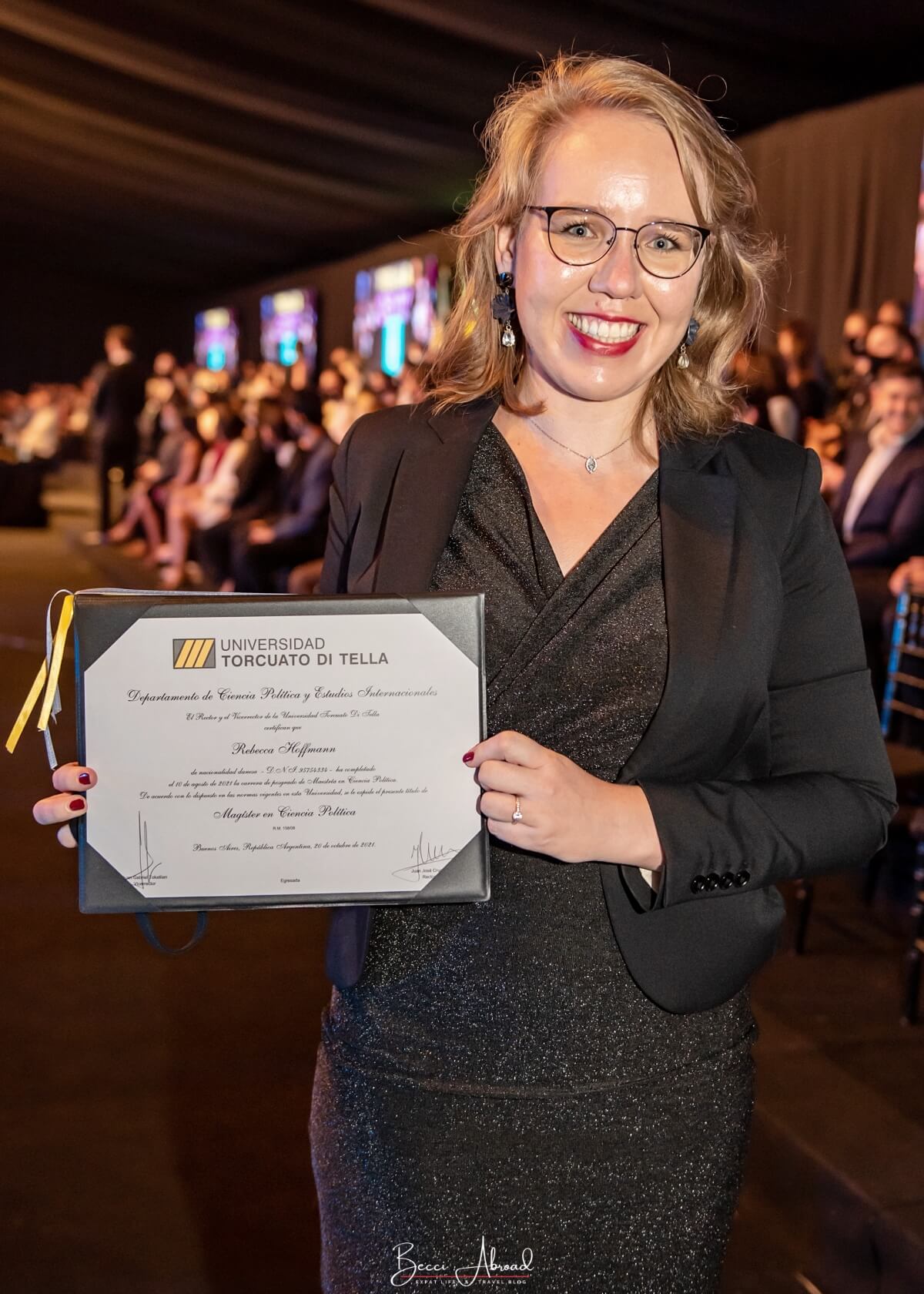
The graduation ceremony at Universidad Torcuato di Tella was more modern and like a show. All graduates had been asked beforehand to wear formal clothing but you were wearing your own clothes – not a graduation gown.
My graduation ceremonies were two very different experiences, and I’m sure the graduation ceremonies differ a lot from university to university in Argentina

Student Life in Argentina
The student life you get to experience when studying abroad in Argentina differs a lot depending on which city you choose to study abroad in.
I can only talk about student life in Buenos Aires, since that’s the only one I have experienced first-hand.
Extra-curricular activities
In Buenos Aires, there are so many different extracurricular activities to do when you are studying abroad!
Most local universities offer you the possibility of joining their university’s sports teams to meet local students outside your class.
The NGO, Buenos Aires International Students (BAIS) is a good place to start if you want to meet other international students. BAIS organizes parties, sightseeing trips, and events exclusively for international students.
The local government initiative Study Buenos Aires also offers several events and tours in Buenos Aires for international students.
Personally, I found that InterNations was a great place to meet people, both local and other internationals, outside the university. Another popular platform in Buenos Aires is MeetUp.
You shouldn’t miss out on exploring your new city either! I highly recommend setting some time aside to explore both hidden gems and classic tourist attractions in Buenos Aires.
Work While Studying in Argentina
In Argentina, it is common for Argentines to work while studying for their degrees.
Most students will be working full-time jobs because the Argentine labor market isn’t too flexible regarding student or part-time jobs.
For a Master’s Degree in Argentina, you will also find that most classes are likely to be at night or on weekends. The universities adjust their schedules to the students’ needs and work schedules.
As an international student, once you have got your Argentine ID card (DNI) through your student visa, you are eligible to work in Argentina.
The Argentine ID card will enable you to register with the tax authorities (AFIP) in Argentina and apply for jobs in Argentina.

Are You Ready to Study Abroad in Argentina?
Overall, studying abroad in Argentina is an affordable and exciting experience for international students.
Despite its ups and downs and a lot of hard work, looking back, I wouldn’t have missed my years studying abroad in Argentina for the world!
There are many reasons why Argentina is a great place to study abroad; Argentina is a beautiful country with many impressive places to visit, the local culture is very warm and welcoming, and it’s a great place to improve your Spanish – and learn some Argentine slang!
But the truth is also that it can be a bit overwhelming at first to plan your trip to study abroad in Argentina. There are so many things to take into account and ways of doing things that might be different from what you are used to.
I hope this guide to studying in Argentina has helped you prepare and better understand what studying abroad in Argentina is like!
Are you studying abroad in Argentina already? Or are you planning on studying abroad in Argentina? How are you finding the experience so far? Is there anything else you would like to know about studying in Argentina?
Share your questions and comments below!

Rebecca
Rebecca is the voice behind Becci Abroad, a travel blog inspiring you to get under the skin of the world. She is a long-term expat with more than 10 year of living abroad from Spain to Argentina, Cuba, and Sweden.





2 Comments
Crystal
Hello Becci! I am in the USA and am a US citizen. I want to study in Argentina at the UBA for medicine and do the entire medical undergraduate degree in Argentina. I have my highschool degree and my bachelors degree from the US apostilled, and I know they have to be legalized in Argentina, but I am stuck on how to actually do that. I have many questions and I’m struggling to find accurate information online or how to complete these “tramites” online from the US. I would greatly appreciate if you could help me. Maybe we could talk through WhatsApp if you are willing and I can share my number.
Rebecca
Hi Crystal,
Thank you so much for reaching out! I hope you found the blog post useful 🙂
Unfortunately, I don’t have much experience with how it works for UBA as I studied at some other universities in Buenos Aires. But as far as my experience, the apostille from the U.S. should be enough to proof that you’re papers are truthful/legal.
What you need in Argentina should be to have those paper (incl. the apostille) translated to Spanish by an official Argentinian translator. I’m not sure if you can get this done online from the U.S. I got mine translated in Buenos Aires, but I would recommend that you reach out to an official translator in Buenos Aires, and ask about the current process since it might have changed (or not) since I studied in Buenos Aires. Here’s the link to the website for official translators in Buenos Aires: https://www.traductores.org.ar/
You can search for an English translator and reach out to them through their contact info on the website, and they will be able to guide you through the current process of translating documents for universities.
I hope this helped you a bit on your way 🙂 All the best of luck!
Becci