What to Do in Little Havana in Miami? My Experience Visiting Miami’s Cuban Neighbourhood
Little Havana in Miami is nothing like the stereotypes of Miami’s South Beach that you imagine.
At Little Havana, you’ll find low-story houses with massive street art murals painted on the side, and small restaurants alongside local cigar factories.
Everything in Little Havana revolves around Cuba and Cuban culture.
If you haven’t guessed it by now, Little Havana is Miami’s Cuban Neighbourhood and tells an essential story to understand the multicultural city with strong Hispanic roots that Miami is today.
Miami is a city shaped in large part by the hundreds of thousands of Cuban immigrants who made it their home from the 1960s onwards after the Cuban Revolution. They brought their food, music, language, and culture with them, and influenced everyday life in Miami with their cubanía.
I have visited Little Havana twice on my trips to Miami; the first time in 2021, shortly after the COVID pandemic, and lastly in March 2026 on a one-week Miami trip with my husband.
Before we get into more details of everything you need to know about visiting Little Havana, I want to be upfront about something:
As someone who has spent five months in Cuba over the years and knows the culture reasonably well, Little Havana did not quite match my expectations.
Before visiting Little Havana, I was expecting a neighbourhood that looked like Cuba’s capital, Havana. With pastel-colored colonial houses, maybe even with an ocean drive like the Malecón in Havana (I had clearly not googled the location of Little Havana).
However, Calle Ocho, the main street in Miami’s Little Havana Neighborhood, is nothing like Havana!
Little Havana does not have the faded grandeur of the Malecon with its colonial houses or the chaotic street life of Centro Habana.
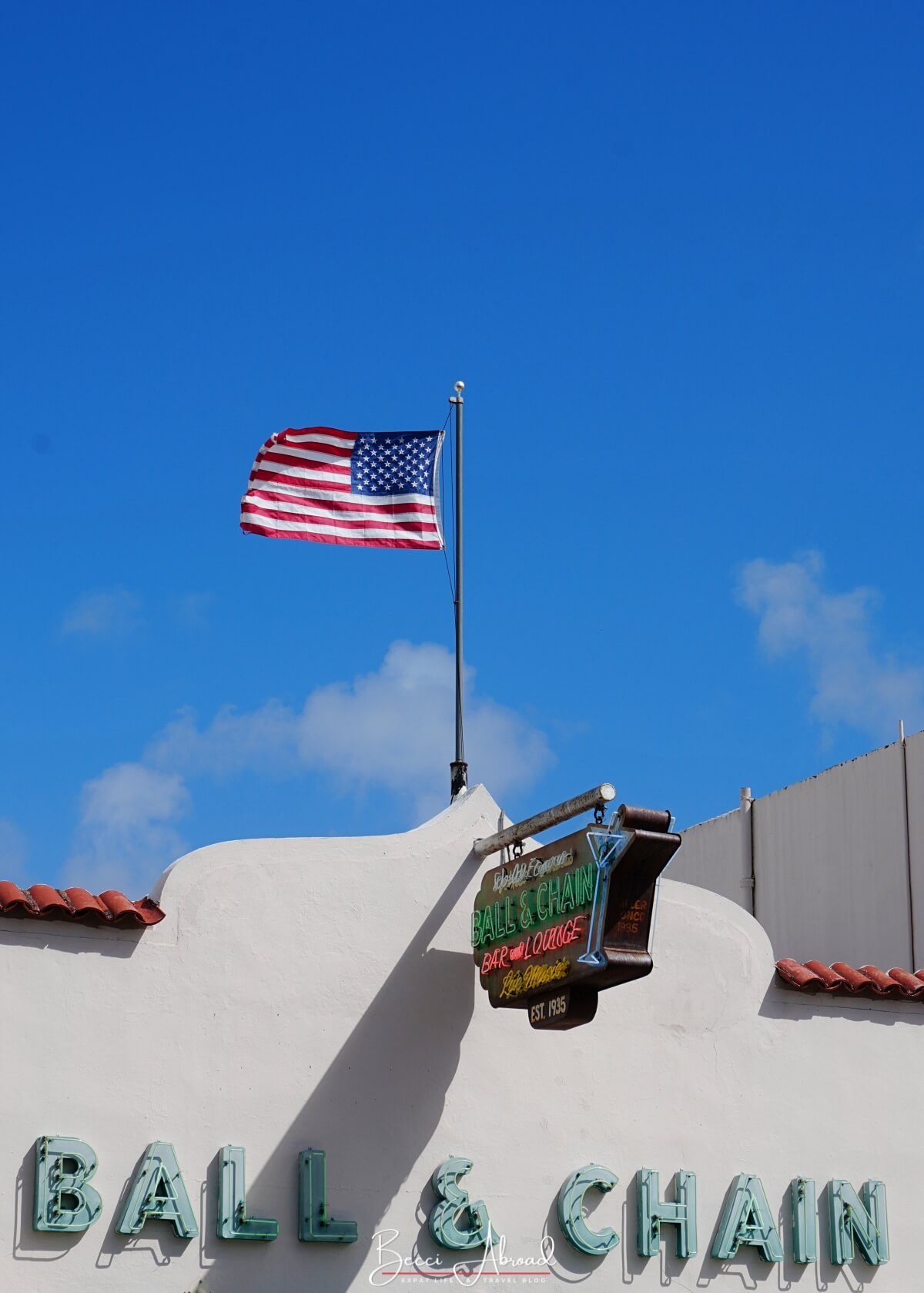
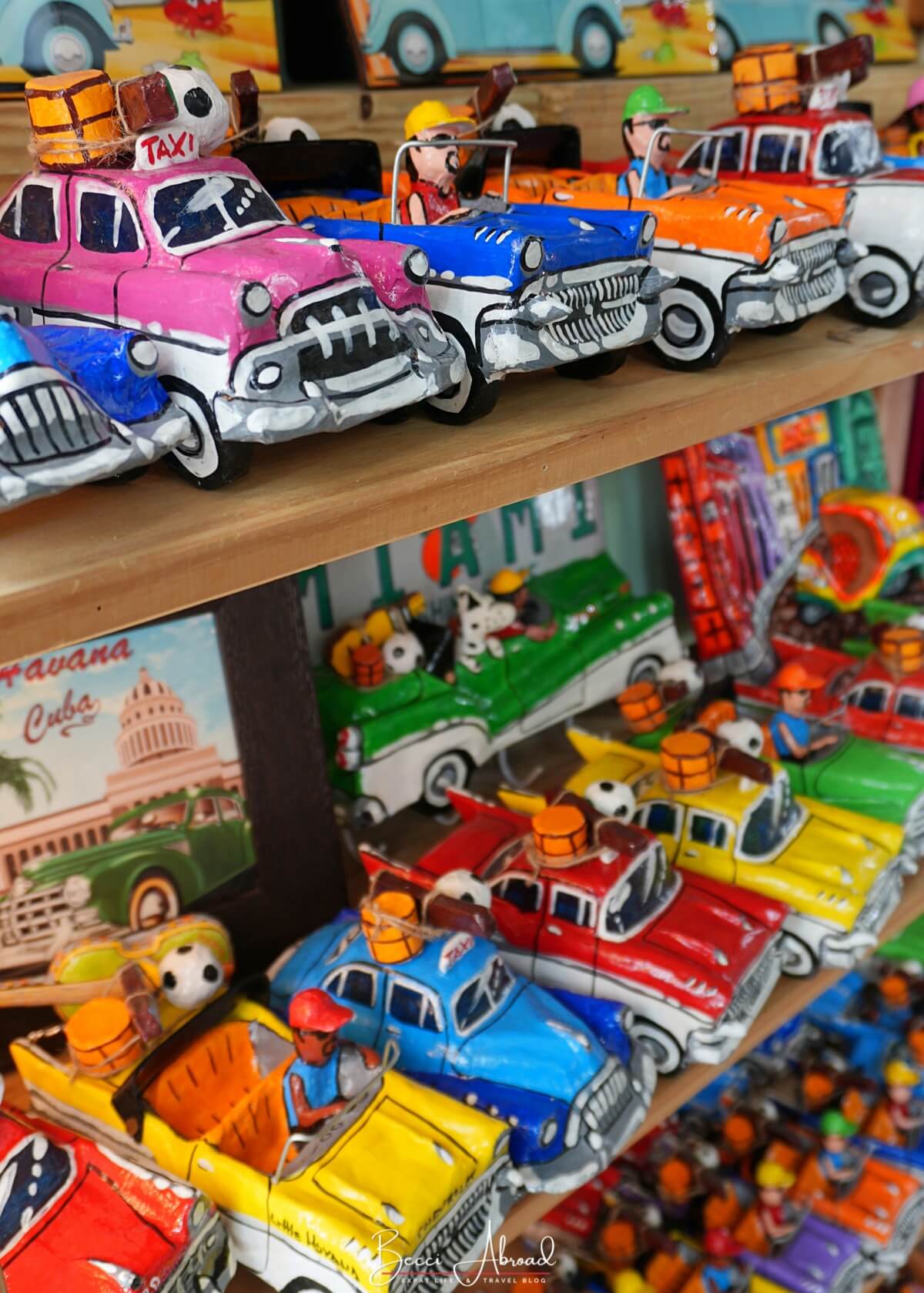
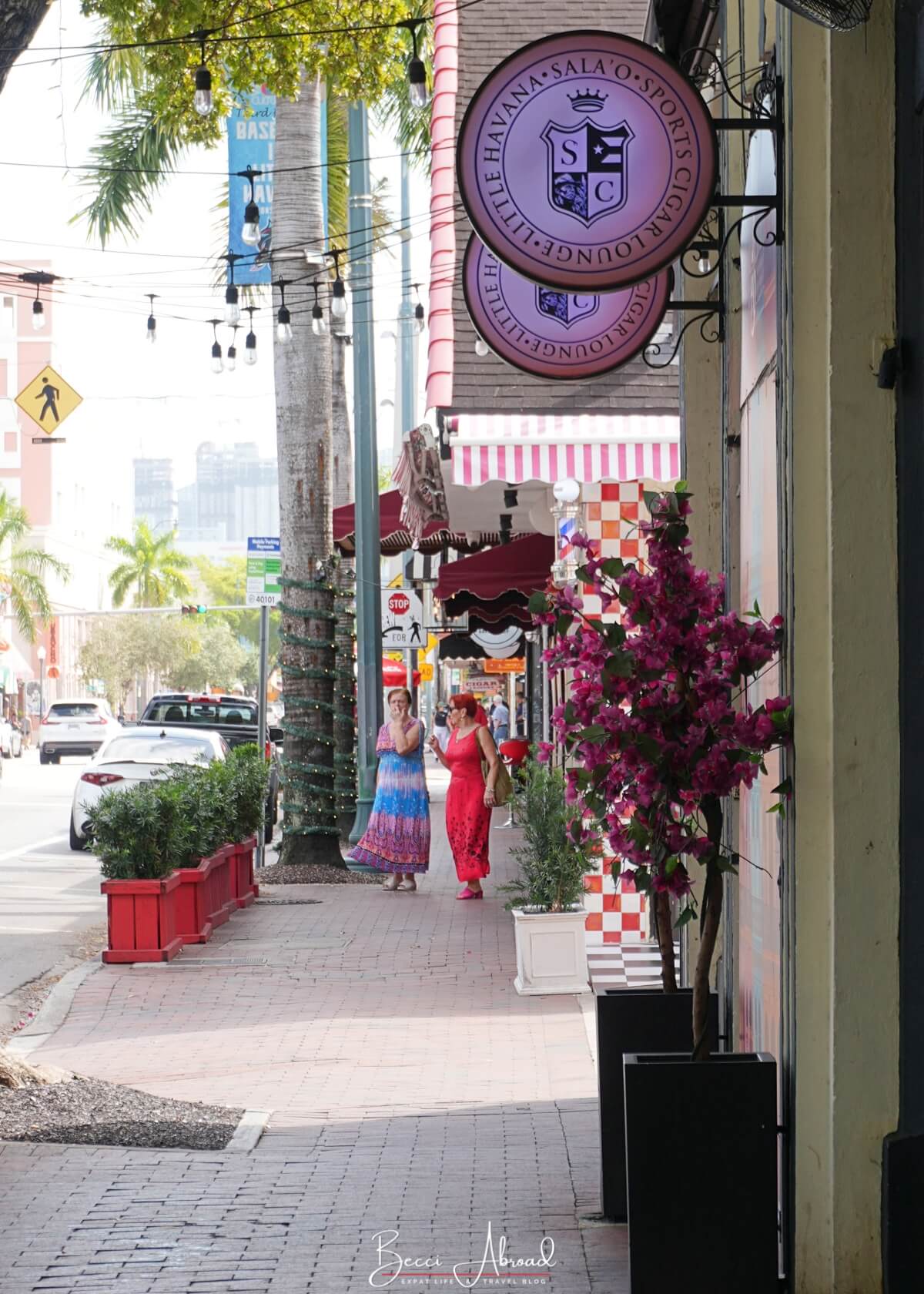
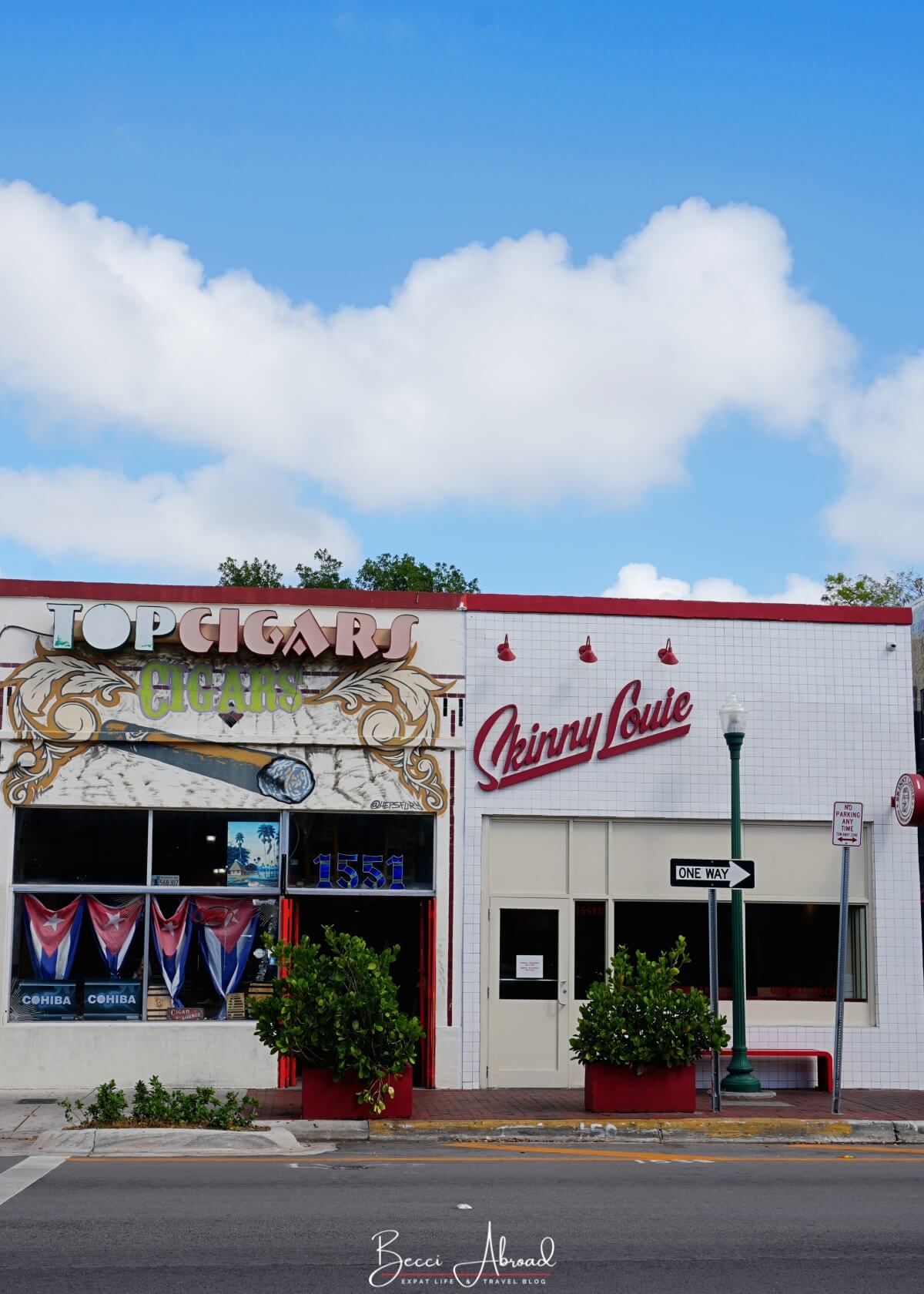
Calle Ocho in Miami is a street full of cigar shops, street art, and tourist-oriented Cuban restaurants and bars.
Many places in Miami’s Little Havana are clearly geared towards visitors rather than locals. That is not a bad thing, but it is worth knowing before you go.
With that honest caveat out of the way, Little Havana is still a genuinely interesting neighbourhood to visit, and the area does tell an important story of the life of Miami’s Hispanic community.
So, let’s dive into what you need to know about visiting Little Havana in Miami.
A Guide to Visiting Little Havana in Miami
Disclosure: Some of the links below are affiliate links. This means that at no additional cost to you, Becci Abroad will earn a commission if you purchase through one of those links. This helps to pay the bills and the maintenance of the site.
Get to Know Miami’s Little Havana Neighborhood
The Cuban Neighbourhood is a place that makes it onto almost every Miami travel itinerary, but how well do you know Miami’s Little Havana Neighbourhood?
Let’s get to know Little Havana together!
What is Little Havana in Miami?
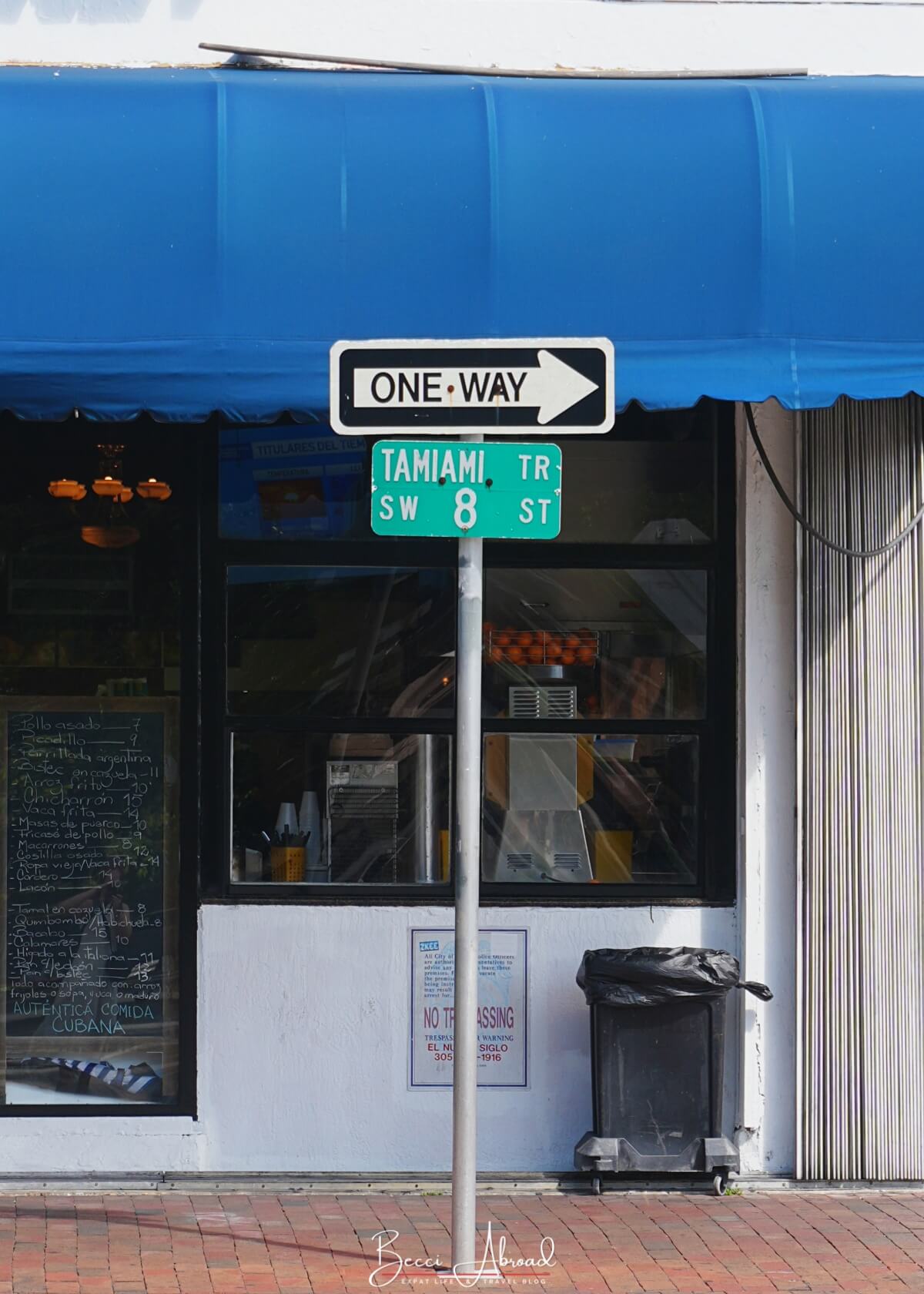
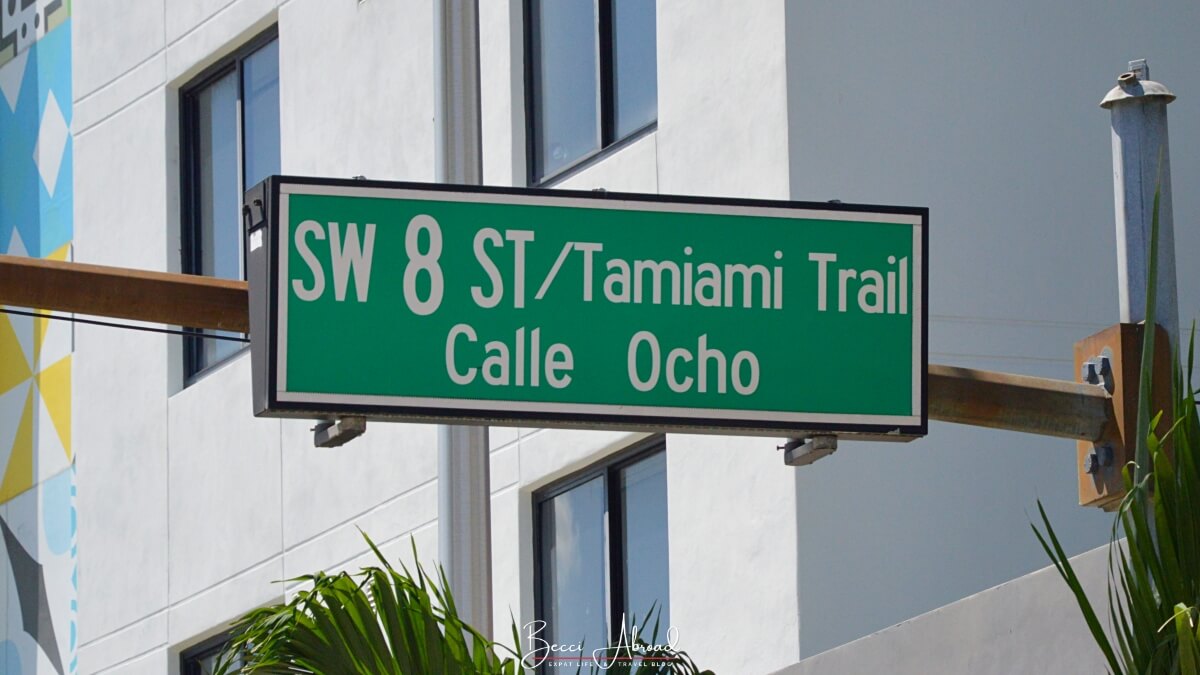
Little Havana is a neighbourhood on the mainland side of Miami, centred around Southwest 8th Street, better known as Calle Ocho.
Little Havana is the cultural heart of Miami’s Cuban community, and home to Cuban restaurants, cigar factories, street art murals, and cultural landmarks that reflect the history of Cuban immigration to the United States.
The neighbourhood stretches quite broadly, but most of the visitor-facing activity is concentrated on Calle Ocho between roughly 12th and 17th Avenues. On this stretch, you’ll find Domino Park, the Cuban Memorial Boulevard, most of the street murals, and the majority of the restaurants and bars.
What is the History Behind the Little Havana Neighborhood?
Little Havana’s story is closely tied to one of the most significant events in modern Cuban history: the Cuban Revolution!
In 1959, the Cuban activist Fidel Castro overthrew the Cuban dictator Batista through a guerrilla revolution.
In the years following the revolution, the Castro regime dramatically reshaped Cuban society, nationalising businesses and restricting civil liberties.
Cubans who had the means to leave, and who did not sympathise with the new government, fled the country in large numbers.
Many of them came to Miami, which was geographically close and already had an established Cuban community.
The Cuban immigrants settled on the western edge of downtown, in an area that quickly became known as Little Havana.
Over the following decades, more waves of Cuban immigrants arrived, particularly after events like the Mariel Boatlift of 1980, which brought around 125,000 Cubans to the United States in a matter of months.
The neighbourhood became a place where Cuban culture, politics, and community life were kept alive in exile.
Many of its older residents arrived with the hope that they would one day return to a free Cuba.
What is Little Havana known for?
Little Havana is probably best known for Calle Ocho, its main street. Along Calle Ocho, you’ll find several Cuban restaurants, bars, and souvenir shops.
At Calle Ocho, you can also find Domino Park, where older men gather to play dominoes much as they would on the streets of Cuba.
Little Havana is also known for its cigar culture, with several working cigar factories and shops where you can watch cigars being hand-rolled.
Beyond the specific attractions, Little Havana is simply known as Miami’s Cuban neighbourhood: a place where Spanish (especially Cuban Spanish) is the dominant language, Cuban coffee is strong and sweet, and the sounds of salsa and son cubano drift out of bars and restaurants throughout the day.
Where is Little Havana in Miami?
Little Havana is located on the mainland side of Miami, just west of downtown.
The neighbourhood is not on Miami Beach. It is on the other side of Biscayne Bay, which catches many people by surprise (myself included).
How Far is Little Havana From South Beach in Miami?
Little Havana is roughly 6 to 7 miles (9 to 11 km) from South Beach, which translates to about 20 to 25 minutes by Uber, depending on traffic.
You can also get to Little Havana using the free Miami Trolley service, though this takes considerably longer.
On our Miami trip this year, we took an Uber from our hotel on Miami Beach to Little Havana, and then the Miami Trolley service to Brickell, which worked really well.
Book a guided tour of Little Havana
What to Do in Little Havana?
After visiting Little Havana twice, here are some of the best things to do and see in Miami’s Cuban neighbourhood.
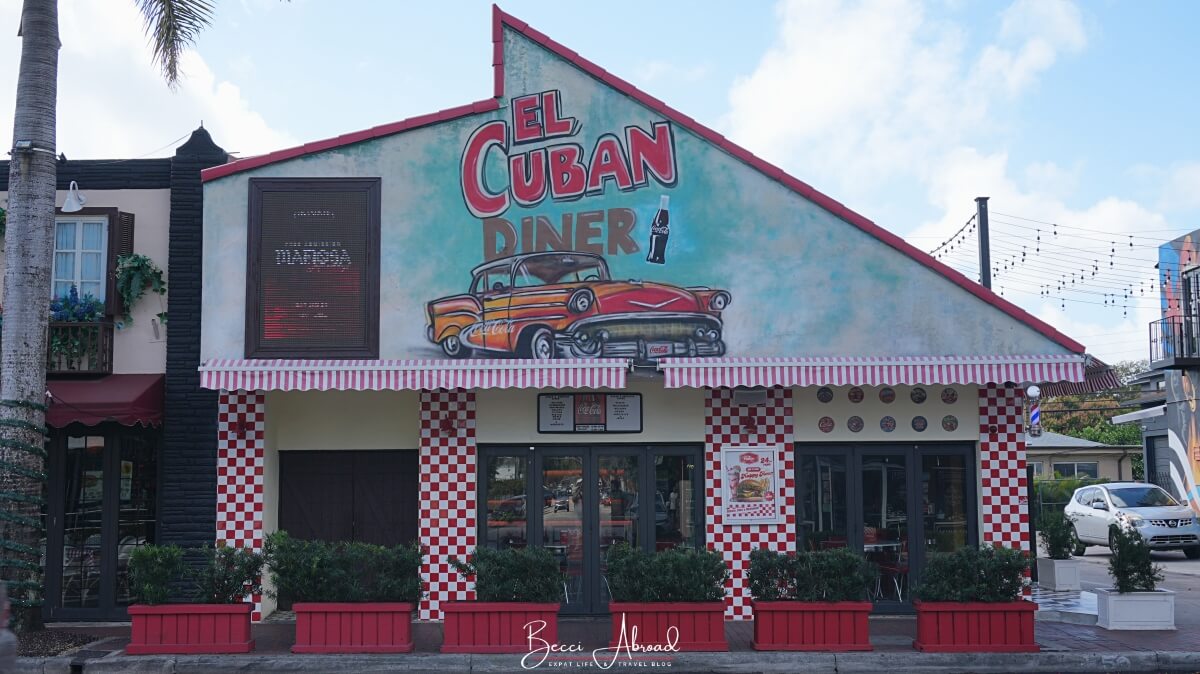
On our visit in 2026, we started our walk around Little Havana on the corner of SW 16th Avenue (right here in front of El Cuban Diner) and walked down Calle Ocho towards the Cuban Memorial Boulevard, and that covered most of the main attractions on Calle Ocho.
Stroll Down Calle Ocho
When you visit Little Havana, a stroll down Calle Ocho is the natural starting point. The street is the neighbourhood’s main artery and the place where most of what makes Little Havana worth visiting is concentrated.
In English, the name simply means Eighth Street, which is the formal name for this stretch of Southwest 8th Street, but Calle Ocho is what everyone calls it!
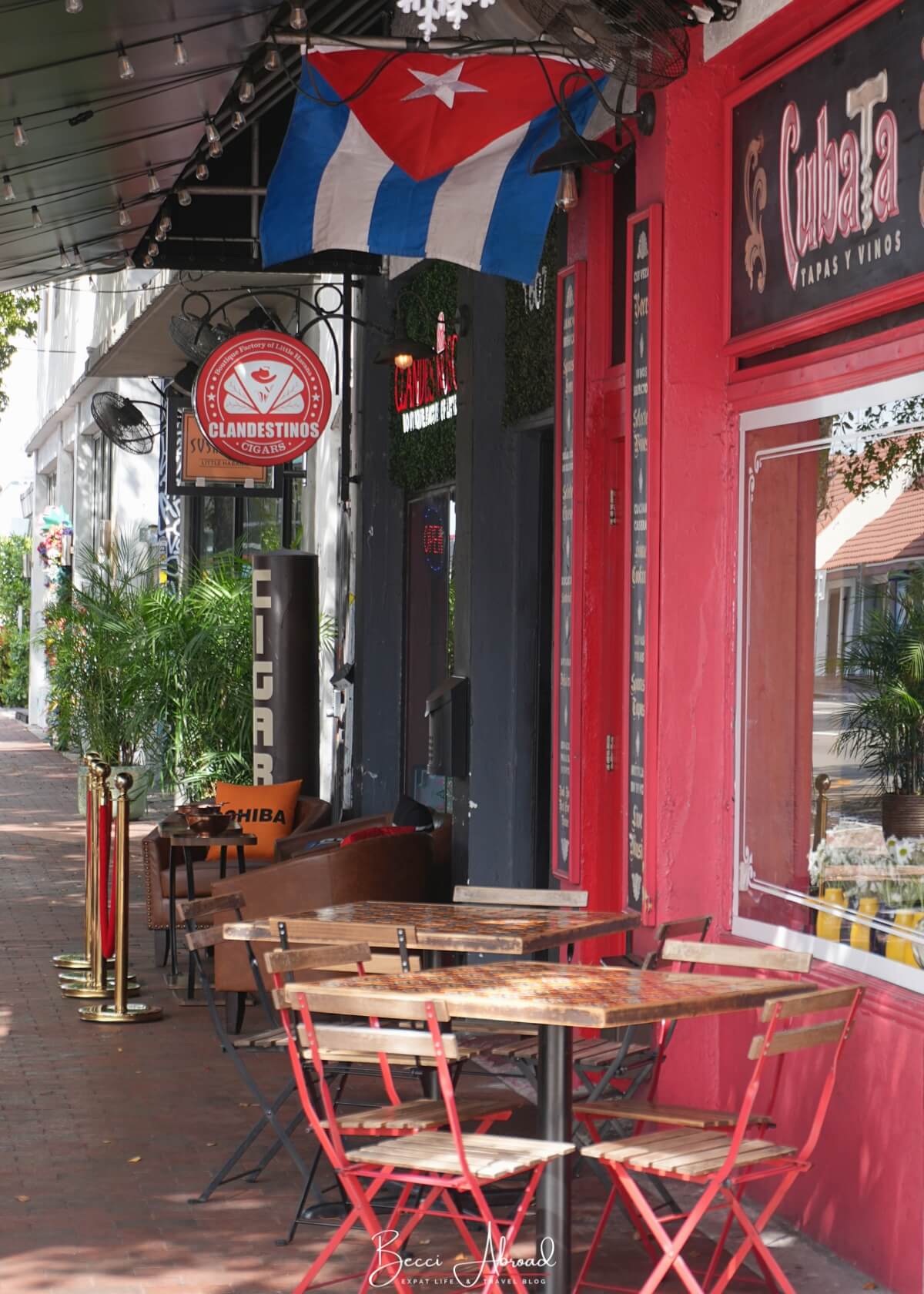
The street runs east to west through the heart of the Little Havana neighbourhood, and along the way, you will pass Cuban cafes serving cafecitos, restaurants with handwritten menus in Spanish, and cigar shops honoring Cuban traditions for hand-rolled cigars.
Calle Ocho is also where you will find most of the neighbourhood’s main landmarks within easy walking distance of each other: Domino Park, the Walk of Fame, and the starting point for most walking tours all sit along this stretch.
Walk Down the Cuban Memorial Boulevard
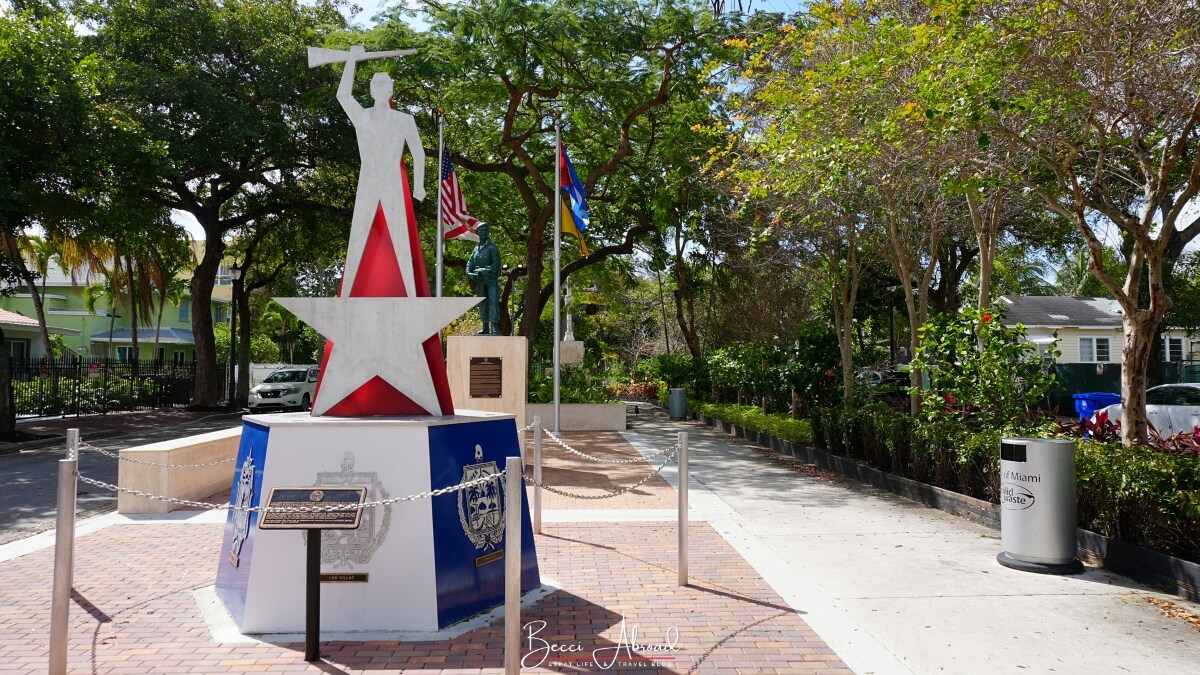
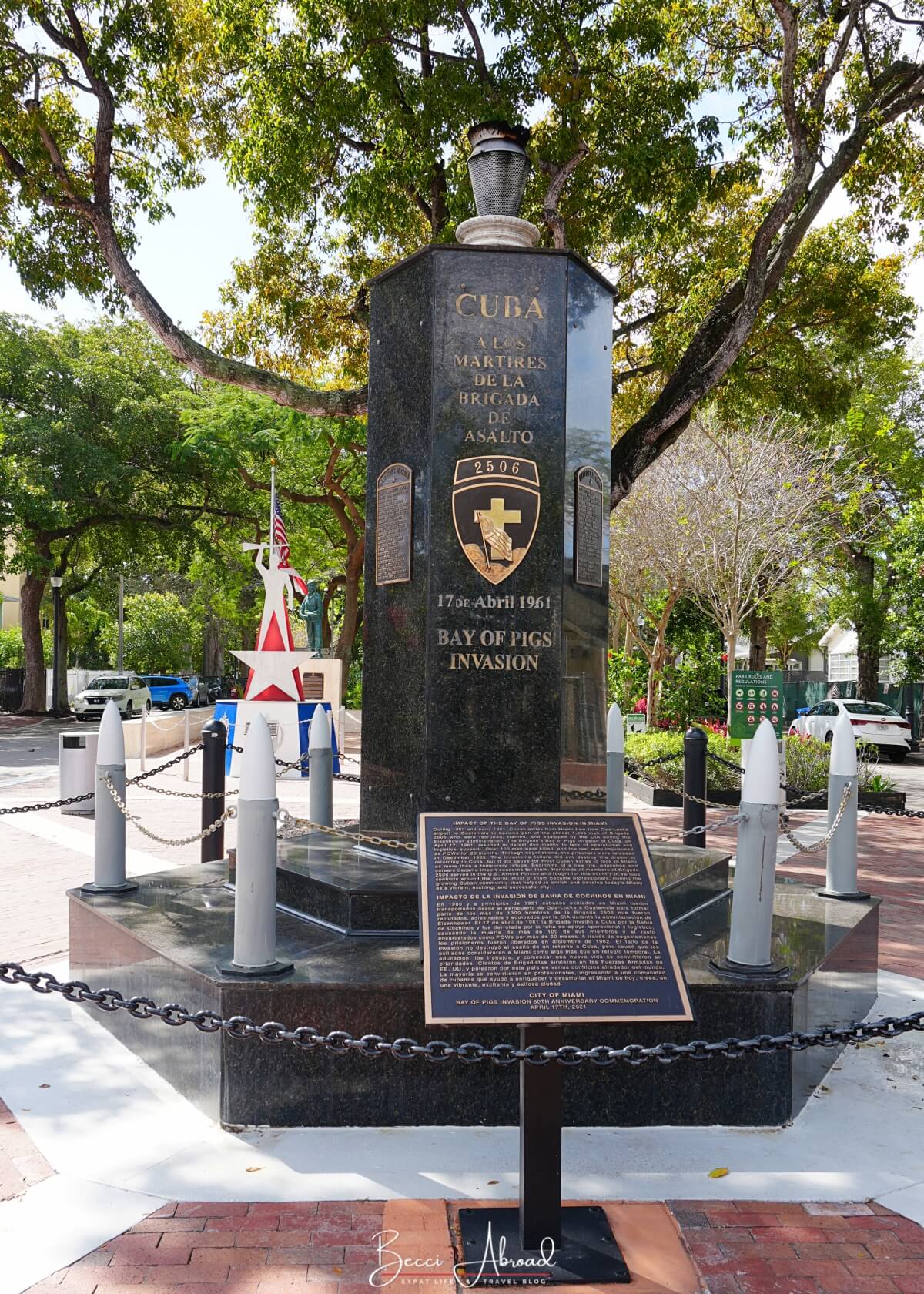
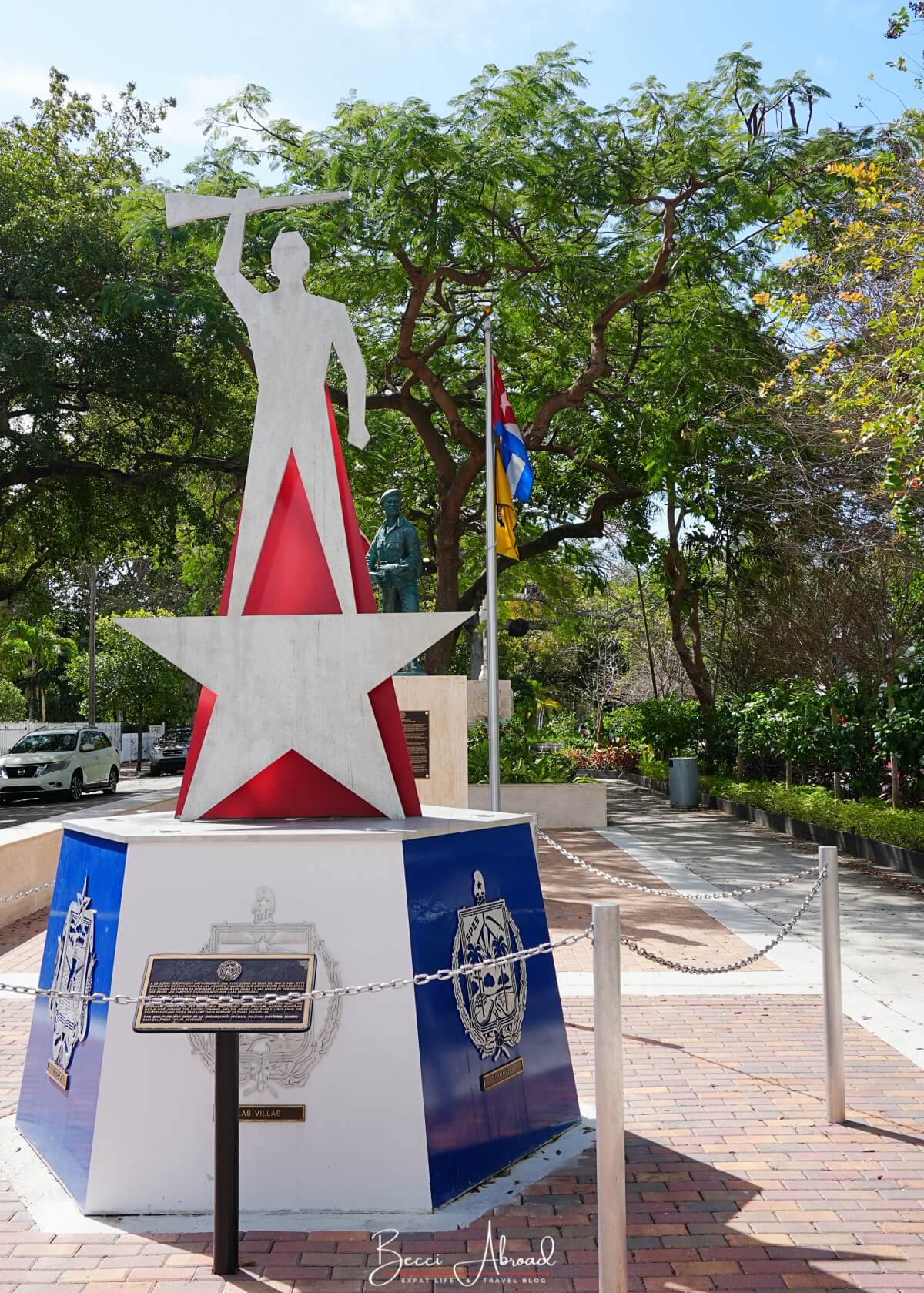
Cuban Memorial Boulevard is one of the most historically significant spots in Little Havana, and one that tends to get overlooked in favour of the livelier parts of Calle Ocho.
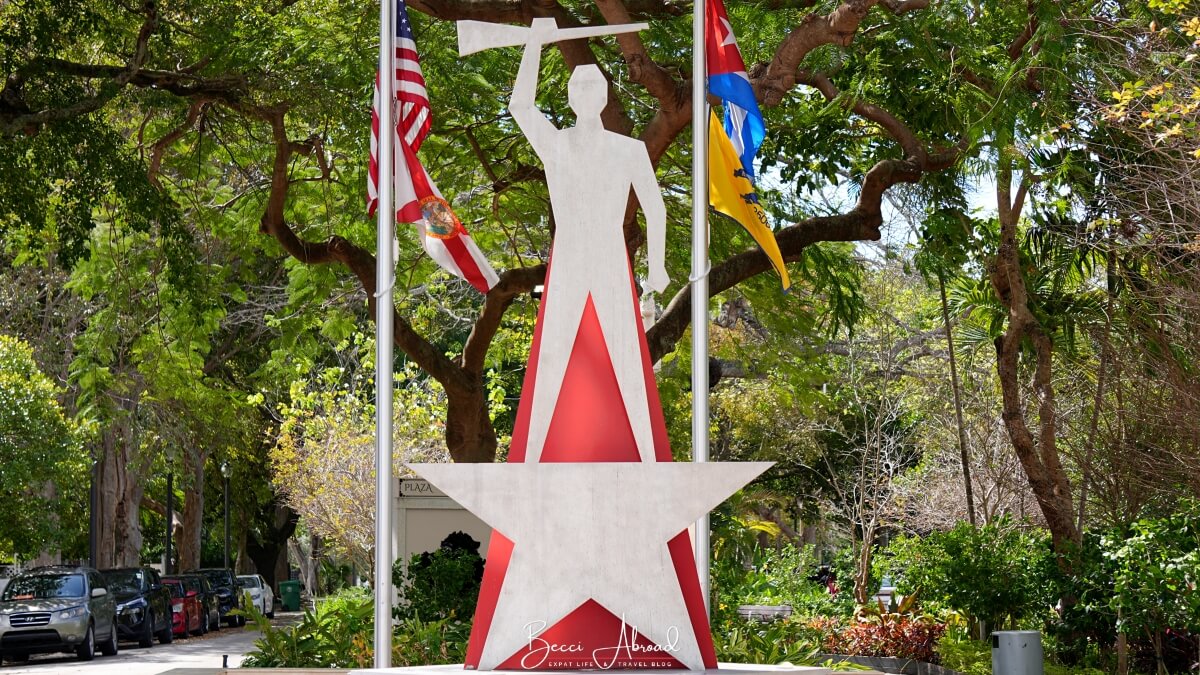
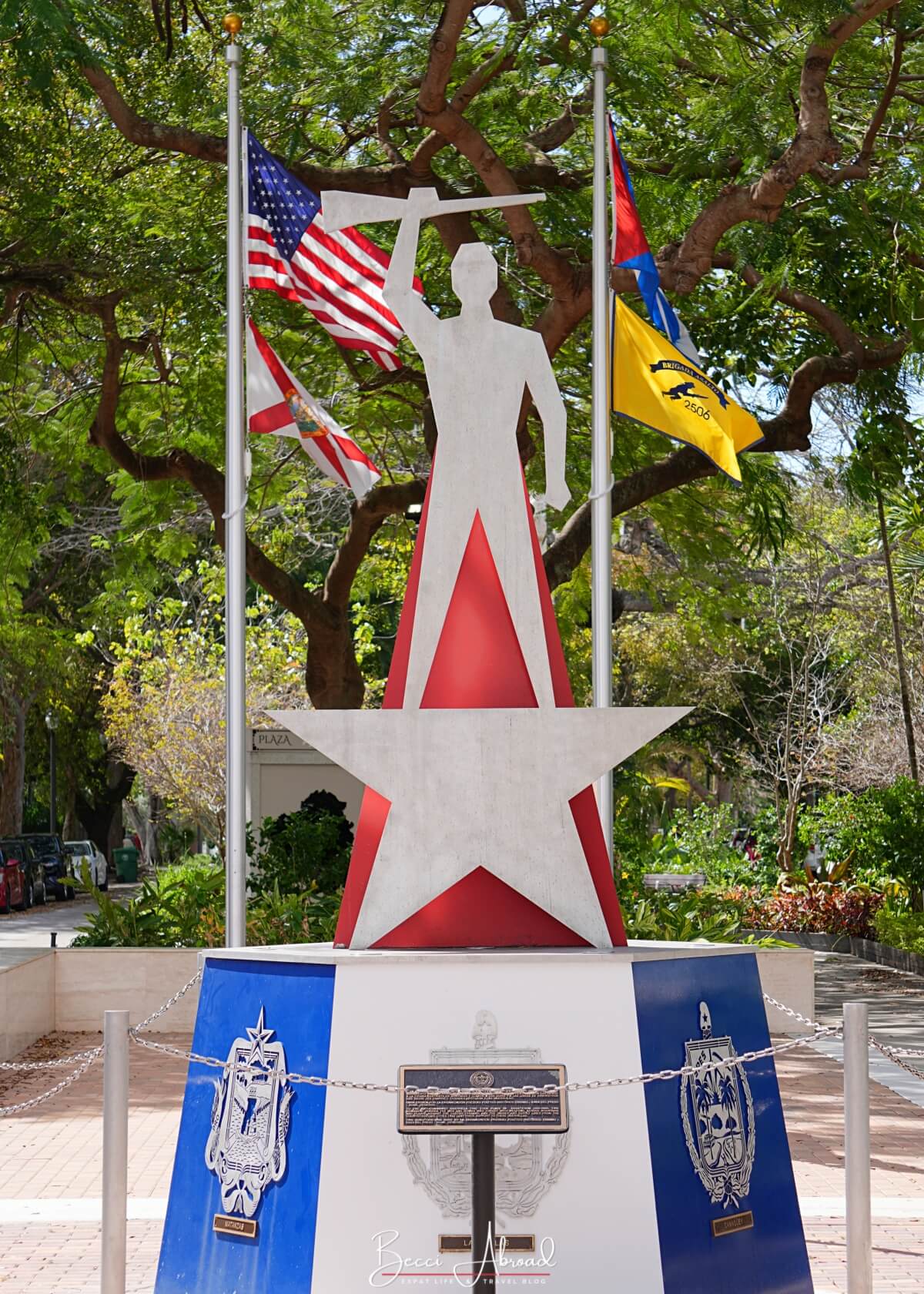
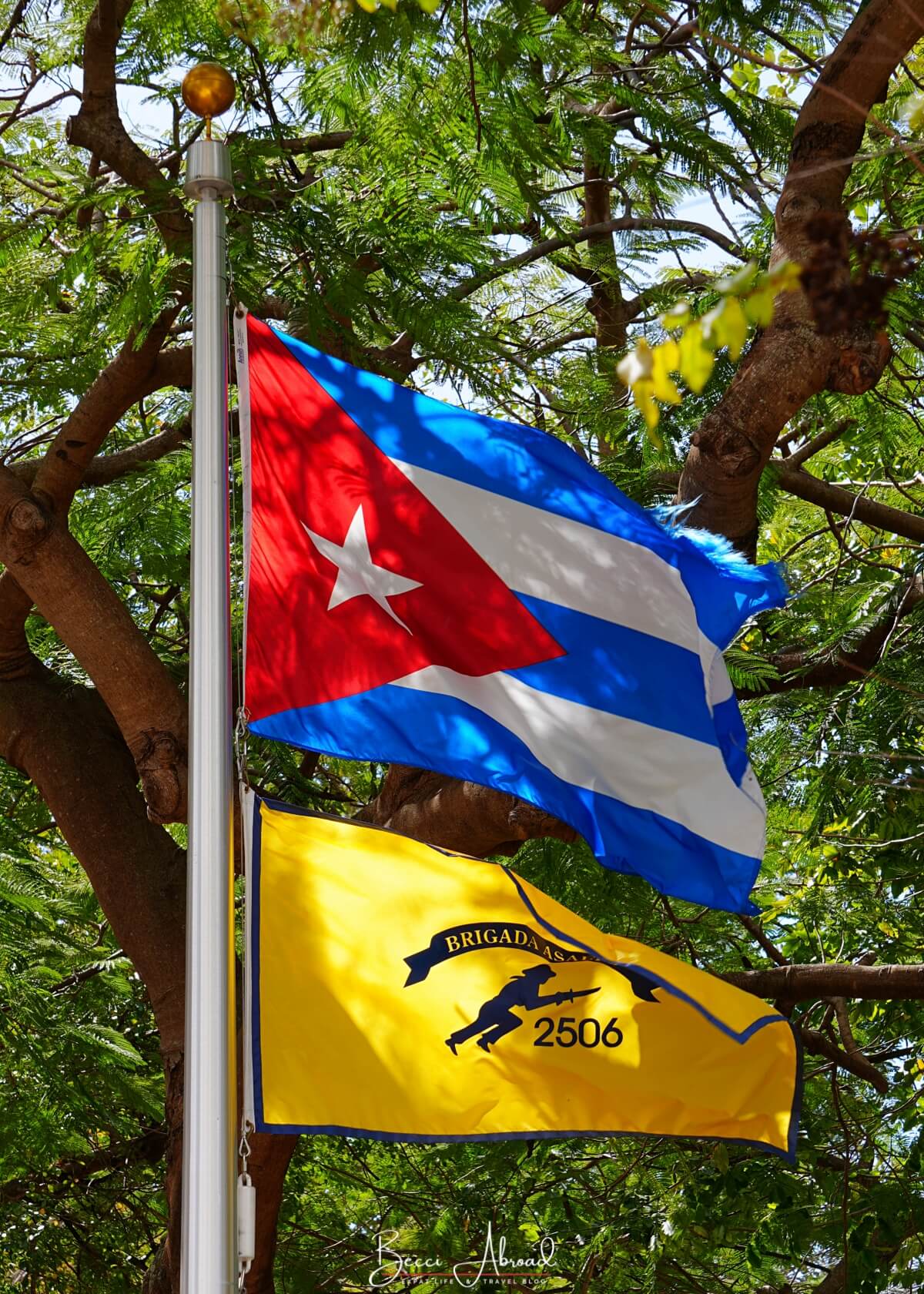
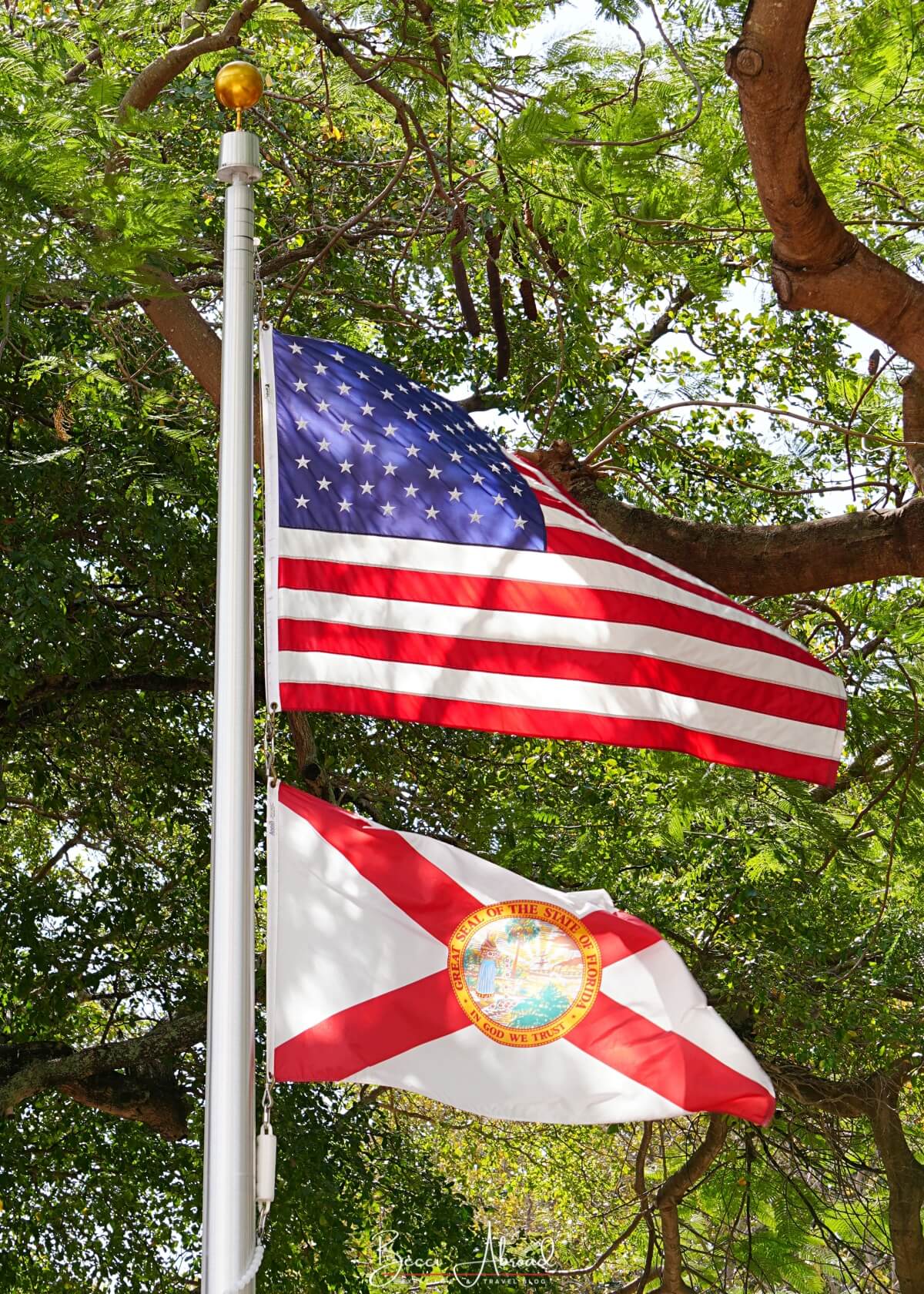
The boulevard is a quieter and more reflective green space just off Calle Ocho, featuring a series of monuments with American and Cuban flags hanging side-by-side.
The monuments honour the Cuban exiles and those who died in the US-sponsored invasion of Cuba at the Bay of Pigs in April 1961. The invasion was a failed attempt to overthrow the Castro government, and it remains a deeply emotional subject for many Cuban Americans whose families were involved.
Personally, I found the Cuban Memorial Boulevard to be one of the places in Little Havana that reminds me the most of Cuba and Havana. The Cuban flags and the revolutionary figure in one of the moments always send me right down my Cuban memory lane.
It is definitely worth spending a few minutes on the Cuban Memorial Boulevard before moving back to the busier parts of Calle Ocho.
Location: Cuban Memorial Boulevard
… And Say Hello to the Free-Roaming Roosters
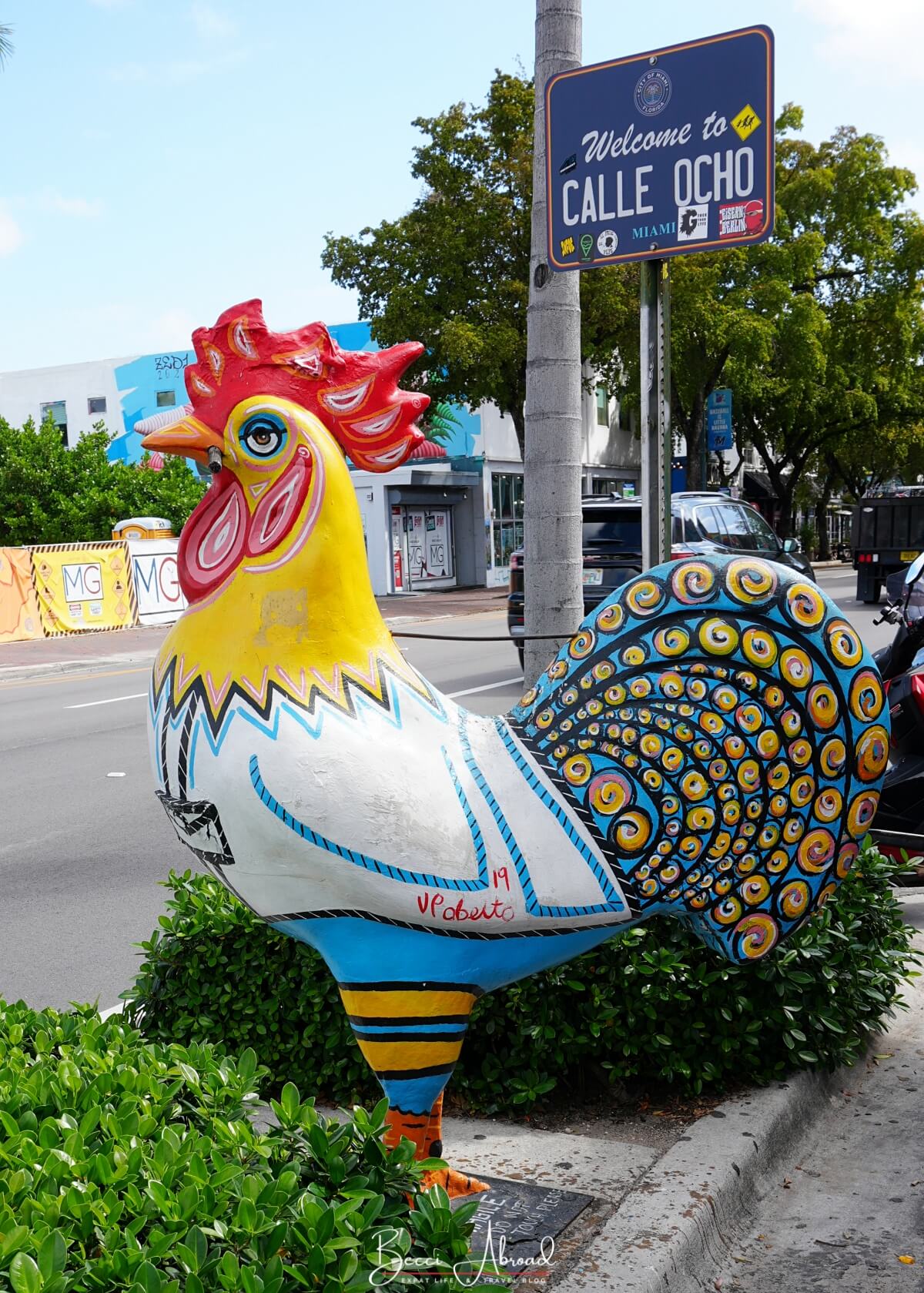
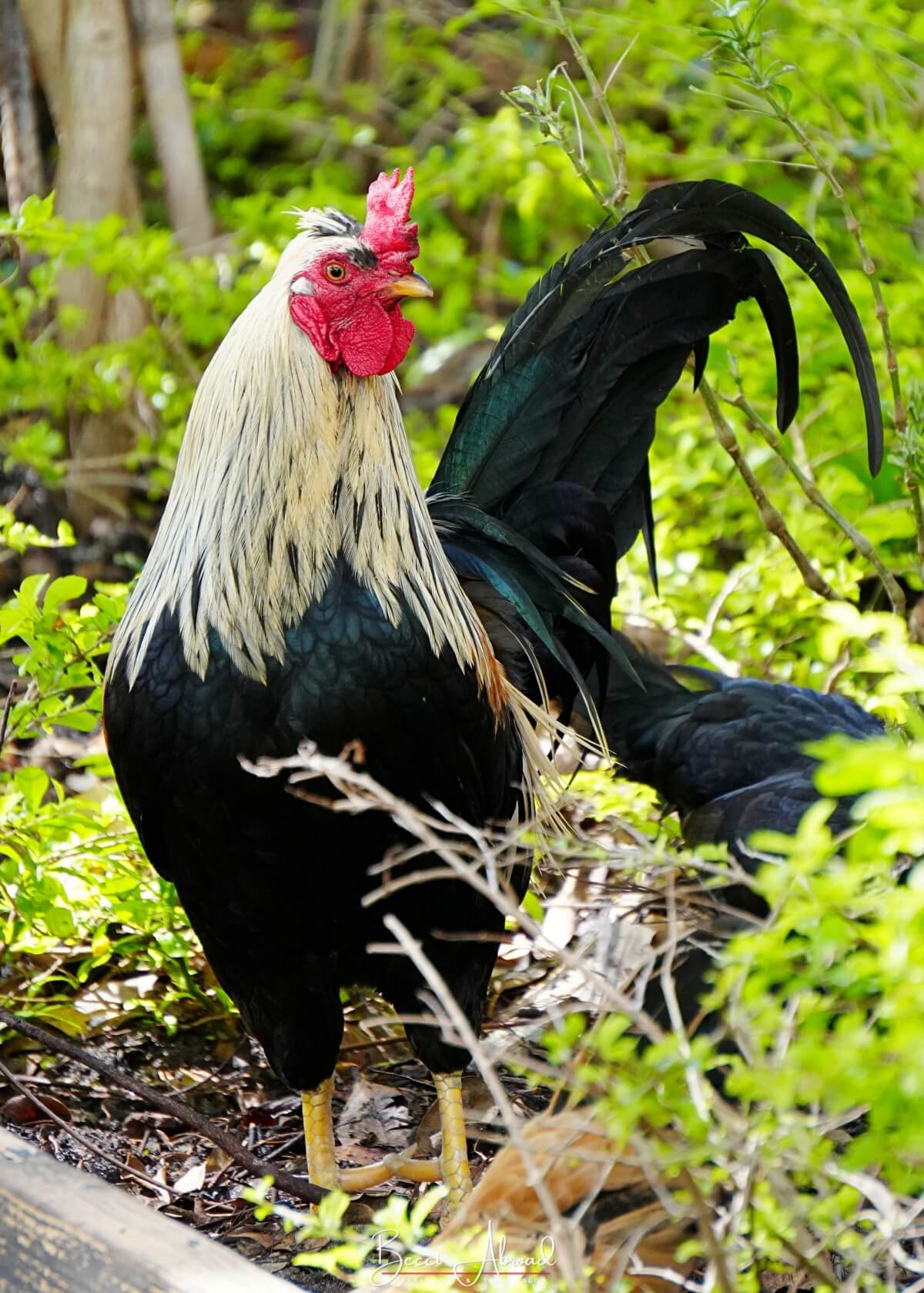
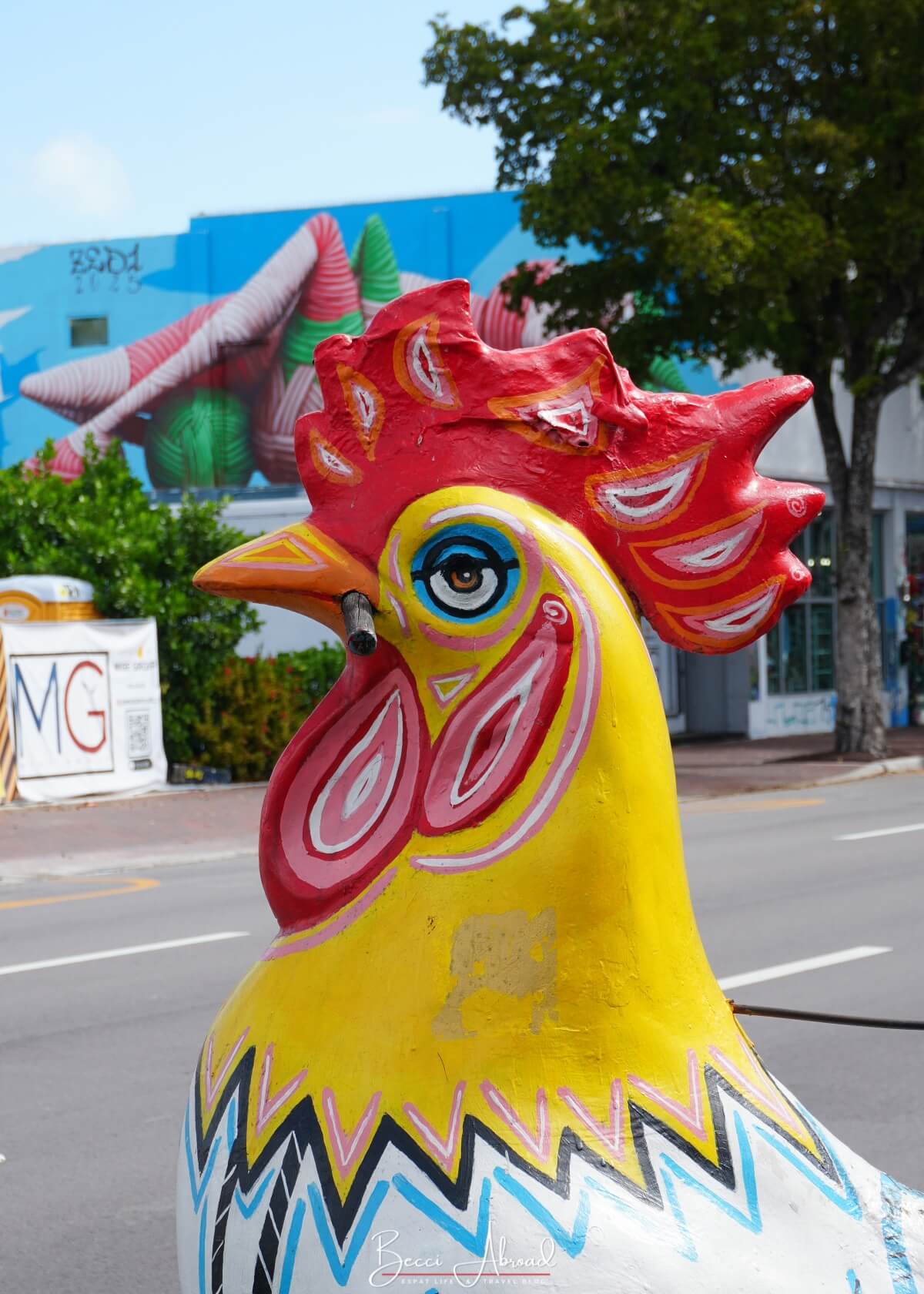
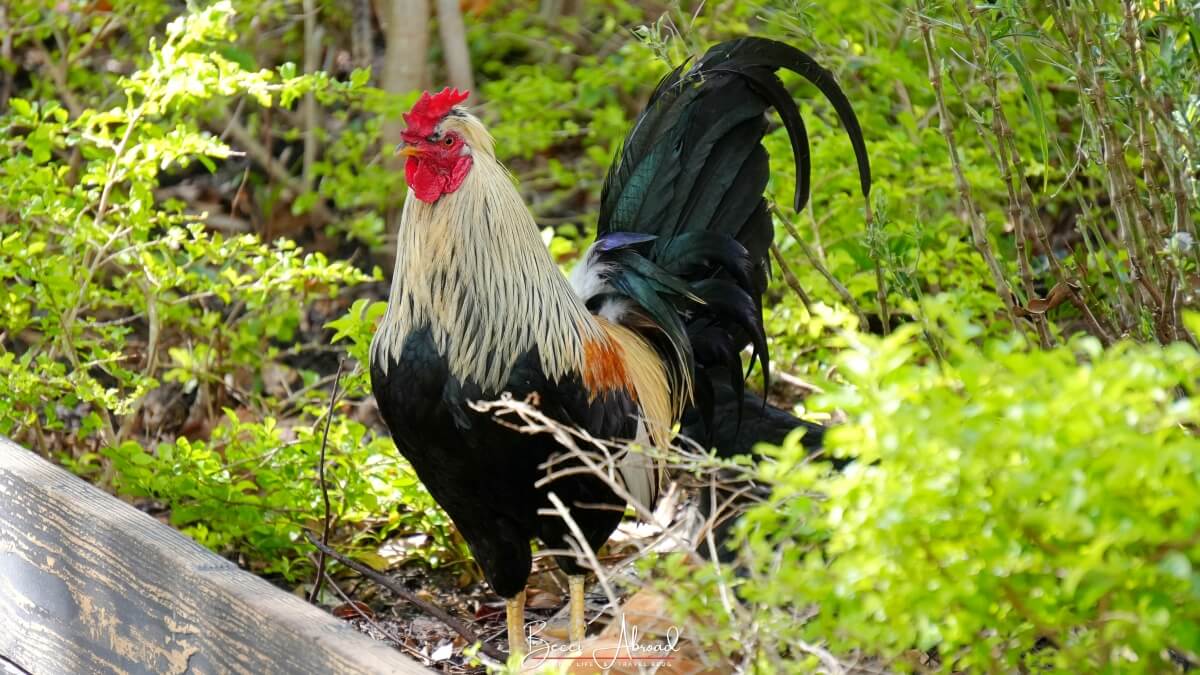
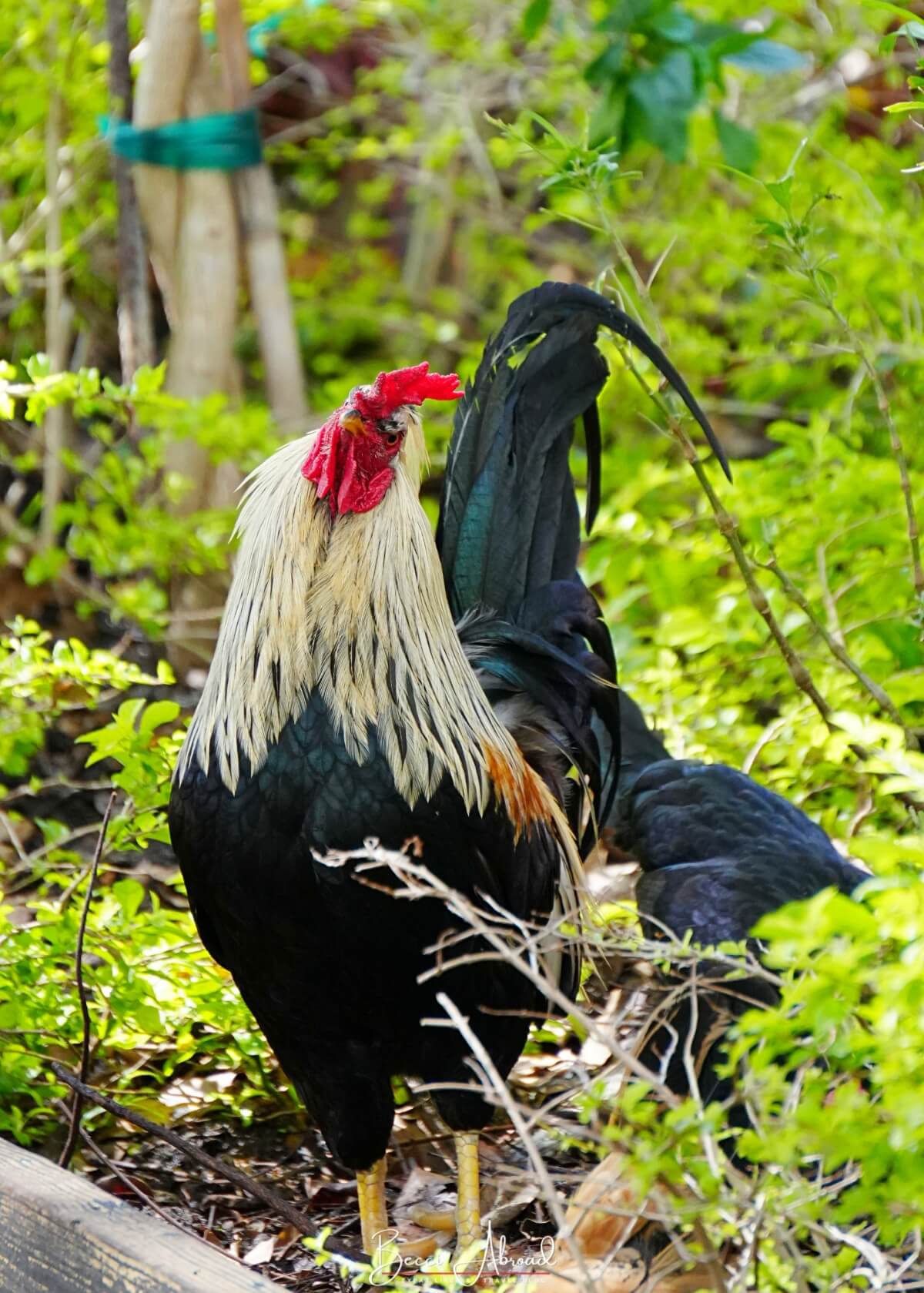
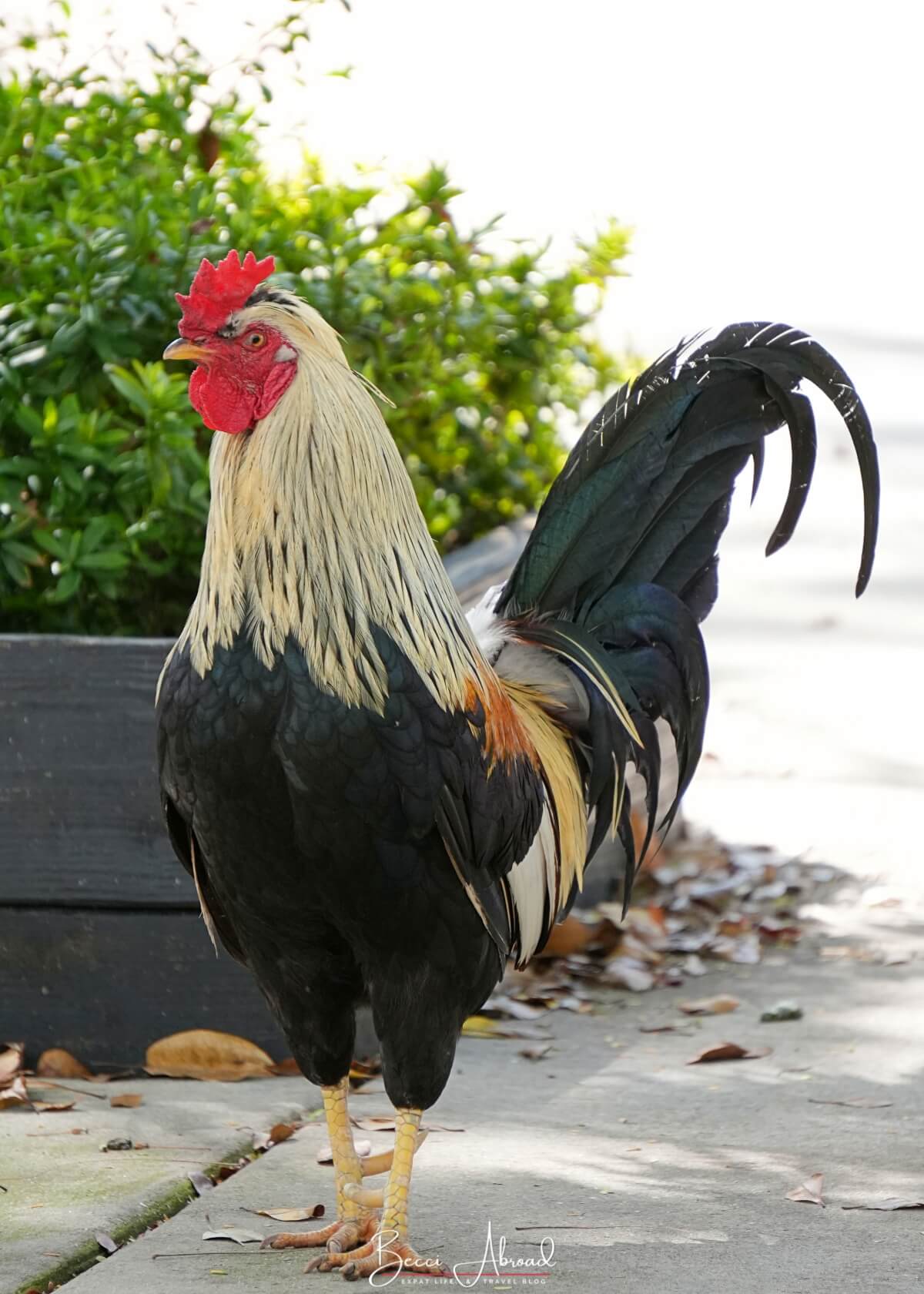
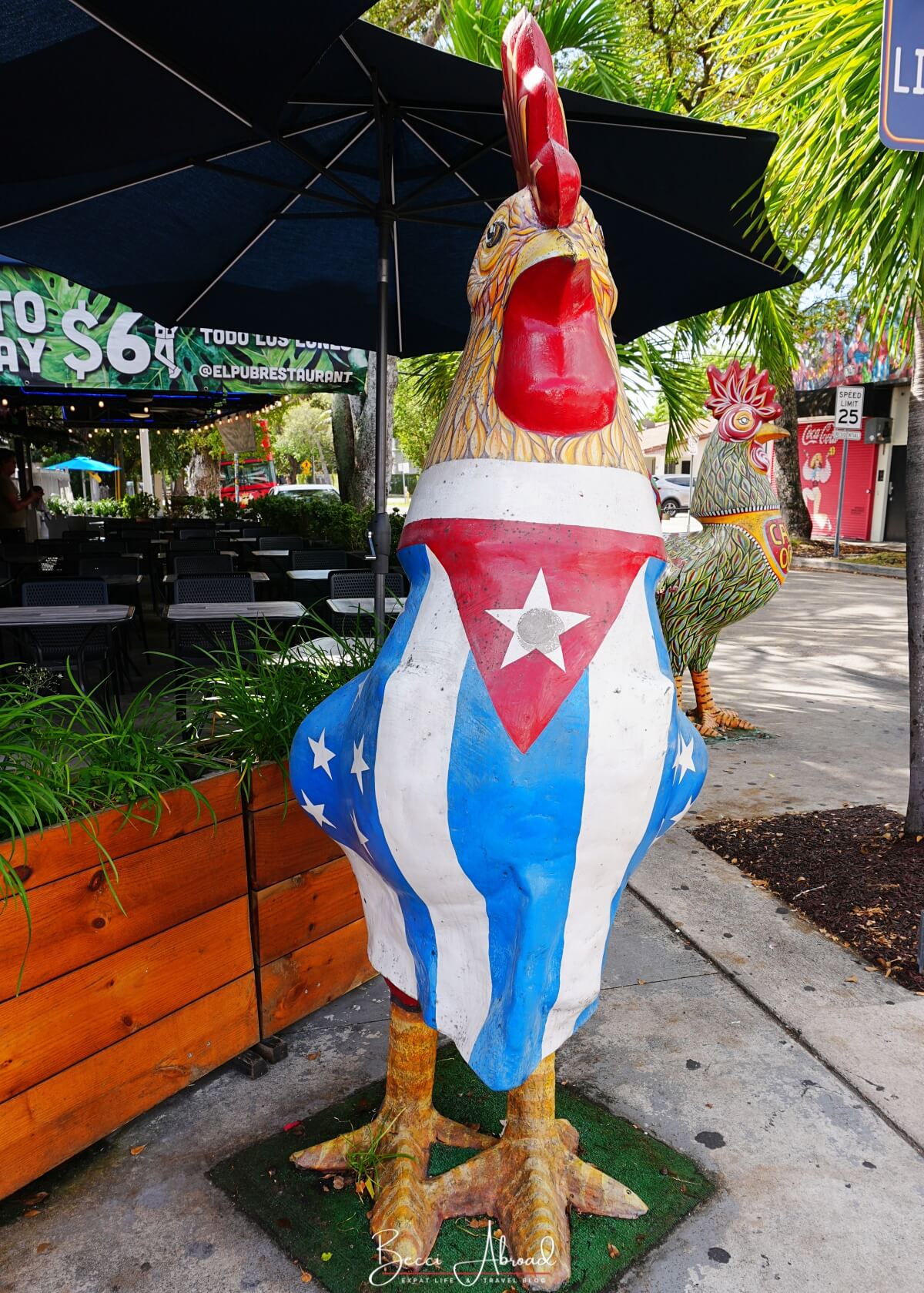
One of the more unexpected things you will encounter in Little Havana is the neighbourhood’s free-roaming chickens and roosters.
The chickens and roosters can be found roaming around the streets throughout Little Havana, but there are particularly many near and along Cuban Memorial Boulevard.
According to local lore, they are the descendants of birds brought to Miami by Cuban immigrants, who kept them in their homes and gardens for food or religious acts.
Over time, the chickens escaped or were released, and the population has been living and reproducing on the streets of Little Havana ever since.
Locals seem to have a fairly relaxed attitude towards their presence, and they definitely also became one of my favorite motives in my photos.
The roosters have become an unofficial symbol of the neighbourhood, and you will see them represented in many different shapes and forms throughout Little Havana.
Take Photos of the Street Art
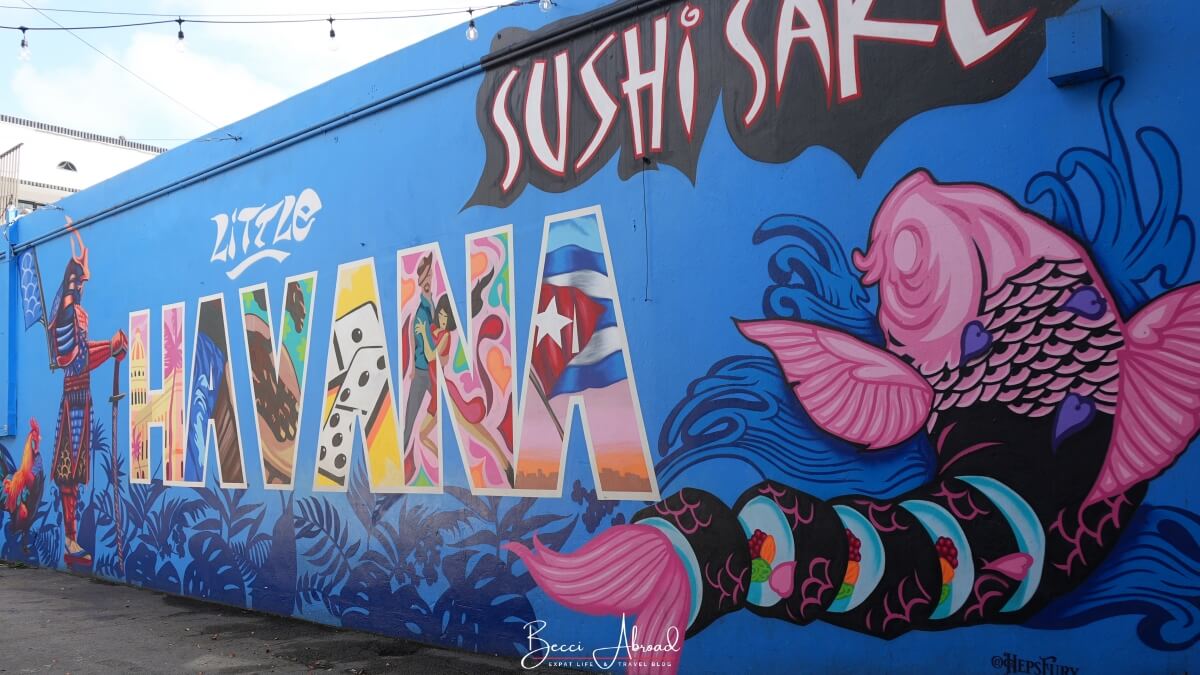
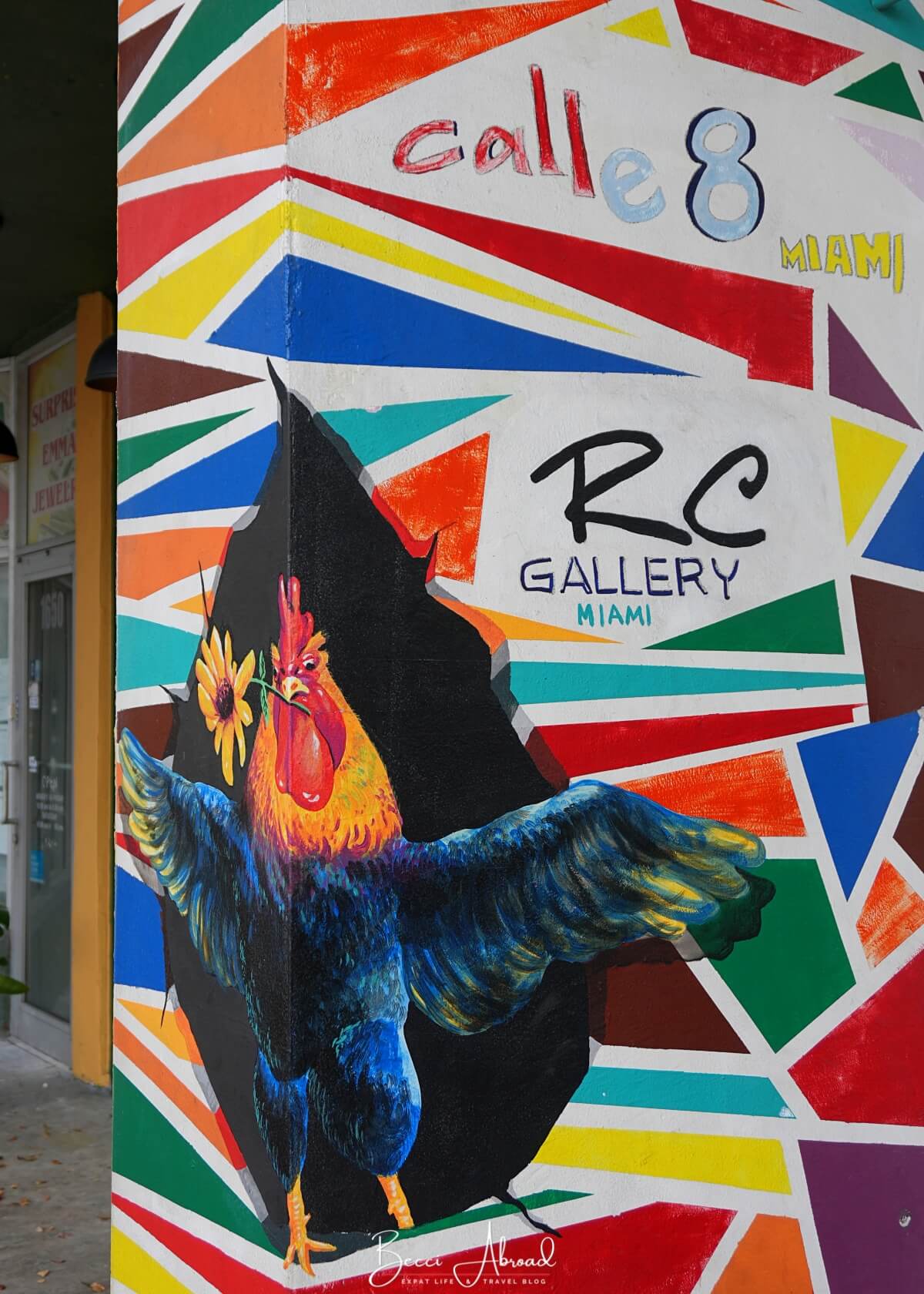
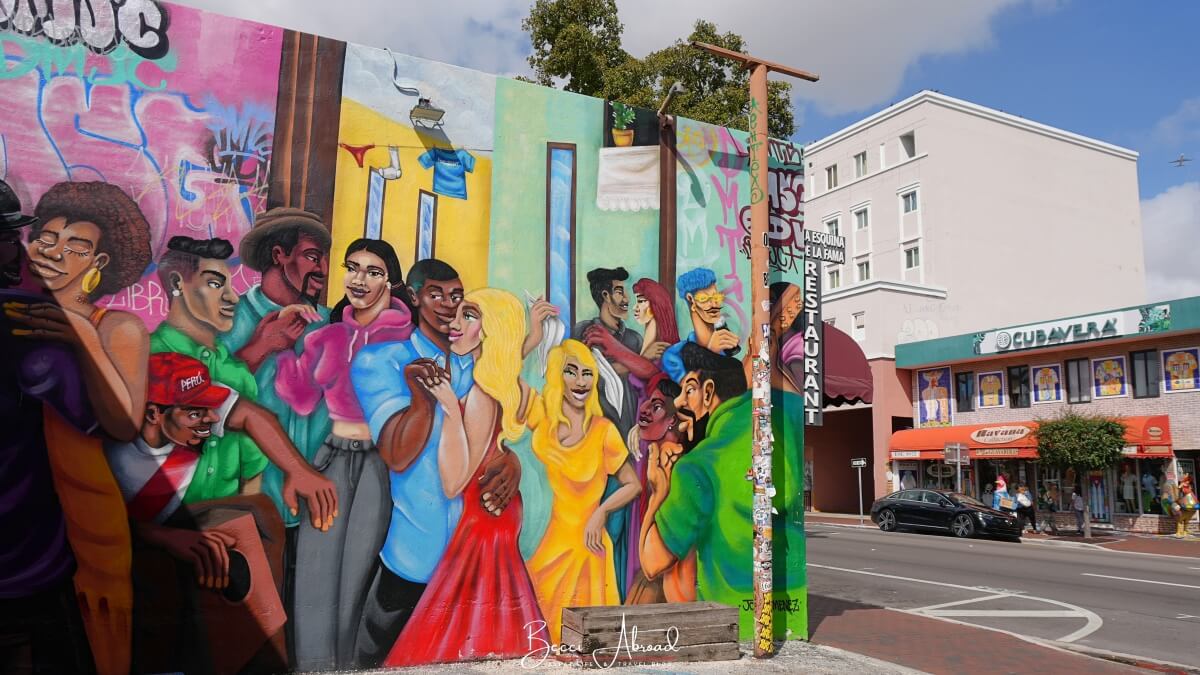
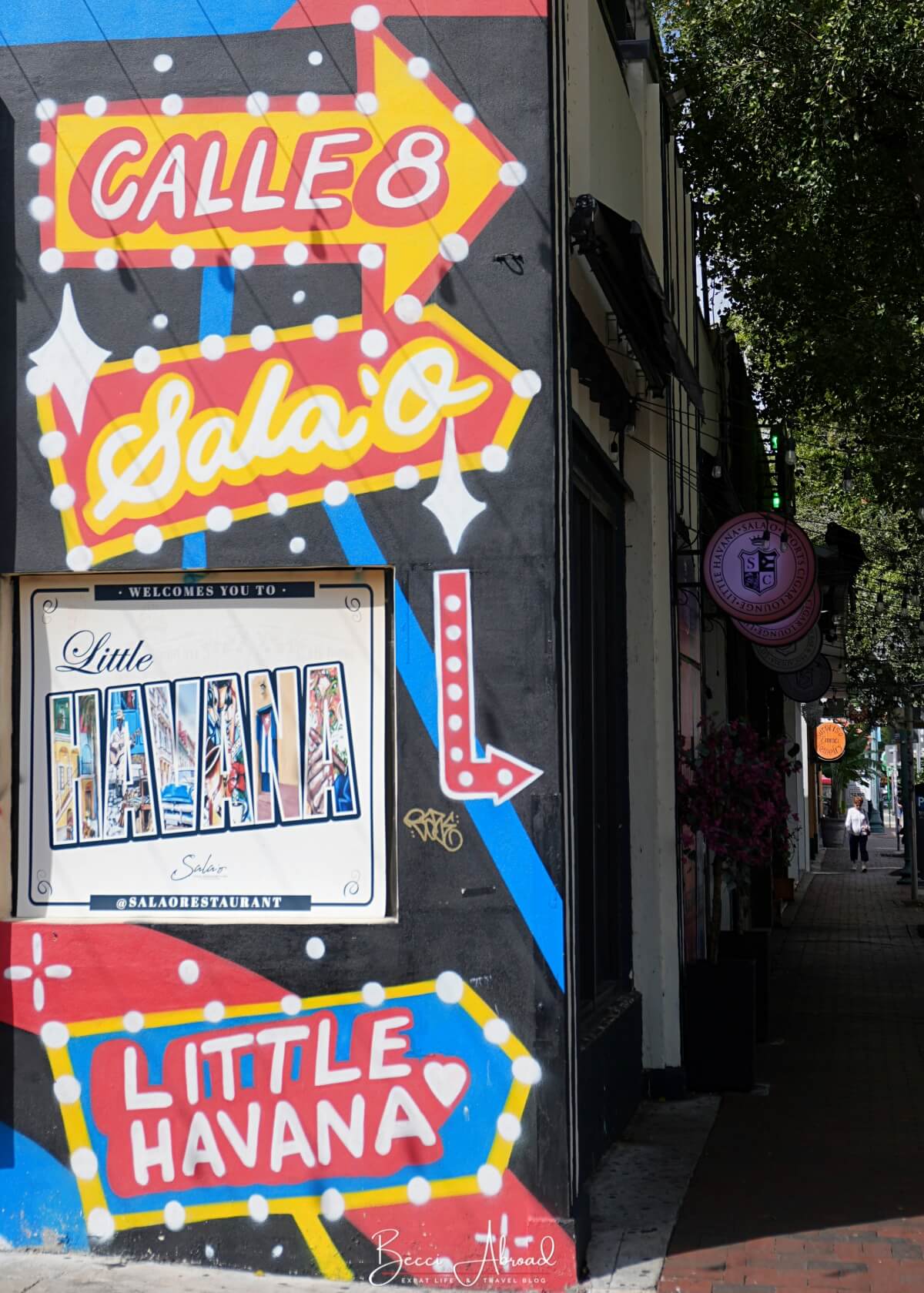
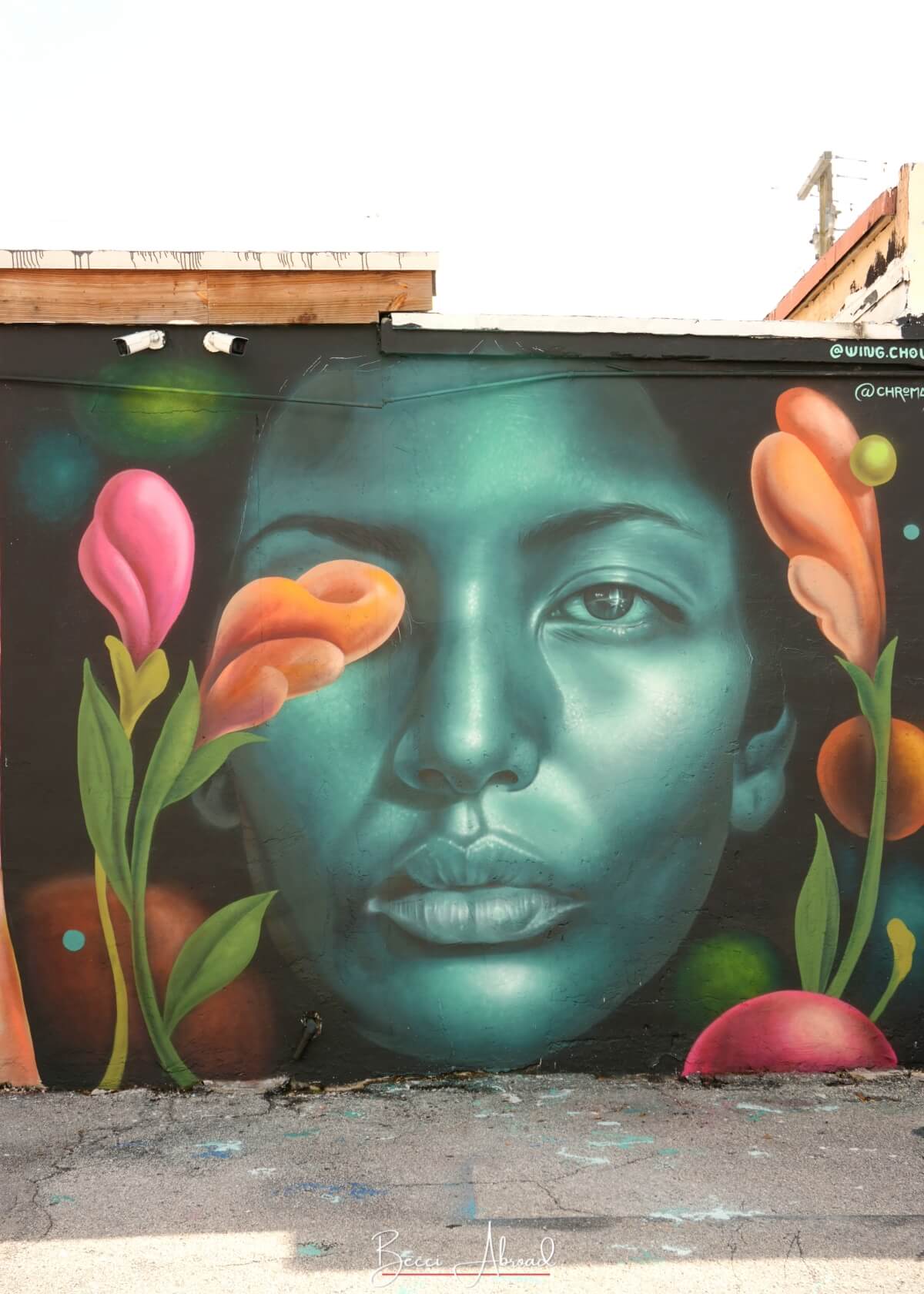
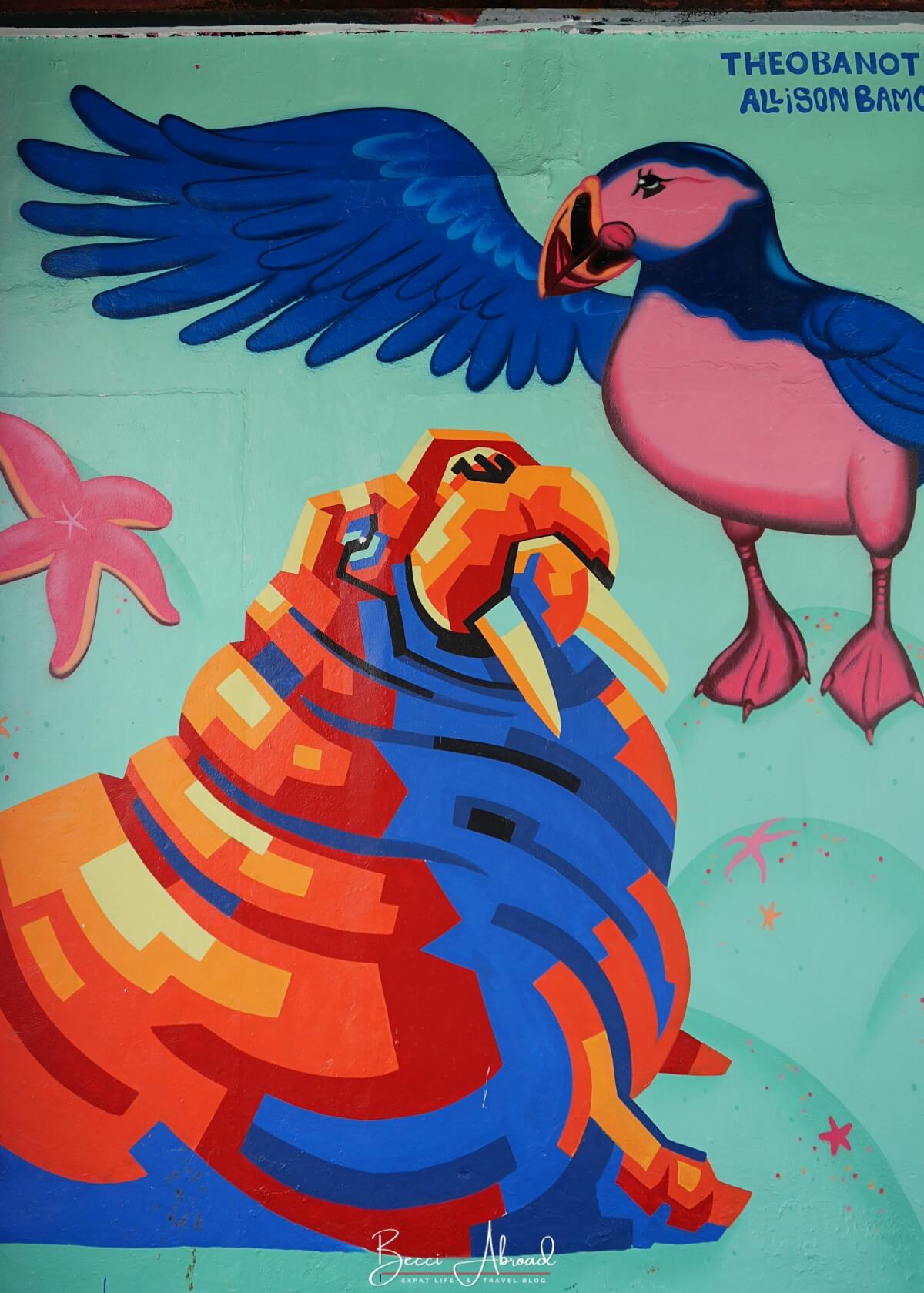
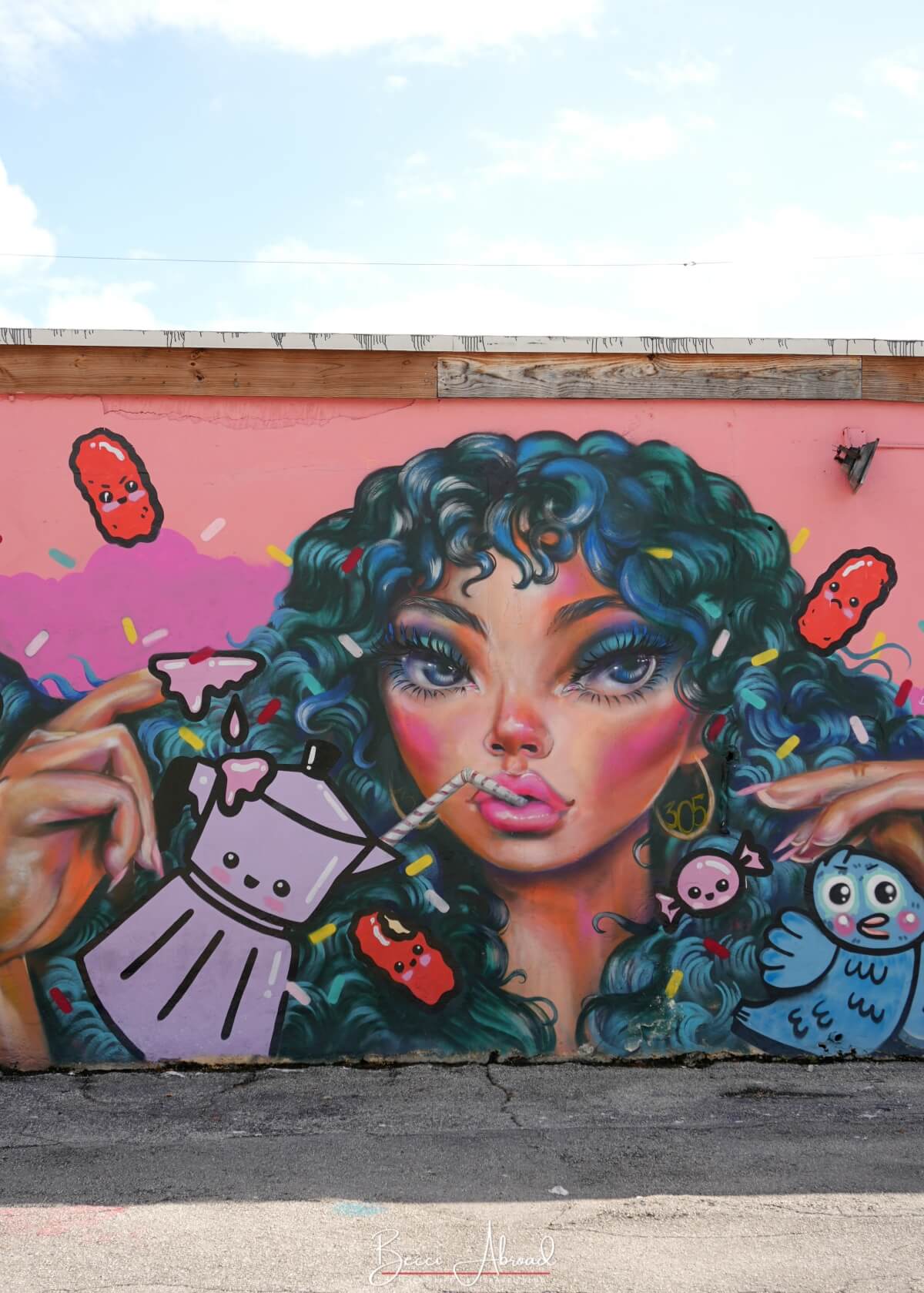
Little Havana does not have the density of street art that Wynwood does, but there is a decent amount of street art murals scattered throughout the neighbourhood.
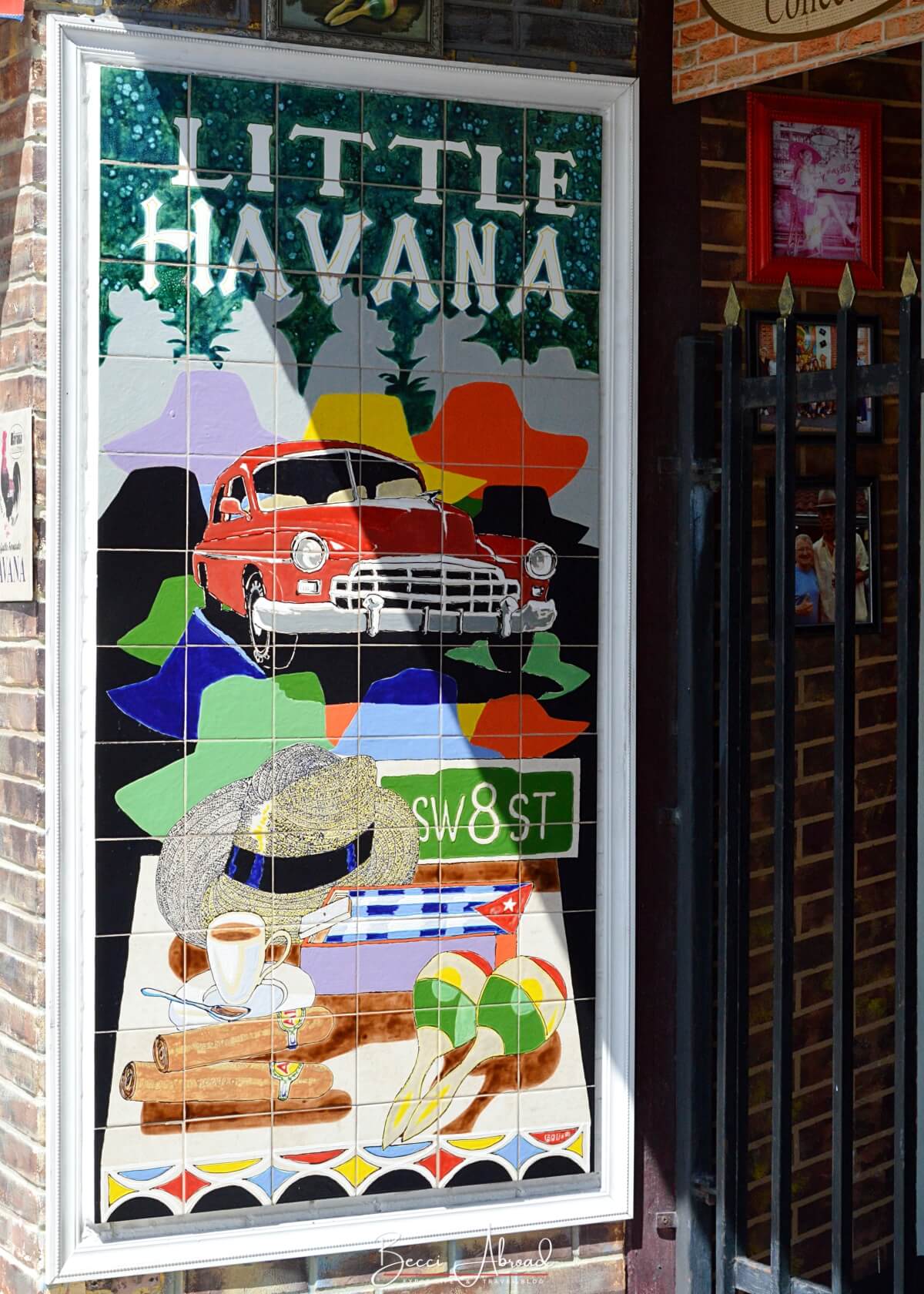
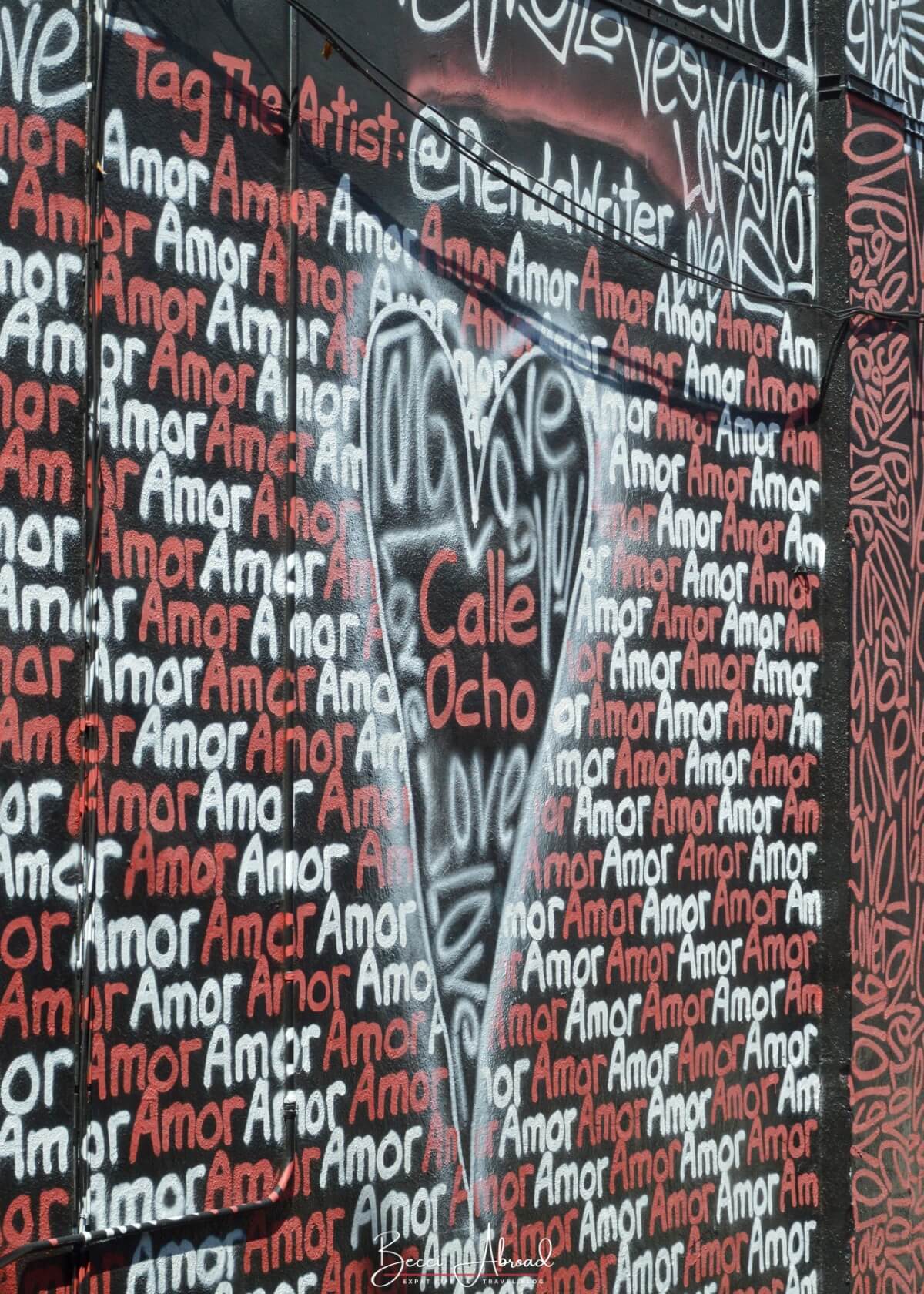
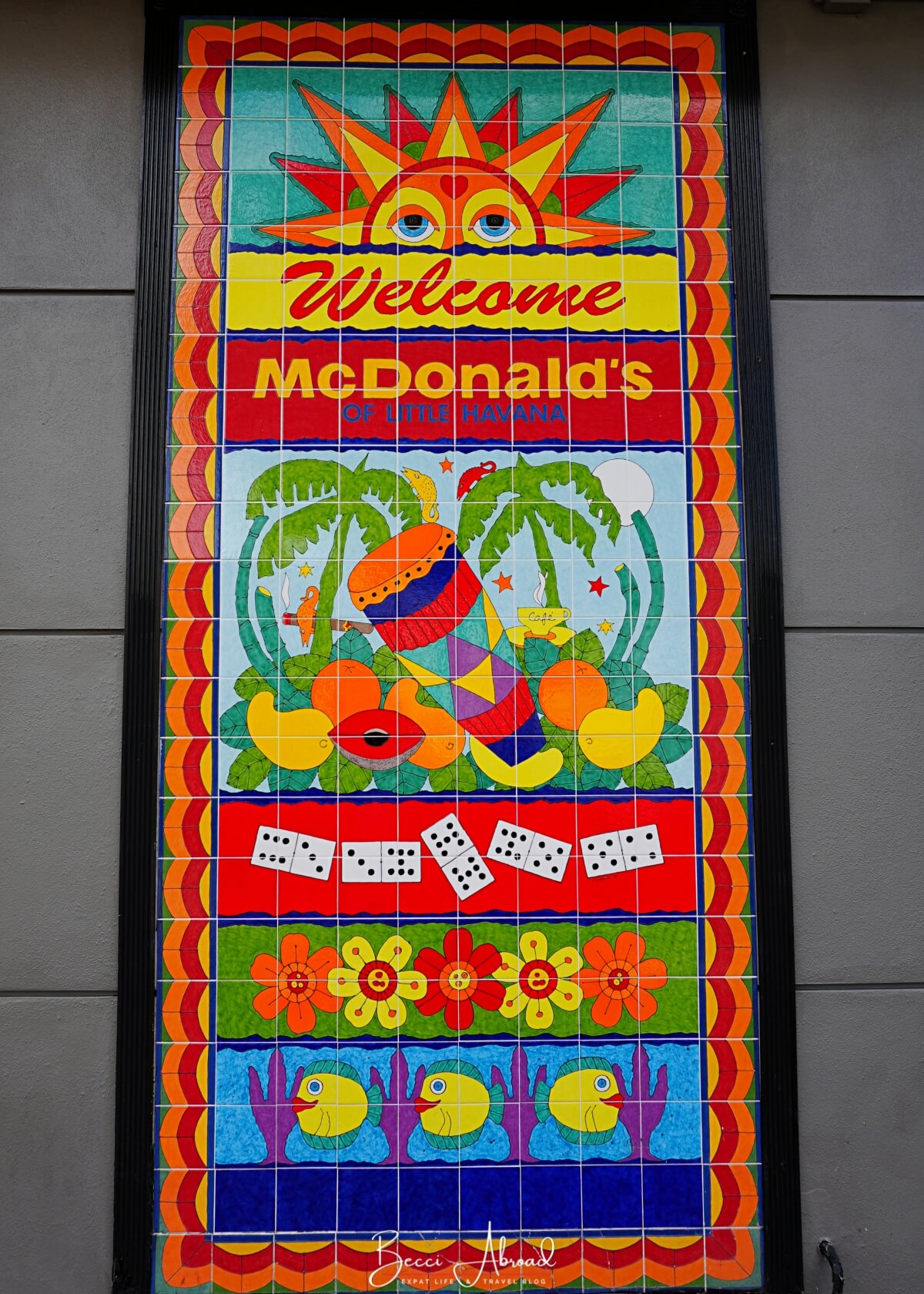
You’ll come across street art murals on the sides of buildings, on shop fronts, and painted onto walls along the boulevard.
A lot of the street art in Little Havana features figures from Cuban history and culture: revolutionary imagery, portraits of musicians and writers, and scenes of Cuban daily life.
While other murals reflect the broader Hispanic identity of the neighbourhood, which has become increasingly diverse over the decades as immigrants from other Central and South American countries have also settled in the area.
Here are some of the best spots I found for street art in Little Havana:
- Calle Ocho Murals
- Murals in the alley by Sushi Sake Little Havana
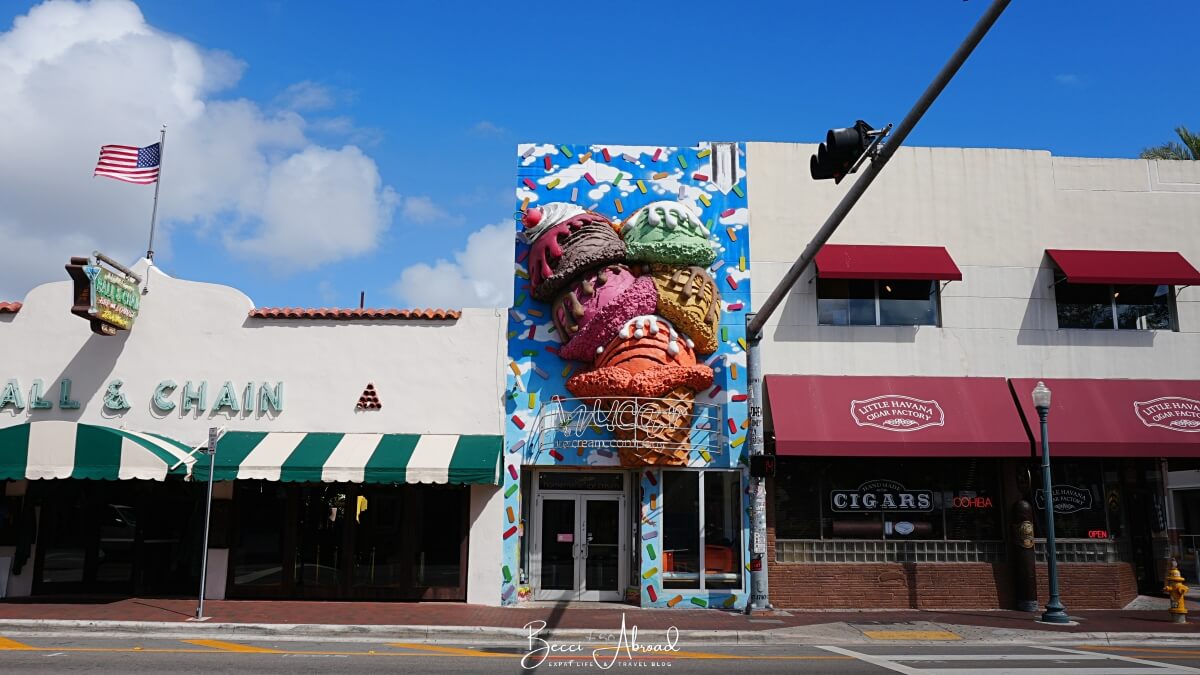
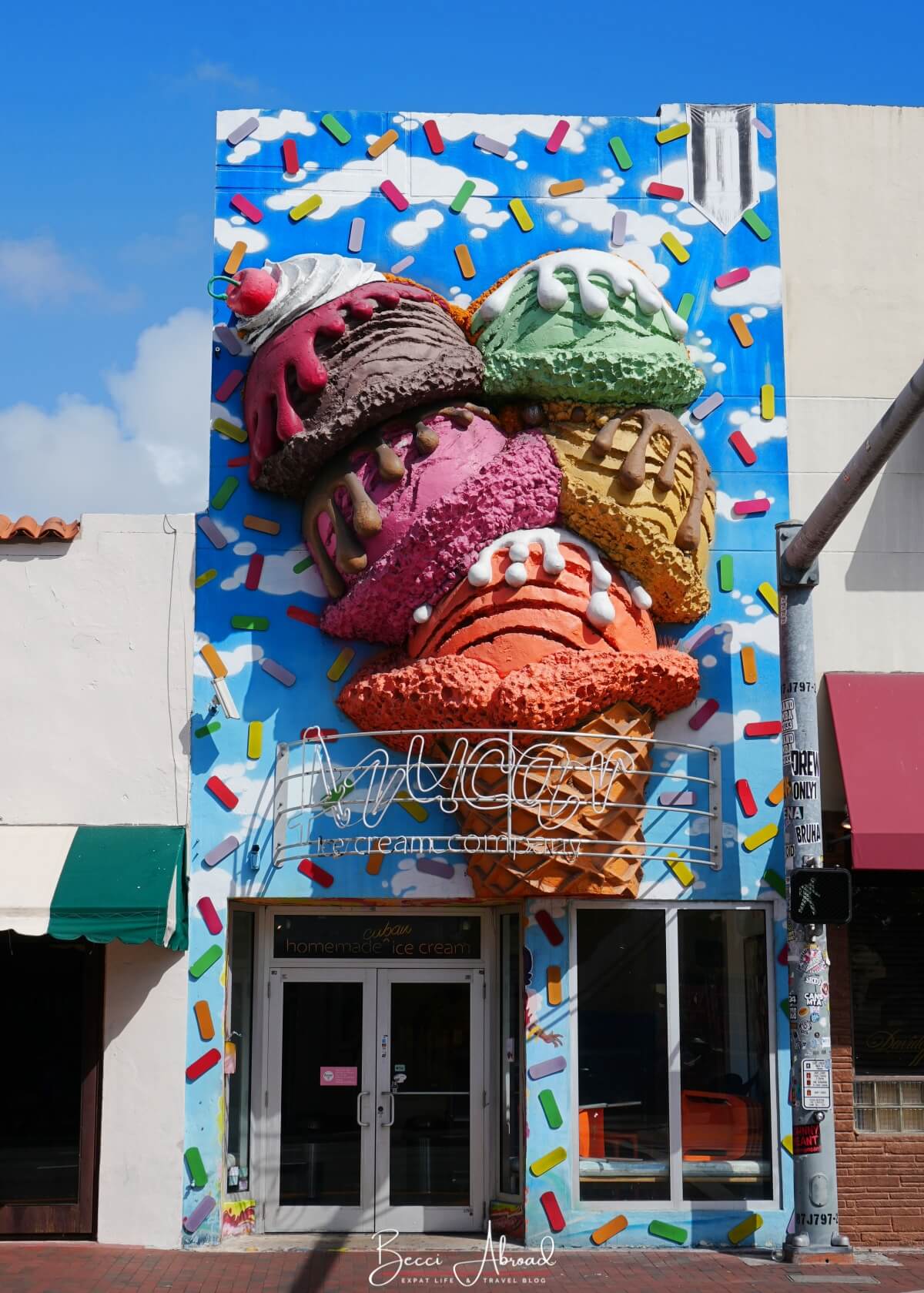
- Azúcar Ice Cream
- Little Havana Mural – it’s quite a long walk from the other murals to get to this one.
If you want to learn more about street art, check out this street art tour of Little Havana.
Watch Locals Play Domino at Domino Park
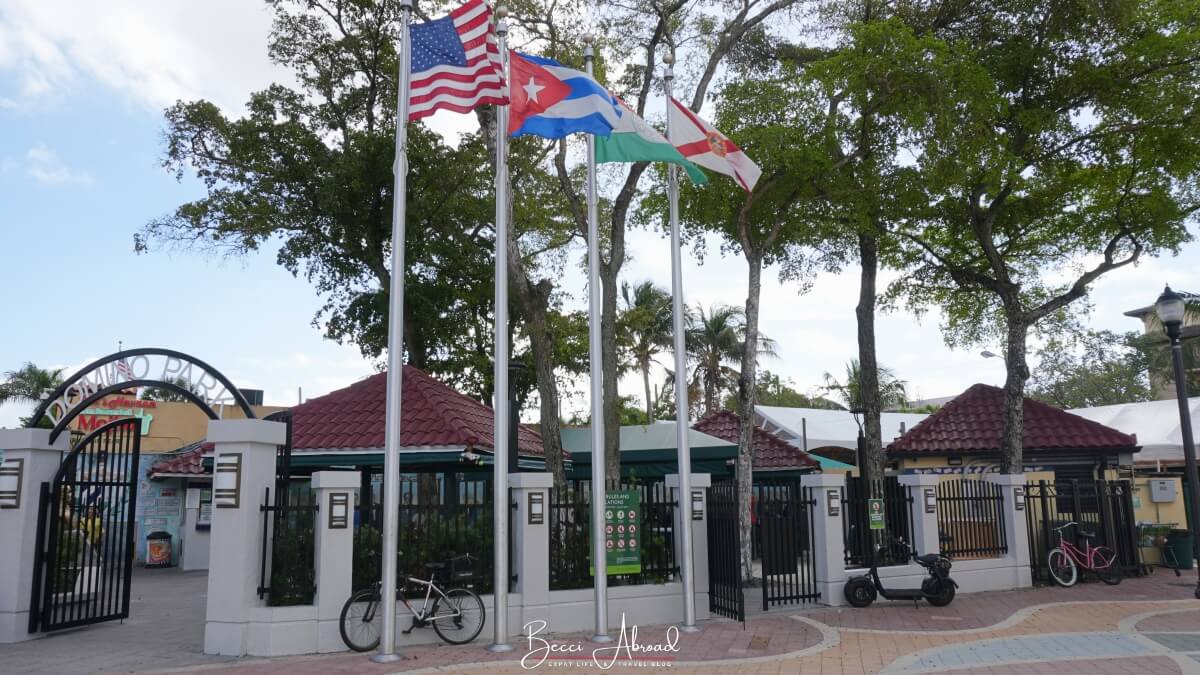
Domino Park is a small, open-air park on Calle Ocho where older Cuban men gather to play dominoes, smoke cigars, and talk.
The park has been a central part of the neighbourhood since the 1970s, and it is one of the few places in Little Havana where you can genuinely get a sense of the older Cuban exile community rather than just the tourist-facing version of it.
The official name for Domino Park is Maximo Gomez Park, named after a Cuban general who fought for independence.
Domino Park is free to visit, and you are welcome to watch, though you cannot just sit down and join a game.
When we visited Little Havana, we only made a stop outside Domino Park and didn’t enter. Generally, I don’t like wandering into areas where locals are hanging out and relaxing, as I believe people should have a place where they can relax from tourists.
Location: Domino Park, corner of Calle Ocho and SW 15th Avenue.
Spot Calle Ocho’s Walk of Fame
Calle Ocho’s Walk of Fame is easy to walk past without noticing.
In the pavement of Calle Ocho, you’ll find star-shaped plaques honoring Latin American musicians, artists, and cultural figures who have left a mark on Miami and on Latin culture.
The stars here read like a history of Latin American music:
Celia Cruz, the Cuban salsa legend who became one of the most celebrated performers in the world after leaving Cuba in 1960, has a star here.
So does Gloria Estefan, who grew up in Miami after her family fled Cuba following the revolution, and went on to become one of the best-selling music artists of all time.
Other honourees include Willy Chirino, Julio Iglesias, and Olga Guillot, among many others.
It is worth taking a few minutes to read the plaques and look up the names you do not recognise.
The Walk of Fame is a small thing on its own, but it adds another layer to the story of Little Havana as a place where Cuban and Latin American culture was preserved and celebrated.
Calle Ocho’s Walk of Fame is embedded in the pavement along Calle Ocho between 14th and 16th Avenues.
Join a Walking Tour of Little Havana
This is something I wish I had done when we visited. We walked around Little Havana on our own, and while we enjoyed it, I came away feeling like we had only scratched the surface of what the neighbourhood has to offer.
The murals, monuments, and parks tell fragments of a bigger story, but without context, they can feel a little disconnected. A guided tour would have filled in those gaps considerably.
Several tour operators run walking tours of Little Havana, and some of them also include food and drink stops along the way.
Here are some top-rated Little Havana walking tours I would choose for our next trip to Miami:
- Little Havana Express Food Tour
- Little Havana Authentic Food and Culture tour
- Little Havana Walking Tour with a Local
- Taste of Little Havana Food and Culture Tour
- Cigar Factory Tour in Little Havana
Get under the skin of Little Havana with a guided tour. Book your spot today:
Try Cuban Food
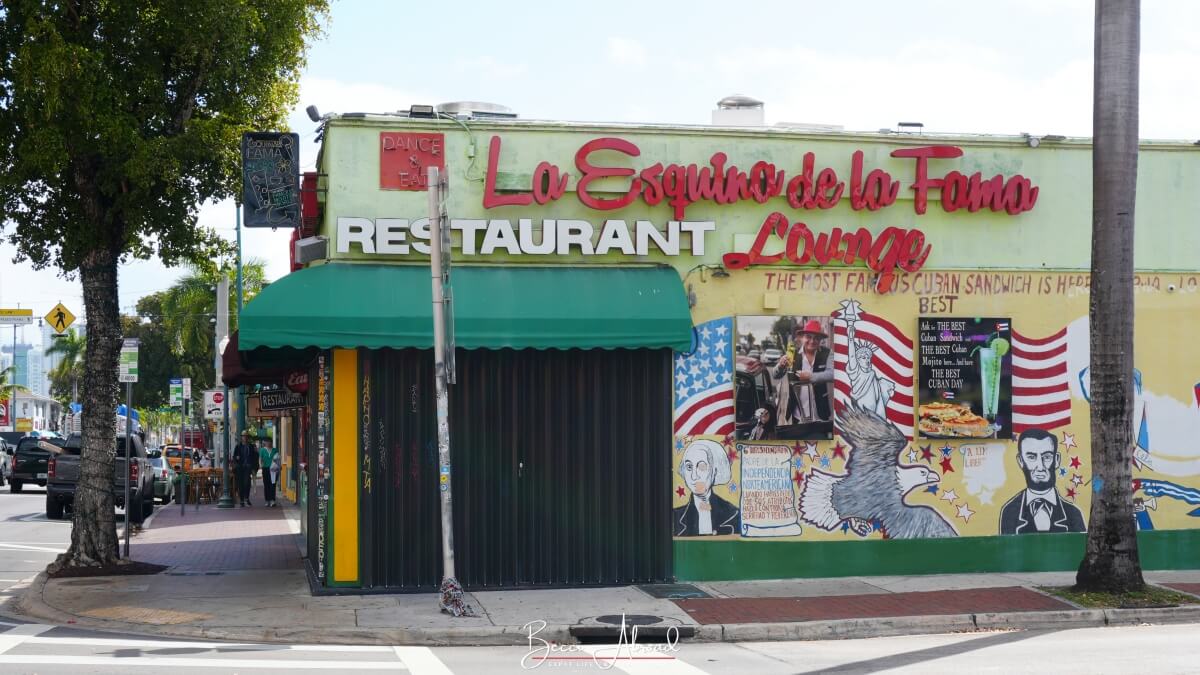
Little Havana is one of the best places outside Cuba to try Cuban food, and there are plenty of places to try it along and around Calle Ocho.
My personal favorite from the Cuban cuisine is the dish ropa vieja (directly translated as “old clothes”), which is a shredded beef in tomato sauce. Ideally, served with black beans and rice.
And of course, you couldn’t end your meal (or your visit to Little Havana) with a Cuban cafecito, the small, strong, sweet Cuban espresso.
In Miami, the Cuban sandwich seems to be a very popular must-try, especially in Little Havana.
The Cuban sandwich is pressed bread filled with roasted pork, ham, Swiss cheese, pickles, and mustard. Since I deeply dislike mustard, it was a hard pass from me!
Try Cuban food with a food tour of Little Havana:
Visit a Cigar Factory
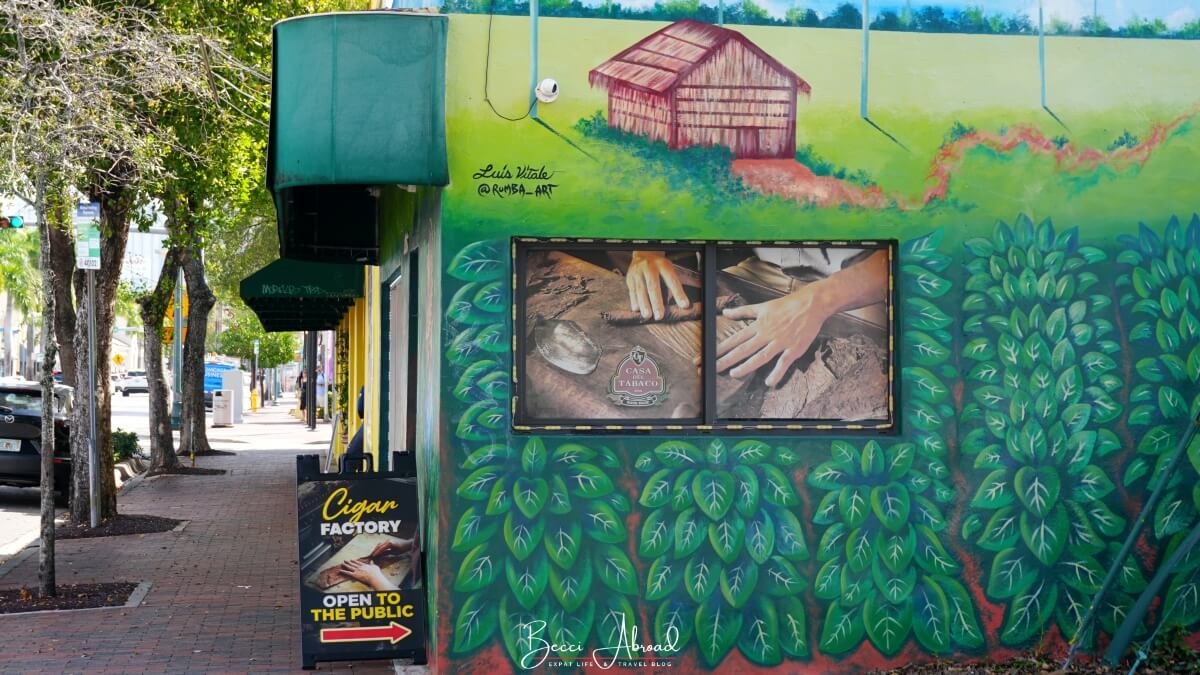
Cigars are part of the cultural fabric of Little Havana, and along Calle Ocho you can find several working cigar factories.
As you walk around Calle Ocho, at some of the cigar factories, you can even watch master cigar rollers, known as torcedores, hand-rolling cigars from start to finish without any machinery.
Some of the factories (such as Casa Habano) also offer guided tours where you can learn about the cigar-rolling process. Although I don’t smoke myself, I actually learned about the cigar-rolling process on a tobacco farm in Vinales in Cuba (if you’re visiting Cuba, definitely, make a stop by Vinales!)
When we visited Little Havana in 2021, my husband stopped at one of the cigar factories to buy cigars for Carlito, his mother’s husband.
We brought them back home to Buenos Aires, and they smoked them the following New Year’s Eve – according to the two of them, the cigars from Little Havana were very good! But you can convince me of anything when it comes to cigars because I have no criteria whatsoever.
Essential Information for Visiting Little Havana in Miami
Here is some of the essential and practical information for visiting Little Havana in Miami.
What is the Best Time to Visit Little Havana?
Little Havana is worth visiting year-round, but there are a few things to keep in mind when planning your visit:
- Go in the Morning – Mornings are generally the most pleasant time for visiting Little Havana. The streets are quieter because the tourist groups arrive. In the summer, you also avoid the worst heat by visiting in the morning. Both times we visited were before lunch, and it was perfect timing!
- Avoid Mondays – If you are hoping to eat at specific restaurants, as some are closed at the start of the week.
- Viernes Culturales (Cultural Friday) – The last Friday of every month, Little Havana offers a free monthly street festival on Calle Ocho featuring live music, art exhibitions, and performances. The event is called Viernes Culturales, or Cultural Fridays, and if you want to experience Cuban culture in Miami, try to plan your visit for the last Friday of the month.
How to Get Around Little Havana?
Most of the sights in Little Havana are concentrated on four to five blocks on Calle Ocho, so you can easily cover Little Havana on foot.
We started our walk around Little Havana on the corner of SW 16th Avenue (right here in front of El Cuban Diner) and walked down Calle Ocho towards the Cuban Memorial Boulevard.
The stretch from El Cuban Diner to Cuban Memorial Boulevard takes around 10 minutes to walk.
How to Get to Little Havana?
The best ways to get to Little Havana are:
- By Uber or Taxi – The most practical option is an Uber or a taxi. A drive from Miami South Beach to Little Havana takes around 20 to 25 minutes, depending on where you are coming from.
- By Miami Trolley Service – Little Havana is included in the free Miami Trolley service, and the route connects Little Havana with Brickell.
What to Do Near Little Havana?
Little Havana is a bit disconnected from other popular areas in Miami, but here are a few ideas on what to do nearby:
- Brickell – Hop on the free trolley service from Little Havana to Brickell, and combine visiting the two neighbourhoods in one day.
- Downtown Miami – If you plan on going to Brickell from Little Havana, you can jump on the Miami Trolley’s Brickell Loop and also visit Downtown Miami, the popular Bayside Marketplace, and the Miami Riverwalk
- Vizcaya Museum & Gardens – Jump on a taxi or book an Uber to visit Miami’s impressive European-inspired mansion, the Vizcaya Museum & Gardens. The drive from the Cuban Memorial Boulevard to the Vizcaya Museum only takes around 10 minutes.
In my opinion, combining your visit to Little Havana with an afternoon at the Vizcaya Museum & Garden is a perfect way to spend one day in Miami!
Top-rated Tours in Little Havana
There are several well-reviewed tour options available for visiting Little Havana. Here are some that I would consider for my next trip to Miami:
- Little Havana Express Food Tour
- Little Havana Authentic Food and Culture tour
- Little Havana Walking Tour with a Local
- Taste of Little Havana Food and Culture Tour
- Cigar Factory Tour in Little Havana
Frequently Asked Questions
Frequently Asked Questions about Little Havana in Miami
Find answers to commonly asked questions about Little Havana in Miami.
Final Thoughts: Is Little Havana Worth Visiting?
Yes, Little Havana is worth visiting if you go with realistic expectations!
Little Havana is a tourist attraction, and Calle Ocho reflects that. Many of the bars and restaurants are set up to appeal to visitors, and the neighbourhood is not a particularly authentic slice of Cuban life. That does not mean it is not worth visiting, but you will get more out of it if you approach it as a cultural destination rather than as an immersive experience.
Visiting Little Havana is not the most authentic window into Cuban culture, and if you have spent any real time in Cuba itself, you may notice the gap between what the neighbourhood presents and what life in Havana actually looks and feels like.
Calle Ocho is a curated version of Cuban Miami that was originally built for and by the community that lives there. Today, Little Havana is leaning more towards becoming a tourist destination in Miami.
This does not make Little Havana uninteresting at all!
The history behind the neighbourhood is very interesting, and the area carries real importance for the Cuban exile community.
Domino Park, the Cuban Memorial Boulevard, and the stories behind the murals and monuments all point to a deeper story about identity, displacement, and what it means to preserve a culture in a foreign country.
My honest recommendation: A couple of hours is enough to cover the main sights in Little Havana, but if you want to dig deeper under the skin of Little Havana, book a guided tour!