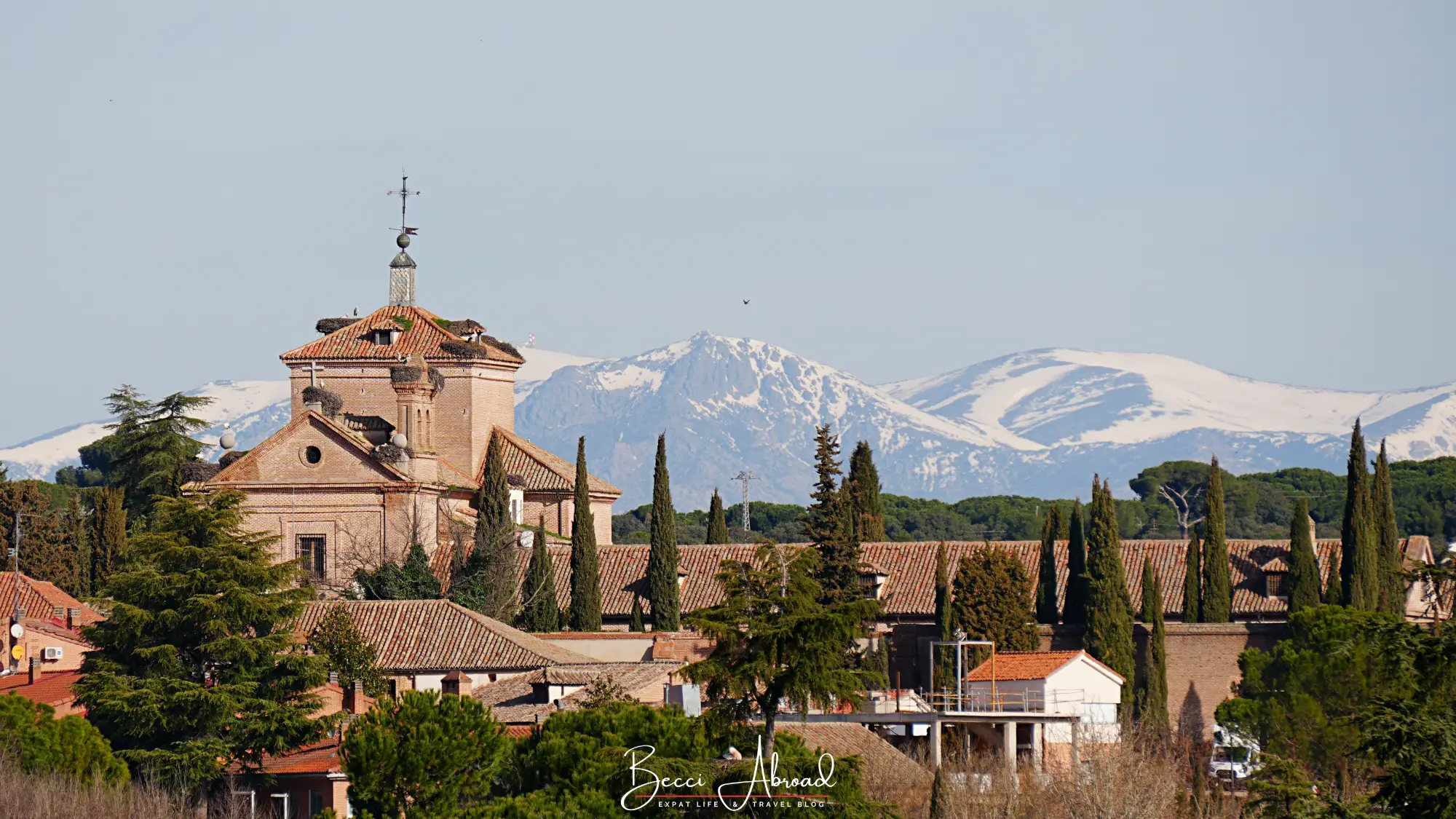
Hidden Gems in Madrid: 20 Lesser-Known Things to Do
Are you looking for hidden gems in Madrid and lesser-known things to do beyond the Prado, the Royal Palace, and Plaza Mayor?
Then this post is for you!
Let me be completely honest with you: Madrid is full of hidden gems, and some of them are hiding in plain sight, just a few steps from Gran Vía.
I have lived in Madrid since 2025, and before that I lived in Barcelona for two and a half years and in Buenos Aires for seven years.
Exploring local hidden gems off the traditional tourist trails is what Becci Abroad is all about (true, I will also recommend the classic stops!). Since moving to Madrid, I have been exploring the city with my husband, and with the friends and family who come to visit us, as well as new friends I make along the way in this new city.
In this guide, I will take you through 20 hidden gems in Madrid, neighborhood by neighborhood, from an old ghost station in Chamberí to peacocks in Retiro Park and three ideas for lesser-known day trips from Madrid, with the price, opening hours, and how to get there for every single one.
Let’s dive into it!
An Expat’s Guide to the Best Hidden Gems in Madrid
Disclosure: Some of the links below are affiliate links. This means that at no additional cost to you, Becci Abroad will earn a commission if you purchase through one of those links. This helps to pay the bills and the maintenance of the site.
I received the Malasaña street art tour for free from GetYourGuide, and a voucher from Winedering towards the non-touristy tapas tour, which did not cover the full cost for the two of us. Nobody has read or approved this post before publishing.

The Short Version: What Are the Best Hidden Gems in Madrid?
In my opinion, the best hidden gems in Madrid are:
I have organized this guide by neighborhood, so you can easily see several hidden gems in one day, from Chamberí and Malasaña to Moncloa, Retiro Park and Puente de Vallecas, plus three hidden gem day trips outside the city.
Most of these hidden gems in Madrid are free, or cost €12 (about 14 USD) or less, and almost all of them are close to a metro station.
One thing to know before you go: several require advance booking, and many are closed on Mondays.
Hidden Gems in Madrid at a Glance
|
Hidden gem |
Neighborhood |
Price |
Getting there |
|---|---|---|---|
|
Estación Museo de Chamberí (ghost station) |
Chamberí |
Free, booking required |
Iglesia (L1) |
|
Frontón Beti Jai |
Chamberí |
Free |
Alonso Martínez (L4, L5, L10) |
|
Fundación María Cristina Masaveu Peterson |
Chamberí |
Free, booking required |
Colón (L4) |
|
Food Lover Tour non-touristy tapas tour |
Chamberí |
Alonso Cano (L7) |
|
|
Peacocks at the Cecilio Rodríguez Gardens |
Retiro |
Free |
Ibiza (L9) |
|
Postal y Tinta |
Barrio de las Letras |
Free to browse |
Estación del Arte (L1) |
|
Cine Doré |
Lavapiés/Barrio de las Letras |
€3 per movie |
Antón Martín (L1) |
|
Mercado de la Paz |
Salamanca |
Free |
Serrano (L4) |
|
Street art tour in Malasaña |
Malasaña |
San Bernardo (L2, L4) |
|
|
Church of San Antonio de los Alemanes |
Malasaña |
Callao (L3, L5) |
|
|
Monastery of San Plácido |
Malasaña |
Included with San Antonio |
Noviciado (L2, L3, L10) |
|
Espacio Fundación Telefónica |
Gran Vía |
Free |
Gran Vía (L1, L5) |
|
El Jardín Secreto |
Plaza España |
Pay for what you order |
Plaza de España (L2, L3, L10) |
|
Ermita de San Antonio de la Florida |
Príncipe Pío |
Free |
Príncipe Pío (L6, L10, R) |
|
Faro de Moncloa |
Moncloa |
€4 |
Moncloa (L3, L6) |
|
Rosaleda del Parque del Oeste |
Moncloa |
Free |
Argüelles (L3, L4, L6) |
|
Cerro del Tío Pío |
Puente de Vallecas |
Free |
Buenos Aires (L1) |
|
Private wine tour to Colmenar de Oreja |
Day trip, southeast |
Pickup at Plaza de Castilla |
|
|
Boadilla del Monte |
Day trip, west |
Palace visits €5, booking required |
Metro Ligero ML3 |
|
Chinchón |
Day trip, southeast |
Free to explore |
Bus 337 |
The 20 Best Hidden Gems & Non-Touristy Things to Do in Madrid
Now let’s look at each of the hidden gems in Madrid, neighborhood by neighborhood, and what makes every one of them worth a visit!
Madrid Hidden Gems Map
Check out all the best hidden gems in Madrid on this map. In the top right-hand corner, you can click on the full-screen icon and have the map open directly in your Google Maps app.
Hidden Gems in Chamberí
Let’s start with exploring some of my favorite hidden gems in Chamberí, a calm and elegant neighborhood just north of the city center. Chamberí is where madrileños, the people of Madrid, live, work, and go out for tapas.
Chamberí is home to four of the hidden gems in this guide, and they are all easy to combine in one day!
For a perfect Chamberí day, see the ghost metro station in the morning, the Fundación Masaveu at midday, and Frontón Beti Jai in the afternoon, and finish with the tapas tour at 6 pm.
I recommend fitting these hidden gems in on a Saturday or Sunday, when the ghost station is open in the morning, or on a Friday, when it is open in the afternoon.
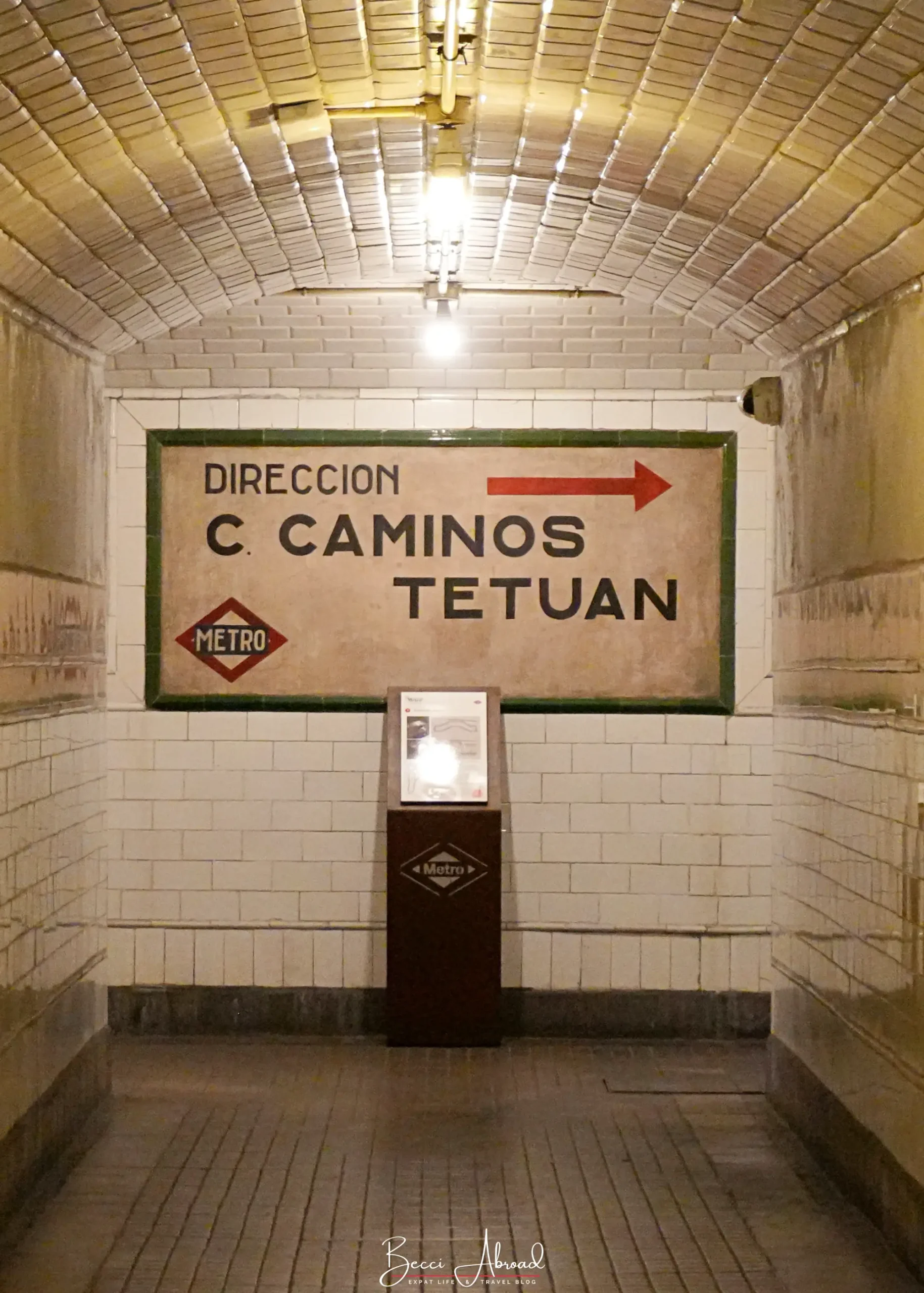
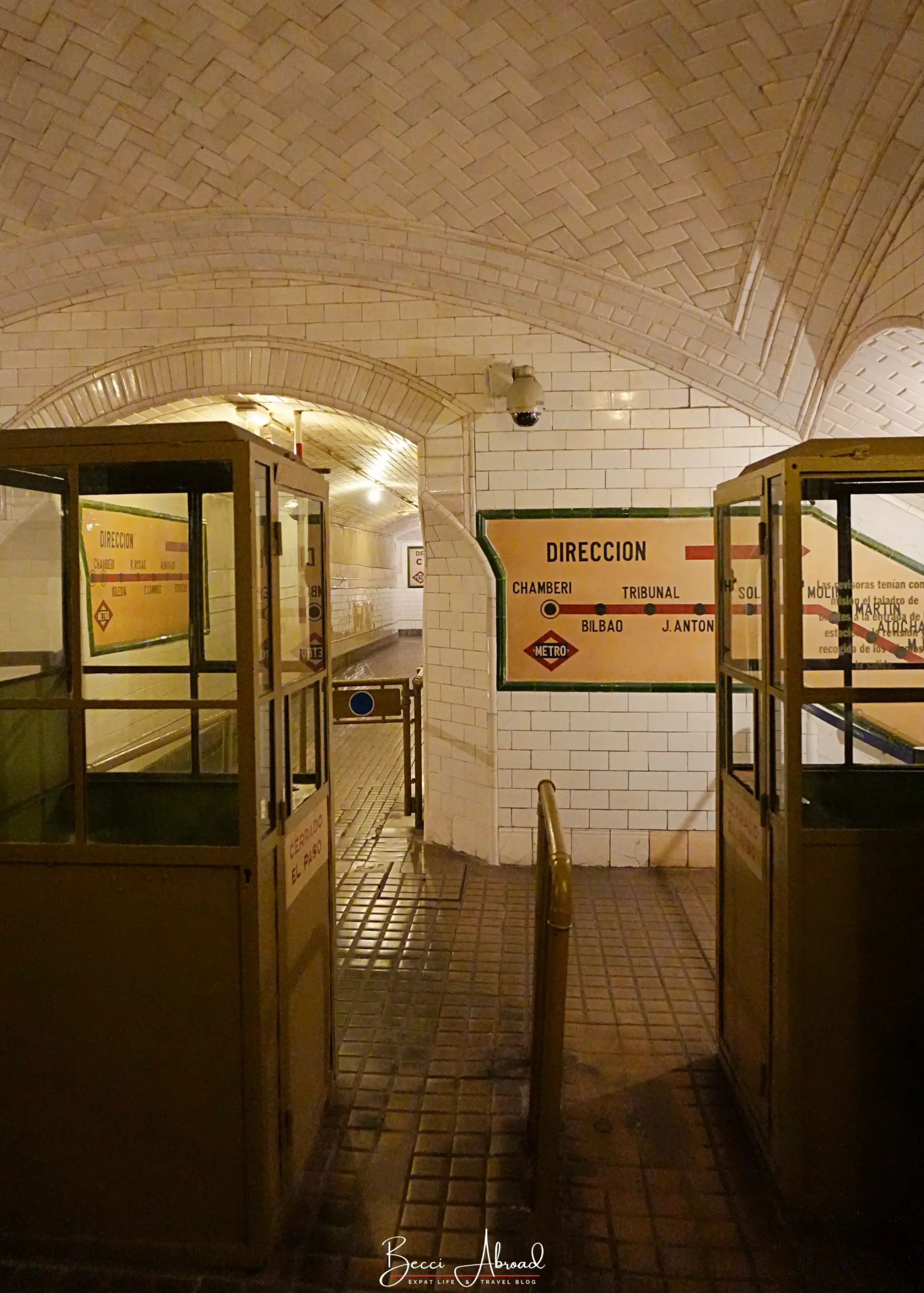
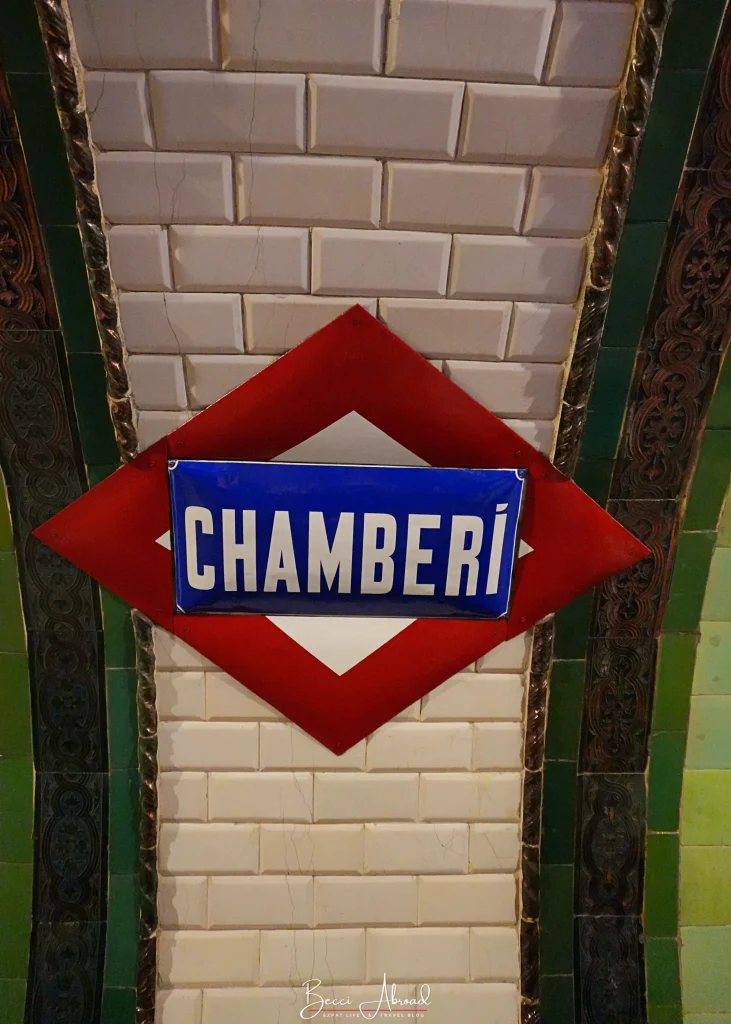
Get Spooked at Madrid’s Ghost Station, Estación Museo de Chamberí
Madrid’s old ghost station is probably one of my favorite hidden gems in Madrid!
The old Chamberí metro station, or Estación Museo de Chamberí as it is called in Spanish, is part of Andén 0, the small network of museums run by the metro company, Metro de Madrid. Andén means platform in Spanish, so actually the name of the project translates to “Platform 0”.
Chamberí station opened in 1919 on the very first metro line in Madrid, and it was in use until 1966, when the station closed.
The metro company decided to close the Chamberí station because it sits on a curve, so the platforms could not be made longer when the metro started running longer trains.
So why is Chamberí station called the ghost station?
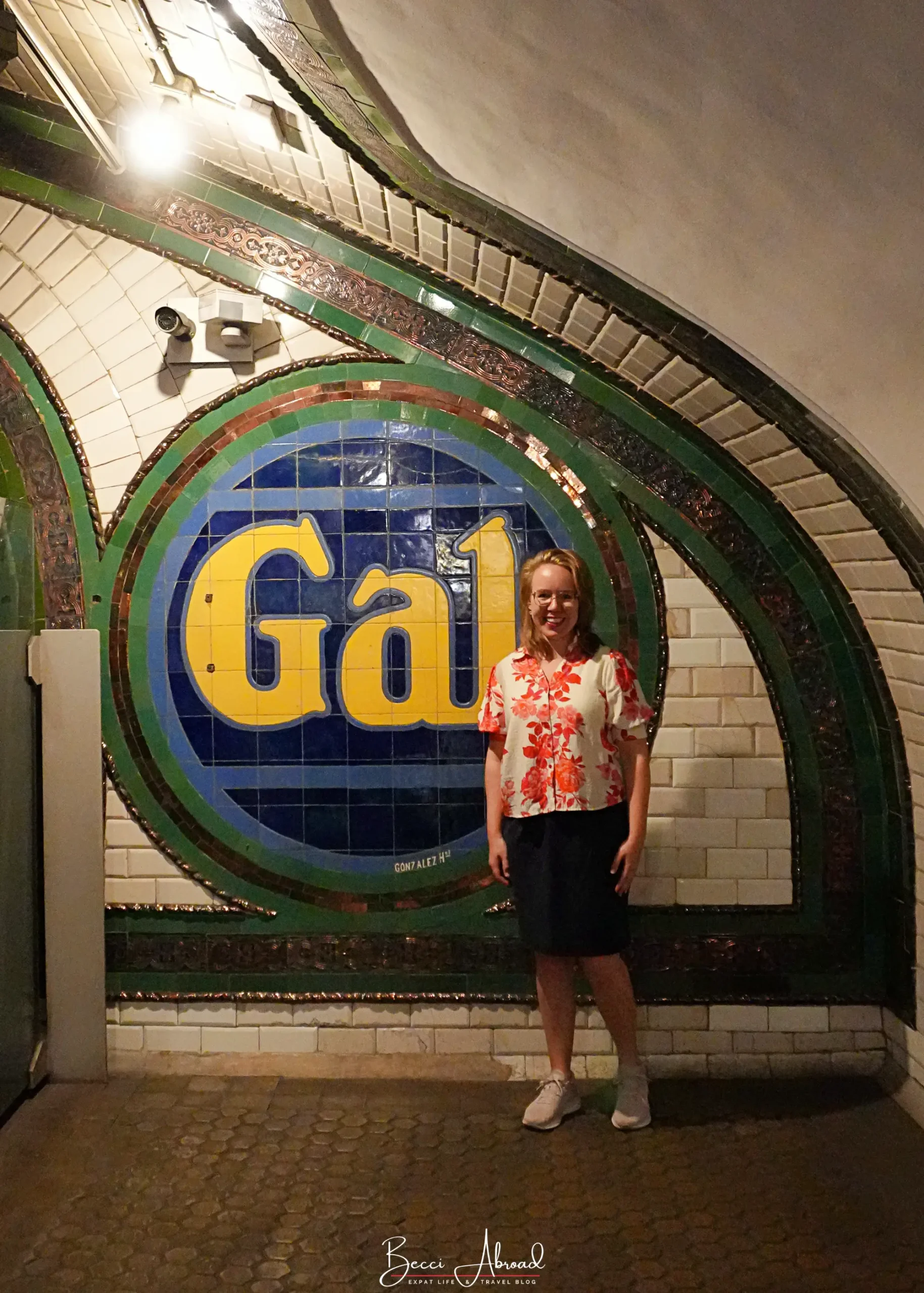
The guide on the guided visit that I went on with my friend in May 2026 told us that after the station closed, homeless people started living there. The trains kept running straight through, so passengers could see shadows of people moving around on the dark platforms, and they started calling it the ghost station!
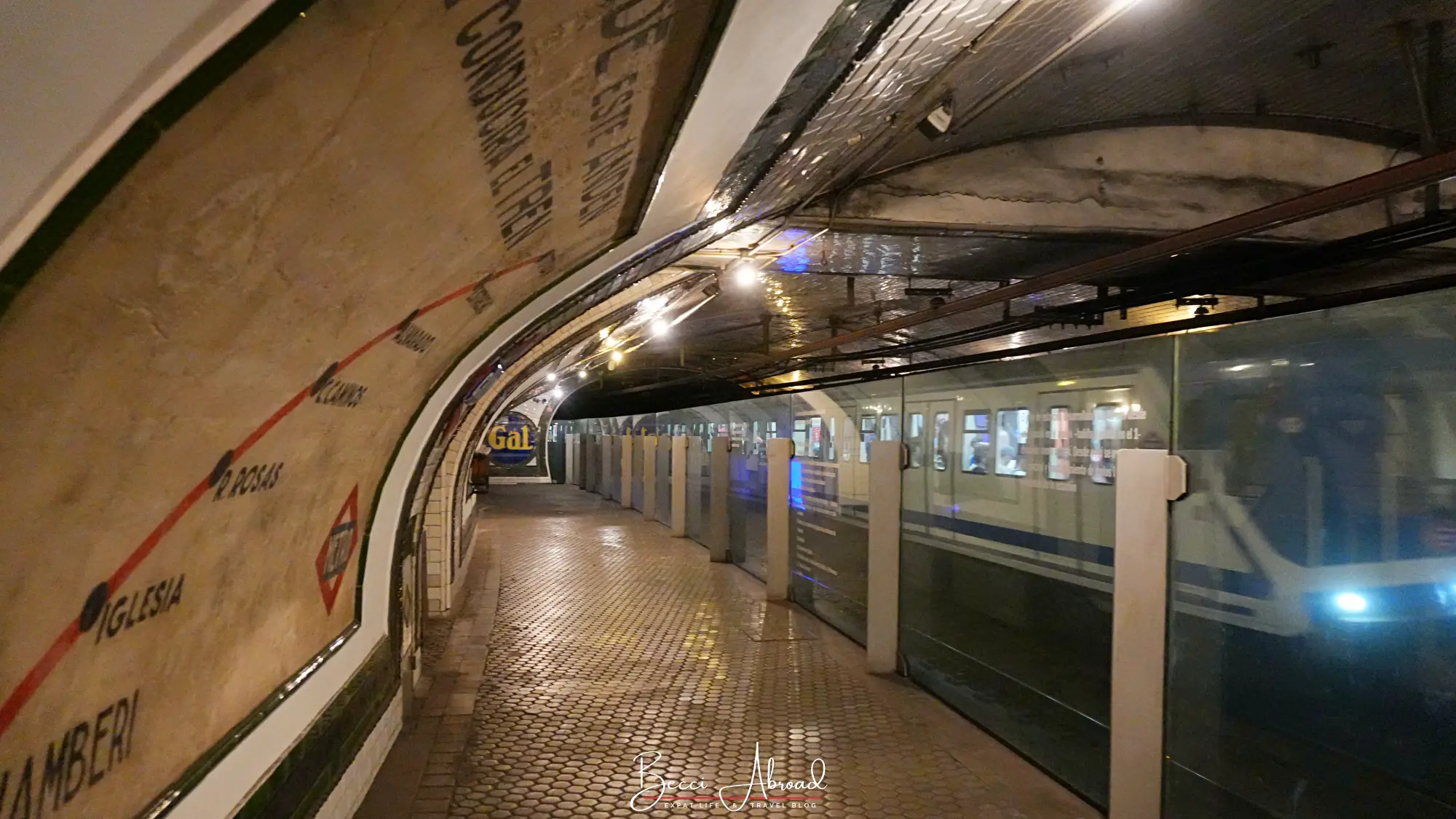
Today, you can walk along the platforms between the original tile work and the old advertisements from when the station was in use.
What I found incredibly crazy was that the metro still drives straight through Chamberí station!
The platforms are closed off with plastic shields, but every three minutes or so, a new Line 1 train rushes past right in front of you.
You can only visit this hidden gem in Madrid on a guided tour, and the free tickets book out very quickly, so plan ahead! The booking system opens at the end of every month for the following month.
The guided tours only take place in Spanish. However, there is information in English through a QR code that you can scan.
Admission: Free, but you need to reserve a guided tour on the Metro de Madrid museums website
Opening hours:
- Friday: 4 pm to 8 pm
- Saturday: 10 am to 2 pm and 4 pm to 8 pm
- Sunday: 10 am to 2 pm
Nearest metro: Iglesia (line 1) or Bilbao (lines 1 and 4)
Location: Estación Museo de Chamberí, Plaza de Chamberí, Chamberí
Visit Frontón Beti Jai, Madrid’s Hidden Basque Pelota Stadium
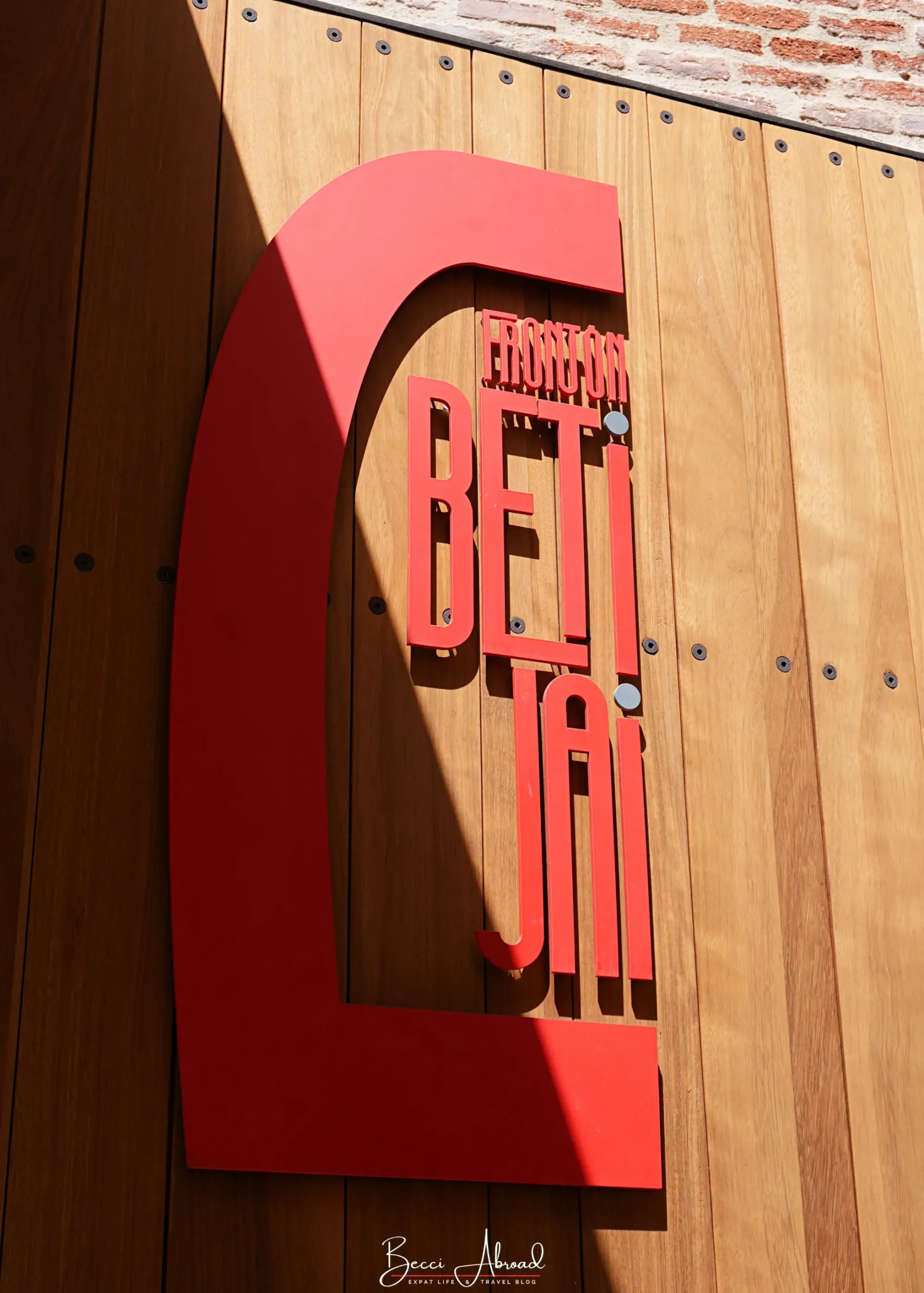
Frontón Beti Jai is a unique hidden gem in Madrid, and perfect for a visit if you’re strolling the streets of Chamberí!
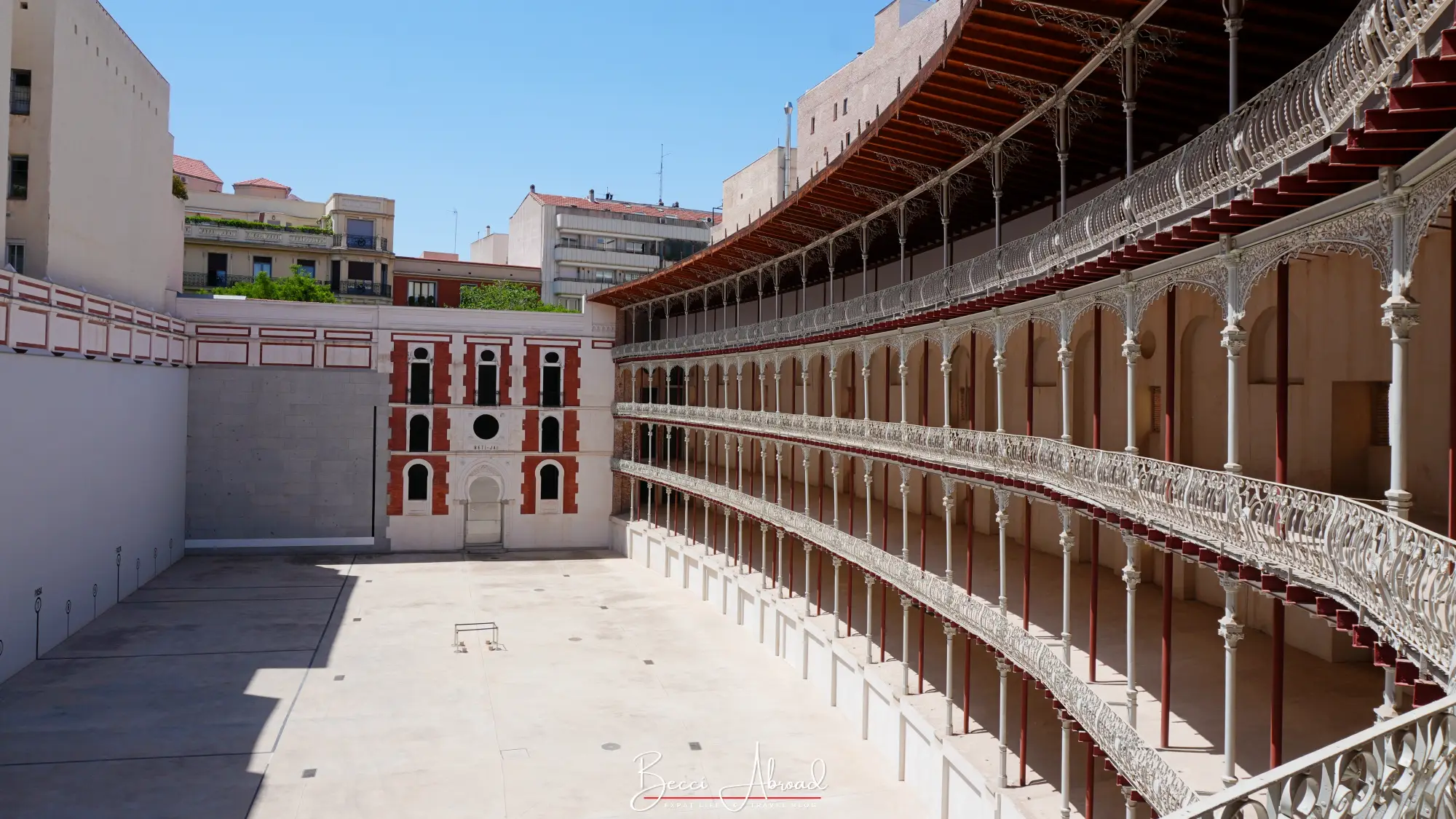
Frontón Beti Jai is an old stadium for Basque pelota, or pelota vasca in Spanish, which is a traditional sport from the Basque Country in northern Spain. In Basque pelota, players hit a hard ball against a high wall, either with their bare hands, a wooden bat, or a curved basket strapped to their arm.
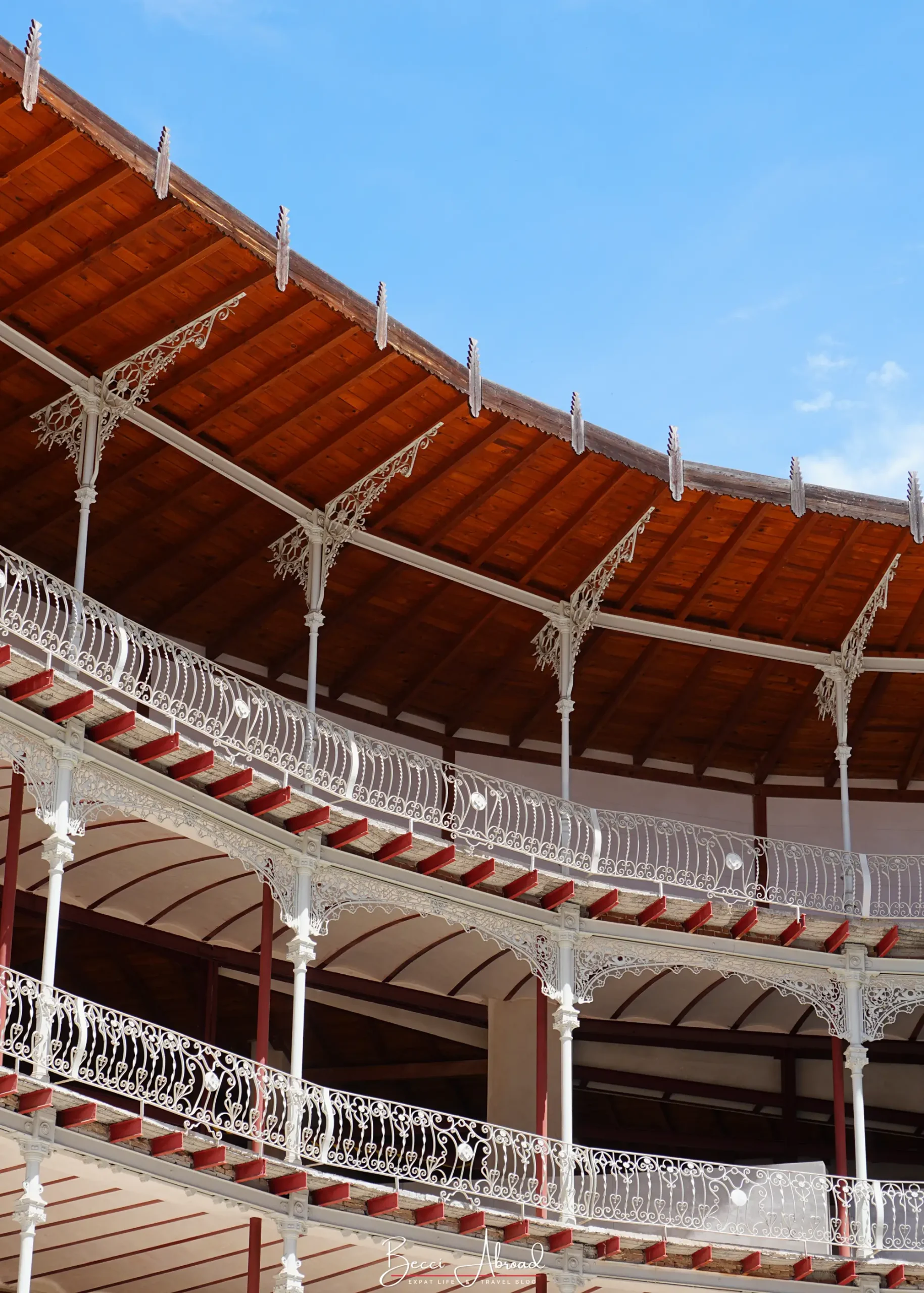
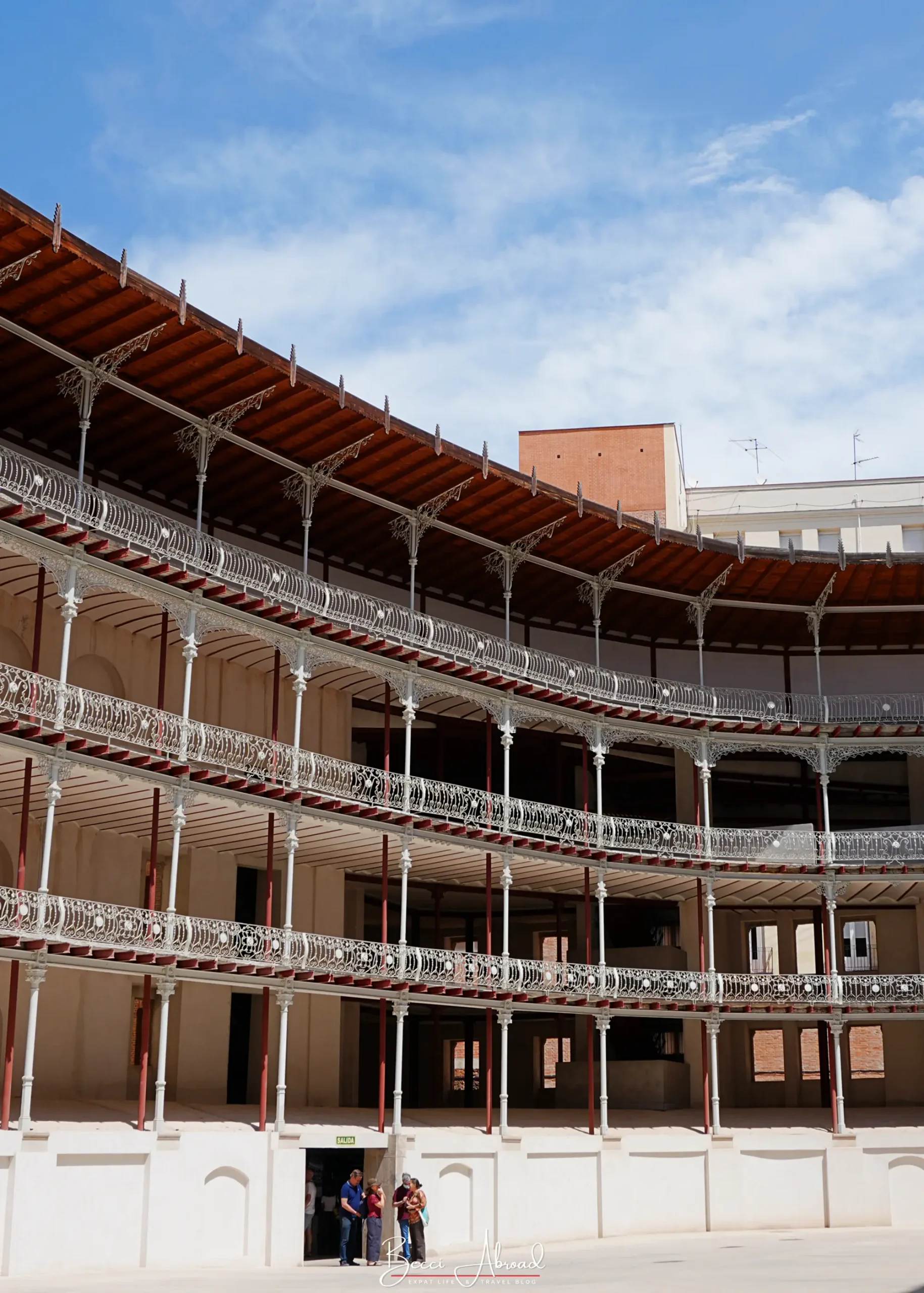
Frontón Beti Jai stadium is built in a Neo-Mudéjar style with beautifully decorated balconies in a half-circle around the court. Beti Jai means “always party” in Basque.
The stadium was built by the architect Joaquín Rucoba and opened in 1894, with room for 4,000 spectators.
During the 19th century, the game of Basque pelota was very popular in Spain in general, and in Madrid in particular. However, by the turn of the century, the madrileños seemed to have lost interest in the game.
The last pelota matches were played here in 1919, and afterwards the building was used for everything from a car workshop to being illegally occupied. Between 1989 and 2008, the building changed hands many times, while nobody really seemed to care about maintaining it.
In 2012, Madrid’s city council stepped in and forced the illegal residents to leave, and started an extensive restoration project. After a long restoration by the city of Madrid, Frontón Beti Jai finally opened permanently to the public in 2024.
I visited Frontón Beti Jai with my friend back in May 2026 when she was visiting from Barcelona. We had such a good time exploring this restored stadium, even though we’re still not sure we understand the rules of pelota vasca!
Apart from walking out on the court where they used to play pelota vasca, you can visit a small museum on the left-hand side of the entrance to the court.
The museum has different objects related to pelota vasca, but most of the information is in Spanish. In the far back, there are stairs up to the other levels, where you get a better view of the stadium and can get close to the beautifully decorated balconies.
Admission: Free, no reservation needed
Opening hours:
- October 1st to June 14th: Tuesday to Sunday, 10 am to 2 pm
- June 15th to September 30th: Tuesday to Sunday, 10 am to 8 pm
Nearest metro: Alonso Martínez (lines 4, 5 and 10) or Rubén Darío (line 5)
Location: Frontón Beti Jai, Calle del Marqués de Riscal 7, Chamberí
Enjoy Art at Fundación María Cristina Masaveu Peterson
If you want an off-the-beaten-path art experience, then you should consider visiting the Fundación María Cristina Masaveu Peterson, a private art foundation in an elegant old mansion in the Chamberí area of Madrid, close to Plaza de Colón.
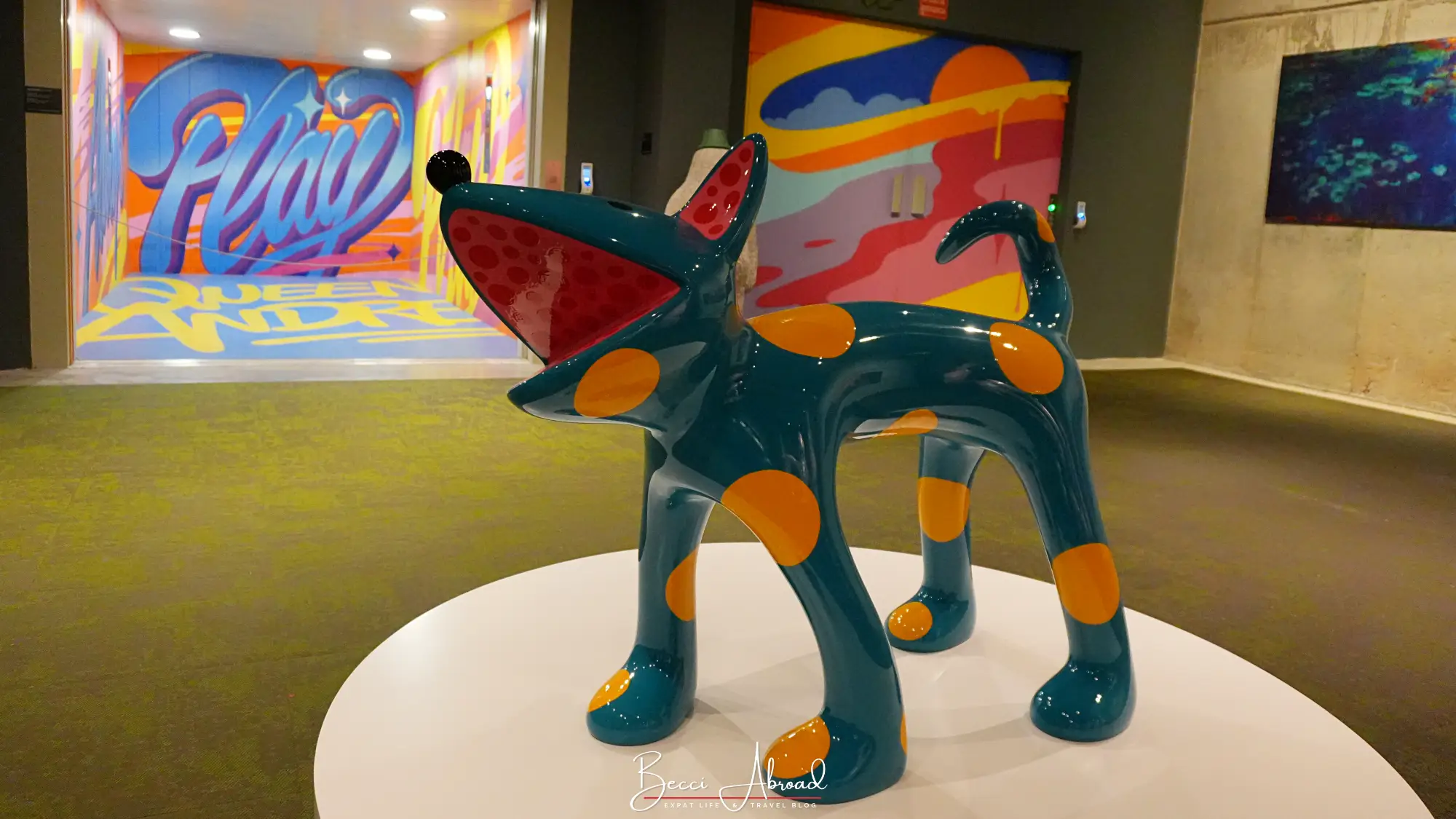
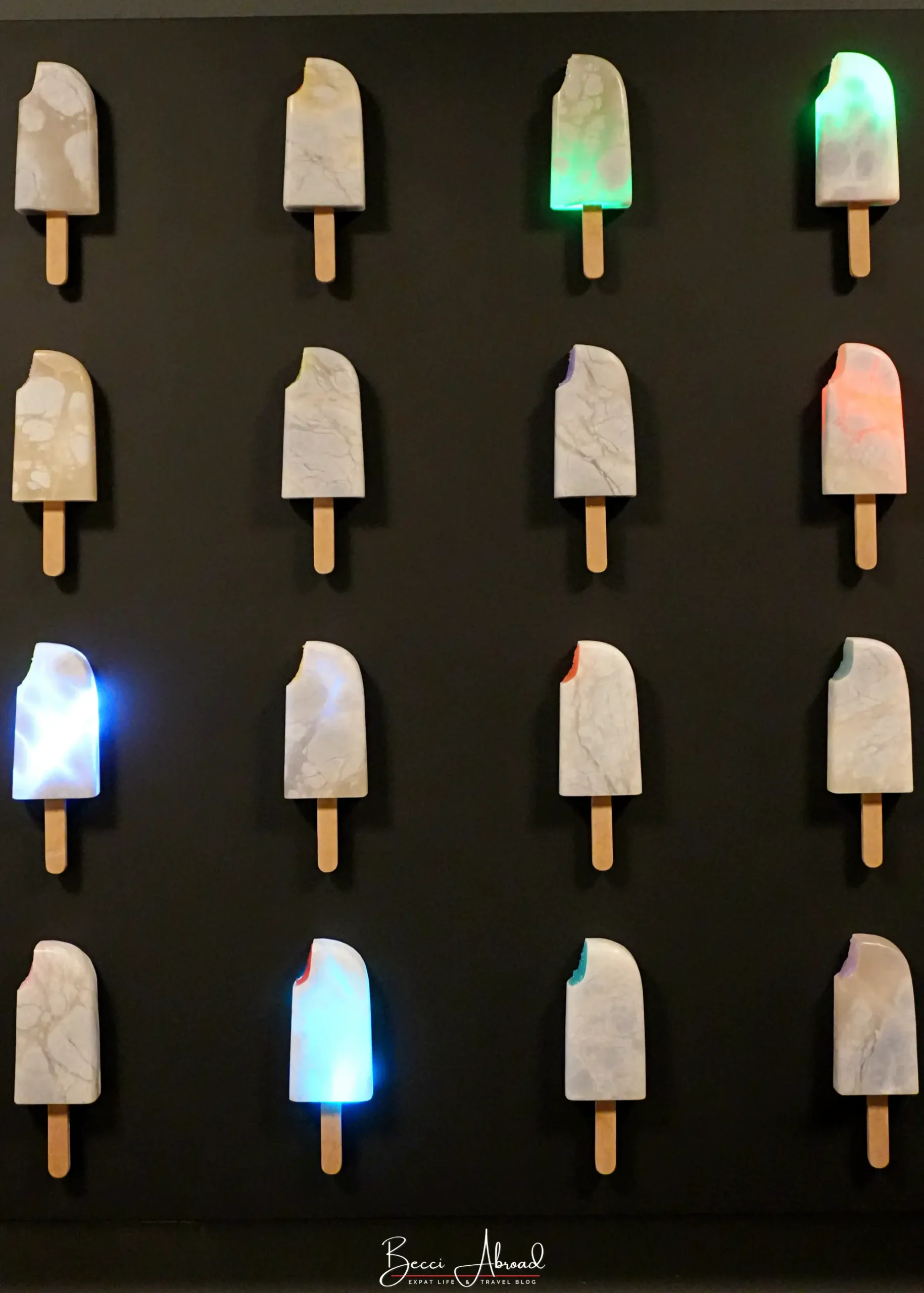
The foundation has a permanent collection, and when my friend and I visited in May 2026, it also had a street art exhibition.
I’m not sure if the street art collection is also a permanent one, so check what is on before you go.
We only got tickets for the street art exhibition, which was small but really cool, with a lot of different pieces of art!
The free tickets go really fast online, so you have to book them well in advance on the museum’s website. However, when we visited, there was nobody there, so it was kind of funny that the tickets were booked out so fast!
If you also want to see the collection of paintings, you need a separate ticket for that, which we were not aware of when we booked.
The building that houses the María Cristina Masaveu Peterson Foundation is very beautiful and well maintained, with lockers, clean and nice toilets, and chairs and couches.
Admission: Free, but you need to book a ticket online for each exhibition
Opening hours:
- Tuesday to Friday: 11 am to 8 pm
- Saturday: 10 am to 8 pm
- Sunday and holidays: 10 am to 3 pm
- Closed on Mondays and some public holidays (check the website)
Nearest metro: Colón (line 4)
Location: Fundación María Cristina Masaveu Peterson, Calle de Alcalá Galiano 6, Chamberí

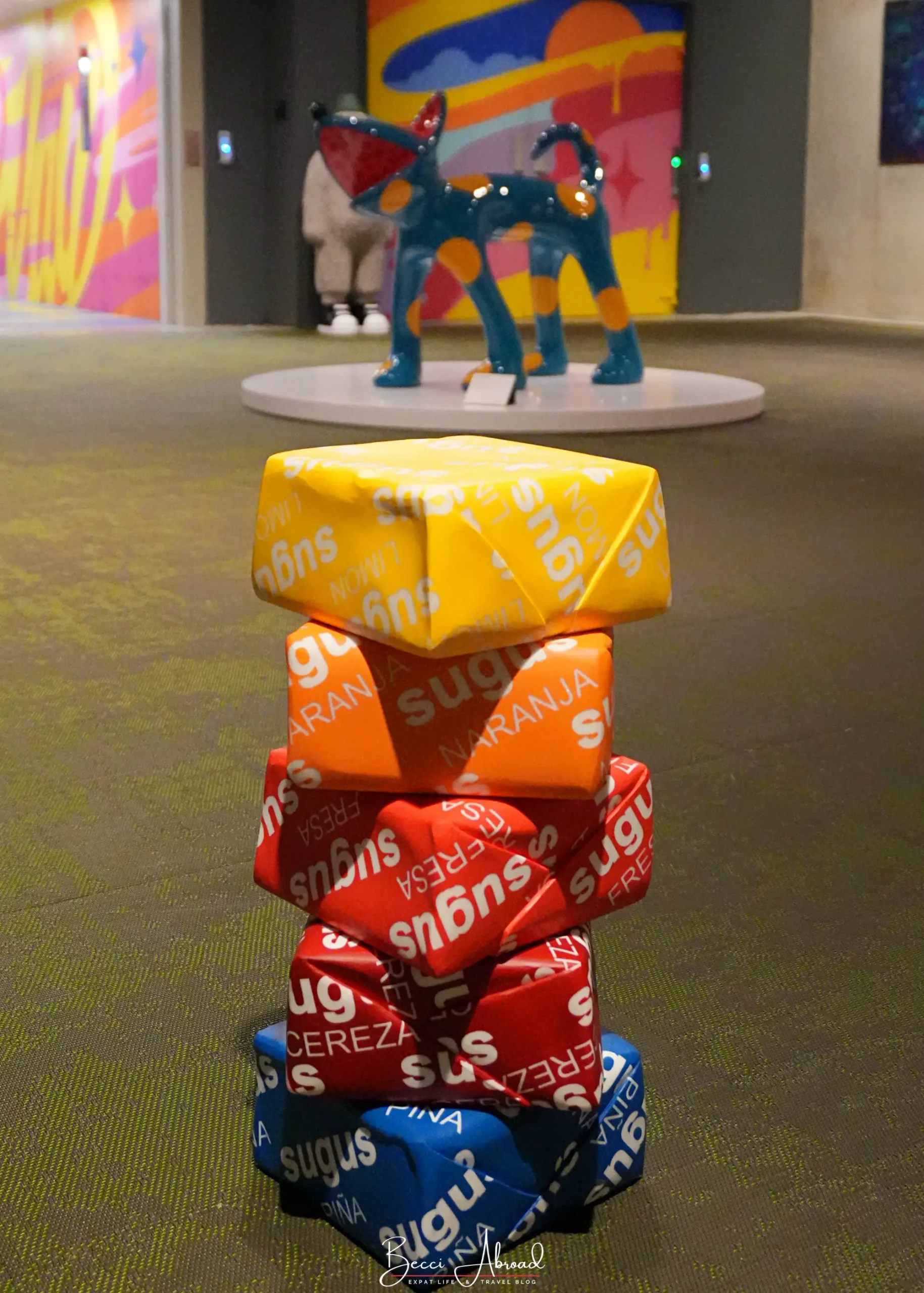
Join a Non-Touristy Tapas Tour in Chamberí
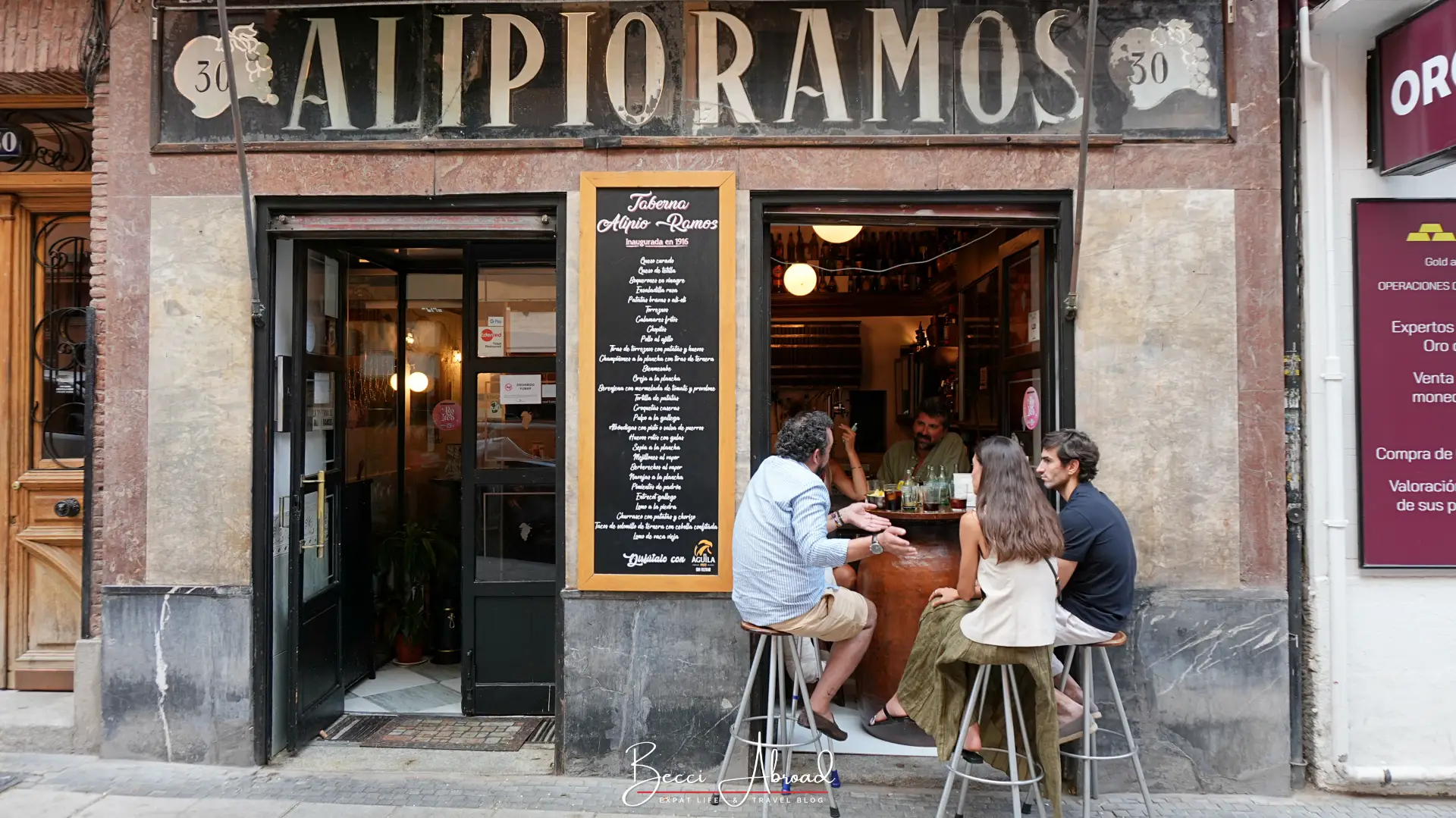
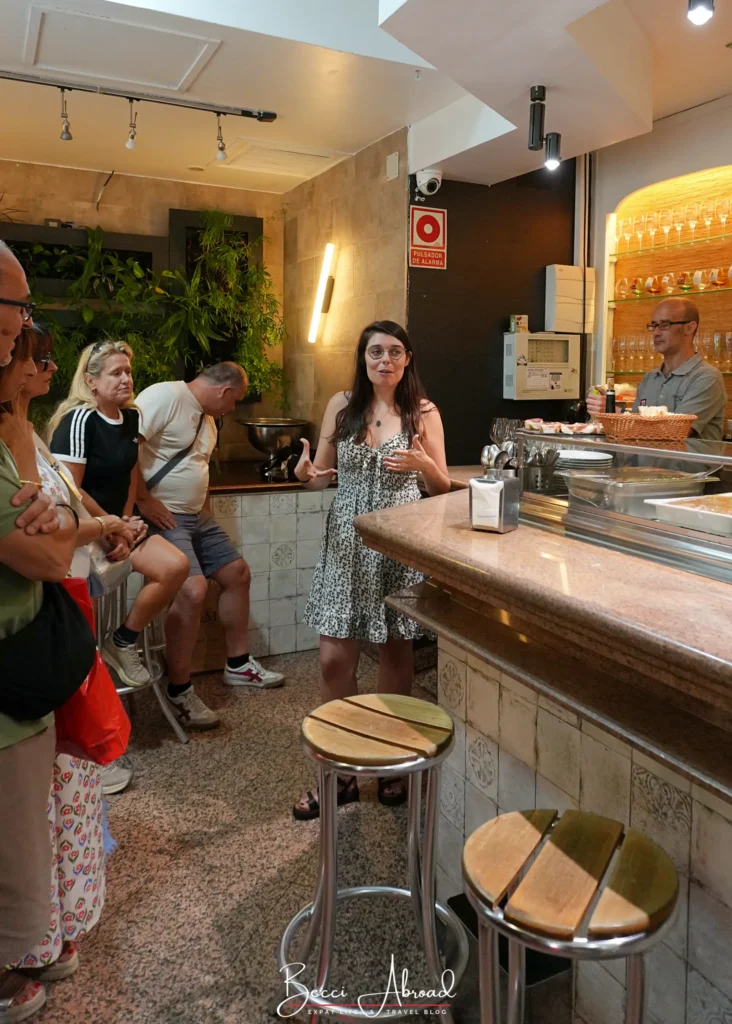
The Chamberí neighborhood is not normally a place where you find tourist tours, but Food Lover Tour offers a non-touristy tapas tour on Calle de Ponzano in Chamberí.
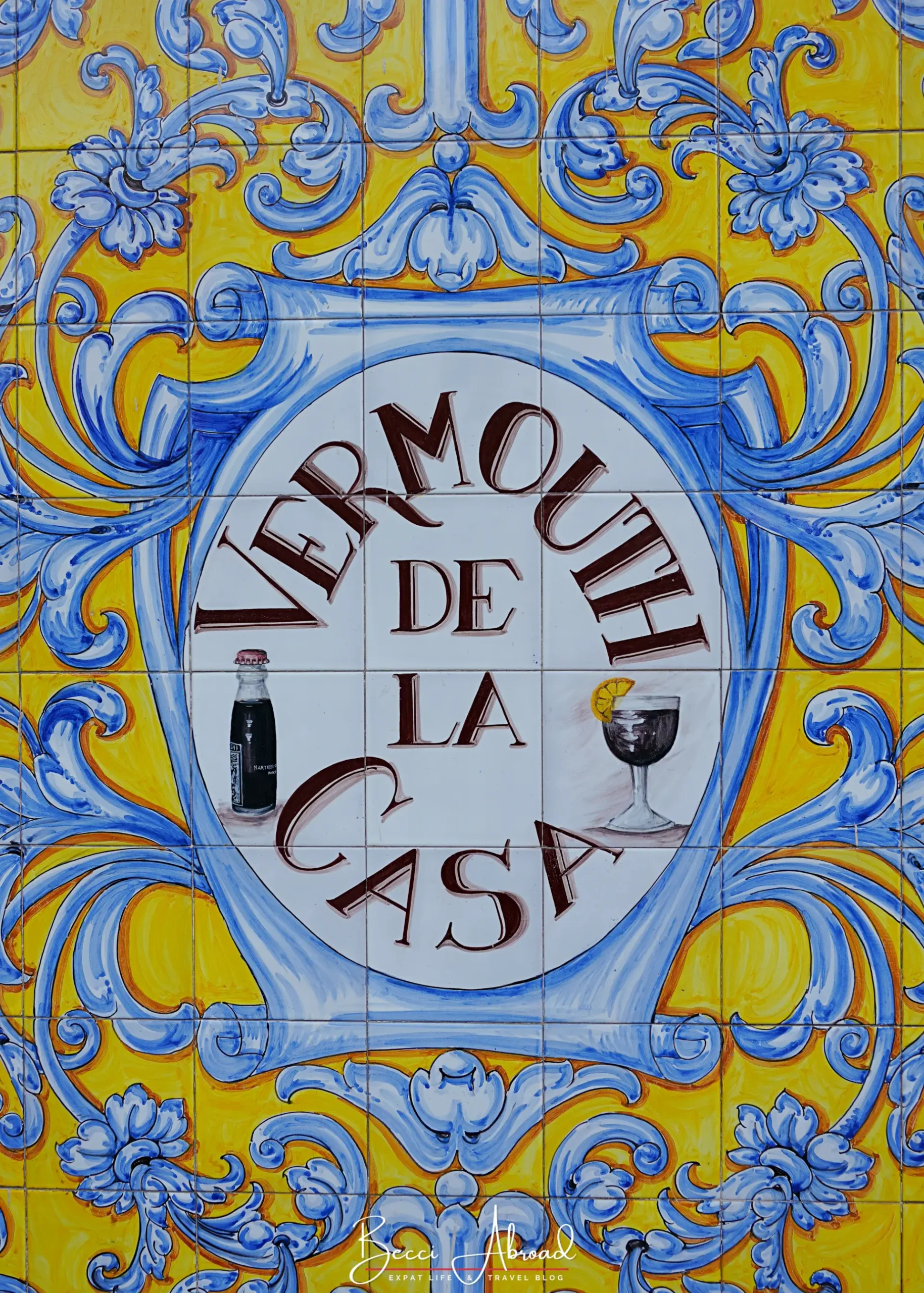
As you probably know by now if you’re planning a trip to Spain, tapas are small plates of food that you share with a drink. On this tapas tour, you get to try tapas like a local by visiting both traditional and modern tapas bars with their own take on this Spanish food tradition. In each bar, you also get a different drink such as sangría, cerveza (beer), and vermut (vermouth).
The non-touristy tapas tour starts at 6 pm, which is relatively early for Spanish tapas culture. However, it also means that the bars you visit are not as crowded, so it’s easy to get in, and you don’t feel squeezed together with the other people on the tour.
My husband and I did the tapas tour at the end of July, and even though we live full-time in Madrid, it was a really cool experience! You can read all about our evening in my full review of this non-touristy tapas tour in Madrid.
I definitely recommend it if you want to see a more local side of Madrid while trying some local specialties.
Admission: From around €69 (79 USD) per person, including food and drinks
Meeting time: 6 pm, for around 2.5 to 3 hours
Nearest metro: Alonso Cano (line 7)
Location: Meeting point outside Alonso Cano metro station, Chamberí

Book your tapas tour here:
Hidden Gems Around Retiro Park, Salamanca and Barrio de las Letras
Retiro Park is surrounded by some of Madrid’s most elegant neighborhoods, with Salamanca to the north and Barrio de las Letras, the old literary quarter, to the west.
While this is one of the most popular areas in Madrid, offering many of the most popular tourist attractions in the city such as the Retiro Park and the Prado Museum, you can also find some of Madrid’s lesser-known places and hidden gems in this area.
Do this route from Monday to Saturday, as Mercado de la Paz and Postal y Tinta are closed on Sundays!
Visit the Peacocks at the Cecilio Rodríguez Gardens in Retiro Park
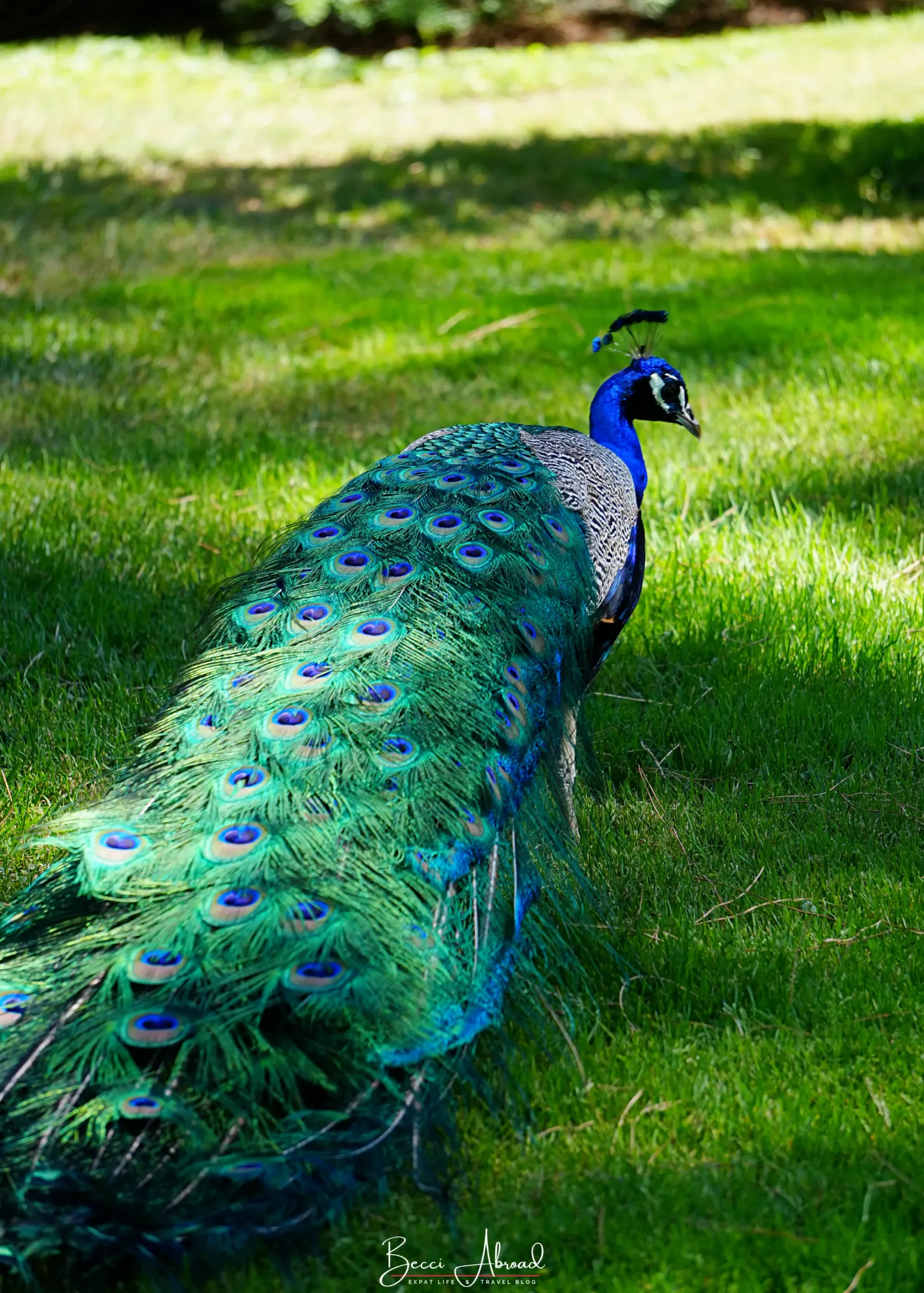
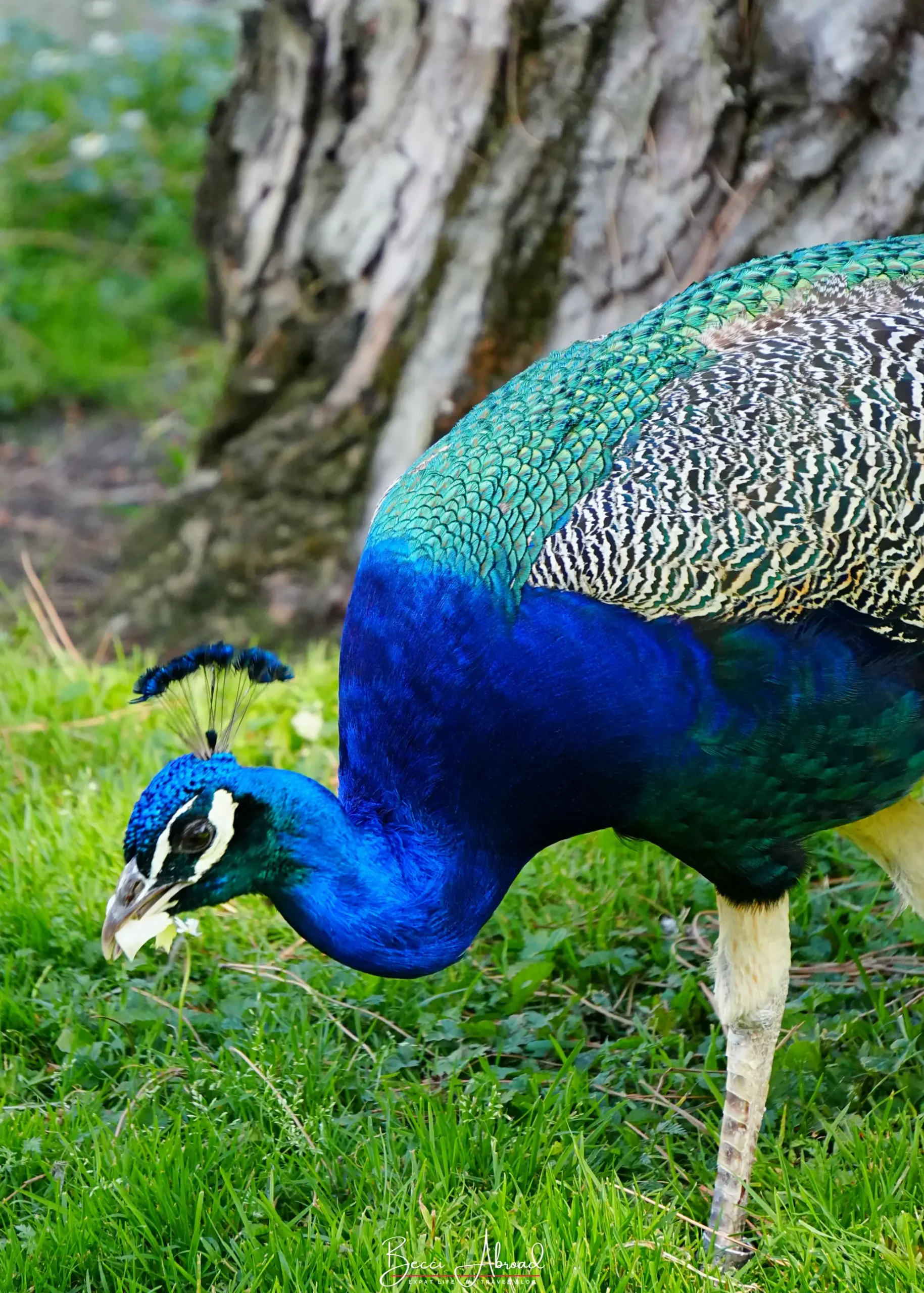
Everyone visiting Madrid has heard about Retiro Park, but did you know that inside Retiro Park you can find peacocks?
Yes, you heard right!
There are peacocks roaming freely around in the center of Madrid… Okay, maybe not exactly in the center of Madrid, but inside Retiro Park in the center of Madrid!
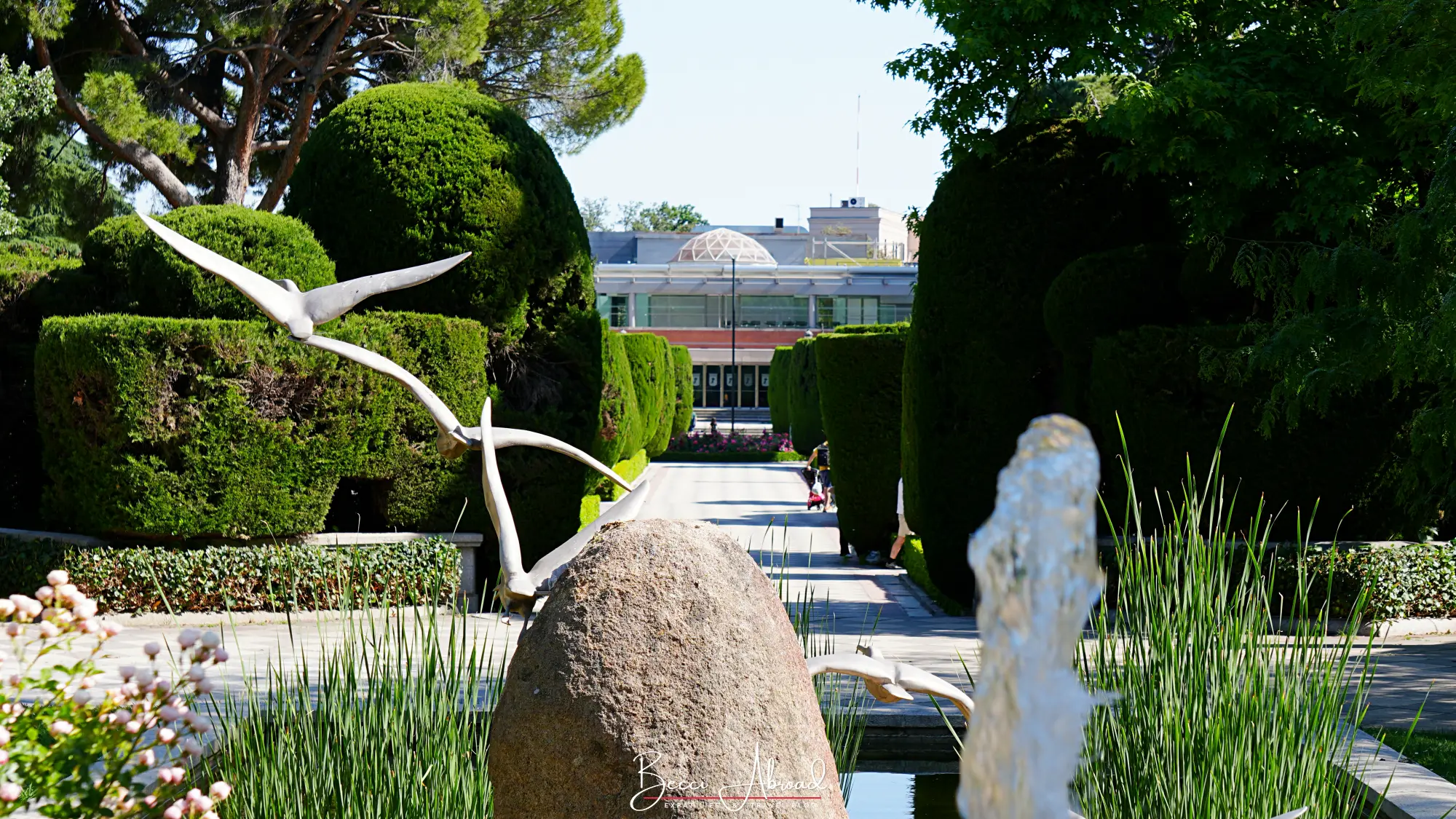
The peacocks live in the Cecilio Rodríguez Gardens, or Jardines de Cecilio Rodríguez in Spanish, a quiet garden tucked away in the southern part of Retiro Park, next to the rose garden, La Rosaleda.
The gardens are named after Cecilio Rodríguez, Retiro Park’s head gardener, who designed them around 1940.
The Cecilio Rodríguez Gardens have a classic, Andalusian-inspired style, with trimmed hedges, pergolas, columns, small ponds and fountains, and the peacocks walk freely between the paths and the benches!
My friend and I discovered the Cecilio Rodríguez Gardens by coincidence as we were wandering around Retiro Park after visiting the rose garden.
Suddenly, we heard some weird shouting noise that turned out to come from the peacocks. They were wandering around, minding their own business, eating and shouting at each other.
First there were one or two roaming around, but we quickly realized that at least 10 peacocks were hanging around in different parts of the Cecilio Rodríguez Gardens.
Of course, I quickly found my big camera lens in my bag, so I could get some nice pictures of the peacocks!
What surprised me the most was that while there were people wandering around this part of the popular Retiro Park, there weren’t nearly as many as in the Rosaleda or by the famous pond in the center of the park. The Cecilio Rodríguez Gardens very much seem to go under the radar of people visiting the Retiro Park.
One little note if you plan on visiting: please be respectful to the peacocks!
You’re visiting their home and what should be an area of peace for them. We saw way too many people, especially families with small kids, chasing the peacocks or trying to get close to them. Please don’t! If you want a good picture of them, get a proper long camera lens for your camera or smartphone.
Admission: Free
Opening hours:
- Every day, Monday to Sunday
- Autumn and winter: 10 am to 6 pm
- Spring and summer: 10 am to 8 pm
Nearest metro: Ibiza (line 9), followed by a walk through Retiro Park
Location: Jardines de Cecilio Rodríguez, Parque del Retiro, near the Avenida de Menéndez Pelayo side

Buy Locally Designed Postcards at Postal y Tinta
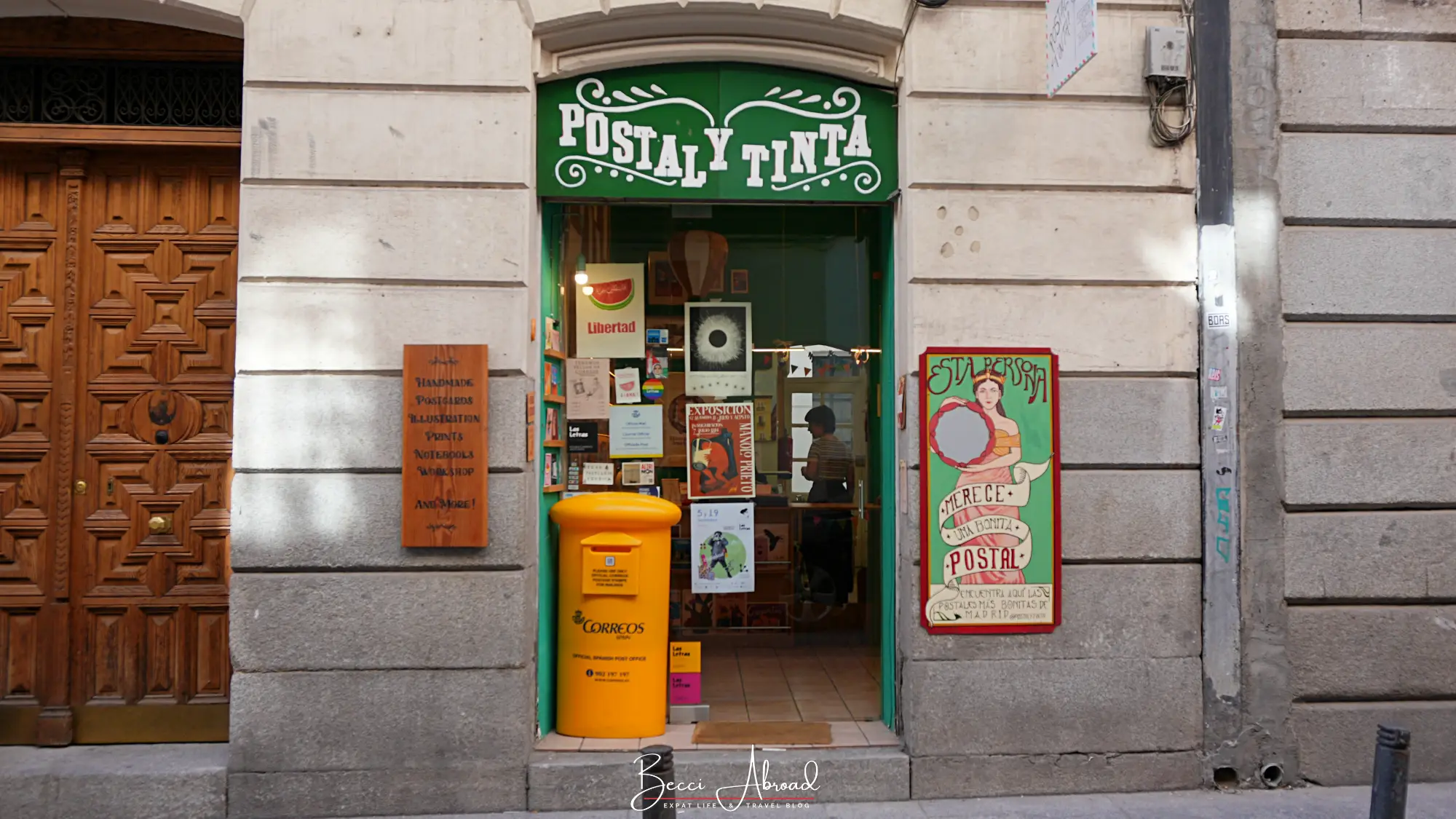
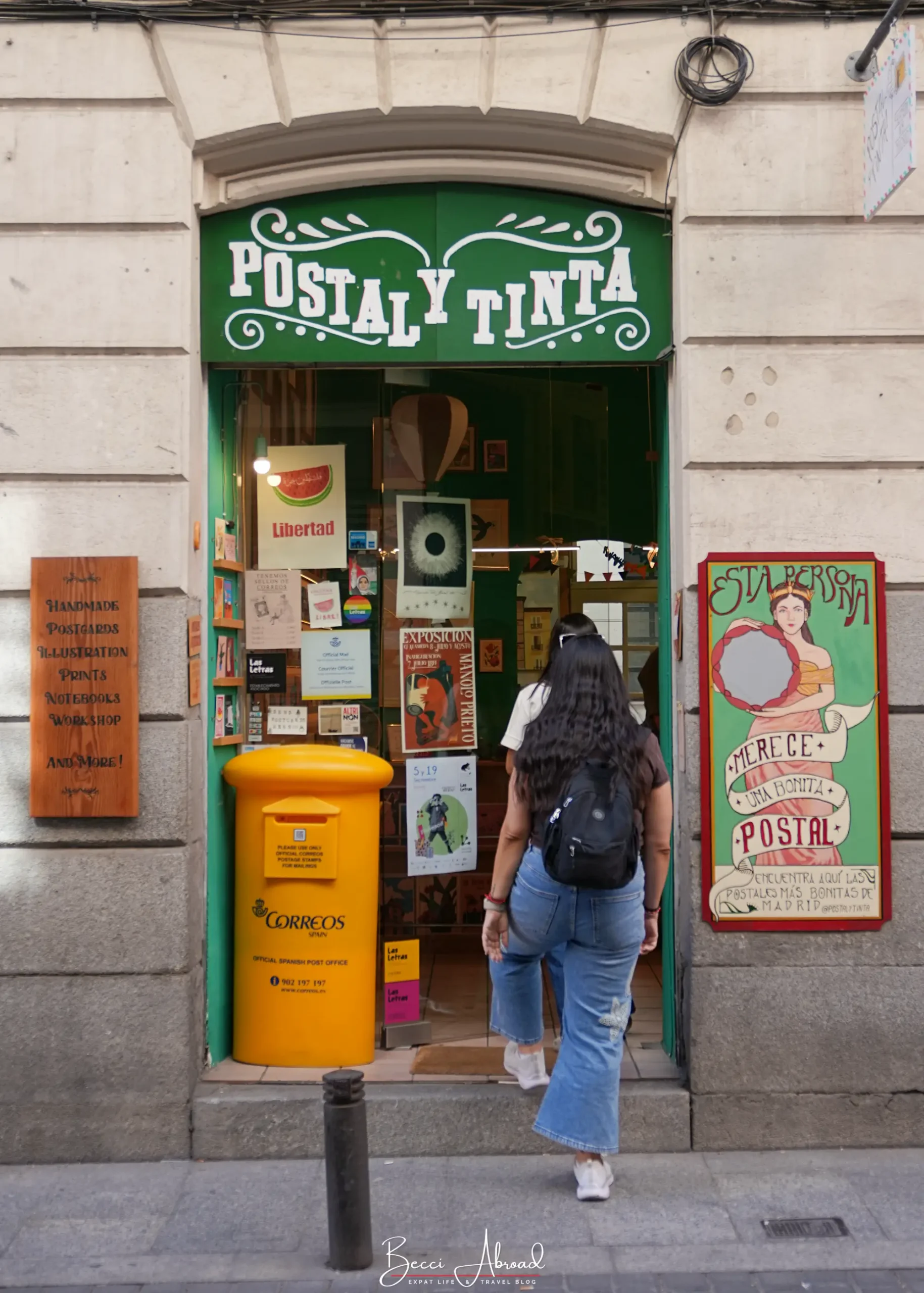
If you’re looking to buy postcards as souvenirs, either to bring home or to send from Madrid, then Postal y Tinta is a very good stop.
Postal y Tinta means “postcard and ink” in English, and it’s a tiny hidden gem located in Barrio de las Letras, not far from the Prado Museum.
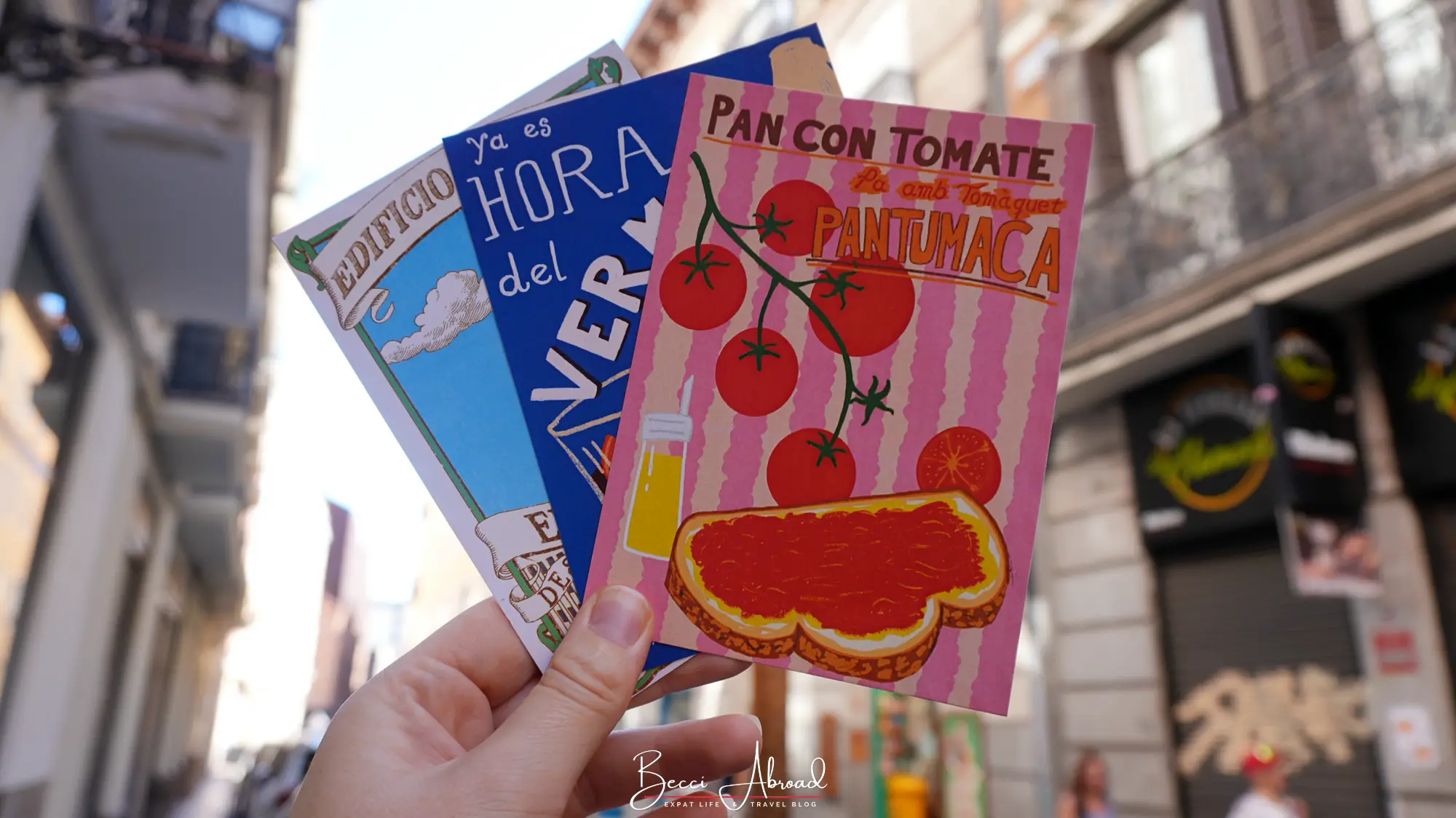
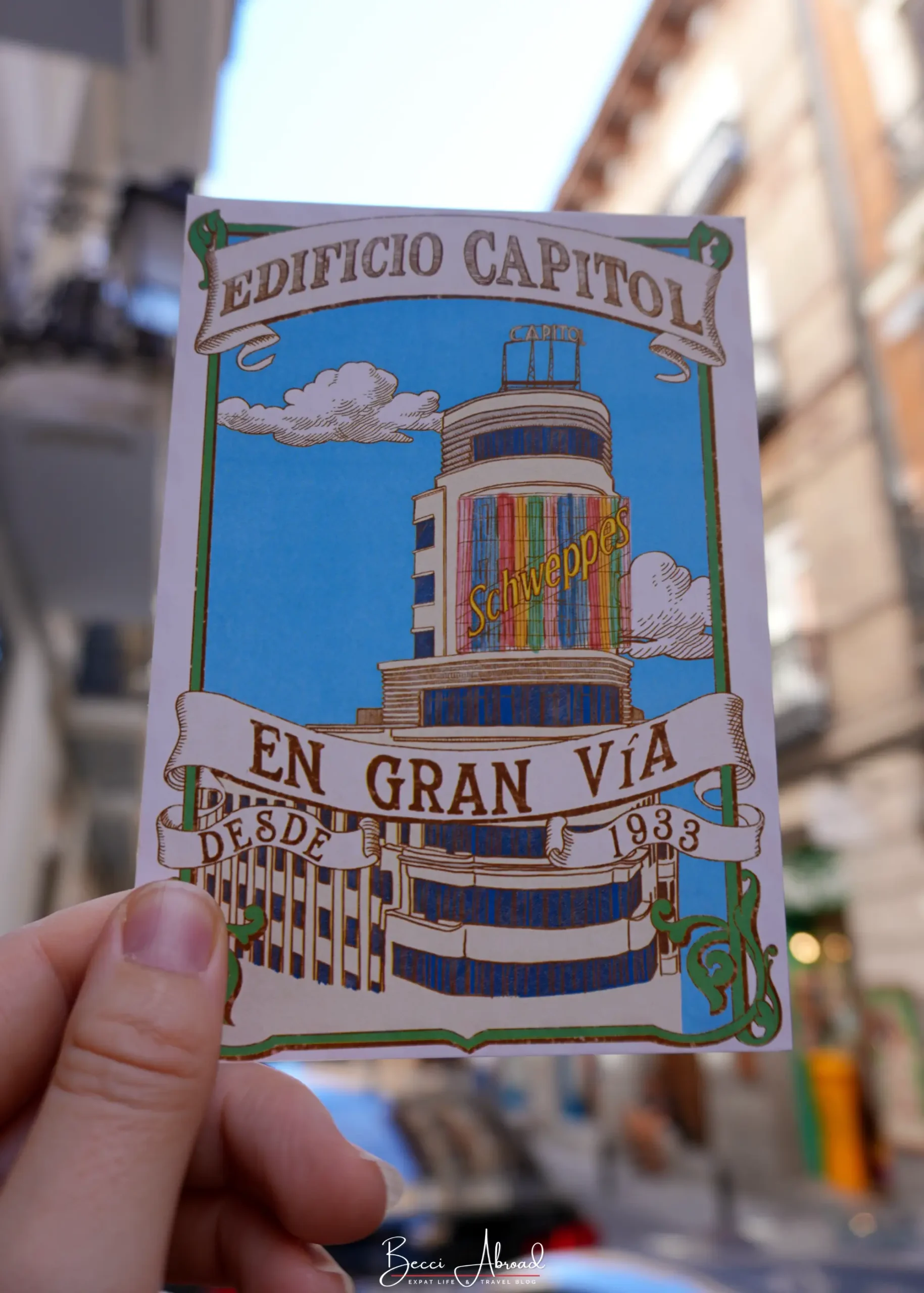
Postal y Tinta is a small local shop that sells beautifully designed postcards of Madrid made by local artists.
They also have some bigger posters and prints if you want to decorate your home with some Spanish art to remember your trip to Madrid.
The shop is run by two local artists, and in the back, there is a small workshop where they print on a press. When I visited, they were even there with their two dogs as assistants!
After hearing about Postal y Tinta, I went there and bought three small posters of traditional Spanish and Madrid landmarks and traditions, including one of my favorite Spanish drinks, vermut. I put them into small frames from IKEA, and now they decorate the wall in my office!
Postal y Tinta is a lesser-known place in Madrid to visit after seeing the more popular sights of El Prado Museum or Retiro Park.
Admission: Free
Opening hours:
- Monday to Friday: 10 am to 3 pm and 4 pm to 7:30 pm
- Saturday: 10:30 am to 6 pm
Nearest metro: Estación del Arte or Atocha (line 1)
Location: Postal y Tinta, Calle de la Alameda 8, Barrio de las Letras
Watch a Classic Film at Cine Doré, Madrid’s Oldest Cinema
Did you know that you can watch a film in a cinema that opened in 1912 for just a few euros?
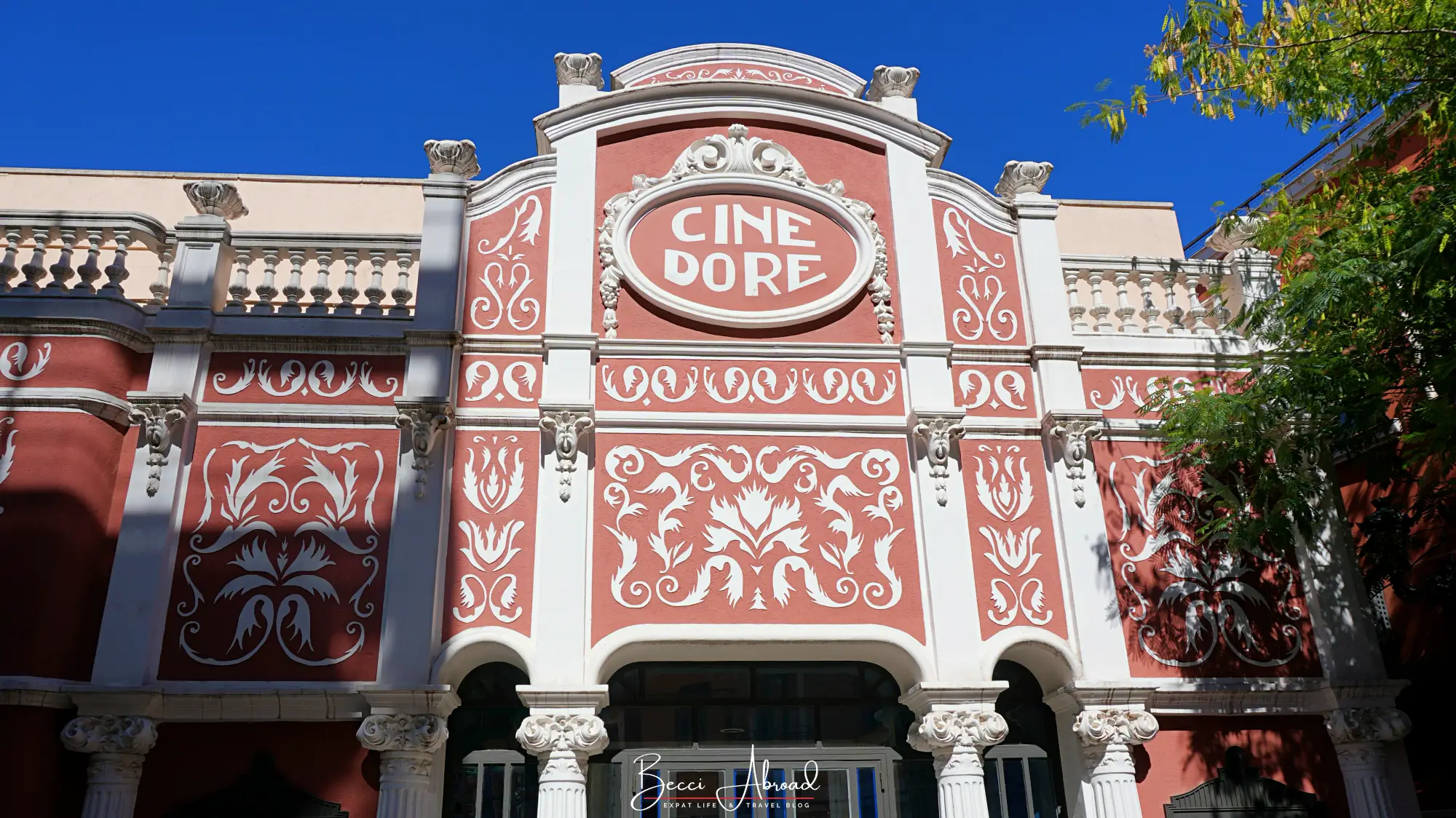
Cine Doré is a beautiful Modernist cinema in Antón Martín, on the edge of Lavapiés and Barrio de las Letras.
The cinema is one of the oldest cinemas in Madrid, and its beautiful pink façade dates from 1923.
Since 2002, Cine Doré has been the screening venue of the Filmoteca Española, Spain’s national film archive.
Every day except Monday, Cine Doré shows classics, documentaries, and themed film cycles from all over the world. Tickets cost only around €3!
Many of the movies shown in Cine Doré are in Spanish. You can check the upcoming screenings on Filmoteca’s website and book directly online.
There is also a small bookshop with books and cinema memorabilia, which is perfect if you are looking for a slightly different souvenir from Madrid.
I stopped by Cine Doré on a sunny August day to check out the beautiful façade. I still haven’t stepped inside Cine Doré to see a movie. But the outside of Cine Doré is also a beautiful, unexpected hidden gem in Madrid!
Admission: €3 per film, reservations online on Filmoteca
Opening hours:
- Screenings Tuesday to Sunday
- The ticket office opens at 4:30 pm in winter and 5:30 pm in summer
- Closed on Mondays
Nearest metro: Antón Martín (line 1)
Location: Cine Doré, Calle de Santa Isabel 3, Madrid
Grab a Snack at Mercado de la Paz
Most guidebooks will recommend that you go to the Mercado de San Miguel in the center of Madrid.
But honestly, in my opinion, the Mercado de San Miguel has become somewhat of a tourist trap, and it isn’t very well maintained.
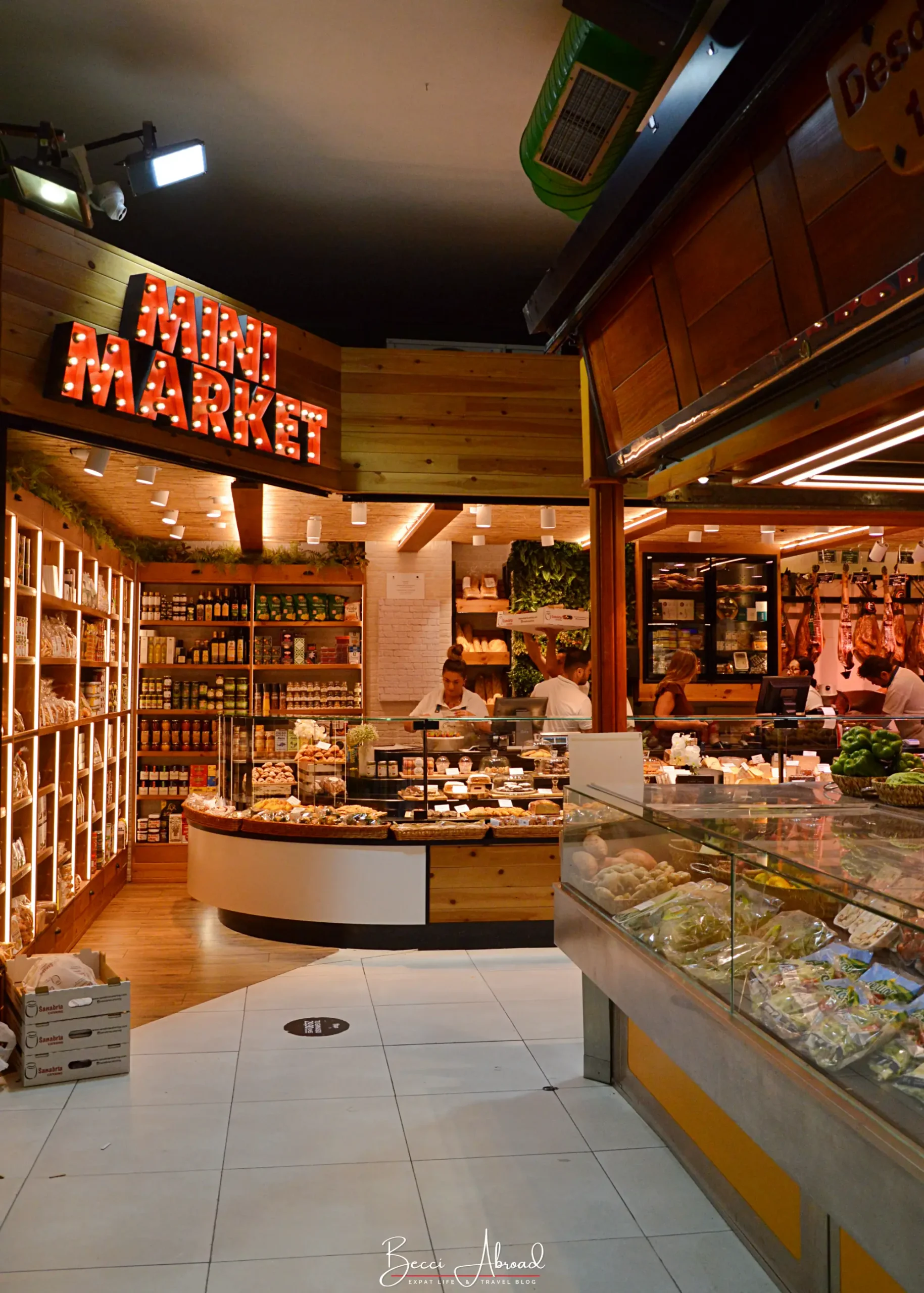
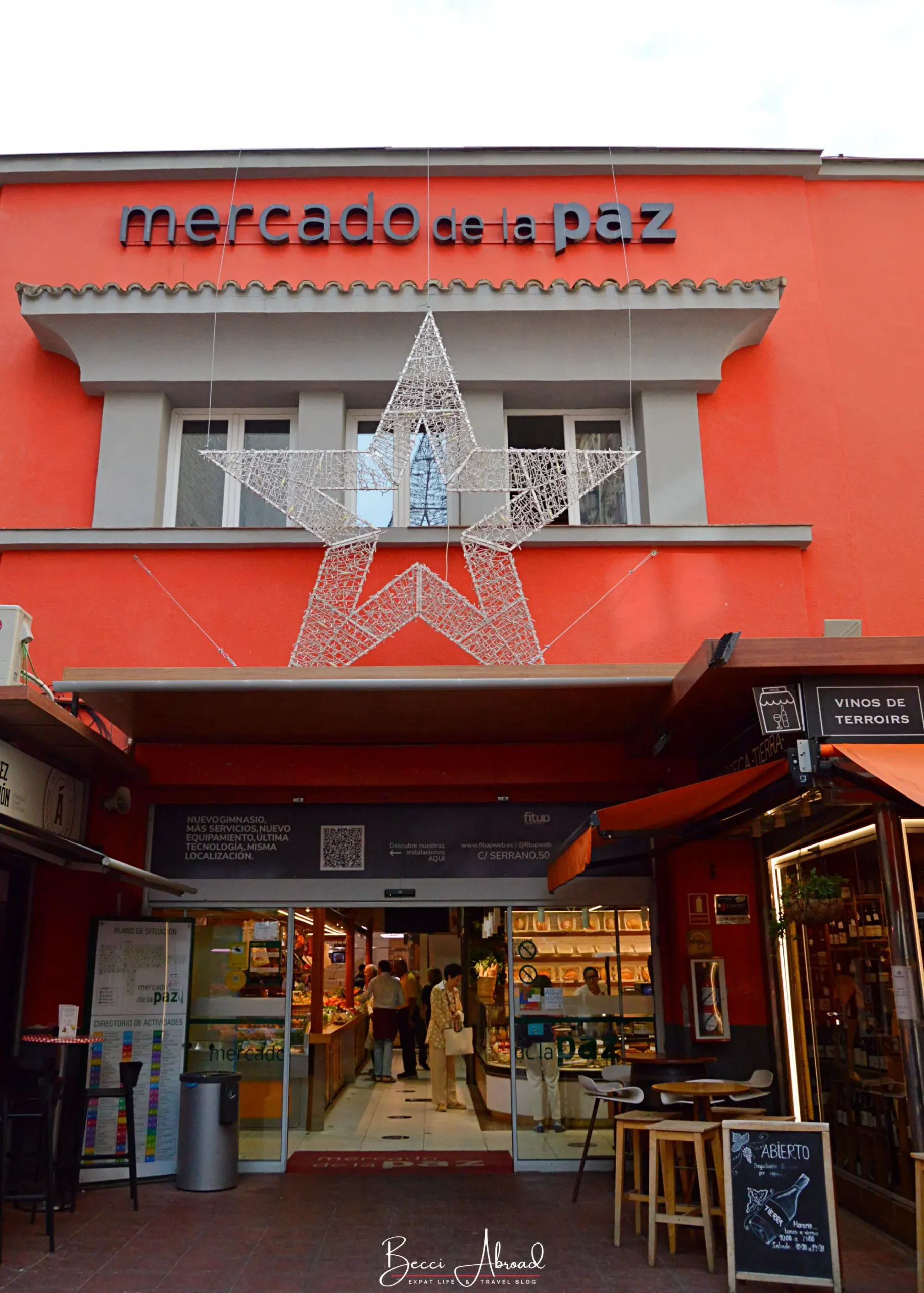
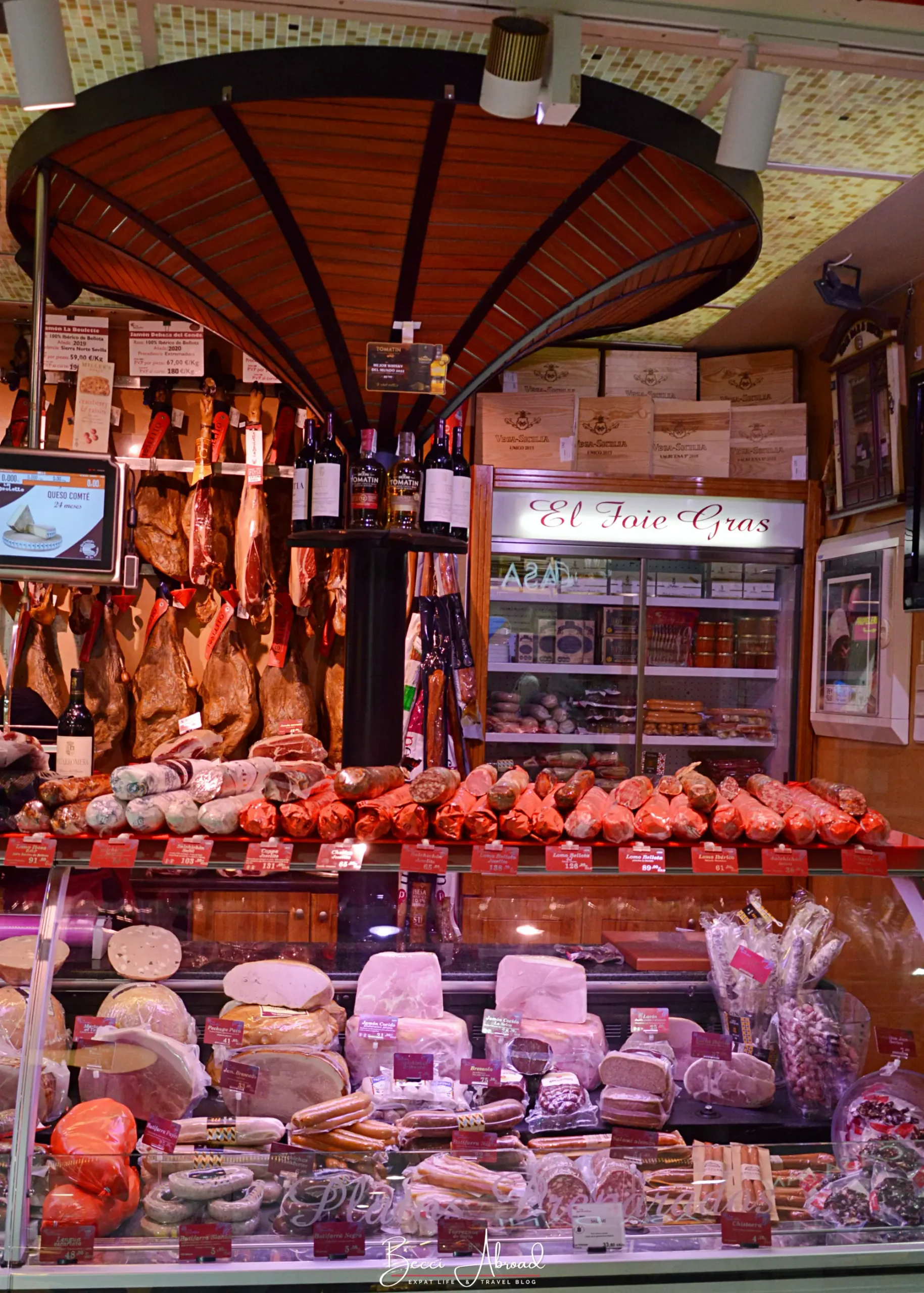
Instead, if you want to experience a local market in Madrid, head to the Salamanca neighborhood and explore Mercado de la Paz!
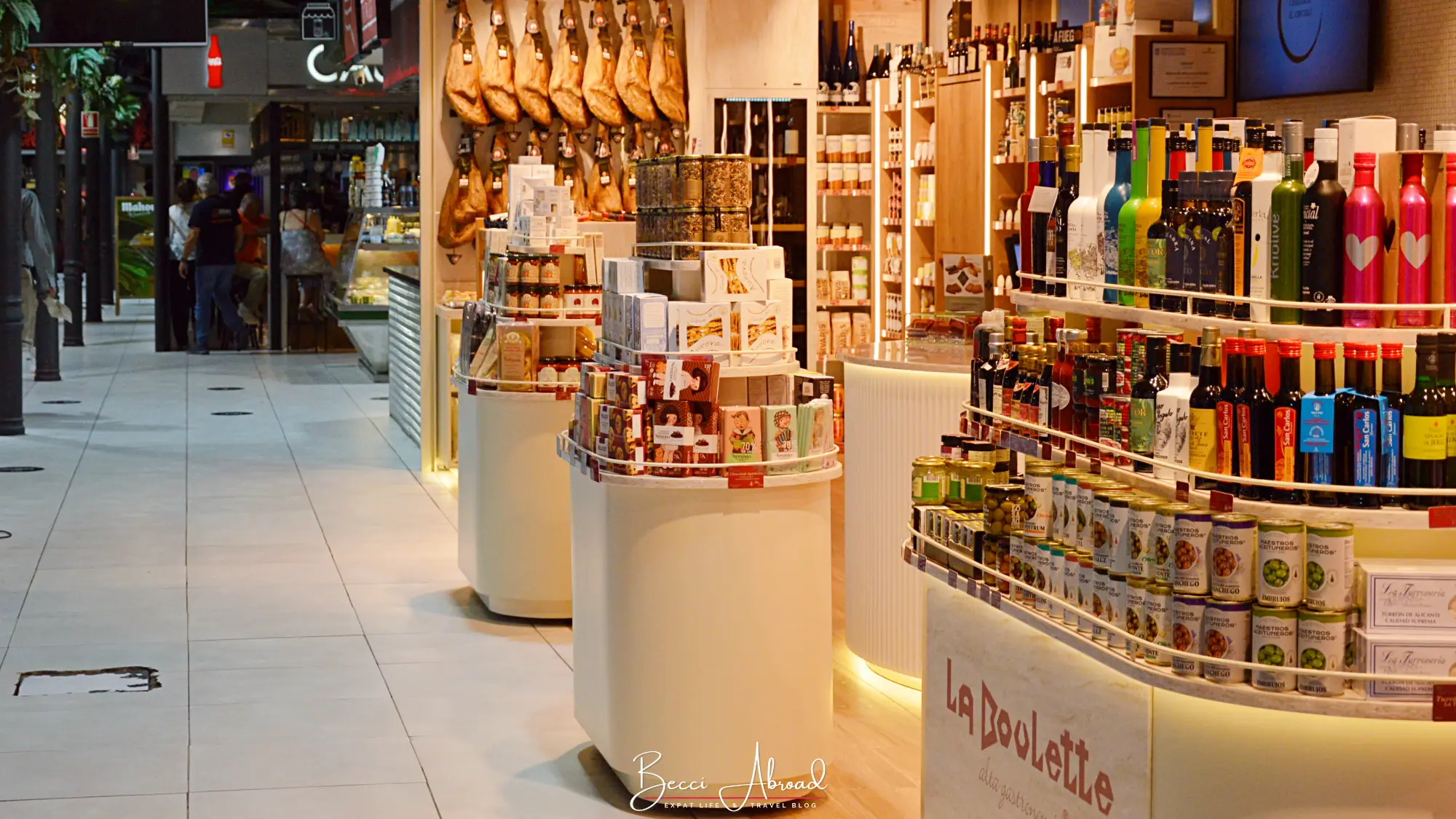
Mercado de la Paz opened in 1882, and it is a beautiful old-style market with its original iron structure, but completely renovated on the inside.
Mercado de la Paz is more of a place where madrileños, the people from Madrid, go themselves! Inside Mercado de la Paz, you can find all kinds of small shops, from bakeries and grocery stalls to small restaurants and tapas bars.
I visited the Mercado de la Paz on this Madrid Contrast Tour that I did in September 2025 of different lesser-known places in Madrid. While I enjoyed the visit to the Mercado de la Paz, I don’t think the Madrid Contrast Tour itself is worth the money. The tour was trying to fit too much into a 5-hour tour, and it felt rushed and a bit disjointed.
Instead, I would jump on the metro or walk to the Mercado de la Paz and visit on my own, if I were you. The market makes a great stop for lunch and exploring more of the Salamanca neighborhood afterwards.
Admission: Free
Opening hours:
- Monday to Friday: 9 am to 8 pm
- Saturday: 9 am to 2:30 pm
- Closed on Sundays
Nearest metro: Serrano or Velázquez (line 4)
Location: Mercado de la Paz, Calle de Ayala 28, 28001 Madrid
Hidden Gems in Malasaña and Gran Vía
North of Madrid’s most popular shopping street, Gran Vía, you find the Malasaña neighborhood and its quieter neighbor, Conde Duque.
Malasaña and Conde Duque are two of the most charming neighborhoods in the center of Madrid, and you can easily walk between all five hidden gems in this part of the city in a single day.
Start with the street art tour of Malasaña, then visit San Antonio de los Alemanes and San Plácido on the same ticket, and pop into Espacio Fundación Telefónica on Gran Vía.
End the day with drinks at El Jardín Secreto, one of the most unique bars in Madrid!
Keep in mind that some of these hidden gems in Madrid are closed on Mondays, such as the churches and Espacio Fundación Telefónica.
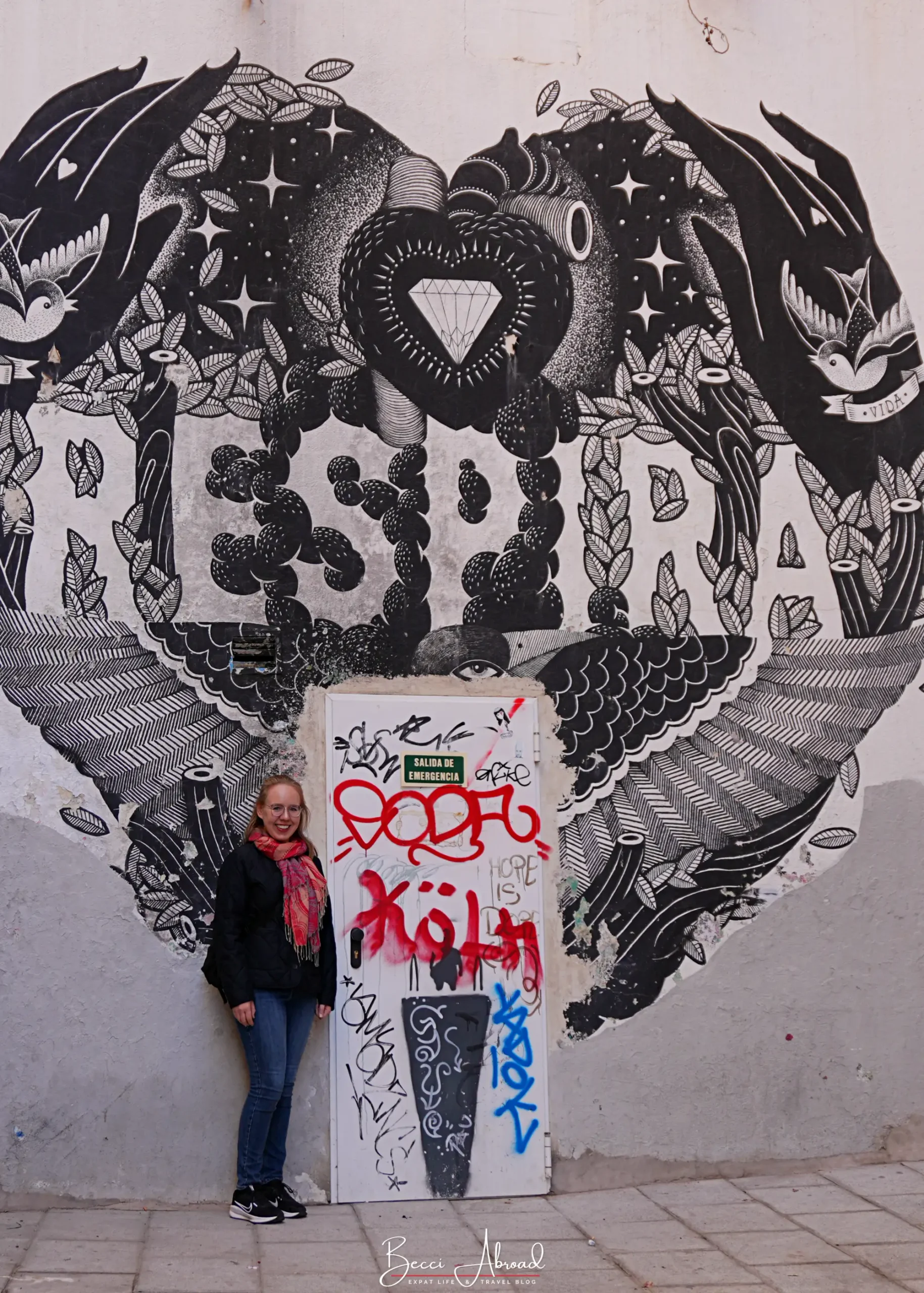
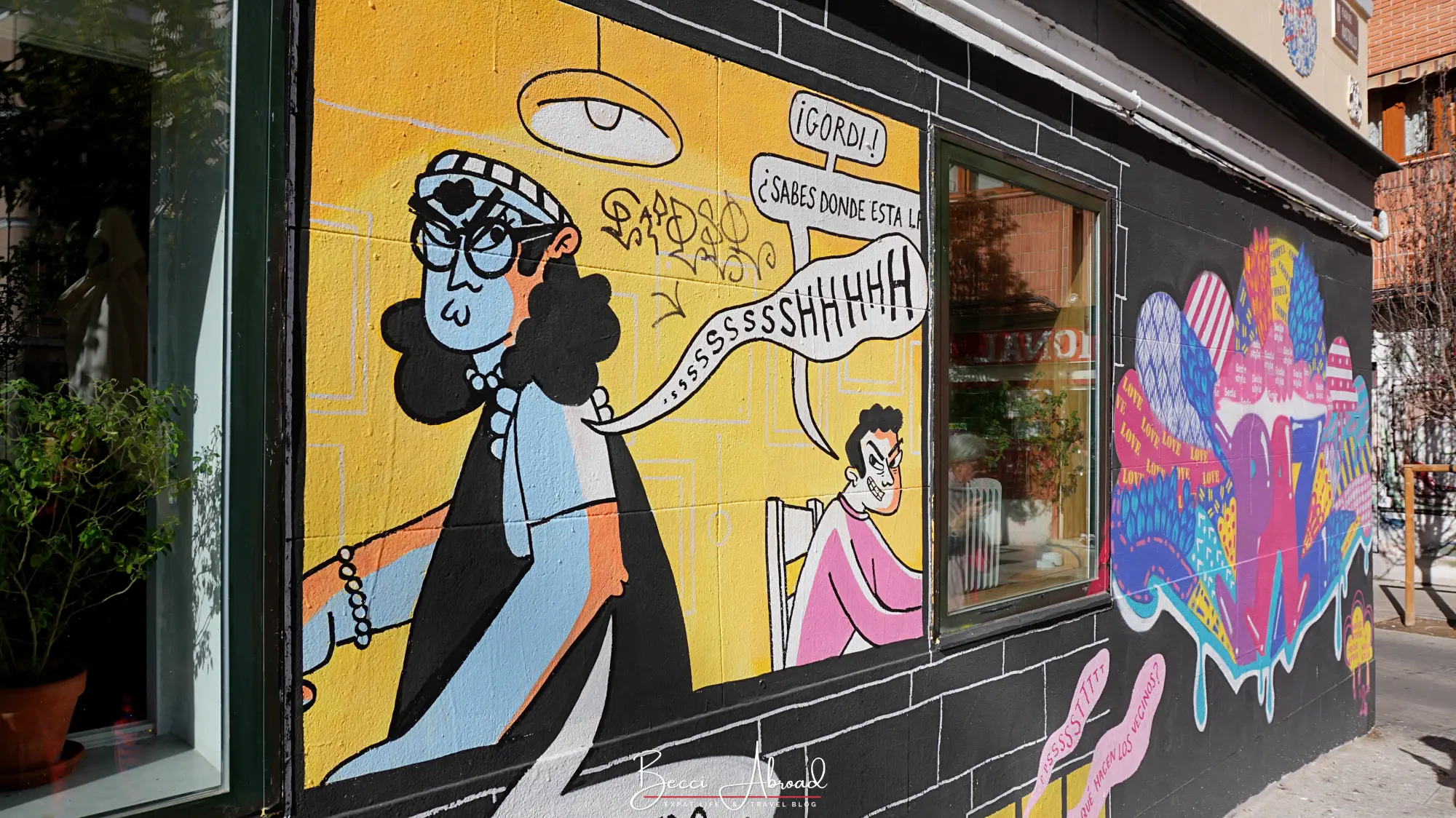
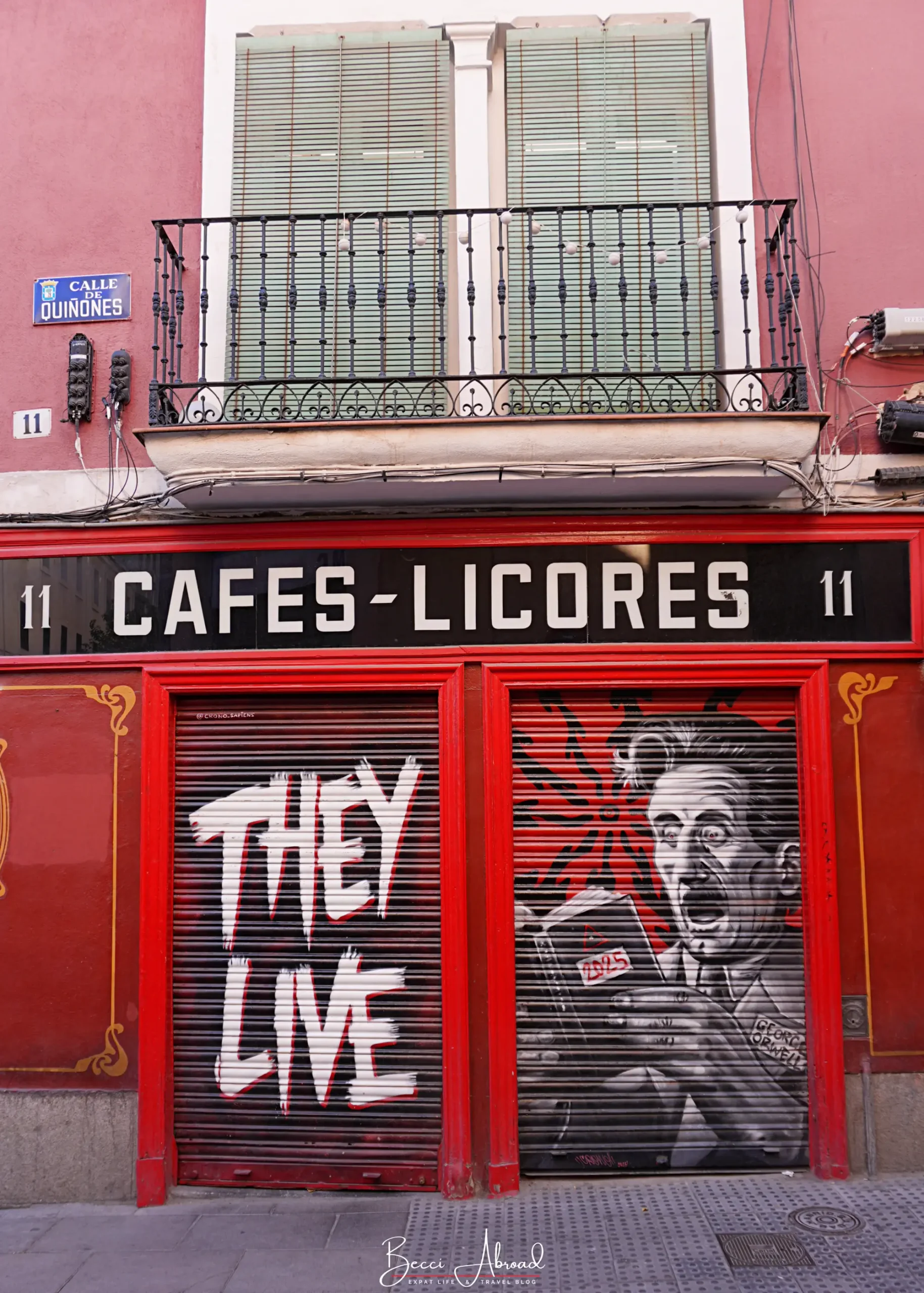
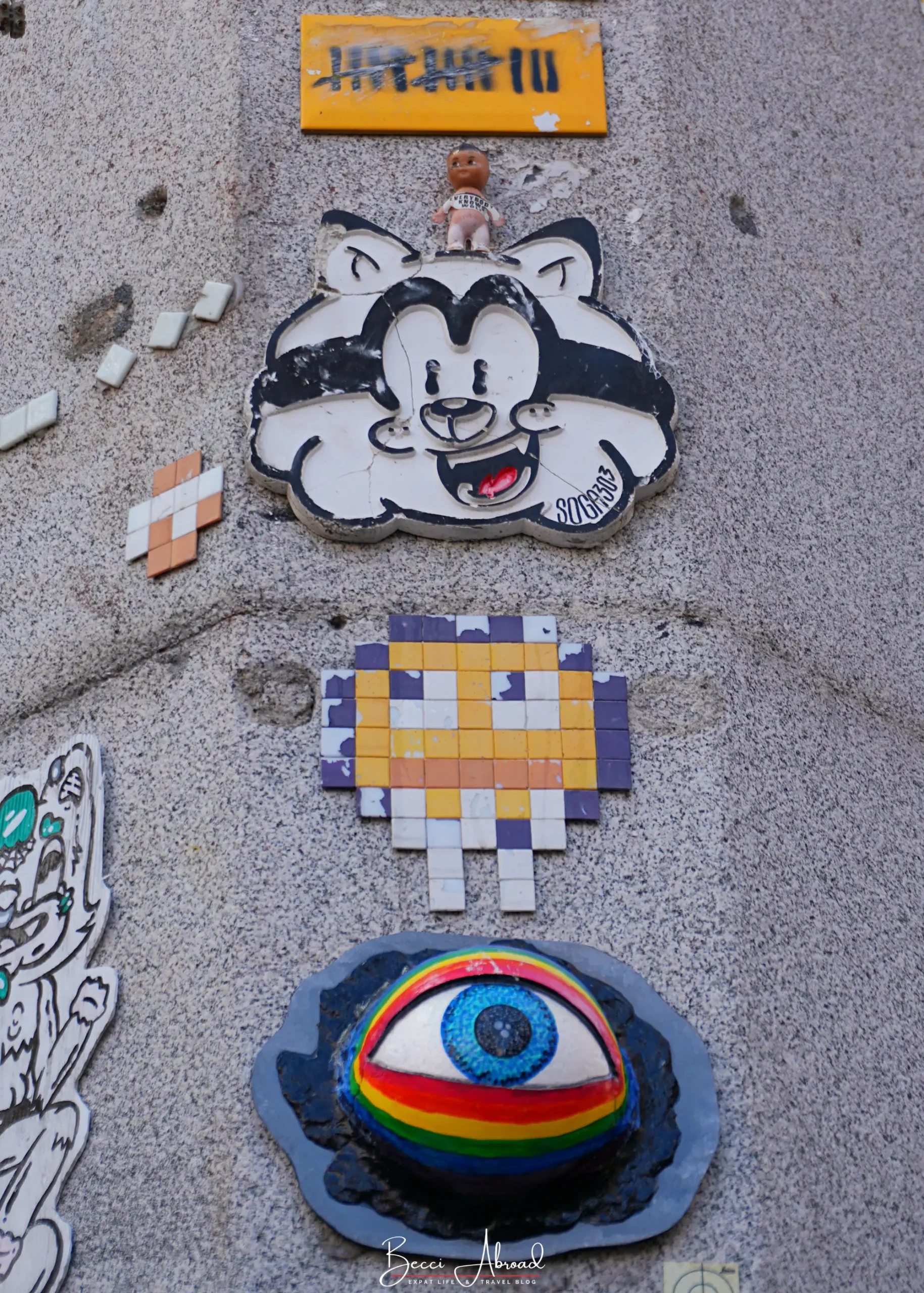
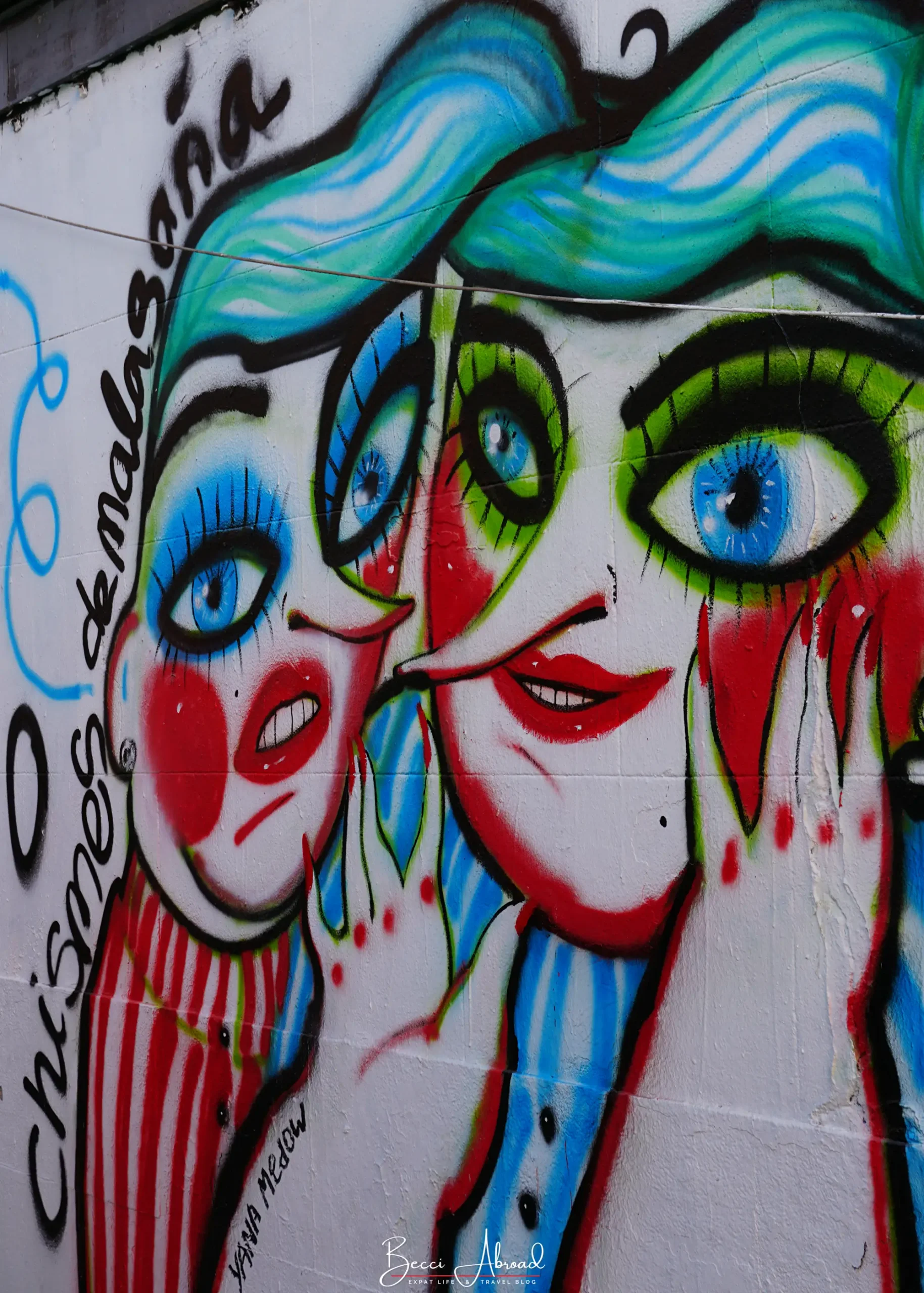
Explore Street Art in Malasaña on a Guided Tour
Malasaña is Madrid’s hip and bohemian neighborhood, which has slowly been taken over by brunch places and specialty coffee shops. But under the surface, Malasaña is also a neighborhood with a lot of history and creativity.
One of the best ways to discover the hidden gems in Malasaña is by joining a street art tour that shows you how art and history live side by side in Madrid.
In November 2026, I joined a street art tour in Malasaña with Localandings, a local tour company in Madrid run by Drica Prado.
The street art tour starts at 10:30 am in front of the San Bernardo metro station. With Drica, we walked through Malasaña chatting and exploring the ever-evolving street art scene. Drica was very knowledgeable about the area and street art in Madrid.
In my opinion, the timing of the tour is perfect, because many bars and restaurants are still closed in the morning and the streets are almost empty!
The street art tour takes around two hours, and we ended at a traditional local bar for a drink, which was a great way to end the tour.
The street art tour of Malasaña is a perfect half-day experience where you can discover some of the best hidden gems in Madrid through street art.
Admission: From around €158 (about 172 USD) per person, including a drink at a local bar
Meeting time: 10:30 am, for around 2 hours
Nearest metro: San Bernardo (lines 2 and 4)
Location: Meeting point outside San Bernardo metro station, Malasaña
Be Amazed by the Church of San Antonio de los Alemanes
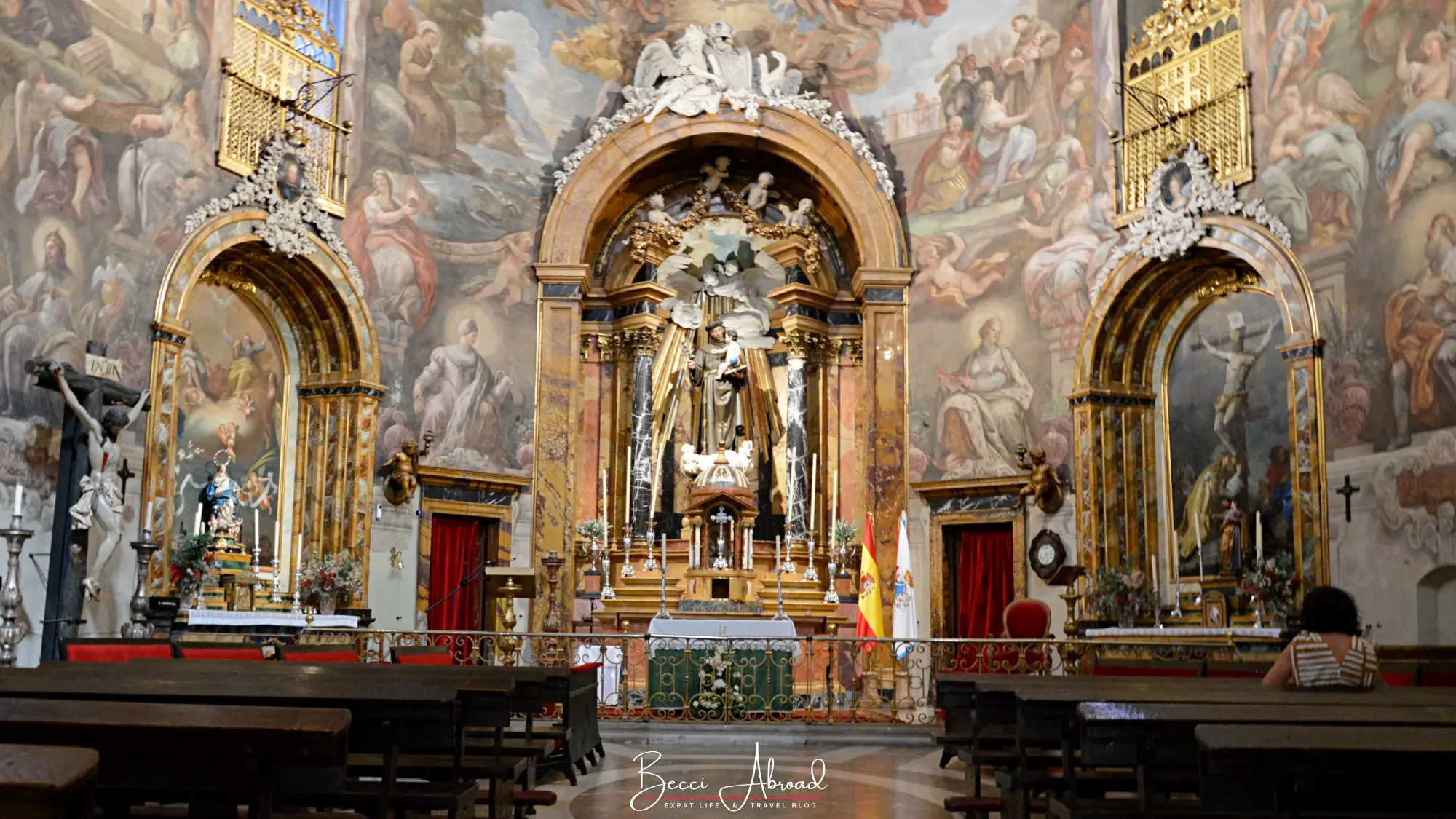
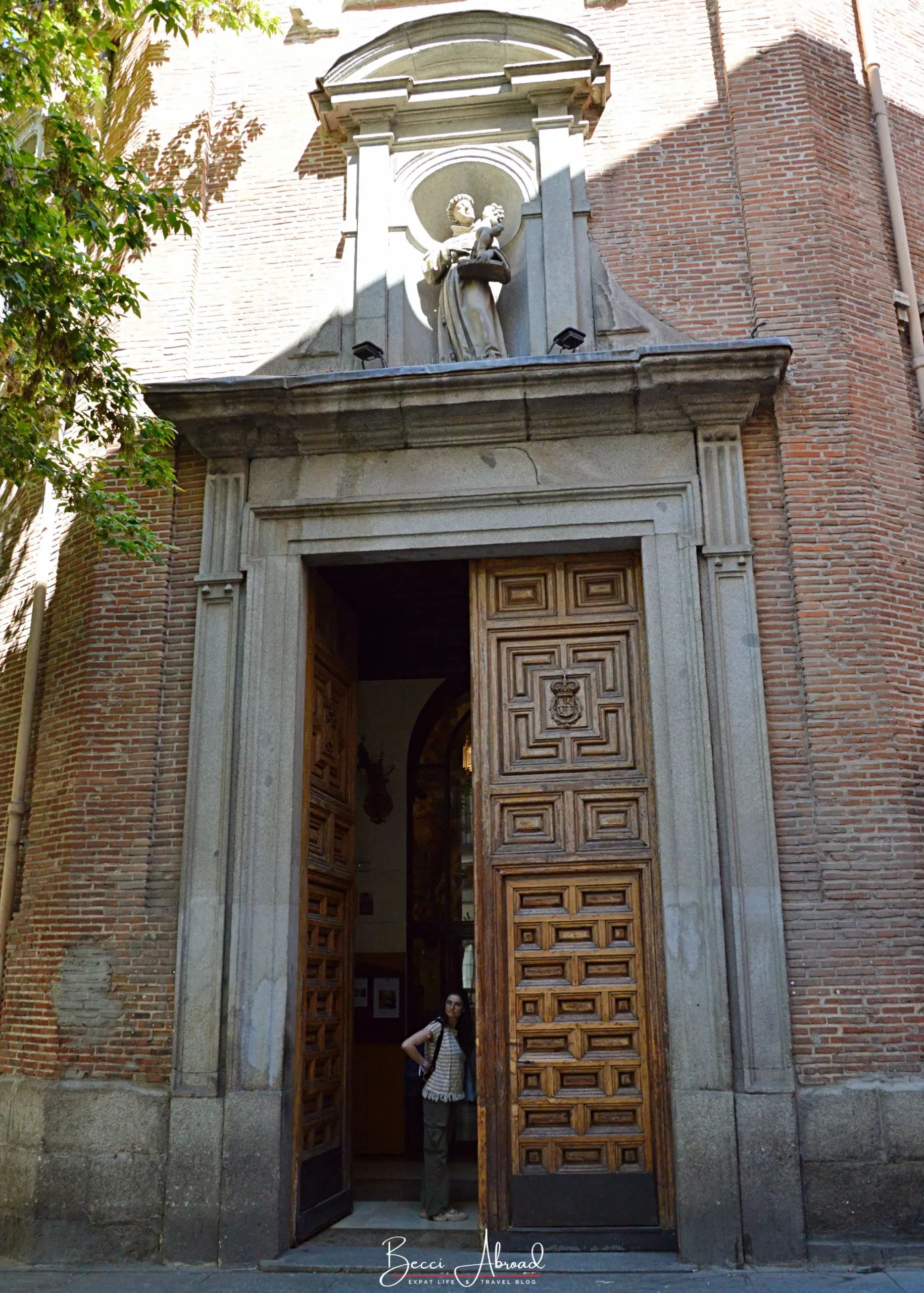
The Church of Saint Anthony of the Germans, also called Iglesia de San Antonio de los Alemanes in Spanish, is one of the most beautiful churches in Madrid and a true hidden gem in Madrid!
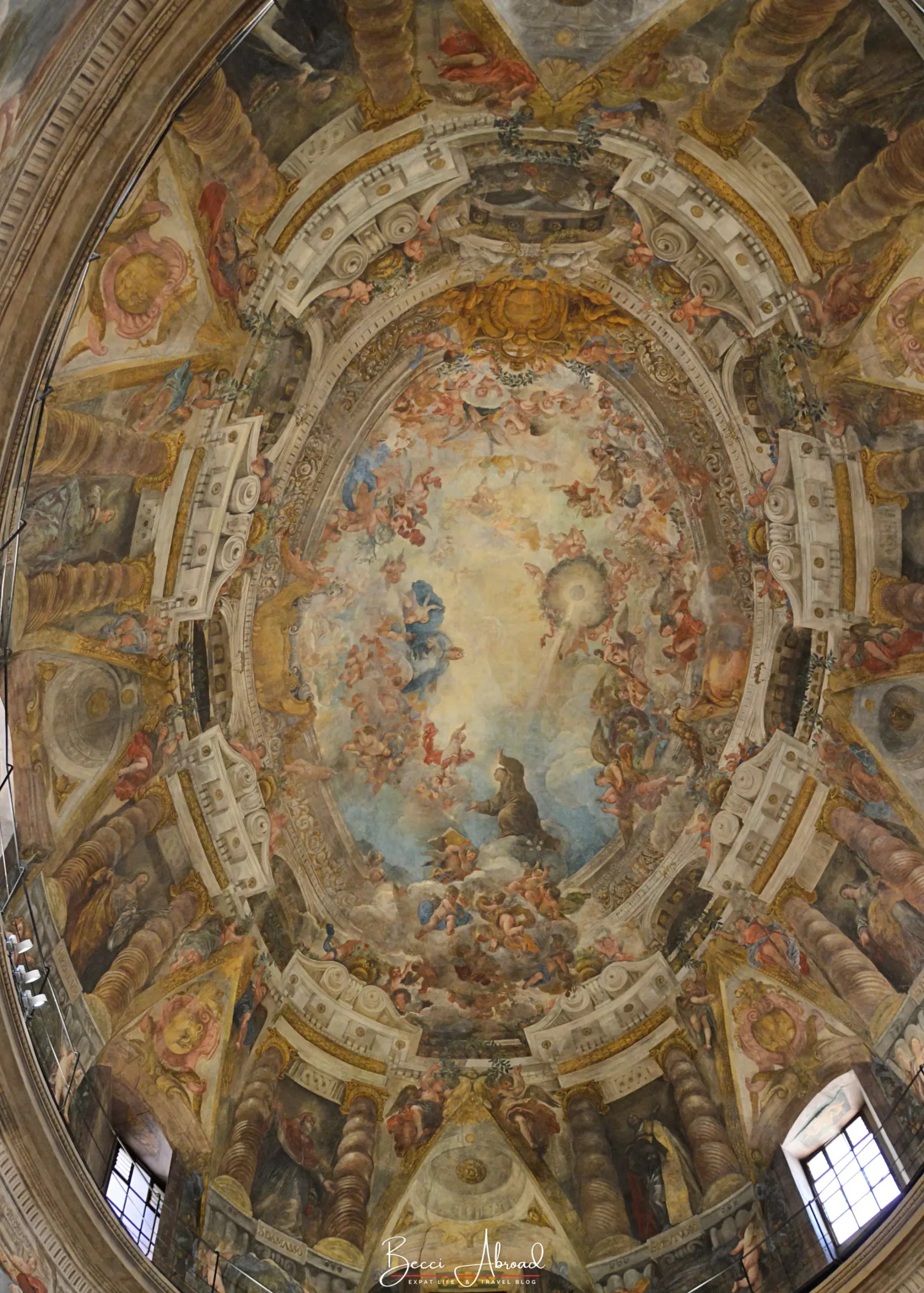
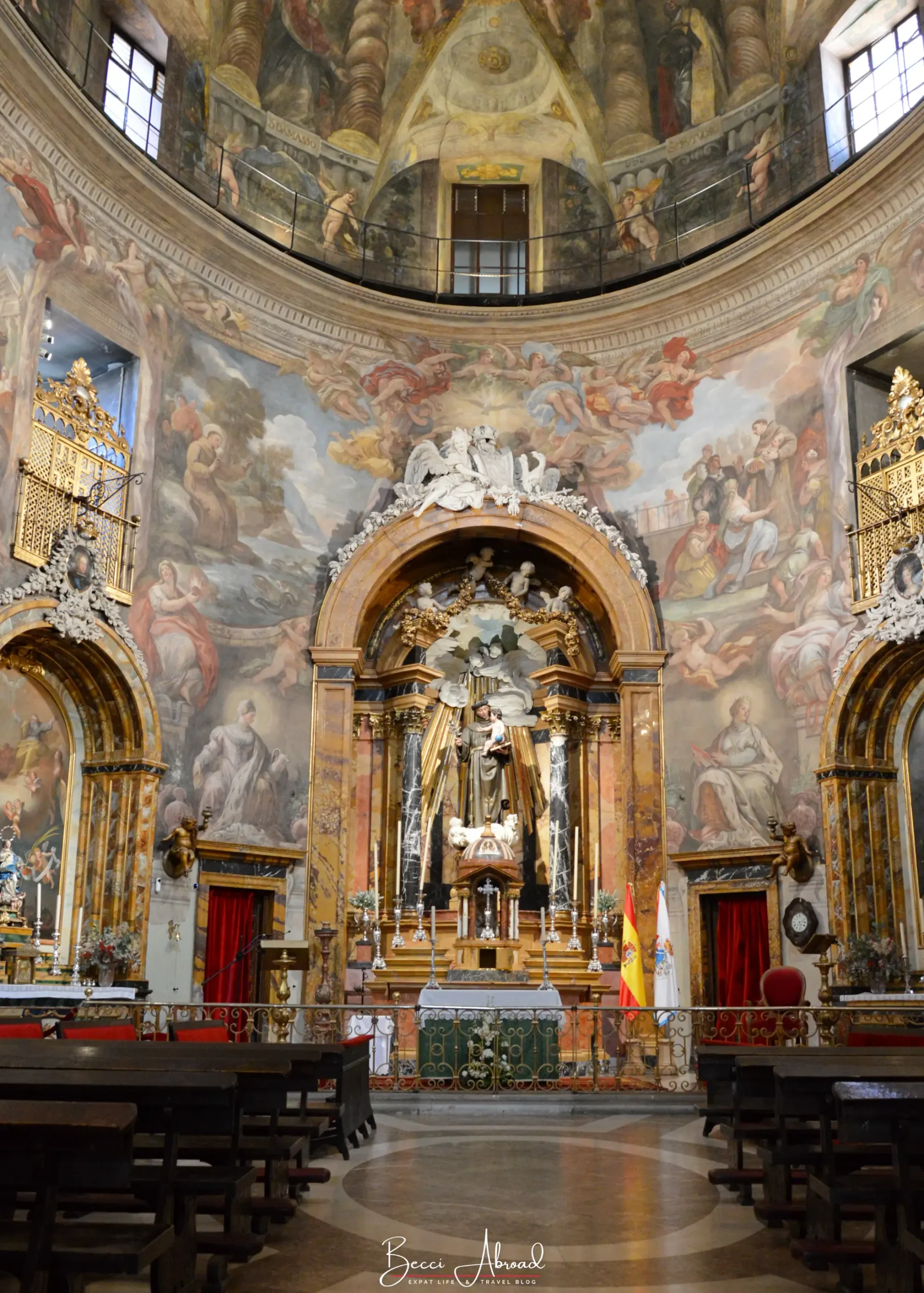
San Antonio de los Alemanes is often nicknamed the “Sistine Chapel of Madrid” because it is painted from floor to ceiling with colorful and detailed frescoes.
The church is hidden away on a corner of Calle de la Puebla, on the edge of Malasaña, just a few minutes’ walk from Gran Vía.
San Antonio de los Alemanes was built between 1624 and 1633 for the Portuguese community in Madrid. After Portugal broke away from Spain in 1640, it was later handed over to the German Catholics in the city, which is how it got its name.
The frescoes were painted by some of the most important painters of the Spanish Baroque, including Francisco Rizi, Juan Carreño de Miranda, and the Italian painter Luca Giordano.
You can buy a combined ticket to both the church and the Monastery of San Plácido for €12 (about 14 USD), including an audio guide for both places.
Admission: €12 (about 14 USD), including an audio guide and entrance to the Monastery of San Plácido
Opening hours:
- Tuesday to Saturday: 10 am to 6 pm (last entry at 5:30 pm)
- Sunday: 1 pm to 4 pm (last entry at 3:30 pm)
- Closed on Mondays
Nearest metro: Callao (lines 3 and 5) or Gran Vía (lines 1 and 5)
Location: Iglesia de San Antonio de los Alemanes, Calle de la Puebla 22, Malasaña
Get your tickets here
Visit the Monastery of San Plácido
If you’re heading to the Church of San Antonio de los Alemanes, you get the Monastery of San Plácido, or Monasterio de San Plácido, included in your ticket.
The Monastery of San Plácido is another beautiful historical hidden gem in Madrid, just a few blocks from the church, and the visit also includes an audio guide.
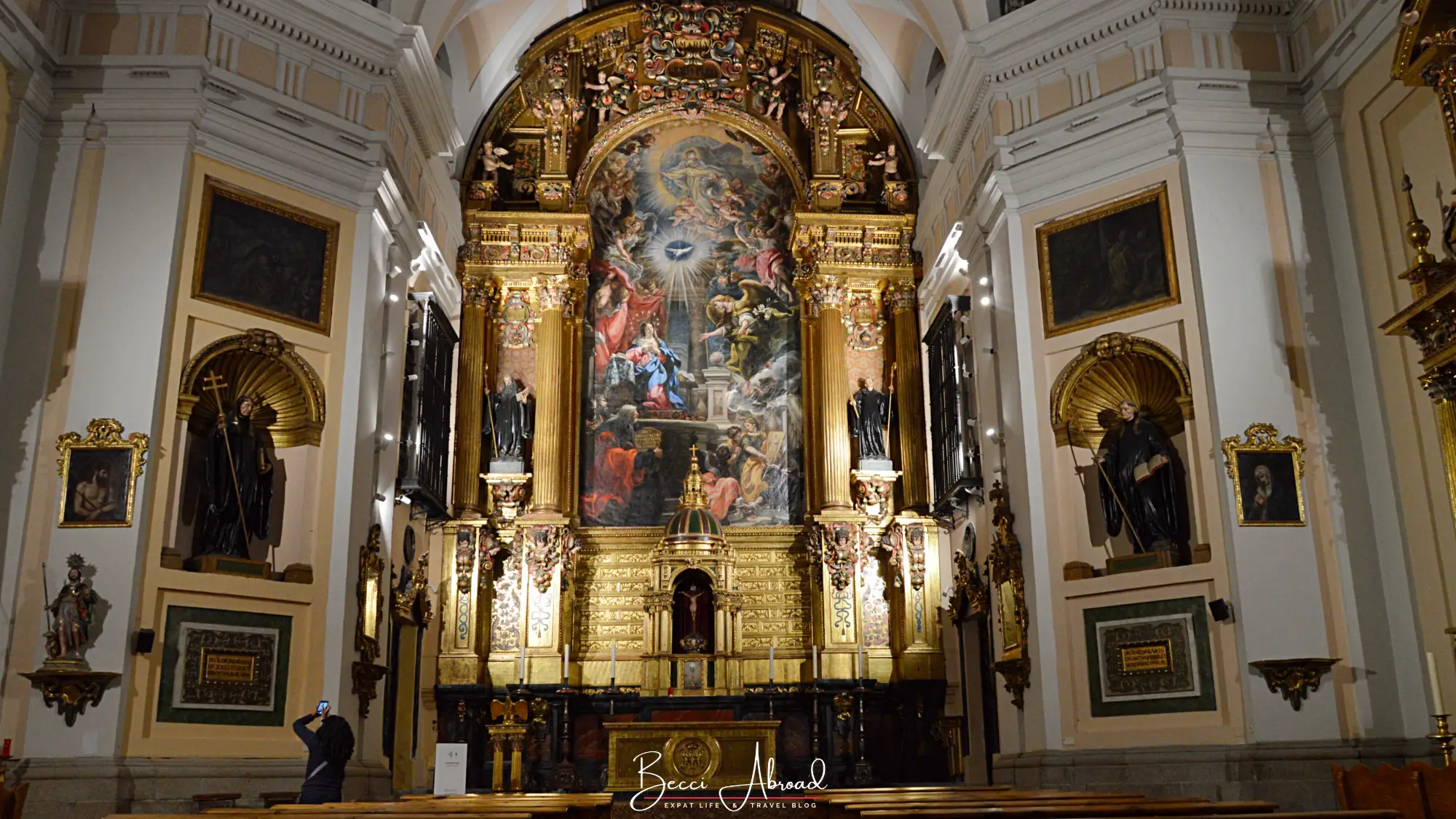
The Benedictine monastery holds the largest collection of works by the Baroque painter Claudio Coello, including an Annunciation almost 7 meters (23 ft) high above the main altar.
Velázquez’s famous Christ Crucified, which now hangs in the Prado Museum, also used to hang in the Monastery of San Plácido.
When my mom and stepfather visited Madrid in September 2025, we went to both the church and the monastery, and both places were very beautifully decorated and painted. The audio guide was very detailed… maybe a little bit too detailed, for my taste!
The Church of San Antonio de los Alemanes is definitely my favorite of the two, but if you’re already in the area, I recommend stopping by the Monastery of San Plácido as well!
Admission: Included in the €12 combined ticket with San Antonio de los Alemanes
Opening hours:
- Tuesday to Saturday: 10:30 am to 2 pm and 3 pm to 5:30 pm (last entry 4:45 pm)
- Sunday: 1 pm to 4 pm (last entry 2:45 pm)
- Closed on Mondays
Nearest metro: Noviciado (lines 2, 3 and 10) or Callao (lines 3 and 5)
Location: Monasterio de San Plácido, Calle de San Roque 9, 28004 Madrid
Learn About Modern Technology at Espacio Fundación Telefónica
Espacio Fundación Telefónica is a really rare hidden gem right in the center of Madrid, by Gran Vía, that almost no one seems to know about.
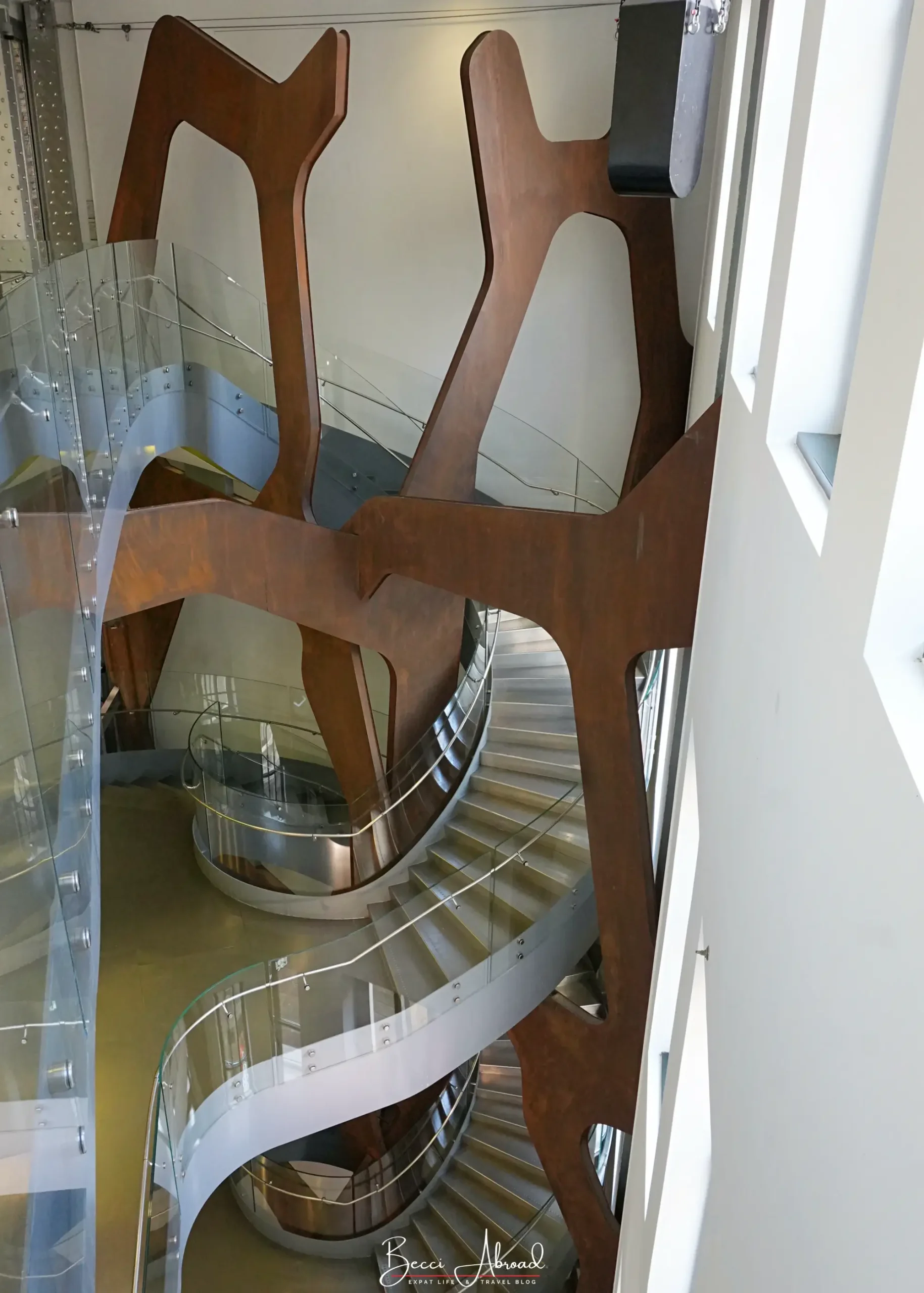
Espacio Fundación Telefónica, meaning the Telephone Foundation’s Exhibition Space in English, is an exhibition space spread over three floors, located inside the historic Telefónica Building.
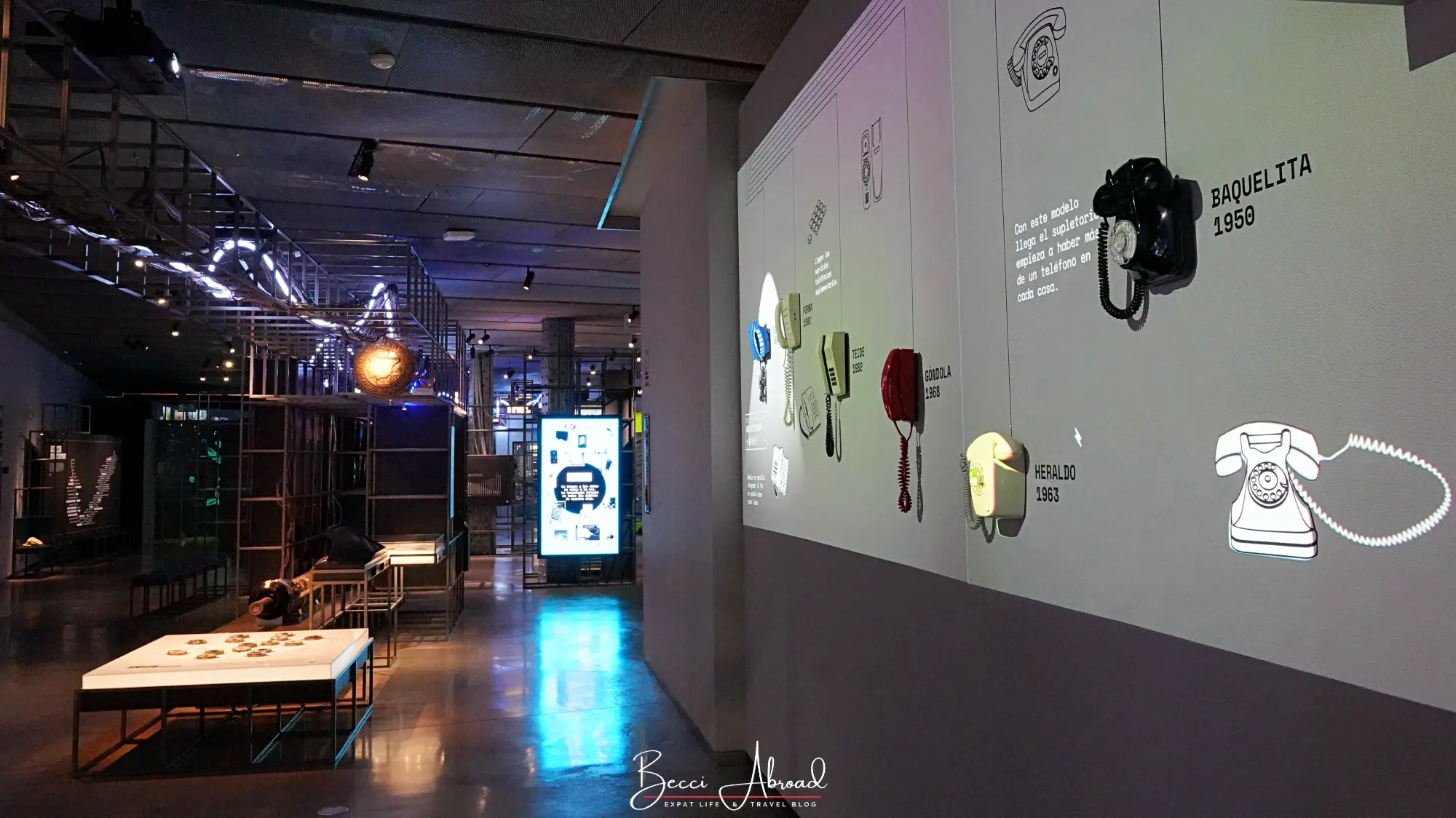
The exhibition space focuses on modern technology, especially the development of phones, the internet, and other connectivity technologies. When I visited, there was a different exhibition on each floor.
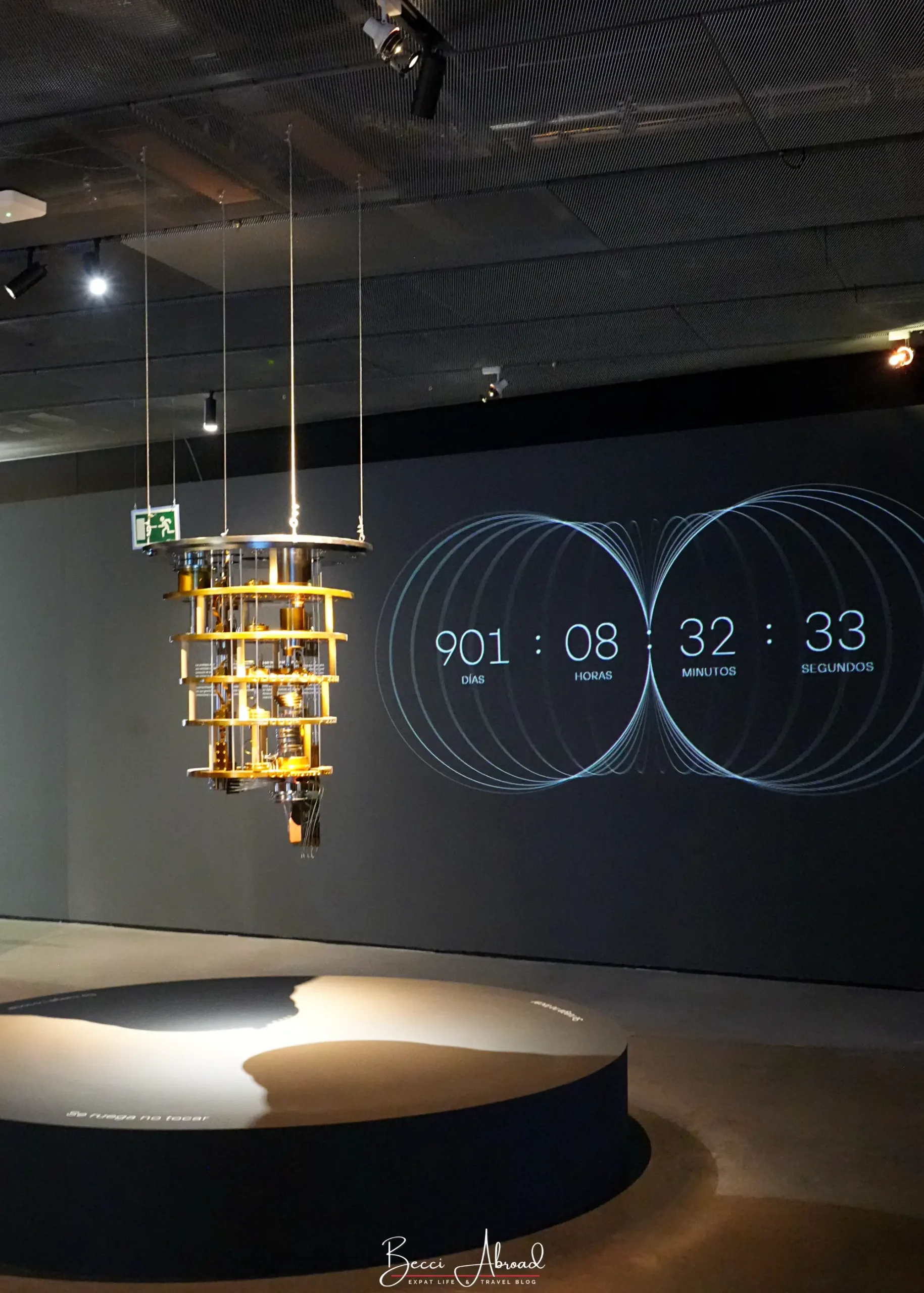
On the top floor, there was an exhibition with photography by an American photographer, and on the middle floor, there was one about quantum mechanics and science.
The one I liked the most was on the first floor, with a little exhibition about the development of modern technology, from computers to phones.
Espacio Fundación Telefónica is located in the same building as the big Movistar shop on Gran Vía, but the entrance is on the side street, Calle de Fuencarral. So, when you’re looking for this hidden gem in Madrid, simply look for the Movistar shop and instead of going inside there, go to the corner, turn and walk a few meters down the street.
The entrance to Espacio Fundación Telefónica is completely free of charge, and there is no need to book your entrance online in advance.
The Espacio Fundación Telefónica is a really cool hidden gem to add to your Madrid itinerary!
Admission: Free, no reservation needed
Opening hours:
- Tuesday to Friday: 10 am to 8 pm
- Saturday, Sunday, and public holidays: 11 am to 8 pm
- Closed on Mondays
Nearest metro: Gran Vía (lines 1 and 5)
Location: Espacio Fundación Telefónica, Calle de Fuencarral 3, inside the Telefónica Building at Gran Vía 28, Madrid

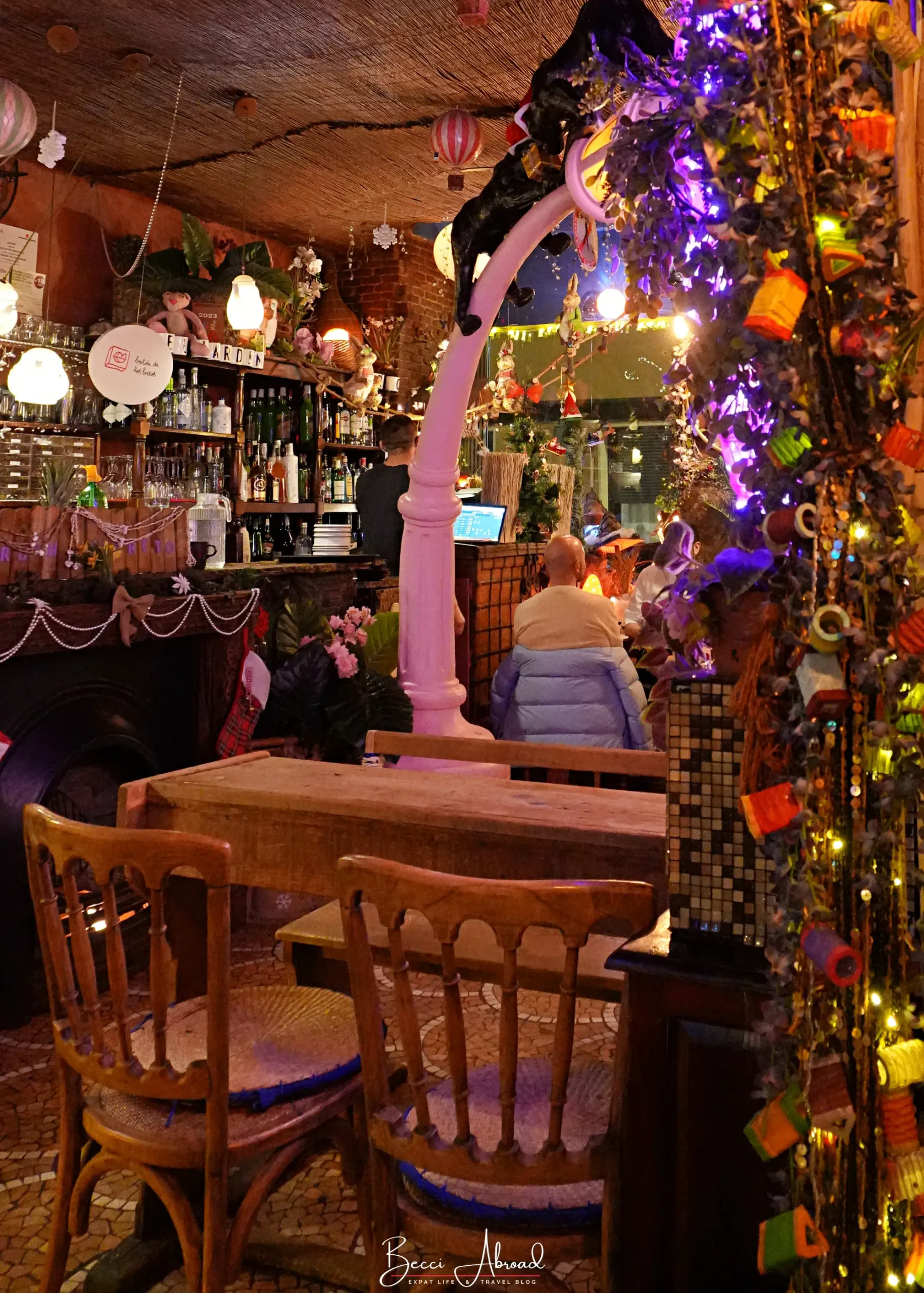
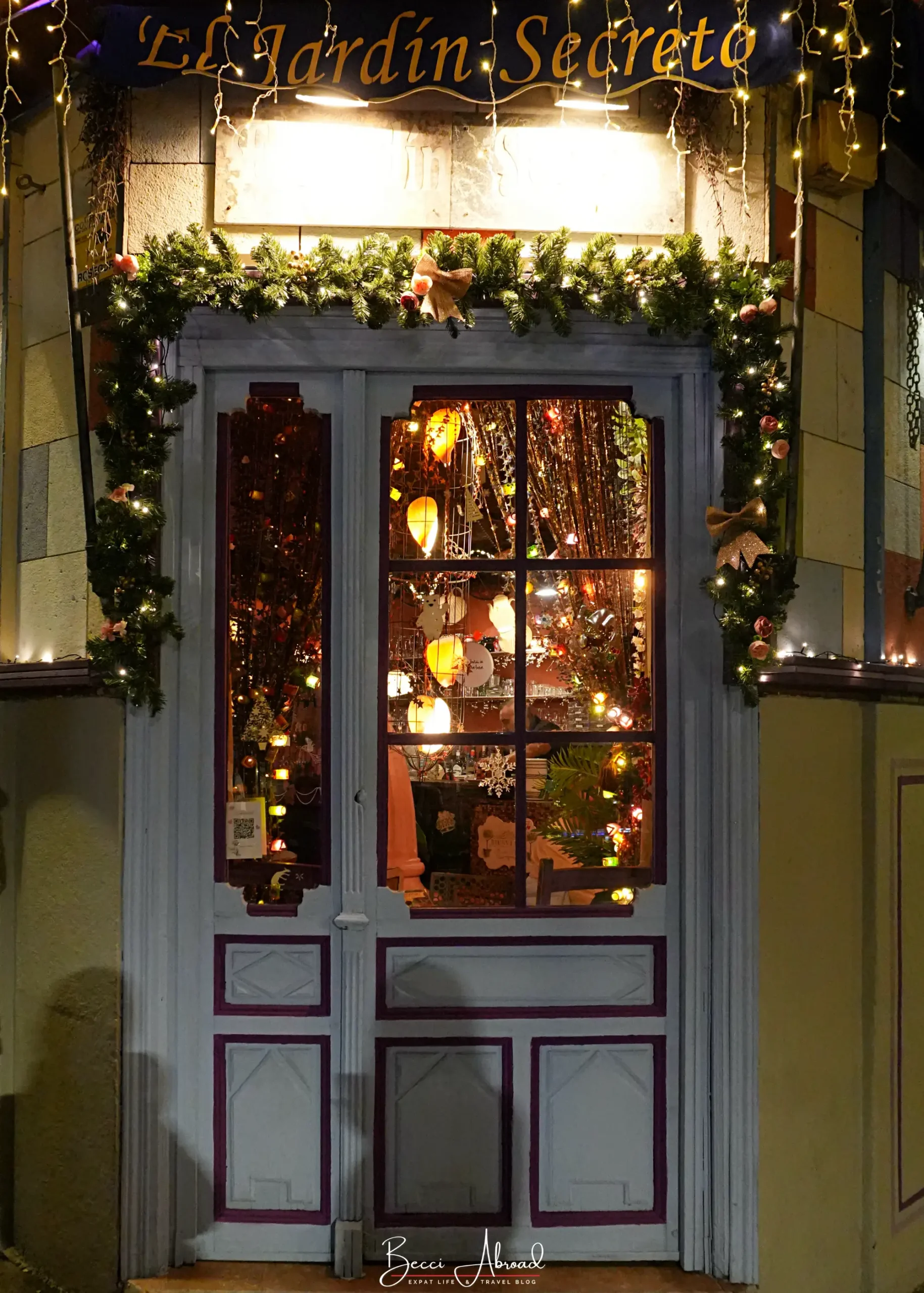
Go for Drinks at El Jardín Secreto, Madrid’s Secret Garden
Located just a few blocks from the popular Plaza de España, you will find a small corner café called El Jardín Secreto, which means “the secret garden” in English.
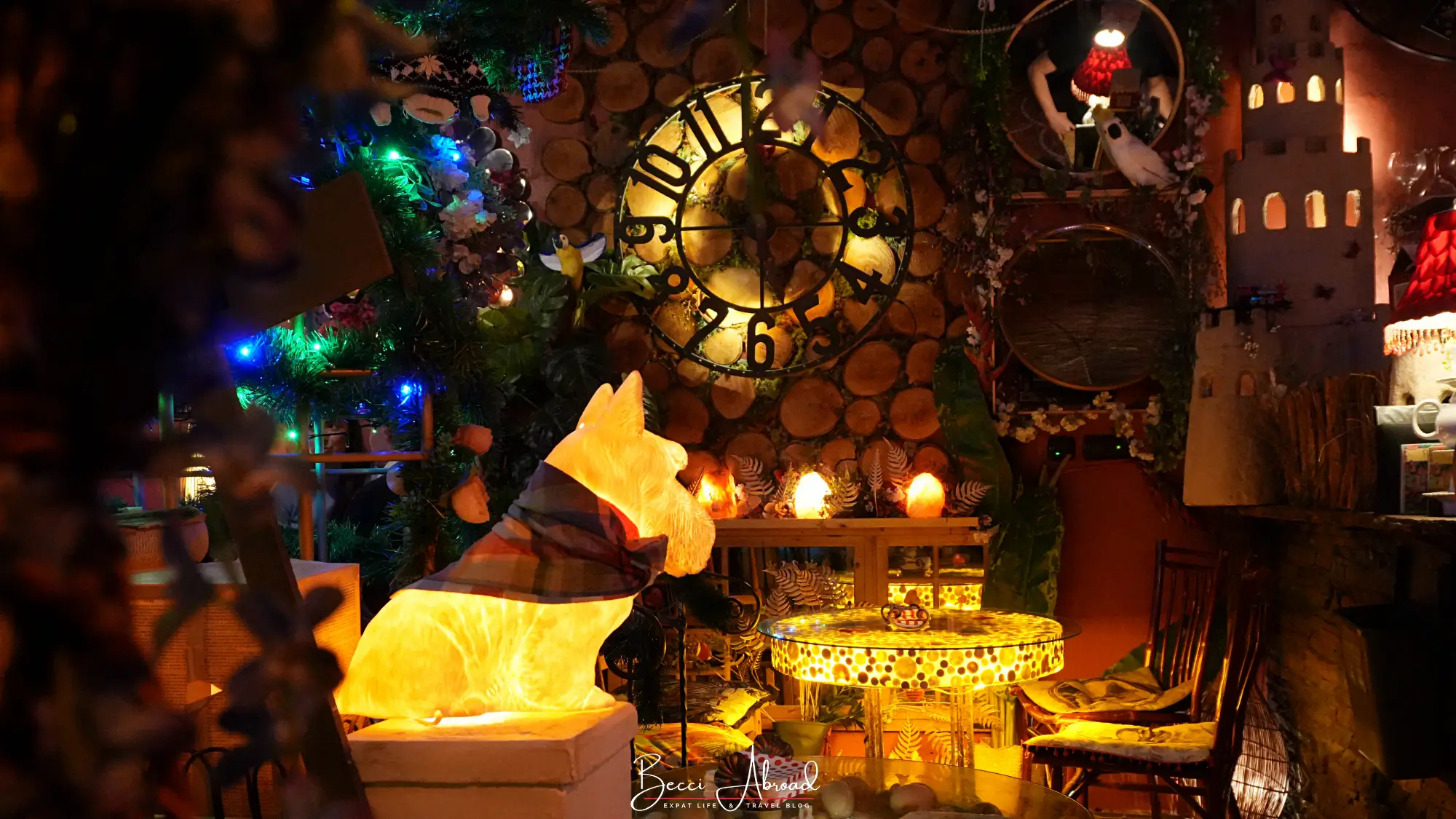
Stepping into El Jardín Secreto literally feels like stepping into a fairy-tale garden, with decorations and little details all over the place.
My friend and I visited in December 2025, and the whole place was decorated with Christmas ornaments and Santa Clauses everywhere!
Honestly, I didn’t find the food to be the best. It was affordable and okayish, so I would recommend that you go to El Jardín Secreto for drinks and maybe go for dinner somewhere else. You can check the menu at El Jardín Secreto’s website.
El Jardín Secreto is a really cool and special hidden gem in Madrid if you want a different experience.
Admission: Free; you only pay for what you order
Opening hours:
- Monday to Thursday: 6:30 pm to 1:30 am
- Friday and Saturday: 6:30 pm to 2:30 am
- Sunday: 6 pm to 1 am
Nearest metro: Plaza de España (lines 2, 3 and 10) or Ventura Rodríguez (line 3)
Location: El Jardín Secreto, Calle del Conde Duque 2, Plaza de España
Hidden Gems in Moncloa and Príncipe Pío
In the west of Madrid, around the green Parque del Oeste, you find Goya’s frescoes and one of the best views of the city, and the two go perfectly together!
The Ermita de San Antonio de la Florida and the Faro de Moncloa are both on metro line 6, only two stops apart.
Start with Goya in the morning and save the view from the Faro de Moncloa for later in the day. However, keep in mind that both of these hidden gems are closed on Mondays!
Enjoy the Views of Madrid From Above at the Faro de Moncloa
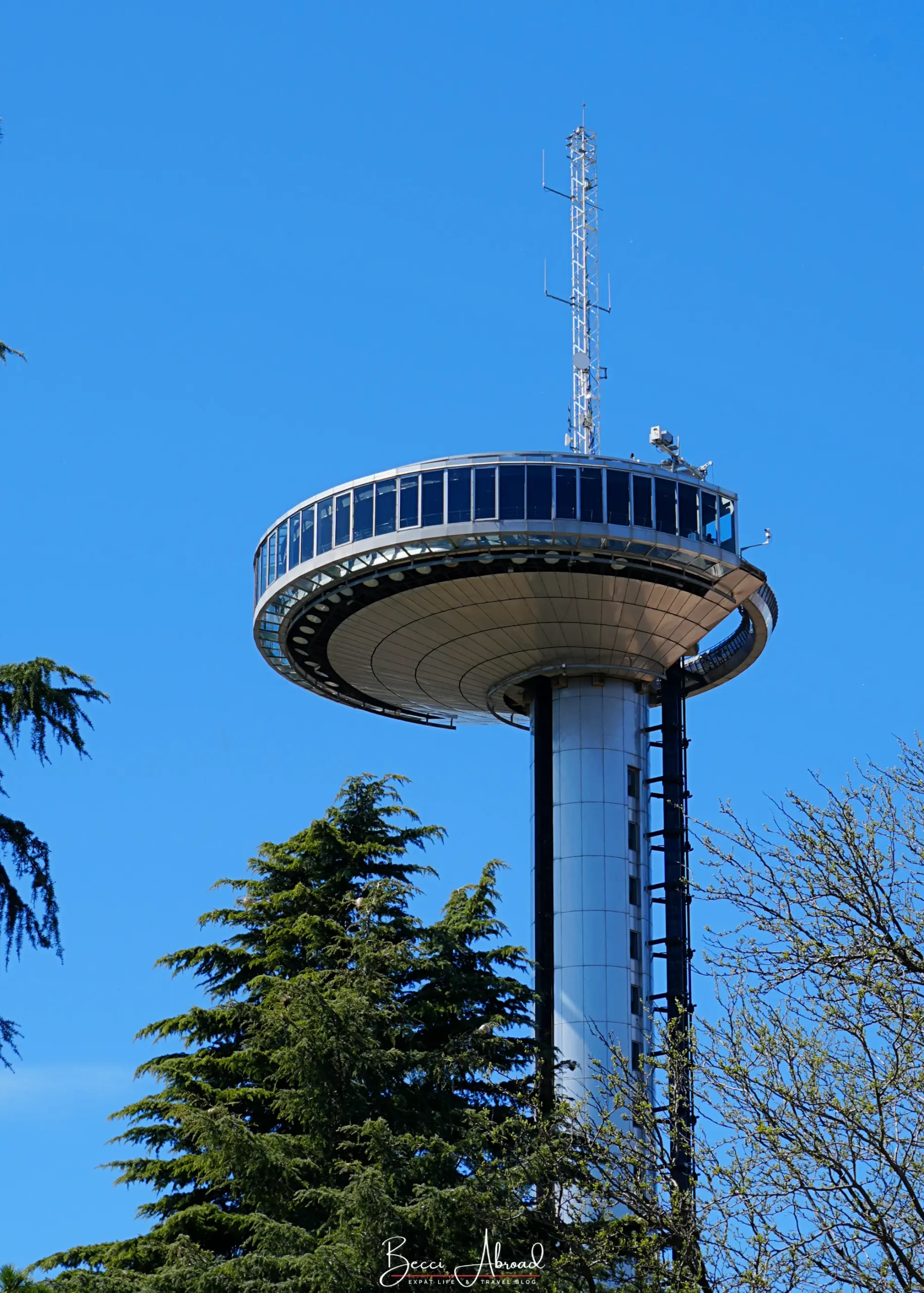
The Moncloa Lighthouse, or Faro de Moncloa in Spanish, is another of my favorite hidden gems in Madrid!
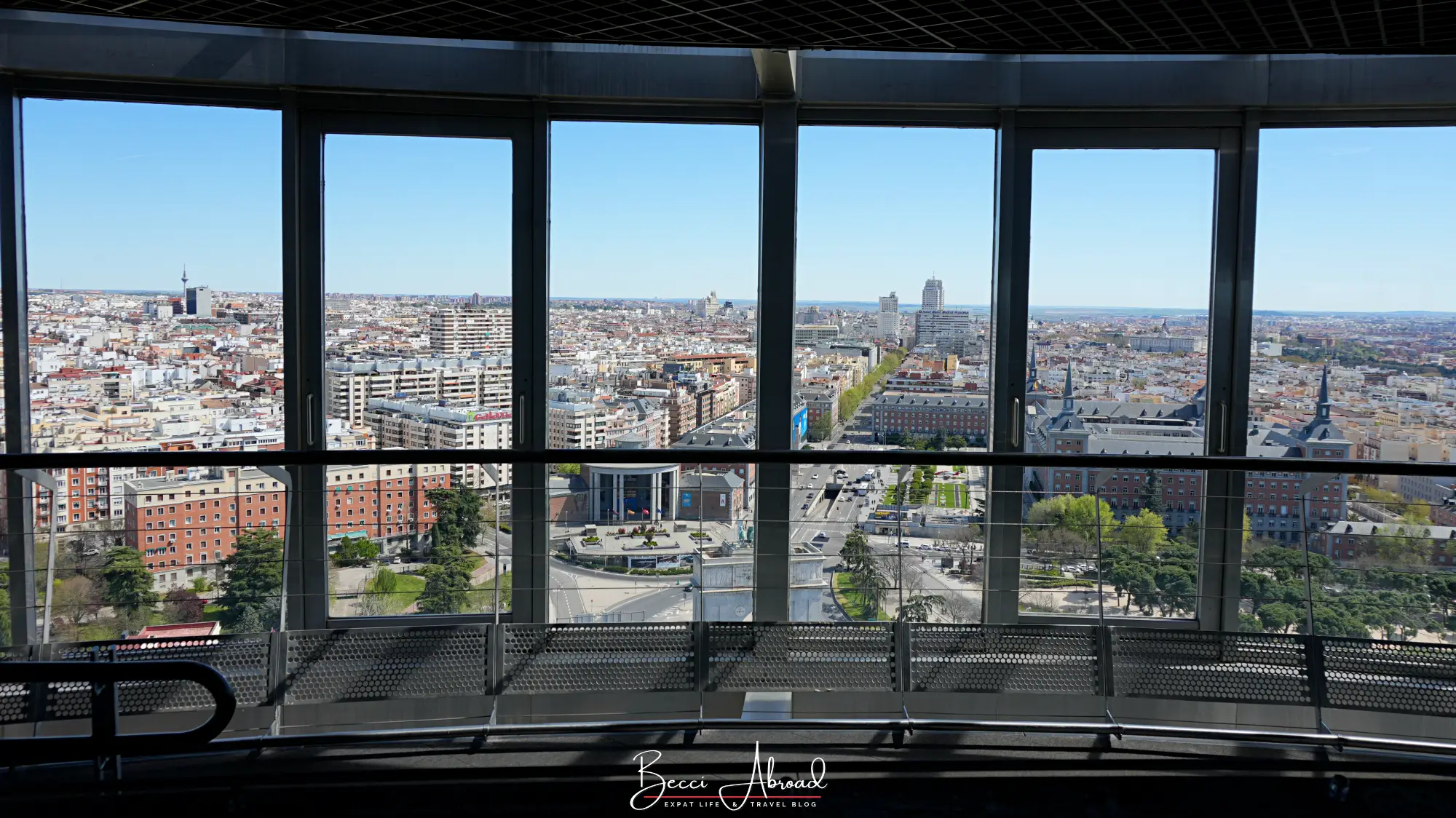
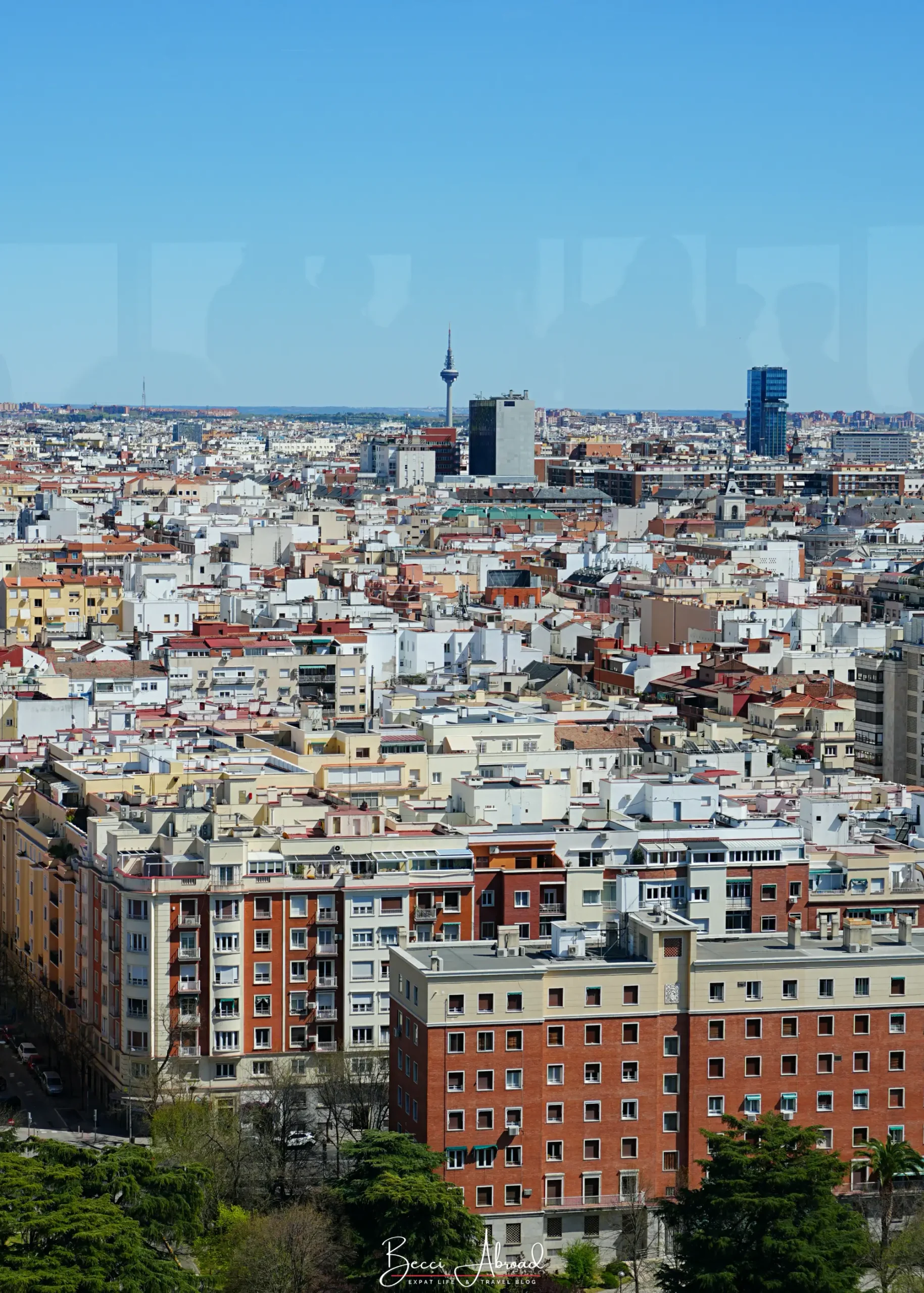
The Moncloa Lighthouse probably offers one of the best views of the Spanish capital, so if you’re like me and enjoy a good viewpoint, you should definitely add the Moncloa Lighthouse to your Madrid itinerary!
The Moncloa Lighthouse is a 110-meter (361 ft) tower in the Moncloa neighborhood, right next to the trees of Parque del Oeste. Despite the name, the Faro de Moncloa is not a real lighthouse.
You go up in a panoramic elevator on the outside of the tower, so you don’t have to walk up any stairs at all!
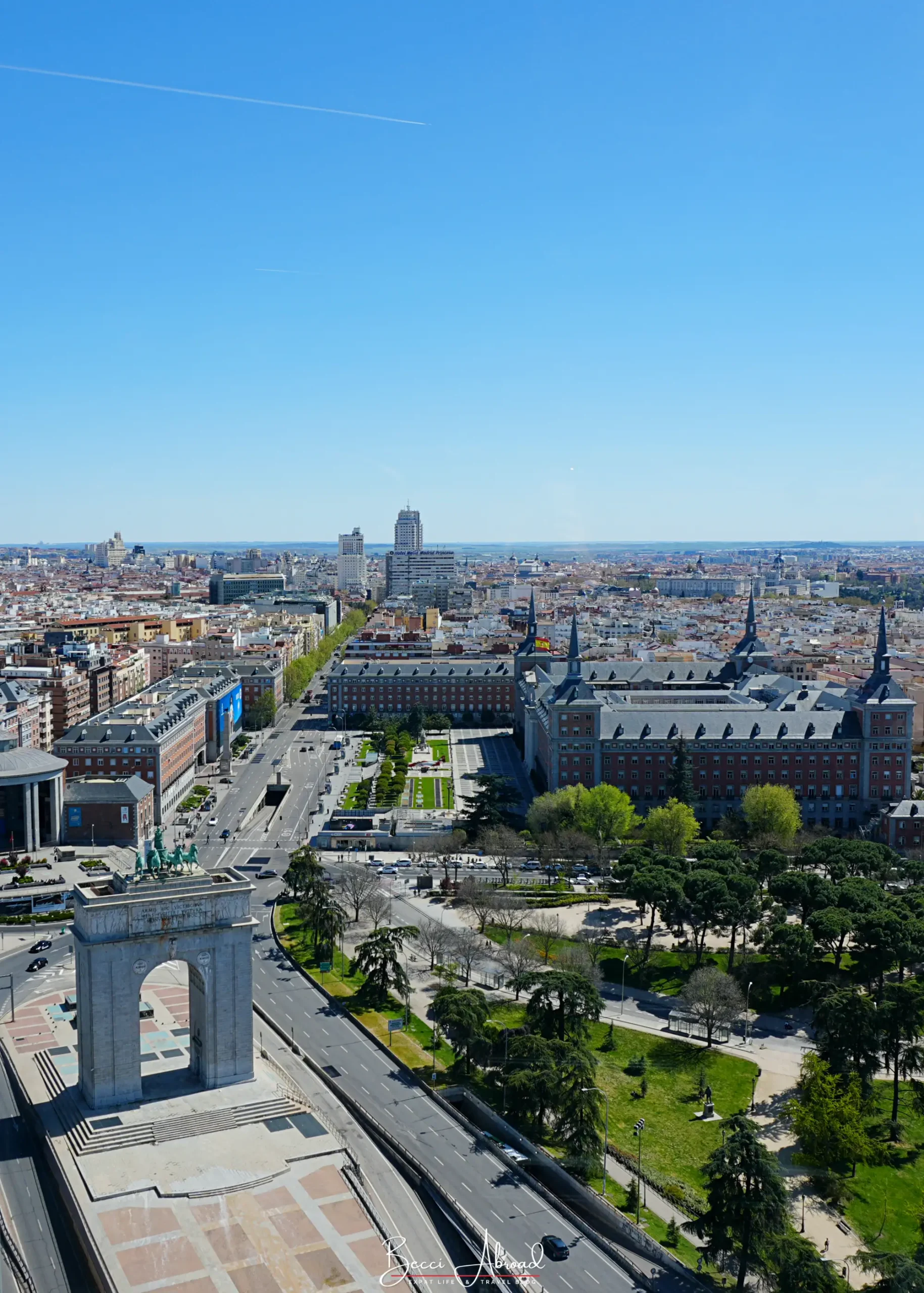
At the top, there is an indoor viewing platform 92 meters (302 ft) up, with an almost 360° view over the Madrid skyline.
From the viewing platform, you can see all the way over to the Royal Palace and spot some of the iconic buildings on Gran Vía, such as the building housing the Círculo de Bellas Artes.
My friend and I visited the Moncloa Lighthouse on a bright spring day, and the views from the viewing platform were gorgeous! The only thing you have to keep in mind if you are like me and like to take photos is that the Moncloa Lighthouse is indoors, and therefore covered in glass, which isn’t the best for taking photos.
When we visited in the afternoon on a Saturday, there were a few other people visiting the viewpoint, but it was far from crowded.
The Faro de Moncloa is very cheap to visit, as it only costs €4 (about 5 USD) per person. Personally, I think the lighthouse is a very beautiful and little-known place in Madrid, and one of the best-value viewpoints in the city!
One thing to know is that the viewing platform closes in strong wind or fog, so save the Faro de Moncloa for a clear day.
Admission: Tickets are €4 (about 5 USD), and you can reserve in advance online
Opening hours:
- Tuesday to Sunday: 9:30 am to 8 pm, with the last ascent at 7:30 pm
- Closed on Mondays, except on some holidays
Nearest metro: Moncloa (lines 3 and 6)
Location: Faro de Moncloa, Avenida de la Memoria 2, Madrid
See Goya’s Frescoes at the Ermita de San Antonio de la Florida
If you thought one “Sistine Chapel of Madrid” was enough, then think again!
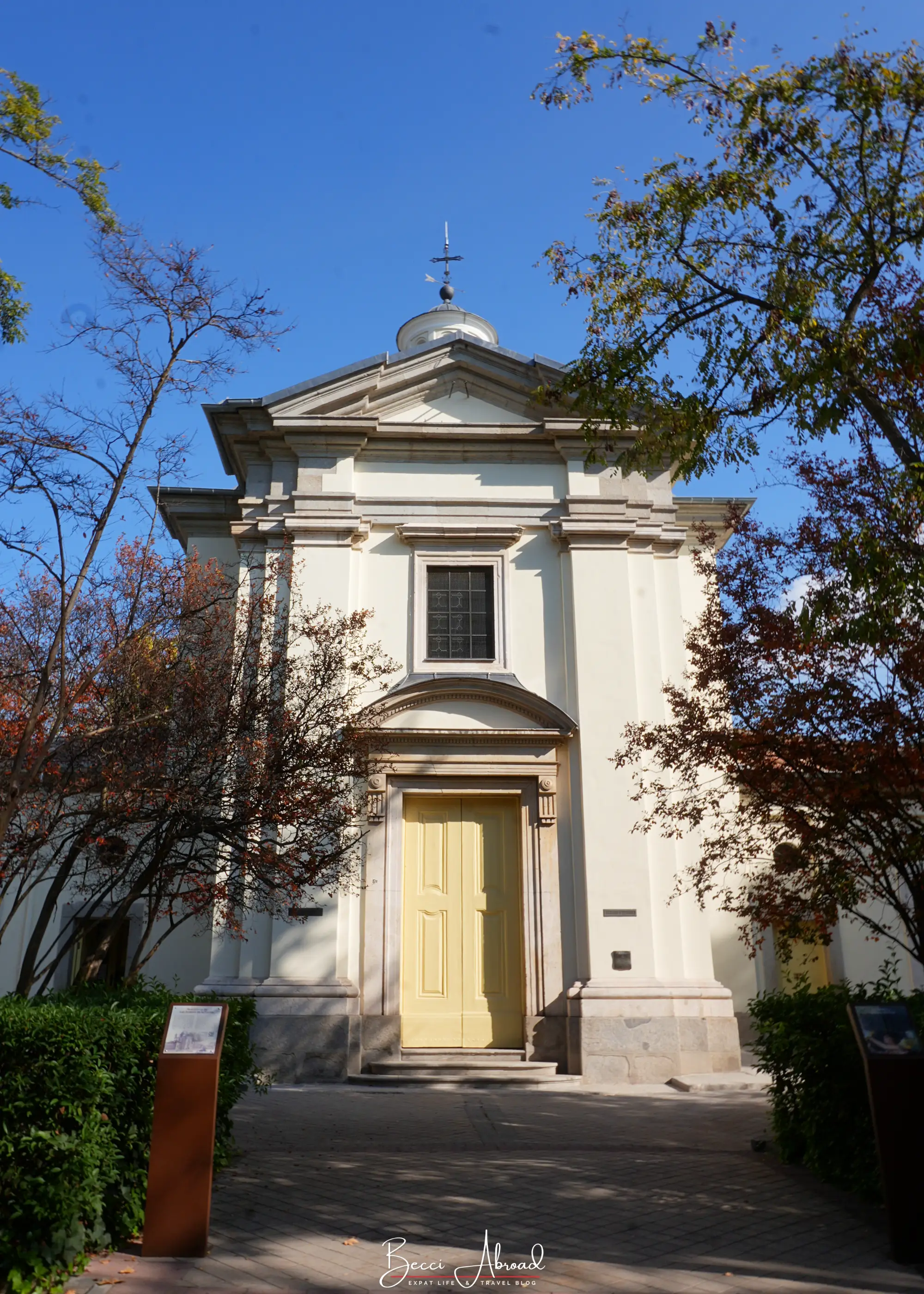
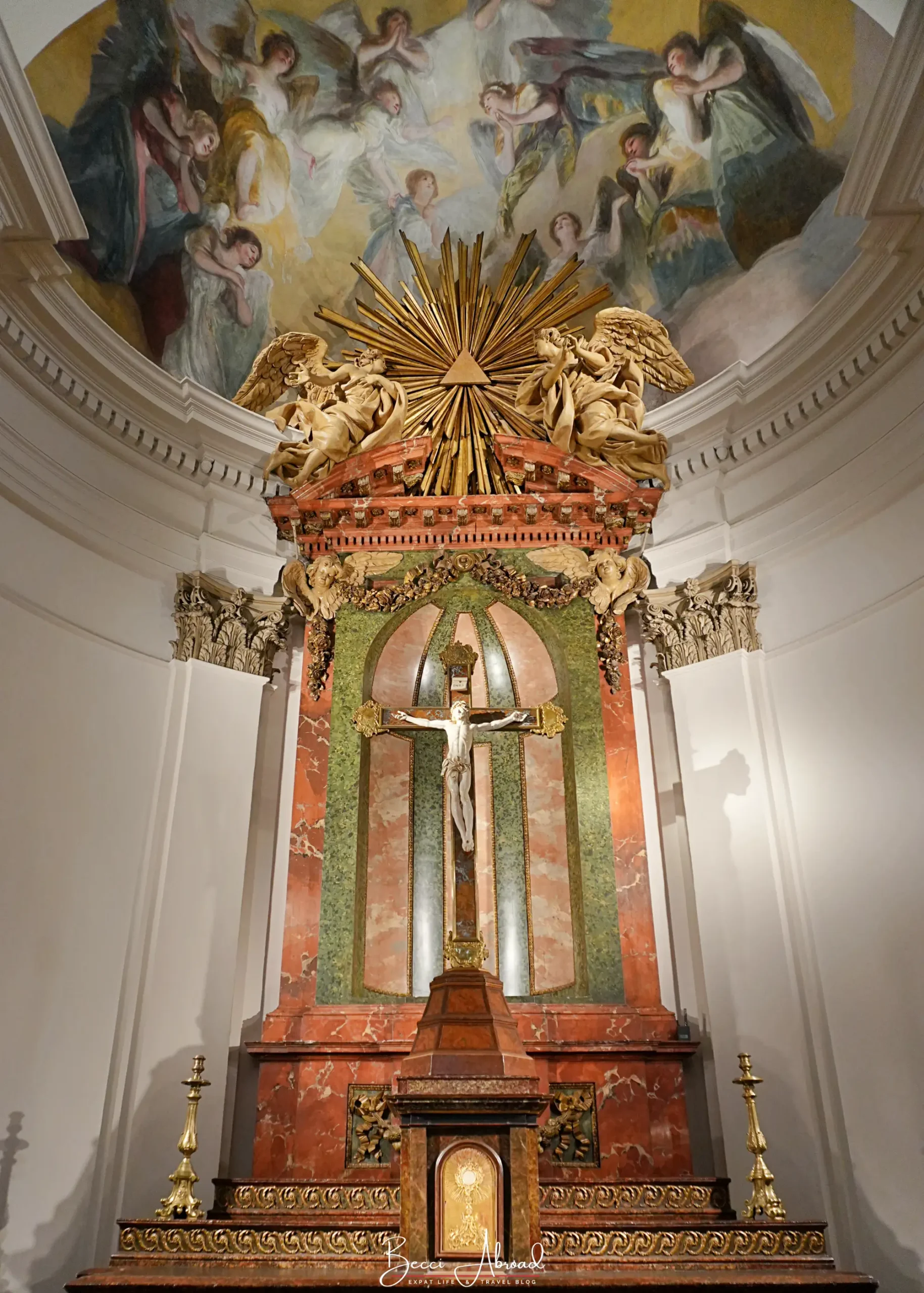
The Ermita de San Antonio de la Florida, a small chapel near the Príncipe Pío station, shares the nickname with San Antonio de los Alemanes church.
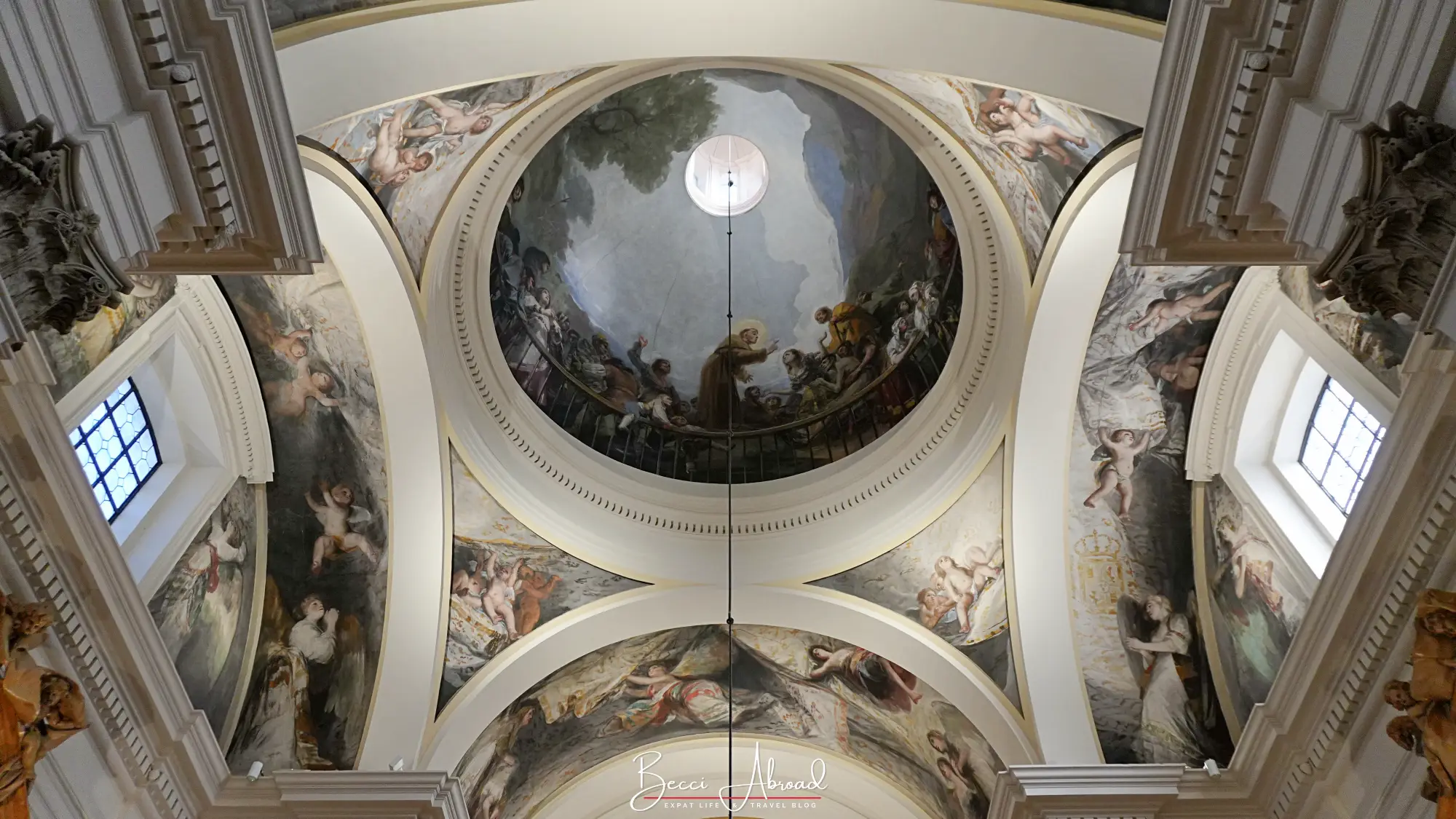
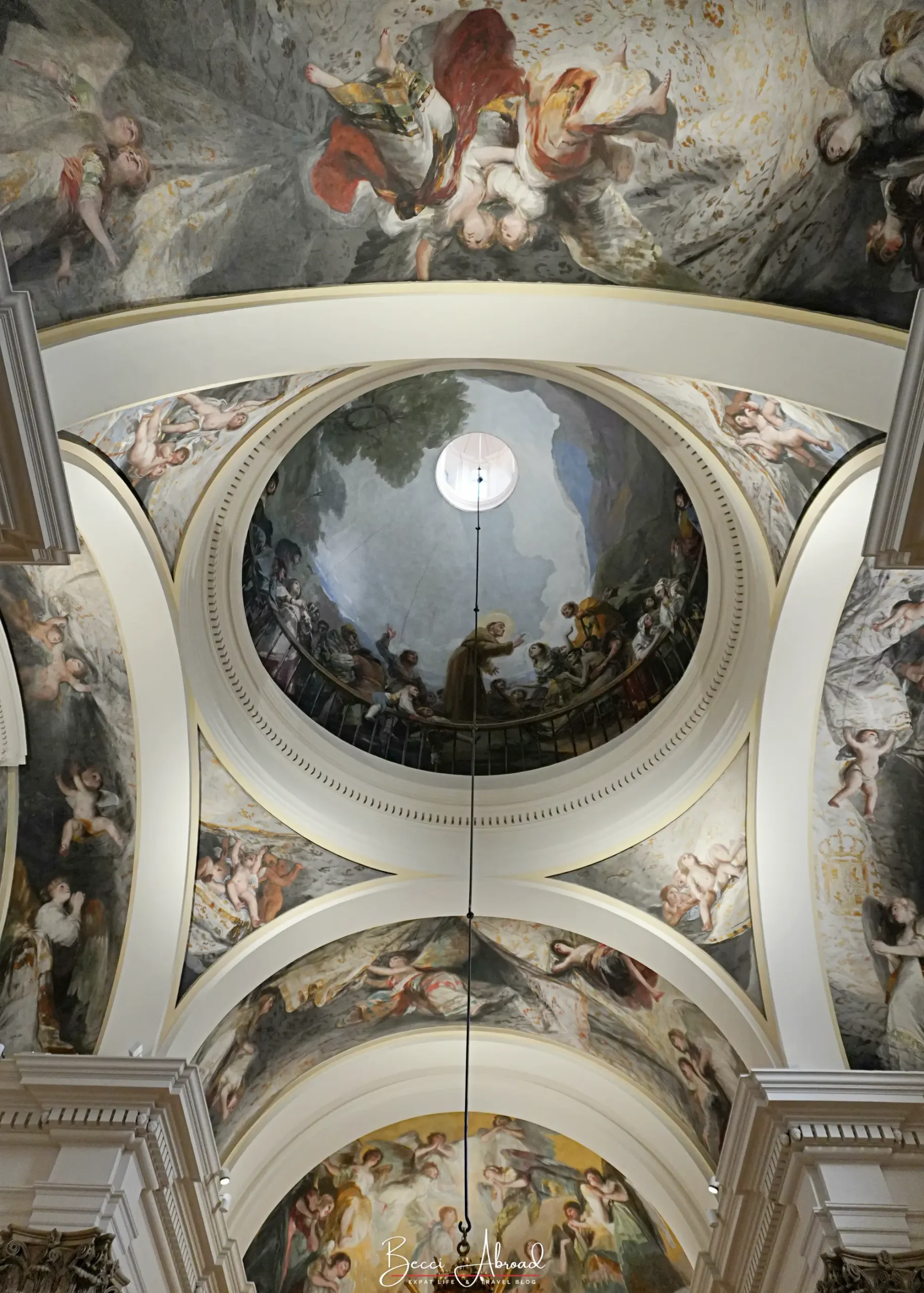
Inside the Ermita de San Antonio de la Florida, you’ll find frescoes painted by none other than the famous Spanish Romantic painter, Francisco de Goya.
An ermita in Spanish is a small chapel or hermitage, and this one was built between 1792 and 1798 on the orders of King Carlos IV.
Goya painted the dome at the end of the 18th century, with Saint Anthony of Padua surrounded by a crowd of people from Lisbon, where the saint was born.
And actually, Goya himself is buried right here in Ermita de San Antonio de la Florida, under the frescoes he painted. In 1919, his remains were brought back to Madrid from Bordeaux, where he died.
In 1928, an identical twin chapel was built right next door, so the church services could move there and the original could be kept as a museum for Goya’s frescoes.
The Ermita de San Antonio de la Florida reopened on 12 June 2026 after more than a year closed for renovation, so now is a great time to visit.
I visited Ermita de San Antonio de la Florida myself to take a look at Goya’s frescoes, but after the impressive experience of visiting the San Antonio de los Alemanes church with its floor-to-ceiling paintings, the Ermita de San Antonio de la Florida felt a bit dull, or maybe it’s me who doesn’t completely get old Romantic paintings.
If you’re in the area and maybe are heading to visit the Moncloa viewpoint, I would step inside to take a look. The chapel is small and visiting doesn’t take more than a couple of minutes (except if you’re more interested and want to join a guided tour).
The entrance is completely free, and you don’t need to book!
Admission: Free, no booking needed
Opening hours:
- Tuesday to Sunday, 9:30 am to 8 pm
- June 15th to September 15th: 9:30 am to 2 pm and 3 pm to 7 pm
- Closed on Mondays
Nearest metro: Príncipe Pío (lines 6, 10 and R)
Location: Ermita de San Antonio de la Florida, Glorieta de San Antonio de la Florida 5, 28008 Madrid
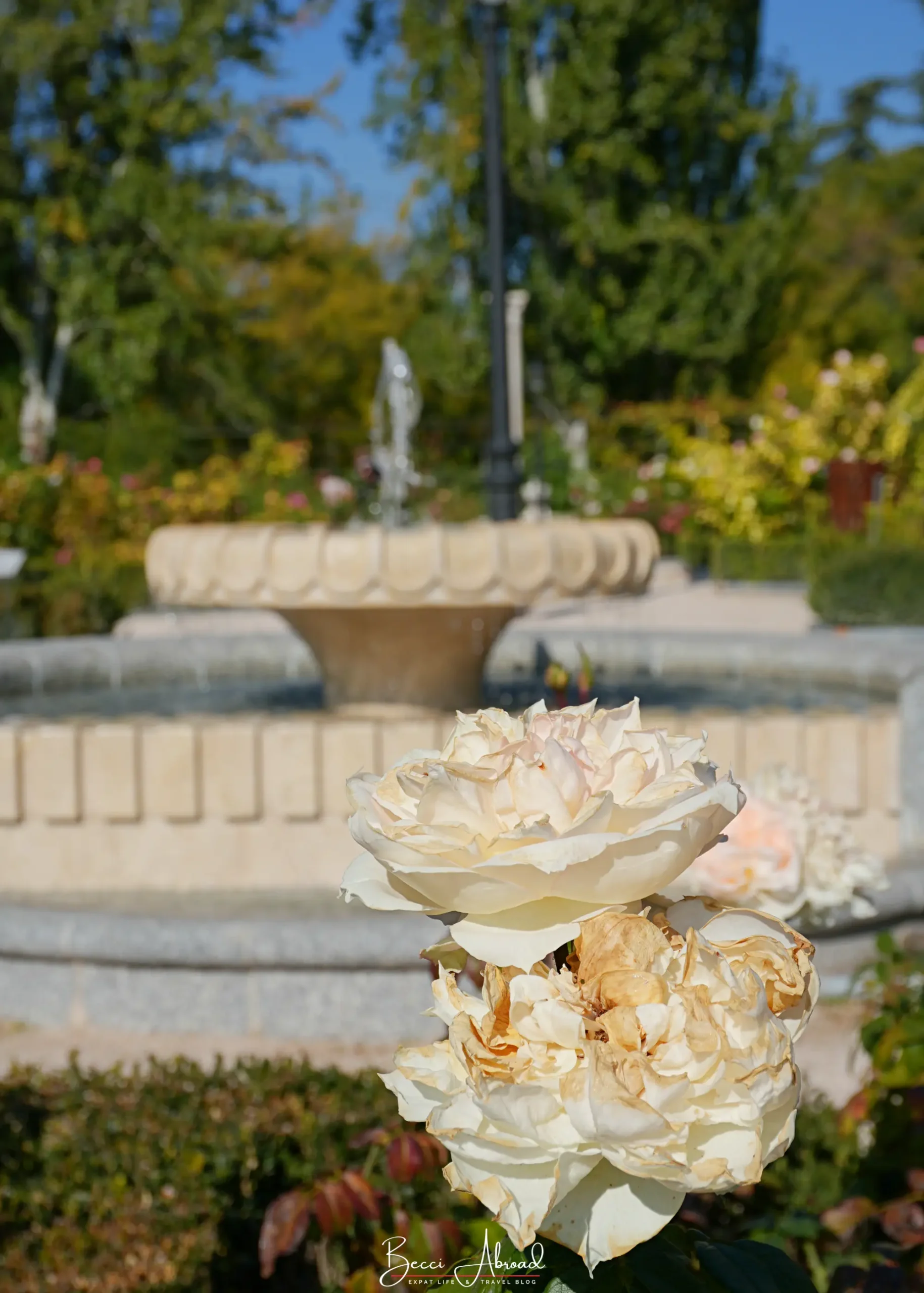
Smell the Roses at the Rosaleda del Parque del Oeste
The Rosaleda del Parque del Oeste, officially the Rosaleda Ramón Ortiz, is a rose garden in Parque del Oeste, the same park as the Temple of Debod, and it’s a perfect hidden gem in Madrid to visit on a sunny day!
Rosaleda simply means rose garden in Spanish, so don’t confuse it with the smaller rose garden in Retiro Park, right next to the peacocks.
The Rosaleda was designed in 1955 by Ramón Ortiz, Madrid’s head gardener, who took over the job from Cecilio Rodríguez, the man behind the peacock gardens in Retiro Park.
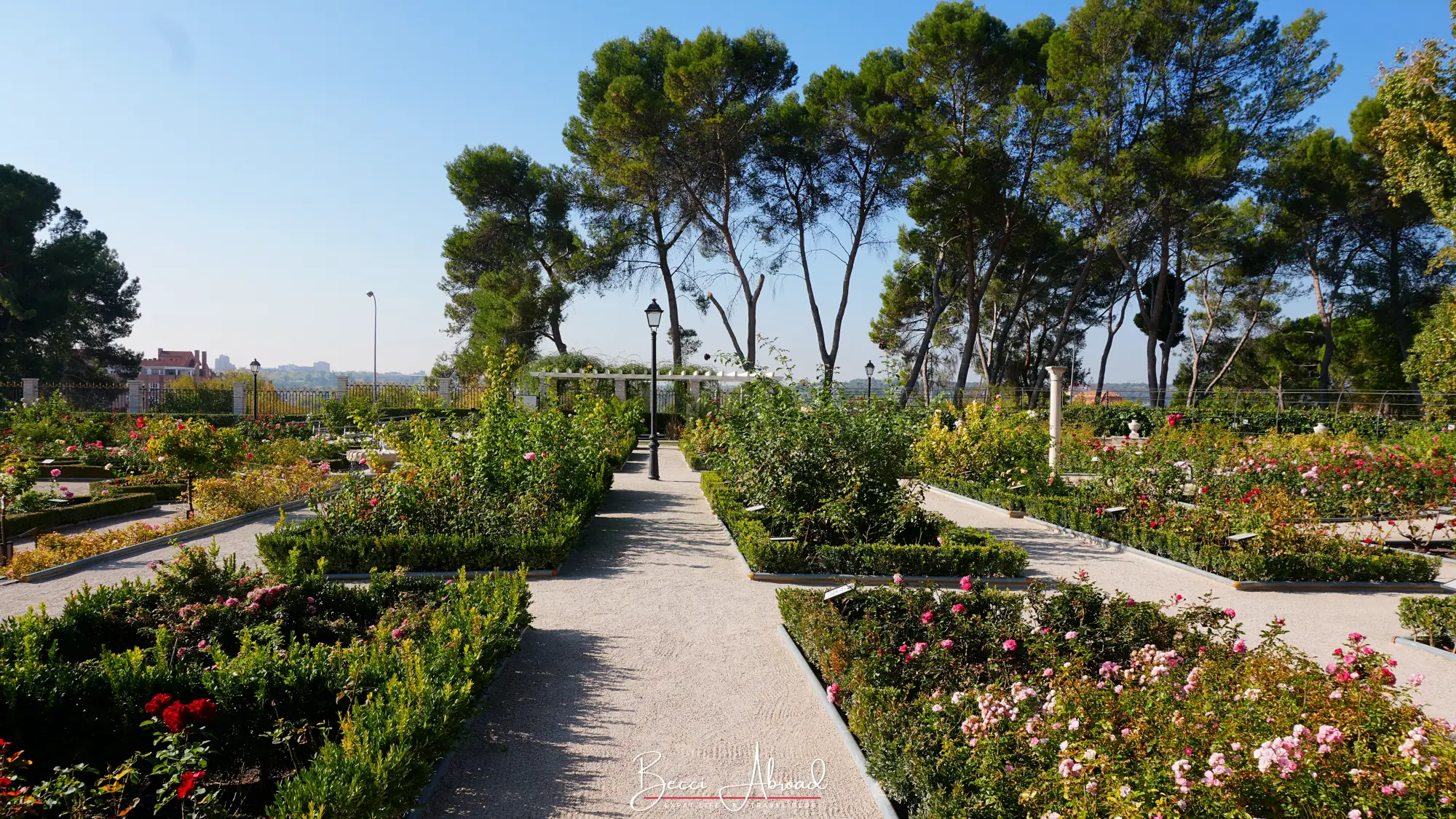
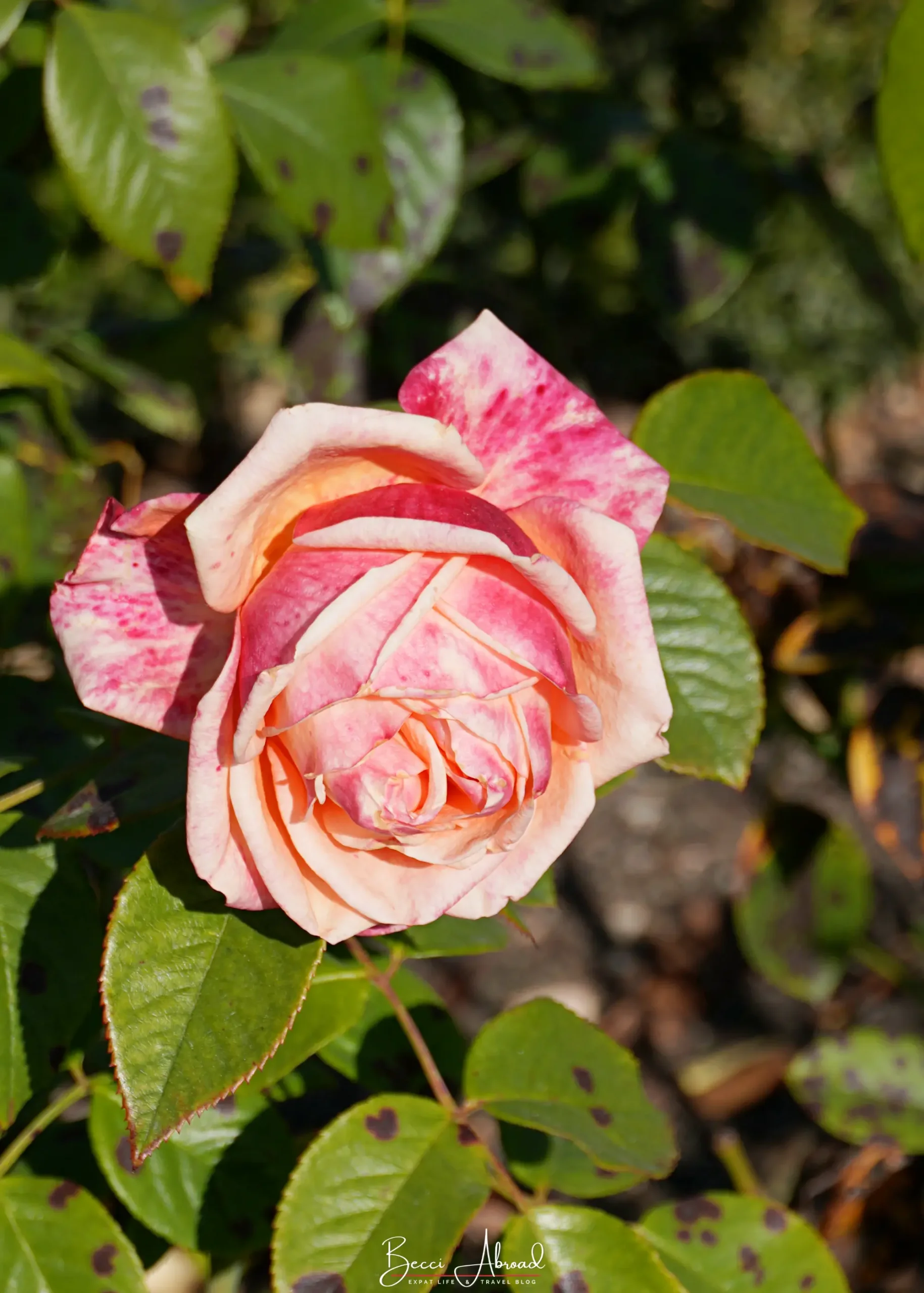
Today, the Rosaleda del Parque del Oeste garden covers around 32,000 square meters (8 acres), with more than 20,000 rose bushes from over 600 varieties, and it’s completely free to visit!
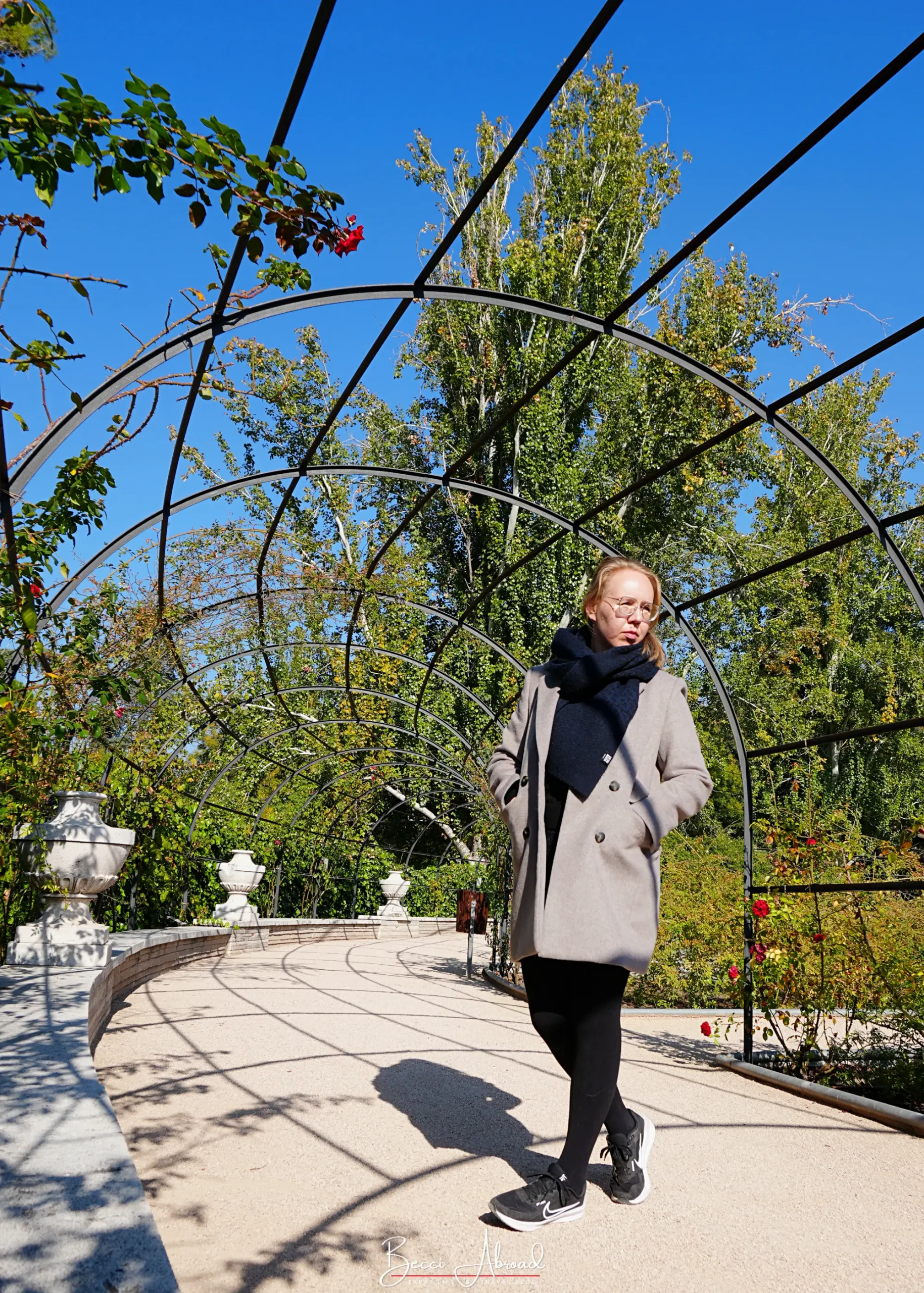
The rose garden is massive, and it’s perfect for relaxing in the sun after a long day of sightseeing. You stroll between rose beds, floral tunnels, and covered pergolas, and in full bloom the whole garden smells of roses!
Every spring, the Rosaleda hosts the Concurso Internacional de Rosas Nuevas Villa de Madrid, an international competition for brand-new roses that celebrated its 70th edition in 2026.
Rose growers send in their new varieties two to three years in advance, so they can be tested in Madrid’s climate. In 2026, the garden tested 82 new roses from 12 countries, including Denmark!
In mid-May, you can vote for your own favorite in the Concurso Popular, the public vote, and the winning rose is named the “Rosa de Madrid”.
The roses are at their best in May, and they are still worth seeing in June, although some petals will have fallen by then.
I visited in early November, and many of the roses were still in bloom, and the sunny fall day was perfect for wandering around the Rosaleda. There were only a few other people visiting the rose garden, and its slightly remote location made it a great, peaceful stop in Madrid.
Admission: Free, no booking needed
Opening hours:
- Every day, Monday through Sunday
- November to February: 10 am to 6 pm
- April 16th to September 15th: 10 am to 9 pm
- Rest of the year: 10 am to 7 pm
Nearest metro: Argüelles (lines 3, 4 and 6) or Ventura Rodríguez (line 3)
Location: Rosaleda del Parque del Oeste, Calle de la Rosaleda 1, Parque del Oeste, 28008 Madrid
Hidden Gems in Puente de Vallecas
Let’s head southeast to Puente de Vallecas, a historically working-class neighborhood far from the usual tourist trail.
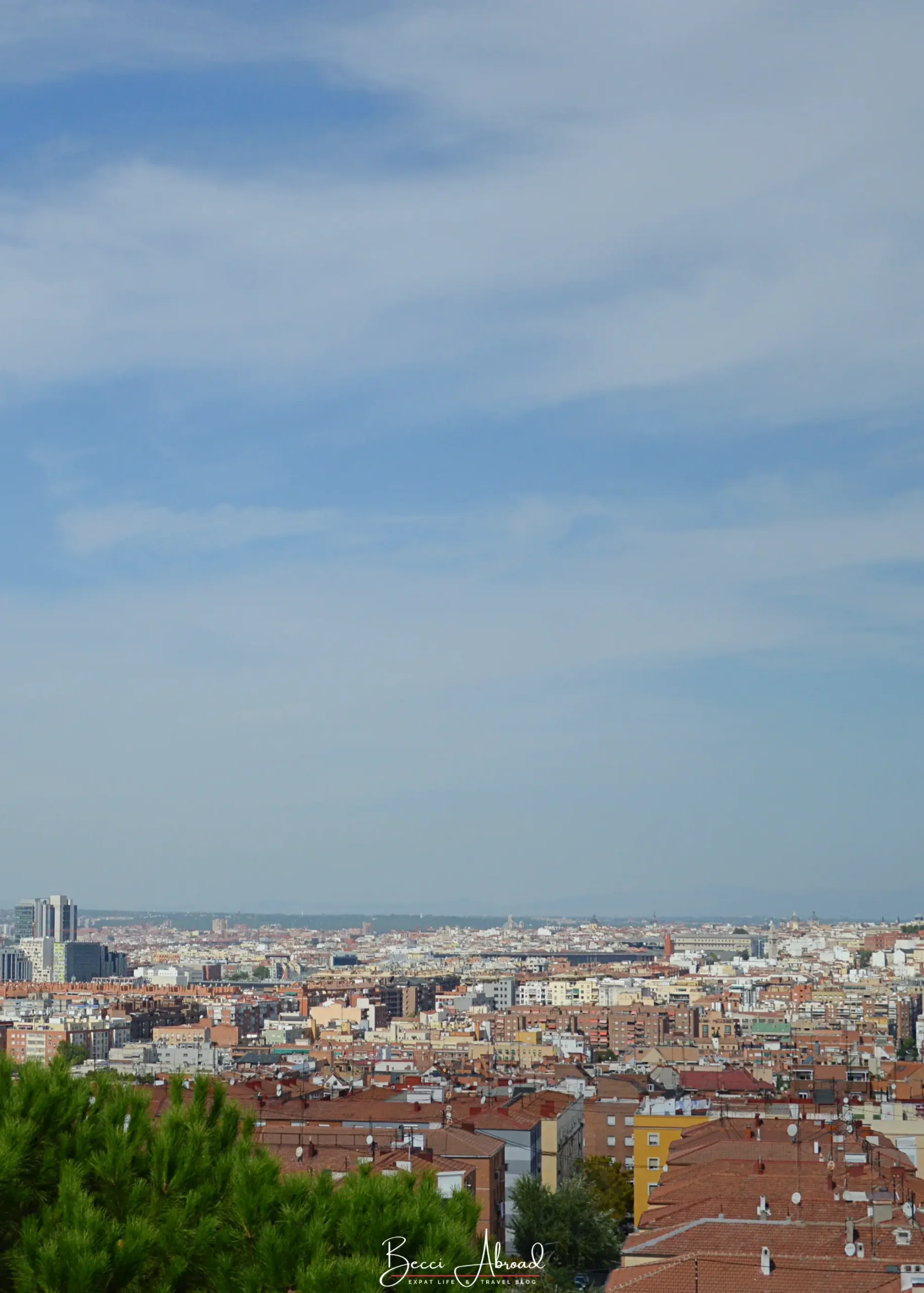
You can reach Puente de Vallecas with a direct ride on Metro Line 1 from Sol, and it is home to one of the best free viewpoints in the city!
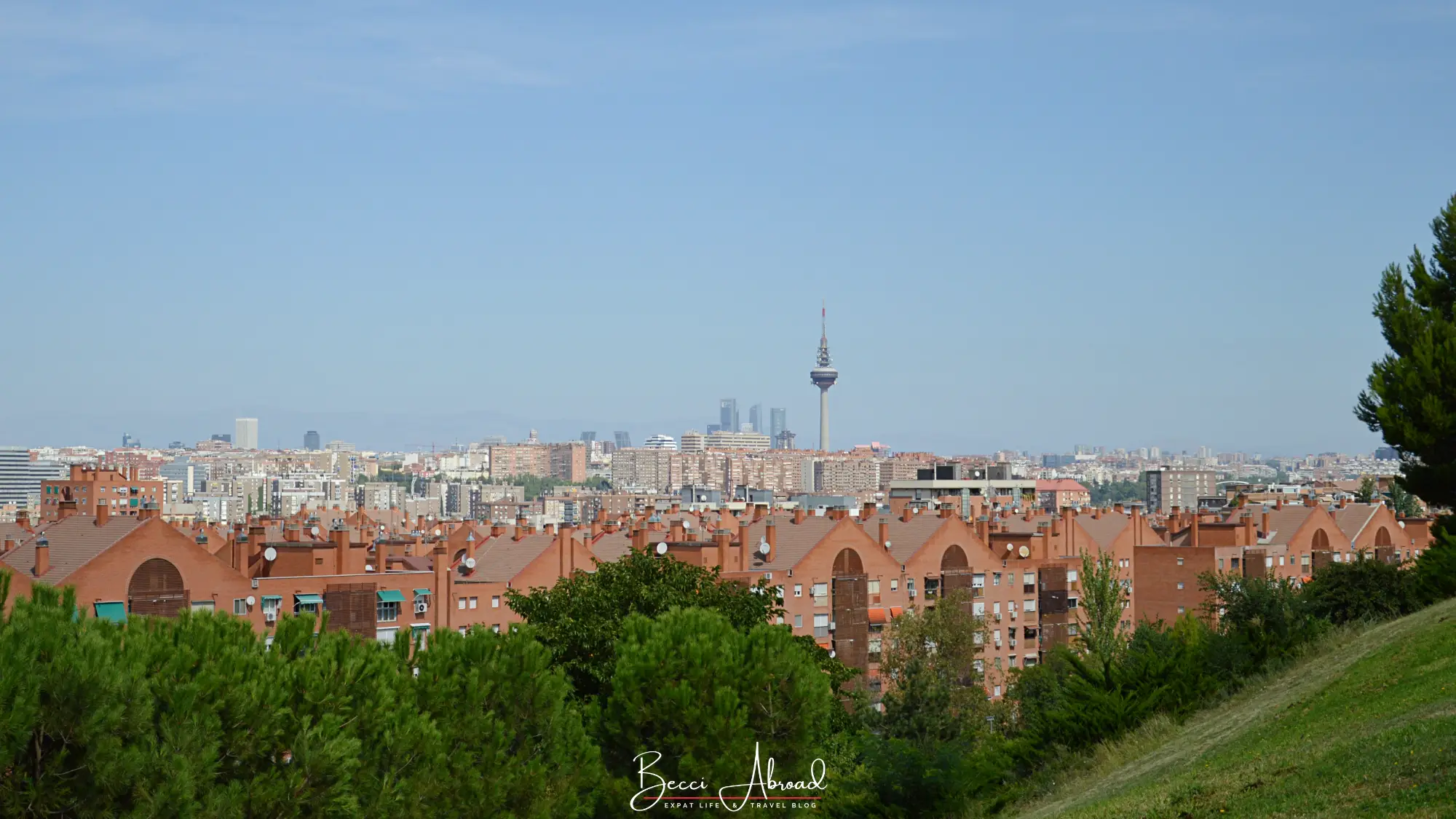
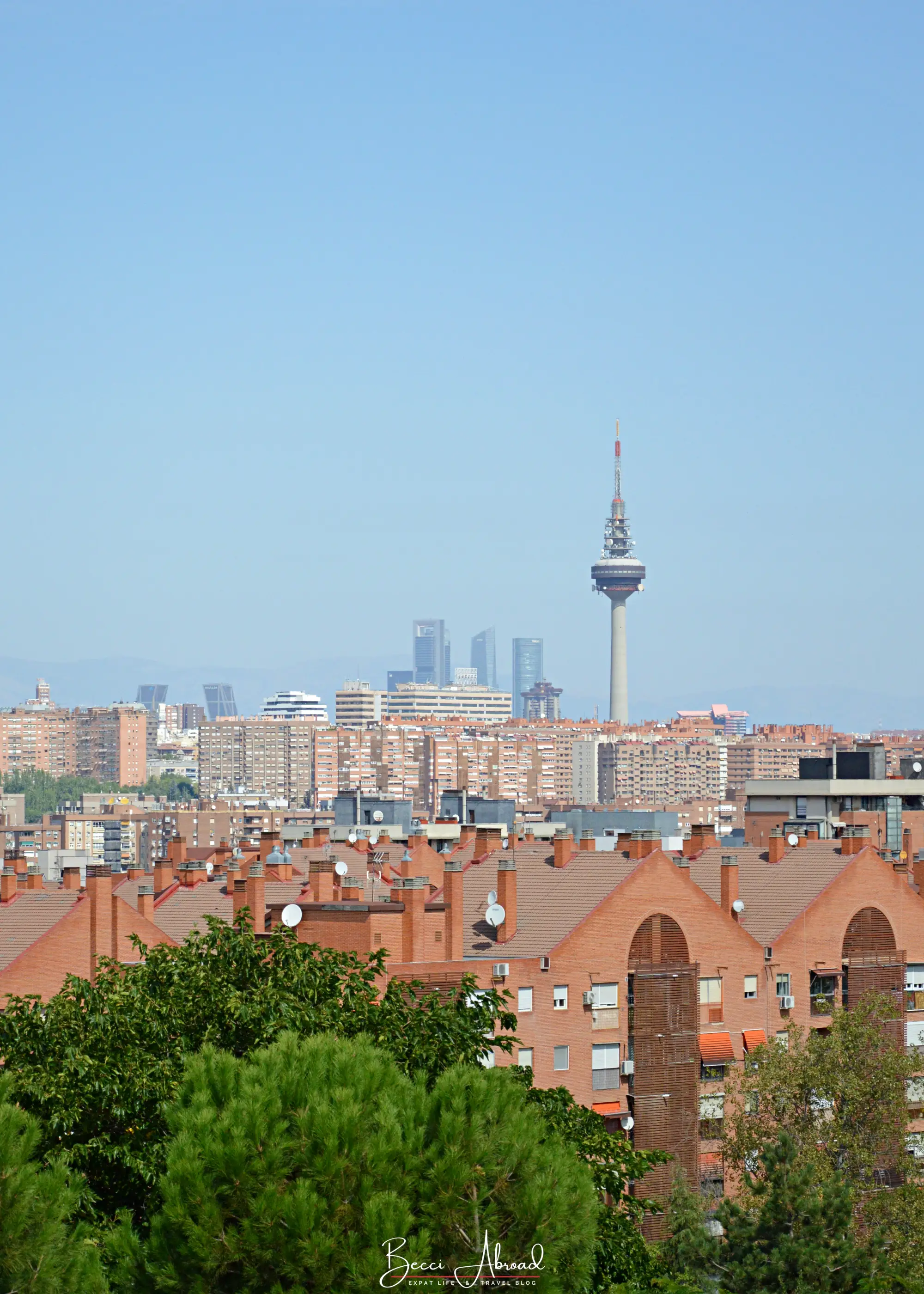
Enjoy the View From Cerro del Tío Pío, the Park of the Seven Hills
Cerro del Tío Pío Park is a lesser-known public park in the Puente de Vallecas neighborhood in the southeast of Madrid.
Locals also call the Cerro del Tío Pío Park Parque de las Siete Tetas, which translates to “the Park of the Seven Boobs”… Yes, the park got its nickname from the shape of its seven round hills!
From the tops of the hills, you get a wide view over the Madrid skyline, which makes Cerro del Tío Pío one of the best free viewpoints in Madrid.
The very name of the park tells its history: Tío Pío was Pío Felipe Fernández, a stonemason from Ávila who built his house on the hill in 1916.
After the Spanish Civil War, families from the countryside built shacks on the hill, and by 1960 around 4,000 people lived there.
However, the shacks were torn down in the 1980s, and the rubble was never taken away. Instead, it was pushed into hills and covered with grass, so the old neighborhood is literally buried under the park!
I visited Cerro del Tío Pío as part of the Madrid Contrast Tour, which I did in September 2025 (the same tour on which I visited the Mercado de la Paz in Salamanca).
The park is nice and offers a good view over Madrid, and the history of the place is fascinating, but I wasn’t too impressed with it. Maybe it was because the tour was a bit rushed and I didn’t get to properly enjoy the park and its views. We basically jumped out of the minibus and took a quick walk to a viewpoint for photos, then went back to the minibus (not my travel style!).
The views from Cerro del Tío Pío are nice, but I personally prefer the views from the Moncloa viewpoint, which are easier to access from the city center.
I hope to get back to Cerro del Tío Pío with my dog, Baloo, and go for a proper walk with him and my camera, and see if I enjoy the experience more.
Admission: Free
Opening hours: Open all day
Nearest metro: Buenos Aires or Portazgo (line 1)
Location: Cerro del Tío Pío, Calle de Benjamín Palencia 2, Puente de Vallecas
Hidden Gem Day Trips From Madrid
If you have a bit more time, there are also plenty of hidden gems outside the city of Madrid!
I have gathered some of my favorite hidden gem day trips from Madrid for you.
All three of these day trips are in the Community of Madrid, the region around the capital, so they are easy to reach by public transport or on a tour.
Boadilla del Monte lies about 20 kilometers (12 miles) west of Madrid, while Chinchón and Colmenar de Oreja are southeast of the city, only around 8 kilometers (5 miles) apart.
Go on an Off-the-Beaten-Path Wine Tour Outside Madrid
Outside Madrid, you can find plenty of lesser-known towns and villages to visit. But if there is one tour I would recommend, it is the private off-the-beaten-path wine tour I did in September 2025 with my mom and stepfather.
The private wine tour takes you out to the small town of Colmenar de Oreja, about 60 kilometers (37 miles) southeast of Madrid.
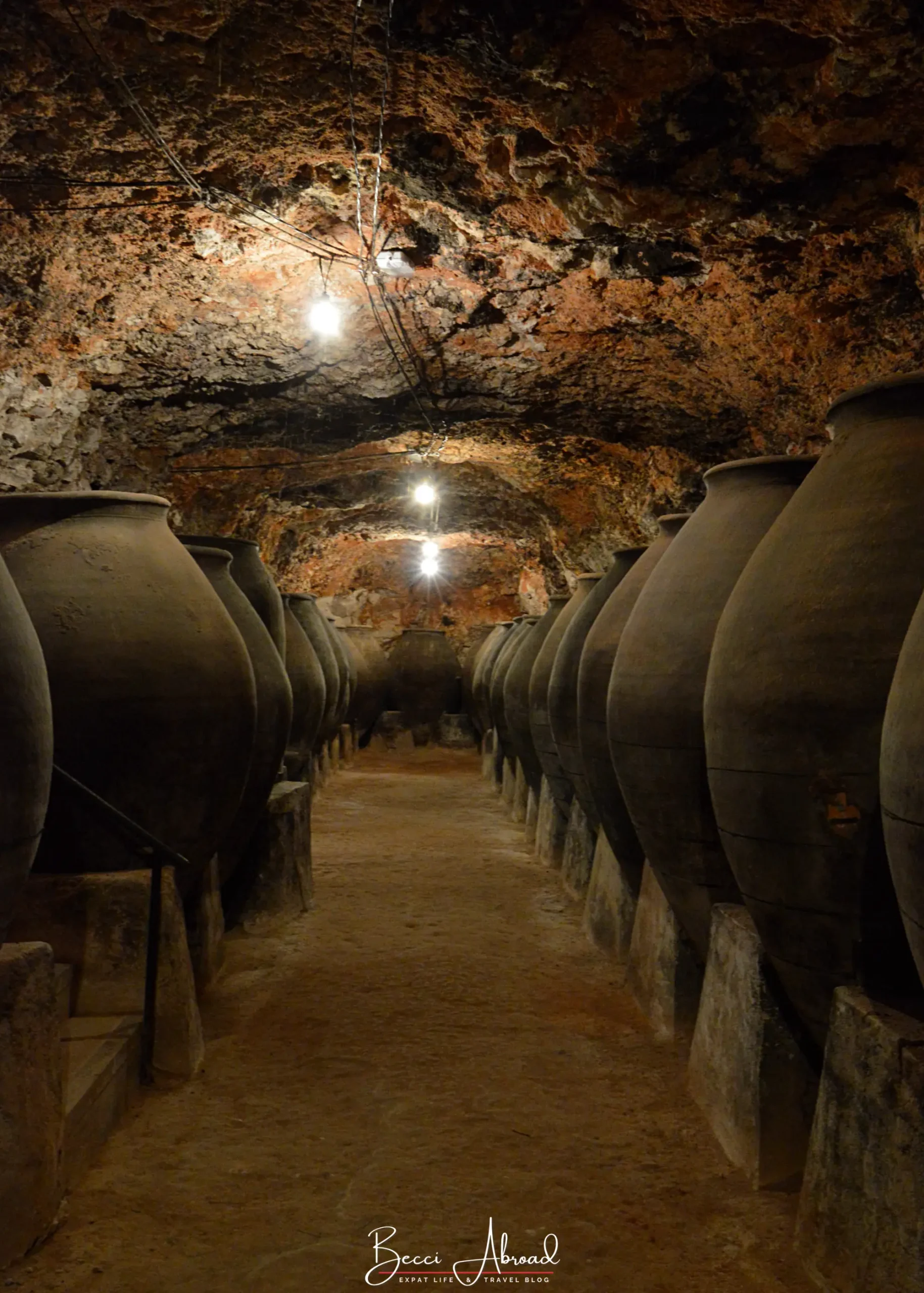
In Colmenar de Oreja, you visit Bodegas Peral, a traditional winery with an underground cellar, where the wine is still stored in big clay jars called tinajas.
Afterwards, we visited Aceites Pósito, a small olive oil cooperative in the village of Villarejo de Salvanés, for an olive oil tasting.
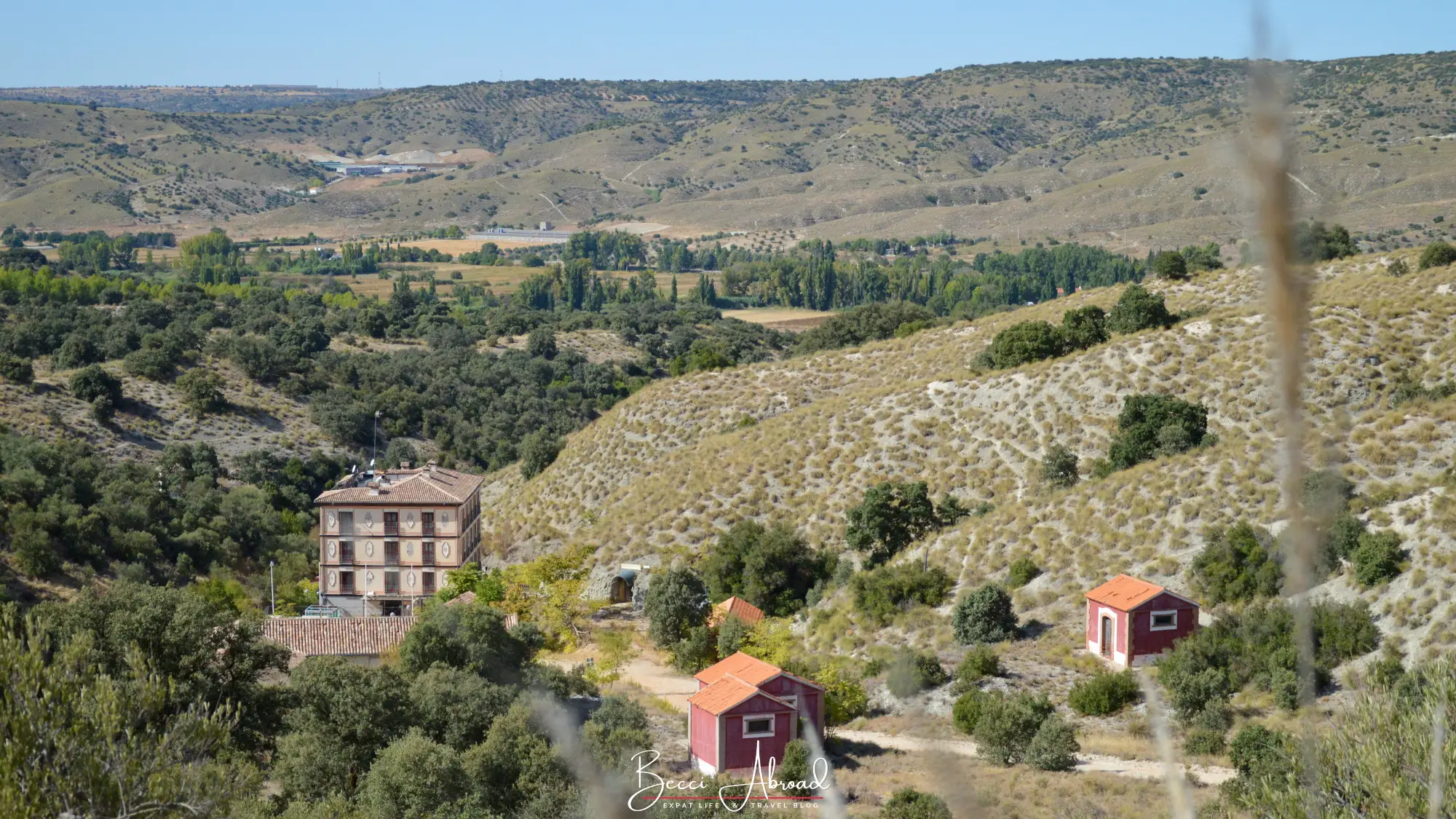
We ended the tour with a paella lunch at Finca Chavarri, a historic and very off-the-beaten-path estate in Carabaña, and a walk to an abandoned spa hotel in the middle of the countryside!
If you’re looking to explore a really off-the-beaten-path place outside of Madrid, I definitely recommend this tour!
You can read my full review of the private wine tour from Madrid here on the blog.
Admission: Private tour, priced per group (see the current price on Viator)
Meeting point: Plaza de Castilla at 9:30 am, for a full day
Nearest metro: Plaza de Castilla (lines 1, 9 and 10)
Location: Colmenar de Oreja, Villarejo de Salvanés and Carabaña, southeast of Madrid

Explore Boadilla del Monte and the Palace of the Infante Don Luis
Boadilla del Monte has been my hometown since the summer of 2025, and I can definitely confirm that most people visiting Madrid haven’t even heard about this small town. But I think Boadilla del Monte deserves a spot on this list of lesser-known places in Madrid!
Boadilla del Monte is a town about 20 kilometers (12 miles) west of Madrid, and can easily be reached from Madrid by metro and light rail.
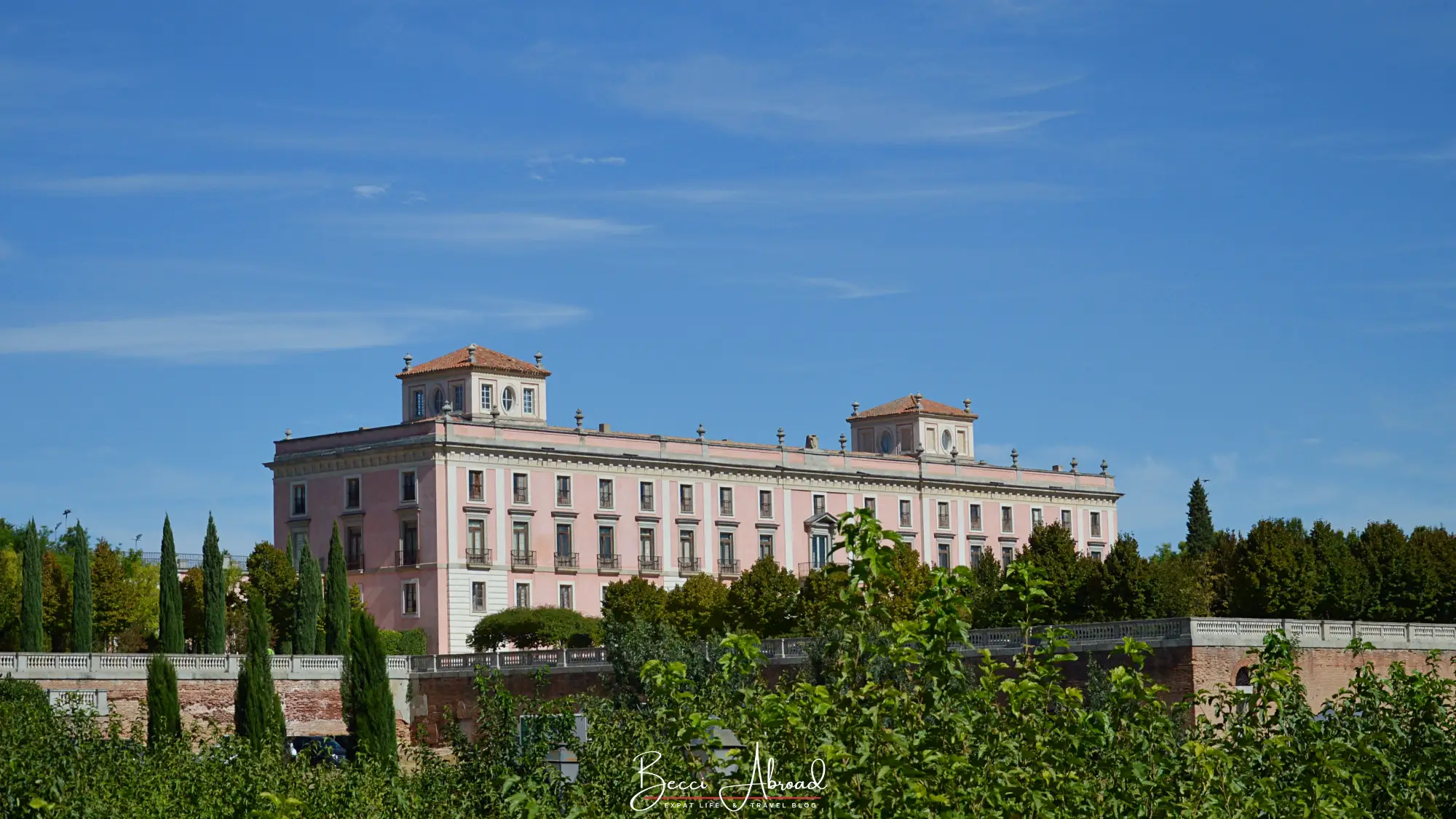
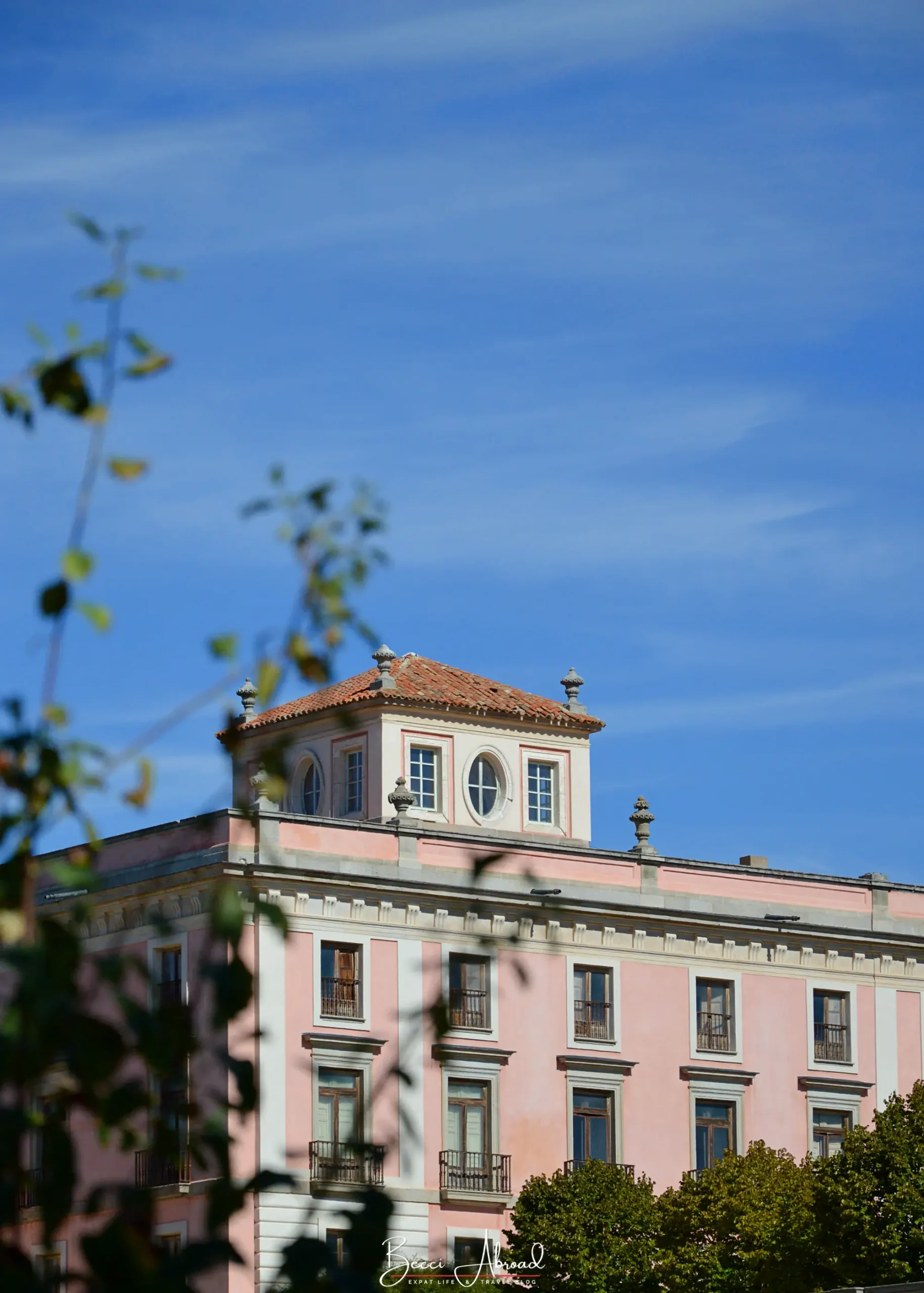
The star of Boadilla del Monte is the Palacio del Infante Don Luis!
Palacio del Infante Don Luis, or the Infante Don Luis Palace in English, is a palace built between 1763 and 1765 by the architect Ventura Rodríguez for the Infante Luis de Borbón.
An infante is the title given to a son of the Spanish king who is not the heir to the throne, and the Infante Don Luis was the younger brother of King Carlos III.
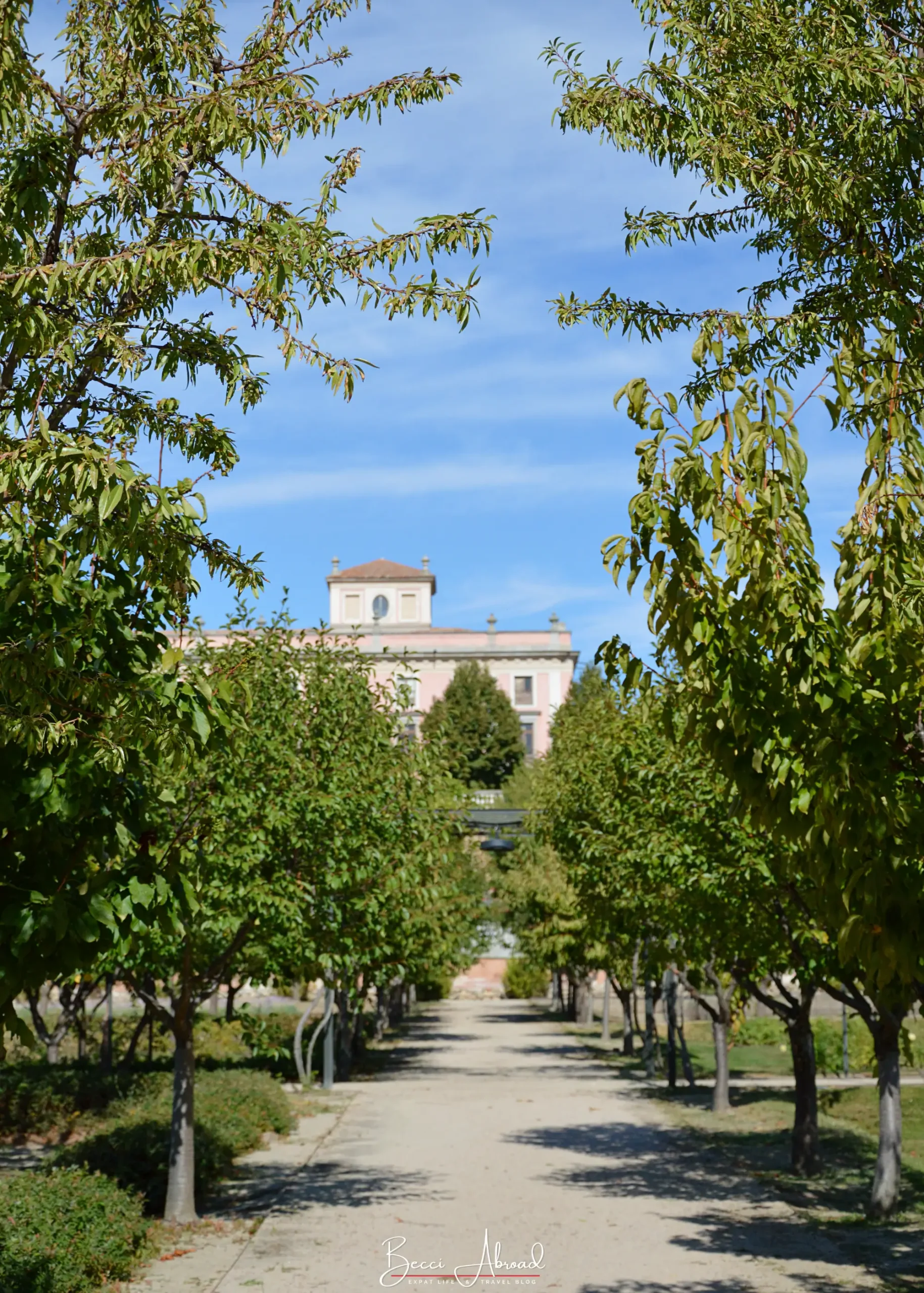
Behind the palace, there are restored terraced gardens with fountains, a pond, an old water wheel, and the Casa de las Aves, the Bird House.
The palace gardens have recently been restored following the old plans of how they were laid out during the time when Infante Don Luis lived in the palace, and the gardens are very much worth a visit.
The Palace of Infante Don Luis can only be visited through a guided tour, and the tours only take place on Saturdays and Sundays and are in Spanish. The visit to the Bird House is included in the visit to the palace. The guided tours are €5 (about 6 USD), and you need to sign up in advance on the palace’s official website.
I did the guided visit of the palace in May 2026 because I was curious to see what’s inside. Honestly, I didn’t find the palace too interesting. The local authorities in Boadilla are still working on restoring it after several years of being abandoned.
Instead, I would recommend you stop by and see the palace from the outside and visit the palace’s gardens and vegetable garden, which are free to visit and open most days.
Boadilla del Monte is surrounded by more than 700 hectares (1,700 acres) of forest, called El Monte de Boadilla y las Encinas. The forest area is mostly Mediterranean holm oak and is crisscrossed by walking and cycling routes, which are perfect for stretching your legs and seeing the Palacio del Infante Don Luis from a distance.
Boadilla del Monte also offers a great gastronomic scene, so I recommend ending your Madrid off-the-beaten-path day trip to Boadilla with tapas and drinks on Avenida del Infante Don Luis (yes, everything in this town is about the Infante Don Luis!). My favorite restaurants in Boadilla are El Invernadero and Tinglado.
Admission:
- Infante Don Luis Palace: €5 (about 6 USD), booking in advance
- Gardens of the Infante Don Luis Palace: Free, no booking needed
Opening hours:
- Palacio del Infante Don Luis: Guided tours most Saturdays and Sundays, from 11 am to 12:30 pm and 12:30 pm to 2 pm (tours only in Spanish)
- Gardens of the Infante Don Luis Palace: daily from 10 am to 4 pm
How to get there:
- Public transport: Take metro line 10 to Colonia Jardín, and change to the Metro Ligero (light rail) line ML3. Get off at Boadilla Centro and walk through the old town to visit the palace. Note: Boadilla del Monte is in fare zone B2, so check that your ticket covers it.
- Car or taxi: Around 30 to 40 minutes by car from Madrid
Location: Palacio del Infante Don Luis, Avenida de Adolfo Suárez, Boadilla del Monte

Stroll Around the Plaza Mayor in Chinchón
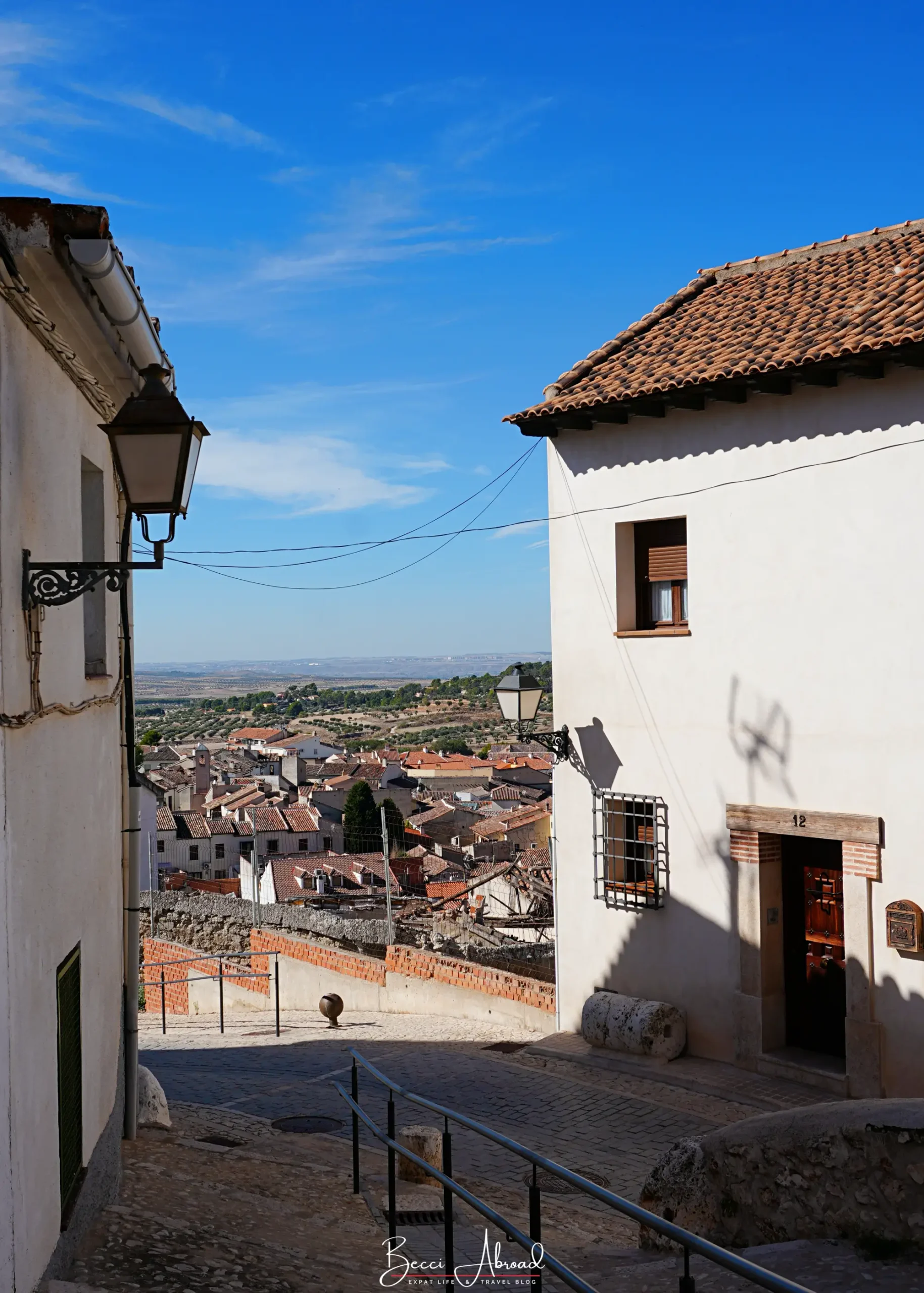
Chinchón is a small historic town about 50 kilometers (31 miles) southeast of Madrid, and a favorite weekend escape for madrileños.
However, Chinchón rarely makes it onto the itineraries of international visitors, so it’s still a bit of a lesser-known place to visit near Madrid.
Chinchón is a member of Los Pueblos Más Bonitos de España, the association of the most beautiful towns in Spain, and it is definitely a picturesque small town with whitewashed old houses!
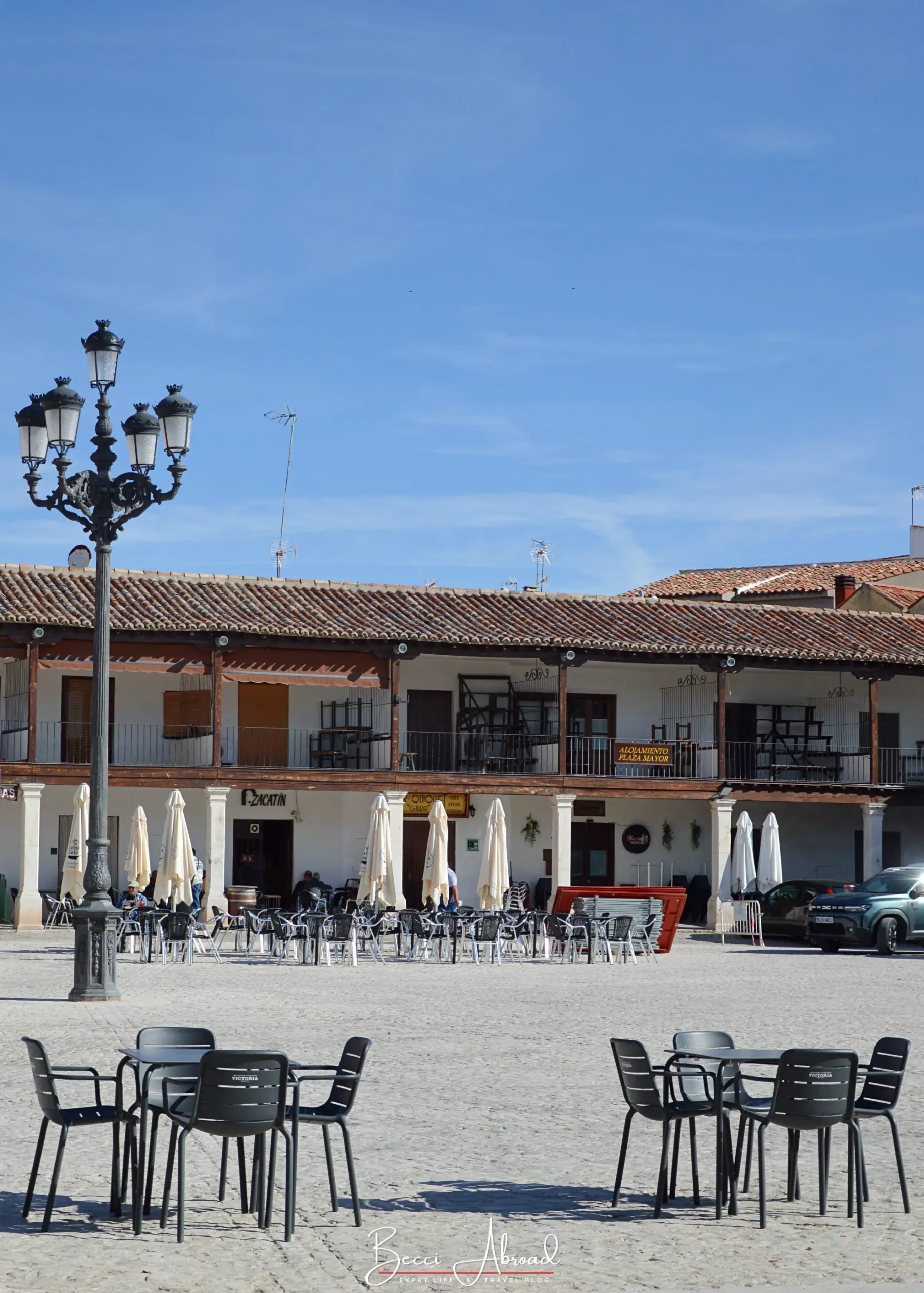
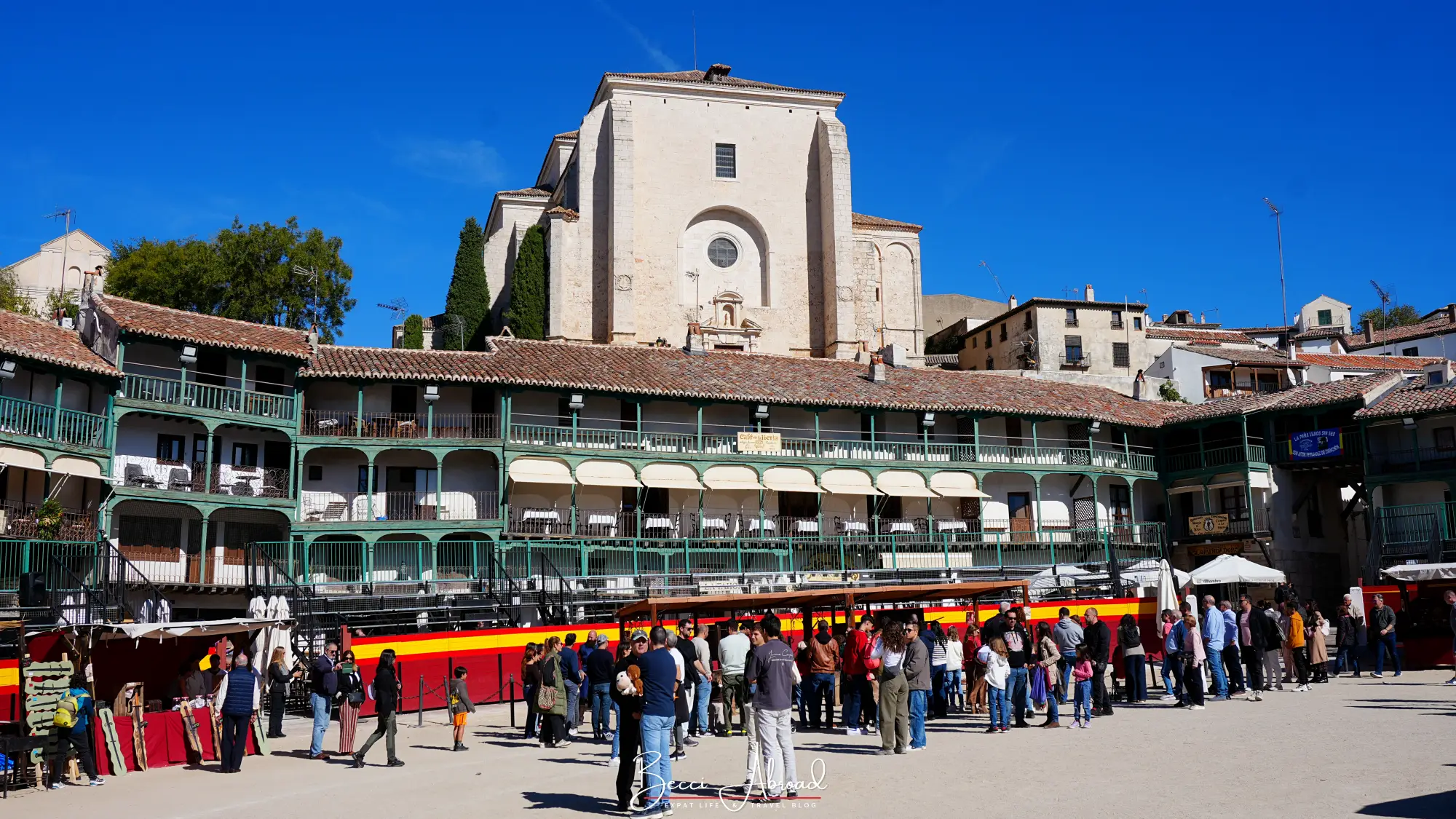
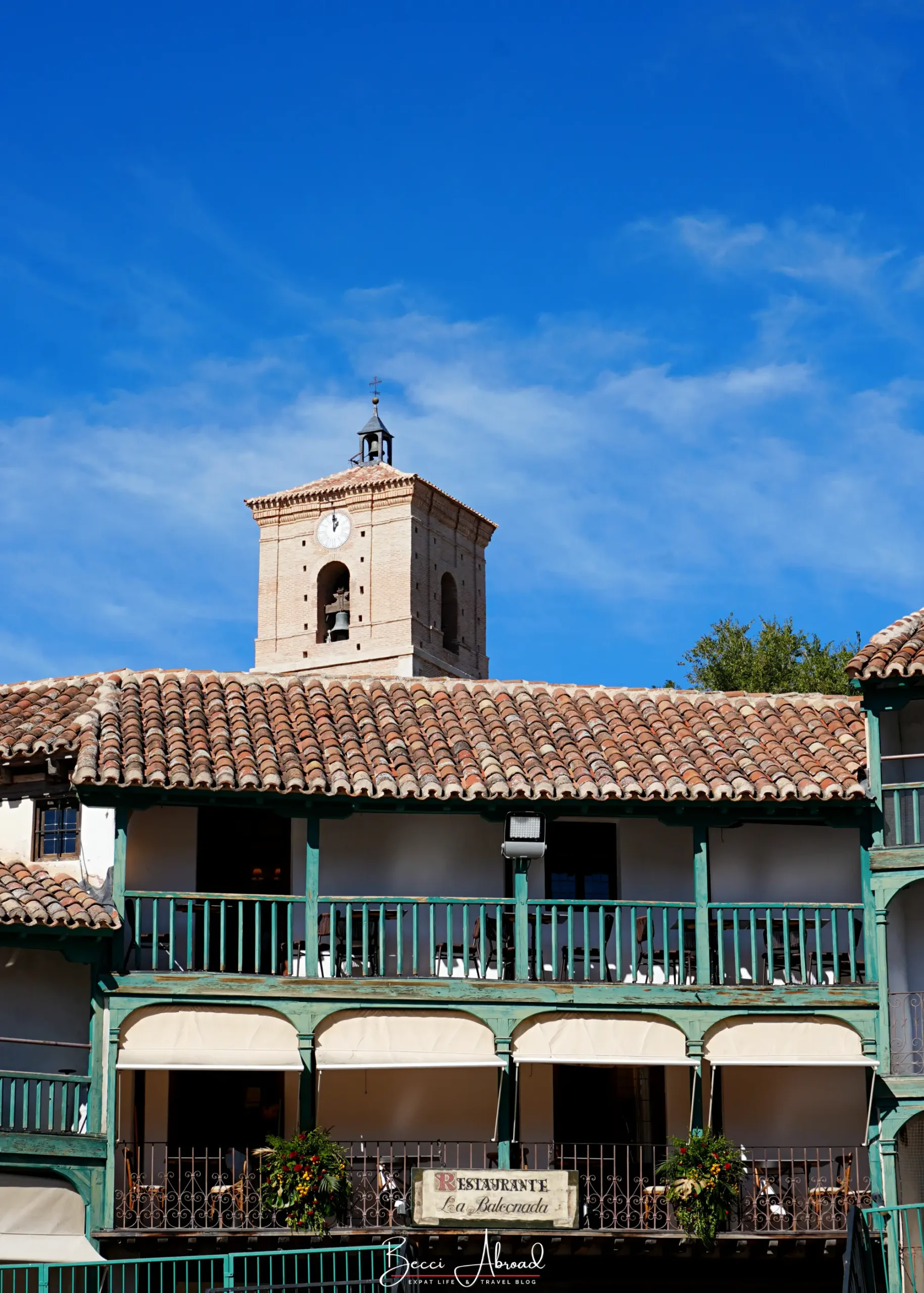
The heart of Chinchón is the Plaza Mayor, an irregular square surrounded by three-story houses with 234 wooden balconies. The square was closed in on all sides in 1683, and over the centuries it has been used for markets, bullfights, theater, and even executions!
Behind the central square, you’ll find the church of Nuestra Señora de la Asunción, where you can find another work by Goya, The Assumption of the Virgin. He painted it around 1812 at the request of his brother Camilo, who was the chaplain in Chinchón.
Locals like to joke that Chinchón has “a tower without a church and a church without a tower”, because the clock tower, the Torre del Reloj, is all that is left of a church destroyed during the Peninsular War.
Chinchón is also famous for its anís, an aniseed liqueur, and for the Pasión Viviente, the oldest and most famous live Passion Play in the Madrid region, which takes place every Holy Saturday.
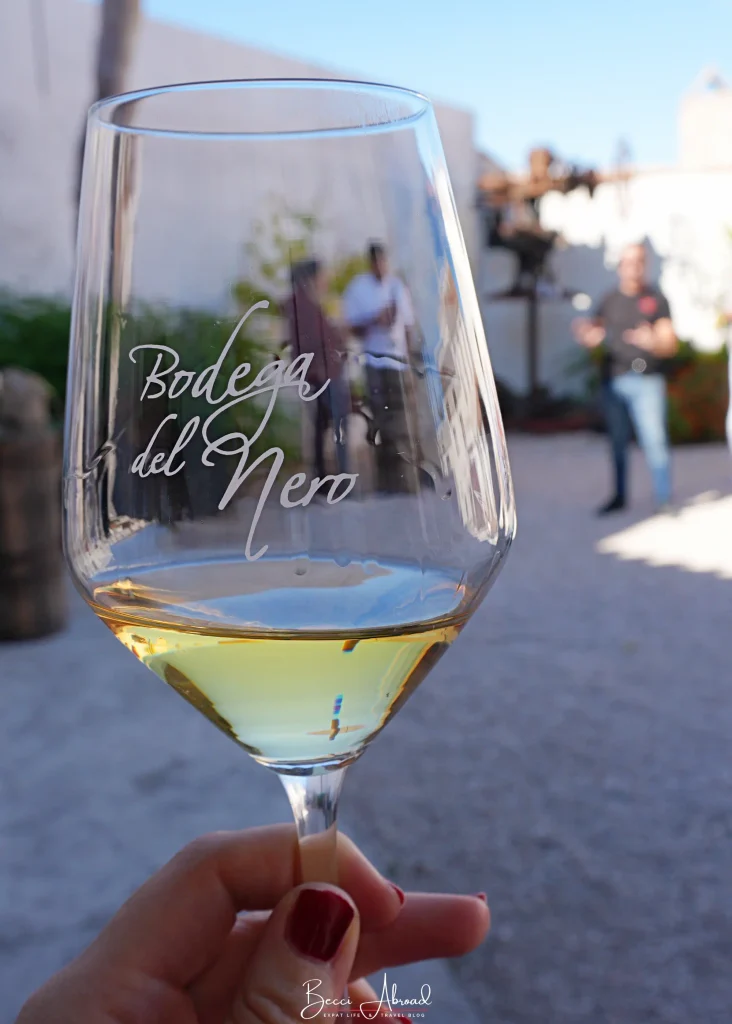
In October 2026, my friend and I visited Chinchón on a day trip from Madrid. We enjoyed a sunny fall day wandering around the small town, visiting the local winery, Bodega del Nero, and getting a late lunch at Plaza Mayor.
Chinchón isn’t the easiest day trip to do from Madrid, as bus 337 takes around an hour from Madrid. The bus stop at Pavones metro station isn’t the most central location in Madrid, so you need to factor in the time to get there as well.
More and more tour companies are beginning to offer day trips to Chinchón, so it might be worth checking out if you are looking to visit Chinchón.
Admission:
- Plaza Mayor, the church, and the town: Free
- Bodega del Nero: €15 for a guided visit with wine tasting of 2 wines
Opening hours:
- Plaza Mayor: All day
- Nuestra Señora de la Asunción church:
- Monday to Friday: 7:20 am to 8 pm
- Saturday and Sunday: Closed
- Bodega del Nero:
- Guided visits on Saturdays, Sundays, and public holidays: 12 pm and 1 pm
How to get there:
- Public transportation: Bus 337 from the Conde de Casal interchange in Madrid, which currently leaves from the Pavones metro exit because of construction work. Get off at the Monastery in Chinchón.
- By car or taxi: Around 45 to 50 minutes by car from Madrid
Location: Chinchón, Madrid
FAQ: Hidden Gems in Madrid
Find answers to commonly asked questions about hidden gems in Madrid.
Final Thoughts: Are the Hidden Gems in Madrid Worth Visiting?
Yes, it is definitely worth visiting some of Madrid’s many hidden gems and lesser-known places on your trip to the Spanish capital!
The hidden gems in Madrid are the best way to get under the skin of Madrid, beyond the big museums and the Royal Palace.
Where else can you stand on an abandoned metro platform while the trains rush past, walk out on a 130-year-old pelota court and see peacocks in a capital city, mostly for free?
The only downside is that several of them take a bit of planning, as the free tickets book out fast, some guided tours are only in Spanish, and many places close on Mondays.
But if you plan ahead, you will see a side of Madrid that most visitors never get to see!
Have you discovered any hidden gems in Madrid, or are you planning a trip? Share your thoughts and questions in the comments below!