The 9 Best Parks in Buenos Aires: A Local Expat’s Favorite (With Map)
The parks in Buenos Aires offer a much-needed escape from the bustling streets of the vibrant urban life of the South American capital.
Buenos Aires, like many South American big cities, can quickly start to feel crowded and overwhelming. There are so many things to do in Buenos Aires and hidden gems to explore. The streets of Buenos Aires are always busy with people coming and going and cars driving.
One of the joys of discovering a new city is finding small, tranquil escapes and soaking up its unique culture and atmosphere.
The parks in Buenos Aires are perfect for exactly that: taking a break and enjoying nature in the middle of the city.
After seven years of living in Buenos Aires, I share what I find to be the best parks in Buenos Aires to disconnect and take a break from the city.
Disclosure: Some of the links below are affiliate links. This means that at no additional cost to you, Becci Abroad will earn a commission if you purchase through one of those links. This helps to pay the bills and the maintenance of the site.
A Local Guide to the Best Parks and Green Spaces in Buenos Aires
Parks in Buenos Aires at a Glance
Before you get started, let’s look at a quick overview of the parks in Buenos Aires and what they are best for, so you can choose the one that suits you the best!
|
Park
|
Best for
|
Location
|
|---|---|---|
|
Plaza San Martín |
History, architecture & views (combine with Torre Monumental viewpoint) |
Retiro |
|
The Palermo Forests (Bosque de Palermo) |
Paddle boating, walking paths & the planetarium |
Palermo |
|
El Rosedal (Rose Garden) |
Roses, the Poets’ Garden & a peaceful stroll |
Palermo |
|
Barrancas de Belgrano |
Weekend tango classes at La Glorieta & relaxing on the grass |
Belgrano |
|
Buenos Aires Botanical Garden |
Free entry, plant lovers & a quiet escape in Palermo |
Palermo |
|
Reserva Ecológica Costanera Sur |
Birdwatching, biking & river views |
Puerto Madero |
|
Parque de los Niños & Urban Beach |
Families with kids & summer beach vibes (Jan – Feb only) |
Nuñez |
|
Parque Centenario |
Local markets, the Natural Science Museum & outdoor exercise |
Caballito |
|
Parque Las Heras |
Dog owners, running routes & everyday local life |
Palermo |

Where to Find the Best Parks in Buenos Aires?
The parks in Buenos Aires are located in different places throughout the city. Some of the parks are located in the middle of the city. While other parks are a little bit further out and offer even more space and nature for you to enjoy.
Map of Buenos Aires Parks
Check out all the parks in Buenos Aires that I mention in this post on the map below. In the top right-hand corner, you can click on the full-screen icon and have the map open directly in your Google Maps app

The 9 Best Parks and Green Spaces in Buenos Aires
Let’s explore the best parks and green spaces in Buenos Aires together!
The Historical San Martín Park
Plaza San Martín is one of my favorite parks in Buenos Aires!
The San Martín Square, as the park can be translated to, is a large historical park located centrally in Buenos Aires, right between the neighborhood of Retiro and Buenos Aires’ downtown district, Microcentro.
Plaza San Martín is one of the oldest parks in Buenos Aires and stretches from the Retiro Station to the Argentine Foreign Ministry (Cancillería) and the Defense Ministry (Círculo Militar).
The park is located on a little hill with a beautiful view of the Retiro train station and the English Clock Tower, Torre Monumental.
The English Tower is one of the best viewpoints in Buenos Aires, and I strongly recommend combining your visit to Plaza San Martín with a visit to the English Clock Tower.
Surrounding Plaza San Martín, you can also explore some of the finest examples of architecture from the Belle Époque in Buenos Aires, including Palacio San Martín and Círculo Militar.
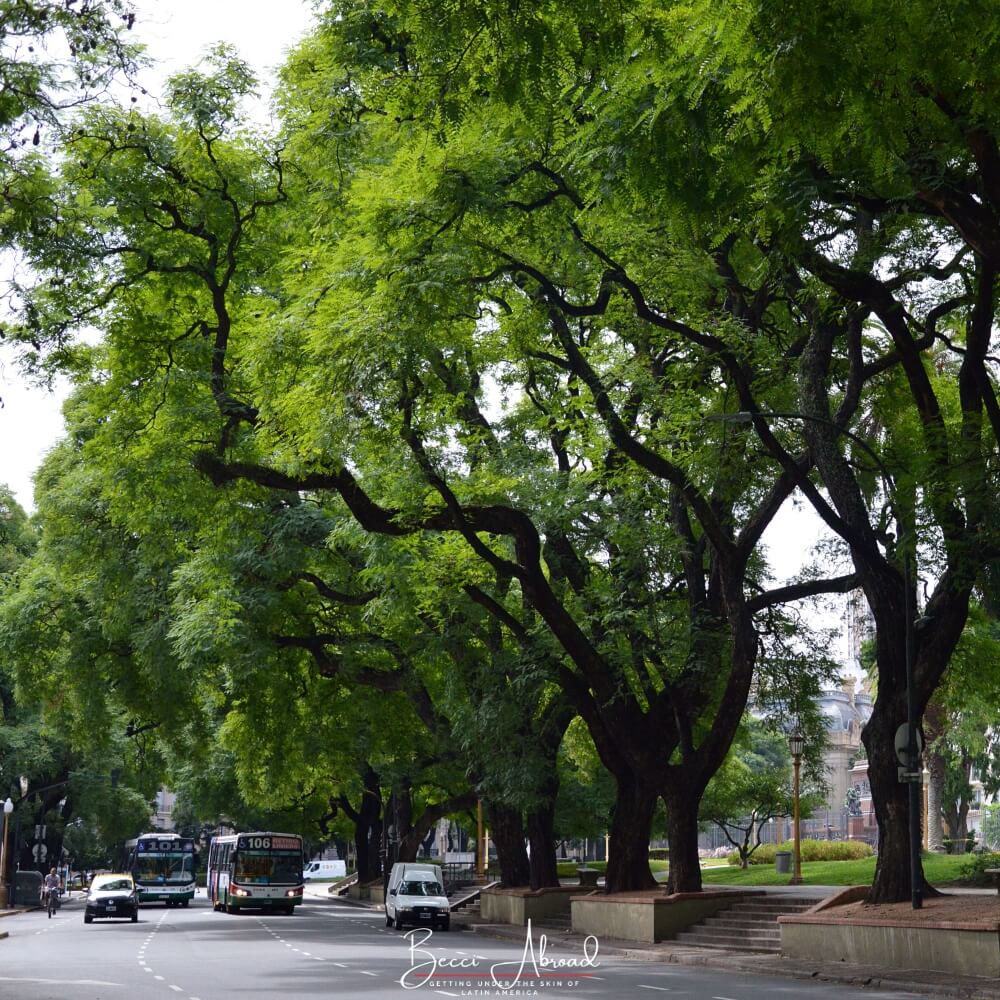
The massive trees that surround the San Martín Park create much-needed shade during the hot summer months in Buenos Aires. I have spent hours sitting on the benches under the beautiful trees chatting with my friends after work, when I lived in Buenos Aires. Actually, I used to work just a few meters from the San Martín Park in Buenos Aires.
So, if you’re looking for a beautiful park in Buenos Aires with a central location and plenty of history, I strongly recommend that you visit Plaza San Martín.
Location: Plaza San Martín, Avenida Santa Fe & Avenida Maipu, Retiro


The Palermo Forests
In the center of the popular neighborhood of Palermo, you’ll find the biggest and most popular park in Buenos Aires: Bosques de Palermo.
Bosque de Palermo best translates to “the Forests of Palermo”, but actually, this is just the park’s local nickname. The official name of this beloved green space is Parque Tres de Febrero, or the Third of February Park – but nobody calls the park by its real name!
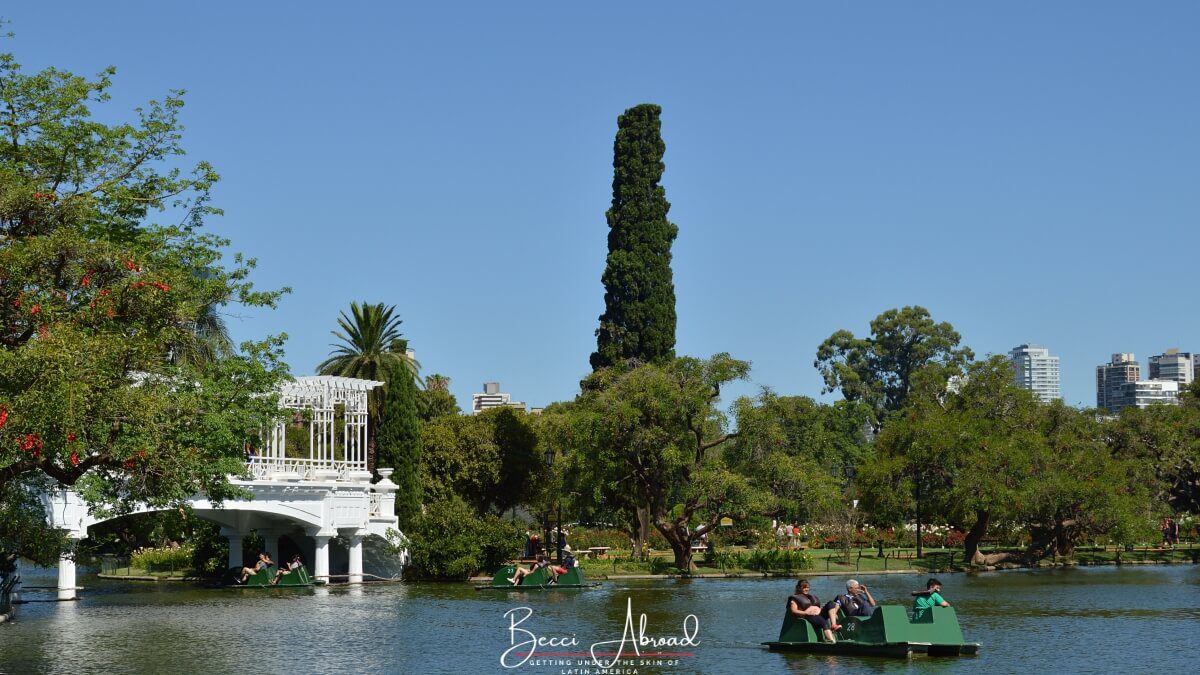
Bosque de Palermo covers more than 370 hectares of green spaces in the heart of one of Buenos Aires most popular neighborhoods. The Palermo park offers wide walking paths, a large lake with paddle boats, and a beautiful rose garden, El Rosedal.
On weekends, the Palermo Forests get especially busy with locals meeting up for a mate and a chat while street performers try to entertain the passersby.
Most of the expansive park was designed by landscape architect Charles Thays, who also designed Buenos Aires’ Botanical Garden. Actually, Thays left his fingerprint across several of the most beloved parks in Buenos Aires!
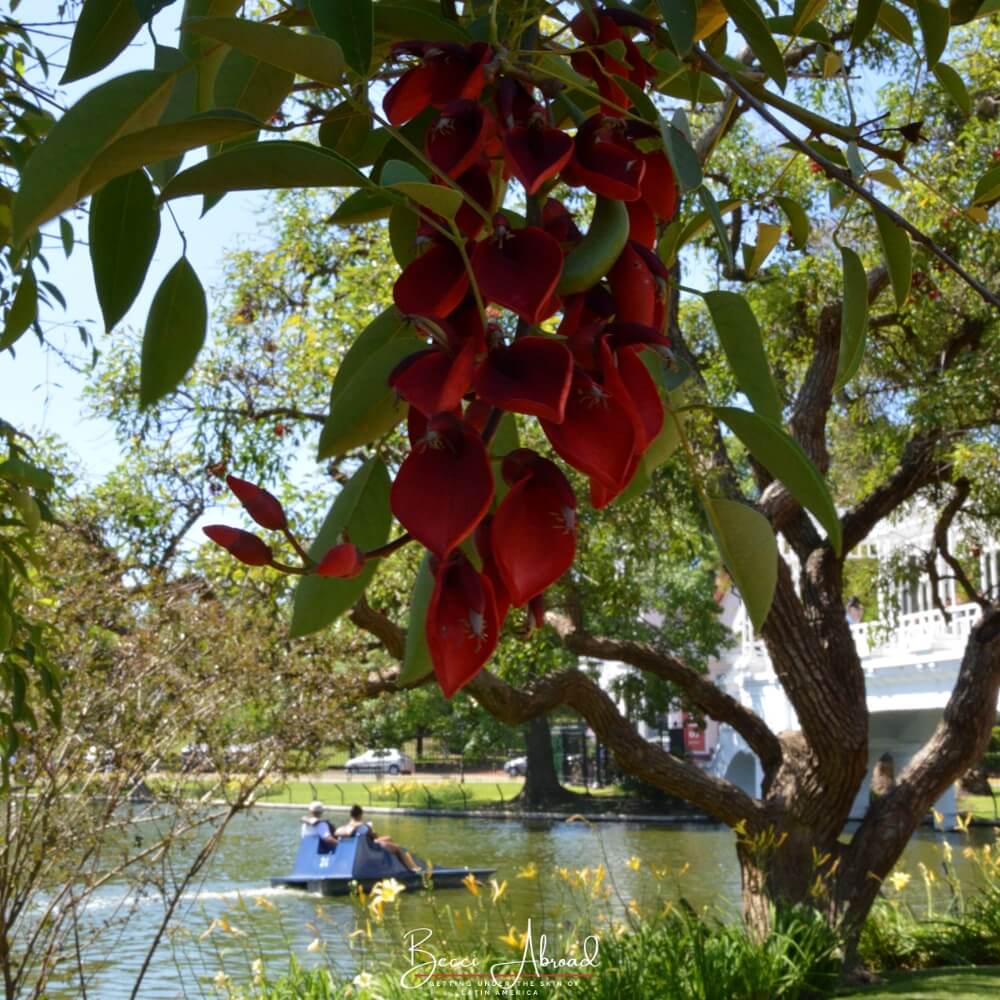
One of the most popular things to do in Palermo among locals is to rent a paddle boat at the lake in Bosque de Palermo to enjoy a relaxing afternoon paddling around on the water while enjoying the park from a different angle.
A popular photo stop inside the Palermo Forests is the Greek Bridge, also known in Spanish as el Puente Griego. It is an iconic bridge that connects the beautiful Rosedal rose garden with the rest of the park.
Finally, the Palermo Forests also houses one of Buenos Aires and Palermo’s most iconic landmarks: Planetario Galileo Galilei.
The Galileo Galilei Planetarium is Buenos Aires’ planetarium, designed like a futuristic, UFO-like dome. During the night, the dome lights up, creating a spectacular scene for bypassers.
Despite living seven years in Buenos Aires, I’ll admit I never made it inside, but the building alone is worth a visit if you’re visiting the Palermo Forests.
Location: Bosques de Palermo, Avenida Sarmiento & Avenida del Libertador, Palermo
Palermo’s Rose Garden
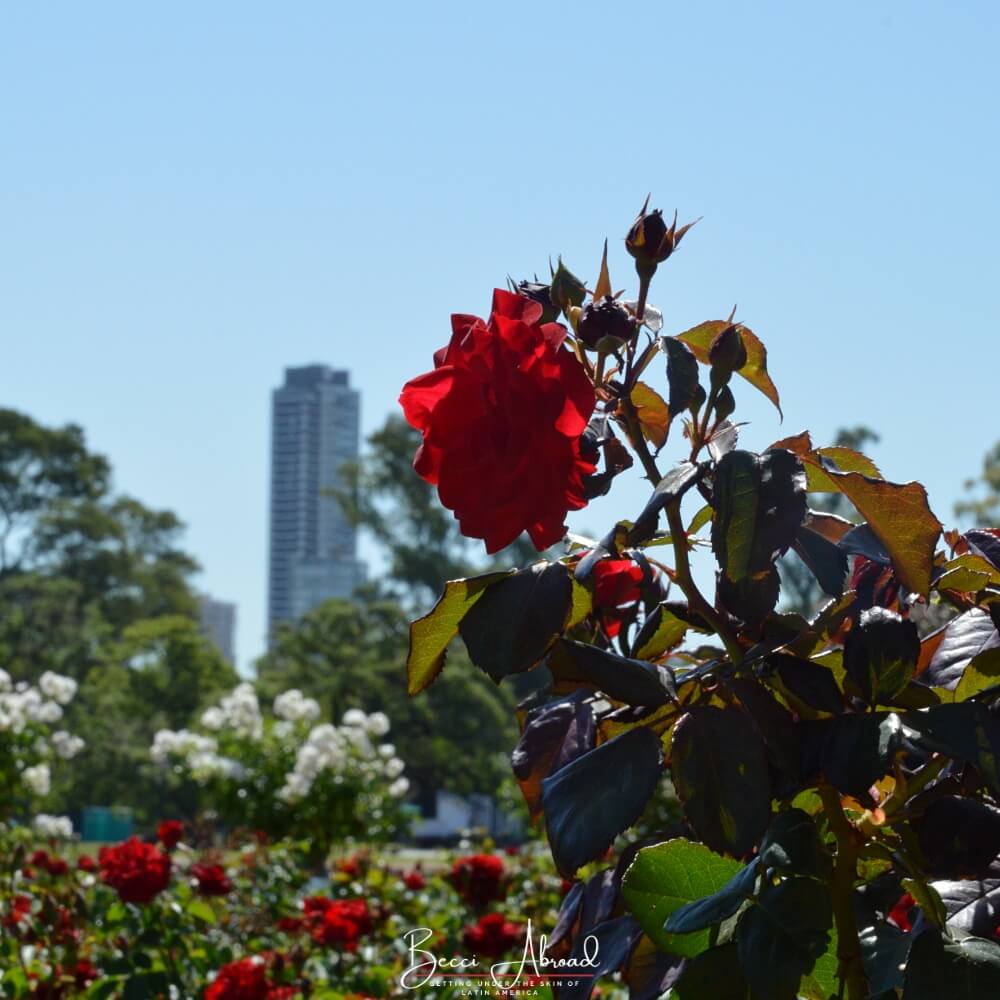
Palermo’s rose garden, El Rosedal, is without a shadow of doubt Buenos Aires’ most beautiful park!
El Rosedal, or formally El Paseo El Rosedal, is a stunning rose garden located inside the famous Parque Tres de Febrero in Palermo.
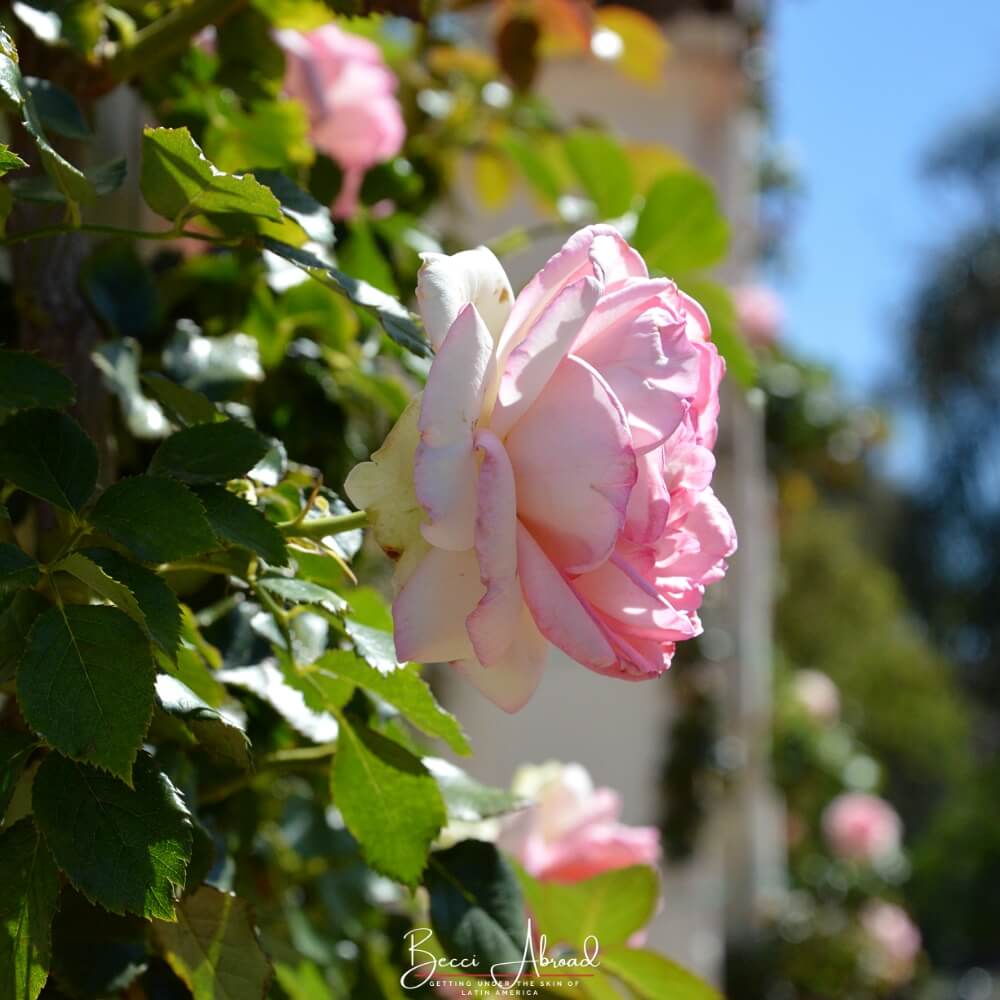
The rose garden is home to over 18,000 roses, making it one of the most beautiful green spaces in the entire city.
The rose garden in Buenos Aires was designed by Charles Thays, the same landscape architect who designed two of Buenos Aires other beautiful parks, Barrancas de Belgrano and the Botanical Garden.
As you wander through El Rosedal, you’ll also come across a gorgeous Andalucian patio, gifted to Buenos Aires by the Spanish city of Seville (one of my absolute favorite cities in Spain!).
Another highlight inside El Rosedal is the so-called Poets’ Garden, a quiet corner filled with sculptures honoring literary greats like William Shakespeare, Miguel de Cervantes, and Argentina’s own Jorge Luis Borges.
El Rosedal is at its most spectacular during spring and summer, when the roses are in full bloom. But honestly, a stroll along its rose-lined pathways is always worth adding to your Buenos Aires itinerary, no matter the season.
Find a bench, take a breath, and enjoy a moment of calm in this little urban oasis.
El Rosedal’s opening hours:
- Tuesday to Sunday: 10 am – 6 pm
- Closed on Mondays
Location: El Rosedal, Avenida Isabel Infante 900, Palermo

Barrancas de Belgrano
Barrancas de Belgrano is a lovely park in Buenos Aires, offering a large green space on a small hillside in the center of the Belgrano neighborhood.
On sunny days, you’ll find students and families spread out across the lawns, enjoying a relaxed afternoon away from the city bustle.
The park was designed in 1892 by French landscape architect Carlos Thays (the same mind behind parts of Bosques de Palermo and the Botanical Garden in Buenos Aires) and features more than 60 species of trees, flowers, and other vegetation.
In the evenings during the weekend, you can experience locals meeting up to dance tango at a small outdoor stage inside the Barrancas de Belgrano park.
The outdoor stage is called La Glorieta de Belgrano, and for more details on when the tango takes place, I recommend checking Milongas Hoy (simply search for “La Glorieta”).
But Barrancas de Belgrano is well worth a visit even without the tango!
The park offers a great spot for relaxing after a long day of visiting Buenos Aires, or as a starting point for exploring other parts of the Belgrano neighborhood or Buenos Aires’ Chinatown.
Location: Barrancas de Belgrano, Avenida Virrey Vértiz & Avenida Juramento, Belgrano


Buenos Aires Botanical Garden
Despite being located between two of Buenos Aires’ busiest avenues, Santa Fe and Las Heras, and right next to the busy Plaza Italy, Buenos Aires Botanical Garden feels like a world apart!
The botanical garden offers a peaceful seven-hectare park with more than 6,000 plant and tree species, ranging from native Argentine flora to exotic varieties brought in from around the world.
The botanical garden is spread across open-air gardens and a series of historic greenhouses. Throughout the park, you’ll find different sculptures placed between the pathways and greenhouses.
Jardín Botánico Carlos Thays, as the botanical garden is called in Spanish, honors Carlos Thays, the French-Argentine landscape architect responsible for the garden’s design.
At the center of the park stands a charming English-style house, which sometimes is used as a small art exhibition space. But this isn’t the only place in the park you’ll find an artistic touch added to the green space.
Buenos Aires Botanical Garden also houses a colony of cats that has unofficially adopted the garden as home.
The garden’s central location makes it incredibly easy to reach from almost anywhere in the city! You can either take the subway to the metro station “Plaza Italia” or take a bus stopping at Plaza Italia.
The entry to Buenos Aires Botanical Garden is completely free, and it easily ranks among my free things to do in Buenos Aires.
Opening hours:
- Tuesday to Friday: 8 am – 6:45 pm
- Saturday, Sunday, and Argentine holidays: 9:30 am – 6:45 pm
- Closed Mondays
Location: Buenos Aires Botanical Garden, Avenida Santa Fe 3951, Palermo

Buenos Aires’ Natural Reserve
Reserva Ecológica Costanera Sur, or simply Reserva Ecológica, is the biggest and most biodiverse green area of all the parks in Buenos Aires!
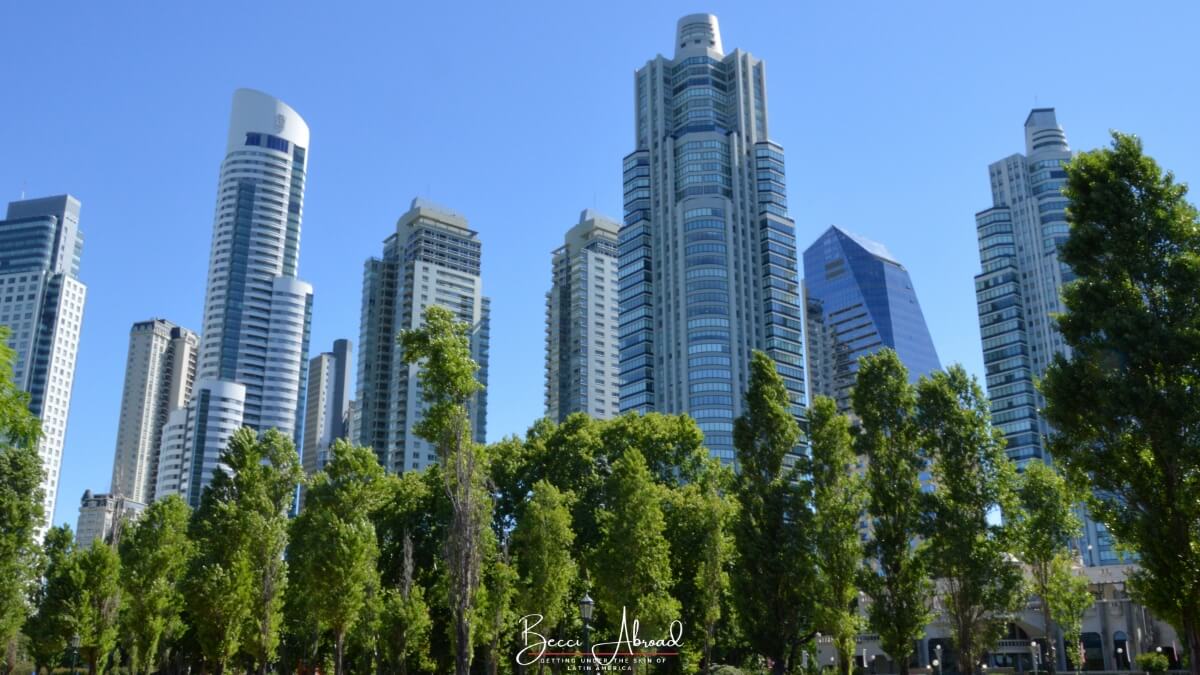
Buenos Aires’ Natural Reserve is located just a few blocks from the skyscrapers of Puerto Madero, but feels like an entirely different world!
This unique green space spands over a 350-hectare reserve along the banks of the Río de la Plata. The area features wide trails that wind through grasslands, native forests, and around three lagoons, eventually leading you all the way down to the river itself.
The reserve is home to an impressive amount of wildlife, with more than 300 species of birds alone, plus reptiles, mammals, and amphibians making their home among the reeds and pampas grass. Bird-watchers in particular flock here (pun intended!), but you don’t need binoculars to enjoy it.
What makes the Costanera Sur even more special is its backstory: the land was originally reclaimed from the river as part of a city expansion project that never went ahead.
Nature simply took over the abandoned site, and decades later, the result is this wild, green oasis sitting right on the doorstep of downtown.
On a clear day, head to the eastern shoreline for one of the best spots in the city to sit by the water, with views stretching across the Río de la Plata towards Uruguay.
Reserva Ecológica is a massive piece of land, so I strongly recommend renting a bike or doing a bike tour to explore the reserve.
On weekends, Reserva Ecológica is a favorite among locals for jogging, cycling, and picnics, so don’t be surprised if it feels lively even out here in “nature.”
The entrance to Reserva Ecológica Costanera Sur is completely free, making it another great addition to your list of free things to do in Buenos Aires.
Opening hours:
- Tuesday to Sunday: 8 am – 6 pm
- Closed Mondays (and during rain)
Location: Avenida Tristán Achával Rodríguez 1550, Puerto Madero
The Children’s Park and Buenos Aires’ Urban Beach
For something a little different, head to the far northern edge of the city, right where Buenos Aires meets the Province of Buenos Aires, where you will find Parque de los Niños, translated as the Children’s Park.
This park in Buenos Aires sits right along the Río de la Plata, giving you a nice stretch of river views as a backdrop.
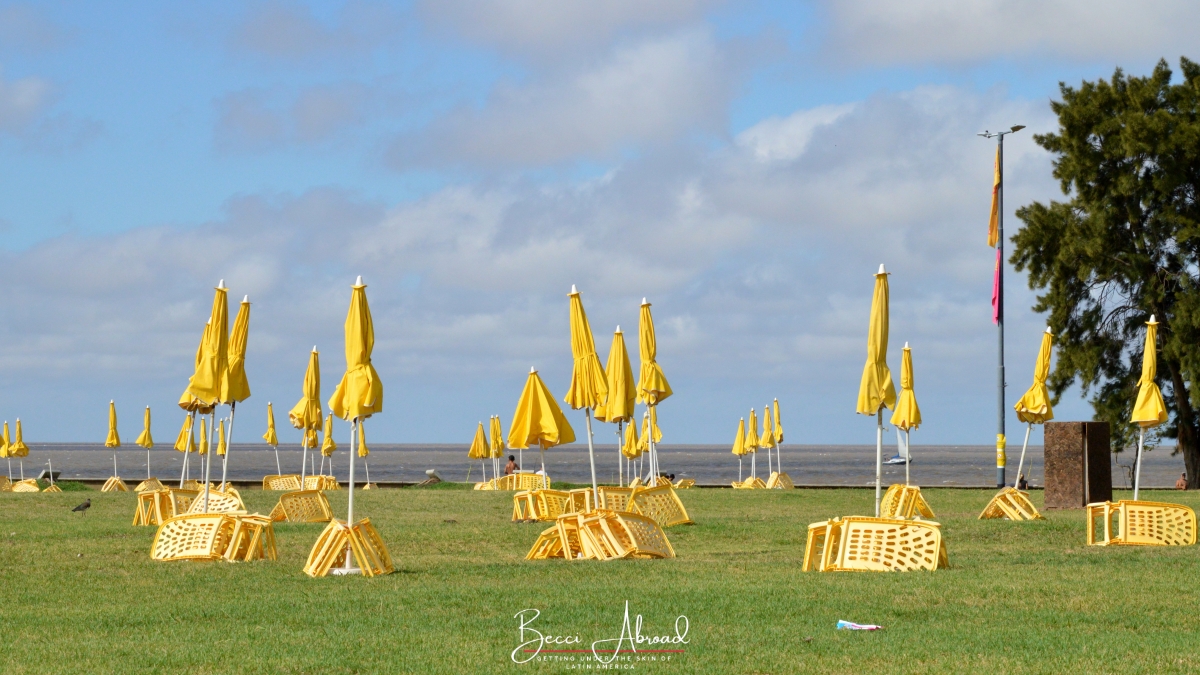
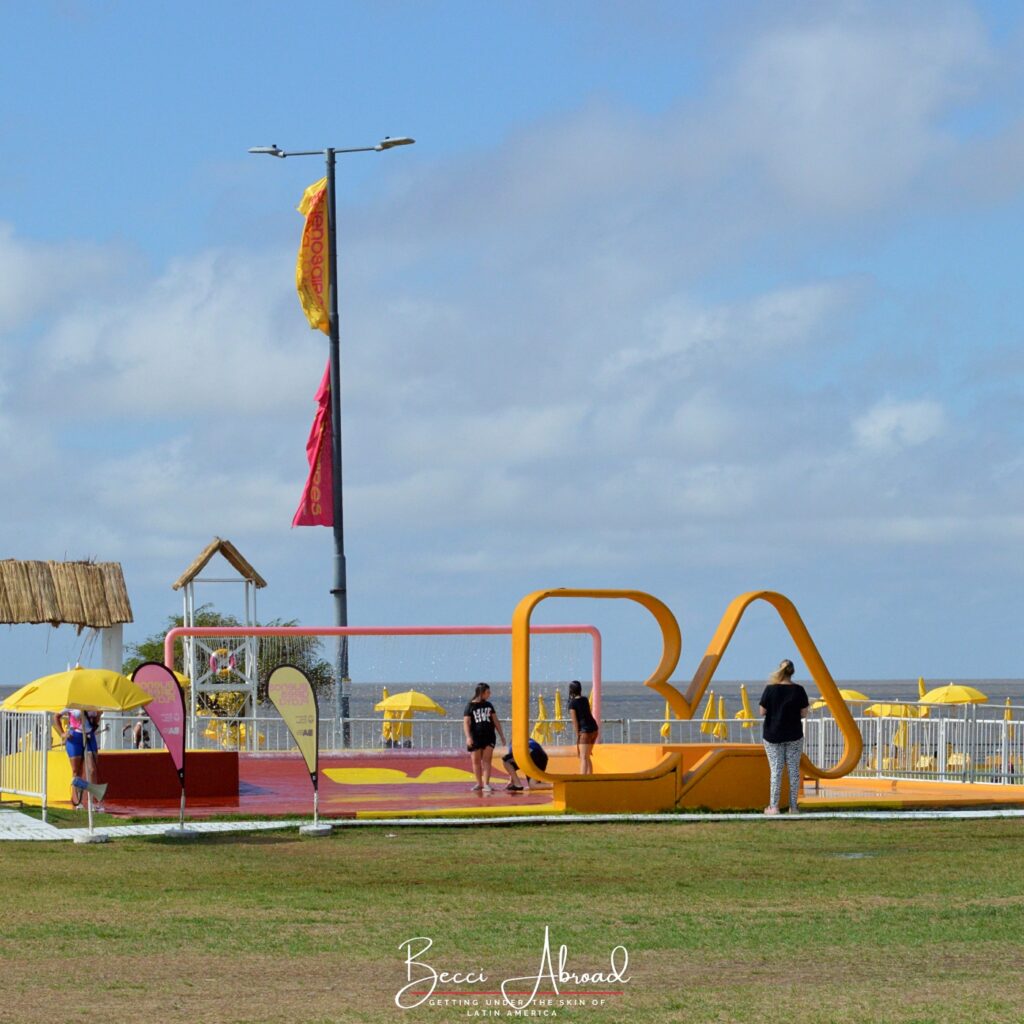
Inside the park, you’ll also find Buenos Aires’ Urban Beach, or Playa Urbana as it’s called locally.
According to the City Government of Buenos Aires, this artificial beach area was actually the first urban beach of its kind in Latin America! It comes complete with children’s playgrounds and a handful of small water park activities.
I’ll be honest though: I visited with my mum on a weekday, and it was pretty quiet! The park is mostly just large grassy areas with no real “beach” feel to speak of, and not a whole lot going on.
That said, I imagine it’s a different story with kids in tow, or during a busy summer weekend when the place is actually buzzing.
The best part? Everything here is completely free: from the entrance, over the sun loungers, to the water activities.
The Urban Beach only operates during the Argentine summer, from January through February, so plan your visit accordingly.
Location: Parque de los Niños, General Paz & Avenida Cantilo

Parque Centenario
Parque Centenario is a circular park located in the neighborhood of Caballito, right in the geographical center of Buenos Aires.
Parque Centenario was designed in 1910 by none other than Carlos Thays (yes, him again!) to celebrate the centenary of the May Revolution, hence the name “Centenario”.
At the heart of the park sits an artificial lake, home to ducks, swans, fish, and even a few turtles. There’s a small island in the middle too, added during a renovation a while back.
Inside Parque Centenario, you’ll also find the Argentine Museum of Natural Sciences. The museum is a fun add-on if you’re already visiting the park, and features thirteen permanent exhibition rooms, including an aquarium, a collection of Argentine meteorites, and a paleontology section with fossils of dinosaurs.
Throughout the park you will find outdoor gym equipment, a skatepark, and a football pitch. In general, Parque Centenario is a very popular spot for locals to get some exercise. I have even had karate classes in Parque Centenario during the summer months!
On a weekend, you can find the streets around the park lined with stalls selling secondhand books and handmade crafts. The market by Parque Centenario is one of the most popular weekend markets in the area.
Parque Centenario not exactly on the typical tourist trail for Buenos Aires, but if you are staying in this part of the city or just want to see a more local side of Buenos Aires, the park is well worth the detour.
Location: Parque Centenario, Avenida Díaz Vélez & Leopoldo Marechal, Caballito
Parque Las Heras
Parque Las Heras might be one of the smaller parks in Buenos Aires, located in Palermo by the two main avenues of Avenida Las Heras and Avenida Coronel Díaz.
Until the 1960s, this green space simply didn’t exist. Instead, the area was home to Buenos Aires’ national penitentiary, locally nicknamed “La Peni“.
Once the prison was demolished, the site was slowly transformed into the park you’ll find today. In 2007, the area was officially declared a historic site of the city.
One thing that sets Parque Las Heras apart from most other green spaces in Buenos Aires is its terrain. The park sits on a barranca, a natural slope that gives it gentle ups and downs, which is a rare feature in the otherwise pretty flat city.
If you’re into running, this makes it a popular alternative to the flatter paths of Bosques de Palermo.
But the park isn’t just for runners. On any given afternoon, you’ll find local families relaxing on the grass, kids taking turns on the carousel, and dog owners letting their pups loose in the designated dog park.
I have spent countless hours with my dog, Baloo, in Parque Las Heras, and its a great spot for dogs.
It’s not the kind of place that’ll be the highlight of your trip, but if you’re staying nearby in Palermo or Recoleta, it’s a lovely spot to slow down for a bit and see a slice of everyday porteño life.
Location: Parque Las Heras, Avenida Coronel Díaz & Avenida Las Heras, Palermo


Frequently Asked Questions
Parks in Buenos Aires FAQ
Find answers to commonly asked questions about parks in Buenos Aires.
Final Thoughts on Parks in Buenos Aires
Buenos Aires offers many different types of parks and green spaces, from the popular Bosque de Palermo to the more local parks such as Parque Las Heras and Parque Centenario.
Personally, I enjoy exploring the local parks when I’m traveling because it gives a nice break from wandering busy streets. But when living in a busy city like Buenos Aires, the parks also become an essential part of everyday life – especially as a dog owner!
I hope you have enjoyed this post about the best parks in Buenos Aires!