The Ultimate Guide to Casa Batlló: Barcelona’s Magical Gaudí House
Casa Batlló is one of Barcelona’s most popular and unique landmarks, known for its out-of-this-world design and architecture.
But if you are planning your first visit to Casa Batlló in Barcelona, you might still feel a bit confused about everything. So, if you are struggling with questions such as:
What is Casa Batlló actually?
Is it possible to visit inside Casa Batlló?
Where to buy the tickets? And what do the different ticket options mean?
Then you have come to the right place!
This guide is for you who are visiting Casa Batlló in Barcelona for the first time, and still feel a bit confused and overwhelmed about planning your visit!
During the years I lived in Barcelona, I walked past this dreamy Gaudí house many times. I often got off the metro at the Passeig de Gracia stop, right in front of Casa Batlló, to go to work.
I have visited inside Casa Batlló twice while living in Barcelona. Each time, it is like I notice something new or something new has happened at the iconic landmark.
And that’s the magic of Casa Batlló: you could visit a dozen times and still find something new hiding in the curves, colours, and shadows.
In this guide, I have compiled all the necessary information and most common questions about Casa Batlló in one place to make it as easy as possible for you to plan your visit!
Let’s explore Casa Batlló together!
Complete Guide to Casa Batlló For First-Timers
Disclosure: Some of the links below are affiliate links. This means that at no additional cost to you, Becci Abroad will earn a commission if you purchase through one of those links. This helps to pay the bills and the maintenance of the site.
Facts about Casa Batlló: Getting to Know Barcelona’s Gaudí House
Casa Batlló is one of Barcelona’s most popular landmarks, and according to the landmark’s official website, the building welcomes more than 1 million visitors each year.
So, there are plenty of people wanting to visit this iconic Gaudí house, and I strongly recommend that you book your Casa Batlló online ticket in advance.
But before we get into the practical details of planning your visit, let’s explore a bit of the background of this iconic landmark in Barcelona!
What is Casa Batlló?
Casa Batlló is a six-story modernist Art Nouveau building on the prestigious avenue, Passeig de Gràcia, and one of the most popular places to visit in Barcelona!
Casa Batlló was designed by world-famous Catalan architect Antoni Gaudí and is often called a masterpiece of Catalan modernism.
Catalan modernism was an artistic and architectural movement that emerged in Catalonia in the late 19th and early 20th centuries.
The Catalan modernists were inspired by the broader modernism or Art Nouveau movement in Europe at the time.
Modernism is inspired by nature and aims to bring organic and curved shapes and elements, like plants and fruits, into design and architecture.
In Catalonia, the modernist movement was also closely linked to a sense of Catalan national identity, promoting Catalan culture and history.
Casa Batlló is full of symbolism inspired by nature and Catalan legends, and therefore a perfect example of Catalan modernism.
Who is the Architect of Casa Batlló?
Casa Batlló was designed by Antoni Gaudí.
Gaudí was a Catalan architect and the mastermind behind other famous landmarks in Barcelona, such as Sagrada Familia and Park Güell.
Gaudí is famous for his organic style and for turning ordinary buildings into dreamy works of art.
Why Is Casa Batlló Famous?
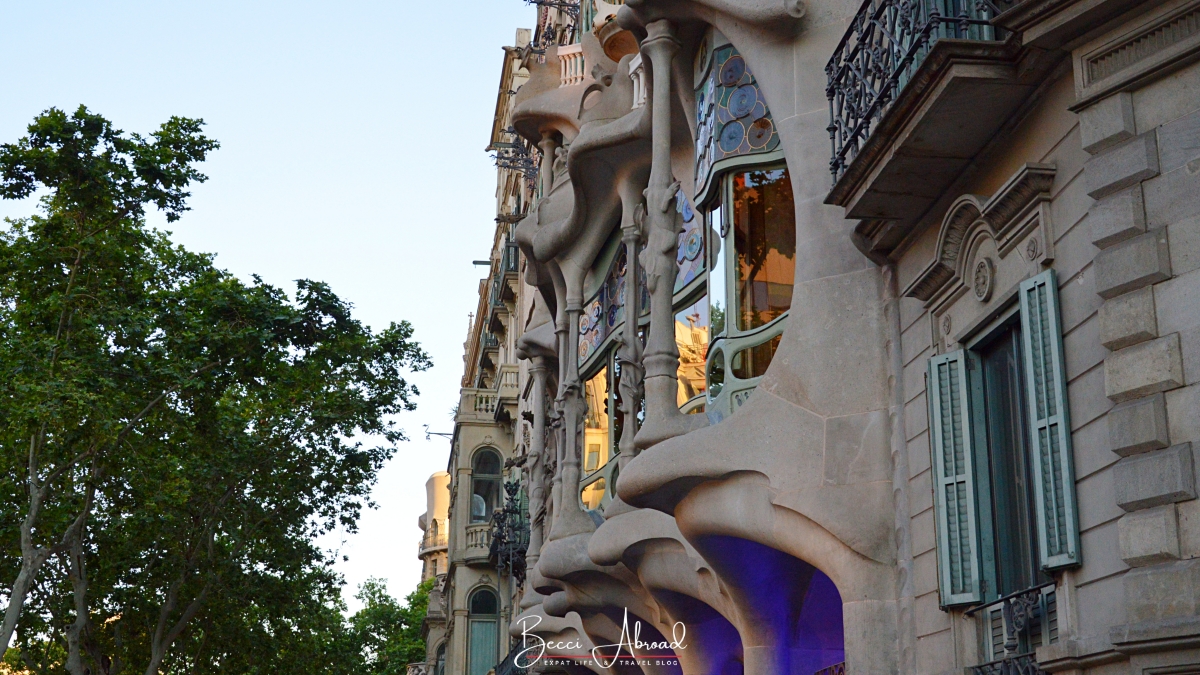
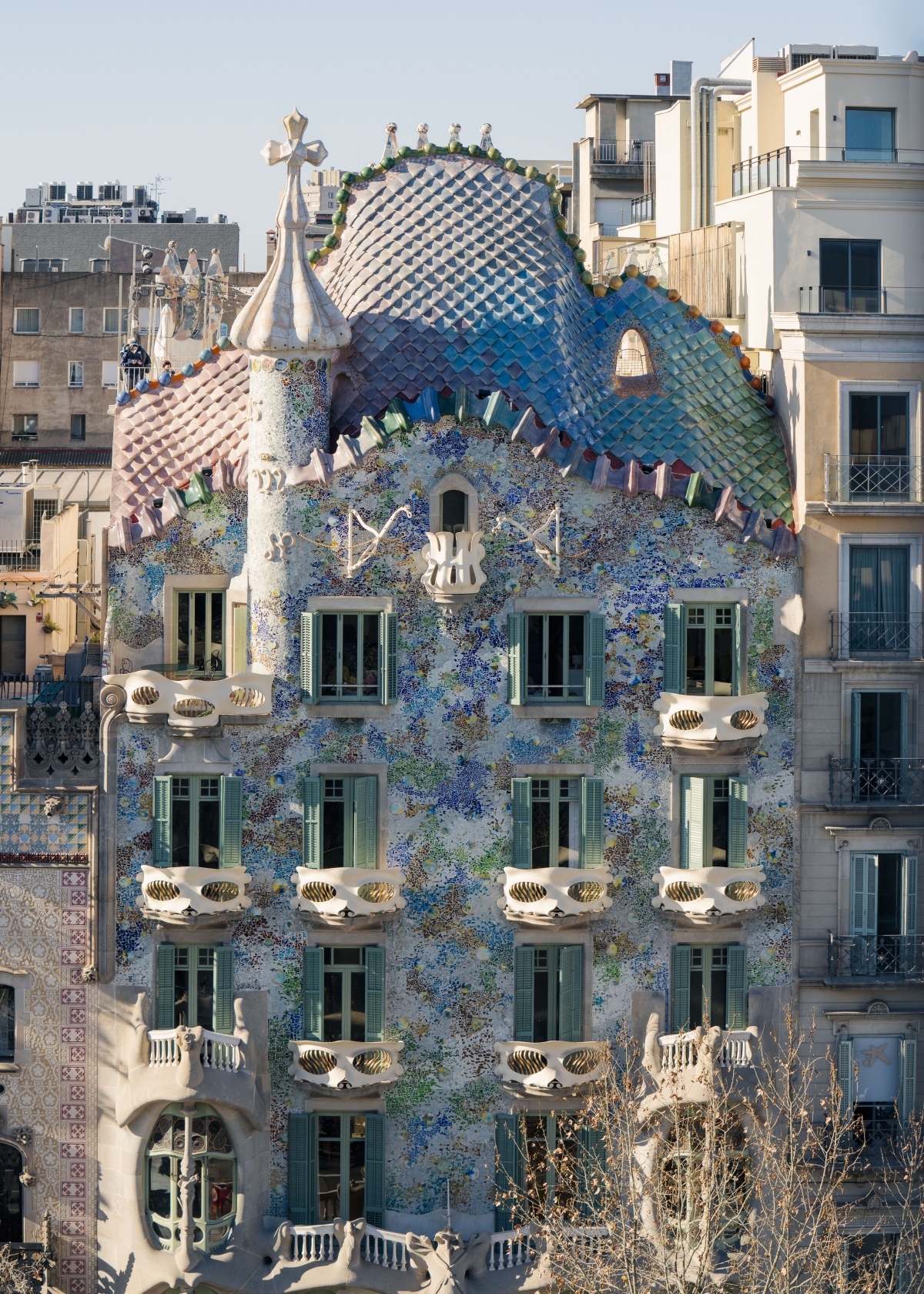
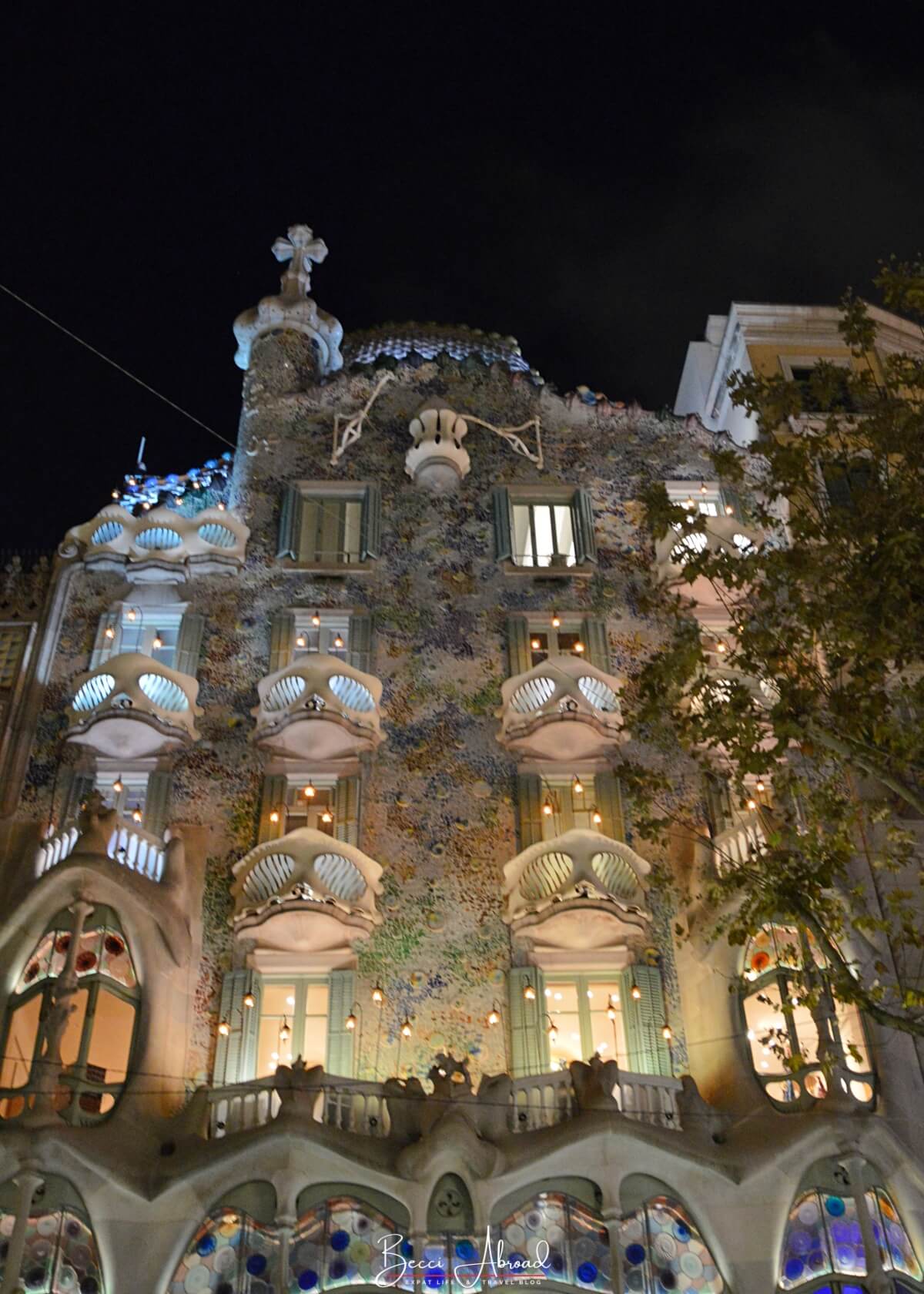
Casa Batlló is famous for its unique design with wavy shapes, multicolored ceramic tile, and glass. The interior is designed with no harsh lines and ensures that natural light flows through every corner of the building.
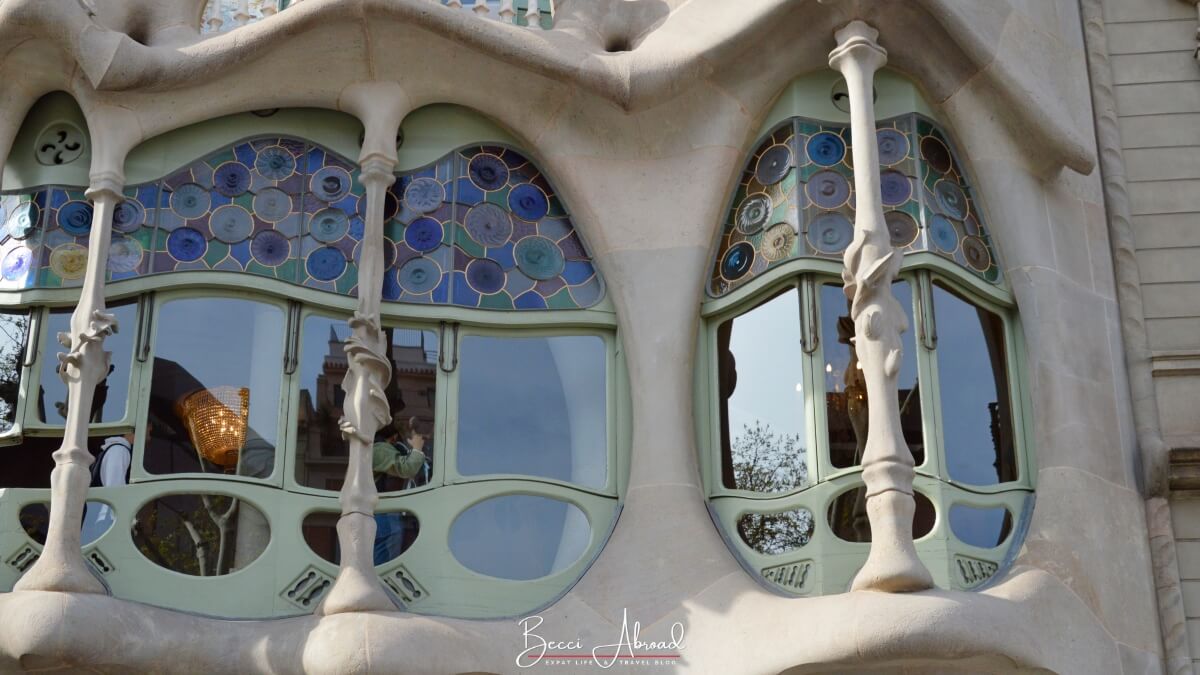
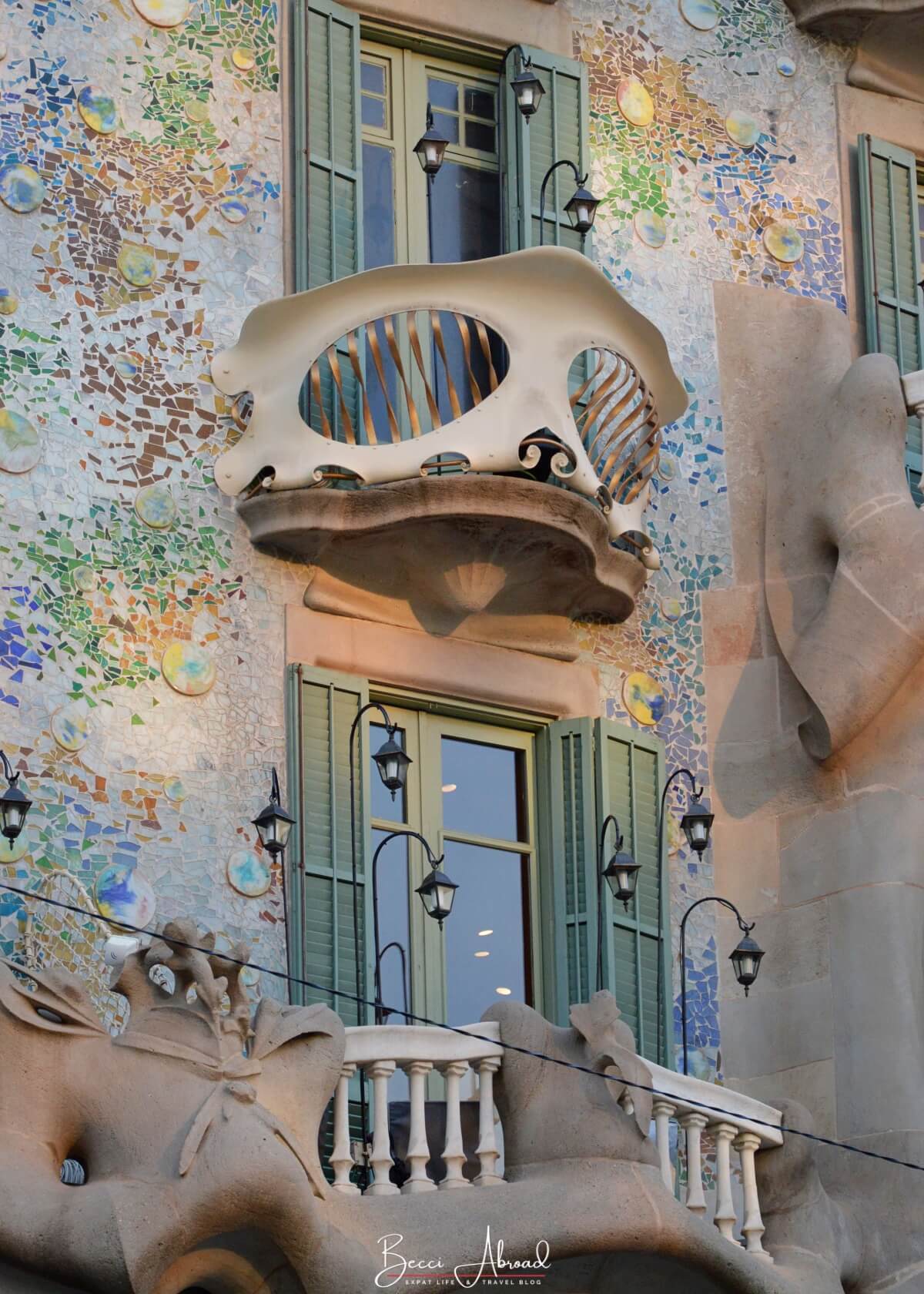
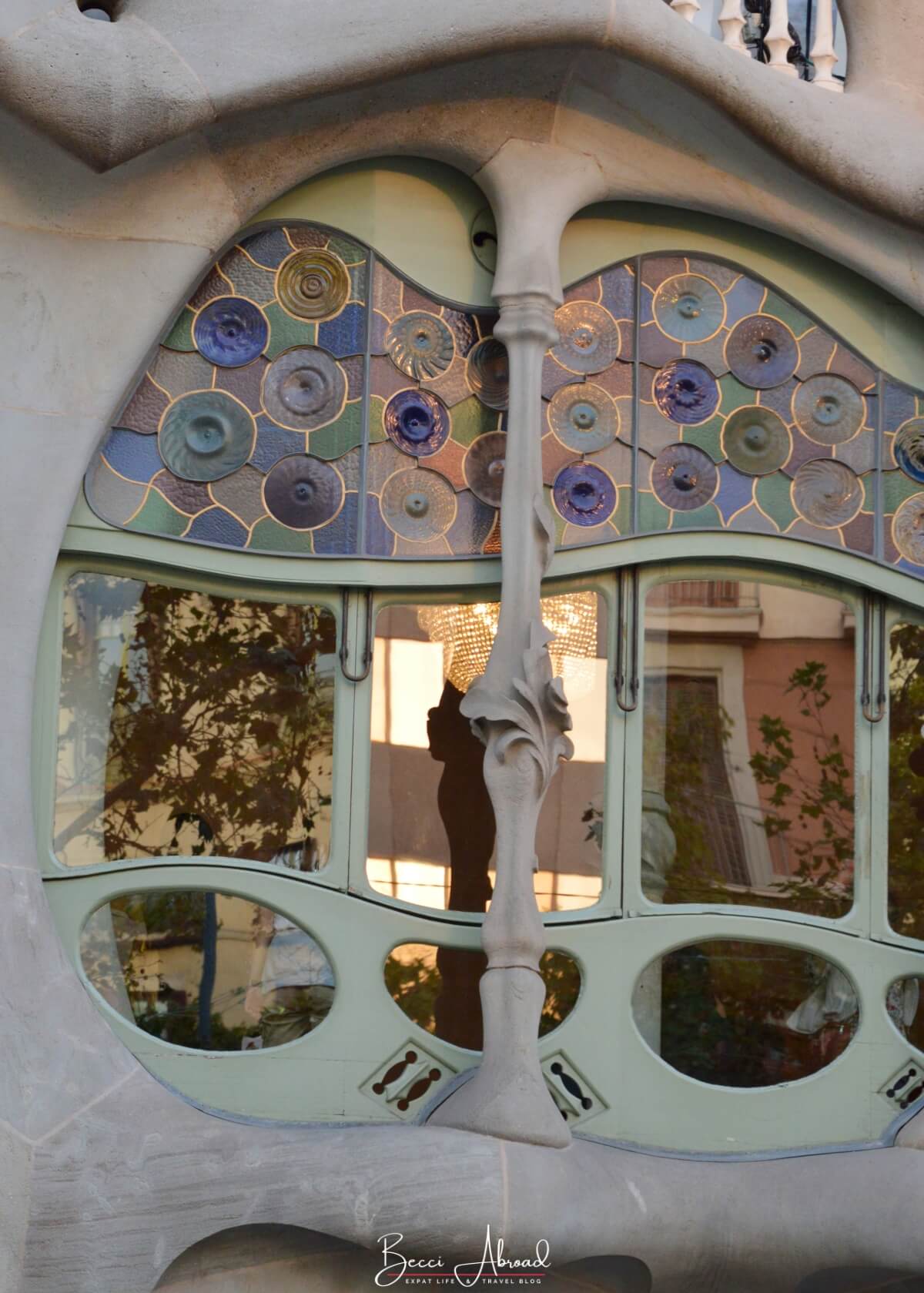
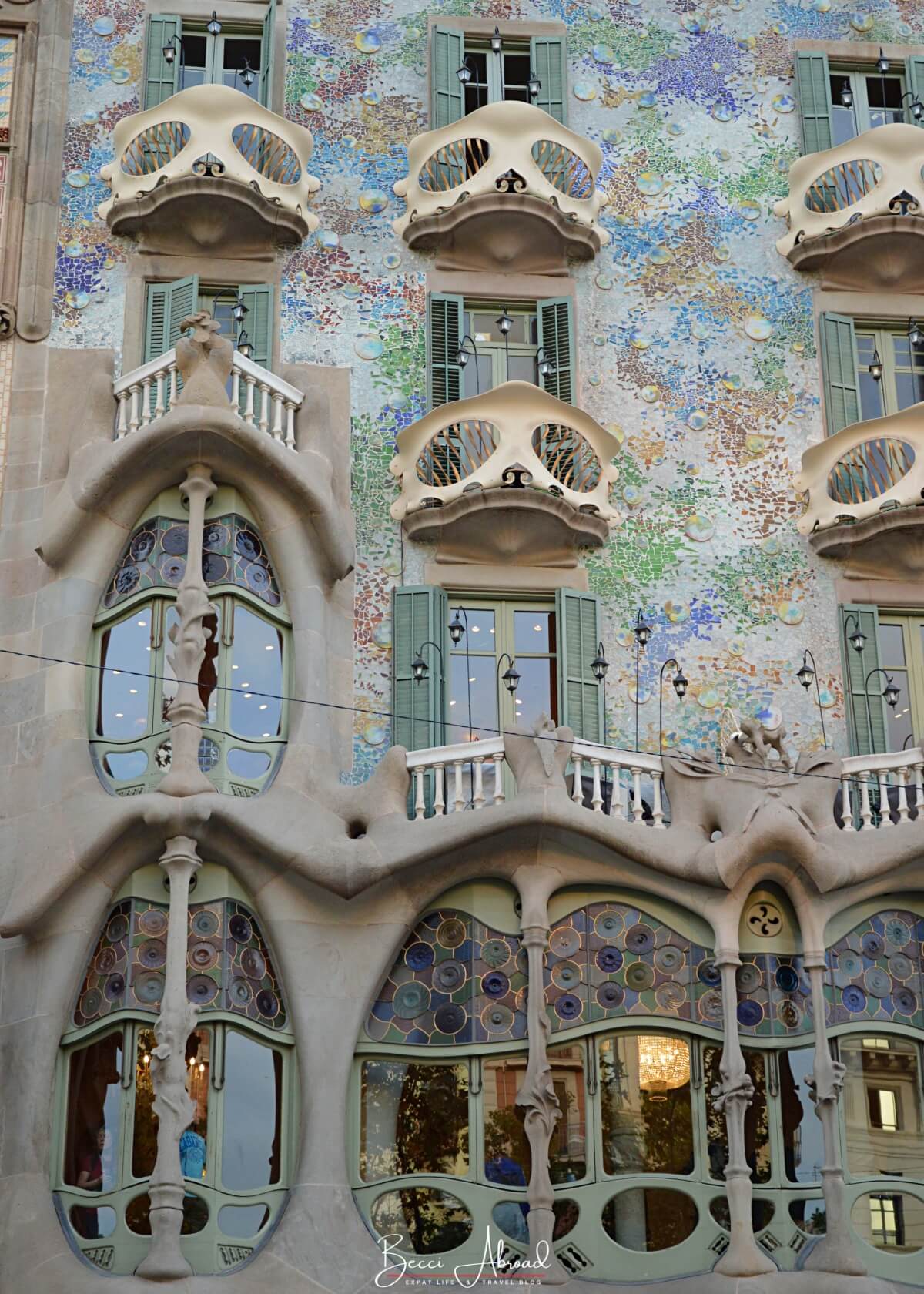
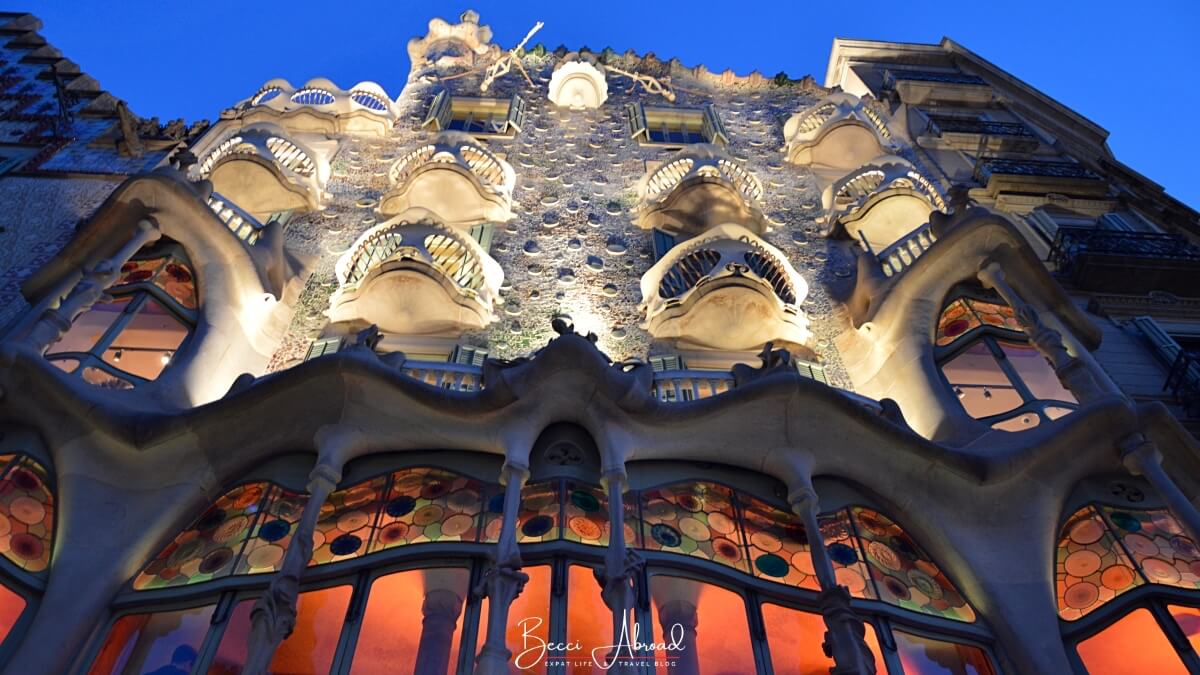
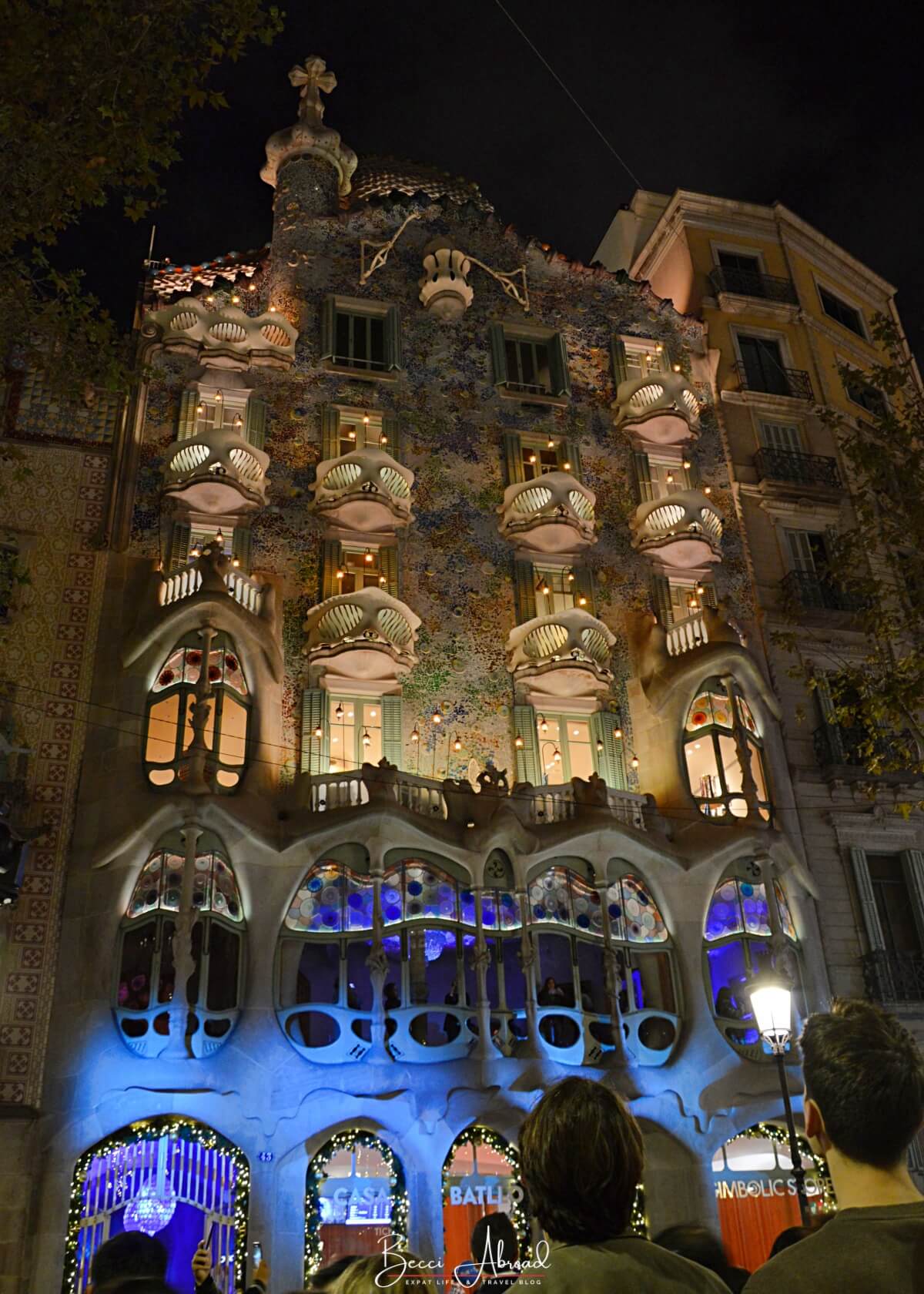
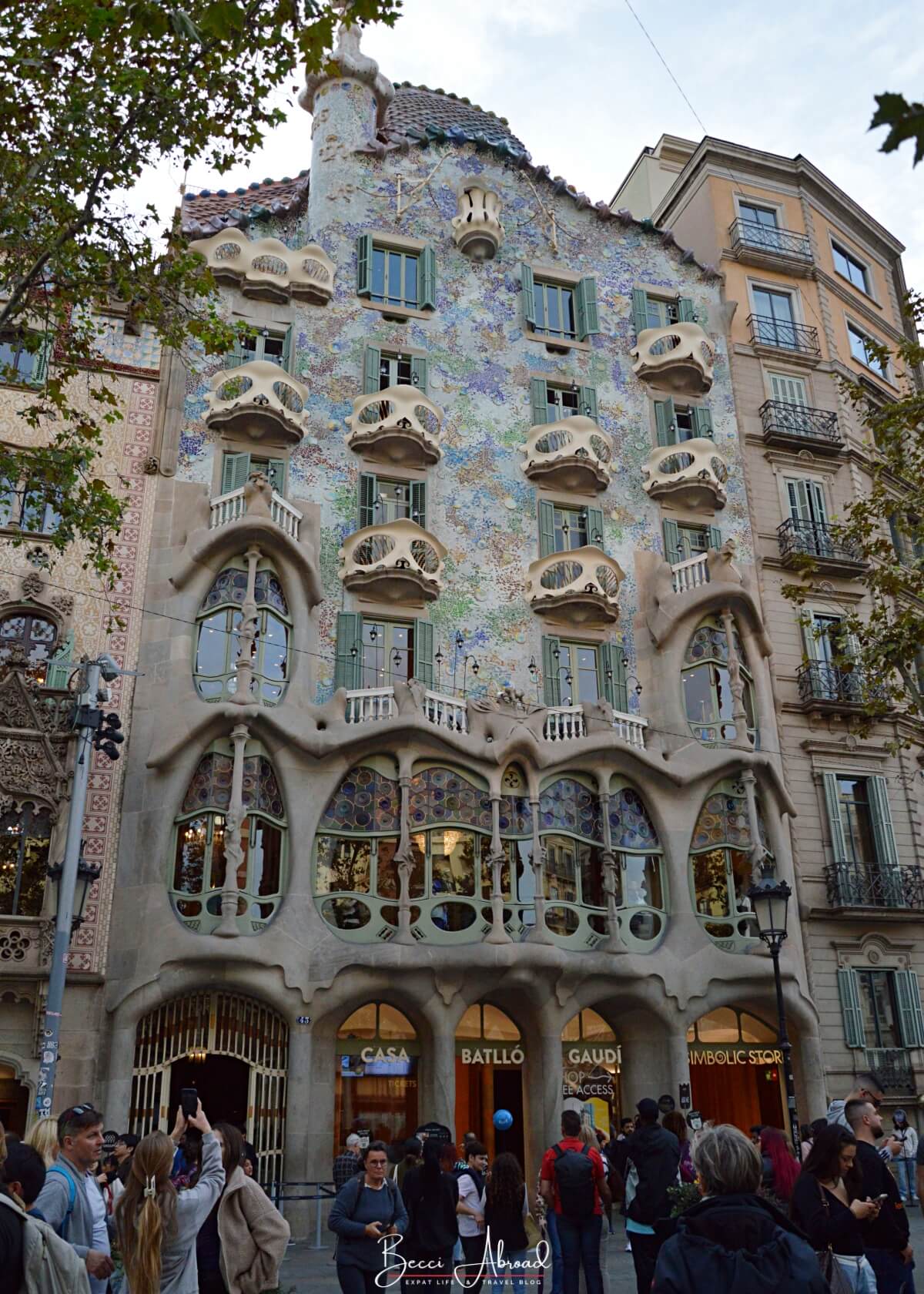
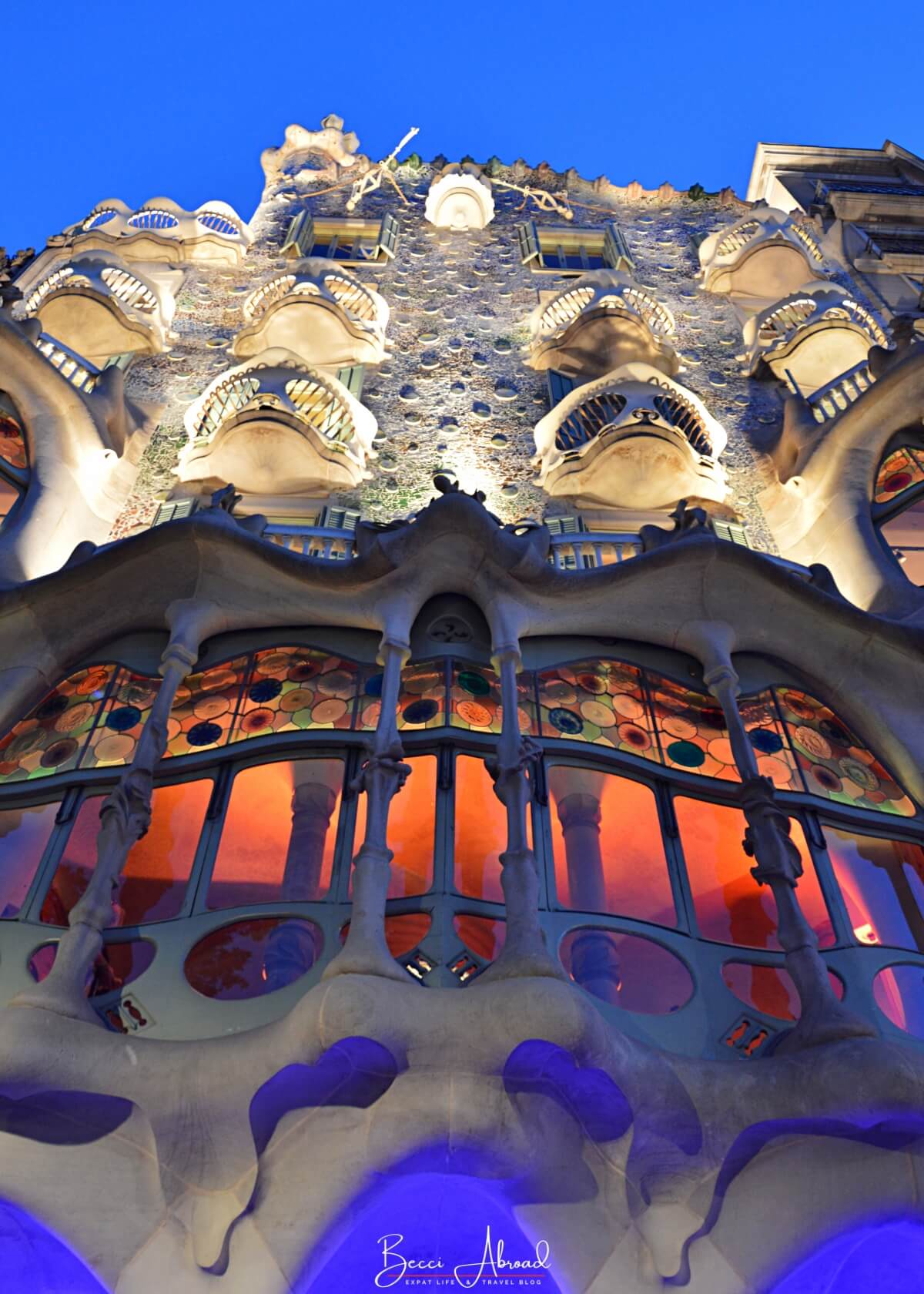
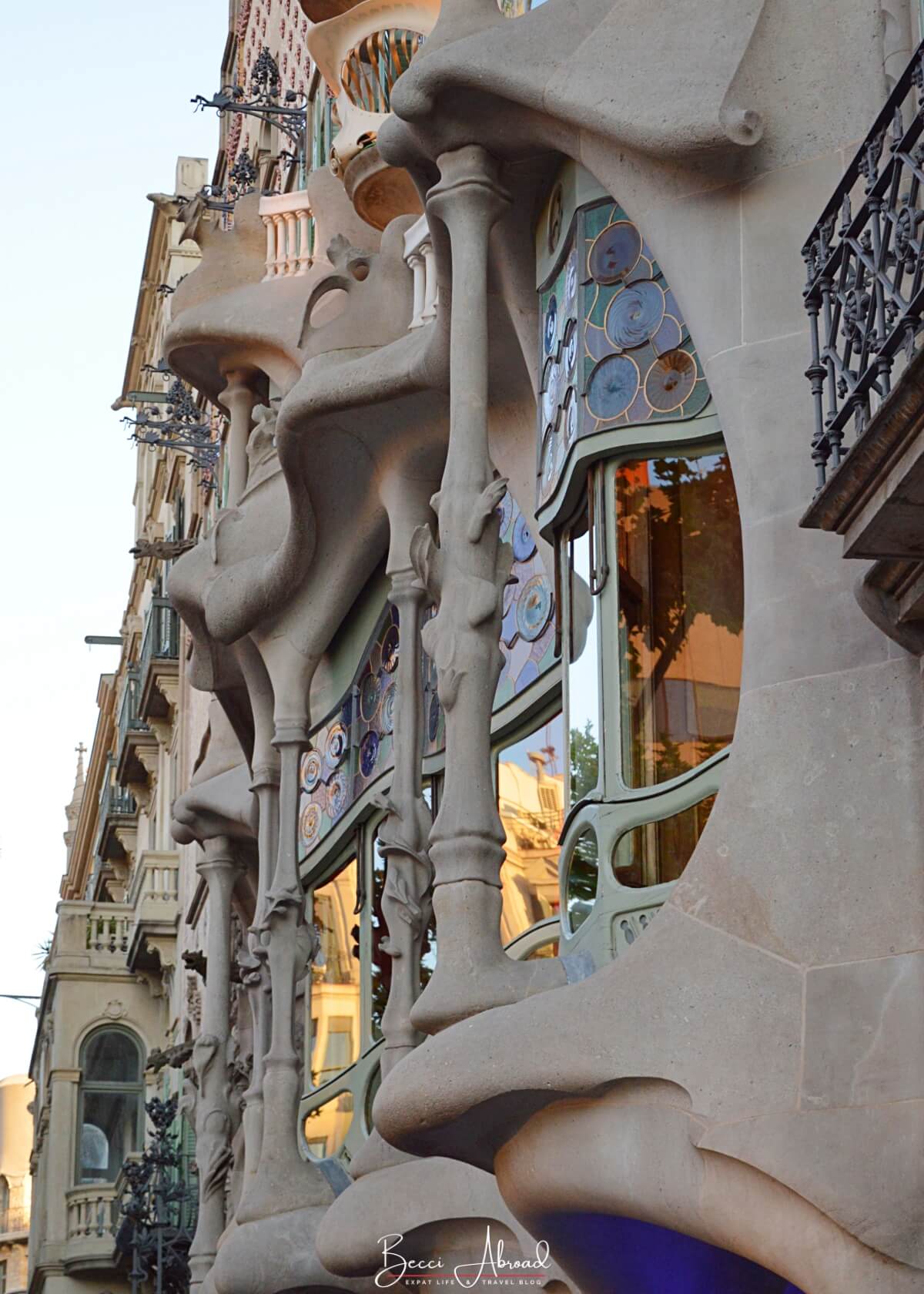
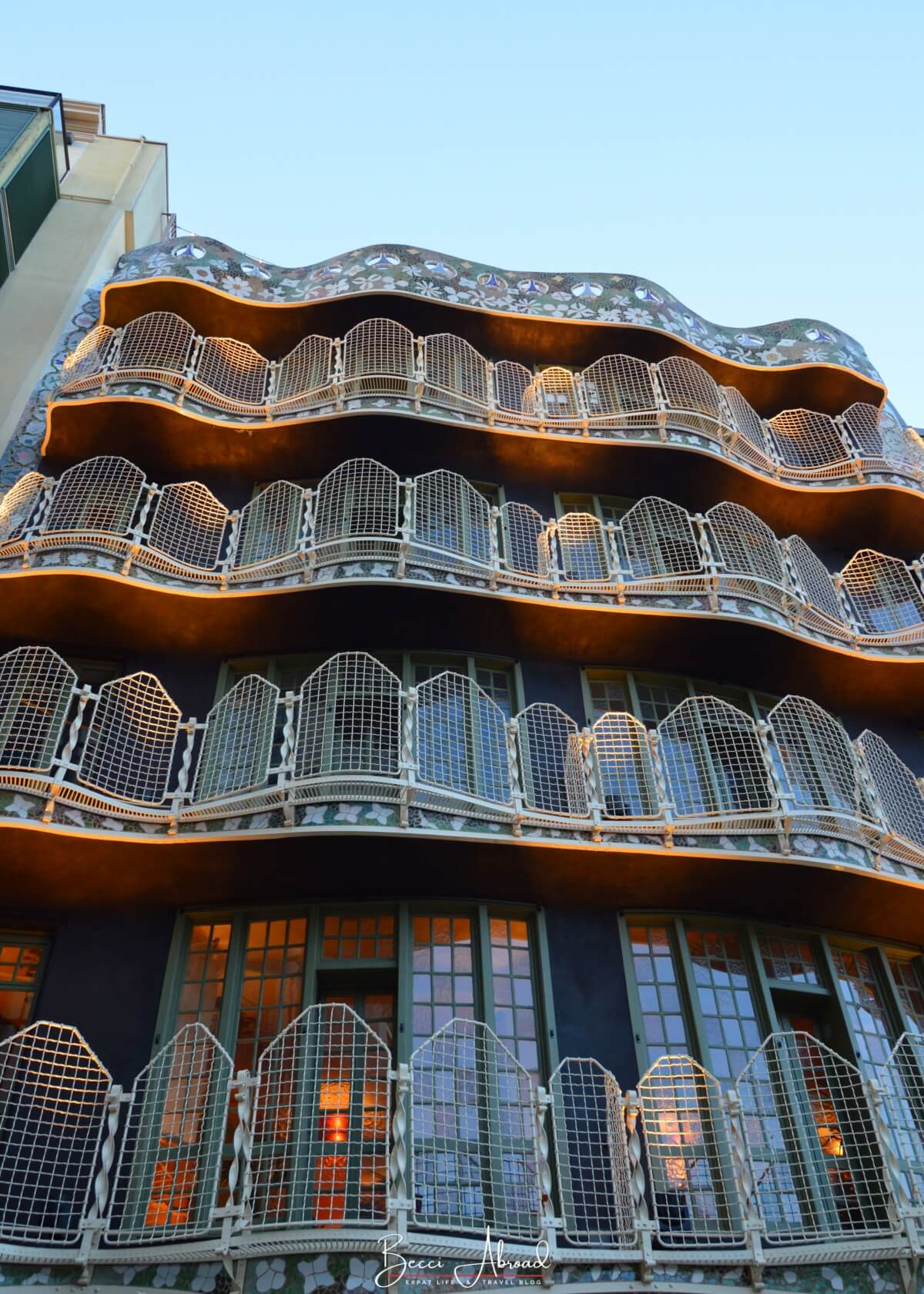
The façade is covered in blue-toned ceramic tiles that mirror the waves of a calm sea. The building’s columns look like bones and its balconies like skulls, giving it a terrifying yet iconic look.
The technique of the broken ceramic tiles used on the façade is called trencadís, and you can see it repeated both inside Casa Batlló and on other of Gaudí´s famous landmarks.
In 2005, Casa Batlló was declared a UNESCO World Heritage Site as part of the “Works of Antoni Gaudí” Collection. The building was highlighted due to its unique development of architecture in the early 20th century.
The UNESCO listing also sparked Casa Batlló’s popularity.
Why Was Casa Batlló Built?
Casa Batlló was built to be the family residence of the Batlló family, a wealthy Catalan family.
Josep Batlló i Casanovas was the head of the Batlló family and a successful textile industrialist. He wanted a unique family home that would stand out on Barcelona’s most prestigious avenue, Passeig de Gràcia.
In 1903, Josep Batlló purchased the building located at Passeig de Gràcia 43 and commissioned Antoni Gaudí to create a new, unique family home.
Batlló gave Gaudí complete creative freedom to create the most spectacular home for the Batlló family.
Casa Batlló belonged to the Batlló family up until the 1950s. The family lived on the two lower floors, and rented out the upper floors. The attic was used as a storage and laundry room.
What Does Casa Batlló Mean?
Casa Batlló means “The House of Batlló” or “The House of the Batlló family.”
How to Pronounce Casa Batlló?
The pronunciation of Casa Batlló can be a bit tricky, especially if you are not a native Spanish or Catalan-speaker.
Batlló is pronounced like “Bat-yo” with the “ll” pronounced a bit like a soft “y”.
“Casa” means house in Spanish and Catalan, as Casa Batlló was the family residence of the Batlló family.
So, Casa Batlló is pronounced like this: “Casa Bat-yo”.
When Was Casa Batlló Built?
The work on the version of Casa Batlló we see today started in 1904.
However, the building itself dates back to 1877. Another Catalan architect, Emili Sala Cortés, created the original building. He was one of Gaudí’s teachers when Gaudí studied architecture.
In 1860, Passeig de Gràcia was created as part of an urban planning project, called the Cerdà Plan, aiming to establish it as the main street of Barcelona.
As a result of the urban planning project, the building designed by Cortés emerged as a plain apartment block. During that period, Barcelona had yet to introduce electric lighting.
In 1903, Josep Batlló bought the building and hired Gaudí to transform it into the impressive masterpiece of Catalan modernism we see today.
When Was Casa Batlló Finished?
Gaudí’s renovation work was completed in 1906, only two years after beginning the work.
Why is Casa Batlló called House of Bones?
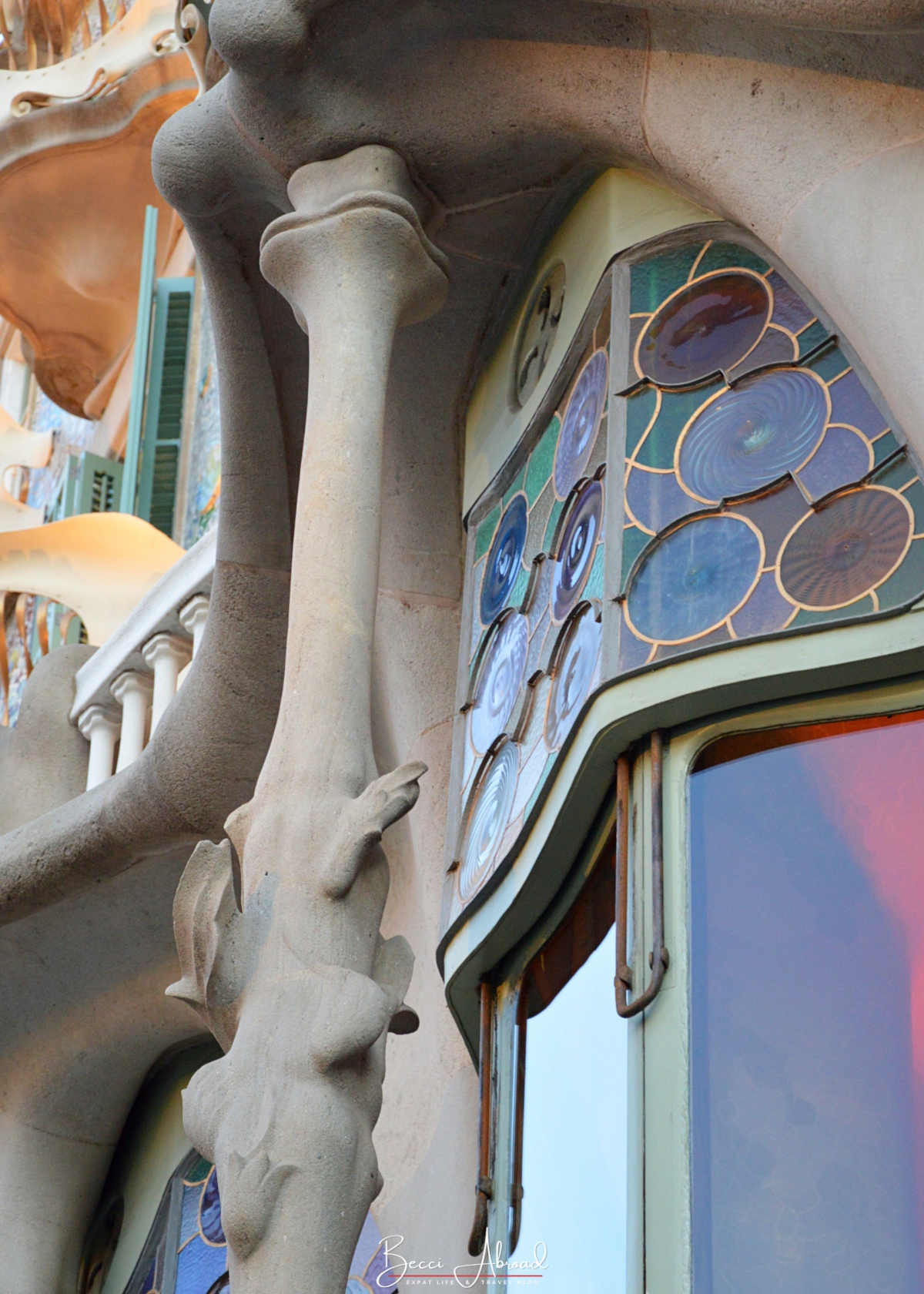
Casa Batlló is called the “House of Bones”, or Casa dels Ossos in Catalan, because of the bone and skeletal-looking columns and balconies.
Another popular nickname for Casa Batlló is the “House of Masks” because some say that the balconies look more like carnival masks.
What is the Story Behind Casa Batlló?
There are many theories surrounding the story behind Casa Batlló and its design.
One of the most popular interpretations of the building and its façade is that of the legend of Saint George and the Dragon.
Saint George, or Sant Jordi in Catalan, is the patron saint of Catalonia. According to the local legend, the knight Sant Jordi saved a princess’s life by defeating a dragon with this sword. The dragon’s blood turned into red roses.
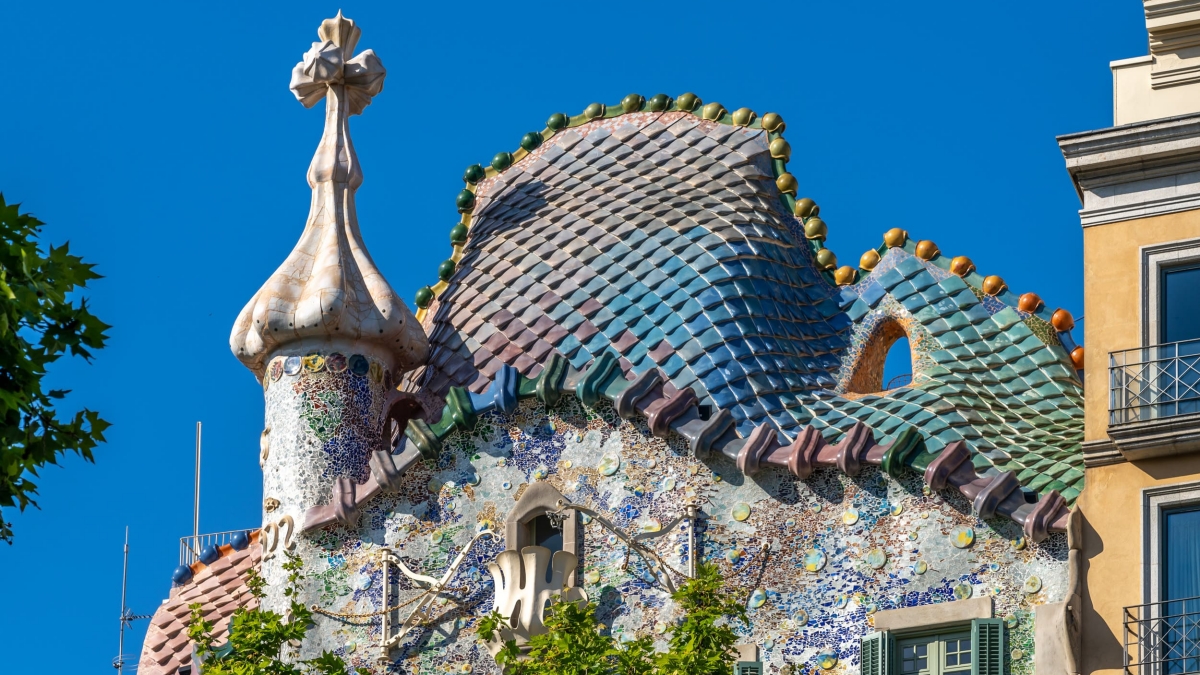
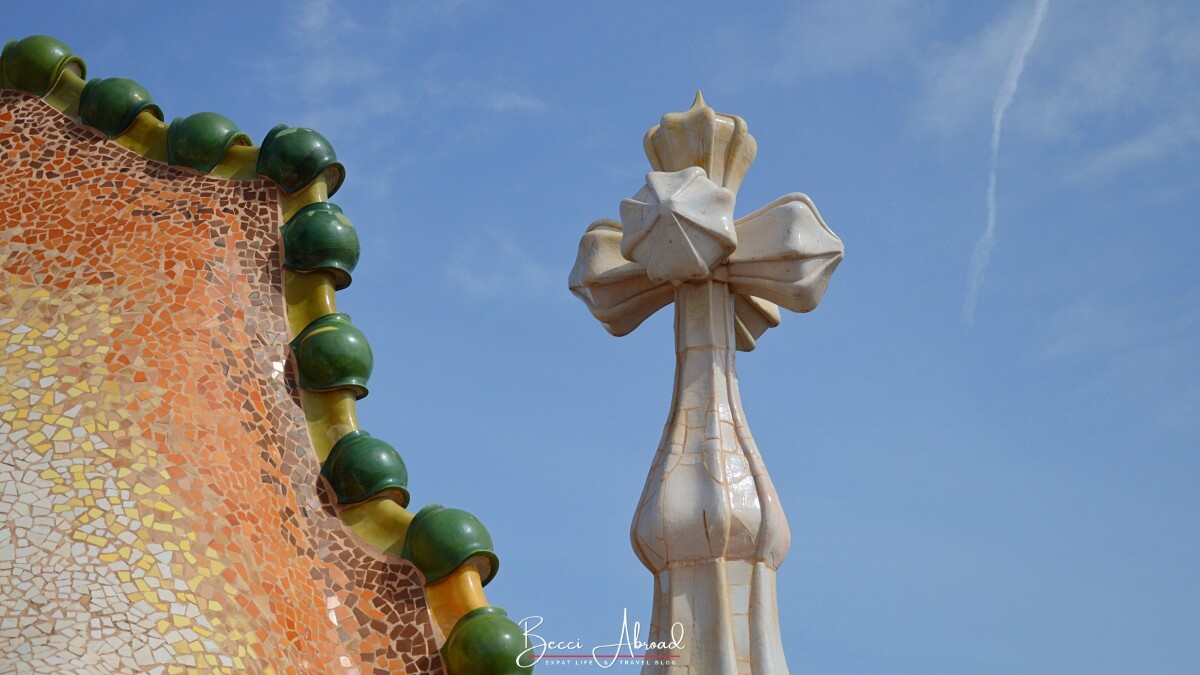
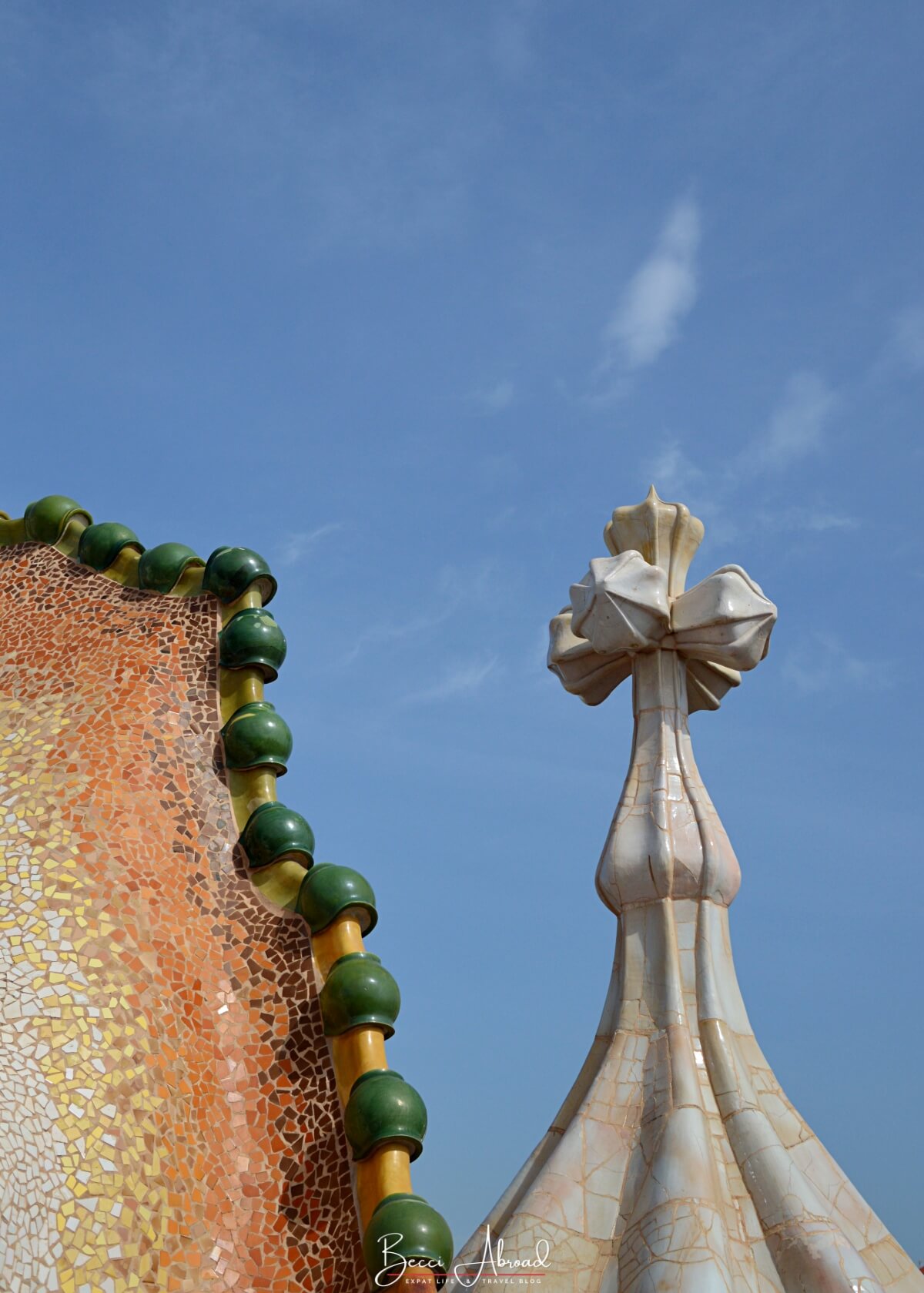
At Casa Batlló, the wavy roof with the colored ceramic tiles is said to represent the dragon’s back. And the large four-armed cross above the roof symbolizes the end of the knight’s sword, killing the dragón to free the princess.
If you look closely, you’ll see that the first balcony from the roof is different than the rest. This balcony looks like a blossoming flower and is known as the princess’s balcony.
Further down, the balconies look like skulls, and the columns of the large windows on the first floor look like bones, representing the remains of the dragon’s victims.
The legend of Saint George and the Dragon is a very popular local legend. Each year on April 23rd, Catalonia celebrates Saint George’s Day, also known as Catalonia’s Valentine’s Day.
What is Casa Batlló Used For Today?
Today, Casa Batlló is a museum and one of the most famous landmarks in Barcelona, receiving visitors from around the world.
You can visit Casa Batlló on a standard visit (more about tickets later on) or attend one of the many special events hosted at this unique Gaudí house throughout the year, including night visits and concerts.
Who Owns Casa Batlló Today?
Today, Casa Batlló is owned by the Bernat family, the founders of the successful candy company, Chupa Chups.
The Bernat family bought Casa Batlló in 1995 and started a complete restoration of the building.
In 2002, Casa Batlló was opened to the public. In 2004, the building received “The Best in Heritage” Prize at the European Heritage Awards for its impressive restoration effort.
Where Is Casa Batlló Located?
Casa Batlló is located on Passeig de Gràcia 43 in Barcelona.
The neighborhood housing Casa Batlló is called the Eixample, and features several architectural gems by famous modernist architects.
Especially, the block where Casa Batlló is located is famous for the high concentration of modernist houses. In Catalan, the block is known as Illa de la Discòrdia, or translated as “Block of Discord”, because of the rivalry between the famous architects.
Together with Casa Batlló, the Block of Discord includes:
- Casa Amatller by Josep Puig i Cadafalch,
- Casa Lleó Morera by Lluís Domènech i Montaner,
- Casa Mulleras by Enric Sagnier,
- Casa Josefina Bonet by Marcel·lí Coquillat.
Gaudí was the last of the modernist architects to work on the Block of Discord. For this reason, he also knew what his famous neighbors (and competitors) had done when he created Casa Batlló.
Further down Passeig de Gràcia from Casa Batlló, you will also find another Gaudí creation, Casa Milà (La Pedrera).
Casa Batlló on the Map
Click on “View larger map” to open the location in your Google Maps app or in a separate window.
How to Get to Casa Batlló?
The easiest way to get to Casa Batlló is to walk from your hotel or take the metro.
Casa Batlló is located right in front of the metro station Passeig de Gràcia and a few minutes’ walk away from the Diagonal metro station.
You can take metro lines L2, L3, or L4 to Passeig de Gràcia or metro lines L3 and L5 to Diagonal.
Plan Your Visit to Casa Batlló in Barcelona
In this section, you will find practical information to plan your visit to Casa Batlló in Barcelona!
What Is the Best Time of the Day to Visit Casa Batlló?
The best time to visit Casa Batlló is early mornings or in the evening.
If you prioritize a quieter and less-busy experience of Casa Batlló, aim to go early in the morning, around the time they open.
There is even an option to purchase an early bird ticket, where you get in before the normal opening hour.
However, if you want a more spectacular experience, you should choose to go in the evening around sunset when they turn on the nighttime lighting.
The first time, I went to Casa Batlló, we went around 11 am on a Saturday, and it was very busy. The staff were lovely to help out as we visited with my husband’s grandmother.
The second time, I visited, we went in the evening, and the lighting was turned on, and it was a completely different and more impressive experience!
What Is the Best Time of the Year to Visit Casa Batlló?
You can visit Casa Batlló all year round, but personally, I think the best time of the year to visit is in April for Sant Jordi!
Sant Jordi is a popular Catalan public holiday, where Casa Batlló is decorated with beautiful red roses on its balconies.
Another beautiful time of the year to visit Casa Batlló is for Christmas, featuring a unique Christmas light show.
Events at Casa Batlló
Throughout the year, the Gaudí house features different events and decorations depending on the seasons.
How the building has become a living part of Barcelona’s cityscape is one of the things I really like about Casa Batlló. There always seems to be something new going on.
Here are some of the most popular and iconic events to keep an eye out for when planning your visit to Barcelona
Sant Jordi (April)
In April, Catalonia celebrates Sant Jordi. This local holiday honors love and literature with books and roses.
In Barcelona, you’ll find everything covered in roses and books, and Casa Batlló is no exception!
Each year, for a couple of days around April 23rd, the balconies on the façade of Casa Batlló are decorated with red roses.
Casa Batlló dressed in red for Sant Jordi is simply one of my favorite times of the year in Barcelona!
Christmas Lights (December)
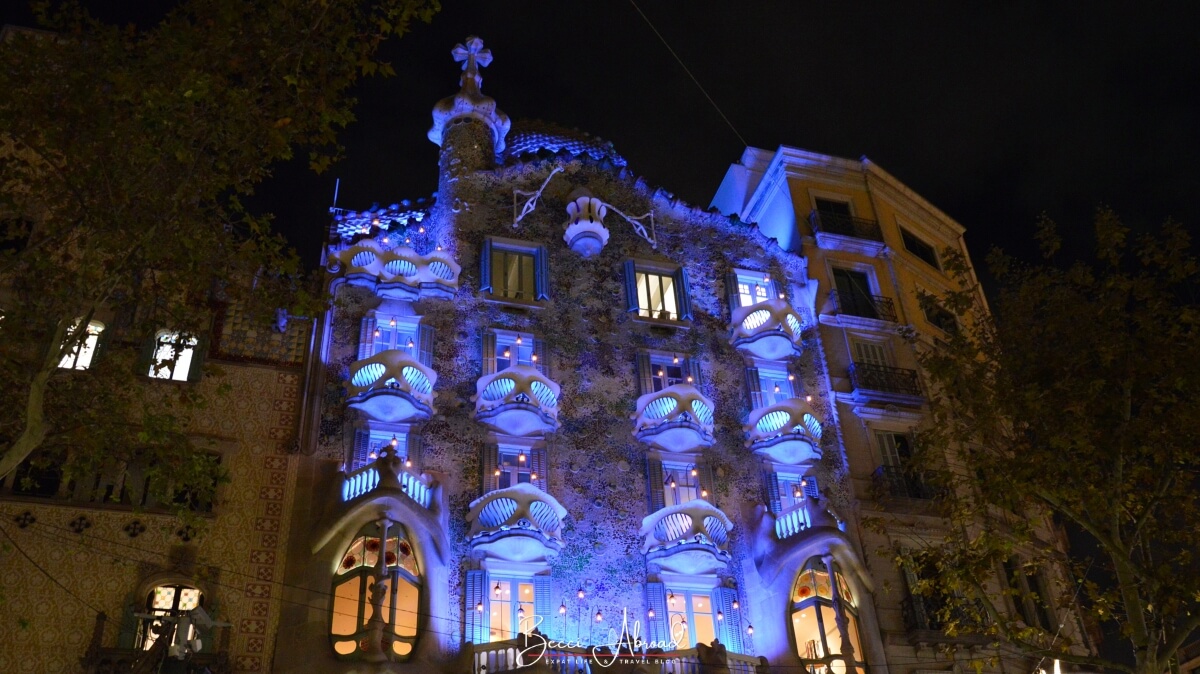
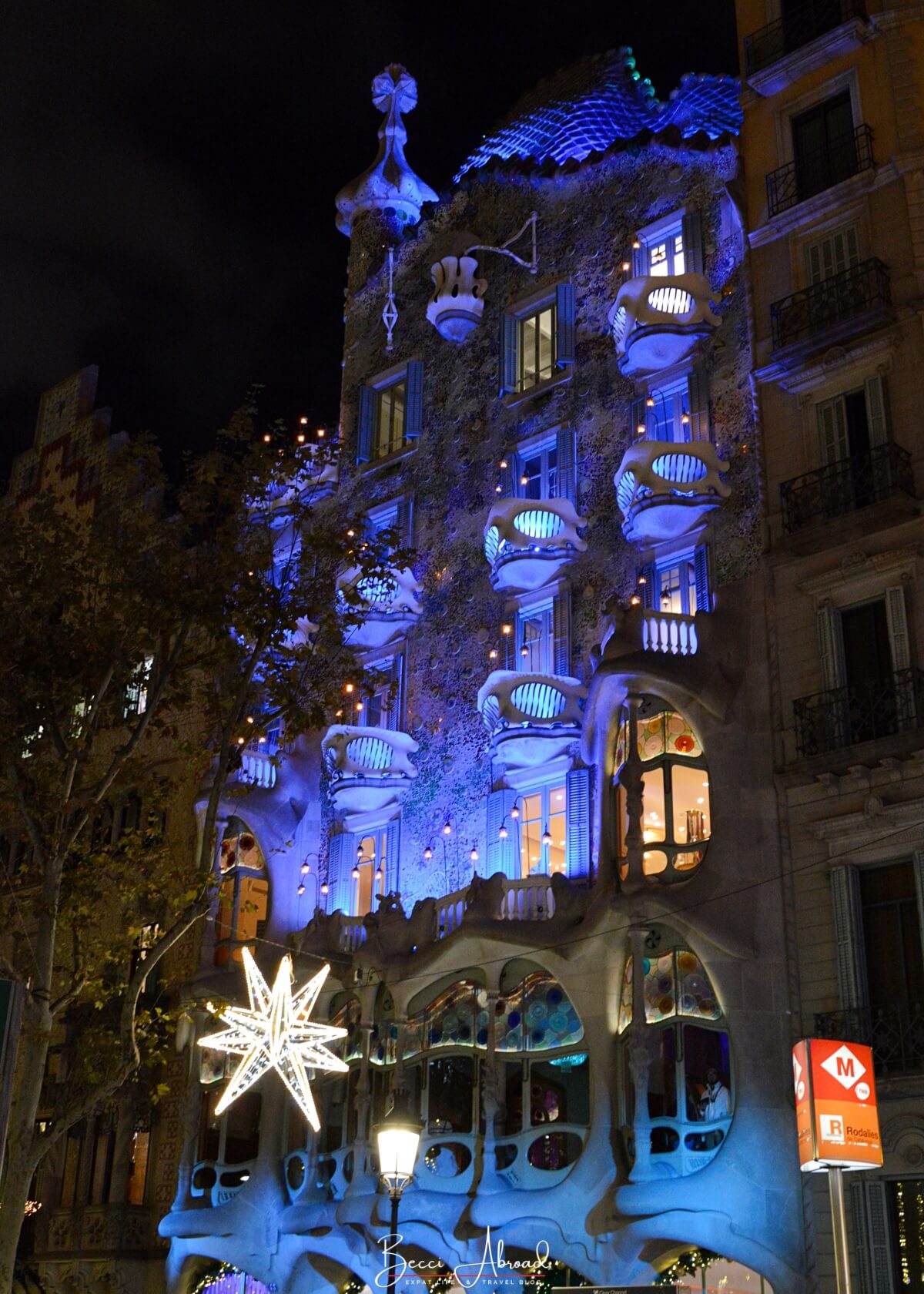
Each year during Christmas, Casa Batlló glows with festive Christmas lights and music, giving the already-magical façade even more sparkle.
The Christmas lights at Casa Batlló get switched on at the same time as Barcelona City turns on all the Christmas street lights, also called iluminación navideña in Spanish.
The Christmas light show on the façade of Casa Batlló takes place in the evening from the end of November to the beginning of January. The show starts at around 6:30 pm and runs until 9:30 pm.
If you are visiting Barcelona in the winter, you should definitely stop by Casa Batlló in the evening to experience this unique light show.
Winter Nights (November – January)
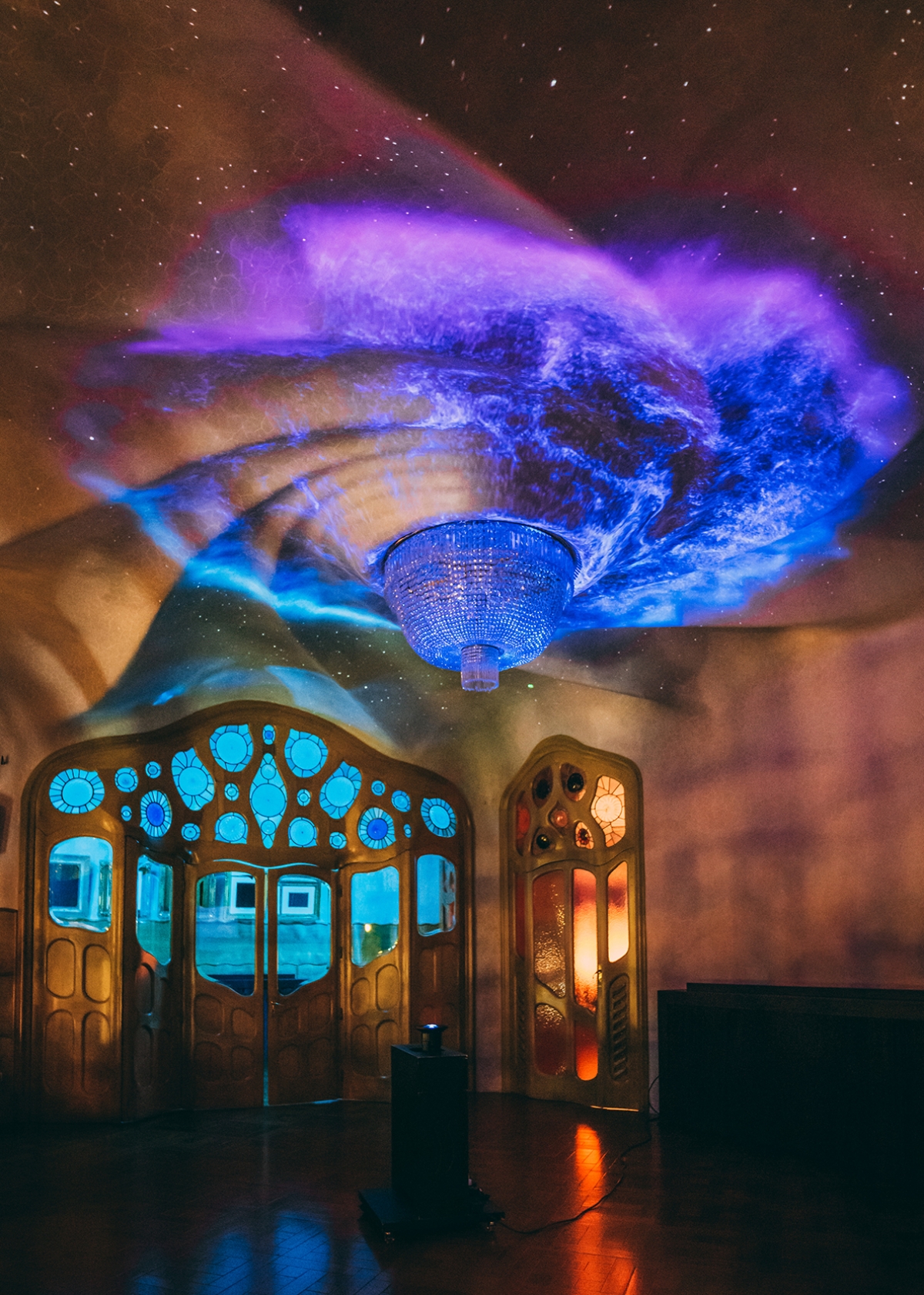
During the winter months in Barcelona, Casa Batlló has for the past four years offered a special nighttime experience called Winter Nights.
The Winter Night events feature special nighttime lighting inside Casa Batlló, creating a dreamy atmosphere throughout the house.
The experience includes a special audio guide. The guide explains the building’s architecture and tells two unique stories inspired by two former residents of the house.
You can choose between stories told from the point of view of the Batlló family’s nanny, Fermina, or the Batlló’s great-grandson, Juan Carlos Marimon.
The idea is to create an intimate experience and share true stories about the daily life of the famous Batlló family in this unique house.
The Winter Night experience starts at 6:30 pm, and included in the visit is also a hot drink.
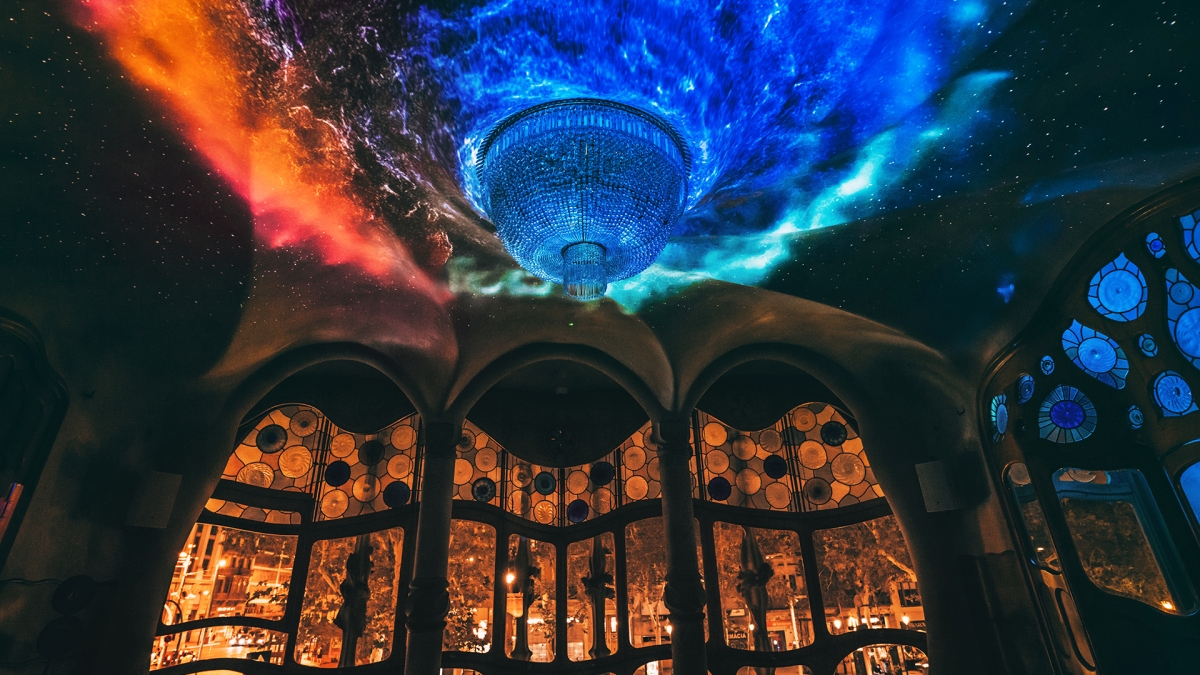
Casa Batlló Mapping (February)
Each year during the first weekend of February, you can experience Casa Batlló Mapping, a light-mapping show projected directly onto the façade.
The light-mapping is a digital art show using light projections to turn the building into a living canvas.
Each year, it’s a different artist who has prepared the mapping show, meaning you’ll get a unique experience each year.
The special projections last around 10-minutes and take place every 30 minutes. The shows attract both locals and visitors and make Casa Batlló the center of life in Barcelona.
In 2026, the annual mapping will take place during the weekend of January 31st and February 1st, and will celebrate Gaudí Year 2026, 100 years since the death of Gaudí.
Magical Nights with Rooftop Concerts (March through November)
From March to November, Casa Batlló offers special visits, including a concert on the Dragon’s rooftop.
The event is called Magical Nights, and includes a visit to Casa Batlló starting from 8 pm, and ending with a live concert on the rooftop at 9 pm.
The visit includes a glass of cava and a table on the rooftop for enjoying the concert.
The music styles played during the concerts change, and you can find the schedule on the official website a couple of weeks in advance.
Casa Batlló Opening Hours
Casa Batlló is open from 8:30 am in the morning to 10:30 pm at night all year round.
The last admission to Casa Batlló is at 9:30 pm to allow you time to explore the Gaudí house before they close the doors.
Timeslots for Visiting Casa Batlló
Casa Batlló has fixed timeslots for when you can enter the building, which you choose when you book your online tickets.
When you are inside the building, you can spend as much time exploring as you want to.
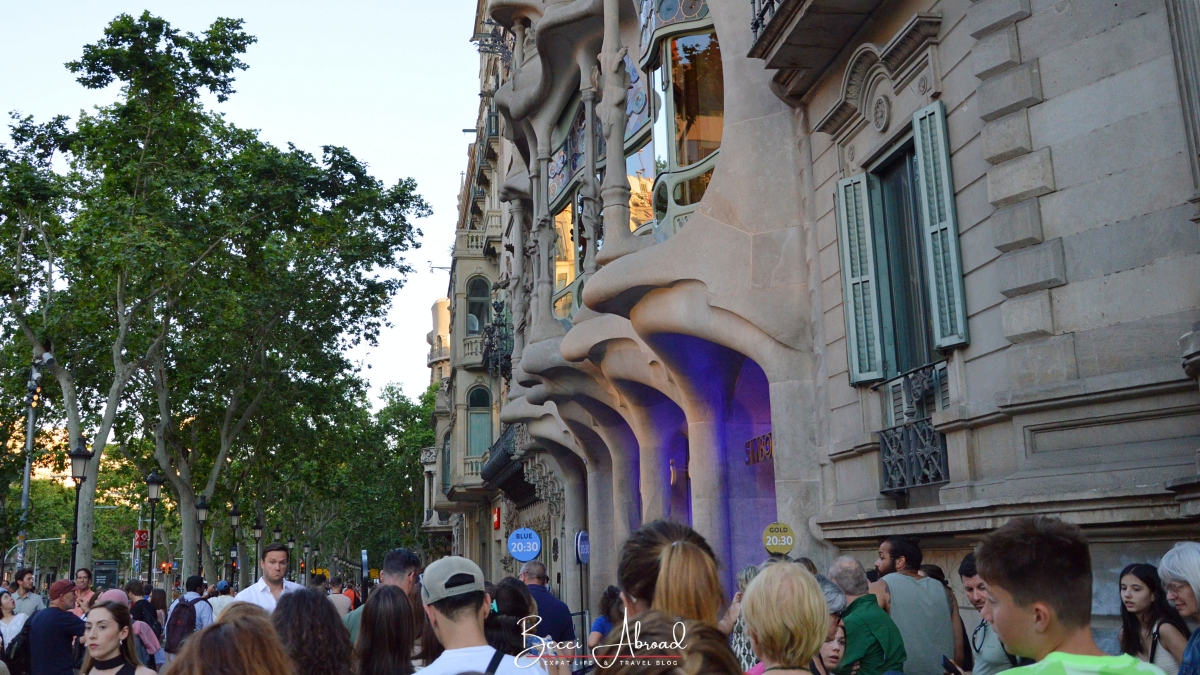
Once you arrive at Casa Batlló, you’ll see different queues outside the building. In front of each queue, there is a small sign with the timeslot for the next entrance.
Each of the signs has a different color, depending on the type of ticket you bought (more about the different ticket types below).
Once you have found the sign corresponding to the ticket and timeslot you have purchased, you simply queue up and wait to get let inside the building.
You should stick to this time slot. If you arrive outside your assigned timeslot, the guards at the entrances are likely to refuse you access, and there are no refunds on your ticket.
What to Wear for Visiting Casa Batlló?
I recommend wearing comfortable shoes you can walk in for visiting Casa Batlló, as you will be doing a lot of walking and climbing stairs.
It is also a good idea to wear clothes in layers. When inside the house, it can feel nice and warm, and you might want to take off some layers.
As you step outside to explore the backyard or the rooftop, it might get cooler depending on the time of the year you visit.
How Long Does It Take to Walk Through Casa Batlló?
Most people spend around one to two hours exploring Casa Batlló.
But if you’re into photography or architecture (or both!), I would recommend that you give yourself a bit more time to explore.
Also, if you purchase one of the premium tickets (Gold or Platinum), there are additional rooms included in your ticket price. So, it might take you a bit longer to visit everything.
Can You Visit Casa Batlló on Your Own?
Yes, you can absolutely visit Casa Batlló on your own!
In fact, the self-guided audio guide lets you explore the famous Gaudí house at your own pace.
Getting Your Casa Batlló Tickets
Now, let’s explore a bit more about how to get your Casa Batlló tickets and the different ticket options available.
How to Buy Tickets for Casa Batlló?
The easiest way is to book directly through Casa Batlló’s official website.
Once you have completed your purchase, you’ll receive a confirmation e-mail with a digital ticket in pdf and an option to save the ticket to your Apple Wallet.
Once you arrive at Casa Batlló, you simply need to show the online ticket on your phone, and the staff will scan it.
Do You Need to Buy Tickets in Advance for Casa Batlló in Barcelona?
Yes, you should definitely book your tickets to Casa Batlló in advance!
I would especially recommend you purchase your Casa Batlló tickets in advance if you are visiting during the summer months, on weekends, or during special events.
The tickets to Casa Batlló book out pretty quickly, and the times I have visited there have always been people who had to leave because there were no more tickets available.
So, yes, yes, yes, book your Casa Batlló ticket in advance!
How Much is the Casa Batlló Entrance?
The tickets to Casa Batlló are around €25 to €65, depending on the ticket type, season, and special events.
Casa Batlló has four different categories of standard tickets:
- Blue – The basic ticket with access to the house’s main floor, the backyard, and the Gaudí immersive Cube, as well as an audio guide available in several languages.
- Silver – The basic ticket with a little bit more, includes everything in Blue plus access to the Dragon’s Rooftop.
- Gold – The premier ticket that offers access to more parts of Casa Batlló and an augmented reality tablet.
- Platinum – The VIP option with access to the same additional rooms as the Gold ticket, as well as fast-track entry and better options for cancellation and for change of timeslot.
- Morning Visit – The special early-bird ticket lets you enjoy the Gaudí house as the first one with the entrance at 8:30 am. Keep in mind that the morning visits can only be purchased online.
Overview of Casa Batlló Ticket Types
To help you decide which is the best Casa Batlló ticket for you, I have created an overview of the different ticket types.
| Casa Batlló Ticket Type | What’s Included? | Price for Adults |
|---|---|---|
| Blue | – Audioguide – The lobby & main floor – Gaudí Cube | From €25 |
| Silver | – Audioguide – The lobby & main floor – Gaudí Cube – The Dragon’s rooftop | From €30 |
| Gold | – Audioguide – The lobby & main floor – Gaudí Cube – The Dragon’s rooftop – Concierge room – The Batlló family’s private residence – Immersive Gaudí Dôme & augmented reality experience | From €35 |
| Platinum | – Audioguide – The lobby & main floor – Gaudí Cube – The Dragon’s rooftop Concierge room – The Batlló family’s private residence – Immersive Gaudí Dôme & augmented reality experience – Priority entrance & flexible cancellation | From €45 |
| Morning Visit | – Entrance from 8:30 am – Audioguide – The lobby & main floor – Gaudí Cube – The dragon’s rooftop – The concierge room – The Batlló family’s private residence – Immersive Gaudí Dôme & augmented reality experience | €45 |
Casa Batlló Tickets Discounts
There are several discounts available at Casa Batlló.
Here are some of the most common discounts for Casa Batlló tickets:
- Discounts for Children – Children below 12 years enter for free if they are accompanied by an adult. There are reduced rates available for children between 12 and 17 years.
- Discounts for Students – Students can get a reduced price on their Casa Batlló ticket by showing a valid student card.
- Discounts for Seniors – Seniors aged 65 years or older can get a discount on their Casa Batlló tickets.
- Discounts for Disabilities – Visitors with disabilities and, in some cases, their companions receive discounted entry, depending on disability accreditation.
- Discounts for Residents – Barcelona residents can enjoy a 2-for-1 discount on most entrances to Casa Batlló.
- Discounts for the Barcelona Card – Entrance to Casa Batlló is not included with the Barcelona Card. But there is a discount on your Casa Batlló ticket if you have purchased the Barcelona Card. Important: You must purchase your Casa Batlló ticket at the ticket office to get the discount with the Barcelona Card.
Always double-check the detailed discounts info at the official website and make sure you bring the necessary documentation.
When I visited Casa Batlló the first time, we had a senior ticket for my husband’s grandmother. We also had a 2-for-1 resident ticket for my husband and me because we lived in Barcelona. The staff did not ask for any documents when we arrived.
Inside Casa Batlló: What Is There to See Inside Casa Batlló?
We have explored the history of Casa Batlló, how to plan your visit, and get your tickets, but what is actually to see inside the iconic Gaudí house?
Let’s explore what you’ll experience inside Casa Batlló!
The Entrance and Lobby
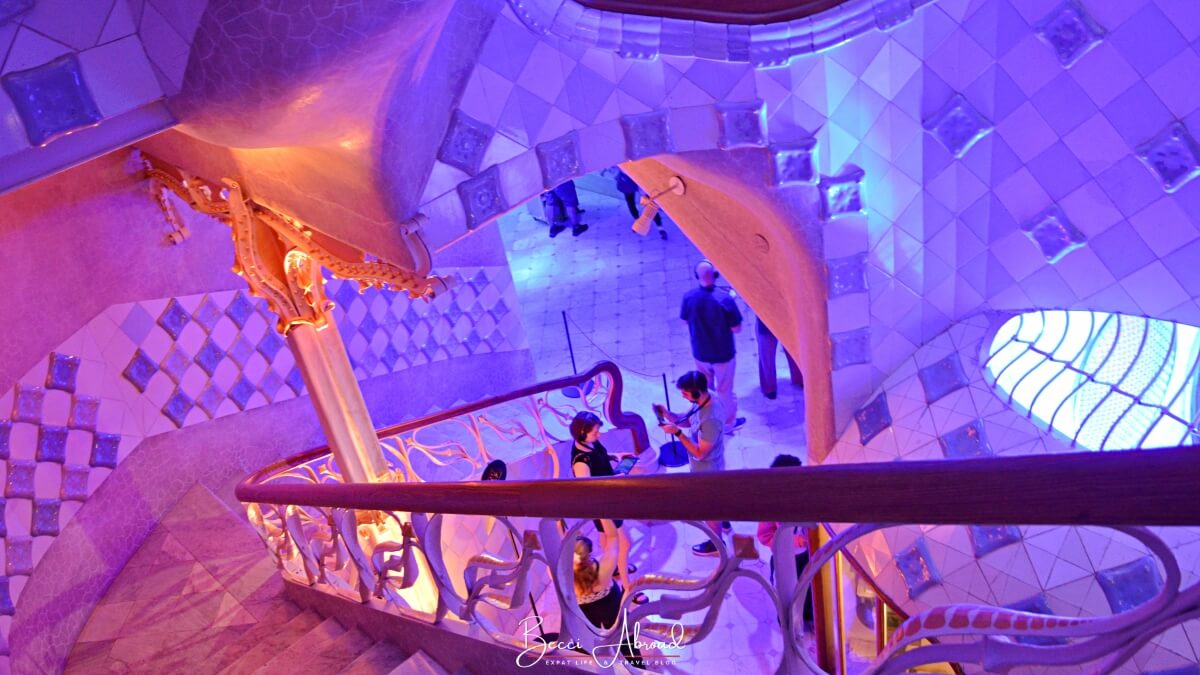
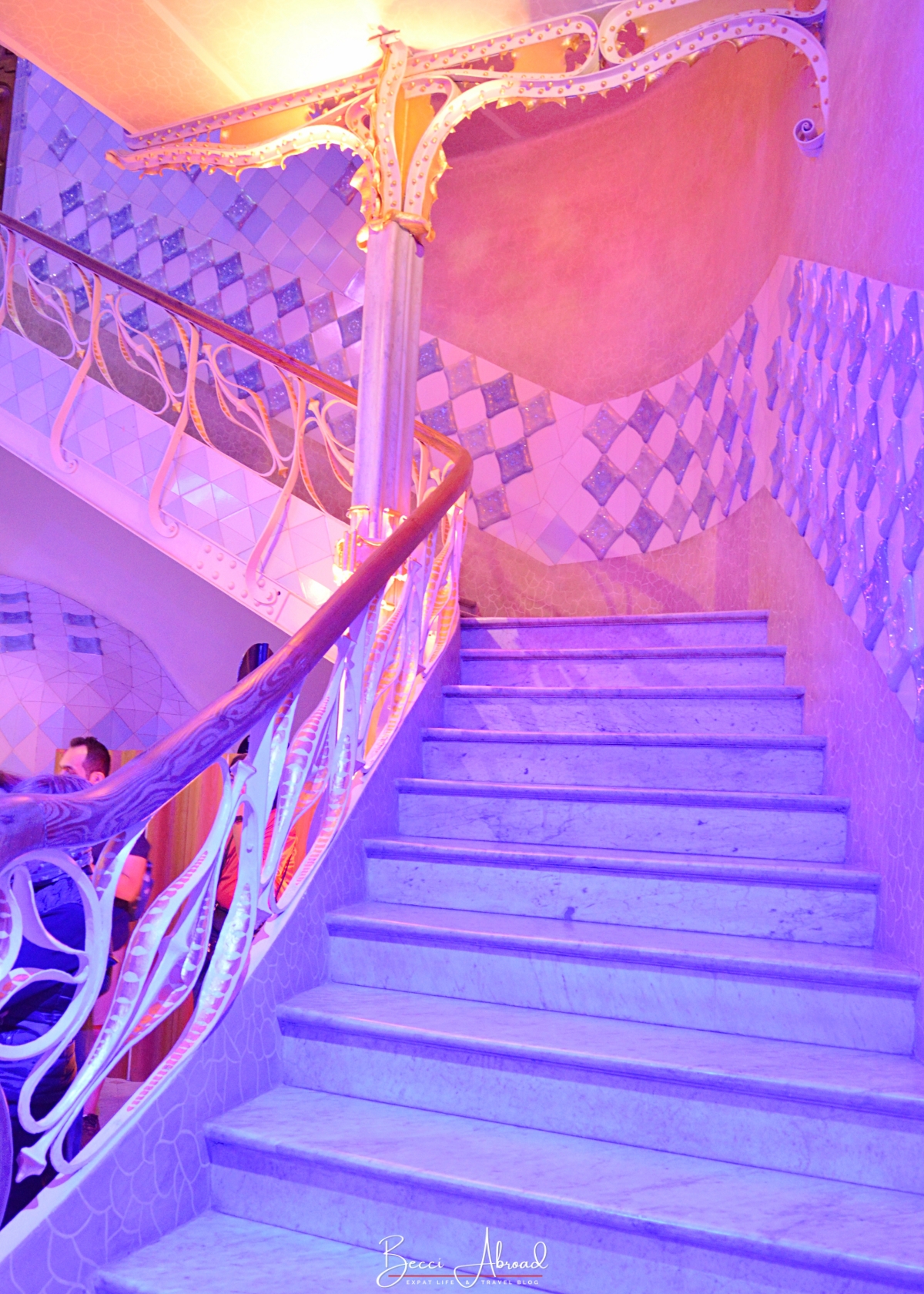
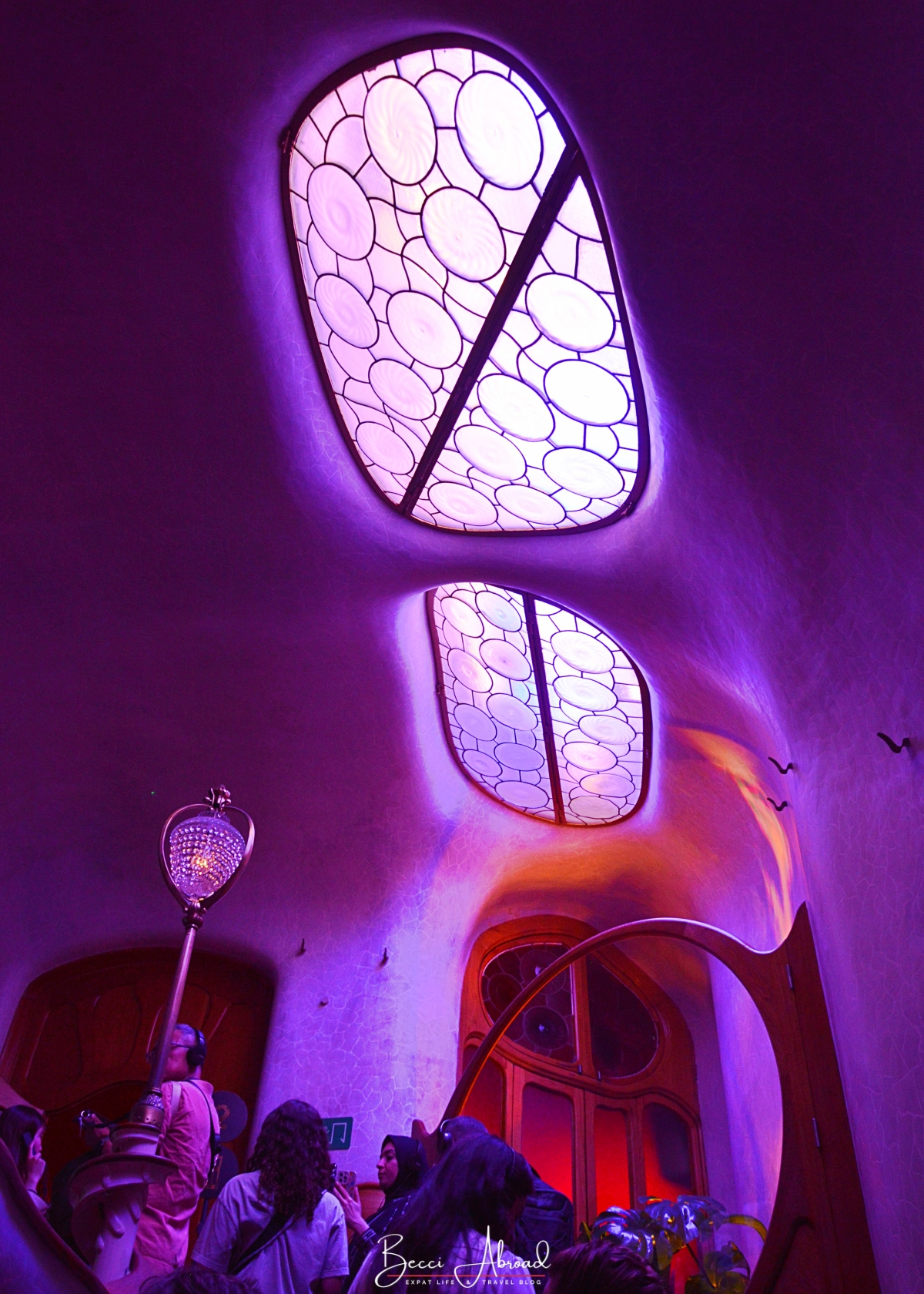
You start your visit by entering the lobby on the ground floor, featuring a curvy staircase leading up to the main floor.
The wooden staircase looks like the spine or the tail of a large animal. Maybe it is actually the tail of the dragon from the legend of Saint George?
The entrance and staircase also feel like an underwater environment. As you climb the stairs to the first floor, take a look at the big, round, stained-glass windows. Don’t they look a bit like turtles or seashells?
I found the lobby and the staircase a lot more magical to visit in the evening, when the lighting helps create this blue-ish underwater atmosphere.
Mushroom Fireplace
As you walk up the wooden staircase, you come to the noble floor of the Batlló family’s residence.
The rooms are unfurnished, but if you have purchased the Gold or Platinum tickets, the AR visuals show visuals of what the rooms might have looked like back in the day.
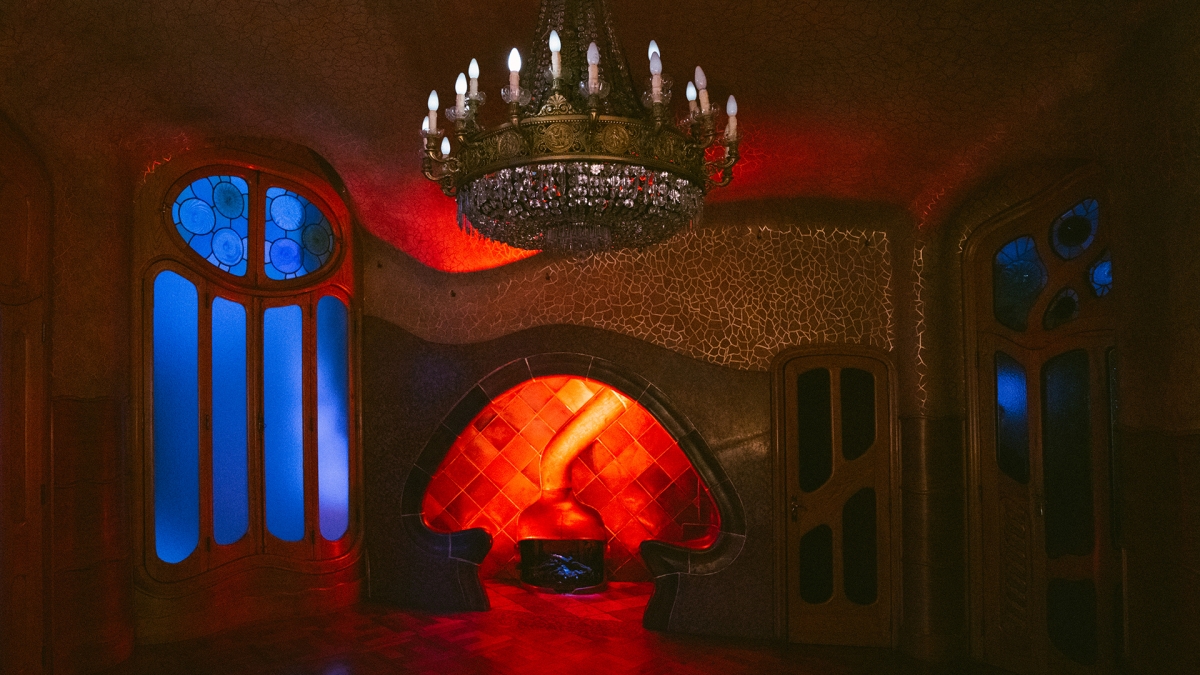
The first room you enter features a mushroom-shaped fireplace and beautifully decorated walls that almost look like animal skin.
Gaudí’s original design of the walls was discovered as part of the restoration project that started in 2018.
The Living Room
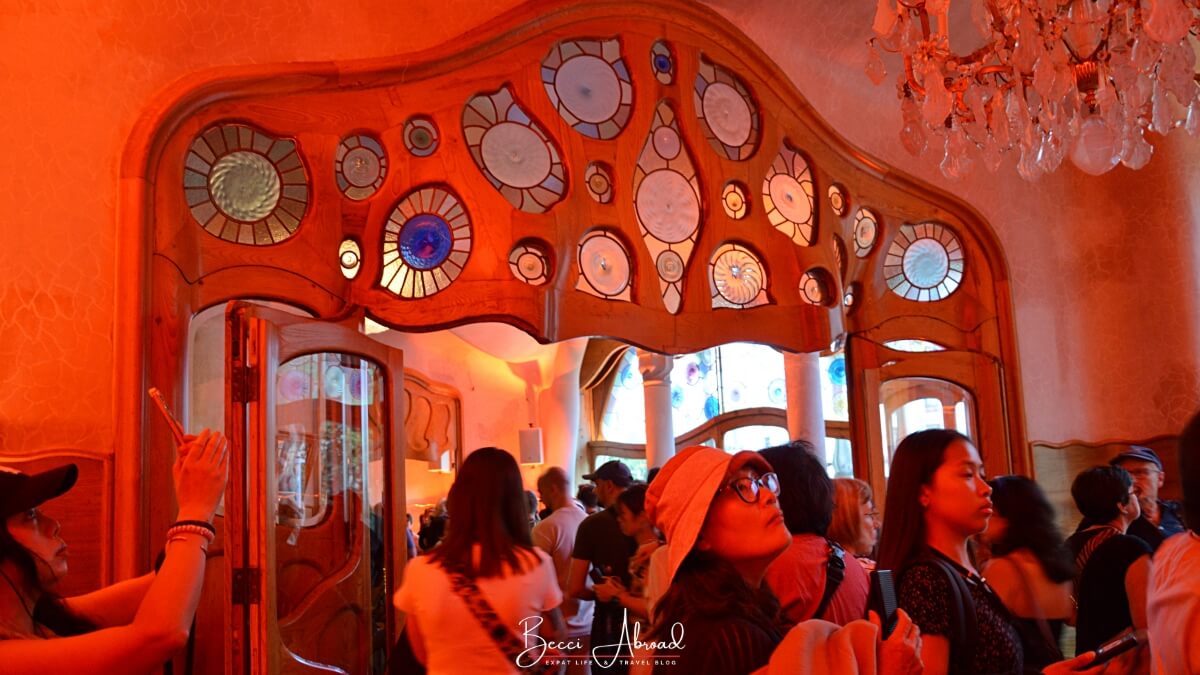
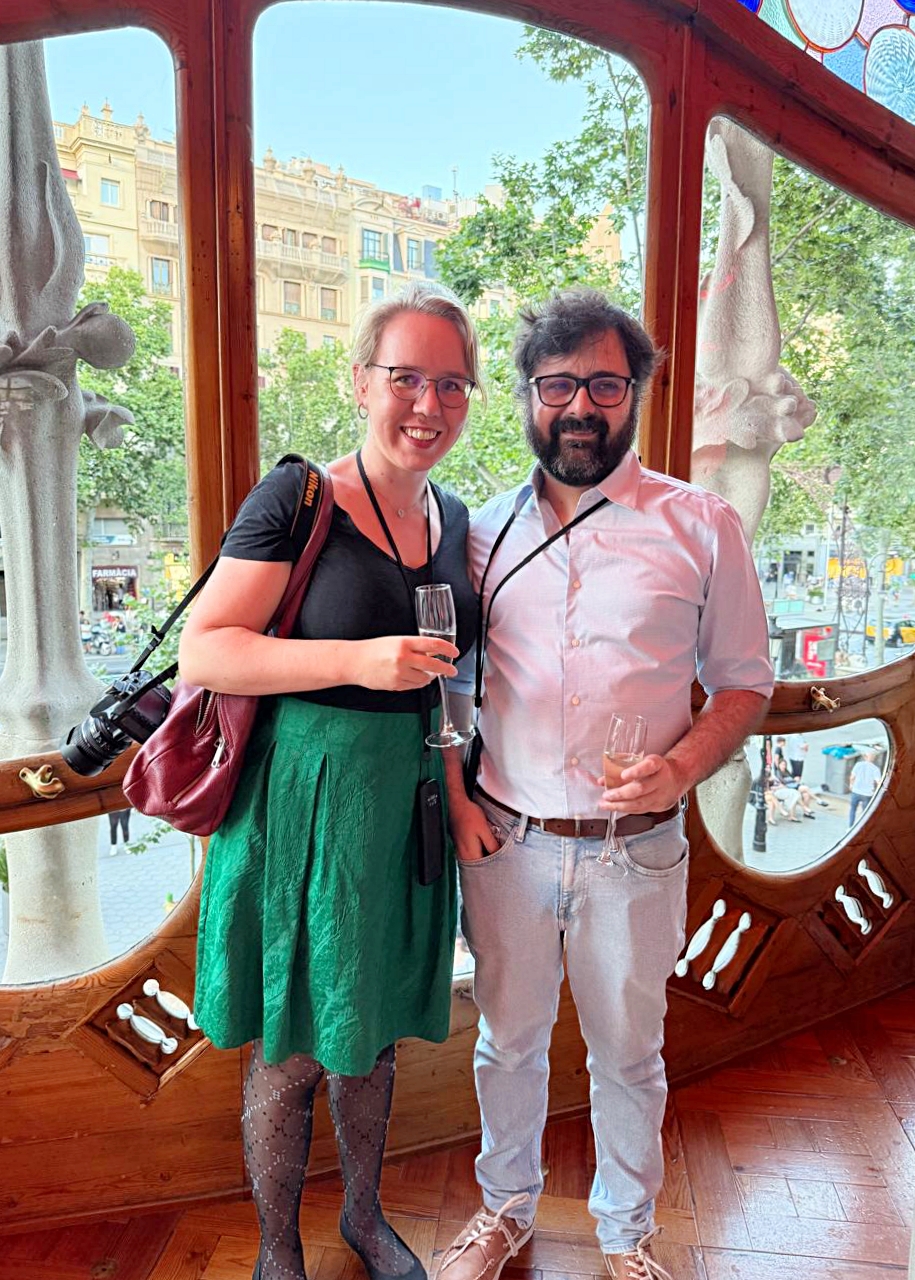
The living room is the true star of the show at Casa Batlló!
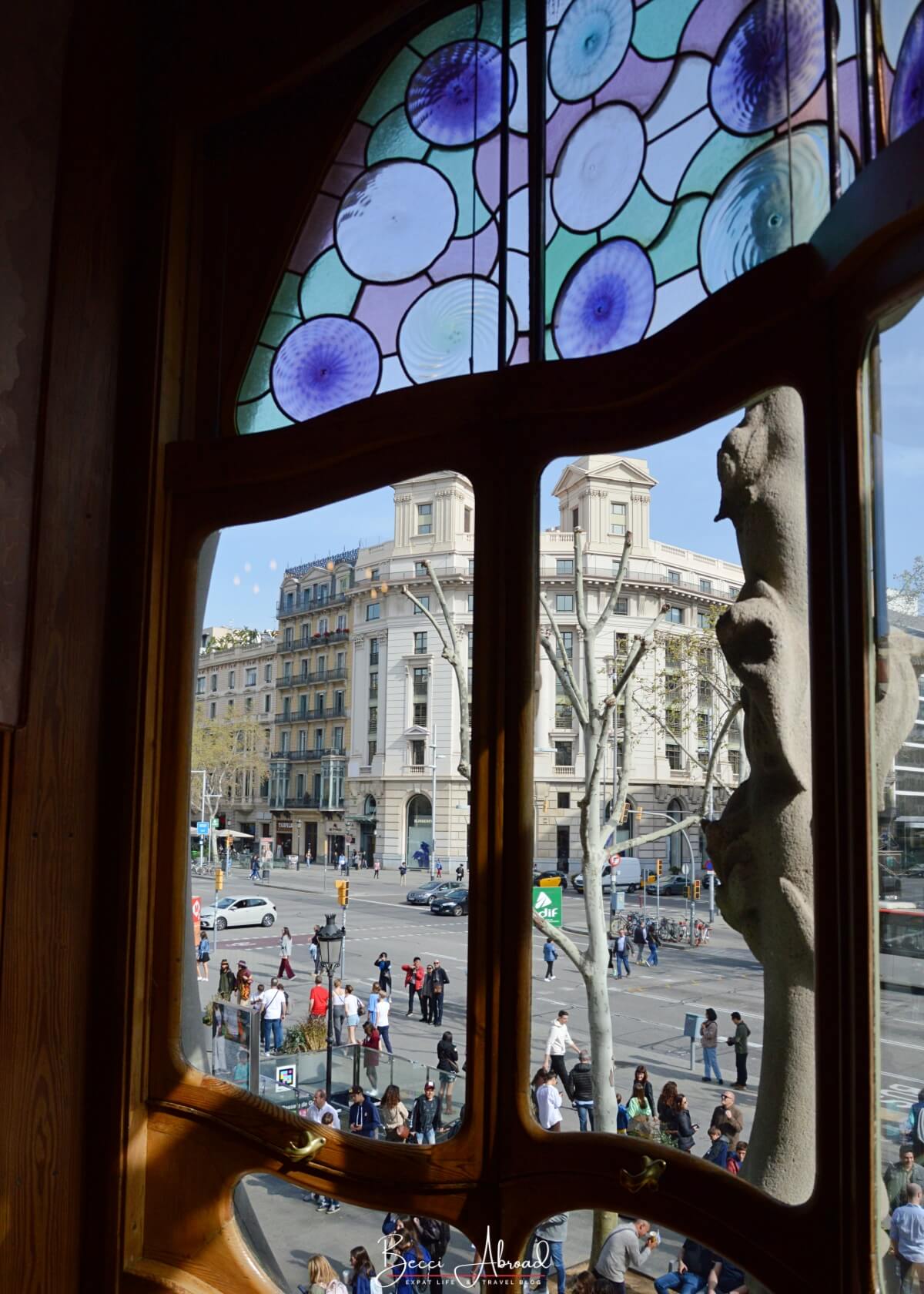
The large windows you can see from street level on the Passeig de Gràcia are in the living room.
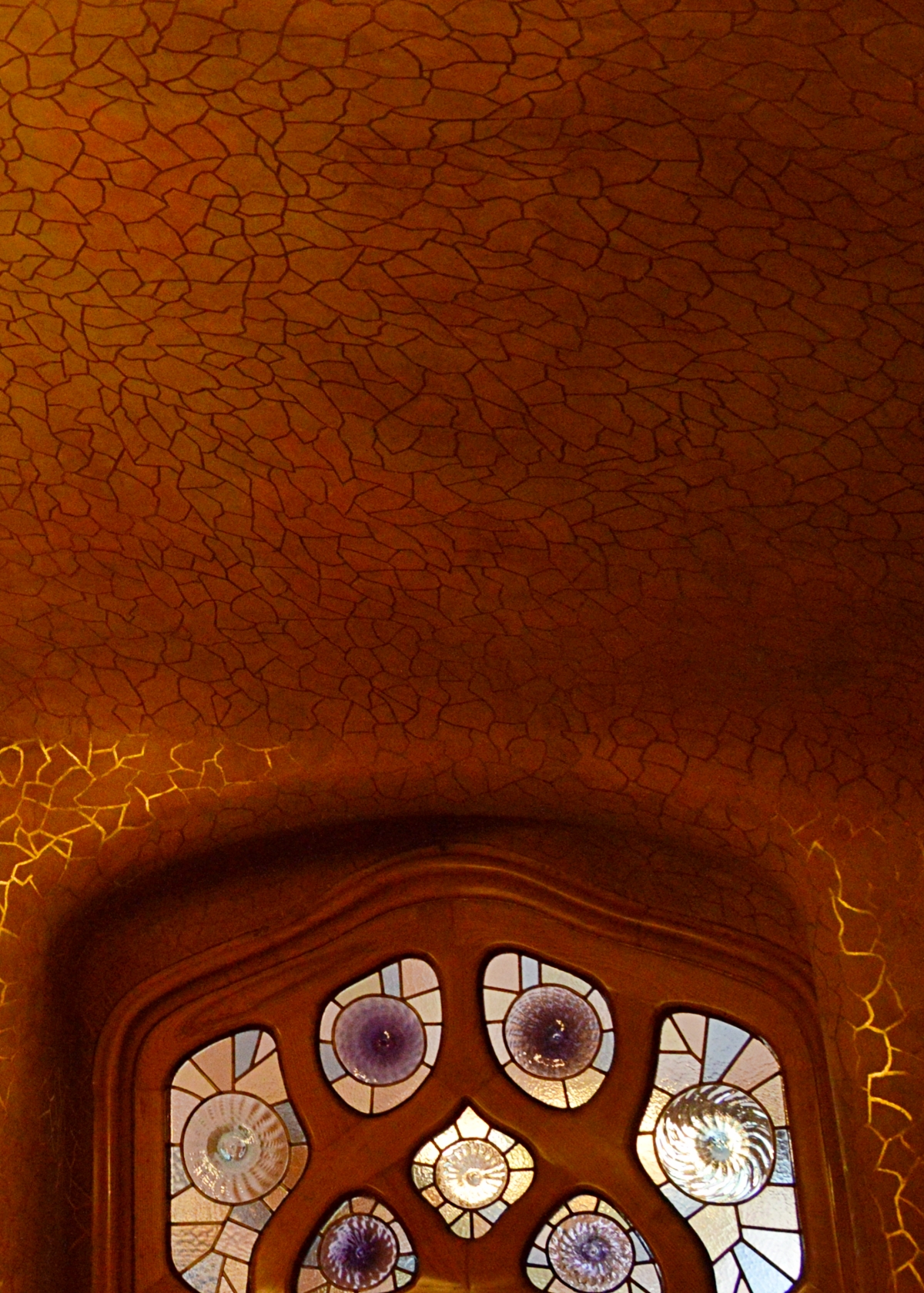
The windows feature circles of blue and purple glass, mirroring the shape and material used on the doors on the inside.
Gaudí designed the windows so they could open up and turn the living room into more of a large balcony.
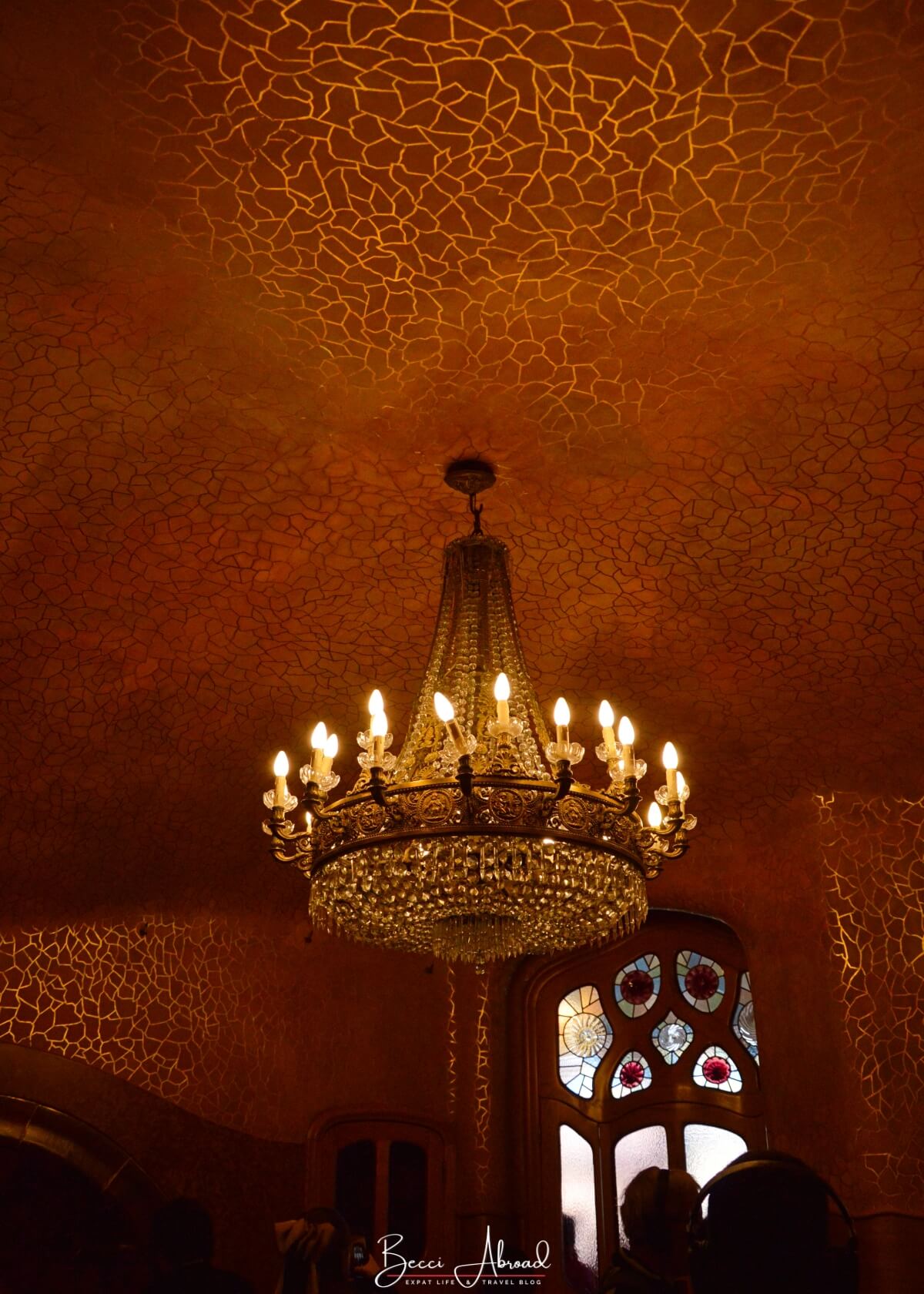
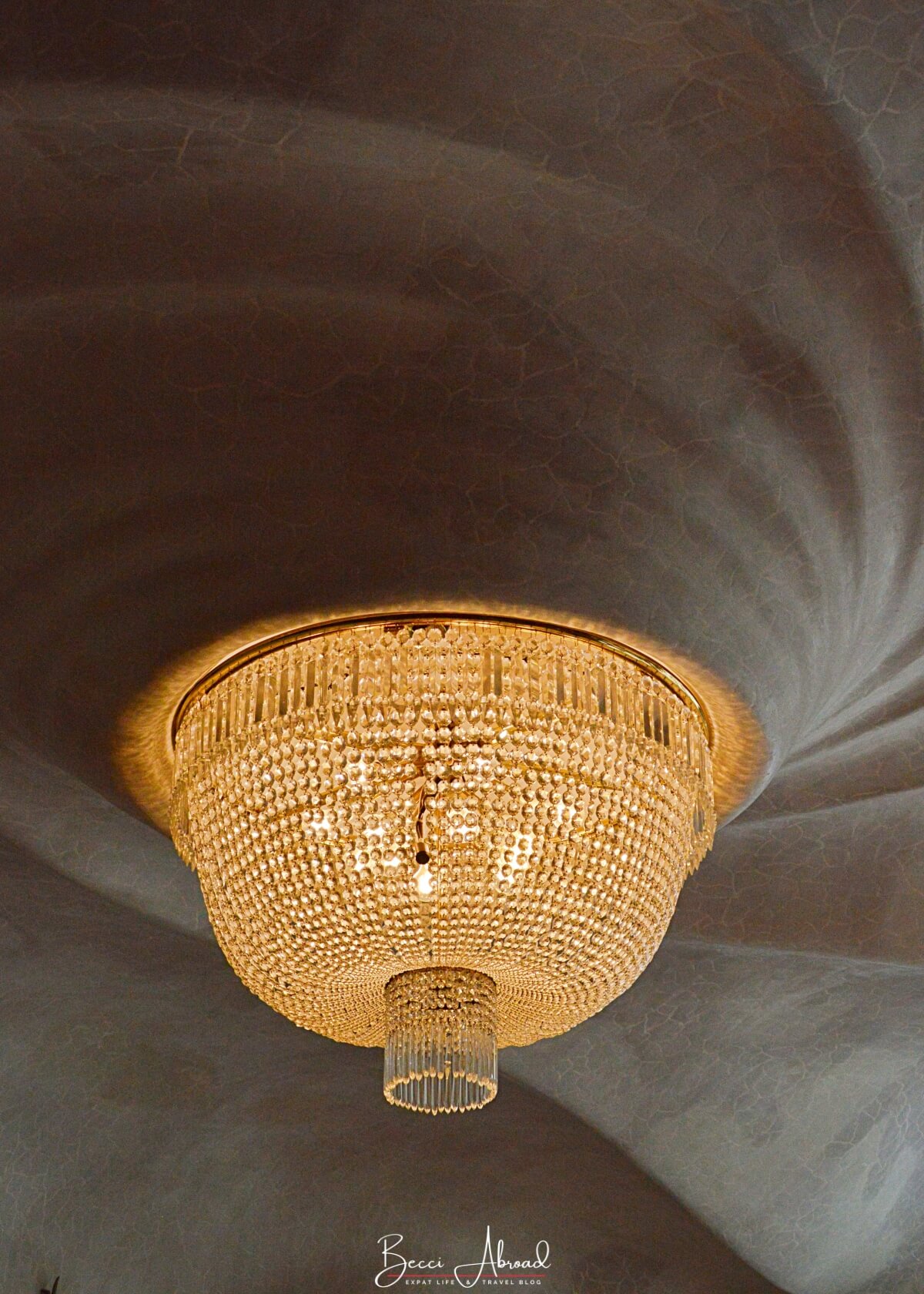
The ceiling is shaped like a seashell, giving the impression that every part of it leads towards the center, where an elegant chandelier hangs.
The living room is one of the most popular places in Casa Battló, so you need a bit of patience to get through and over to look out the windows onto Passeig de Gràcia.
The Main Floor
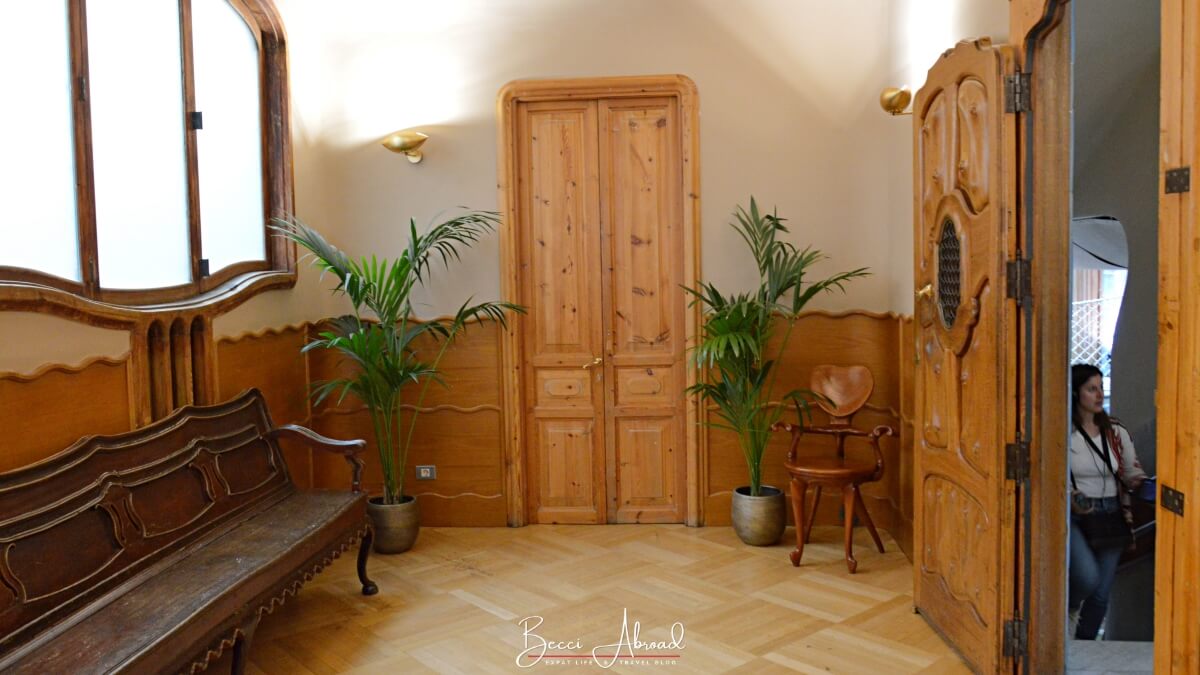
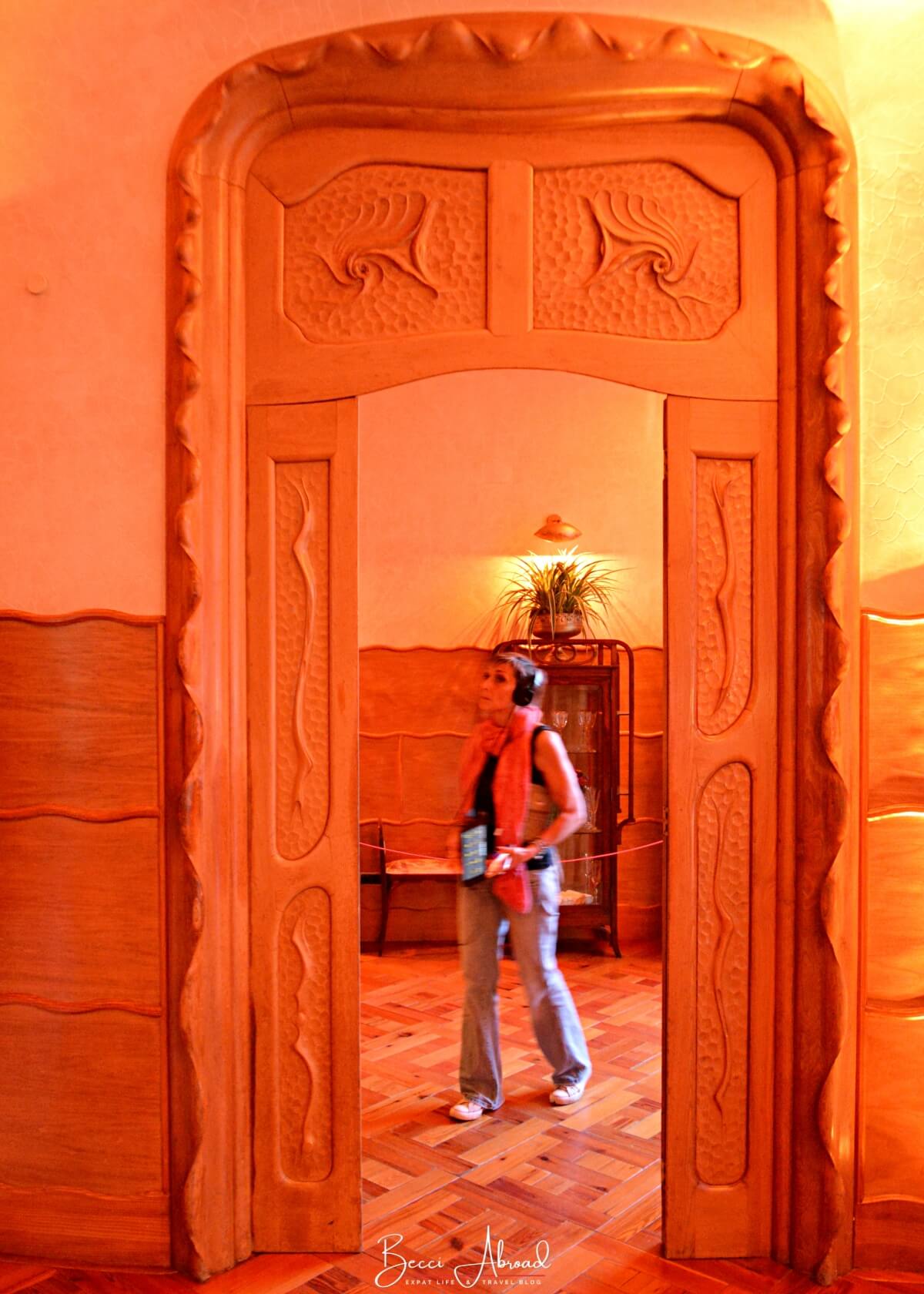
The rest of the main floor features several smaller rooms, with furniture from the early 20th century.
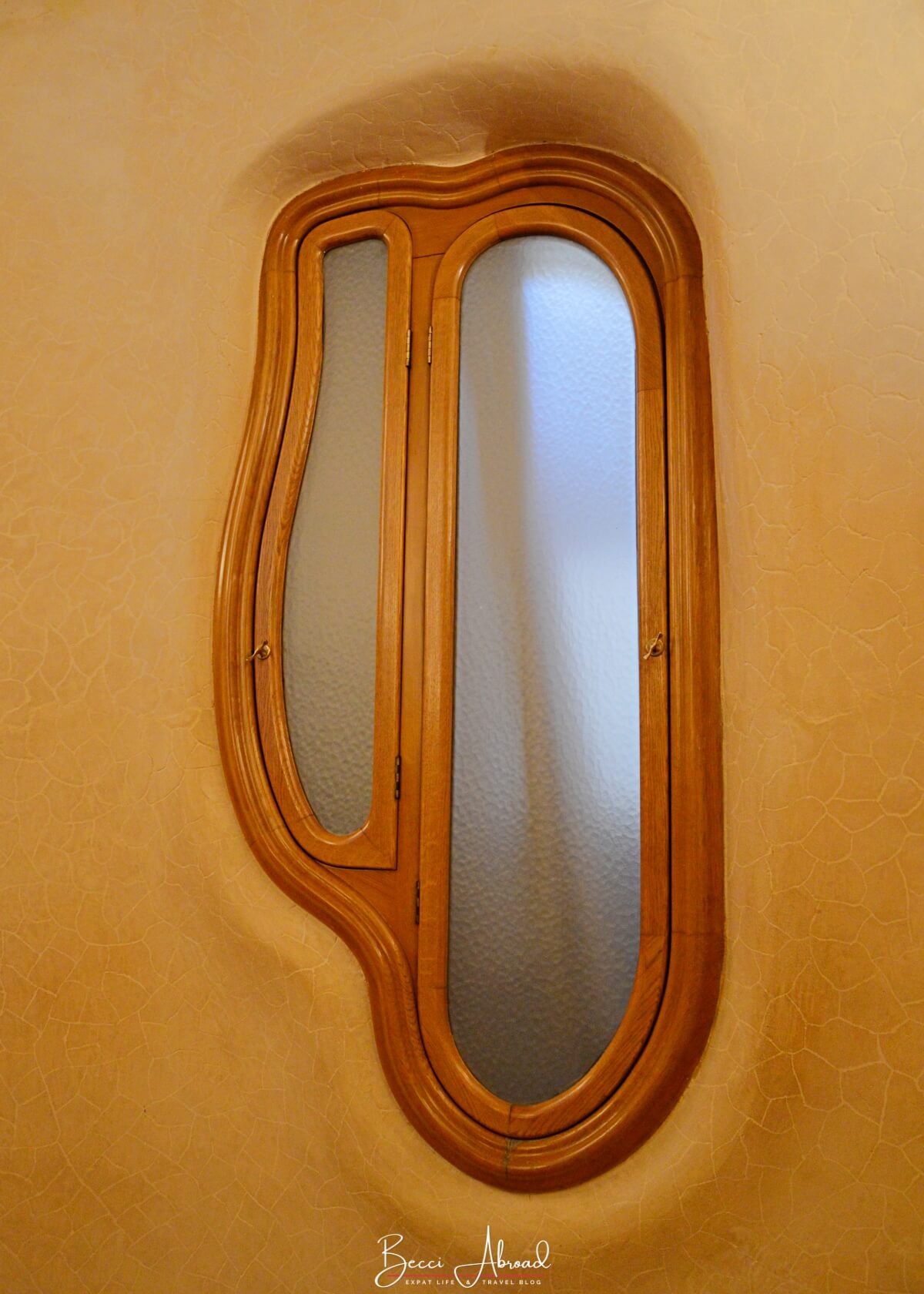
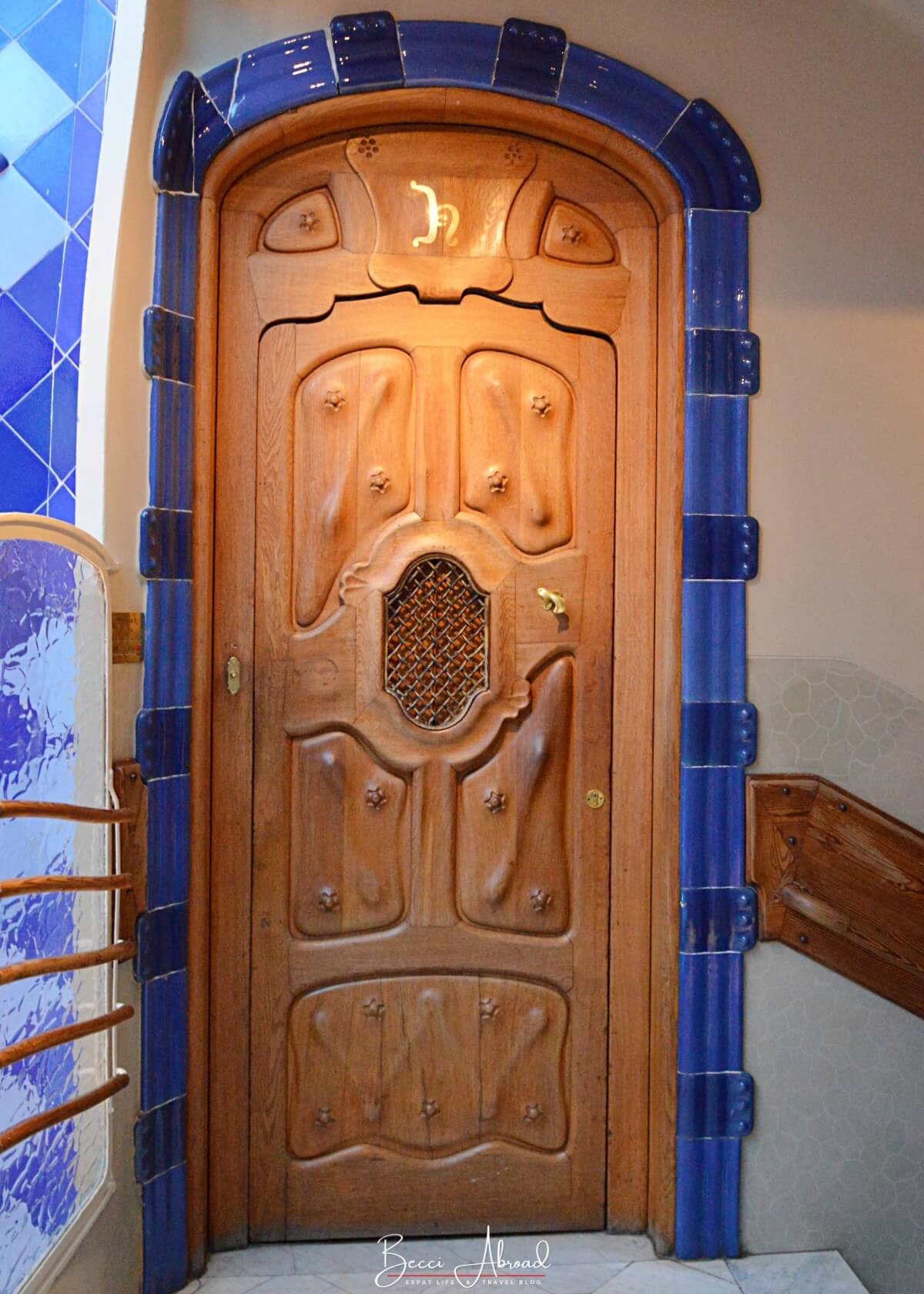
Look out for the unique details on everything from doors to windows. Gaudí ensured proper ventilation of the house by including different opening systems on the house’s windows.
This might seem completely normal for us today, but this wasn’t something commonly thought about when building houses at the beginning of the 19th century.
The Courtyard and Rear Façade
Towards the back of the main floor, facing away from Passeig de Gràcia, you’ll find the courtyard and rear façade of Casa Batlló.
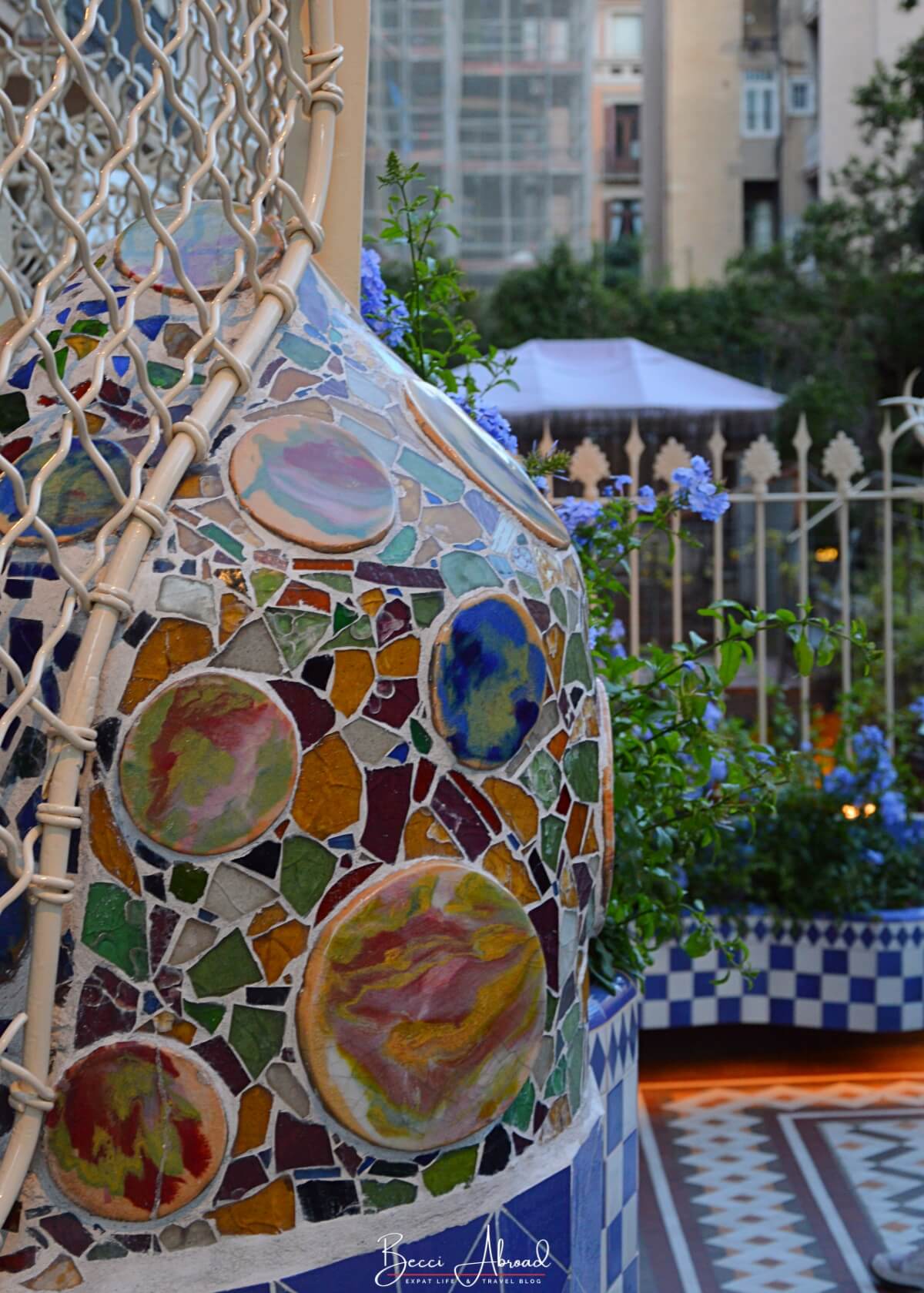
The courtyard is a small oasis away from the busy life of Barcelona’s main street, featuring beautiful flower pots with ceramic pieces.
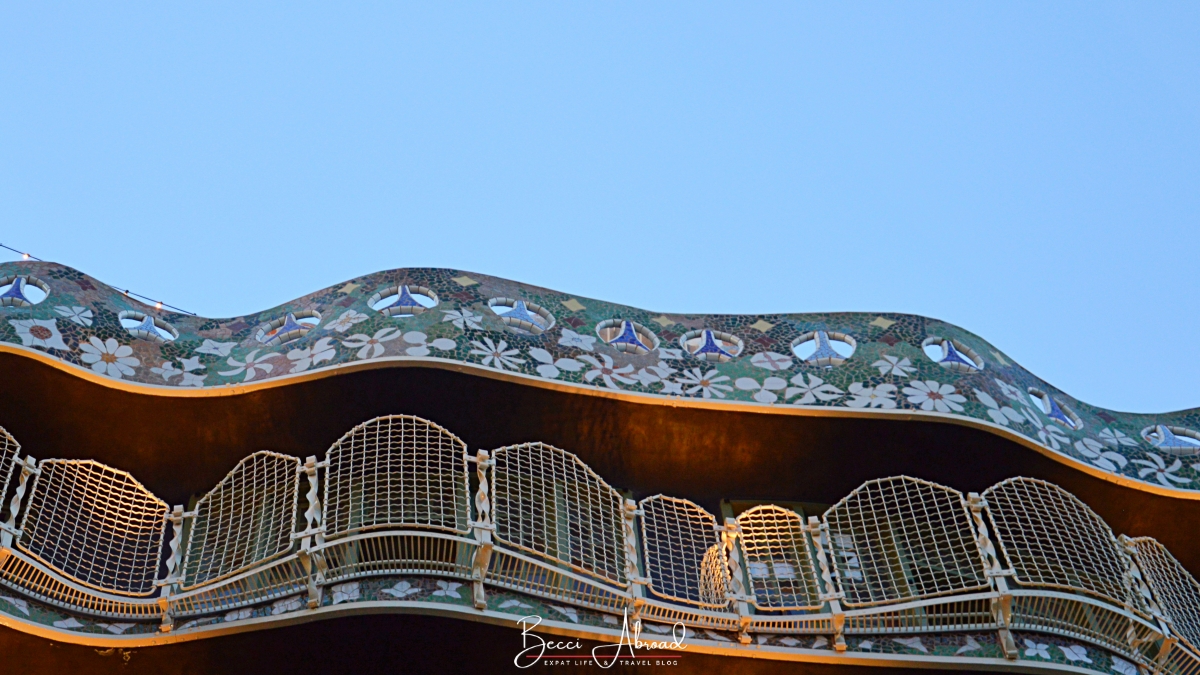
The rear façade features long balconies on each floor of the house. Each of the balconies is decorated with ceramic trendcadís in a similar way to the serpentine bench in Park Güell. The small ceramic pieces of the trendcadís patterns make up motives of flowers and plants.
The courtyard and rear façade are the last parts of the house that have undergone the extensive restoration project to bring back Gaudí’s original design of Casa Batlló.
As you head inside the house again, you’ll be guided towards the internal staircase and the lightwell.
The Blue Tiled Lightwell
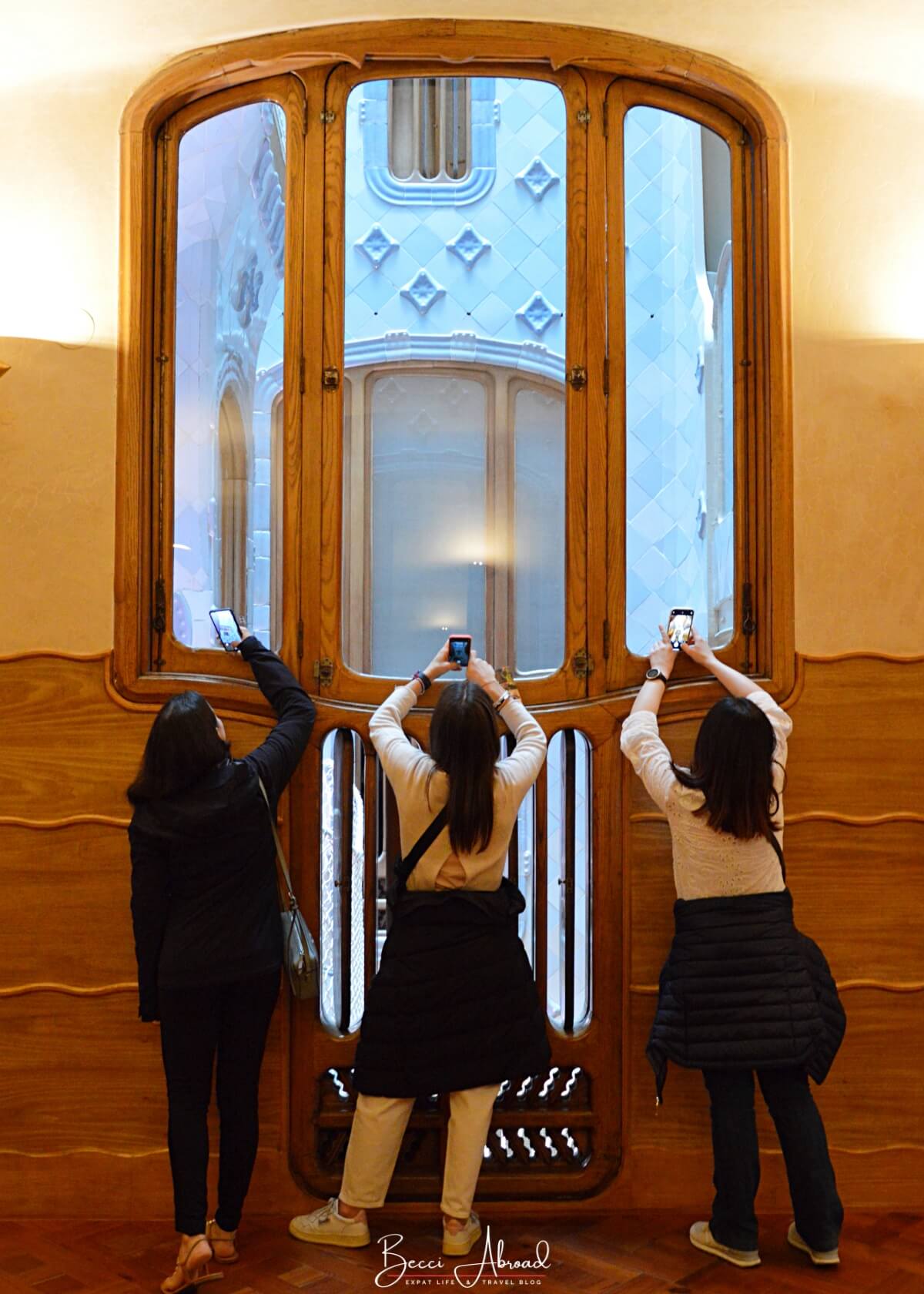
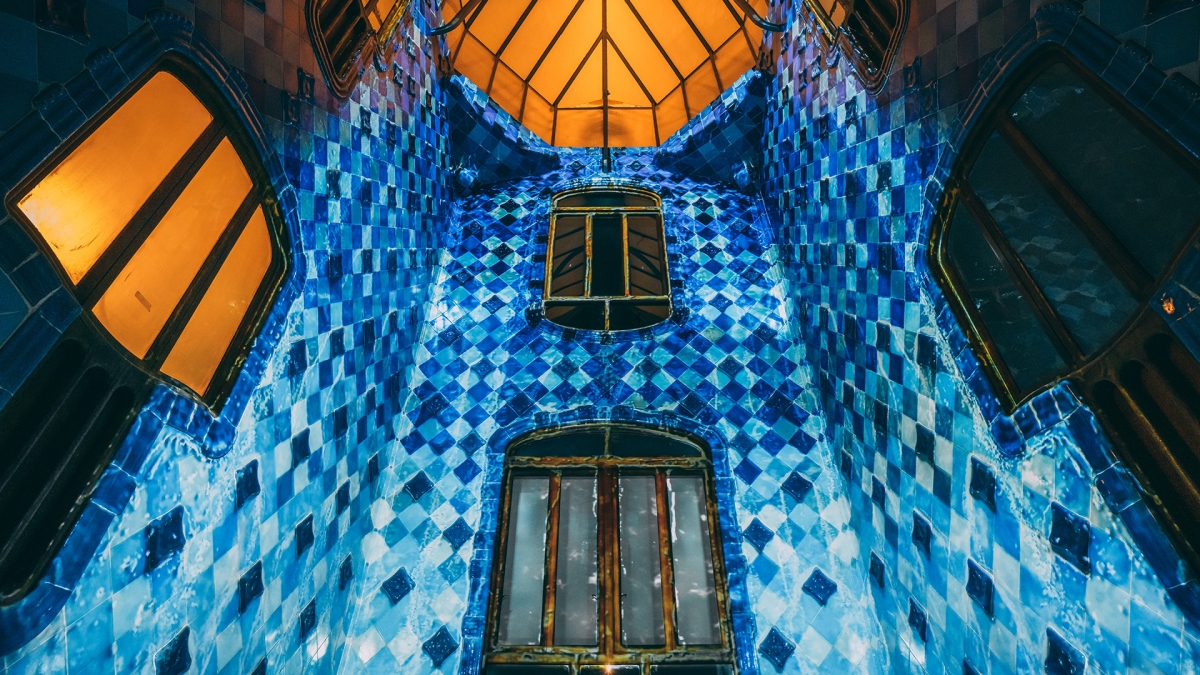
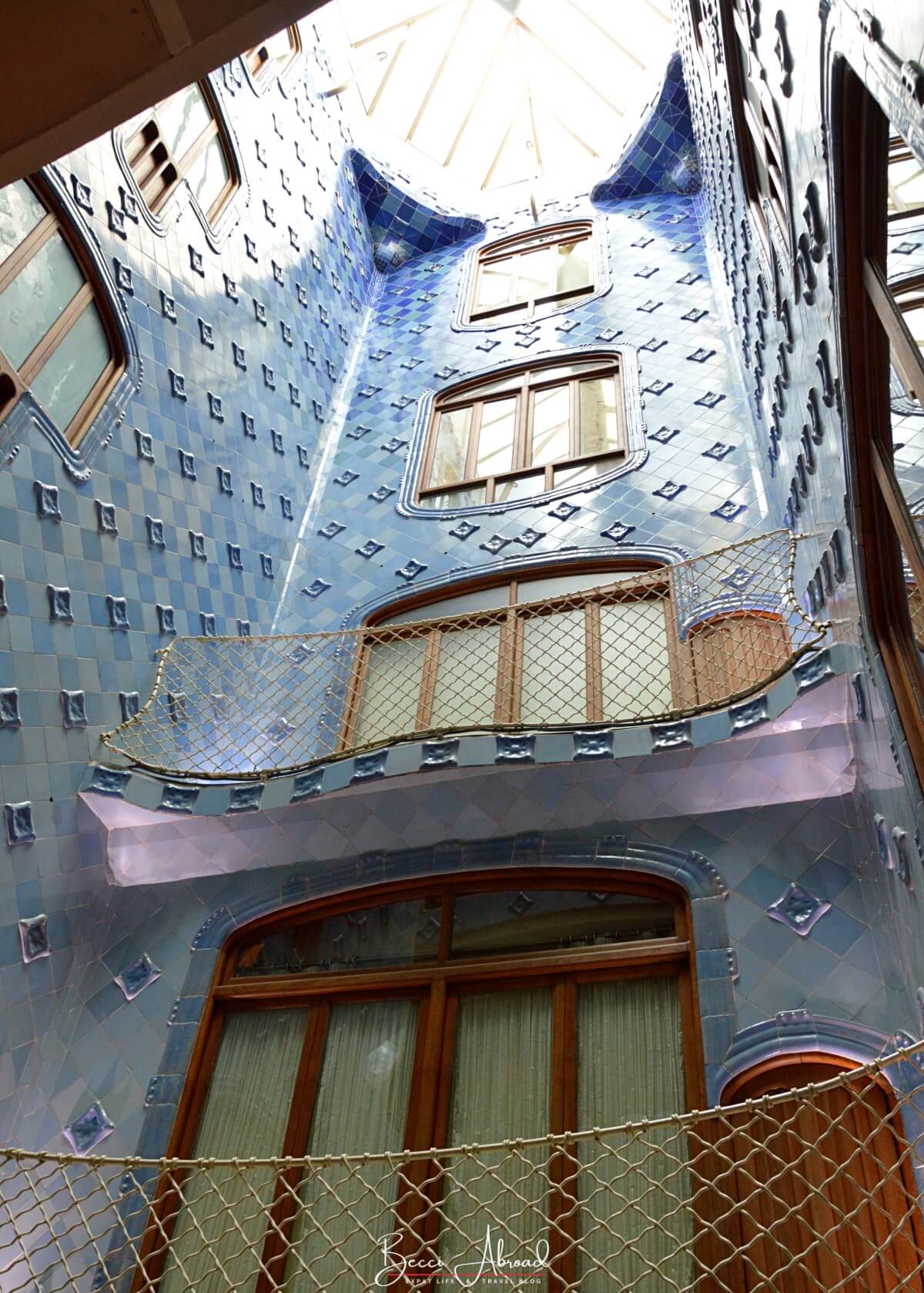
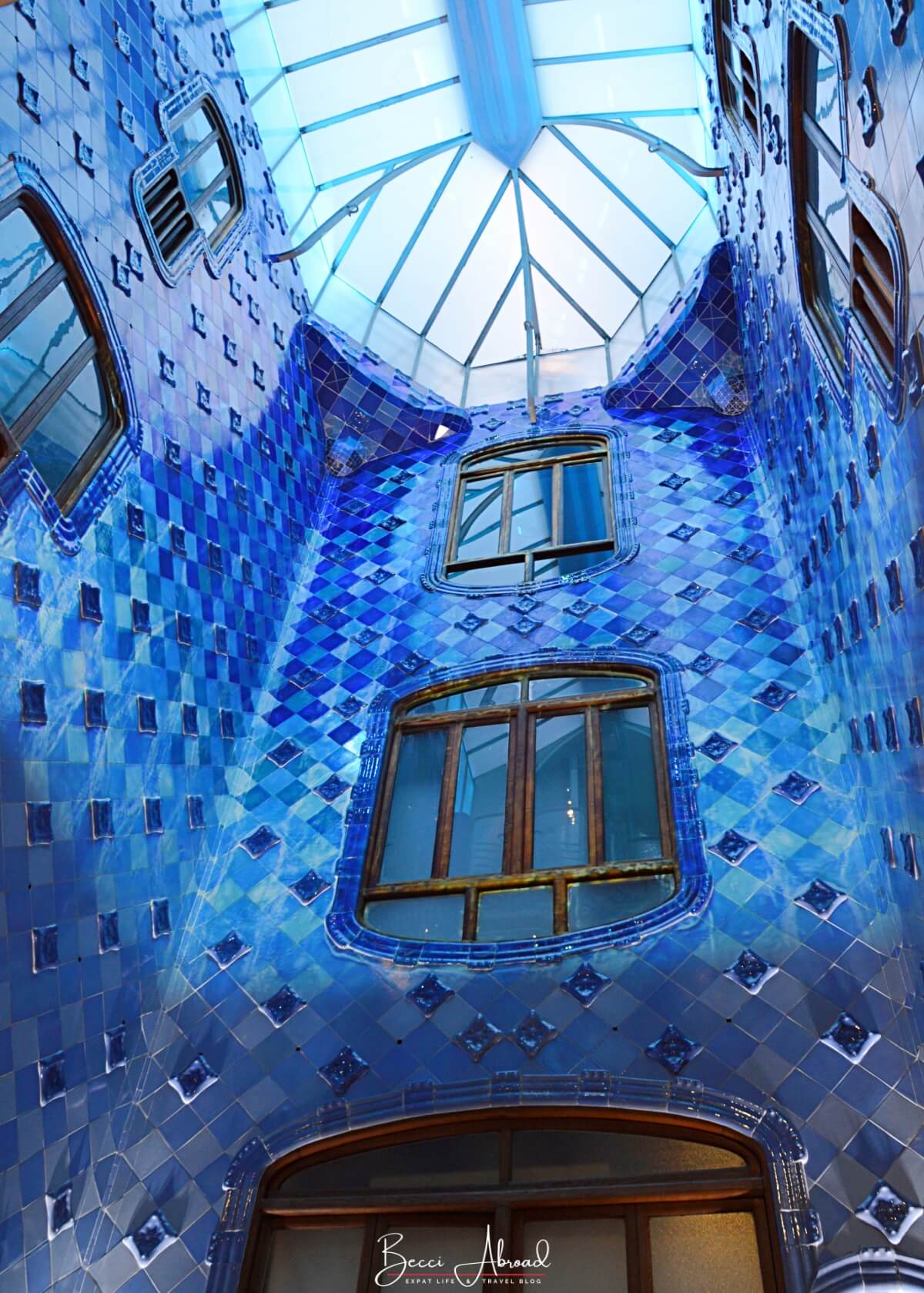
The blue lightwell at Casa Batlló is designed to distribute light and air through the house.
The lightwell is covered with blue tiles of different shades. Towards the bottom of the house, close to the ground floor, the tiles are in light blue tones.
As you climb up the stairs on the inside of the lightwell, the blue color of the tiles deepens, creating an illusion of an equal distribution of light.
Gaudí designed the windows facing the lightwell in different sizes to balance the light in the house. He made the windows at the top near the opening smaller, and the windows at the bottom larger to let in more light.
The different blue tones of the light well make it feel like walking inside a huge wave. This connects the house’s design to nature, as modernism often did in architecture.
In the evening, there is a water animation projected on the walls of the lightwell, creating a magical effect of being inside a huge waterfall.
The staircase spiralling up towards the higher floors of the building is also great for making beautiful photos of the colourful lightwell.
The Attic
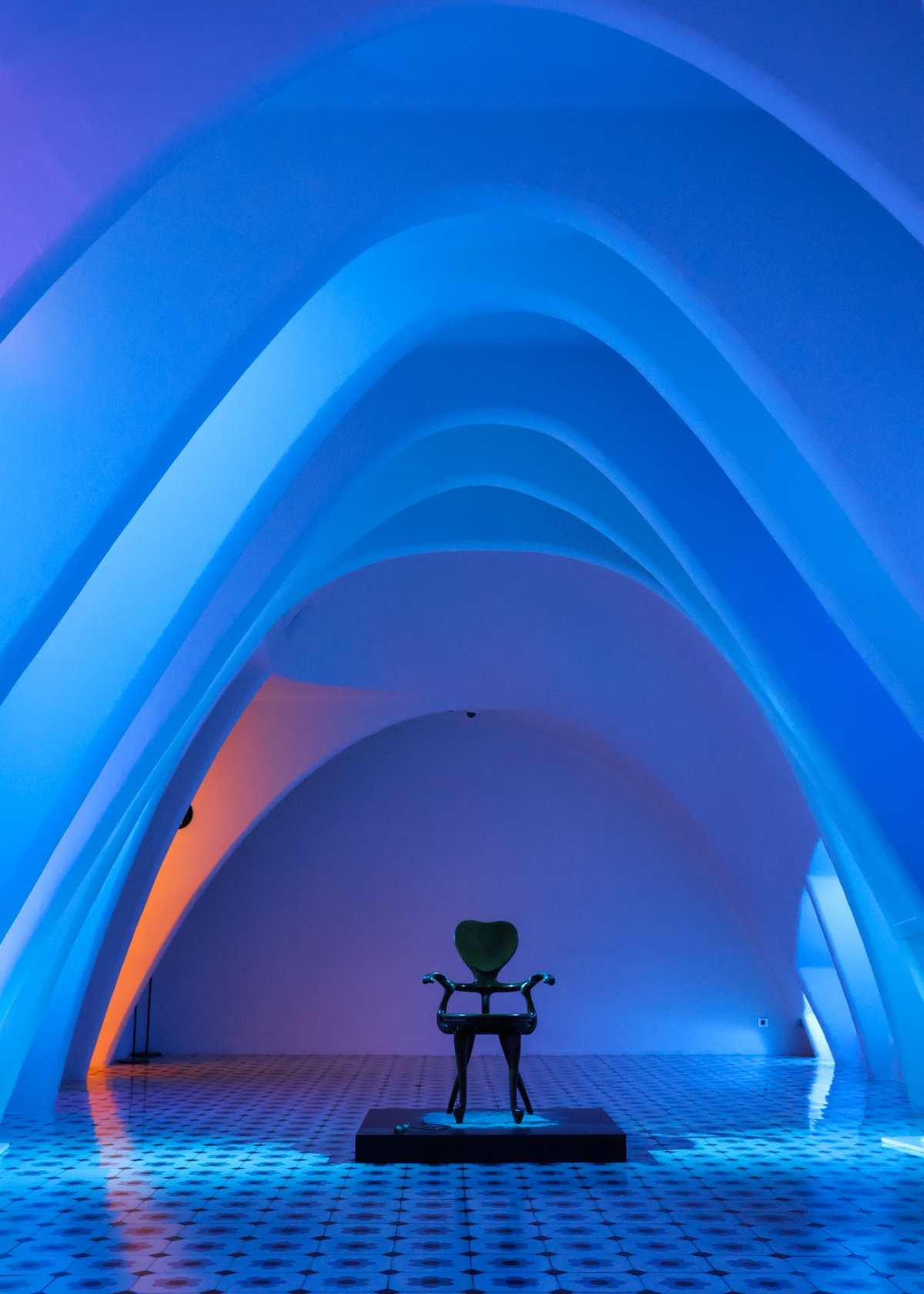
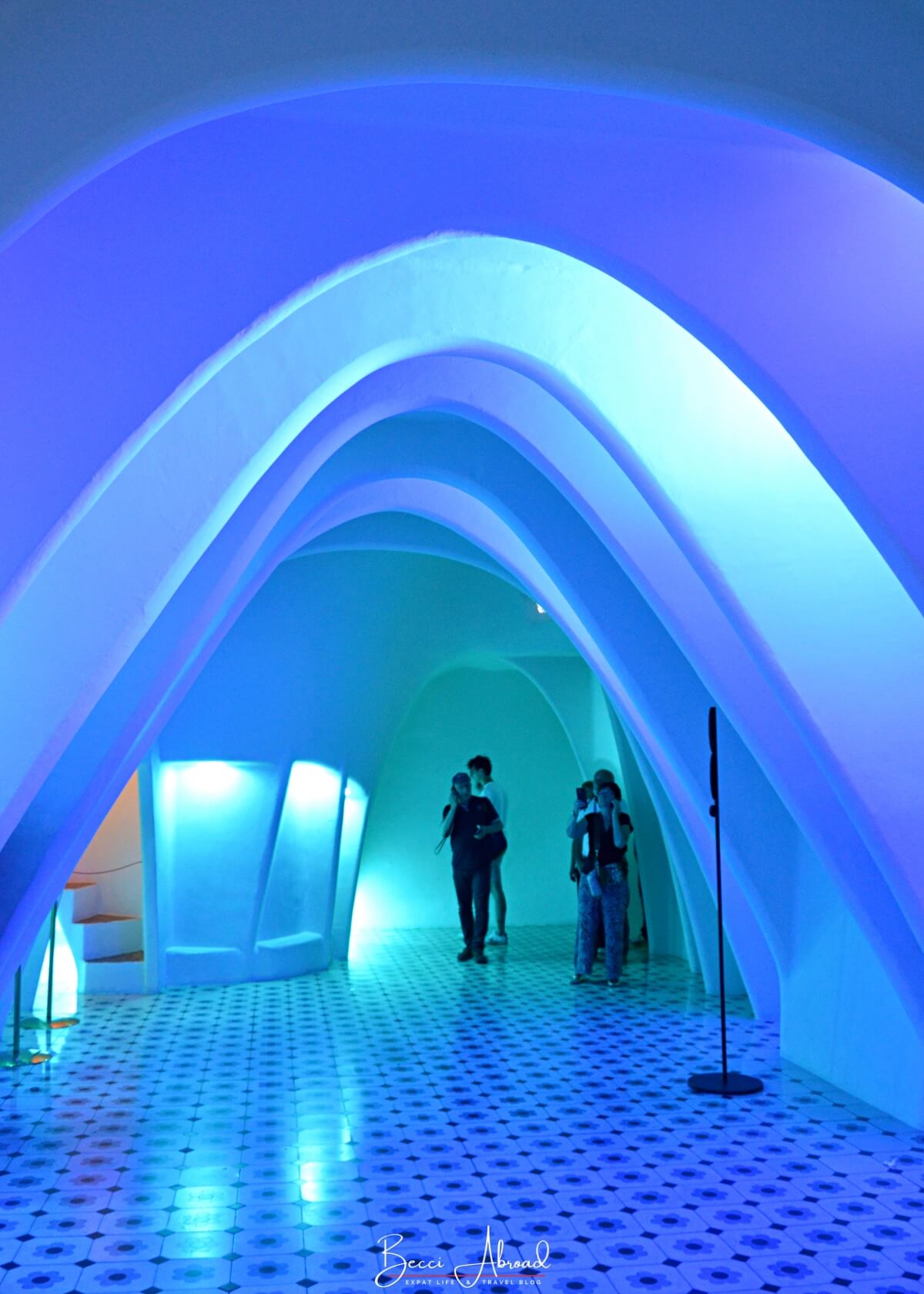
Following the staircase facing the blue-tiled lightwell to the top floor, the attic features soft white curves and catenary arches.
The attic features 60 catenary arches and was originally used as the service area of the house. The area houses storage and laundry rooms (I don’t know about you, but I definitely have to improve something about the design of my laundry room!)
Just as the staircase of the lobby looks like the spine or tail of an animal, the arches of the attic create the feeling of being inside the ribcage of a massive whale.
Compared to other parts of the house with dark wooden details, the design feels surprisingly futuristic.
Gaudí Cube Immersive Digital Installation
After visiting the attic, you’ll be led to the Gaudí Cube, which is an immersive 360-degree digital installation.
The Gaudí Cube shows animated visuals inspired by Gaudí’s imagination. It includes close-ups of organic shapes and images that look like the Sagrada Familia.

Note: If you purchased the Blue Casa Batlló ticket, the above areas of the house are what is included in your visit. However, if you purchase the Silver, Gold, or Platinum tickets, the following additional areas are also included.
The Dragon’s Rooftop
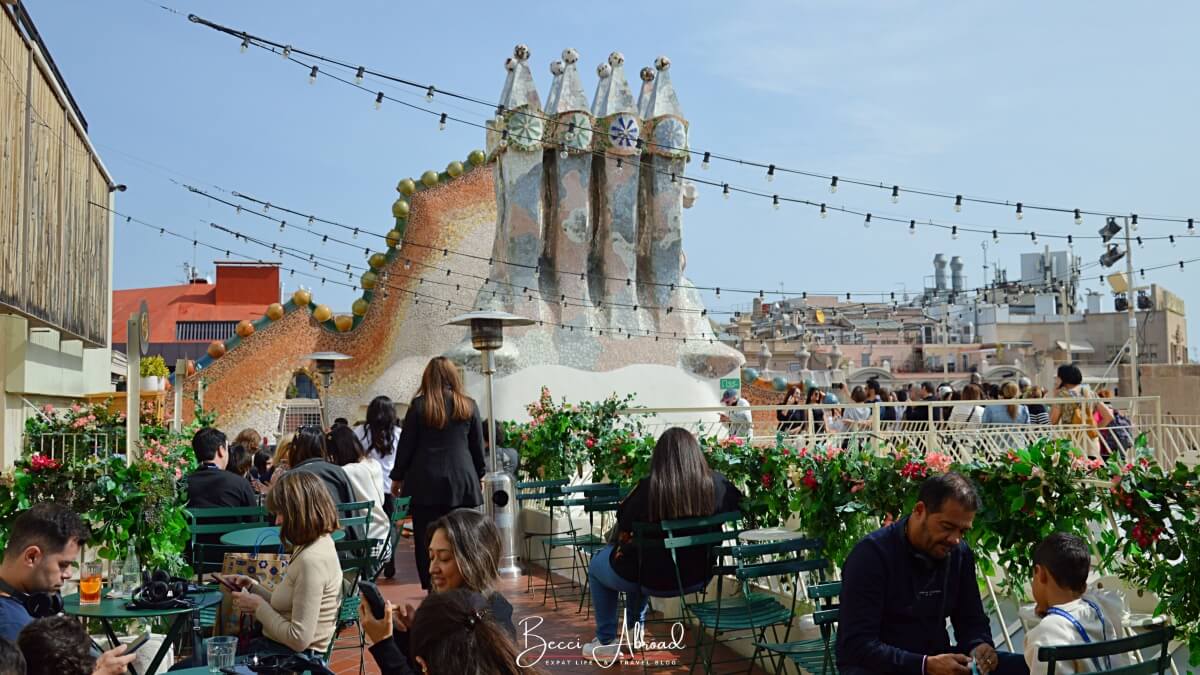
The top part of Casa Batlló’s façade towards Passeig de Gracia is covered in colorful ceramic tiles and is commonly called the dragon’s back.
And for that reason, the rooftop of Casa Batlló is also commonly known as the dragon’s rooftop.
From the rooftop, you can get a closer look at the beautiful, colorful trencadís mosaic. and admire the views over Barcelona.
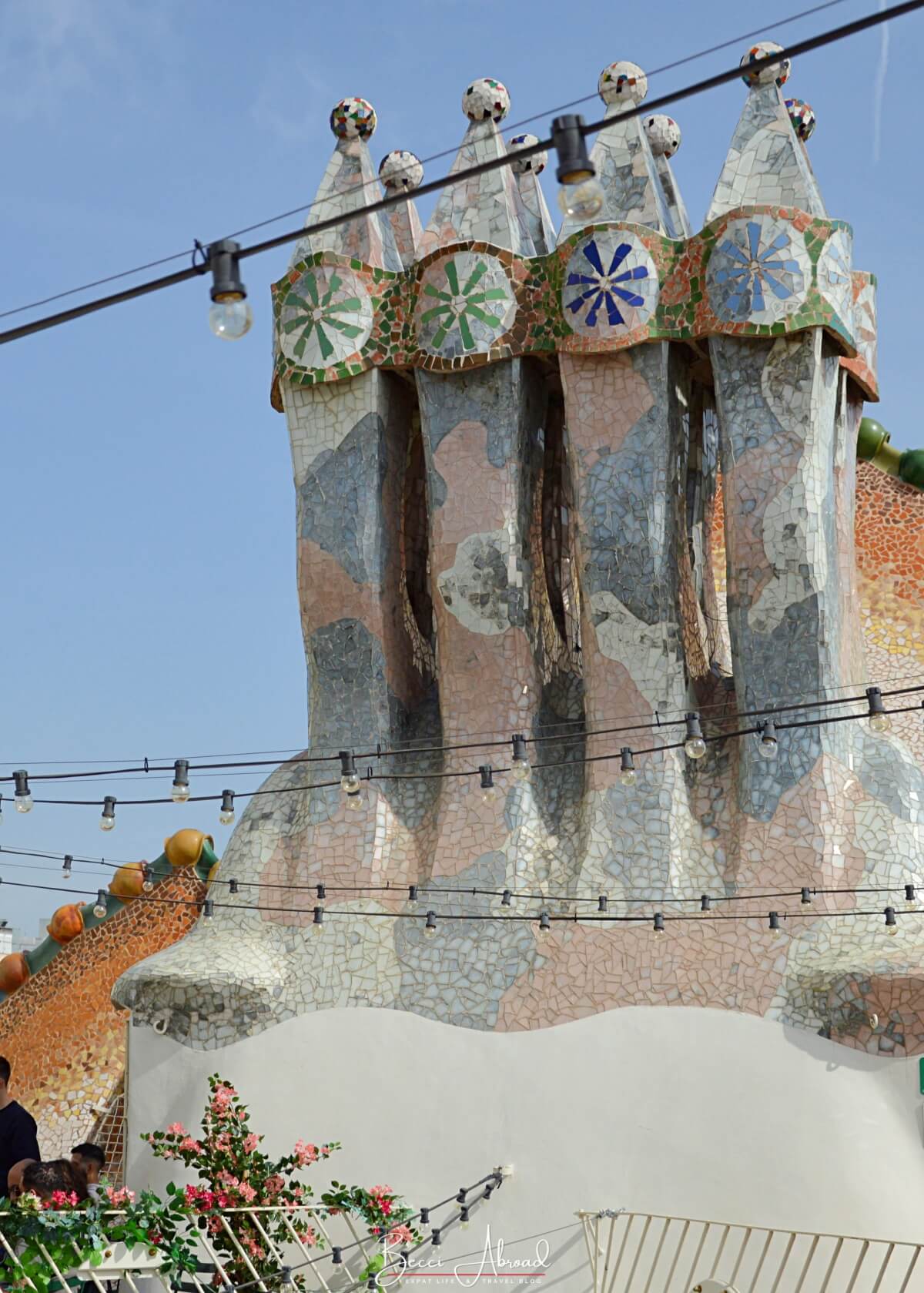
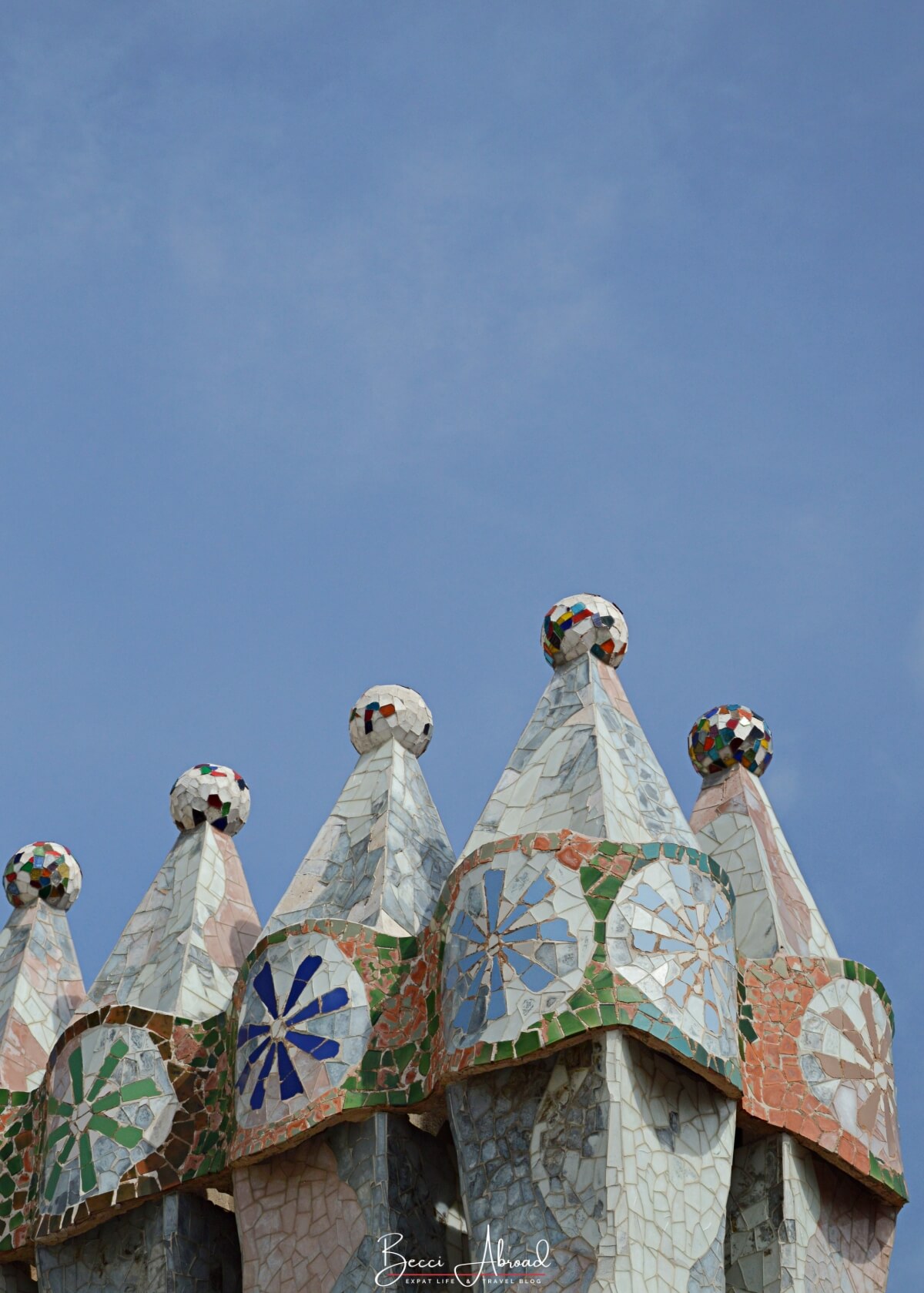
Right behind the dragon-shaped roof, you will also find four sets of whimsical chimney stacks, designed to prevent air from blowing back inside the house.
Personally, I think the chimneys look more like a dragon’s tail sticking up towards the sky.
In the summer, there is a small rooftop bar serving refreshments and offering a break from all the walking up stairs.
Note: If you purchase the Gold or Platinum tickets, you’ll get access to the following two additional areas of Casa Batlló.
The Concierge Room
The concierge room has been restored to Guadí’s original design, showcasing how Gaudí thought of every detail of the house.
Gaudí Dôme & Augmented Reality
With the Gold and Platinum tickets, you get special access to experience Casa Batlló through augmented reality and the immersive experience, Gaudí Dôme.
The augmented reality tablets are meant to bring Gaudí’s creative thoughts to life using modern AR-technology.
The Gaudí Dôme is an experience showing the origin of Gaudí’s inspiration in nature.
The Batlló Family’s Private Residence
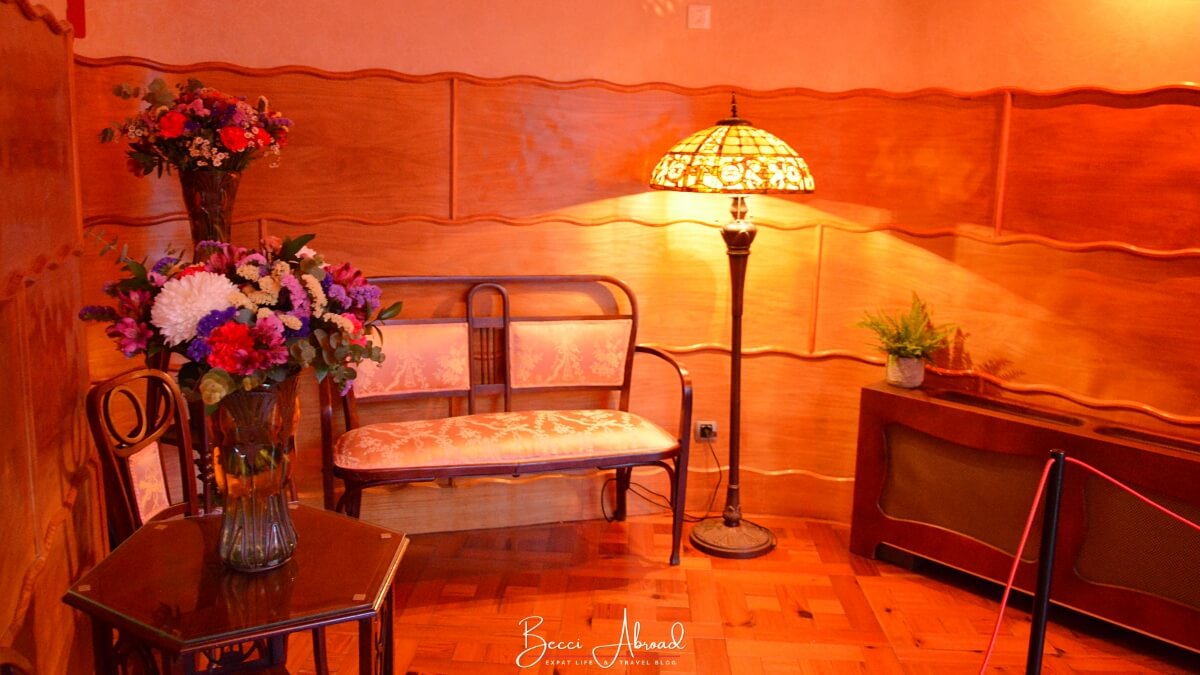
On the first floor of Casa Batlló, you can visit a fully furnished private room of the Batlló family’s private residence.
The elegant room gives insight into how the Batlló family lived in the early 20th century, with elegant furniture and Gaudí’s custom designs.
The Simbolic Store
The souvenir store at Casa Batlló, Simbolic Store or Tienda Casa Batlló, is located on the mainfloor and on the ground floor of the landmark.
The Simbolic Store features all kinds of Gaudí and Casa Batlló-inspired souvenirs, from decorations to Gaudí books.
If you get your eyes set on something, and don’t want to carry it around, the Simbolic gift shop on the ground floor can be accessed without a ticket – and it is open all year round.
Final Thoughts: Is it worth going inside Casa Batlló?
A visit to Casa Batlló is a great way to discover the secrets of modernism and understand how architecture developed in Barcelona.
So, if you’re interested in architecture, art, design, or simply beautiful experiences, Casa Batlló is an absolute must-visit in Barcelona!
Even if you have seen other works by Gaudí, Casa Batlló often appears as if you were walking through a living organism. This is especially true if you join an evening visit with the unique light show.
However, I do strongly recommend purchasing tickets to the entrance early in the morning to get access to Casa Batlló before the house gets too busy.